At A Glance
The challenge facing marketers today is not the decline of a single identifier, but the fragmentation of signals across browsers, devices, apps and platforms. A resilient identity framework unifies these signals into a consistent, privacy-safe view of the consumer, allowing marketers to reach, measure and optimize across environments that expose different identifiers.In this article…
Why an identity framework matters more than any single identifier
The challenge facing marketers today isn’t a single identifier on a deprecation timeline; it’s the increasing fragmentation of signals and identifiers across browsers, devices, apps, and platforms. This shift introduces complexity into how audiences are reached and measured, as signals behave differently in every environment, and it becomes more complex to piece together a complete view of the consumer.
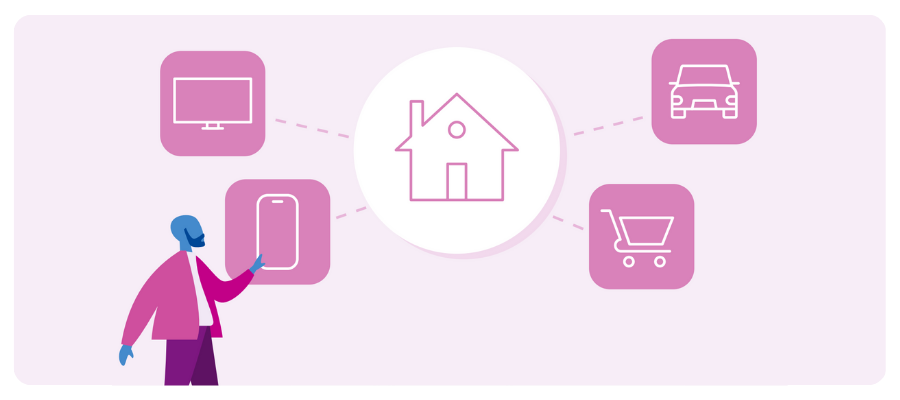
Each environment contributes to its own set of visibility gaps, making identity less predictable and more uneven. The result is a patchwork of inconsistent identity signals rather than a single, predictable decline.
While you can’t control how platforms evolve, you can control how you respond to fragmentation. The future won’t be defined by the loss of any single identifier, but by your ability to unify, interpret, and activate the many signals that remain. Marketers who adopt a flexible, identity framework will be best positioned to create consistency in an otherwise fragmented landscape.
At Experian, we believe flexibility starts with intelligence. For decades, we’ve used AI and machine learning to help marketers understand people’s behavior more clearly, respect their privacy, and deliver messages that drive business outcomes. Our technology brings identity, insight, and intelligence together, so even as the number of signals grows and becomes more varied across environments, marketers can reach the right people with relevance, respect, and simplicity. This intelligence acts as the connective tissue across fragmented ecosystems, ensuring marketers can recognize and reach audiences consistently wherever they appear.
What forces are driving fragmentation in identity and signals?
Changes to traditional IDs
Since Apple introduced App Tracking Transparency (ATT), access to the Identifier for Advertisers (IDFA) has become inconsistent across apps and devices. Google’s evolving Android privacy roadmap adds another layer of variability, fragmenting mobile addressability. Safari and Firefox have long restricted third-party cookies, while Chrome continues to support them for now. This creates different signal availability across browsers, contributing to an uneven and increasingly fragmented identity landscape on the open web.
Shifts in signals
IPv4 to IPv6 migration introduces mismatched identity structures that complicate continuity across environments.
Platform-driven fragmentation
Closed ecosystems and uneven adoption of evolving RTB standards (like OpenRTB 2.6 updates designed to support new identifiers and consent signals) create differences in which identifiers and consent signals are shared in the bidstream. At the same time, the rise of alternative or “universal” IDs—often developed by individual platforms, publishers, or technology companies—means that multiple ID types can appear within the same auction, each with its own structure, rules, and level of support. These differences reduce interoperability across platforms and contribute to a more fragmented activation landscape.
Each change creates an identity silo. Together, they form an ecosystem defined by fragmentation rather than absence. Without an identity framework, these environments operate as disconnected identity islands.
A multi-ID world requires a unified identity framework
Alternative IDs play an important role, but they also expand the number of signals marketers must reconcile. Without a consistent identity layer, more IDs often mean more complexity—not more clarity. Common alternative IDs in use today:
- UID2: The Trade Desk’s Unified I.D. 2.0, an iteration of their original Unified ID 1.0, which was still reliant on third-party cookies, creates persistent IDs with user-provided email addresses and phone numbers.
- ID5: This independent identity provider builds an identity infrastructure that powers addressable advertising across channels. It can create an ID based on both deterministic and probabilistic data.
- Hadron ID: Hadron ID is a unique, interoperable identity system (including first-party, audience-based, contextual, deterministic, and probabilistic) developed by Audigent, now part of Experian, to drive revenue for publishers by making their audience data and inventory actionable for media buyers.
Industry reports suggest roughly one-third to two-fifths of open-auction traffic carries alternative IDs, sometimes multiple per request. Among Experian clients, adoption of alternative IDs rose 50% year over year, with a 30% increase in IDs resolved to individuals via our Digital Graph.
Identity isn’t disappearing; it’s multiplying. A modern identity framework resolves these identifiers into a single, privacy-safe consumer view.
Why CTV makes an identity framework essential
Beyond alternative IDs, device-level identifiers also play a major role in today’s ecosystem and add to the fragmentation marketers must navigate. Connected TV (CTV) environments introduce additional fragmentation.
CTV IDs
A CTV ID is an identifier used to deliver, target, and measure ads on CTV devices, including smart TVs, streaming devices, gaming consoles, and more. Unlike MAIDs, which act as universal device identifiers across apps, CTV environments often generate multiple, platform-specific IDs for the same physical device. Different operating systems, publishers, or streaming platforms may each assign their own identifier—such as Roku ID for Advertisers, Amazon Fire Advertising ID, Samsung TIFA, or Apple IDFA for CTV. As a result, a single household or TV can appear under several distinct IDs, making cross-app or cross-platform recognition more complex and further reinforcing the need for a unified identity framework.
Experian’s identity framework is powered by predictive and generative intelligence that makes resolution faster and more human-centered. Our AI models fill gaps where data signals are missing, infer behaviors responsibly, and continuously optimize for accuracy, so marketers can personalize ads responsibly, even in a fragmented ecosystem. More importantly, our framework normalizes signals across disconnected environments, creating a consistent identity spine that follows the consumer through their fragmented digital journey.
An identity framework connects online and offline signals
Fragmentation extends beyond digital environments. Marketers manage offline data from in-store transactions, loyalty programs, household identifiers, and phone numbers that rarely align cleanly with digital signals.
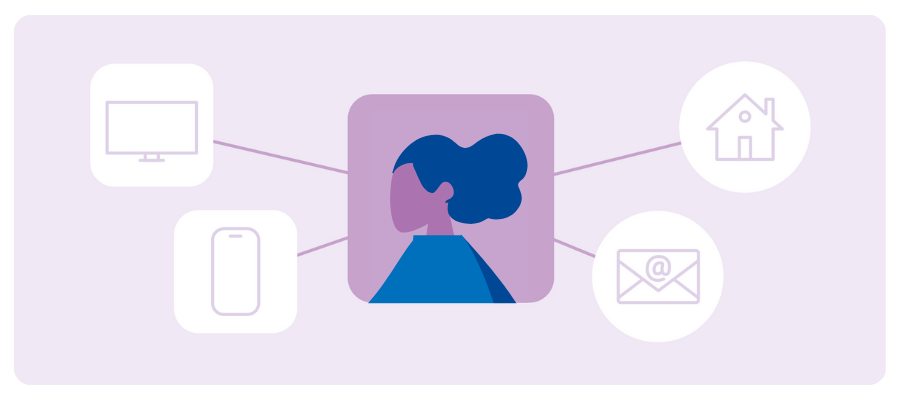
As consumers move between online and offline touch points, an identity framework connects these signals into a coherent view of the individual. This foundation allows marketers to recognize the same consumer across environments that expose different identifiers.
Four keys to future-proofing your media with an identity framework
1. Know your customer: Unify and enrich your first-party data
First-party data is a marketer’s most durable asset, but it’s often scattered and incomplete.
- Unify it: Bring CRM records, site interactions, and loyalty data into a single platform to build a holistic customer view. Use Offline Identity Resolution to resolve your first-party offline personally identifiable information (PII) back to a consolidated consumer profile, removing duplication of users in your data set.
- Enrich it: Append Experian Marketing Attributes to uncover demographics, lifestyle markers, and purchase behaviors you can’t see on your own, and use Offline Identity Append to fill in missing offline data points (such as name, address, phone, etc.) to create a more complete and actionable customer profile.
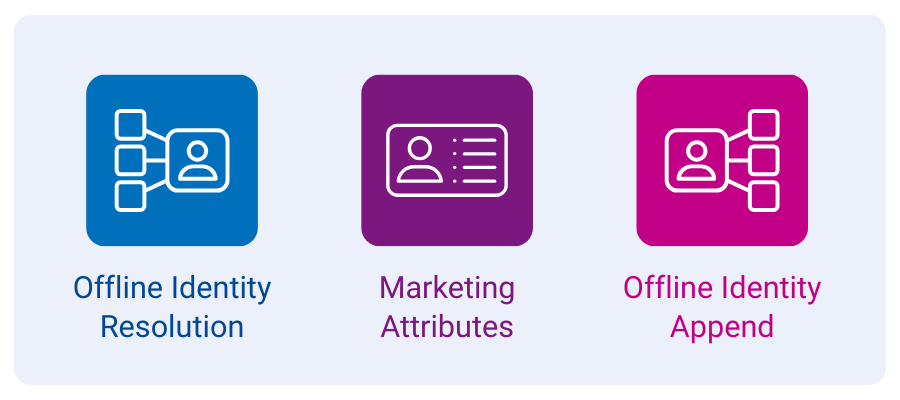
This gives you richer profiles that drive more personalized targeting and messaging. Fragmented ecosystems make unified first-party data even more essential. A connected view allows marketers to anchor identity against a stable, proprietary foundation. As identifiers vary across environments, marketers need flexible, privacy-first ways to understand where their audiences are and how to reach them.
2. Find your customer: Expand how you discover and reach audiences in a fragmented landscape
As identifiers vary across environments, marketers need flexible, privacy-first ways to understand where their audiences are and how to reach them.
- Contextual signals: Experian’s Contextually-Indexed Audiences map content to consumer insights, so you can target intent-rich environments.
- Geographic insights: Our Geo-Indexed Audiences help you find regions that over-index for specific traits and activate them across your preferred platforms.
- Syndicated and Partner Audiences: Choose from 3,500+ prebuilt segments or 30+ partner data sources spanning health, retail, travel, and more.
- Curation: As a full-service curation partner, we enable private marketplace (PMP) deals that are privacy-safe, identity-agnostic, and performance-optimized.
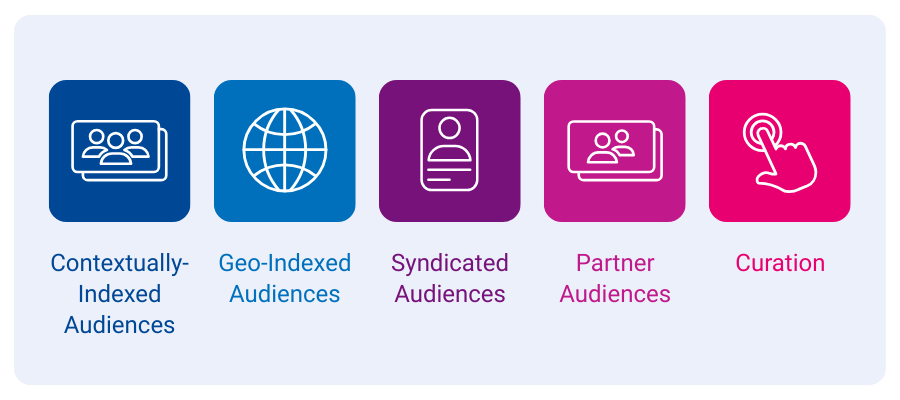
Together, these approaches help you confidently reach your audiences – using multiple types of signals that complement your identity strategy and create a clearer picture across fragmented environments.
3. Reach your customer: Maximize scale through interoperability
As signals and identifiers proliferate across environments, interoperability is essential to maintain consistent reach. Experian’s Offline and Digital Graphs unify disparate signals (MAIDs, CTV IDs, alternative IDs, IP, and more) so marketers can recognize and engage audiences reliably across channels, devices, and platforms.
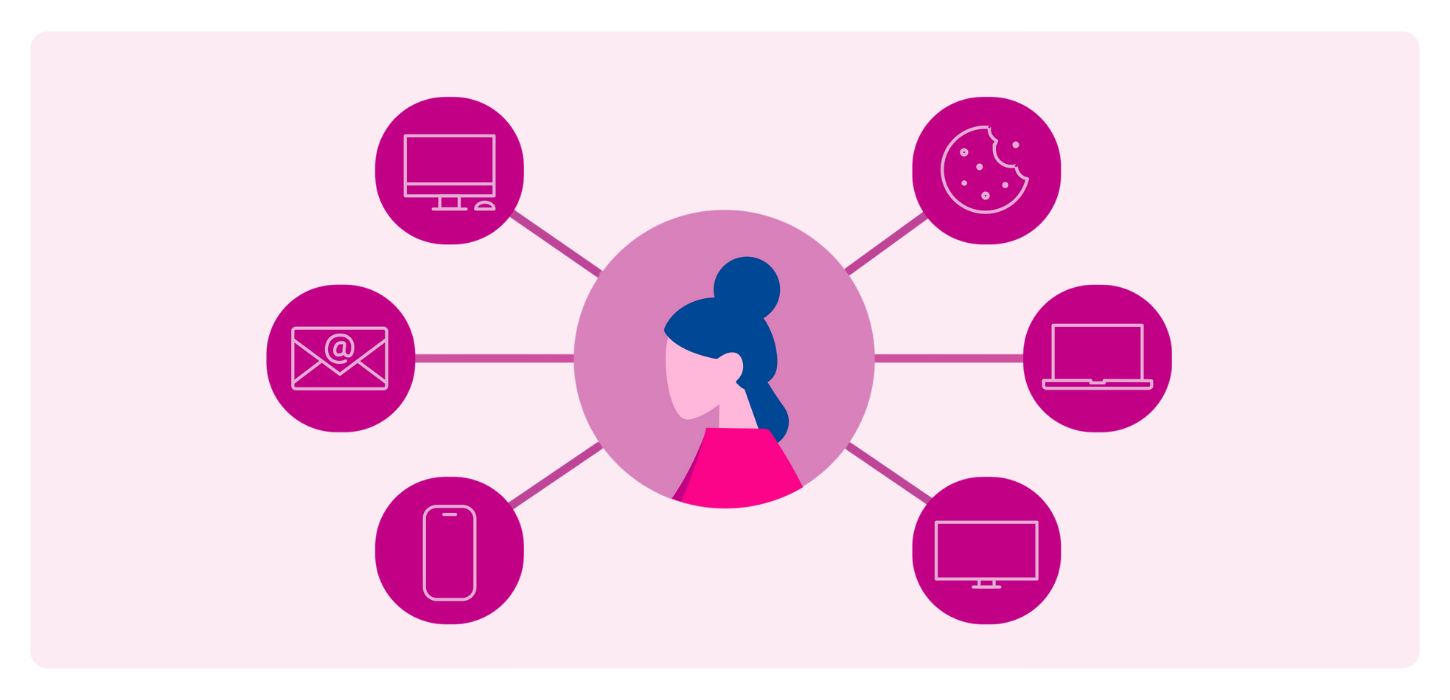
Interoperability matters because it turns a collection of disconnected identifiers into a coherent identity framework that can actually be activated. The following capabilities demonstrate how that comes to life.
- Unified identity: Create a consistent view of your audience, even when different environments expose different identifiers. Experian’s identity framework connects these signals into a single, actionable identity spine.
- Expanded reach: OpenX enriched its supply-side identity graph with Experian’s audiences, making our data available directly across OpenX supply and formats. By matching more of the starting audience and identifying more users in the bidstream, marketers see higher match and activation rates, extending reach in hard-to-address environments like Safari and mobile web.
Measure success: Optimize based on outcomes
If you can’t measure your marketing, you can’t improve it. Experian Outcomes, powered by our holistic understanding of the user across online and offline touch points, closes the loop by connecting media exposures to real-world actions (store visits, purchases, or site conversions).

With these insights, you can:
- Prove ROI across digital and TV
- Attribute success to the right channels and tactics
- Continuously refine targeting, creative, and spend allocation
Outcome-based measurement makes your strategy adaptive, so dollars flow to what drives results.
As signals multiply across environments, connecting exposures to outcomes requires a unified identity foundation. Experian closes the loop by unifying exposures across disconnected touch points, enabling holistic attribution and optimization. Our AI-powered simplicity drives continuous improvement. From predictive modeling to agentic workflows that automate optimization, we’re investing in generative AI to help marketers spend less time on manual setup and more time on strategy and outcomes.
The Experian identity framework advantage
Experian connects fragmented signals into a single, actionable identity framework built for long-term resilience.
What our identity framework delivers
- Interoperability: We support all major identifiers, including alternative IDs, IP address (v4 and v6), contextual signals, and both first- and third-party data.
- Flexibility: Whether you’re activating syndicated audiences, tapping into partner audiences from 30+ data providers, or curating custom segments through Audigent, our solutions meet you where you are.
- Scale: With four billion IDs resolved in our Digital Graph and 280 million telephones in our Offline Graph, we deliver unmatched reach across digital and offline environments.
- AI that makes marketing more human: We bring together identity, insight, and automation through responsible AI, helping marketers see audiences clearly, act with intelligence, and optimize with respect for privacy.
Our approach is delivering results across a range of programmatic players. These outcomes demonstrate how a unified identity framework delivers performance in environments where signals, identifiers, and devices operate in silos.
Proven results powered by Experian’s identity framework
- Sonobi increased programmatic addressability across the mobile web by 25% and delivered a 20% lift in impression value through our identity graph, driving stronger campaign connections and greater publisher returns.
- One DSP used our Digital Graph to match more MAIDs, CTV IDs, and IP addresses to online conversions, enabling increased accuracy of their attribution and measurement. They achieved an 84% synced ID rate and a 9% increase in match rate.
- For Cuebiq, we significantly increased match rates and resolved data from cookieless environments, such as Safari. By combining separate data streams and resolving 85% of total events to a household, Cuebiq expanded on the household IDs to identify MAIDs that are observed in-store, enabling accurate cross-channel measurement.
- Our Digital Graph allowed MiQ and their clients to expand the reach of their seed audiences across devices by 51% and cookieless IDs by 64%. As a result, MiQ can provide marketers with future-proofed connected planning, advanced targeting, and precise measurement.
We’re your partner in building identity framework that lasts: resilient to change, adaptive to new signals, and focused on outcomes.
What comes next for signals and identity?
The future isn’t defined by any single identifier. It’s defined by the ability to unify and activate across a fragmented identity ecosystem. The winners will be those who adopt interoperable, outcome-driven identity frameworks today.
Those strategies will increasingly be powered by responsible AI, systems that simplify workflows, predict opportunity, and optimize in real time while keeping people at the center. At Experian, we see AI not as automation for its own sake, but as a way to make marketing more human, relevant, and respectful.
Your playbook for navigating fragmentation
Experian connects the fragmented identity ecosystem, unifying alternative IDs, IP signals, contextual data, and first- and third-party assets into a consistent, actionable identity foundation. With proven lift across partners like Sonobi and new offerings like Contextually-Indexed Audiences, we help you build campaigns that perform in a fragmented landscape.
Download our 2026 Digital trends and predictions report to explore how identity, interoperability, and measurement will define the future of advertising.
About the author

Henry Schenker
Group Product Manager, Experian
Henry has nearly 15 years of experience in Digital Advertising, Social Media Marketing, Data Licensing & Analytics, Front-End Engineering, Technical Architecture & Integrations, Profit & Loss Management, and Enterprise-Level Contract Negotiation across the U.S., EMEA, and Asia Pacific regions.
Prior to re-joining Experian, Henry held critical go-to-market and product roles at noted industry-disruptors Media.Monks and Attain. From 2018 – 2020, he served as the Vice President, APAC of Innovid (now publicly traded, NYSE:CTV), leading the company’s expansion into Japan, Singapore, and Australia. The preceding 4 years with Tapad (acquired by Experian), allowed Henry to become a seasoned Sales Engineer, grow and lead a global Technical Integrations team, and relocate to Singapore, leading sales and operations in the APAC region. Before beginning his career and learning front-end engineering on-the-job at Wyng (formerly Offerpop), Henry received a dual-major (BA/BS) in Sociology and Economics & Finance from Bard College in New York.
FAQs
Signal and identity fragmentation is increasing across digital and offline channels because consumers now engage across more devices, platforms, and environments. Each environment introduces its own identifiers and privacy rules. This growth creates more signals overall, which increases the need for unification rather than reliance on a single ID.
Alternative IDs add reach and coverage when they connect through a common identity framework. They work best alongside first-party data, device identifiers, and contextual signals. Resolution turns multiple IDs into one consistent view of the consumer.
CTV environments often assign multiple platform-specific identifiers to the same household or device. A unified identity layer links those identifiers together. This approach supports consistent audience recognition across streaming apps, devices, and digital channels.
Unified identity connects media exposure to outcomes across digital, TV, and offline touch points. It enables marketers to see how different channels contribute to real actions like visits or purchases. Measurement improves when identity remains consistent across the full journey.
Identity extends into offline signals such as transactions, loyalty activity, and household data. A unified foundation aligns online and offline interactions into one coherent profile. This connection supports planning, activation, and measurement across the entire customer experience.
Latest posts

It's almost the start of a new year, so it's time to plan your marketing strategy. One-third of U.S. adults planned to make a New Year's resolution in 2024, with adults under 30 being the most likely to do so. From living healthier lifestyles to traveling more often, there is an opportunity to capture customers with well-targeted messaging. But how do you know which audiences are most interested in these goals? In this blog post, we’ll reveal audience segments designed for you to reach the most relevant shoppers for your New Year’s resolutions campaigns according to shoppers' goals and resolution categories. You can find the complete audience segment name in the appendix. Start the year strong with Experian's audience insights With the New Year almost upon us, it’s the perfect time for a fresh start. Utilize Experian’s syndicated audiences to ensure your marketing messages resonate with your ideal customers. Experian’s 2,400+ syndicated audiences are available directly on over 30 leading television, social, programmatic advertising platforms, and directly within Audigent for activation within private marketplaces (PMPs). Reach consumers based on who they are, where they live, and their household makeup. Experian ranked #1 in accuracy by Truthset for key demographic attributes. Access to unique audiences through Experian’s Partner Audiences available on Experian’s data marketplace, within Audigent for activation in PMPs and directly on platforms like DirectTV, Dish, Magnite, OpenAP, and The Trade Desk. Five New Year's resolution audience categories to embrace this new year There are many different types of New Year's Resolutions that people set come January 1st. Here are five common New Year's Resolutions: Healthy habits Get organized Explore new experiences Live life to the fullest New Year’s budgeteers Let's break down each resolution category and which audiences you can use to target consumers based on their New Year’s resolutions. Healthy habits A significant portion of consumers set their sights on adopting healthier lifestyles and maintaining newfound habits. Target audiences could include those who have recently purchased gym memberships and are shopping at health stores, demonstrating a commitment to their resolutions. Here are five audience segments that you can activate to target consumers focused on healthy habits in the new year: NEW! New Year's Health/Fitness/Gym Membership Shoppers NEW! Frequent Gym Goers Vitamins/Supplements Shoppers New Year's Food/Healthy Food Shoppers New Year's Vitamins/Diet Supplement Shoppers By strategically targeting these segments, your marketing efforts are more likely to resonate with those determined to make a year of lasting, healthy change. Get organized Many consumers pledge to declutter and get organized. One key target audience could consist of those who have recently purchased organizational tools or storage solutions. Additionally, consider reaching out to homeowners or individuals in the midst of a major life change, such as moving or expanding their families, as they often seek ways to simplify and organize their spaces. Here are seven audience segments that you can activate to target consumers focused on getting organized in the new year: NEW! Furniture and Home Decor: Deals Discounts Affordable High Spend Spenders Shoppers NEW! Post Holiday Shoppers Household Goods: Frequent Spenders Home Improvement/DIY: Frequent Spenders Furniture & Home Decor In Store: Frequent Spenders Garden & Landscaping Stores: Frequent Spenders Hardware & Home Improvement Stores: In Store Frequent Spenders To expand or reach new audiences, you can layer in purchase predictors to reach those who are likely to spend on home maintenance and improvement products or are expanding their families. Home Maintenance and Improvement Explore new experiences Many consumers want to embark on a journey of self-improvement by exploring new experiences, whether it's picking up a new hobby or visiting a place they've never been. One primary target audience could be vacation and leisure travelers, as they often seek new destinations and opportunities to make the most of their seasonal getaways. Additionally, sports enthusiasts are always looking to boost their outdoor adventures through fresh experiences and specialized equipment. Here are six audience segments that you can activate to target consumers focused on exploring new experiences in the new year: Play Golf Pickleball Enthusiast Wilderness Sports and Camping Enthusiasts Activities: Camping Summer Airline Travel Summer Travel: Vacation/Leisure Live life to the fullest A considerable number of individuals make resolutions aimed at embracing life to the fullest. One prime target audience includes those who have recently booked travel experiences or adventures, showcasing their commitment to exploring new horizons. Additionally, consider reaching out to individuals who are likely to visit sports stadiums and arenas. Here are seven audience segments that you can activate to target consumers focused on living life to the fullest in the new year: NEW! Budget Savvy Air Travelers Air Travel: Frequent Spenders Cruises: Frequent Spend NFL Stadium Visitors Ski Resort Visitors Vacation/Leisure Travelers: Weekend Getaways Culinary Experience To expand or reach new audiences, you can layer in purchase predictors to reach consumers who are likely to spend on travel and travel-related products. Travel New Year's budgeteers As the new year begins, many consumers are rethinking their finances and seeking smarter ways to spend and save. These audiences are focused on achieving their financial goals by utilizing budgeting tools, finding flexible payment options, and taking control of their debt. With financial wellness top of mind, they are ready to explore solutions that align with their resolution to be more financially savvy. Here are seven key audience segments that reflect the mindset of consumers eager to make 2024 a year of financial empowerment: In market for Buy Now Pay Later In market for Mortgage Refinance In market for Auto Loan Refinance Credit Card High Utilization Likely to Transfer Credit Card Balance Loyal Rewards Enthusiast, Low Credit Card Balance Secure, Savvy Credit User, High Home Equity Balance We can help you reach consumers in the new year Connect with consumers pursuing their New Year's resolutions to kick off 2025. Whether your audience seeks to embrace healthy habits, get organized, explore new experiences, budget their personal finances, or live life to the fullest, Experian Marketing Data provides a solid foundation for targeting, enrichment, and activation As we get ready for 2025, let the power of Experian’s data-driven insights guide your marketing strategies, helping consumers turn their resolutions into reality. Connect with our audience team Need a custom audience? Reach out to our audience team and we can help you build and activate an Experian audience on the platform of your choice. Additionally, work with Experian’s network of data providers to build audiences and send to an Audigent PMP for activation. You can activate our syndicated audiences on-the-shelf of most major platforms. For a full list of Experian’s syndicated audiences and activation destinations, download our syndicated audiences guide. Explore our other seasonal audiences that you can activate today. View now Contact us Appendix Here are the complete audience segment names (taxonomy path) for all audience segments discussed in this blog post. Healthy habits NEW! Retail Shoppers: Purchase Based > Seasonal > New Year's Health/Fitness/Gym Membership Shoppers NEW! Retail Shoppers: Purchase Based > Health and Fitness > Frequent Gym Goers Retail Shoppers: Purchase Based > Health and Fitness > Vitamins/Supplements: Vitamins/Supplements Retail Shoppers: Purchase Based > Seasonal > New Year's Food/Healthy Food Shoppers Retail Shoppers: Purchase Based > Seasonal > New Year's Vitamins/Diet Supplement Shoppers Get organized NEW! Retail Shoppers: Purchase Based > Home Furnishings > Furniture and Home Decor: Deals Discounts Affordable High Spend Spenders Shoppers NEW! Retail Shoppers: Purchase Based > Seasonal > Holiday Shoppers: Post Holiday Shoppers Purchase Transactions > Household Goods > Frequent Spenders Purchase Transactions > Home Improvement/DIY > Frequent Spenders Retail Shoppers: Purchase Based > Home Improvement & DIY > Furniture & Home Decor In Store: Frequent Spenders Retail Shoppers: Purchase Based > Home Improvement & DIY > Garden & Landscaping Stores: Frequent Spenders Retail Shoppers: Purchase Based > Home Improvement & DIY > Hardware & Home Improvement Stores: In Store Frequent Spenders Purchase Predictors > Shoppers All Channels > Home Maintenance and Improvement Explore new experiences Lifestyle and Interests (Affinity) > Activities and Entertainment > Play Golf Retail Shoppers: Purchase Based > Sporting Goods, Apparel > Pickleball Enthusiast Retail Shoppers: Purchase Based > Outdoor Activities > Wilderness Sports and Camping Enthusiasts Travel Intent > Activities > Camping Retail Shoppers: Purchase Based > Seasonal > Summer Airline Travel Retail Shoppers: Purchase Based > Seasonal > Summer Travel: Vacation/Leisure Retail Shoppers: Purchase Based > Travel > Vacation/Leisure Travelers: Summer Trips Live life to the fullest NEW! Retail Shoppers: Purchase Based > Seasonal > Budget Savvy Air Travelers Retail Shoppers: Purchase Based > Travel > Air Travel: Frequent Spenders Retail Shoppers: Purchase Based > Travel > Cruises: Frequent Spend Mobile Location Models > NFL Stadium Visitors Mobile Location Models > Ski Resort Visitors Retail Shoppers: Purchase Based > Travel > Vacation/Leisure Travelers: Weekend Getaways Travel Intent > Activities > Culinary Experience Purchase Predictors > Shoppers All Channels > Travel New Year’s budgeteers Financial > In Market > Buy Now Pay Later Financial FLA Friendly > In Marketing Mortgage Refinance Financial FLA Friendly > In Market Auto Loan Refinance Financial FLA Friendly > Credit Card High Utilization Financial FLA Friendly > Likely to Transfer Credit Card Balance Financial Personalities > Credit Card Financial Personality > Loyal Rewards Enthusiast, Low Credit Card Balance Financial Personalities > Home Equity Financial Personality > Secure, Savvy Credit User, High Home Equity Balance Latest posts

Brands are increasingly focused on offering personalized experiences while respecting consumer privacy. Addressability enables them to reach specific audiences with relevant messages, and personalization crafts unique content that aligns with each audience's interests and needs. By combining these strategies, brands can create more relevant and effective marketing campaigns. With new regulations and signal loss reshaping the landscape, alternative identifiers like the ID5 ID and The Trade Desk's Unified I.D. 2.0 (UID2) are gaining importance. These tools give advertisers a more holistic view of consumers across channels, enhancing personalization and addressability even as traditional third-party cookies lose relevance. To shed light on this topic, we interviewed experts from Audigent, Basis Technologies, CvE, ID5, MiQ and others. They shared insights on navigating privacy, utilizing new identifiers, and enhancing personalization with consent. Drawing from their perspectives, we've identified five considerations to help brands adapt and succeed in this evolving landscape. 1. Embrace a privacy-centric approach With the increasing focus on consumer data protection, prioritizing privacy in your addressability efforts is essential. Implement strict data guidelines to protect personally identifiable information (PII) and maintain compliance with state-specific regulations. To achieve this, empower consumers by providing clear and transparent choices about data sharing and honoring their preferences. Avoid targeting based on protected categories or sensitive information. By adopting a privacy-first mindset, you can build consumer trust while still delivering relevant advertising experiences. “It's important to champion consumer privacy and the free internet. We need to strike a balance between the two. This balance is essential for our jobs, the economy, news, politics, and all the valuable content and information we rely on.”Drew Stein, Audigent 2. Personalize with consent Consumers are more willing to share their information when they see clear benefits. In fact, over half of shoppers—and two-thirds of Gen X and Millennials—express a desire to receive holiday shopping deals directly from their preferred brands1. By offering value through loyalty programs, special offers, or interactive platforms, you can personalize experiences without compromising privacy. To implement this strategy, encourage consumers to share their preferences and needs by being transparent and giving them control over their data. This approach builds trust, empowers your audience, and enhances personalization. “Building personalization based on the data consumers have consented to share should lead to a positive experience that drives better engagement because it's relevant to them.” April Weeks, Basis Technologies 3. Personalize with contextual targeting Contextual targeting involves delivering ads based on the content users are currently engaging with rather than user identifiers. By focusing on personalization through contextual targeting and dynamic content, you can align your strategies with your audience's real needs and interests. This approach allows advertisers to reach consumers on websites with more visitors matching the demographics, behaviors, or interests they want to target. “Personalization absolutely can thrive. We have various solutions, all utilizing IDs for targeting and personalization. Beyond that, we can also personalize using context, geo-contextual data, and creative strategies.” Georgiana Haig, MiQ 4. Use alternative identifiers As advertisers move beyond third-party cookies, exploring alternative identifiers offers reliable means to connect with consumers. Options like email addresses or device IDs provide direct connections, improving targeting accuracy. Utilize identity graphs to link different signals and identifiers to establish strong ties to individual users or households. This approach maintains, and can even enhance, your ability to reach the right audience and measure campaign performance. “It's not just about maintaining addressability. It's about massively improving addressability. When we run tests with some of our clients, they're seeing 30, 40, 50, 60% incremental reach by using ID5 versus cookies.” Mathieu Roche, ID5 5. Build partnerships Navigating the complexities of addressability doesn't have to be a solo effort. Partnerships between brands, publishers, and tech providers can lead to innovative solutions that benefit everyone. Consider engaging in data partnerships to access new audience segments without maintaining extensive data. Collaborations focused on your tech stack can enhance your ability to deliver personalized content effectively and at scale. “The rise of second-party data partnerships is going to be an interesting trend over the next couple of years. And if you need mass scale across the world, I think that's a much more cost effective and scalable way to do it.” Paul Frampton, CvE Steering toward success The future of addressability and personalization hinges on your ability to adapt to the changing privacy landscape while delivering meaningful, personalized experiences. By focusing on these five key considerations, you can navigate the complexities of modern advertising, build stronger relationships with consumers, and drive sustainable growth. Connect with our addressability experts Footnote Online survey conducted in June, 2024 among n=1,000 U.S. adults 18+. Sample balanced to look like the general population on key demographics (age, gender, household income, ethnicity, and region). Latest posts

Originally appeared on VideoNuze Connected TV (CTV) is a leading platform in digital advertising, combining the precise targeting of digital ads with the broad reach and storytelling power of traditional TV. This creates an immersive experience that offers full-funnel marketing results. As consumer time spent watching CTV has doubled over the past five years and linear TV viewing patterns have shifted, advertisers now see CTV as essential for reaching and engaging audiences. Of those CTV users, viewers increasingly choose to watch content with ads. By 2025, free ad-supported streaming TV (FAST) viewers will increase to 49% of CTV users, further highlighting the opportunity for marketers to captivate audiences in ways standard digital display ads can't match. With the explosion of consumer time spent and advertising dollars following, making CTV more addressable and targeted requires a combination of identity and audience. Historically, the IP address has been the most popular way to target a household with a CTV (e.g., LG, Samsung, Vizio device) or streaming platform (e.g., Disney+, Paramount+, Roku, Amazon Prime, etc.). As IP addresses continue to fluctuate in terms of durability, consistency, and type, including the increased adoption of IPv6, we have seen a new incumbent enter the CTV ecosystem: Unified ID 2.0 (UID2). UID2 stands out as a particularly valuable tool for CTV advertisers. It provides a standardized way to identify and target users across CTV and traditional channels like display and mobile while respecting consumer privacy. Given that purchases might not occur on CTV, UID2's ability to link ad exposure on CTV to conversions on other devices is crucial for demonstrating a CTV campaign's true impact. Authenticated audiences are key to CTV's appeal A significant advantage of CTV is its high rate of logged-in, authenticated users. This provides marketers with reliable first-party data for targeting and measurement purposes. UID2 benefits from this since it's a universal identifier based primarily on first-party data, such as people’s email addresses and phone numbers. Authenticated viewers can also be connected across different devices, enabling marketers to understand the full customer journey, which helps attribute conversions more accurately to CTV ads. Key advantages of CTV for digital marketers Superior viewing experience: Larger screens and a captive audience watching high-quality on-demand content Authenticated users: Enables precise audience targeting, more personalized ad experiences, and enhanced cross-device attribution Value exchange: Viewers get cost-effective content with personalized ads, leading to higher engagement "Authenticated viewers and universal IDs like UID2 are revolutionizing CTV advertising, enabling the effective delivery of personalized content and ensuring strong engagement for marketers; Paramount is committed to optimizing across platforms and will continue to utilize tools and advancements that maximize reach for our partners and improve the user experience for our viewers."Travis Scoles, Executive Vice President, Paramount Advertising The role of universal IDs in CTV advertising Universal IDs, like UID2, play a critical role in CTV by ensuring consistent user identification across platforms while respecting privacy. Adoption of UID2 is gaining traction in the TV industry, with brands such as AMC Networks, Disney, Dish Media, FreeWheel, NBCUniversal, Roku, and Paramount integrating it into their digital advertising ecosystem. As authentication increases across traditional digital and mobile apps, especially CTV, universal IDs like UID2 enable cross-device and cross-channel identity strategies without cookies. This is especially important as traditional identifiers like third-party cookies and IP addresses face an uncertain future. Better understand and reach your audience with identity graphs For CTV ad spending to catch up to time spent with CTV, the industry must use these authenticated signals and universal IDs. Identity graphs, like Experian’s, integrate various identifiers (e.g., universal IDs, CTV IDs, IP addresses), allowing CTV platforms to understand relationships between households, individuals, and devices. This understanding enables: Publishers using universal IDs can make advertising on their platform more addressable, which will lead to higher demand. Marketers can achieve greater precision with cross-device targeting, cross-channel frequency management, and more holistic measurement since conversions often happen on non-CTV devices. Viewers receive a more personalized ad experience (without seeing the same ad repeatedly), which will increase engagement with a marketer's campaign. Watch our Ask the Expert video with The Trade Desk to deepen your knowledge on CTV advertising and UID2. Watch the video here Contact us Latest posts