Loading...

How to build a stronger identity framework in a multi-signal world

Published: January 9, 2026 by Henry Schenker, Group Product Manager

At A Glance

The challenge facing marketers today is not the decline of a single identifier, but the fragmentation of signals across browsers, devices, apps and platforms. A resilient identity framework unifies these signals into a consistent, privacy-safe view of the consumer, allowing marketers to reach, measure and optimize across environments that expose different identifiers.

Why an identity framework matters more than any single identifier

The challenge facing marketers today isn’t a single identifier on a deprecation timeline; it’s the increasing fragmentation of signals and identifiers across browsers, devices, apps, and platforms. This shift introduces complexity into how audiences are reached and measured, as signals behave differently in every environment, and it becomes more complex to piece together a complete view of the consumer.
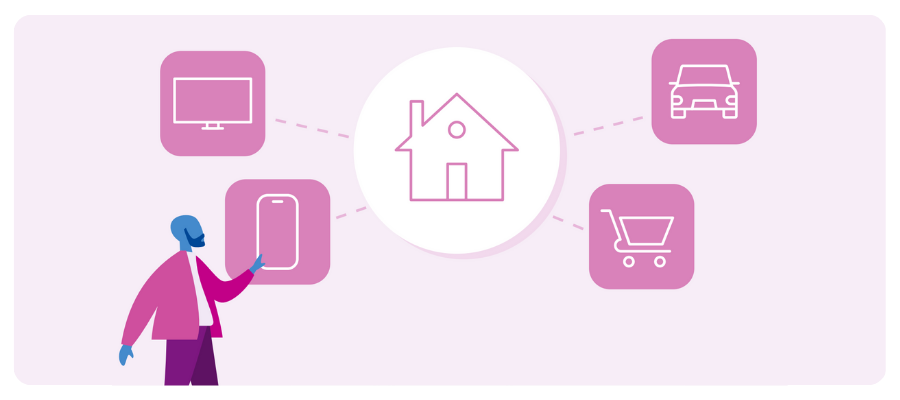
An icon of a house in the center with icons around it that represent a TV, mobile phone, shopping cart, and car with a man on the bottom left-hand side.

Each environment contributes to its own set of visibility gaps, making identity less predictable and more uneven. The result is a patchwork of inconsistent identity signals rather than a single, predictable decline.

While you can’t control how platforms evolve, you can control how you respond to fragmentation. The future won’t be defined by the loss of any single identifier, but by your ability to unify, interpret, and activate the many signals that remain. Marketers who adopt a flexible, identity framework will be best positioned to create consistency in an otherwise fragmented landscape.

At Experian, we believe flexibility starts with intelligence. For decades, we’ve used AI and machine learning to help marketers understand people’s behavior more clearly, respect their privacy, and deliver messages that drive business outcomes. Our technology brings identity, insight, and intelligence together, so even as the number of signals grows and becomes more varied across environments, marketers can reach the right people with relevance, respect, and simplicity. This intelligence acts as the connective tissue across fragmented ecosystems, ensuring marketers can recognize and reach audiences consistently wherever they appear.

What forces are driving fragmentation in identity and signals?

Changes to traditional IDs

Since Apple introduced App Tracking Transparency (ATT), access to the Identifier for Advertisers (IDFA) has become inconsistent across apps and devices. Google’s evolving Android privacy roadmap adds another layer of variability, fragmenting mobile addressability. Safari and Firefox have long restricted third-party cookies, while Chrome continues to support them for now. This creates different signal availability across browsers, contributing to an uneven and increasingly fragmented identity landscape on the open web.

Shifts in signals

IPv4 to IPv6 migration introduces mismatched identity structures that complicate continuity across environments.

Platform-driven fragmentation

Closed ecosystems and uneven adoption of evolving RTB standards (like OpenRTB 2.6 updates designed to support new identifiers and consent signals) create differences in which identifiers and consent signals are shared in the bidstream. At the same time, the rise of alternative or “universal” IDs—often developed by individual platforms, publishers, or technology companies—means that multiple ID types can appear within the same auction, each with its own structure, rules, and level of support. These differences reduce interoperability across platforms and contribute to a more fragmented activation landscape.

Each change creates an identity silo. Together, they form an ecosystem defined by fragmentation rather than absence. Without an identity framework, these environments operate as disconnected identity islands.

A multi-ID world requires a unified identity framework

Alternative IDs play an important role, but they also expand the number of signals marketers must reconcile. Without a consistent identity layer, more IDs often mean more complexity—not more clarity. Common alternative IDs in use today:

  • UID2: The Trade Desk’s Unified I.D. 2.0, an iteration of their original Unified ID 1.0, which was still reliant on third-party cookies, creates persistent IDs with user-provided email addresses and phone numbers.
  • ID5: This independent identity provider builds an identity infrastructure that powers addressable advertising across channels. It can create an ID based on both deterministic and probabilistic data.
  • Hadron ID: Hadron ID is a unique, interoperable identity system (including first-party, audience-based, contextual, deterministic, and probabilistic) developed by Audigent, now part of Experian, to drive revenue for publishers by making their audience data and inventory actionable for media buyers.

Industry reports suggest roughly one-third to two-fifths of open-auction traffic carries alternative IDs, sometimes multiple per request. Among Experian clients, adoption of alternative IDs rose 50% year over year, with a 30% increase in IDs resolved to individuals via our Digital Graph.

Identity isn’t disappearing; it’s multiplying. A modern identity framework resolves these identifiers into a single, privacy-safe consumer view.

Why CTV makes an identity framework essential

Beyond alternative IDs, device-level identifiers also play a major role in today’s ecosystem and add to the fragmentation marketers must navigate. Connected TV (CTV) environments introduce additional fragmentation.

CTV IDs

A CTV ID is an identifier used to deliver, target, and measure ads on CTV devices, including smart TVs, streaming devices, gaming consoles, and more. Unlike MAIDs, which act as universal device identifiers across apps, CTV environments often generate multiple, platform-specific IDs for the same physical device. Different operating systems, publishers, or streaming platforms may each assign their own identifier—such as Roku ID for Advertisers, Amazon Fire Advertising ID, Samsung TIFA, or Apple IDFA for CTV. As a result, a single household or TV can appear under several distinct IDs, making cross-app or cross-platform recognition more complex and further reinforcing the need for a unified identity framework.

Experian’s identity framework is powered by predictive and generative intelligence that makes resolution faster and more human-centered. Our AI models fill gaps where data signals are missing, infer behaviors responsibly, and continuously optimize for accuracy, so marketers can personalize ads responsibly, even in a fragmented ecosystem. More importantly, our framework normalizes signals across disconnected environments, creating a consistent identity spine that follows the consumer through their fragmented digital journey.

An identity framework connects online and offline signals

Fragmentation extends beyond digital environments. Marketers manage offline data from in-store transactions, loyalty programs, household identifiers, and phone numbers that rarely align cleanly with digital signals.
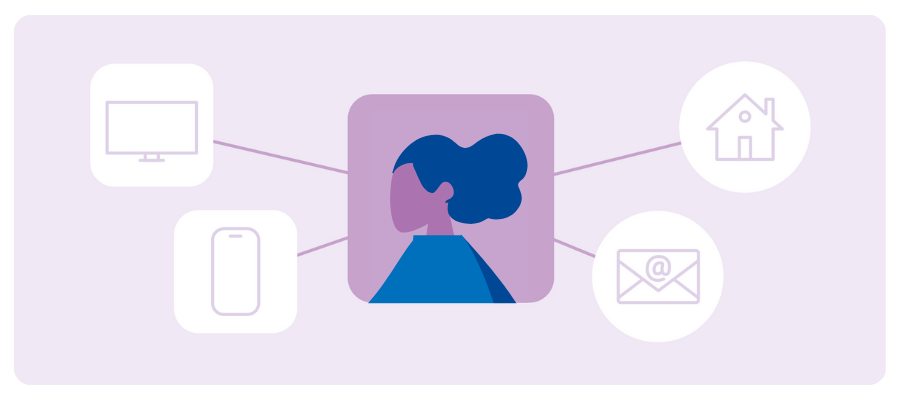
An icon of a woman in the center with icons around her for TV, mobile phone, email, and home.

As consumers move between online and offline touch points, an identity framework connects these signals into a coherent view of the individual. This foundation allows marketers to recognize the same consumer across environments that expose different identifiers.

Four keys to future-proofing your media with an identity framework

1. Know your customer: Unify and enrich your first-party data

First-party data is a marketer’s most durable asset, but it’s often scattered and incomplete.

  • Unify it: Bring CRM records, site interactions, and loyalty data into a single platform to build a holistic customer view. Use Offline Identity Resolution to resolve your first-party offline personally identifiable information (PII) back to a consolidated consumer profile, removing duplication of users in your data set.
  • Enrich it: Append Experian Marketing Attributes to uncover demographics, lifestyle markers, and purchase behaviors you can’t see on your own, and use Offline Identity Append to fill in missing offline data points (such as name, address, phone, etc.) to create a more complete and actionable customer profile.
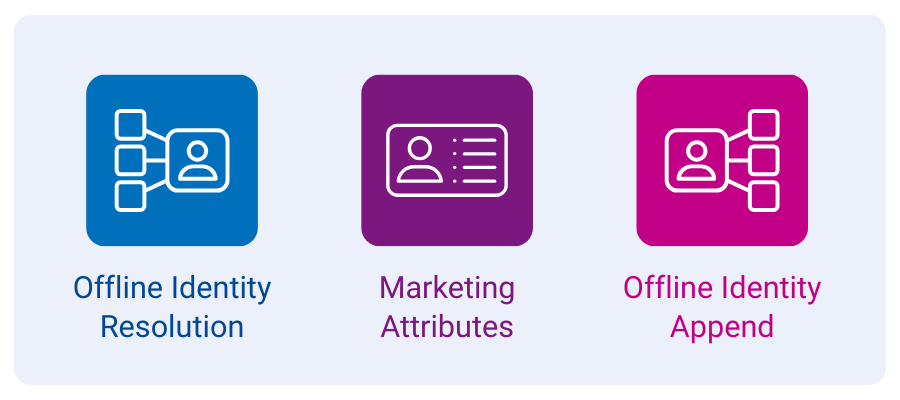
Experian's Offline Identity Resolution, Marketing Attributes, and Offline Identity Append

This gives you richer profiles that drive more personalized targeting and messaging. Fragmented ecosystems make unified first-party data even more essential. A connected view allows marketers to anchor identity against a stable, proprietary foundation. As identifiers vary across environments, marketers need flexible, privacy-first ways to understand where their audiences are and how to reach them.

2. Find your customer: Expand how you discover and reach audiences in a fragmented landscape

As identifiers vary across environments, marketers need flexible, privacy-first ways to understand where their audiences are and how to reach them.

  • Contextual signals: Experian’s Contextually-Indexed Audiences map content to consumer insights, so you can target intent-rich environments.
  • Geographic insights: Our Geo-Indexed Audiences help you find regions that over-index for specific traits and activate them across your preferred platforms.
  • Syndicated and Partner Audiences: Choose from 3,500+ prebuilt segments or 30+ partner data sources spanning health, retail, travel, and more.
  • Curation: As a full-service curation partner, we enable private marketplace (PMP) deals that are privacy-safe, identity-agnostic, and performance-optimized.
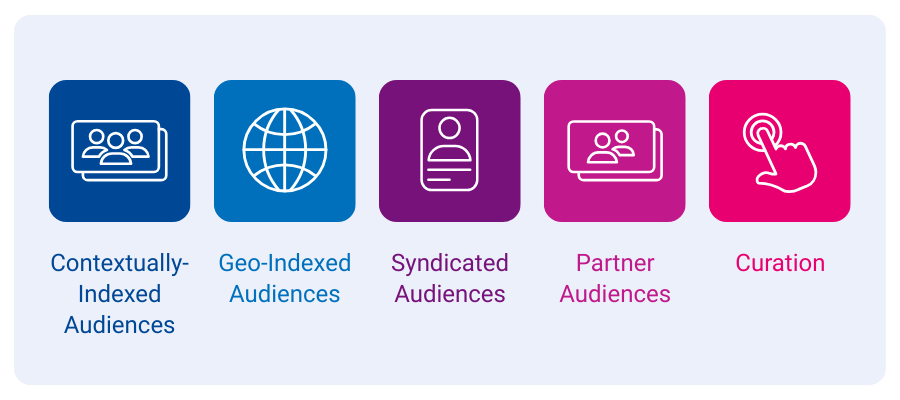
Icons that represent Experian's Contextually-Indexed Audiences, Geo-Indexed Audiences, Syndicated Audiences, Partner Audiences, and Curation.

Together, these approaches help you confidently reach your audiences – using multiple types of signals that complement your identity strategy and create a clearer picture across fragmented environments.

3. Reach your customer: Maximize scale through interoperability

As signals and identifiers proliferate across environments, interoperability is essential to maintain consistent reach. Experian’s Offline and Digital Graphs unify disparate signals (MAIDs, CTV IDs, alternative IDs, IP, and more) so marketers can recognize and engage audiences reliably across channels, devices, and platforms.
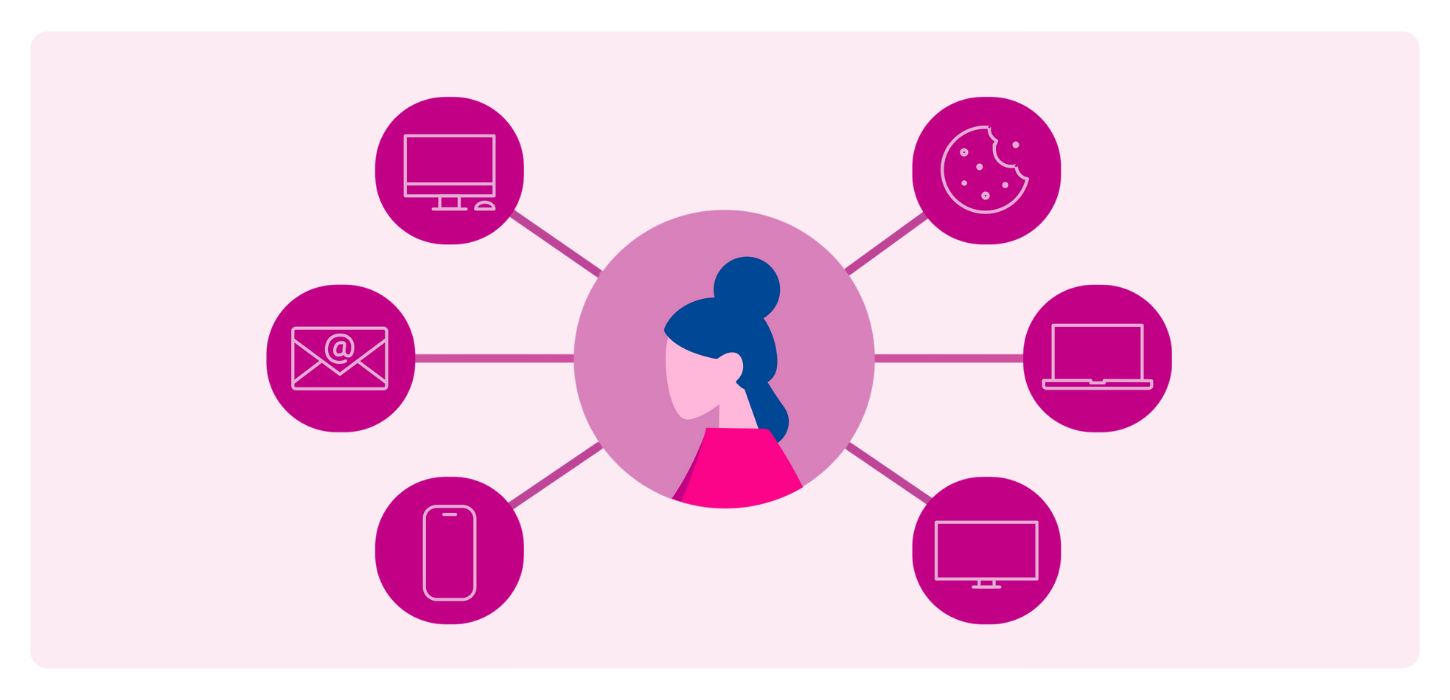
An icon of a woman in a center circle with different cirlces around her with icons for a desktop computer, email, mobile phone, TV, laptop, and cookie.

Interoperability matters because it turns a collection of disconnected identifiers into a coherent identity framework that can actually be activated. The following capabilities demonstrate how that comes to life.

  • Unified identity: Create a consistent view of your audience, even when different environments expose different identifiers. Experian’s identity framework connects these signals into a single, actionable identity spine.
  • Expanded reach: OpenX enriched its supply-side identity graph with Experian’s audiences, making our data available directly across OpenX supply and formats. By matching more of the starting audience and identifying more users in the bidstream, marketers see higher match and activation rates, extending reach in hard-to-address environments like Safari and mobile web.

Measure success: Optimize based on outcomes

If you can’t measure your marketing, you can’t improve it. Experian Outcomes, powered by our holistic understanding of the user across online and offline touch points, closes the loop by connecting media exposures to real-world actions (store visits, purchases, or site conversions).
An icon of a person with graphs and charts on their left and right sides.

With these insights, you can:

  • Prove ROI across digital and TV
  • Attribute success to the right channels and tactics
  • Continuously refine targeting, creative, and spend allocation

Outcome-based measurement makes your strategy adaptive, so dollars flow to what drives results.

As signals multiply across environments, connecting exposures to outcomes requires a unified identity foundation. Experian closes the loop by unifying exposures across disconnected touch points, enabling holistic attribution and optimization. Our AI-powered simplicity drives continuous improvement. From predictive modeling to agentic workflows that automate optimization, we’re investing in generative AI to help marketers spend less time on manual setup and more time on strategy and outcomes.

The Experian identity framework advantage

Experian connects fragmented signals into a single, actionable identity framework built for long-term resilience.

What our identity framework delivers

  • Interoperability: We support all major identifiers, including alternative IDs, IP address (v4 and v6), contextual signals, and both first- and third-party data.
  • Flexibility: Whether you’re activating syndicated audiences, tapping into partner audiences from 30+ data providers, or curating custom segments through Audigent, our solutions meet you where you are.
  • Scale: With four billion IDs resolved in our Digital Graph and 280 million telephones in our Offline Graph, we deliver unmatched reach across digital and offline environments.
  • AI that makes marketing more human: We bring together identity, insight, and automation through responsible AI, helping marketers see audiences clearly, act with intelligence, and optimize with respect for privacy.

Our approach is delivering results across a range of programmatic players. These outcomes demonstrate how a unified identity framework delivers performance in environments where signals, identifiers, and devices operate in silos.

Proven results powered by Experian’s identity framework

  • Sonobi increased programmatic addressability across the mobile web by 25% and delivered a 20% lift in impression value through our identity graph, driving stronger campaign connections and greater publisher returns.
  • One DSP used our Digital Graph to match more MAIDs, CTV IDs, and IP addresses to online conversions, enabling increased accuracy of their attribution and measurement. They achieved an 84% synced ID rate and a 9% increase in match rate.
  • For Cuebiq, we significantly increased match rates and resolved data from cookieless environments, such as Safari. By combining separate data streams and resolving 85% of total events to a household, Cuebiq expanded on the household IDs to identify MAIDs that are observed in-store, enabling accurate cross-channel measurement.
  • Our Digital Graph allowed MiQ and their clients to expand the reach of their seed audiences across devices by 51% and cookieless IDs by 64%. As a result, MiQ can provide marketers with future-proofed connected planning, advanced targeting, and precise measurement.

We’re your partner in building identity framework that lasts: resilient to change, adaptive to new signals, and focused on outcomes.

What comes next for signals and identity?

The future isn’t defined by any single identifier. It’s defined by the ability to unify and activate across a fragmented identity ecosystem. The winners will be those who adopt interoperable, outcome-driven identity frameworks today.

Those strategies will increasingly be powered by responsible AI, systems that simplify workflows, predict opportunity, and optimize in real time while keeping people at the center. At Experian, we see AI not as automation for its own sake, but as a way to make marketing more human, relevant, and respectful.

Your playbook for navigating fragmentation

Experian connects the fragmented identity ecosystem, unifying alternative IDs, IP signals, contextual data, and first- and third-party assets into a consistent, actionable identity foundation. With proven lift across partners like Sonobi and new offerings like Contextually-Indexed Audiences, we help you build campaigns that perform in a fragmented landscape.

Download our 2026 Digital trends and predictions report to explore how identity, interoperability, and measurement will define the future of advertising.


About the author

Henry Schenker, Group Product Manager, Experian

Henry Schenker

Group Product Manager, Experian

Henry has nearly 15 years of experience in Digital Advertising, Social Media Marketing, Data Licensing & Analytics, Front-End Engineering, Technical Architecture & Integrations, Profit & Loss Management, and Enterprise-Level Contract Negotiation across the U.S., EMEA, and Asia Pacific regions.

Prior to re-joining Experian, Henry held critical go-to-market and product roles at noted industry-disruptors Media.Monks and Attain. From 2018 – 2020, he served as the Vice President, APAC of Innovid (now publicly traded, NYSE:CTV), leading the company’s expansion into Japan, Singapore, and Australia. The preceding 4 years with Tapad (acquired by Experian), allowed Henry to become a seasoned Sales Engineer, grow and lead a global Technical Integrations team, and relocate to Singapore, leading sales and operations in the APAC region. Before beginning his career and learning front-end engineering on-the-job at Wyng (formerly Offerpop), Henry received a dual-major (BA/BS) in Sociology and Economics & Finance from Bard College in New York.


FAQs

Why is signal and identity fragmentation increasing across digital and offline channels?

Signal and identity fragmentation is increasing across digital and offline channels because consumers now engage across more devices, platforms, and environments. Each environment introduces its own identifiers and privacy rules. This growth creates more signals overall, which increases the need for unification rather than reliance on a single ID.

How should marketers think about alternative IDs in a multi-signal ecosystem?

Alternative IDs add reach and coverage when they connect through a common identity framework. They work best alongside first-party data, device identifiers, and contextual signals. Resolution turns multiple IDs into one consistent view of the consumer.

What role does unified identity play in CTV and cross-device media?

CTV environments often assign multiple platform-specific identifiers to the same household or device. A unified identity layer links those identifiers together. This approach supports consistent audience recognition across streaming apps, devices, and digital channels.

How does unified identity support accurate measurement and attribution?

Unified identity connects media exposure to outcomes across digital, TV, and offline touch points. It enables marketers to see how different channels contribute to real actions like visits or purchases. Measurement improves when identity remains consistent across the full journey.

Why does an identity strategy matter beyond digital advertising?

Identity extends into offline signals such as transactions, loyalty activity, and household data. A unified foundation aligns online and offline interactions into one coherent profile. This connection supports planning, activation, and measurement across the entire customer experience.


Latest posts

Loading…
Solving the multiscreen challenge: How Experian helps Optimum Media connect campaigns across channels

Marketers are searching for better ways to connect with their audiences across screens and prove results. Optimum Media is at the forefront of this development, helping brands plan, activate, and measure campaigns across linear TV, addressable TV, connected TV (CTV), digital, and social platforms. To support this approach, Optimum Media partners with Experian, combining their subscriber data with Experian’s trusted audience and identity solutions. Together, we help brands not only find the right consumers but also understand their behaviors and measure real outcomes. Here’s how Optimum Media and Experian are working together. Build a complete customer view with rich data from Experian Optimum Media starts with strong first-party data, including viewership and exposure information from millions of households. However, reaching a deeper understanding of these audiences requires more than what subscriber records alone can offer. Through Experian’s Marketing Attributes, Optimum Media gains access to thousands of demographic and behavioral attributes to its data sets. These attributes—such as income ranges, lifestyle interests, and retail purchasing behaviors—help advertisers build a more complete view of the consumer. "We work with trusted partners like Experian to deliver the additional audience insights—like demographics and lifestyle—that are critical for our clients' success."Natalia Irmin, Sr. Director, Strategic Partnerships, Optimum Media Combining Experian’s Marketing Attributes with Optimum Media’s subscriber footprint helps brands segment audiences more precisely, develop refined media plans, and tailor messaging based on the real behaviors and interests of consumers. Move beyond basic targeting with Audience Engine To support more personalized and scalable targeting, Optimum Media uses Audience Engine—Experian’s self-service platform for audience management and activation. Through Audience Engine, Optimum Media can: Access Experian’s syndicated audiences Not just what’s available directly on their platform. Build custom segments Using Experian’s demographic and behavioral insights. Tap into our data marketplace To explore additional segments from Experian and our Partner Audiences through trusted third-party providers. These tools give Optimum Media and its clients the ability to move beyond basic targeting. Whether a brand wants to reach families preparing for back-to-school shopping, in-market car buyers, or upscale consumers planning home renovations, Audience Engine makes it possible to identify and activate those audiences with greater accuracy—based on real data, not guesswork. Extend campaign reach with Experian’s Digital Graph While Optimum Media has a substantial owned footprint, they often work with advertisers who need to extend reach beyond traditional subscriber bases. To support this, they rely on Experian’s Digital Graph. Our Digital Graph connects mobile ad IDs (MAIDs), IP addresses, CTV IDs, and hashed emails into unified household and individual profiles. This enables Optimum Media to identify and reach audiences outside of their network with the same level of accuracy as inside it. For even deeper audience insights, Digital Graph can be bundled with Marketing Attributes. This combination helps advertisers go beyond basic targeting to include real-world behaviors like shopping habits, travel preferences, and lifestyle characteristics. The result: campaigns that do more than deliver impressions—they connect with the right households across any channel. Turn viewership into measurable business outcomes One of the biggest challenges in multiscreen advertising is connecting exposure to real business results. With Experian’s solutions, Optimum Media can: Plan based on audience behaviors across screens, not just age and gender demographics. Activate household-level audiences across linear, CTV, digital, and social. Measure campaign performance using unduplicated reach, frequency, and attribution across devices. By offering advertisers access to a more complete consumer profile and maintaining consistent measurement across channels, Optimum Media and Experian help clients make better decisions about where to spend and how to adjust strategies over time. Why the Optimum Media and Experian partnership delivers Deeper audience understanding: By combining first-party viewership with Experian’s demographic and behavioral data, advertisers gain a fuller picture of who they are reaching. Seamless cross-platform execution: Identity solutions like Digital Graph allow brands to reach audiences across multiple devices and channels without losing precision. "Optimum Media has been instrumental in helping Experian strengthen the precision, quality, and real-world applications of our data. Their ongoing feedback is invaluable in making sure our solutions continue to meet client needs and perform at the highest level."Chris Feo, Chief Business Officer, Experian With a single, trusted partner offering both identity and audience solutions, Optimum Media avoids the complexity many advertisers still face when piecing together different data sets and vendors. “Having Experian’s identity and audience solutions under one roof makes it easier for us to plan, reach, and measure across every channel. It’s a complete solution that simplifies advertising and improves performance.”Natalia Irmin, Sr. Director, Strategic Partnerships, Optimum Media Start building better campaigns with Experian Ready to improve your audience targeting and measurement strategies like Optimum Media? Connect with our team today to learn how Marketing Attributes, Audience Engine, Digital Graph, and our other solutions can help you build stronger, more measurable advertising campaigns. Connect with us About Optimum Media Optimum Media is a multiscreen advertising business that partners with small and medium businesses, as well as national, political, media and entertainment, and agency clients across the United States. They work with advertisers to develop custom multiscreen advertising solutions powered by proprietary technology and a massive aggregated database of audience data points and TV viewership data. Latest posts

Jul 24,2025 by Experian Marketing Services

Identity is the bridge between AI and outcomes

Originally appeared in The Current Forget the cookie delay — AI is already rewriting the rules of advertising. While the industry was busy debating yet another postponement of Chrome’s third-party cookie phaseout, AI quietly became the most disruptive force in marketing. But here’s the twist: AI doesn’t work without identity. If marketers want results — real outcomes, not just impressions — they need to prioritize the data that makes AI go. First-party data strategies are now mainstream. Interoperable identity solutions like Unified I.D. 2.0 (UID2) and ID5 are gaining adoption across the open web. Connected TV (CTV) has grown into a performance-focused, cookieless channel. Contextual and geo-based targeting have become smarter and more scalable. Identity graphs are helping marketers stitch together signals across devices, platforms, and channels. The foundation for a better ecosystem isn’t being built — it’s already here. The AI hype is over — and the stakes are higher It’s no longer buzz. AI is here, and it’s already reshaping how we plan, activate, and measure advertising. We’re seeing the rise of agentic AI: systems that don’t just surface insights but act on them. These AI agents are identifying patterns, building audiences, optimizing media buys, and analyzing performance. AI is helping marketers stop guessing and start improving. But there’s a catch — one we can’t afford to overlook. AI is only as good as the data it works with. “Garbage in, garbage out.” as the saying goes. And in advertising, that means if you don’t know who you’re reaching, even the smartest AI won’t drive results. To unlock AI’s full potential, marketers need a strong, privacy-safe identity foundation. Identity is the fuel that makes AI work AI can personalize creative, optimize in-flight campaigns, and even recommend which channels to prioritize — but it can’t do any of that well without context. And context starts with identity. Identity connects signals from different devices, logins, channels, and interactions to real people. It tells your AI models who you’re talking to — not just what they clicked. That kind of clarity gives AI the power to make smarter predictions, uncover insights, and deliver relevance at scale. Without identity, AI is guessing. With identity, it’s delivering. Identity is the foundation of the outcomes era We’re living in a performance-driven age. Impressions and clicks are no longer enough. Marketers today are being judged by real outcomes: incremental sales, customer acquisition, revenue lift, and long-term value. To measure those outcomes, you need to know who you reached — and whether they took action. Identity makes that connection possible. It links ad exposure to real-world results. It enables accurate attribution across channels. It powers personalization at every stage of the journey, making every impression more valuable. This is the outcomes era, and identity is what makes it measurable. Commerce media and CTV show what’s possible Two of the fastest-growing channels — commerce media and CTV — are great examples of identity in action. Commerce media In commerce media, identity helps retailers and marketplaces organize their customer data, enrich it with external insights, and activate it across their own sites and off-site channels. It makes accurate targeting possible and gives marketers a clear ROI they can prove. CTV In CTV, identity helps solve a fundamental challenge: turning anonymous viewers into addressable audiences. On free ad-supported streaming platforms (FAST), identity solutions resolve viewership to the household level. On logged-in platforms, identity enriches profiles with behavioral and purchase data, boosting demand, improving CPMs, and growing revenue. At Experian, we’ve invested in this future. Our recent acquisition of Audigent brings together data, identity, and activation — under one roof — built to support both AI-driven planning and outcome-based performance. How marketers can win now To stay ahead in a world defined by AI and outcomes, marketers need to: Invest in omnichannel identity To unify signals across platforms and environments. Make identity actionable in real time To inform both targeting and measurement. Utilize first-party data, clean rooms, and privacy-safe partnerships To future-proof performance. Tailor identity strategies To fit their media mix — because what works in CTV may not apply to in-app or web. It’s not about rebuilding everything. It’s about building on what’s already working. Final thought: Identity is the bridge AI is raising the bar, and outcomes are the new standard. But neither works without identity. The marketers who win won’t treat identity as a compliance checkbox — they’ll treat it as their competitive edge. Get started with us today Latest posts

Jul 22,2025 by Christopher Feo, Chief Business Officer

Using consumer data to win big on Black Friday and Cyber Monday 2025

As marketers gear up for the 2025 holiday season, economic turbulence, tariffs, and shifting digital habits are changing how and where consumers shop. Black Friday and Cyber Monday are still set to be the crown jewels of retail, but winning this year means leaning into data, omnichannel activation, and tools that help you do more with less as you start your Black Friday planning.  Let’s explore this year’s Black Friday trends in relation to last year’s and how to make the most of every opportunity in the 2025 holiday season. Download our 2025 holiday shopping report Spending trends we saw in 2024 After years of economic uncertainty, Black Friday 2024 marked a return to retail “normalcy” with record-setting online and in-store shopping that reflected growing optimism and smarter behaviors: Online Black Friday sales increased by 10.2% from 2023, largely due to better-timed deals and earlier shopping. Mobile shopping made up 69% of global purchases. In-store traffic rebounded, surpassing online during Cyber Week for the first time in years. Buy now, pay later (BNPL) added $686 million to online sales — an 8.8% YoY increase — as consumers spread out their holiday spending. Retailers using AI tools (like chatbots and shopping assistants) saw up to 15% more conversions. Ultimately, last year’s Black Friday e-commerce trends showed that shoppers prioritized flexible payments, value, and easy, personalized buying experiences. Key products and categories in 2024 After years of favoring lower-cost essentials, consumers returned to higher-ticket purchases during Cyber Week. The share of expensive goods sold online rose over 15% compared to pre-season figures, with AI-powered product recommendations leading consumers to top-selling products like: AirPods Pro Ninja Creami Our Place Always Pan Vitamix blenders Oura Ring The highest-performing gift categories included electronics, apparel, furniture and bedding, groceries, and cosmetics. 2024 Black Friday trends we expect to continue in 2025 As we reflect on a record-breaking 2024 holiday season, we predict many of the key Cyber Monday trends and Black Friday strategies for retailers in 2024 will carry over and intensify in 2025: Mobile will remain the primary shopping channel. The shift to early shopping will persist. AI-driven efficiencies will play an increasing role. Retailers that focus on the customer experience will capture the most wallet share. As a marketer, you can use these insights to plan your Black Friday e-commerce strategy and meet audiences where and when they scroll and shop. Projected growth YoY While 2025 holiday retail shopping may not match the explosive growth of 2023 to 2024, consumers are still expected to show up in force for Black Friday in 2025. The National Retail Federation projects that overall U.S. holiday sales will rise between 2.7% and 3.7% compared to last year. Experian’s 2025 Q1 consumer data paints a more nuanced picture: Mass retail transactions remain above 2024 levels, but YoY growth is slowing, from +8% in January to +4% in May. Department stores, which grew 10% YoY in January, have since declined to -3% by May. Apparel saw a similar trajectory, slipping from +7% growth in Q1 to slightly negative growth leading up to the summer months. This slowdown suggests early signs of consumer fatigue, especially in discretionary categories, as inflation and tariffs continue to erode the spending power of price-sensitive consumers and small brands that rely heavily on imports. Emerging trends and behaviors to expect in 2025 With inflation still weighing on household budgets and new tariffs potentially reducing consumer spending power by up to $78 billion, brands and shoppers are entering the holiday season with uncertainty. Roughly 91% of consumers may adjust their buying habits in response to tariff-driven price increases and inflation. Consumers are still motivated by value, but they’ll expect more for their money and may start deal-hunting even earlier this season. You’ll need to be agile with your messaging, inventory, and budget allocation, as shoppers will still spend when the experience is seamless, personalized, and smart. Let’s explore the key trends shaping the 2025 holiday season and how you can build them into your omnichannel marketing plan before the rush hits. Omnichannel campaigns In 2025, holiday shoppers will be more intentional than impulsive, which means they may zigzag between channels — browsing products on TikTok, watching TV ads, researching on Google, and checking out in-store or online before purchasing. They’ll want consistent, personalized experiences no matter where they engage.  This means you can’t rely on a single sales touchpoint anymore and must deliver a seamless experience wherever your audience spends time. Forrester shows 21% of global B2C leaders are already prioritizing omnichannel, which makes it a competitive necessity. Fortunately, these efforts pay off. Omnichannel shoppers spend 1.5x more per month than those who shop on a single channel. How Experian helps Experian simplifies omnichannel marketing. Our identity graph connects hashed emails, mobile ad IDs (MAIDs), connected TV (CTV) IDs, and more so you can define your audience once and reach them consistently across every major channel.  With unified data, identity, and activation, we help you cut through platform silos and deliver coordinated, cross-device campaigns that actually feel connected. Mobile first In 2024, over 70% of orders and $195 billion in sales happened on mobile devices, according to Salesforce. As more consumers browse holiday deals from the couch, car, or checkout line, mobile-first shopping is among the top Cyber Monday retail trends and the main channel for on-the-go purchases. For marketers, this means your mobile experience can make or break your Black Friday results. Responsive design, fast load times, and smooth checkout flows are the new expectations. Brands that invest in sleek mobile sites, intuitive apps, and frictionless buy online, pick up in-store (BOPIS) options will better meet and convert customers where they are at key moments. How Experian helps With Experian, you can reach mobile-first shoppers precisely at scale. Our identity graph connects MAIDs to individuals, so you can activate campaigns across mobile apps, SMS, and social with confidence. Define your audience once and deliver consistently personalized offers wherever they scroll, search, or shop. CTV On Black Friday 2025, shoppers won’t just be scrolling — they’ll be streaming, too. CTV continues to surge as a key channel for holiday shoppers, with viewership far outpacing ad spend. In 2024, CTV drove 31% of digital audience activation revenue. With nearly half of U.S. viewers expected to tune into free ad-supported TV (FAST) in 2025, CTV is becoming a core part of the Black Friday media mix. Still, many marketers underestimate the channel, assuming it’s strictly an upper-funnel awareness channel rather than a direct driver of conversions. In reality, CTV can influence high-intent holiday shoppers closer to purchase than many assume. With more consumers engaging with FAST during the holidays, CTV offers scalable, measurable reach and can fuel conversions across the entire funnel. And when paired with identity resolution and cross-device targeting, it becomes a powerful full-funnel tool. How Experian helps Experian gives marketers the household-level insights and activation capabilities to reach the right shoppers at the right frequency across platforms — a must for a high-volume weekend like Black Friday. Our identity graph connects devices within a household to manage frequency, unify messaging, and eliminate waste.  Plus, with support for Universal IDs like Unified I.D. 2.0 (UID2), you can activate audiences across CTV environments — including FAST — using login-based, privacy-compliant signals for a campaign that connects, converts, and performs on the biggest shopping weekend of the year. Signal loss Although Google has reversed its plan to phase out third-party cookies, 40% of browser traffic no longer supports them. You now need various identifiers across devices and platforms to get a complete customer view, especially during Black Friday when reach and precision are key. That’s why marketers are shifting to alternative IDs like UID2, ID5, and Hadron ID to maintain reach. In 2024, we saw a 50% increase in Experian clients using alternative IDs and a 30% jump in the number resolved to individuals in our Digital Graph. These IDs are unlocking up to 60% incremental reach in campaigns compared to cookies. Preparing a multi-ID approach and incorporating privacy-first strategies, such as contextual targeting, can give you a competitive edge this holiday season. How Experian helps Experian’s identity solutions connect all your digital and offline identifiers into a single, privacy-forward customer profile. This lets you recognize and reach your audiences no matter what device or platform they’re using. Plus, with Contextually-Indexed Audiences, you can activate high-performing segments instantly in major demand-side platforms (DSPs) without cookies to maintain and improve addressability during the holidays. RMNs Retail media networks (RMNs) are set to capture 20% of digital ad spend in 2025. In particular, off-site retail media is expected to surge 42.1% this year, driving more Black Friday campaigns into channels like CTV, programmatic, and social. This shift reflects a growing demand for full-funnel strategies, broader reach, and cross-channel measurement. RMNs that extend their first-party data beyond owned platforms will be best positioned to deliver results during peak shopping periods like Cyber Week. However, off-site success hinges on clean, connected data. Many RMNs still face fragmented views of their customers, making it harder to scale audiences and measure performance. How Experian helps Experian helps RMNs scale off-site by resolving fragmented identities, enriching first-party data, and enabling seamless activation across channels. Our identity graph connects key digital identifiers to unify customer profiles, while our audience insights add depth with demographic, behavioral, and purchase data. Curation Curation is quickly becoming a go-to Black Friday marketing strategy, helping advertisers connect with high-value audiences by blending inventory with audience and contextual data. In fact, by 2026, private marketplace ad spending is projected to grow by $31 billion. Instead of choosing between wide-open auctions or direct publisher deals, curation offers a powerful middle ground through curated private marketplaces (PMPs) built on first-party publisher data, contextual signals, and alternative IDs. How Experian helps Now unified with Audigent, Experian is setting a new standard for curated media buying. Our Curated Deals combine Experian’s powerful identity and data capabilities with Audigent’s flexible activation and audience customization. You can activate high-performing audiences across DSPs or directly through Audigent’s PMPs to maximize precision, privacy, and scale ahead of the biggest shopping week of the year. AI-powered shopping experiences AI is becoming a co-pilot for holiday shoppers and reshaping the customer journey. From researching gift ideas and comparing prices to relying on personalized product recommendations and AI chatbots for faster service, consumers are using AI to shop smarter. Salesforce reports that AI influenced 19% of holiday purchases in 2024 — a 6% increase from the previous year. In an Experian survey, shoppers shared they’re also using AI to help with BOPIS logistics and even choosing which BNPL option to use at checkout. Influencer content powered by AI and social algorithms is also guiding purchases in real time. This holiday season, brands that weave AI into their digital storefronts, payment options, and social strategies will drive conversion. How Experian helps Experian uses AI and machine learning to help marketers deliver faster, smarter Black Friday campaigns. Our Digital Graph improves targeting with advanced household connections, while machine learning models fill in data gaps and identify high-intent shoppers. We also offer AI-powered audience recommendations and real-time contextual signals, enabling you to quickly build and activate the right segments at scale. How to prepare for Black Friday 2025 Now that we’ve covered Black Friday trends for this year, it’s time to talk about how you can build them into a data-powered marketing strategy. Here’s where we suggest you focus your Black Friday planning for Cyber Week 2025. Understand and segment your audience Winning Black Friday 2025 starts with knowing your audience and how they shop so you can reach them at optimal times with messaging that resonates. Whether you're targeting early-bird deal hunters or last-minute gifters, audience precision is the foundation for success this holiday season — and Experian can help. Purchase intent Drive performance by identifying consumers actively in the market for holiday purchases. With Experian’s holiday shopping audiences (available across major DSPs and platforms like Audigent, The Trade Desk, and DirectTV), you can reach: Last-Minute Shoppers One-Stop Holiday Shoppers Post-Holiday Shoppers Heavy Gift Givers These intent-rich segments can help you capture demand at every phase of the season. Spending behavior While some consumers may splurge this year, others are tightening their belts due to economic turbulence. Experian’s pre-built holiday audiences help you target accordingly, with segments like: Holiday High Spenders and Moderate Spenders Big Box/Club Stores Discount Holiday Shoppers, Black Friday, and Cyber Monday Shoppers These segments can help you optimize campaign spend based on wallet size. Channel preferences Knowing where your audience shops is just as important as how much they spend or what they buy. Experian offers audiences like: eCommerce Diehards Brick-and-Mortar Diehards Impulse Buyers BOPIS Shoppers Tailor your media mix and creative strategy to align with their channel behavior, whether they’re browsing in-store, online, or on social. Demographic, lifestyle, and behavioral data Experian helps you tap into rich demographic and lifestyle data to better understand and engage high-value segments, whether that’s suburban deal hunters, Gen Z beauty buyers, or luxury holiday splurgers. And by layering in Experian Marketing Attributes — 5,000+ attributes that include financial behaviors, interests, shopping patterns, car ownership, media consumption, and more — you can gain a clearer picture of age, gender, purchase behaviors, and content habits for refined holiday targeting. With our data marketplace, audiences are more accessible and actionable than ever. We offer: Diverse, high-fidelity partner audiences Easily activate audiences from 31+ premium data providers, including: Attain: Real-time, permissioned transaction data from 8 million U.S. consumers Alliant: Predictive audiences built from billions of consumer transactions across key verticals Circana: Loyalty-based CPG and general merchandise audiences Dun & Bradstreet: Privacy-compliant B2B audiences based on firmographic and professional attributes Flexible activation across top platforms Our identity graph powers our data marketplace, enabling audiences to be easily activated and highly addressable across display, mobile, and CTV with 10+ activation platforms, including Madhive, Open AP, Optimum, and Yieldmo. Privacy-first audience planning All data in our marketplace meets strict privacy and compliance standards, helping brands scale campaigns confidently. Custom and pre-built audience options Mix and match from 2,400+ Experian Audiences and Partner Audiences to find the right shoppers and meet your campaign goals. Our data marketplace delivers the people you want to reach, where you need to reach them, with the insights to optimize in real time. Personalize promotions One-size-fits-all promotions won’t cut it in 2025. Consumers expect relevance at every touchpoint and ignore what feels generic or off-base. With the abundance of Black Friday offers, shoppers are filtering fast and prioritizing brands that understand their needs, preferences, and timing. Here’s how you can deliver on these demands: Deliver targeted product recommendations: Whether through chatbots or personalized emails, consumers want help quickly finding what they need. Brands that invest in smart recommendation engines position themselves to drive cart additions and increase average order value (AOV). Customize promo codes by segment: Everyone loves discounts, but not all shoppers should get the same one. Use customer segments like high-spenders, last-minute shoppers, or deal-hunters from Experian’s syndicated holiday audiences to offer custom promo codes, boost conversions, and avoid over-discounting with those who would buy regardless. Optimize the timing of offers: Timing is everything during Cyber Week when inboxes and feeds are flooded. Use our behavioral and lifestyle data to determine when your segments are most active and likely to buy, and schedule your best offers for maximum impact. Use Experian Activity Feed: Black Friday 2025 will span devices, stores, and channels. Activity Feed connects the dots between online ad exposures and offline sales, helping you measure the impact of your campaigns and identify what drives conversions. Case study: How Cuebiq increased match rates with Activity Feed Using Activity Feed, Cuebiq, resolved digital ad exposures to MAIDs so they could know the impact of their campaigns on in-store visits and purchases. Within three weeks, they resolved 85% of ad events to households across web, mobile, and CTV, giving their clients a clearer view of what drove store traffic and sales. “In just a few weeks, they were able to maximize the match rate across the fragmented digital inventory, solving a huge problem when it comes to cross-channel attribution.”Luca Bocchiardi, Director of Product, Cuebiq Experian can help you win big this holiday season Marketers are entering this season with more pressure, more complexity, and more opportunity than ever before. Whether you're grappling with signal loss, evolving your omnichannel mix, or launching your first curated PMP, Experian has the data, identity infrastructure, and activation tools to help you win. Download our 2025 Holiday spending trends and insights report, in collaboration with GroundTruth, to access our predictions for this year's holiday season. Download now Want help building your Black Friday marketing strategy? Let’s talk. Latest posts

Jul 15,2025 by Experian Marketing Services

Subscribe to our newsletter

Enter your name and email for the latest updates

This site is protected by reCAPTCHA and the Google Privacy Policy and Terms of Service apply.

About Experian Marketing Services

At Experian Marketing Services, we use data and insights to help brands have more meaningful interactions with people. As leaders in the evolution of the advertising landscape, Experian Marketing Services can help you identify your customers and the right potential customers, uncover the most appropriate communication channels, develop messages that resonate, and measure the effectiveness of marketing activities and campaigns.

Visit our website

Subscribe to our newsletter

Stay up to date on the latest industry news and receive expert tips from our marketing experts.
Subscribe now!