Loading...

How contextual advertising addresses signal loss

Published: February 28, 2023 by Experian Marketing Services

At A Glance

Experian and Yieldmo collaborate to help marketers navigate signal loss with privacy-safe contextual advertising. By combining Experian’s identity solutions with Yieldmo’s advanced targeting, this collaboration enables effective audience engagement in a world with fewer traditional signals.

Note: While third-party cookies are no longer being phased out, this webinar was recorded in 2023 when cookie deprecation was still a key industry focus. The strategies discussed reflect that time frame and remain relevant for addressing broader signal loss challenges.

With major browsers discontinuing support for third-party cookies, marketers must rethink how to identify and engage their audiences. Contextual advertising offers a privacy-safe solution by combining contextual signals with machine learning to deliver highly targeted campaigns. In a Q&A with our experts with eMarketer, Jason Andersen, Senior Director of Strategic Initiatives and Partner Solutions at Experian, and Alex Johnston, Principal Product Manager at Yieldmo, we discuss how contextual advertising addresses signal loss, improves addressability, and delivers better outcomes for marketers.

A thumbnail image taken from our webinar

The macro trends impacting marketers

How important is it for digital marketers to stay informed about the changes coming to third-party cookies, and what challenges do you see signal loss creating?

Jason (Experian): Third-party cookies have already been eliminated from Firefox, Safari, and other browsers, while Chrome has held out. It’s just a matter of time before Chrome eliminates them too. Being proactive now by predicting potential impacts will be essential for maintaining growth when the third-party cookie finally disappears.

An illustration of three people with charts in the background

Alex (Yieldmo): Third-party cookie loss is already a reality. As regulations like the General Data Protection Regulation (GDPR) and the California Consumer Privacy Act (CCPA) take effect, more than 50% of exchange traffic lacks associated identifiers. This means that marketers have to think differently about how they reach their audiences in an environment with fewer data points available for targeting purposes. It’s no longer something to consider at some point down the line – it’s here now! Also, as third-party cookies become more limited, reaching users online is becoming increasingly complex and competitive. Without access to as much data, the CPMs (cost per thousand impressions) that advertisers must pay are skyrocketing because everyone is trying to bid on those same valuable consumers. It’s essential for businesses desiring success in digital advertising now more than ever before.

Solving signal loss with contextual advertising

How does contextual advertising help marketers engage audiences with new strategies like machine learning and artificial intelligence (AI)?

Jason (Experian): Contextual advertising helps marketers engage audiences by combining advanced machine learning with privacy-safe strategies. We focus on using AI and machine learning to better understand behavior, respect privacy, and deliver insights. As third-party cookies go away, alternative identifiers are coming to market, like Unified I.D. 2.0 (UID2). These are going to be particularly important for marketers to be able to utilize them. As cookie syncing becomes outdated, marketers will have to look for alternative methods to reach their target audiences. It’s essential to look beyond cookie-reliant solutions and use other options available regarding advertising.
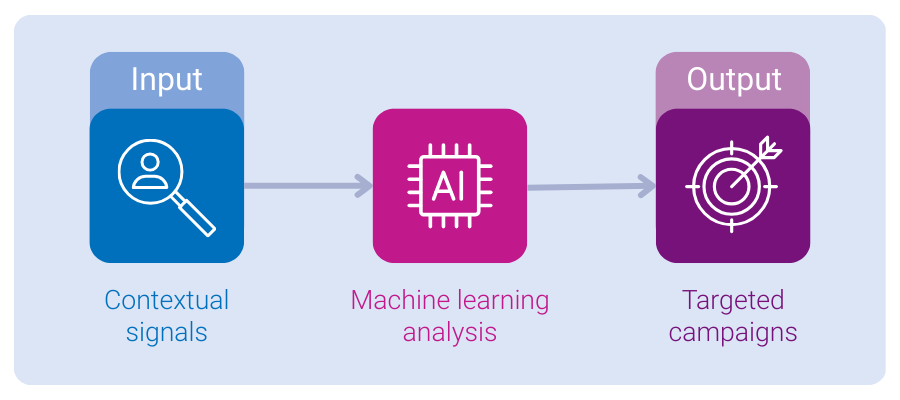
Input: Contextual signals, then AI machine learning analysis, then the output is targeted campaigns

Alex (Yieldmo): There’s been a renaissance in contextual advertising over the last couple of years. Three key drivers are shaping this shift:

  1. The loss of identity signals is forcing marketers to rethink how they reach audiences.
  2. Advances in machine learning allow us to analyze more granular contextual signals, identifying patterns that are most valuable to advertisers.
  3. Tailored models now use these signals to deliver more effective campaigns. This transformation is occurring because of our ability to capture and operate on richer, more detailed data.

Reach consumers with advanced addressability

How does advanced contextual advertising help marketers reach non-addressable audiences?

Jason (Experian): Advanced contextual advertising helps marketers reach non-addressable audiences by taking a set of known data (identity) and drawing inferences from it with all the other signals we see across the bidstream. It’s about using a small seed set of customers, those who have transacted with you before or match your target audience, and training contextual models to make the unknown known. Now we can go out and find users surfing on any of the other sites that traditionally don’t have that identifier for that user or don’t at that moment in time and start to be able to advertise to them based on the contextually indexed data.

An illustration that shows three icons of three different people with a cloud of connected people over their heads

Alex (Yieldmo): I think the exciting opportunity for many people in the industry is figuring out how to reach your known audience in a non-addressable space, that is based on environmental and non-identity based signals, that helps your campaign perform. Machine learning advancements allow you to take your small sample audience and uncover those patterns in the non-addressable space. High-quality, privacy-resilient data sets are critical for building these campaigns. Companies like Experian, with deep, rich training data, are well positioned to support advertisers in building extension audiences.

Creative strategies that improve ad performance

Why does creative strategy remain essential for digital advertising success?

Jason (Experian): Creative strategy remains essential because it provides valuable signals for targeting and engages audiences effectively. In this advanced contextual world, good creative in the proper ad format that you can test and learn from is paramount. It comes back to that feedback loop. We can use that as another signal in this equation to develop and refine the right set of audiences for your targeting needs.
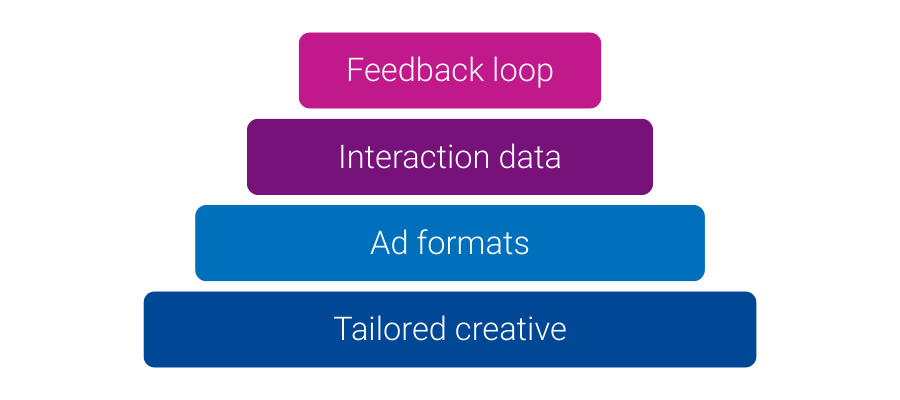
A hierarchy that shows feedback loop, interaction data, ad formats, and tailored creative

Alex (Yieldmo): Creative and ad formats are powerful signals for understanding audience engagement. At Yieldmo, we collect interaction data every 200 milliseconds, such as scrolling behavior or time spent on an ad. This data fills the gap between clicks and video completions, helping us build models that predict downstream actions. Tailoring creative to specific audience groups has always been one of the best ways to improve performance, and it remains essential in this new era of contextual advertising. Throughout my career, I learned that designing or tailoring your creative to different audience groups is one of the best ways to improve performance. We ran many lift studies with analysis to understand how you can tailor creative customized for individual audiences. That capability and the ability to do that on an identity basis is.

Our recommendations for actionable marketing strategies

Do you have recommendations for marketers building out their yearly strategies or a campaign strategy?

Jason (Experian): My recommendation for marketers building out their yearly strategies is to be proactive and start testing and learning these new solutions now. I mentioned addressability and being in the right place at the right time. That’s easier in today’s third-party cookie world. But as traditional identity is further constricted, you will have these first-party solutions that will not be at scale, so you’re less likely to find your user at the scale you want. It would be best if you thought about how to reach that user at the right place at the right time. They may not be seen from an identity basis. They might not be at the right place at the right time when you were delivering or trying to deliver an ad. But you increase your chance of reaching them by building these advanced contextual targeting audiences using this privacy-safe seed ‘opted-in’ user set; this is a way to cast that wider net and achieve targeted scale.

Alex (Yieldmo): Build your seed lists, test your formats with different audiences, and understand what’s resonating with whom. Take advantage of some of the pretty remarkable advances in machine learning that are allowing us, really, for the first time to fully uncork the potential and the opportunity with contextual in a way that we’ve never done before.

Contact us

This site is protected by reCAPTCHA and the Google Privacy Policy and Terms of Service apply.


About our experts

Jason Andersen, Senior Director, Strategic Initiatives and Partner Solutions, Experian headshot

Jason Andersen

Senior Director, Strategic Initiatives and Partner Solutions, Experian

Jason Andersen heads Strategic Initiatives and Partner Enablement for Experian Marketing Services. He focuses on addressability and activation in digital marketing and working with partners to solve signal loss. Jason has worked in digital advertising for 15+ years, spanning roles from operations and product to strategy and partnerships.

Alex Johnston, Principal Product Manager, Yieldmo headshot


Alex Johnston

Principal Product Manager, Yieldmo

Alex Johnston is the Principal Product Manager at Yieldmo, overseeing the Machine Learning and Optimization products. Before joining Yieldmo, Alex spent 13 years at Google, where he led the Reach & Audience Planning and Measurement products, overseeing a 10X increase in revenue. During his time, he launched numerous ad products, including YouTube’s Google Preferred offering. To learn more about Yieldmo, visit www.yieldmo.com.

Yieldmo logo

About Yieldmo

Yieldmo is an advertising platform that fuses media and creative to meet audiences in the moments that matter. Using proprietary data and AI, Yieldmo uses advanced targeting to deliver context-aware creative when and where it’s most effective, all while respecting user privacy. The result: ads that belong on inventory brands trust. For more information, please visit www.yieldmo.com.


Contextual advertising FAQs

What is contextual advertising, and how does it work?

Contextual advertising works by targeting audiences based on the content they’re engaging with, rather than relying on personal identifiers or traditional tracking methods. Yieldmo’s platform uses advanced contextual signals and machine learning to deliver relevant ads in privacy-safe ways.

How does contextual advertising address signal loss?

Contextual advertising addresses signal loss by focusing on environmental and content-based signals instead of relying on thir-dparty cookies or other traditional identifiers. Experian’s identity solutions complement this approach by enabling marketers to connect with audiences in a compliant and scalable way.

Why is creative important in contextual advertising?

Creative is important in contextual advertising because it engages audiences and provides valuable signals for targeting. Yieldmo’s platform collects interaction data, such as scrolling and time spent on ads, to refine campaigns and improve performance.

How can marketers reach non-addressable audiences?

Marketers can reach non-addressable audience through advanced contextual targeting, which uses known data, like seed audiences, to identify patterns and extend reach. Experian’s identity solutions and contextual data from, Audigent, a part of Experian, help marketers connect with these audiences in privacy-safe and effective ways.


Latest posts

Loading…
How AI is transforming connected TV advertising

In this article…Why AI and CTV are a great matchThe rising popularity of CTVHow is AI already being used in CTV?Demand-side platforms Artificial intelligence (AI) and connected TV (CTV) have a perfect synergy that’s revolutionizing how advertisers connect with their audiences. CTV serves as a medium for streaming content, while AI acts as a sophisticated technology that improves the performance of CTV advertising campaigns. The integration of these two technologies has paved the way for advertisers to reach their target audience more effectively, making CTV advertising a powerful and efficient tool.  In this blog post, we’ll dive into how these technologies work together — and why you should jump on board with AI for CTV advertising if you haven’t already. Why AI and CTV are a great match  CTV and AI are transforming how advertisers connect with their audiences and improving the performance of their advertising campaigns in the CTV space. They work together to make advertising smarter and more enjoyable for everyone involved. AI uses sophisticated computer programs to analyze and understand data, while CTV refers to the streaming services that consumers use at home. But what makes them a great match in advertising?  AI uses data to determine which TV ads are most exciting and relevant to certain people, and it can even adjust ads in real time to ensure viewers are always getting the most personalized experience. AI can provide suggestions to viewers based on previously watched content to help them find what they’d enjoy watching next. To sum it up, AI allows for: Precise targeting: AI uses data to determine which TV ads are most exciting and relevant to certain people. Personalization: AI can adjust ads in real time to ensure viewers are always getting the most personalized experience. Effective ad insertion: AI can provide suggestions to viewers based on previously watched content to help them find what they’d enjoy watching next. CTV facilitates these AI-driven strategies for enhanced user engagement and satisfaction. The rising popularity of CTV CTV has become increasingly popular as people change the way they watch TV. Instead of the traditional approach, more viewers are now choosing CTV platforms for their entertainment. One of the main reasons for this shift is that CTV offers greater flexibility and lets viewers watch content at their convenience. The ability to skip ads on many CTV platforms also improves the experience.  CTV offers a great opportunity to interact with your target audience in a more engaging way. CTV allows for highly targeted advertising capabilities so you can reach specific demographics and households with tailored messages. Additionally, CTV provides valuable data insights that enable you to measure campaign effectiveness accurately.  If you haven’t embraced this advertising channel yet, you may be missing out on a growing and engaged audience. Here are three reasons you should add CTV to your advertising strategy. Global video ad impressions As a global platform, CTV has the unique ability to reach audiences worldwide. Unlike traditional TV, CTV transcends geographical boundaries and brings marketers a global audience, which makes it an ideal channel for global ad campaigns. No matter your target audience, they’re consuming content on CTV. In fact, a recent study showed that 51% of global video ad impressions came from CTV in 2022.  This abundance of global video ad impressions generates vast amounts of data, which AI can process in real time to help you make data-driven decisions and optimize your campaigns for diverse international audiences. AI can analyze viewer data from various regions, identify audience preferences and behaviors across borders, and tailor ad content accordingly. These data analysis capabilities ensure your ads get in front of the right viewers.  Viewers prefer ad-supported CTV In 2020, the viewing time of ad-supported CTV surged by 55% while subscription video on demand decreased by 30%, according to TVision Insights. Viewers have a well-established preference for ad-supported CTV due, in part, to cost-effective access to premium content. Viewers are more engaged and less resistant to ads, as AI tailors ad content to viewer preferences and behavior to enhance ad relevance.  AI-powered insights can also aid in viewer retention and help you optimize your CTV campaigns. By accommodating viewers’ preference for ad-supported CTV and harnessing AI to improve the ad experience, you’re more likely to be successful in your marketing efforts. CTV outpaces mobile and desktop for digital video viewing eMarketer recently reported that U.S. adults spend 7.5+ hours each day on CTV — more than half of their digital video viewing time. Comparatively, they only spend 37.5% of their viewing time on mobile and 10% on desktops and laptops. These statistics demonstrate that CTV has become the preferred platform for digital video consumption, as viewers enjoy larger screens with superior quality for an immersive experience. It's important to note that AI is an essential CTV marketing tool, as it allows for precise targeting and content optimization. By utilizing AI on CTV, you can take advantage of this trend and deliver more engaging and effective campaigns to a growing and engaged audience. How is AI already being used in CTV? CTV has been integrated with AI across various facets and has revolutionized the television landscape. Here's a look at how AI is already shaping the CTV experience: Generative AI ads  Generative AI ads are taking CTV personalization to a whole new level. These innovative ads are customized versions of the same CTV ad to suit individual viewers. Some AI tools can generate several versions of the same CTV ad — swapping the actor’s clothing and voiceover elements like store locations, local deals, promo codes, and more — and can create up to thousands of personalized iterations in just a few seconds. Such capabilities are a game-changing approach to connecting with your audience.  Next, we dive into the advantages and impact of generative AI ads, and explore their transformative role in CTV advertising. Contextual ads vs personal data Generative AI ads use personal data, such as viewing history and demographics, to create highly personalized ad experiences. This sets them apart from contextual ads, which rely solely on the content being viewed. Using AI to harness this data, you can move beyond traditional contextual targeting and ensure your ads connect with viewers on a more individualized level. Generative AI ads can be used to A/B test Generative AI ads are not just about personalization; they also open the door to A/B testing. Being able to create several versions of one ad quickly allows you to experiment with various ad elements, such as messaging, visuals, and calls to action, to identify what works best for different segments of your audience and drives the best performance. This flexibility is especially valuable for refining ad campaigns and maximizing their impact. What’s next for AI-generated ads like this? The potential of AI-generated ads is exciting. As AI technologies constantly advance, we can expect even more personalized and automated CTV advertising. It’s a good idea to keep up with the latest AI-driven innovations to create more effective ad campaigns in the fast-evolving CTV space. The possibilities are endless, and you’ll likely find the most success when you embrace AI in CTV advertising. Optimize streaming quality AI helps viewers enjoy more seamless CTV experiences. By assessing network speed and user preferences, AI optimizes video quality in real time to reduce buffering interruptions. For instance, streaming platforms use AI to adjust video settings based on a user's connection speed. This guarantees an uninterrupted and enjoyable viewing experience. Review content for compliance AI also has a part to play in quality assurance and compliance management. It assesses content alignment with technical parameters and moderates compliance with local age restrictions and privacy regulations. This means AI can identify and filter out unsuitable content to provide a safer and more enjoyable viewing environment for audiences while safeguarding brands from association with undesirable material. Voice command AI-powered voice command technology is increasingly used to control CTV viewing. This technology is embedded in streaming devices and smart TVs and allows viewers to interact with their CTV content through voice-activated commands. This personalizes the viewing experience and improves convenience, as it eliminates the need for remote controls.  CTV-integrated voice assistants like Google Assistant, Amazon Alexa, Apple Siri, and Samsung Bixby offer a more human-like interaction with the television, allowing users to give commands and receive tailored responses.  Content recommendations AI can offer content recommendations that provide viewers a more personalized and engaging experience. Major over-the-top (OTT) services like Netflix, Hulu, and Amazon Prime use AI-driven data analysis to deliver tailored content suggestions to their audiences. By analyzing user habits in detail, AI can recommend content based on factors such as actors, genres, reviews, and countries of origin. This personalized approach helps viewers discover content that matches their preferences and enhances their viewing experience. Advertising  Programmatic ad buying, driven by AI, automatically matches ad placements to specific audience segments based on behavioral patterns. It improves ad delivery by moving away from gross rating points (GRP) to more intelligent and targeted placements. This benefits marketers by ensuring ads are seen by the right people at the right time. It’s also cost-effective for publishers, as it maximizes the sale of ad spots to suitable buyers. Automatic content recognition (ACR) technology, which AI powers, is integrated into smart TVs and streaming devices to improve ad relevance. It provides contextual targeting and extends the reach of ads across multiple devices. For example, platforms like Roku use ACR data to display ads to viewers who haven’t seen them on traditional TV. Similarly, Samba TV retargets mobile users based on IP address and aligns their viewing habits with their smart TVs. Demand-side platforms CTV advertising relies heavily on demand-side platforms (DSPs) to efficiently manage and optimize ad campaigns. These platforms use machine learning and AI in several important ways: Using machine learning and AI to address data fragmentation Data is abundant but fragmented when it comes to CTV advertising. DSPs are flooded with a massive amount of data, including information about households, viewer behavior, and viewing patterns. This data is far too much for manual analysis to handle effectively, which is where AI comes in. By integrating machine learning algorithms into DSPs, AI can harmonize this fragmented data and provide valuable insights and a holistic view of your audience. AI can process zettabytes of data in real time, which streamlines the decision-making process and empowers you to compete quickly for limited CTV impression opportunities. Predicting advertising outcomes with AI AI is quickly changing the way we predict and optimize advertising outcomes. TV buying and optimization platforms are now using AI to improve ad performance. With machine learning, these platforms can anticipate which ad creatives will produce the best results based on various non-creative factors. These include the context of the ad, the audience's profiles, the time of day it is displayed, and the frequency of the ad display.  By relying on AI to make these predictions, you can make sure your campaigns are highly optimized for success and deliver more relevant, compelling ads to viewers. Optimizing generative ads AI is also driving optimization in generative ads. These personalized versions of the same CTV ad can be tailored to suit individual viewers. By utilizing AI-driven analytics, DSPs can process extensive amounts of data in real time and optimize generative ads to ensure they align with viewers' preferences and behaviors. This level of personalization is a game-changer in CTV advertising that boosts engagement and delivers content that truly resonates with the audience. Add AI to your CTV strategy today Integrating AI into your CTV strategy can help you stay competitive and ensure your ad campaigns are effective and engaging.  At Experian, we’re ready to help you elevate your CTV advertising and implement AI as part of your strategy. Our solutions, such as Consumer View and Consumer Sync, provide valuable audience insights, enhance targeting capabilities, and optimize engagement on TV. Plus, our partnerships with leading media marketing solutions can help you achieve greater success through effective advanced television advertising.  As you incorporate AI into your CTV strategy, you’ll be able to make more data-driven decisions, deliver more relevant content, and reach the right audience at the right time. Explore Experian's TV solutions and empower your CTV advertising with AI today. Start exploring Latest posts

Dec 14,2023 by Experian Marketing Services

UID2: Steering the course in identity management with The Trade Desk

The digital advertising landscape is undergoing a significant transformation with the gradual deprecation of third-party cookies. This shift necessitates the adoption of new strategies for audience targeting and data management. In our next Ask the Expert segment, we explore this evolution, discussing new strategies for audience targeting and data management in a world without cookies.  We’re joined by industry leaders, Gabe Richman, Senior Director of Data Partnerships at The Trade Desk, and Chris Feo, Experian’s SVP of Sales & Partnership who spotlight The Trade Desk’s innovative approach to navigating a cookieless future. Tune in to our Q&A below to learn more about these topics and learn how the collaborative efforts of Experian and The Trade Desk offer a glimpse into the future of advertising.  Cookieless IDs are the new face of identity in advertising  Traditional tracking and targeting techniques are being replaced by more advanced and privacy-conscious methods. Unified I.D. 2.0 (UID2), led by The Trade Desk, exemplifies this shift, offering a new identifier based on encrypted email addresses or phone numbers. This approach not only caters to the evolving privacy regulations but also places greater control in the hands of consumers. UID2’s design fundamentally differs from cookies since it is rooted in transparency and consumer consent.  UID2: A catalyst for industry-wide adoption  UID2’s journey reflects a rising industry-wide recognition of its value across the industry. The adoption of UID2 by major publishers, demand-side platforms, and advertisers indicates a shift toward more sustainable and consumer-friendly approaches to identity in advertising. This is particularly evident in areas like connected TV (CTV), where UID2 is rapidly becoming a currency and standard.  “The purpose of UID2 is not only to create a better ID for advertisers and publishers to achieve their objectives, but also to benefit the consumers. Unlike cookies, UID2 provides transparency and control to the consumers for the first time.”gabe richman, sr. director, data partnerships, the trade desk How Experian and The Trade Desk work together   The partnership between The Trade Desk and Experian goes beyond adapting to the absence of cookies. Our joint efforts highlight a commitment to developing solutions that cater to advertiser’s needs while respecting consumer privacy, a balancing act becoming increasingly crucial in today’s digital ecosystem. The Trade Desk's emphasis on UID2 as a foundational element in the open web, campaign design, and activation is a testament to the potential of new identifiers in enhancing advertising efficacy. Similarly, our ability to utilize these identifiers to deliver detailed audience insights offers advertisers a powerful tool to remain effective in a post-cookie world.  Experian’s role in the adoption of UID2   Experian's integration strategies have played a critical role in diversifying the applications of UID2. By partnering with The Trade Desk, we help broaden the reach and effectiveness of UID2 across various advertising channels. In terms of reach – by incorporating a prominent cookieless ID, we further amplify the reach of UID2. The increased adoption of this new ID allows the digital ecosystem the ability to interact using an alternative identifier, thereby broadening the potential audience. In terms of effectiveness – we help advertisers serve relevant ads to the right audiences, ensuring the relevance of the ads and control over their frequency.  Targeting with Geo-Indexed audiences  The Trade Desk works with Experian to ingest and host our syndicated audiences. This partnership gives The Trade Desk’s clients access to over 2,400 syndicated audiences that span across eight verticals. This includes access to our new Geo-Indexed audiences that allow brands to reach consumers and households based on geographic regions that over-index for a common set of attributes, ultimately offering brands a targeting solution that prioritizes both consumer privacy and accuracy.  What a future beyond cookies looks like  Looking ahead, the focus in advertising is not solely on replacing cookies but on a broader evolution of the industry. This includes continuing to apply machine learning technologies, like artificial intelligence (AI), to enhance ad personalization and effectiveness. The interplay between creative content, audience insights, and privacy-compliant targeting will become increasingly important as the industry evolves. As cookies become a thing of the past, the initiatives spearheaded by The Trade Desk and Experian will likely set the tone for the next era of digital advertising, and emerging solutions like UID2 are leading the way.  Watch the full Q&A  Visit our Ask the Expert content hub to watch Gabe and Chris' full conversation about cookieless advertising. In their conversation, Gabe and Chris share more about UID2, consumer transparency, and the importance of consumer data for targeted advertising.  Connect with us About our experts Gabe Richman, Sr. Director, Data Partnerships, The Trade Desk Gabe Richman is the Senior Director of Data Partnerships at The Trade Desk where he focuses on global identity strategy and platform partnerships as well as driving UID2 and EUID adoption across the broader ecosystem. Prior to joining The Trade Desk in 2021, Gabe held various roles in AdTech at HealthVerity, Wunderkind and LiveRamp. For the last decade Gabe has taken pride in helping advertisers and platforms alike demystify the complex identity landscape and embrace the change needed to preserve the open internet. Gabe is a graduate of the University of Maryland and resides in Los Angeles. Chris Feo, SVP, Sales & Partnerships, Experian As SVP of Sales & Partnerships, Chris has over a decade of experience across identity, data, and programmatic. Chris joined Experian during the Tapad acquisition in November 2020. He joined Tapad with less than 10 employees and has been part of the executive team through both the Telenor and Experian acquisitions. He’s an active advisor, board member, and investor within the AdTech ecosystem. Outside of work, he’s a die-hard golfer, frequent traveler, and husband to his wife, two dogs, and two goats! Latest posts

Dec 13,2023 by Experian Marketing Services

Elevating advertising precision: The collaborative excellence of Magnite and Experian

Magnite and Experian have formed a strategic integration to enhance cross-device audience targeting in the advertising industry. Magnite, the largest independent sell-side platform, and Experian, a leader in consumer data and identity solutions, aim to optimize advertising capabilities by activating Experian's Consumer View in Magnite Access, an omnichannel audience product suite. This marks one of Experian’s first forays into a direct sell-side integration, a crucial step for the cookieless era. This collaboration offers targeting and efficiency across digital channels, providing advertisers and agencies with a more effective way to reach consumers. With Experian's robust deterministic offline data, generated from consumer purchase activity, enriched with insights on over 250 million U.S. consumers and 126 million U.S. households, advertisers can look forward to a new benchmark in targeted advertising available through Magnite Access. Thriving in a cookieless world With the looming deprecation of third-party cookies, audience, and identity solutions using first-party data are shifting to the sell-side. To that end, Magnite developed Magnite Access, a suite of omnichannel audience products that make it easier for media owners and their advertising partners to maximize the value of their first-party data assets. Access is adept at thriving in a post-cookie world through its effective utilization of sell-side first-party data, including within Magnite Streaming and SpringServe. Magnite Access’ deterministic and probabilistic tools provide sellers and buyers with a comprehensive solution to leverage their first-party data for audience targeting and insights. Experian's solutions are built to work efficiently in offline environments, making them well-equipped to thrive in a cookieless world. Brands can benefit from Experian's deep integrations within the ecosystem, providing data and audience solutions designed to perform in cookieless environments. "We're excited about the collaborative approach between Magnite and Experian. This off-the-shelf integration of Experian's syndicated audiences and the streamlined ability to receive custom audiences will provide a more accurate and cohesive consumer view, allowing us to reach our target audience and enhance campaign performance seamlessly."sam bloom, ceo, camelot Reach and impact As companies continue to rely on data-driven insights to make smarter, more efficient business decisions, partnerships between leading data and technology providers are becoming increasingly valuable.  "Integrating with Magnite allows us to translate our extensive offline and online data into actionable, intelligent solutions for making smarter, more efficient business decisions. With Magnite's expertise in the omnichannel sell-side environment, this partnership is poised to empower businesses with the tools they need to succeed in today's data-driven landscape."chris feo, svp, sales & partnerships, experian Strengthening foundations within streaming Magnite's cutting-edge streaming solutions, integrated with Experian's robust data, facilitate a connection between data and inventory, providing enhanced targeting capabilities and consumer insights.  "By integrating Experian's Consumer View capabilities into our platform, we are enabling advertisers to unlock improved targeting capabilities while benefiting from Experian's wealth of consumer insights. Our collaboration with Experian amplifies the value of our streaming solutions and enhances the overall advertising ecosystem by seamlessly connecting data, identity, and inventory."kristen williams, svp, strategic partnerships, magnite Precision and innovation: A new advertising era The synergistic partnership between Magnite and Experian is paving the way for a new era in advertising, offering targeting efficiency across digital channels. This collaboration is not merely a confluence of technologies but a testament to both companies' relentless pursuit of excellence in creating a consumer-conscious advertising ecosystem. By harnessing the wealth of consumer insights and integrating state-of-the-art technologies, Magnite and Experian are contributing to shaping the future of advertising, emphasizing accuracy and efficiency. It's a revolutionary stride toward understanding and reaching the consumer in more meaningful and impactful ways, setting new benchmarks in the advertising world. In a rapidly evolving digital landscape, this collaboration stands as a beacon, guiding brands toward intelligent, informed, and innovative advertising solutions, redefining the possibilities in targeted advertising and audience solutions. Connect with us to learn more about how you can access Experian’s Consumer View data solutions in Magnite Access. To learn more about our partner Magnite, visit their website. Latest posts

Dec 12,2023 by Experian Marketing Services

Subscribe to our newsletter

Enter your name and email for the latest updates

This site is protected by reCAPTCHA and the Google Privacy Policy and Terms of Service apply.

About Experian Marketing Services

At Experian Marketing Services, we use data and insights to help brands have more meaningful interactions with people. As leaders in the evolution of the advertising landscape, Experian Marketing Services can help you identify your customers and the right potential customers, uncover the most appropriate communication channels, develop messages that resonate, and measure the effectiveness of marketing activities and campaigns.

Visit our website

Subscribe to our newsletter

Stay up to date on the latest industry news and receive expert tips from our marketing experts.
Subscribe now!