Loading...

How contextual advertising addresses signal loss

Published: February 28, 2023 by Experian Marketing Services

At A Glance

Experian and Yieldmo collaborate to help marketers navigate signal loss with privacy-safe contextual advertising. By combining Experian’s identity solutions with Yieldmo’s advanced targeting, this collaboration enables effective audience engagement in a world with fewer traditional signals.

Note: While third-party cookies are no longer being phased out, this webinar was recorded in 2023 when cookie deprecation was still a key industry focus. The strategies discussed reflect that time frame and remain relevant for addressing broader signal loss challenges.

With major browsers discontinuing support for third-party cookies, marketers must rethink how to identify and engage their audiences. Contextual advertising offers a privacy-safe solution by combining contextual signals with machine learning to deliver highly targeted campaigns. In a Q&A with our experts with eMarketer, Jason Andersen, Senior Director of Strategic Initiatives and Partner Solutions at Experian, and Alex Johnston, Principal Product Manager at Yieldmo, we discuss how contextual advertising addresses signal loss, improves addressability, and delivers better outcomes for marketers.

A thumbnail image taken from our webinar

The macro trends impacting marketers

How important is it for digital marketers to stay informed about the changes coming to third-party cookies, and what challenges do you see signal loss creating?

Jason (Experian): Third-party cookies have already been eliminated from Firefox, Safari, and other browsers, while Chrome has held out. It’s just a matter of time before Chrome eliminates them too. Being proactive now by predicting potential impacts will be essential for maintaining growth when the third-party cookie finally disappears.

An illustration of three people with charts in the background

Alex (Yieldmo): Third-party cookie loss is already a reality. As regulations like the General Data Protection Regulation (GDPR) and the California Consumer Privacy Act (CCPA) take effect, more than 50% of exchange traffic lacks associated identifiers. This means that marketers have to think differently about how they reach their audiences in an environment with fewer data points available for targeting purposes. It’s no longer something to consider at some point down the line – it’s here now! Also, as third-party cookies become more limited, reaching users online is becoming increasingly complex and competitive. Without access to as much data, the CPMs (cost per thousand impressions) that advertisers must pay are skyrocketing because everyone is trying to bid on those same valuable consumers. It’s essential for businesses desiring success in digital advertising now more than ever before.

Solving signal loss with contextual advertising

How does contextual advertising help marketers engage audiences with new strategies like machine learning and artificial intelligence (AI)?

Jason (Experian): Contextual advertising helps marketers engage audiences by combining advanced machine learning with privacy-safe strategies. We focus on using AI and machine learning to better understand behavior, respect privacy, and deliver insights. As third-party cookies go away, alternative identifiers are coming to market, like Unified I.D. 2.0 (UID2). These are going to be particularly important for marketers to be able to utilize them. As cookie syncing becomes outdated, marketers will have to look for alternative methods to reach their target audiences. It’s essential to look beyond cookie-reliant solutions and use other options available regarding advertising.
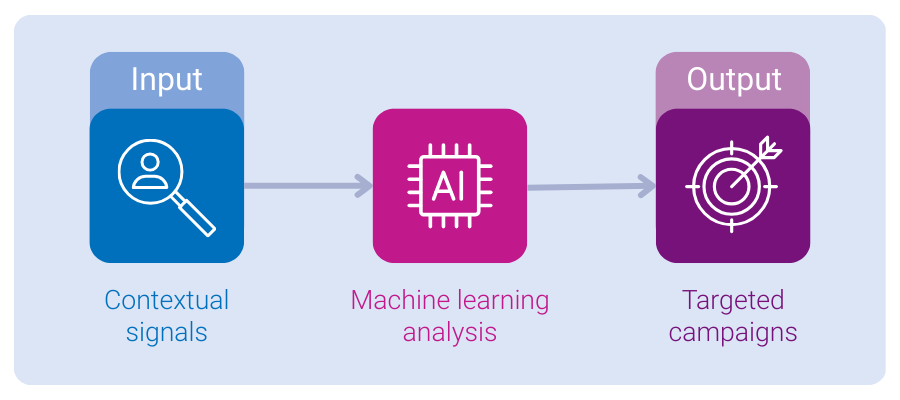
Input: Contextual signals, then AI machine learning analysis, then the output is targeted campaigns

Alex (Yieldmo): There’s been a renaissance in contextual advertising over the last couple of years. Three key drivers are shaping this shift:

  1. The loss of identity signals is forcing marketers to rethink how they reach audiences.
  2. Advances in machine learning allow us to analyze more granular contextual signals, identifying patterns that are most valuable to advertisers.
  3. Tailored models now use these signals to deliver more effective campaigns. This transformation is occurring because of our ability to capture and operate on richer, more detailed data.

Reach consumers with advanced addressability

How does advanced contextual advertising help marketers reach non-addressable audiences?

Jason (Experian): Advanced contextual advertising helps marketers reach non-addressable audiences by taking a set of known data (identity) and drawing inferences from it with all the other signals we see across the bidstream. It’s about using a small seed set of customers, those who have transacted with you before or match your target audience, and training contextual models to make the unknown known. Now we can go out and find users surfing on any of the other sites that traditionally don’t have that identifier for that user or don’t at that moment in time and start to be able to advertise to them based on the contextually indexed data.

An illustration that shows three icons of three different people with a cloud of connected people over their heads

Alex (Yieldmo): I think the exciting opportunity for many people in the industry is figuring out how to reach your known audience in a non-addressable space, that is based on environmental and non-identity based signals, that helps your campaign perform. Machine learning advancements allow you to take your small sample audience and uncover those patterns in the non-addressable space. High-quality, privacy-resilient data sets are critical for building these campaigns. Companies like Experian, with deep, rich training data, are well positioned to support advertisers in building extension audiences.

Creative strategies that improve ad performance

Why does creative strategy remain essential for digital advertising success?

Jason (Experian): Creative strategy remains essential because it provides valuable signals for targeting and engages audiences effectively. In this advanced contextual world, good creative in the proper ad format that you can test and learn from is paramount. It comes back to that feedback loop. We can use that as another signal in this equation to develop and refine the right set of audiences for your targeting needs.
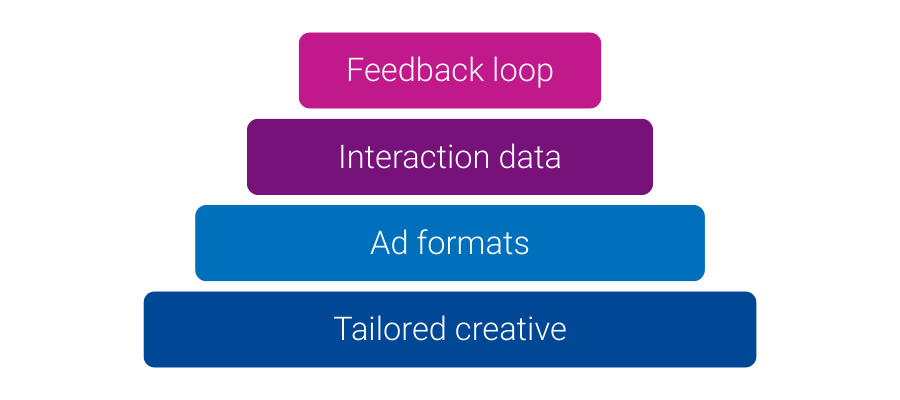
A hierarchy that shows feedback loop, interaction data, ad formats, and tailored creative

Alex (Yieldmo): Creative and ad formats are powerful signals for understanding audience engagement. At Yieldmo, we collect interaction data every 200 milliseconds, such as scrolling behavior or time spent on an ad. This data fills the gap between clicks and video completions, helping us build models that predict downstream actions. Tailoring creative to specific audience groups has always been one of the best ways to improve performance, and it remains essential in this new era of contextual advertising. Throughout my career, I learned that designing or tailoring your creative to different audience groups is one of the best ways to improve performance. We ran many lift studies with analysis to understand how you can tailor creative customized for individual audiences. That capability and the ability to do that on an identity basis is.

Our recommendations for actionable marketing strategies

Do you have recommendations for marketers building out their yearly strategies or a campaign strategy?

Jason (Experian): My recommendation for marketers building out their yearly strategies is to be proactive and start testing and learning these new solutions now. I mentioned addressability and being in the right place at the right time. That’s easier in today’s third-party cookie world. But as traditional identity is further constricted, you will have these first-party solutions that will not be at scale, so you’re less likely to find your user at the scale you want. It would be best if you thought about how to reach that user at the right place at the right time. They may not be seen from an identity basis. They might not be at the right place at the right time when you were delivering or trying to deliver an ad. But you increase your chance of reaching them by building these advanced contextual targeting audiences using this privacy-safe seed ‘opted-in’ user set; this is a way to cast that wider net and achieve targeted scale.

Alex (Yieldmo): Build your seed lists, test your formats with different audiences, and understand what’s resonating with whom. Take advantage of some of the pretty remarkable advances in machine learning that are allowing us, really, for the first time to fully uncork the potential and the opportunity with contextual in a way that we’ve never done before.

Contact us

This site is protected by reCAPTCHA and the Google Privacy Policy and Terms of Service apply.


About our experts

Jason Andersen, Senior Director, Strategic Initiatives and Partner Solutions, Experian headshot

Jason Andersen

Senior Director, Strategic Initiatives and Partner Solutions, Experian

Jason Andersen heads Strategic Initiatives and Partner Enablement for Experian Marketing Services. He focuses on addressability and activation in digital marketing and working with partners to solve signal loss. Jason has worked in digital advertising for 15+ years, spanning roles from operations and product to strategy and partnerships.

Alex Johnston, Principal Product Manager, Yieldmo headshot


Alex Johnston

Principal Product Manager, Yieldmo

Alex Johnston is the Principal Product Manager at Yieldmo, overseeing the Machine Learning and Optimization products. Before joining Yieldmo, Alex spent 13 years at Google, where he led the Reach & Audience Planning and Measurement products, overseeing a 10X increase in revenue. During his time, he launched numerous ad products, including YouTube’s Google Preferred offering. To learn more about Yieldmo, visit www.yieldmo.com.

Yieldmo logo

About Yieldmo

Yieldmo is an advertising platform that fuses media and creative to meet audiences in the moments that matter. Using proprietary data and AI, Yieldmo uses advanced targeting to deliver context-aware creative when and where it’s most effective, all while respecting user privacy. The result: ads that belong on inventory brands trust. For more information, please visit www.yieldmo.com.


Contextual advertising FAQs

What is contextual advertising, and how does it work?

Contextual advertising works by targeting audiences based on the content they’re engaging with, rather than relying on personal identifiers or traditional tracking methods. Yieldmo’s platform uses advanced contextual signals and machine learning to deliver relevant ads in privacy-safe ways.

How does contextual advertising address signal loss?

Contextual advertising addresses signal loss by focusing on environmental and content-based signals instead of relying on thir-dparty cookies or other traditional identifiers. Experian’s identity solutions complement this approach by enabling marketers to connect with audiences in a compliant and scalable way.

Why is creative important in contextual advertising?

Creative is important in contextual advertising because it engages audiences and provides valuable signals for targeting. Yieldmo’s platform collects interaction data, such as scrolling and time spent on ads, to refine campaigns and improve performance.

How can marketers reach non-addressable audiences?

Marketers can reach non-addressable audience through advanced contextual targeting, which uses known data, like seed audiences, to identify patterns and extend reach. Experian’s identity solutions and contextual data from, Audigent, a part of Experian, help marketers connect with these audiences in privacy-safe and effective ways.


Latest posts

Loading…
Five considerations for data-driven advertising partnerships

Advertising today is more complex than ever. Consumers demand personalized, relevant experiences from brands, making it increasingly challenging to meet expectations without external support. Businesses must work with publishers, retailers, and platforms to thrive, using these partnerships for data insights that refine their strategies and fuel growth. We spoke with industry leaders from Ampersand, AppsFlyer, Audigent, Comcast Advertising, Fox, ID5, and Snowflake to gather insights on how strategic collaboration can expand audience reach, improve targeting precision, and drive measurable advertising success. 1. Expand your reach with strategic collaborations Gone are the days when brands relied solely on third-party data. By linking their first-party insights with equally valuable data from partners, brands develop a far more comprehensive understanding of their audiences. This collaborative approach creates richer audience profiles, improves targeting, and enhances campaign performance. Partnerships also create opportunities for operational efficiencies. For instance, brands that share data and expertise with collaborators can expand their audience reach without overhauling existing systems. These collaborations allow marketers to work smarter, turning shared knowledge into strategic wins. "Partnerships are everything. We can't fulfill our goals on the sale side, marketers can't fulfill their goals of finding their audience where they need to reach them and with the right level of outcomes without partnering together. Why? Because each of them has their own line of sight to the data that they have access to and the data that they know best."Justin Rosen, Ampersand 2. Identify the right partnership model Choosing the right partnership model is key to achieving your business objectives. For some, pairing first-party data with publishers' insights creates better targeting. For others, aligning with complementary brands allows them to engage shared audiences. For large-scale efforts, agencies can unify collaboration frameworks, making onboarding and activation seamless. Meanwhile, emerging categories like FinTech, hospitality, and commerce media provide brands new avenues for impactful partnerships. Evaluating these options thoroughly will ensure your collaboration aligns with long-term marketing goals. "With first-party data being really the central point of signal today, we see more and more of our advertisers identifying partnerships with maybe potentially historical competitors or partners they would've never considered."Tami Harrigan, AppsFlyer 3. Utilize the power of pooled insights Combining various data sources, like CRM records, browsing behavior, and shopping receipts, creates an in-depth view of your customers. By understanding what motivates consumers at every stage of their journey, brands can better tailor messaging and funnel marketing spend to where it matters most. This approach also enables data-driven agility. Real-time insights help brands make informed adjustments, whether it’s shifting strategies mid-campaign or identifying new growth opportunities. When brands share data responsibly, the results are campaigns that resonate and deliver measurable improvements. "A lot of advertisers have gotten smarter about their data than they were just two, three years ago. They’re now doing that segmentation on their side with their data and bringing that to Fox and saying, ‘Look, match this segment against your entire user base.’ In order to do that, we can work with providers like Experian, or with data clean rooms to really bring that data and do a direct match without going through a third party."Darren Sherriff, Fox 4. Adopt the right tools and technology The right tools empower a collaborative data ecosystem. Solutions like data clean rooms ensure privacy-first data matching and measurement. Identity frameworks, such as Unified ID 2.0 (UID2) or ID5, enable secure data alignment across platforms, simplifying audience targeting while safeguarding sensitive information. Shared dashboards are another crucial tool, providing all collaborators with clear, co-owned performance metrics. Yet, while technology is an enabler, success ultimately depends on how well tools align with each partner’s goals and build trust within the collaboration. “You have to make it accessible to non-technical personas and you have to have the ability to have it stood up and pay dividends in a short amount of time. The other thing is interoperability. We very much think as an industry we need to have interoperability with clean rooms, ones that operate on different frameworks.” David Wells, Snowflake 5. Overcome barriers to collaboration Collaboration often faces obstacles, like differing goals, fragmented data, or resource gaps. Brands can tackle these issues by aligning stakeholders on clear KPIs, standardizing data-sharing practices, and selecting tools that integrate smoothly with existing systems. Breaking down barriers early fosters fluid cooperation and improves outcomes for everyone involved. When goals, tools, and resources are in sync, these partnerships deliver lasting value and stronger results. “The key is to bring together data assets and work collaboratively to address fragmentation. The way to solve that is with more interoperability and connect the data in very privacy-safe ways, offering more opportunity to reach high fidelity audiences and incorporate better measurement methodologies.”Carmela Fournier, Comcast Advertising The path to growth through partnership Those who prioritize collaboration will outrun the competition and drive sustainable growth through smarter, more connected advertising. By choosing the right models, using powerful technology, and addressing potential obstacles, brands can co-create campaigns that resonate deeply with their audiences. Connect with our experts Latest posts

Mar 06,2025 by Experian Marketing Services

Mic’d up at RampUp 2025: AdTech’s hottest takes

RampUp 2025 brought together some of the smartest minds in AdTech to talk about the future of our industry. I had the opportunity to ask attendees key questions about AI, data collaboration, and the challenges they wish they could solve instantly. Here’s what they had to say. Watch my interviews here AI is everywhere in ads—How is it changing things? AI’s influence on advertising is undeniable, and industry leaders at RampUp 2025 emphasized how it is transforming the way data is used across marketing workflows. The increasing presence of Generative AI like ChatGPT is making it easier to stitch together data from various sources and act on insights, helping marketers execute campaigns with more efficiency. AI is no longer just about automation; it is now deeply embedded in audience building, personalization, and measurement, enabling marketers to optimize every step of the customer journey. What’s the one AdTech headache you’d fix forever? AdTech leaders agreed that some industry challenges have lingered for too long. Many expressed frustrations with the ongoing conversation about unifying cross-screen targeting and measurement. While the technology exists, aligning business priorities remains a roadblock. Others highlighted issues like the complexity of billing and reporting, which still needs to be faster and more reliable. There was also a strong push to educate brand marketers on the continued impact of offline media, such as billboards, and how data-driven strategies can enhance the effectiveness of out-of-home advertising. Beyond these operational challenges, another recurring theme was the increasing importance of identity as the backbone of effective advertising. While brands are focused on collecting first-party data, the true challenge lies in activating that data at scale. Without a strong identity resolution strategy, first-party data alone is not enough to create meaningful audience connections across multiple platforms and devices. What's one AdTech tool or strategy you can’t live without? When it comes to must-have tools and strategies, data collaboration and clean rooms emerged as essential. These solutions help companies, agencies, and publishers work together seamlessly while maintaining security and efficiency. Another key strategy discussed was traffic shaping, which allows advertisers to push activation closer to publishers, reducing data leakage and improving overall performance. Both of these approaches are critical for advertisers aiming to scale. However, as brands continue to seek more flexibility and efficiency, the conversation at RampUp expanded beyond individual tools toward a broader industry transformation. Interoperability has become a top priority, with brands, platforms, and data providers focused on ensuring seamless connectivity across clean rooms, customer data platforms (CDPs), and activation partners. The days of being locked into a single walled garden are over—the future is about data portability. "RampUp made it clear that the industry is shifting toward curated, interoperable, and always-on identity solutions—and Experian is perfectly positioned to lead this next phase of growth."Suzanna Stevens, Sr. Enterprise Partnerships Manager This shift is also driving changes in how brands manage identity. Rather than relying on one-off data onboarding, companies are increasingly adopting subscription-based identity solutions that provide an always-on, continuously refreshed identity graph. This model ensures that brands have up-to-date customer profiles while reducing inefficiencies associated with batch processing. What privacy regulations should marketers be watching? Privacy remains one of the most pressing concerns in AdTech, and industry experts highlighted the need for a better approach to regulation. Consent management was identified as a major priority since it is fluid and directly impacts how marketers engage with consumers. There was also a strong sentiment that the current state-by-state approach to privacy regulation in the U.S. is unsustainable. Instead, the industry would benefit from a national framework that simplifies compliance and ensures more consistent data governance across all states. Final thoughts from RampUp 2025 RampUp 2025 showcased the rapid shifts happening in AdTech, from AI-driven efficiencies to the growing importance of data collaboration and privacy-first strategies. As the industry works to solve long-standing challenges, such as unification and regulatory fragmentation, innovation continues to drive new opportunities. Experian remains committed to helping advertisers and marketers navigate these changes by enabling smarter, more connected, and privacy-conscious advertising solutions. We’re excited to see how these themes evolve throughout the year and look forward to collaborating with our partners to shape the future of digital advertising. Follow us on LinkedIn or sign up for our email newsletter for more insights on the latest industry trends and data-driven marketing strategies. Contact us Latest posts

Mar 04,2025 by Erin Wolf, Sr. Sales Director, Strategic Partnerships

Swipe right on the perfect data and identity partner

Originally appeared in AdExchanger Navigating the world of data and identity partners feels like scrolling through a dating app: a sea of options, but only a select few worth swiping right. To find your perfect match, look for a partner who ticks all the right boxes. Here’s your guide to finding your perfect match. 1. Identity resolution: It all starts with a strong foundation Great identity resolution depends on a rock-solid foundation. The best partners rely on offline data—like names, addresses, and emails—that rarely change, ensuring a consistent view of households, individuals, and their devices over time. You want someone who gives you the same understanding of your audience across every stage of a campaign. 2. In search of: A well-rounded, reliable identity partner When evaluating identity graphs, it’s essential to distinguish between digital-only graphs, offline graphs, and those rare gems who combine both. Digital graphs rely on digital identifiers, while offline graphs are grounded in persistent identifiers like name, address, and phone number. A partner who offers both creates a more complete and reliable view of consumers across channels, resulting in more effective targeting and measurement. 3. Match rates are like dating profiles—don’t be fooled by the numbers Match rates can look impressive, but they’re often misleading. They can also vary widely depending on the methodology and the IDs being tested. Some providers inflate match rates by limiting the scope of comparison or tweaking their standards. The real indicators of quality are the depth of the data, the quality of matches, and how often the graph is refreshed. Ideally, your partner updates their graph weekly or monthly. The inclusion of inactive IDs may inflate the perceived scale without reflecting the true addressable audience. It's like having a profile photo from ten years ago–a major no-no. 4. Authentic origins: Is their data genuine or just a catfish? Look into your partner’s data sources and place a premium on those with public records or direct to consumer relationships. Ask if they have the experience and expertise when it comes to all aspects of data processing from accuracy to privacy and security. Look for some clear third-party indicators for accuracy, like ratings from Truthset, but there is also a basic reality: either your partner is focused on privacy and accuracy, or they are just playing the scale game. Swipe left on those playing games. 5. The breadth to impress Depth matters as much as quality. Seek a partner with wide-ranging attributes that span key audience categories like demographics, interests, and purchase behavior. They should offer the flexibility to deliver both granular data scores and broad audience segments, empowering you to reach the right consumers across channels effectively. 6. The total package: Does your partner really have it all? A true, lifelong partner connects the dots seamlessly, offering a blend of data and identity that link households to devices while layering in rich marketing insights. This approach helps advertisers better understand their customers, reach the right audiences across channels, and measure the impact of their campaigns. The right partner is well-connected and ensures that all the pieces—identity, data, and activation—work in harmony. 7. Future-proof charm: Will they ghost you when cookies crumble? With the Identifier for Advertisers (IDFAs) gone, cookies on the wane, and IP addresses under scrutiny, a partner’s ability to adapt is critical. The most future-proofed solutions are based on offline identifiers like names and addresses, which are user provided and consented data points–making them more resistant to privacy changes. Additionally, look for partners who have made the necessary investments and are prepared to support the new wave of addressable IDs emerging as alternatives to traditional signals. 8. Privacy savvy: Do they respect boundaries? As privacy laws evolve, you need a partner with a strong history in privacy compliance and proactive leadership in navigating new regulations. Strong and transparent privacy policies and participation in privacy organizations are a good indicator of trustworthiness, especially as new rules emerge across different states. Look for a partner who takes data privacy as seriously as you do and gives you peace of mind when handling sensitive information. 9. Seamless connectivity: Do they play well with others? Data is only as useful as it is actionable. Connectivity across platforms is essential, so choose a partner with seamless integrations into the major platforms you rely on for advertising. This ensures your data quality and identity resolution remain intact throughout your campaigns, avoiding loss from multiple handoffs. 10. Killer customer service: Are they in it for the long haul? A great partner collaborates to solve challenges, not just to sell or upsell. Long-standing partnerships and testimonials about strong customer service are key indicators of reliability. Choose a partner who educates and guides you through technical and strategic challenges, fostering an environment where problem-solving and innovation thrive. Keep your standards high Only a handful of companies can meet these rigorous criteria, and you should refuse to settle for a partner that lacks any of these key dimensions. Successfully navigating signal loss, privacy compliance, and seamless omnichannel integration requires extensive resources, robust infrastructure, and years of expertise. Download our full matchmaking guide So, swipe right on a partner who can handle the complexities of modern marketing and deliver consistent, scalable successful marketing outcomes. Could we be your perfect match? Find out if it's a match today Latest posts

Feb 19,2025 by Scott Kozub, VP, Product Management

Subscribe to our newsletter

Enter your name and email for the latest updates

This site is protected by reCAPTCHA and the Google Privacy Policy and Terms of Service apply.

About Experian Marketing Services

At Experian Marketing Services, we use data and insights to help brands have more meaningful interactions with people. As leaders in the evolution of the advertising landscape, Experian Marketing Services can help you identify your customers and the right potential customers, uncover the most appropriate communication channels, develop messages that resonate, and measure the effectiveness of marketing activities and campaigns.

Visit our website

Subscribe to our newsletter

Stay up to date on the latest industry news and receive expert tips from our marketing experts.
Subscribe now!