Loading...

How contextual ad targeting addresses signal loss

Published: February 28, 2023 by Experian Marketing Services

Contextual ad targeting paves the way for new opportunities

Advertisers and marketers are always looking for ways to remain competitive in the current digital landscape. The challenge of signal loss continues to prompt marketers to rethink their current and future strategies. With many major browsers phasing out support for third-party cookies due to privacy and data security concerns, marketers will need to find new ways to identify and reach their target audience. Contextual ad targeting offers an innovative solution; a way to combine contextual signals with machine learning to engage with your consumers more deeply through highly targeted accuracy. Contextual advertising can help you reach your desired audiences amidst signal loss – but what exactly is contextual advertising, and how can it help optimize digital ad success?

In a Q&A with our experts, Jason Andersen, Senior Director of Strategic Initiatives and Partner Solutions with Experian, and Alex Johnston, Principal Product Manager with Yieldmo, they explore:

  • The challenges causing marketers to rethink their current strategies
  • How contextual advertising addresses signal loss
  • Why addressability is more important than ever
  • Why good creative is still integral in digital marketing
  • Tips for digital ad success
a thumbnail image taken from our webinar

By understanding what contextual advertising can offer, you’ll be on the path toward creating powerful, effective campaigns that will engage your target audiences.

Check out Jason and Alex’s full conversation from our webinar, “Making the Most of Your Digital Ad Budget With Contextual Advertising and Audience Insights” by reading below. Or watch the full webinar recording now!

Macro impacts affecting marketers

How important is it for digital marketers to stay informed about the changes coming to third-party cookies, and what challenges do you see signal loss creating?

Jason: Marketers must stay informed to succeed as the digital marketing landscape continuously evolves. Third-party cookies have already been eliminated from Firefox, Safari, and other browsers, while Chrome has held out. It’s just a matter of time before Chrome eliminates them too. Being proactive now by predicting potential impacts will be essential for maintaining growth when the third-party cookie finally disappears.

Alex: Jason, I think you nailed it. Third-party cookie loss is already a reality. As regulations like the General Data Protection Regulation (GDPR) and the California Consumer Privacy Act (CCPA) take effect, more than 50% of exchange traffic lacks associated identifiers. This means that marketers have to think differently about how they reach their audiences in an environment with fewer data points available for targeting purposes. It’s no longer something to consider at some point down the line – it’s here now!

Also, as third-party cookies become more limited, reaching users online is becoming increasingly complex and competitive. Without access to as much data, the CPMs (cost per thousand impressions) that advertisers must pay are skyrocketing because everyone is trying to bid on those same valuable consumers. It’s essential for businesses desiring success in digital advertising now more than ever before.

List that says 1) Digital identifiers continue to be restrictive. 2) Increased CPMs for alternative identifiers. 3) Marketers will have to learn to use these new solutions. 4) Cookie fidelity is incredibly competitive.


Contextual ad targeting: A solution for signal loss

How does contextual ad targeting help digital marketers find new ways to reach and engage with consumers? What can you share about some new strategies that have modernized marketing, such as machine learning and Artificial Intelligence (AI)?

Jason: We’re taking contextual marketing to the next level with advanced machine learning. We are unlocking new insights from data beyond what a single page can tell us about users. As third-party cookies go away, alternative identifiers are coming to market, like RampID and UID2. These are going to be particularly important for marketers to be able to utilize.

As cookie syncing becomes outdated, marketers will have to look for alternative methods to reach their target audiences. It’s essential to look beyond cookie-reliant solutions and use other options available regarding advertising.
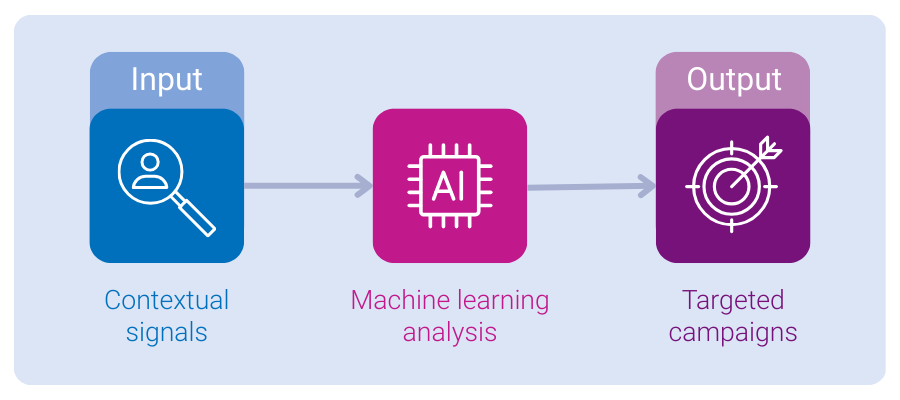
Alex: I think, as Jason alluded to, there’s a renaissance in contextual advertising over the last couple of years. If I were to break this down, there are three core drivers:

  1. The loss of identity signals. It’s forcing us to change, and we must look elsewhere and figure out how to reach our audiences differently.
  2. There have been considerable advances in our ability to store and operate across a set of contextual signals far more extensive than anything we’ve ever worked with in the past and in far more granular ways. That’s a huge deal because when it comes to machine learning, the power and the impact of those machine learning models are entirely based on how extensive and granular the data set is that you can collect. Machine learning can pull together critical contextual signals and figure out which constellations, or which combinations of those signals, are most predictive and valuable to a given advertiser.
  3. We can tailor machine learning models to individual advertisers using all those signals and find patterns across those in ways that were previously impractical or unfeasible. The transformation is occurring because of our ability to capture much more granular data, operate across it, and then build models that work for advertisers.
List that says 1) Four flavors of contextual advertising. 2) Modeling allows you to extract values from users. 3) Value in specialized models. 4) Delivers on privacy forward commitments

Addressability: Connect your campaigns to consumers

How does advanced contextual targeting help marketers reach non-addressable audiences?

Jason: Advanced contextual targeting allows us to take a set of known data (identity) and draw inferences from it with all the other signals we see across the bitstream. It’s taking that small seed set of either, customers that transacted with you before that you have an identity for, or customers that match whom you’re looking for. We can use that as a seed set to train these new contextual models. We can now look at making the unknown known or the unaddressable addressable. So, it’s not addressable in an identity sense, it is addressable in a contextual or an advanced contextual sense that’s made available to us, and we can derive great insight from it.

One of the terms I like to use is contextual indexing. This is where we take a set of users we know something about. So, I may know the identity of a particular group of households, and I can look at how those households index against any of the rich data sets available to us in any data marketplace, for example, the data Yieldmo has. We can look at how that data indexes to those known users to find patterns in that data and then extrapolate from that. Now we can go out and find users surfing on any of the other sites that traditionally don’t have that identifier for that user or don’t at that moment in time and start to be able to advertise to them based on the contextually indexed data.

Historically, we’ve done some contextual ad targeting based on geo-contextual, and this is when people wanted to do one to one marketing, and geo-contextual outperformed the one to one. But marketers weren’t ready for alternatives to one to one yet. We want marketers to start testing these solutions. Advertisers must start trying them, learning how they work, and learn how to optimize them because they are based on a feedback loop, and they’re only going to get better with feedback.

Alex: Jason, you described that perfectly. I think the exciting opportunity for many people in the industry is figuring out how to reach your known audience in a non-addressable space, that is based on environmental and non-identity based signals, that helps your campaign perform. Your known audience are people that are already converting – those who like your products and services and are engaged with your ads. Machine learning advancements allow you to take your small sample audience and uncover those patterns in the non-addressable space.

It’s also worth noting that in this world in which we are using seed audiences, or you are using your performing audiences to build non-addressable counterpart targeting campaigns, having high-quality, privacy-resilient data sets becomes incredibly important. In many cases, companies like Experian, who have high quality, deep rich training data, are well positioned to support advertisers in building those extension audiences. As we see the industry evolve, we’re going to see some significant changes in terms of the types of, and ways in which, companies offer data, and make that available to advertisers for training their models or supporting validation and measurement of those models.

Jason: Addressable users, the new identity-based users, are critical to marketers’ performance initiatives. They’re essential to training the models we’re building with contextual advertising. Together, addressable users and contextual advertising are a powerful combination. It’s not just one in isolation. It’s not just using advanced contextual, and it’s not just using the new identifiers. It’s using a combination to meet your performance needs.

It’s imperative to start thinking about how you can begin building your seed audiences. What can you start learning from, and how do you put contextual into play today? You are looking to build off a known set and build a more advanced model. These can be specialized models based on your data. You can hone in and create a customized model for your customer type, their profile, and how they transact. It’s a greenfield opportunity, and we’re super excited about the future of advanced contextual targeting.

List that says 1) Helps advertisers know who to reach. 2) Starts with known data. 3) Panel based approach. 4) Together we are improving deterministic signals.

Turn great creative into measurable data points

Why does good creative still play an integral part in digital advertising success?

Jason: Good creative has always been meaningful. It’s vital in getting people to click on your ad and transact. But it’s becoming increasingly important in this new world that we’re talking about, this advanced contextual world. The more signal that we can get coming into these models, the better. Good creative in the proper ad format that you can test and learn from is paramount. It comes back to that feedback loop. We can use that as another signal in this equation to develop and refine the right set of audiences for your targeting needs.
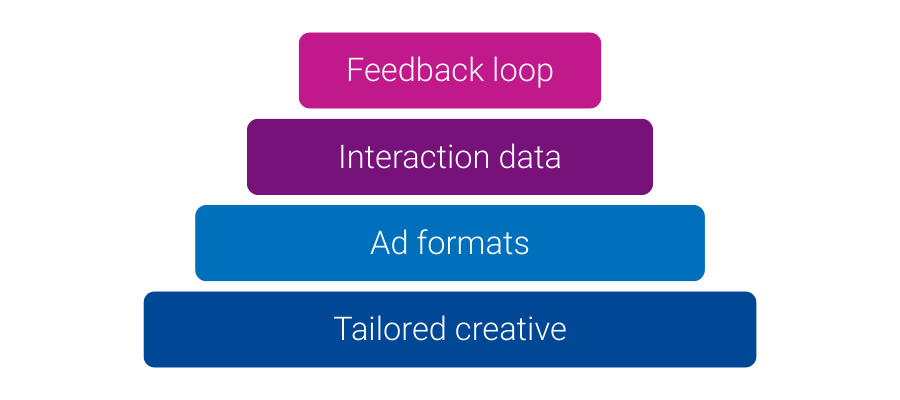
Alex: If you imagine within the broader context of identity and signal loss, creative and ad format becomes incredibly powerful signals in understanding how different audiences interact with and engage with different creative. In the case of the formats that serve on the Yieldmo exchange, we’re collecting data every 200 milliseconds around how individual users are engaging with those ads. Interaction data like the user scrolling back or the number of pixel seconds they stay on the screen, fills this critical gap between video completes and clicks. Clicks are sparse and down the funnel, and views and completes are up the funnel. All those attention and creative engagement type metrics occupy the sweet spot where they’re super prevalent, and you can collect them and understand how different audiences engage with your ads. That data lets you build powerful models because they predict all kinds of other downstream actions.

Throughout my career, I learned that designing or tailoring your creative to different audience groups is one of the best ways to improve performance. We ran many lift studies with analysis to understand how you can tailor creative customized for individual audiences. That capability and the ability to do that on an identity basis is starting to deteriorate. The ability to do that using a sample of data or using a smaller set of users, either where you’re inferring characteristics or you’re looking at the identity that does exist in a smaller group, becomes powerful for being able to customize your creative to tell the right story to the right audience. When you layer together all the interaction data collected at the creative level on top of all the contextual and environmental signals, you can build powerful models. Whether those are driving proxy metrics, or downstream outcomes, puts us in a powerful position to respond to the broader loss of identity that we’ve relied on for so many years.

List that says 1) Synchronizes campaign goals. 2) Drives performance. 3) Improves measurability. 4) Delivers your brand's story.

Our recommendations for marketers for 2023 and beyond

Do you have recommendations for marketers building out their yearly strategies or a campaign strategy?

Jason: Be proactive and start testing and learning these new solutions. I mentioned addressability and being in the right place at the right time. That’s easier in today’s third-party cookie world. But as traditional identity is further constricted, you will have these first-party solutions that will not be at scale, so you’re less likely to find your user at the scale you want. It would be best if you thought about how to reach that user at the right place at the right time. They may not be seen from an identity basis. They might not be at the right place at the right time when you were delivering or trying to deliver an ad. But you increase your chance of reaching them by building these advanced contextual targeting audiences using this privacy-safe seed ‘opted-in’ user set; this is a way to cast that wider net and achieve targeted scale.

Alex: Build your seed lists, test your formats with different audiences, and understand what’s resonating with whom. Take advantage of some of the pretty remarkable advances in machine learning that are allowing us, really, for the first time to fully uncork the potential and the opportunity with contextual in a way that we’ve never done before.

Jason: At the end of the day, it’s making the unaddressable addressable. So, it’s a complementary strategy; having that addressable piece will feed the models. But also, that addressable piece still needs to be identity-based, addressable still needs to be part of your overall marketing strategy, and you need to complement it with other strategies like advanced contextual targeting. The two of them together are super complimentary. They learn from each other, and it’s a cyclical loop. Now is the time to take advantage and start testing and understanding how these solutions work.

List that says 1) Start experimenting. 2) Be proactive. 3) Synchronize creative. 4) Develop strategies for addressable and non-addressable.

We can help you get started with contextual ad targeting

Contextual advertising can help you stay ahead of the curve, identify your target audience, and continue to drive conversions despite signal loss. We’ve partnered with Yieldmo to help make sure that your marketing campaigns are reaching the right target audiences on the platforms that are most relevant. To get started with contextual ad targeting to reach the right audience at the right time and drive conversions, contact our marketing professionals. Let’s get to work, together.


Find the right marketing mix in 2023

Three webinar speakers

Check out our webinar, “Find the right marketing mix with rising consumer expectations.” Guest speaker, Nikhil Lai, Senior Analyst from Forrester Research, joins Experian experts Erin Haselkorn, and Eden Wilbur. We discuss:

  • New data on the complexity and uncertainty facing marketers
  • Consumer trends for 2023
  • Recommendations on finding the right channel mix and the right consumers

Get in touch

This site is protected by reCAPTCHA and the Google Privacy Policy and Terms of Service apply.


About our experts

Jason Andersen headshot

Jason Andersen, Senior Director, Strategic Initiatives and Partner Solutions, Experian
Jason Andersen heads Strategic Initiatives and Partner Enablement for Experian Marketing Services. He focuses on addressability and activation in digital marketing and working with partners to solve signal loss. Jason has worked in digital advertising for 15+ years, spanning roles from operations and product to strategy and partnerships.

Alex Johnston headshot

Alex Johnston, Principal Product Manager, Yieldmo
Alex Johnston is the Principal Product Manager at Yieldmo, overseeing the Machine Learning and Optimization products. Before joining Yieldmo, Alex spent 13 years at Google, where he led the Reach & Audience Planning and Measurement products, overseeing a 10X increase in revenue. During his time, he launched numerous ad products, including YouTube’s Google Preferred offering. To learn more about Yieldmo, visit www.Yieldmo.com.


Latest posts

Loading…
Three audience categories for political campaign marketing

As we approach the 2024 election season, the advertising landscape is poised for tremendous growth, with political ad spending projected to surpass $10 billion. With Kamala Harris entering the race, spending priorities have moved, especially in key states like Ohio, where the Senate race alone has already seen $300 million in ad spending. Connected TV’s (CTV’s) share of political ad spending is set to jump from 2.7% in 2020 to 12.8% this year. The Harris campaign is leading the charge, allocating $200 million for digital ads, much of which will go to streaming platforms.  During this political campaign marketing season, effective audience targeting is crucial, as it holds the potential to sway voters, shape public opinion, and ultimately determine election outcomes. In this blog post, we'll highlight political audiences that can assist political campaigns and organizations in connecting with their desired audiences in a meaningful and impactful way. What separates Experian's syndicated audiences Experian’s 2,400+ syndicated audiences are available directly on over 30 leading television, social, programmatic advertising platforms, and directly within Audigent for activation within private marketplaces (PMPs).   Reach consumers based on who they are, where they live, and their household makeup. Experian ranked #1 in accuracy by Truthset for key demographic attributes. Access to unique audiences through Experian’s Partner Audiences available on Experian’s data marketplace, within Audigent for activation in PMPs and directly on platforms like DirectTV, Dish, Magnite, OpenAP, and The Trade Desk. Three political campaign marketing audience categories Over 240 politically relevant audiences are available on-the-shelf of leading TV, demand, and supply platforms to help your political partners gain share based on three political audience categories: Political affiliations Political personas Relevant ballot initiative audiences Let's break down each category and which audiences you can use in your political campaign marketing to target voters this upcoming election season. Political affiliations Target audiences could include those who are likely to be in the Democratic, Independent, or Republican parties, or are likely to not be registered to a political party. Our political affiliation audiences use a foundation of voter registration data with Experian's advanced statistical models to reach voters at scale, based on their political party. Here are four audience segments that you can activate to target voters based on their predicted party affiliation: Political Affiliation > Democrat Political Affiliation > Republican Political Affiliation > Independent/Other Political Affiliation > Unregistered Political personas One key target audience could be voters who are likely to be influenced by a political candidate's renewable energy program. Additional target audiences could include those who are likely to be influenced by a candidate's position on the economy or healthcare. Here are 10 audience segments that you can activate to target voters based on their viewpoints on key political issues: Political Personas > Political Unregistered Liberal Leaning Political Personas > Political Unregistered Conservative Leaning Political Personas > Committed Democrats Political Personas > Moderate Democrats Political Personas > Political Leaning Liberals Political Personas > Liberal Leaning Independents Political Personas > Conservative Leaning Independent Political Personas > Political Leaning Conservatives Political Personas > Moderate Republicans Political Personas > Committed Republicans To reach voters who believe the environment is a key political issue, you can layer in our GreenAware audiences with our Political Personas audiences: GreenAware > Behavioral Greens GreenAware > Think Greens GreenAware > Potential Greens GreenAware > True Browns Psychographic/Attitudes > Shopping Behavior > Smart Greens To reach voters based on their regional voting patterns, you can use our new battleground counties and district audiences: Affiliation Switcher Counties   Battleground Counties  House Battleground Districts  Democrat Counties Republican Counties Independent Counties Relevant ballot initiative audiences You can also reach voters based on their attitudes and behaviors related to key ballot measures. Let's walk through a few examples below and highlight relevant syndicated audiences that you can activate during the 2024 political campaign marketing season. Local and national ballot initiative support Consumer behaviors are often great predictors of down-ballot initiatives. For example, military families may show favor toward initiatives supporting veterans, households with children present may show more interest in school funding, and those interested in the environment will favor green initiatives. Experian offers an array of consumer behavior and interests audiences to help you fine-tune your targeting and messaging strategies. Lifestyle and Interests (Affinity) > Occupation > Military – Active Demographics > Presence of Children > Ages: 0-18 Charitable causes Understanding where consumers are actively donating to charitable causes paints a clear picture into their political interests. Lifestyle and Interests (Affinity) > Charitable Causes > Contributes to Political Charities Consumer Financial Insights > Discretionary Spend – Donations > $1,000-$1,999 Demographics Demographics play a critical role into voter opinions with presence of children, age, and household income influencing decisions at the polls. Geo-Indexed > Demographics > Household Income: $50,000-$74,999 Geo-Indexed > Demographics > Education: Bachelor Degree Demographics > Presence of Children > Ages: 10-12 Demographics > Marital status > Single Demographics > Ages > 19-24 Lifestyle and Interests (Affinity) > Moms, Parents, Families > Mothers with infant child(ren) (0-3 yrs old) Millions of campaign dollars were wasted in the 2022 midterm elections when voters were targeted with ads for issues and candidates they couldn’t vote for. Using advances in geo-targeting can help save wasted spend and ensure relevant messages reach the right voters. Finance Income and large financial decisions often trigger changes in perspective and influence voter behaviors. Financial FLA Friendly1 > Income > $1,000-$24,999 Financial FLA Friendly > In Market New Mortgage Financial FLA Friendly > In Market Auto Loan Media consumption and engagement Media consumption and engagement offers great insights into how voter interest, current channel engagement, and engagement in political issues. TrueTouch: Communication Preferences > Engagement Channel Preference > Email Engagement TrueTouch: Communication Preferences > Engagement Channel Preference > Streaming TV Social Media > Snapchat Purchase Transactions > Ad Responders > Digital Television (TV) > Ad Avoiders/Ad Acceptors > Ad Acceptors Mosaic Proprietary persona-based audience solution that combines demographic and behavioral data to create a holistic view of voters and their interests. Mosaic – Personas – Lifestyle and Interests > Group O: Singles and Starters > O55 – Family Troopers Occupation Provides the opportunity to deliver targeted messaging on measures based on a consumer’s occupation. Demographics > Occupation > Management/Business and Financial Operations Demographics > Occupation > Sales Demographics > Occupation > Farming/Fish/Forestry Consumer Behaviors > At-Home: Retired/Empty Nesters Consumer Behaviors > Occupation: Education Personal views Understand consumers personal views around family, their social and work life. Psychographic/Attitudes > Personal Views > Work Centered Psychographic/Attitudes > Personal Views > Family Centered Psychographic/Attitudes > Personal Views > Social Isolation We can help you match your message to your audience With Experian's political audiences, you can confidently execute your political campaign marketing, knowing our audiences are based on voter registration data and advanced predictive technology. Our highly accurate models are validated by our expert audience team to ensure precise targeting and drive impact and influence with the right audience. We understand that finding a trusted data provider can be a challenge, which is why we make it easy to access our syndicated audiences. For a full list of all of Experian's syndicated audiences, download our syndicated audiences guide. Download our syndicated audiences guide You can activate our political audiences on-the-shelf of most major platforms. Can't find the audience you're looking for or need a custom audience? Connect with our audience team for more information. Additionally, work with Experian’s network of data providers to build audiences and send to an Audigent PMP for activation. Connect with our audience team Footnote “Fair Lending Friendly” indicates data fields that Experian has made available without use of certain demographic attributes that may increase the likelihood of discriminatory practices prohibited by the Fair Housing Act (“FHA”) and Equal Credit Opportunity Act (“ECOA”). These excluded attributes include, but may not be limited to, race, color, religion, national origin, sex, marital status, age, disability, handicap, family status, ancestry, sexual orientation, unfavorable military discharge, and gender. Experian’s provision of Fair Lending Friendly indicators does not constitute legal advice or otherwise assures your compliance with the FHA, ECOA, or any other applicable laws. Clients should seek legal advice with respect to your use of data in connection with lending decisions or application and compliance with applicable laws. Latest posts

Jan 30,2024 by Hayley Schneider, Sr. Manager, Content Marketing

Advances in retail media — and what they mean for the future of advertising

In this article…Benefits of retail media for advertisersRetail media network use case: Experian's impactful marketing attribution with a discount store giantKroger Precision Marketing’s newly announced platformHome Depot retail media Amazon retail mediaWalmart retail mediaThe future of RMNs Retail media networks (RMNs) are an exciting innovation within the advertising industry. A retail media network refers to an advertising platform that a retailer owns, providing marketers with the opportunity to buy advertising space on the retailer's digital platforms as well as extend their reach offsite with key platforms the retailer has partnered with to open up their media buying to advertisers. The retailer uses first-party data and customer insights to create new advertising opportunities and connect with shoppers throughout their buying journey.  In this article, we’ll discuss the significant advances in retail media trends and technology — and their implications for the future of advertising. Benefits of retail media for advertisers Every online impression counts in the digital era, making retail media especially advantageous for advertisers. It yields new opportunities for advertisers to thrive, which we’ll discuss below.  Get access to first-party data First-party data is a valuable asset for advertisers. Retail media networks offer advertisers direct access to customer insights from the retailer's data vault, which helps them create highly personalized ad campaigns and connect with current and potential customers. Custom marketing options for each brand Retail media provides brands with various marketing options, from product listings to onsite display advertising. These options allow advertisers to customize their approach, deliver tailored messages to their target audience, and meet consumers where they are. Reach new customers Retail media networks empower advertisers to connect with new and existing customers using retailers’ extensive digital presence. These networks extend beyond a retailer's own website and allow brands to tap into a broader audience base; major RMNs often have a significant offsite presence and provide advertisers with opportunities to reach consumers across various digital touchpoints and platforms beyond the retailer's controlled environment. This reach enhances brand visibility, engages diverse audiences, and contributes to the growth of customer acquisition.  Closer proximity to purchase decisions Another benefit of retail media is its ability to position brands closer to the point of purchase in the customer journey. Targeted, data-driven advertising strategically placed across various touchpoints enables retailers to influence consumers when they are already lower in the purchase funnel. This proximity increases the likelihood of faster purchase decisions, especially when complemented by strategies such as timely offers and retargeting, expediting the decision-making and conversion processes. Consumers prefer personalized advertising Research has shown that approximately 50% of consumers will spend more money with companies that personalize their e-commerce retail experience. Ads relevant to a consumer’s interests and aligned with their behaviors make shoppers more likely to engage with a brand and find it easier and more convenient. As retailers honor consumer preferences for personalized advertising, they’ll find it easier to align with consumer preferences and provide an improved shopping experience. Retail media network use case: Experian's impactful marketing attribution with a discount store giant Experian’s past collaboration with a discount store giant involved implementing a comprehensive marketing attribution strategy. The primary goal was to effectively demonstrate brand campaign performance and optimize ad spend within the retail media network. We built a full-stack attribution solution that connected their offline and online data, and our approach was as follows: We started by collecting exposure data from all touchpoints, such as the website, app, and offsite display and social, to turn anonymous exposures into identified individuals and households.  Additionally, we gathered debit and credit card transaction data from in-store and online points of sale to better understand purchase behavior. We also unveiled new demographic insights for the retailer.  To streamline the decision-making process, we provided an easy-to-read reporting tool that showcased vital performance metrics.  Takeaways from the collaboration emphasized the importance of: Understanding the audience seeing the ads and those making purchases. Analyzing incremental lift and identifying insights or trends. Sharing these valuable insights across the organization and with advertisers to inform future campaigns and brand positioning. Utilizing recent trends in the retail media landscape This case study serves as a prime example of how recent retail media trends are shaping a data-centric, integrated, and insights-driven future for advertising in retail. Our marketing attribution strategy aligns with the industry's shift toward data-driven decision-making in RMNs.  Today, retailers are adopting full-stack attribution solutions like ours, enabling them to connect offline and online data to understand customer interactions better. This reflects the trend of looking for a holistic view of customer journeys and highlights the importance of integrating diverse data sources to understand consumers comprehensively. Moreover, our strategy to transform anonymous exposures into identified individuals, integrate transaction data, unveil new demographic insights, and provide an easy-to-read reporting tool mirrors the trends of enhanced personalization, merging online and offline data, and simplifying analytics within RMNs.  Using new retail media Our introduction of a user-friendly reporting tool highlights the potential of new retail media to change how advertisers analyze data and gain actionable insights. It emphasizes the value of advanced tools in optimizing ad campaigns, measuring performance metrics, and informing future strategies. New technology will continue to drive effective marketing attribution and shape the future of retail advertising. Kroger Precision Marketing’s newly announced platform Kroger Precision Marketing (KPM) represents another excellent retail media use case. The retail media arm of the popular supermarket chain is looking to the future with the launch of its advertising platform. KPM is committed to innovation, and this move underscores its desire to be at the forefront of the retail media landscape. Let's take a closer look at some of the essential features of this new platform. In-house KPM recently announced the launch of an in-house advertising platform — a significant shift from their previous practices, where they relied on external tools and systems for their retail media services. By bringing the ad technology in-house, KPM has greater control, flexibility, and the ability to align its platform precisely with its retail media goals. This decision enhances Kroger’s self-sufficiency and enables quicker adaptation to evolving market demands.  KPM’s new in-house platform was officially rolled out on October 13, 2023, and is redefining how advertisers interact with Kroger’s expansive base of consumers. Easier for media buyers KPM's in-house platform is also focused on providing better tools for media buyers. The platform is designed to offer advanced automation and optimization capabilities that will make campaigns more efficient and data-driven. By using this platform, media buyers can easily reach the right audience, customize their messages, and fine-tune their campaigns — all in one place. Integrated platform KPM’s new platform will integrate with existing ad campaigns and eventually encompass all their retail media options. This interoperability makes migrating ongoing campaigns easy and minimizes disruptions to advertising efforts. In the long run, the platform will serve as the foundation for all KPM's retail media services. Advertisers will have a one-stop solution for on-site and off-site media channels to ensure consistency and efficiency in retail media strategies. KPM's emerging retail media solutions demonstrate a commitment to advertisers and their changing needs in a shifting digital era. Home Depot retail media  Home Depot, a well-known player in the home improvement retail industry, has made great strides in retail media. With an impressive annual customer transaction count of 1.7 billion and 3.6 billion visits to homedepot.com, their Retail Media+ platform provides advertisers with unparalleled visibility, reaching 198 million individual customers across 2,322 stores, according to their site. The benefits of Retail Media+ also include 24/7 self-service access to advertising portals, real-time reporting for campaign optimization, and dedicated support. What Home Depot’s Retail Media+ does right Home Depot’s Retail Media+ has set itself apart through strategic initiatives that prioritize enhancements to the shopper experience. Here's a closer look at what makes Home Depot's approach to RMN noteworthy: Seamless integration: Retail Media+ seamlessly integrates into the customer's journey without disrupting their experience. The platform allows the delivery of targeted ads across various Home Depot-owned spaces, including the website, app, in-store, email, and offsite channels like social and video. Supplier-centric ad inventory: Home Depot allocates the majority of its RMN ad inventory to suppliers. This ensures the ads presented to customers align closely with the products available at Home Depot for a natural connection between onsite and in-store experiences. Customer-centric approach: Melanie Babcock, Vice President of Retail Media+ and Monetization at The Home Depot, emphasizes maintaining a customer-centric perspective. The goal is not merely to monetize the website but to enhance the customer journey by incorporating suppliers into the process. This approach contributes to a more personalized and relevant shopping experience. Exploration of offsite opportunities: Home Depot is actively exploring opportunities to expand its RM+ platform beyond onsite channels. Initiatives include piloting in-store video screens and venturing into connected TV (CTV). By considering the entire customer journey, Home Depot aims to provide value to suppliers while gaining deeper insights into customer behavior. Strategic use of data science: With the help of data scientists, Home Depot ensures personalized precision in its advertising efforts. This aligns with the shopper's preferences and needs and makes the ads more relevant and engaging. Ongoing adaptation and expansion: Home Depot's proactive stance is evident in its continuous efforts to adapt and expand its RMN initiatives. The exploration of offsite channels, partnerships with platforms like Roku and Disney Advertising, and the piloting of in-store video screens showcase a commitment to staying at the forefront of evolving digital retail trends. Home Depot's success with their RMN stems from its commitment to creating a symbiotic relationship between customers, suppliers, and the retail brand. Home Depot has set a benchmark for RMNs by aligning advertising efforts with the customer's journey and embracing technological advancements. Amazon retail media Amazon Advertising, the retail media division of Amazon, has become another dominant force in the industry. Let’s take a quick look at what they’ve done well and what they could improve. Scale of Amazon’s retail media In 2022, eMarketer estimated that Amazon commanded a 76.9% share of retail digital media spend, blowing its competitors out of the water. Walmart, the second-largest player, trailed far behind with a 6.1% share. This underscores Amazon's unparalleled influence and market presence in the digital advertising landscape and solidifies its position as the go-to platform for advertisers looking to reach a massive audience. What works for Amazon Amazon has an unmatched advantage when it comes to personalizing ads and delivering relevant content to consumers. With over 200 million Prime members in the U.S. alone, Amazon has access to vast amounts of valuable data that spans shopping habits, preferences, and more. This data is invaluable for advertisers looking to target their audiences with precision, and it gives Amazon a significant edge in the market.  What needs to change Although Amazon continues to thrive, there’s always room for improvement. For instance, to attract brand dollars, traditional retailers are starting to concentrate on channels where Amazon has less historical dominance, such as in-store experiences and email marketing. Understanding this potential, Amazon has been experimenting with email tools to enhance merchant-audience connections and widen its reach. As ad sales' profitability becomes more significant, incorporating these offerings into Amazon's retail media strategy could further strengthen its market position. Walmart retail media Walmart has been working hard to become a more dominant retail media force. Walmart Connect, the retailer’s retail media network, has done an excellent job bridging the gap between online and in-store activities. It provides a unique closed-loop system that connects online and in-store activity on an unprecedented scale. This mechanism offers advertisers a comprehensive view of Walmart customers’ behavior, giving them valuable insights and measurable business results. With this closed-loop approach, advertisers can access a holistic view of customer activity and achieve successful marketing campaigns. How Walmart ties together online and in-store activities Walmart’s massive brick-and-mortar presence and its comprehensive online platform provide a complete view of customer behavior and preferences. This synergy between the digital and physical is a compelling selling point for advertisers that gives them a holistic view of consumer interactions. Walmart's connected shopping experience integrates both online and in-store activities, allowing advertisers to engage with customers from the research stage to the online or in-store purchase stage of the buying journey.  New features and technology Walmart’s retail media platform is trying As part of their innovative initiatives, Walmart Connect introduced the "Holiday Hub," recognizing Walmart as America's go-to holiday shopping destination. Advertisers can use this hub to gain key customer insights and implement product best practices to ensure a meaningful omnichannel connection during the holiday season. In terms of new features and technology, Walmart Connect provides various advertising options to help brands stand out from the crowd: The Search feature ensures visibility when customers actively search for products, with ads appearing prominently in search results and on browse pages.  Display ads, strategically placed on Walmart.com, the Walmart app, and across the web, aim to make a premium impression on customers based on their omnichannel Walmart history.  For in-store influence, Walmart Connect offers opportunities to inspire shoppers through digital TV and point-of-purchase screens across 4,700+ Walmart stores.  Walmart's closed-loop measurement uniquely enables advertisers to correlate online ads with purchases, providing unparalleled scale and accuracy in measuring campaign impact. Whether for a small business or a global brand, Walmart Connect offers solutions to help marketers discover new and effective ways to connect with their target audience. The future of RMNs The future of retail media networks (RMNs) is bright and holds exciting possibilities. These five key dynamics will likely drive retail media evolution: Smaller retailers getting into the RMN game With each passing day, more small brands are becoming active with RMNs. This trend is highly beneficial, bringing diversity, competition, expanded reach, and collaborative potential to the landscape. The future of RMNs is expected to be shaped by a mix of established and emerging brands. This will create an inclusive environment for advertisers and consumers alike. Potential for cross-platform campaigns Cross-platform campaigns in RMNs allow advertisers to create a cohesive, impactful, and data-driven advertising approach across different retail media networks. This shift in campaign strategy aligns with the dynamic nature of consumer interactions in the digital landscape, as it provides a comprehensive solution for brands that seek to enhance their presence and influence across diverse channels. Targeted vs. personalized ads Personalized ads are becoming a notable trend in RMNs and replacing targeted ads. This means RMNs now provide consumers with more relevant and tailored content based on their interests and preferences. The shift is driven by the increasing demand for personalization and the need to improve the consumer shopping experience. RMN advertisers must take advantage of these personalized ad opportunities to create stronger brand awareness. Conversions vs. brand awareness Advertisers often struggle when deciding whether to focus more on conversions or brand awareness. For a well-rounded strategy, RMN advertisers should craft campaigns that balance these two goals. Using the data and insights from RMNs, advertisers can personalize their messaging to drive sales and build and reinforce brand recognition. This approach can help RMN advertisers make brand awareness a central component of their advertising efforts. Third-party data integration to enhance data and audiences As RMNs evolve, data expansion is essential for targeted, personalized, and contextually relevant advertising experiences and will help drive the future success of retail media. Advertisers using third-party data, in particular, can unlock new dimensions in audience targeting to create more tailored and impactful campaigns. Third-party data allows for a broader understanding of customer behaviors and preferences and facilitates relevant content delivery.  Data insights for more connected, tailored advertising Moving forward, it will also be important for advertisers to achieve a consistent view across online, app, and in-store activities. They need to understand where customers prefer to be reached and where they are most likely to engage so they can ensure a strategic alignment of messaging and optimize the effectiveness of their retail media strategies. The future of RMNs lies in using comprehensive data insights for more connected and personalized advertising.  What about AI? Where is it useful? In the retail media context, AI (Artificial Intelligence) enhances advertisers’ capabilities by providing valuable insights and automation to drive more effective and personalized ad campaigns. AI helps analyze vast amounts of data, predict consumer behavior, and empower advertisers with the tools to optimize their strategies. Ultimately, it helps them deliver more tailored, relevant content to consumers that best aligns with their interests and preferences.  Humans still needed to drive change While AI is a critical technology in retail media, it doesn’t replace the need for human expertise. People are still essential for driving change, making strategic decisions, and ensuring AI-driven solutions align with business objectives. Moving forward, advertisers will need to utilize both AI-driven capabilities and human expertise to see the greatest success. A connected customer identity is the key to success  The future of advertising lies in the seamless integration of customer identity across various touchpoints. Experian's cutting-edge solutions are leading the way in this transformation. We can help businesses navigate this dynamic environment with helpful tools that unlock a comprehensive view of audiences and facilitate effective campaigns across multiple channels.  Partner with Experian to achieve retail media success Experian’s comprehensive data and identity solutions can help RMNs maximize their opportunity, with our new solution tailored to enhance RMNs’ strength in first-party shopper data. Experian’s solution helps RMNs unlock expanded customer insights, enriched audiences for activation, identity resolution for cross-channel audience targeting, and real-time measurement and attribution. This comprehensive solution is designed to help RMNs capture more advertising revenue. Our goal is to ensure you capture the most advertising dollars and make your RMN operate at its peak performance. Read more here Our Consumer Sync solutions can connect customers across multiple touchpoints and channels, specifically bridging the gap between online and in-store to ensure a holistic view and strategy for audiences, campaigns, and performance. With access to over 2,500 frequently updated data points, we have the depth and breadth of data needed to supplement your audience strategy. We’ll help you unlock a broad view of your audiences to see well-rounded profiles, gain the reach required to access your audience across multiple channels, and turn opportunities into revenue. Additionally, our Consumer View solutions can help deepen your understanding of your customers, their behaviors, and campaign success.  Connect with a member of our team today to get started. Latest posts

Jan 23,2024 by Experian Marketing Services

Experian at CES 2024: Four key trends in advertising

Every year, the Experian team attends the Consumer Electronics Show (CES) in Las Vegas, to immerse ourselves in the world's most significant consumer tech showcase and stay at the forefront of the latest technological advancements and innovations that shape the AdTech industry. This year's event was a vibrant melting pot of innovation and vision, from streamers taking a bigger bite of the advertising pie to the emergence of AI-powered solutions and drone delivery services. Amidst these advancements, the dynamic interplay of technology, media, and advertising raised important questions, especially in the context of evolving regulations and cookie deprecation. During CES, we captured insights from various thought leaders, and in the coming months, we'll be sharing these valuable perspectives with you. Watch the video below for full insights coming from our content studio onsite during the event. Or, keep reading for a recap on four key trends from CES and what they mean for your business in 2024! “My first CES was a major success. You could feel the buzz in the air as new ideas and partnerships were being created within and across industries. The intersection of the different players within retail media, connected TV, retail technology, the demand and supply-side, and agencies all in an ever-changing world of regulation and privacy begs for a solution that can maximize a successful outcome for all.”anne passon, sr director, sales, retail & cpg 1.  Audience targeting: How first- and third-party data work together A central theme at CES was the importance of audience targeting, highlighting the crucial role of first-party data. However, it’s clear that to maximize its potential, this data needs to be augmented with sophisticated identity solutions and enriched with third-party insights, all while navigating the complexities of privacy regulations. This integrated approach is vital to understanding audiences and for creating more effective marketing strategies that comply with privacy regulations. 2. Standardizing metrics in retail media networks The challenges around retail media networks, particularly in terms of standardizing metrics like incremental return on ad spend (iROAS), were a hot topic at CES. This complexity around this topic underscores the need for neutral, expert third parties to help bring clarity and consensus, aiding businesses in navigating this multifaceted domain. 3. The challenge of switching data solutions Discussions covered the broader challenges associated with transitioning to new data solutions. For businesses, this involves a critical assessment of the benefits versus the costs and complexities of adopting new platforms or systems. This decision-making process is increasingly significant as data strategies become integral to marketing success. 4. Identity solutions in a cookieless future With the industry moving toward a cookieless future, the spotlight at CES was on the importance of robust identity solutions. Understanding the functionality and necessity of various universal IDs is essential to minimize data loss and maintain effective targeting. Investing in flexible and adaptable identity solutions like the Experian Graph is essential to maintain effective targeting and audience engagement in this new landscape. Announcements and advertising innovations at CES 2024 CES was a stage for significant announcements and innovative marketing initiatives: Criteo and Albertsons announced their collaboration in retail media. Instacart's partnership with Google for enhanced shopping ads and AI shopping carts. NBCUniversal's advancements in streamlining programmatic advertising. Brands like Netflix, LG, Freewheel, and Amazon Ads also captured attention with their creative marketing strategies, ranging from unique collaborations to themed promotions and captivating events. These insights from CES provide a glimpse into the future of technology, media, and advertising. They highlight the need for adaptability, innovation, and informed decision-making in these dynamic industries, especially in the context of privacy regulations. Stay tuned for our series of posts where we'll dive deeper into these topics, sharing exclusive insights from industry thought leaders.  Follow us on LinkedIn or sign up for our email newsletter for more informative content on the latest industry insights and data-driven marketing. Contact us Latest posts

Jan 18,2024 by Hayley Schneider, Sr. Manager, Content Marketing

Subscribe to our newsletter

Enter your name and email for the latest updates

This site is protected by reCAPTCHA and the Google Privacy Policy and Terms of Service apply.

About Experian Marketing Services

At Experian Marketing Services, we use data and insights to help brands have more meaningful interactions with people. As leaders in the evolution of the advertising landscape, Experian Marketing Services can help you identify your customers and the right potential customers, uncover the most appropriate communication channels, develop messages that resonate, and measure the effectiveness of marketing activities and campaigns.

Visit our website

Subscribe to our newsletter

Stay up to date on the latest industry news and receive expert tips from our marketing experts.
Subscribe now!