Contextual ad targeting paves the way for new opportunities
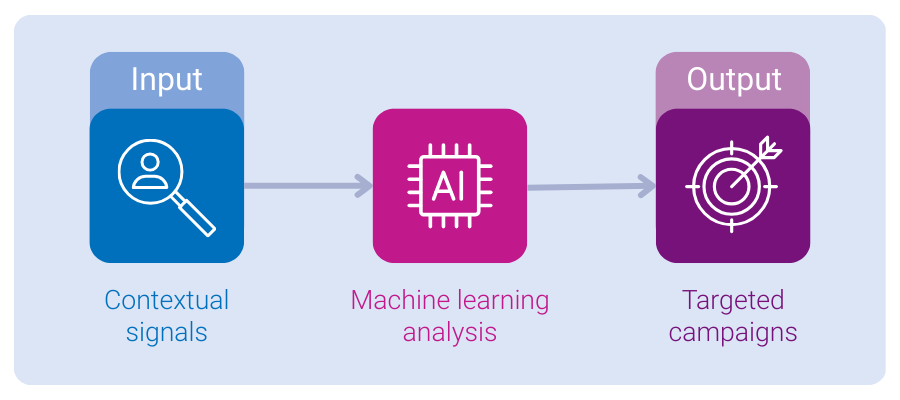
Advertisers and marketers are always looking for ways to remain competitive in the current digital landscape. The challenge of signal loss continues to prompt marketers to rethink their current and future strategies. With many major browsers phasing out support for third-party cookies due to privacy and data security concerns, marketers will need to find new ways to identify and reach their target audience. Contextual ad targeting offers an innovative solution; a way to combine contextual signals with machine learning to engage with your consumers more deeply through highly targeted accuracy. Contextual advertising can help you reach your desired audiences amidst signal loss – but what exactly is contextual advertising, and how can it help optimize digital ad success?
In a Q&A with our experts, Jason Andersen, Senior Director of Strategic Initiatives and Partner Solutions with Experian, and Alex Johnston, Principal Product Manager with Yieldmo, they explore:
- The challenges causing marketers to rethink their current strategies
- How contextual advertising addresses signal loss
- Why addressability is more important than ever
- Why good creative is still integral in digital marketing
- Tips for digital ad success

By understanding what contextual advertising can offer, you’ll be on the path toward creating powerful, effective campaigns that will engage your target audiences.
Check out Jason and Alex’s full conversation from our webinar, “Making the Most of Your Digital Ad Budget With Contextual Advertising and Audience Insights” by reading below. Or watch the full webinar recording now!
Macro impacts affecting marketers
How important is it for digital marketers to stay informed about the changes coming to third-party cookies, and what challenges do you see signal loss creating?
Jason: Marketers must stay informed to succeed as the digital marketing landscape continuously evolves. Third-party cookies have already been eliminated from Firefox, Safari, and other browsers, while Chrome has held out. It’s just a matter of time before Chrome eliminates them too. Being proactive now by predicting potential impacts will be essential for maintaining growth when the third-party cookie finally disappears.

Alex: Jason, I think you nailed it. Third-party cookie loss is already a reality. As regulations like the General Data Protection Regulation (GDPR) and the California Consumer Privacy Act (CCPA) take effect, more than 50% of exchange traffic lacks associated identifiers. This means that marketers have to think differently about how they reach their audiences in an environment with fewer data points available for targeting purposes. It’s no longer something to consider at some point down the line – it’s here now!
Also, as third-party cookies become more limited, reaching users online is becoming increasingly complex and competitive. Without access to as much data, the CPMs (cost per thousand impressions) that advertisers must pay are skyrocketing because everyone is trying to bid on those same valuable consumers. It’s essential for businesses desiring success in digital advertising now more than ever before.

Contextual ad targeting: A solution for signal loss
How does contextual ad targeting help digital marketers find new ways to reach and engage with consumers? What can you share about some new strategies that have modernized marketing, such as machine learning and Artificial Intelligence (AI)?
Jason: We’re taking contextual marketing to the next level with advanced machine learning. We are unlocking new insights from data beyond what a single page can tell us about users. As third-party cookies go away, alternative identifiers are coming to market, like RampID and UID2. These are going to be particularly important for marketers to be able to utilize.
As cookie syncing becomes outdated, marketers will have to look for alternative methods to reach their target audiences. It’s essential to look beyond cookie-reliant solutions and use other options available regarding advertising.
Alex: I think, as Jason alluded to, there’s a renaissance in contextual advertising over the last couple of years. If I were to break this down, there are three core drivers:
- The loss of identity signals. It’s forcing us to change, and we must look elsewhere and figure out how to reach our audiences differently.
- There have been considerable advances in our ability to store and operate across a set of contextual signals far more extensive than anything we’ve ever worked with in the past and in far more granular ways. That’s a huge deal because when it comes to machine learning, the power and the impact of those machine learning models are entirely based on how extensive and granular the data set is that you can collect. Machine learning can pull together critical contextual signals and figure out which constellations, or which combinations of those signals, are most predictive and valuable to a given advertiser.
- We can tailor machine learning models to individual advertisers using all those signals and find patterns across those in ways that were previously impractical or unfeasible. The transformation is occurring because of our ability to capture much more granular data, operate across it, and then build models that work for advertisers.

Addressability: Connect your campaigns to consumers
How does advanced contextual targeting help marketers reach non-addressable audiences?
Jason: Advanced contextual targeting allows us to take a set of known data (identity) and draw inferences from it with all the other signals we see across the bitstream. It’s taking that small seed set of either, customers that transacted with you before that you have an identity for, or customers that match whom you’re looking for. We can use that as a seed set to train these new contextual models. We can now look at making the unknown known or the unaddressable addressable. So, it’s not addressable in an identity sense, it is addressable in a contextual or an advanced contextual sense that’s made available to us, and we can derive great insight from it.
One of the terms I like to use is contextual indexing. This is where we take a set of users we know something about. So, I may know the identity of a particular group of households, and I can look at how those households index against any of the rich data sets available to us in any data marketplace, for example, the data Yieldmo has. We can look at how that data indexes to those known users to find patterns in that data and then extrapolate from that. Now we can go out and find users surfing on any of the other sites that traditionally don’t have that identifier for that user or don’t at that moment in time and start to be able to advertise to them based on the contextually indexed data.

Historically, we’ve done some contextual ad targeting based on geo-contextual, and this is when people wanted to do one to one marketing, and geo-contextual outperformed the one to one. But marketers weren’t ready for alternatives to one to one yet. We want marketers to start testing these solutions. Advertisers must start trying them, learning how they work, and learn how to optimize them because they are based on a feedback loop, and they’re only going to get better with feedback.
Alex: Jason, you described that perfectly. I think the exciting opportunity for many people in the industry is figuring out how to reach your known audience in a non-addressable space, that is based on environmental and non-identity based signals, that helps your campaign perform. Your known audience are people that are already converting – those who like your products and services and are engaged with your ads. Machine learning advancements allow you to take your small sample audience and uncover those patterns in the non-addressable space.
It’s also worth noting that in this world in which we are using seed audiences, or you are using your performing audiences to build non-addressable counterpart targeting campaigns, having high-quality, privacy-resilient data sets becomes incredibly important. In many cases, companies like Experian, who have high quality, deep rich training data, are well positioned to support advertisers in building those extension audiences. As we see the industry evolve, we’re going to see some significant changes in terms of the types of, and ways in which, companies offer data, and make that available to advertisers for training their models or supporting validation and measurement of those models.
Jason: Addressable users, the new identity-based users, are critical to marketers’ performance initiatives. They’re essential to training the models we’re building with contextual advertising. Together, addressable users and contextual advertising are a powerful combination. It’s not just one in isolation. It’s not just using advanced contextual, and it’s not just using the new identifiers. It’s using a combination to meet your performance needs.
It’s imperative to start thinking about how you can begin building your seed audiences. What can you start learning from, and how do you put contextual into play today? You are looking to build off a known set and build a more advanced model. These can be specialized models based on your data. You can hone in and create a customized model for your customer type, their profile, and how they transact. It’s a greenfield opportunity, and we’re super excited about the future of advanced contextual targeting.

Turn great creative into measurable data points
Why does good creative still play an integral part in digital advertising success?
Jason: Good creative has always been meaningful. It’s vital in getting people to click on your ad and transact. But it’s becoming increasingly important in this new world that we’re talking about, this advanced contextual world. The more signal that we can get coming into these models, the better. Good creative in the proper ad format that you can test and learn from is paramount. It comes back to that feedback loop. We can use that as another signal in this equation to develop and refine the right set of audiences for your targeting needs.
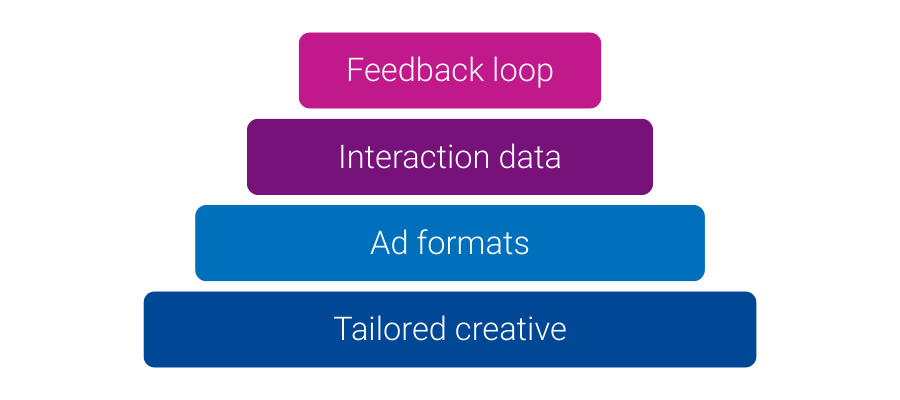
Alex: If you imagine within the broader context of identity and signal loss, creative and ad format becomes incredibly powerful signals in understanding how different audiences interact with and engage with different creative. In the case of the formats that serve on the Yieldmo exchange, we’re collecting data every 200 milliseconds around how individual users are engaging with those ads. Interaction data like the user scrolling back or the number of pixel seconds they stay on the screen, fills this critical gap between video completes and clicks. Clicks are sparse and down the funnel, and views and completes are up the funnel. All those attention and creative engagement type metrics occupy the sweet spot where they’re super prevalent, and you can collect them and understand how different audiences engage with your ads. That data lets you build powerful models because they predict all kinds of other downstream actions.
Throughout my career, I learned that designing or tailoring your creative to different audience groups is one of the best ways to improve performance. We ran many lift studies with analysis to understand how you can tailor creative customized for individual audiences. That capability and the ability to do that on an identity basis is starting to deteriorate. The ability to do that using a sample of data or using a smaller set of users, either where you’re inferring characteristics or you’re looking at the identity that does exist in a smaller group, becomes powerful for being able to customize your creative to tell the right story to the right audience. When you layer together all the interaction data collected at the creative level on top of all the contextual and environmental signals, you can build powerful models. Whether those are driving proxy metrics, or downstream outcomes, puts us in a powerful position to respond to the broader loss of identity that we’ve relied on for so many years.

Our recommendations for marketers for 2023 and beyond
Do you have recommendations for marketers building out their yearly strategies or a campaign strategy?
Jason: Be proactive and start testing and learning these new solutions. I mentioned addressability and being in the right place at the right time. That’s easier in today’s third-party cookie world. But as traditional identity is further constricted, you will have these first-party solutions that will not be at scale, so you’re less likely to find your user at the scale you want. It would be best if you thought about how to reach that user at the right place at the right time. They may not be seen from an identity basis. They might not be at the right place at the right time when you were delivering or trying to deliver an ad. But you increase your chance of reaching them by building these advanced contextual targeting audiences using this privacy-safe seed ‘opted-in’ user set; this is a way to cast that wider net and achieve targeted scale.
Alex: Build your seed lists, test your formats with different audiences, and understand what’s resonating with whom. Take advantage of some of the pretty remarkable advances in machine learning that are allowing us, really, for the first time to fully uncork the potential and the opportunity with contextual in a way that we’ve never done before.
Jason: At the end of the day, it’s making the unaddressable addressable. So, it’s a complementary strategy; having that addressable piece will feed the models. But also, that addressable piece still needs to be identity-based, addressable still needs to be part of your overall marketing strategy, and you need to complement it with other strategies like advanced contextual targeting. The two of them together are super complimentary. They learn from each other, and it’s a cyclical loop. Now is the time to take advantage and start testing and understanding how these solutions work.

We can help you get started with contextual ad targeting
Contextual advertising can help you stay ahead of the curve, identify your target audience, and continue to drive conversions despite signal loss. We’ve partnered with Yieldmo to help make sure that your marketing campaigns are reaching the right target audiences on the platforms that are most relevant. To get started with contextual ad targeting to reach the right audience at the right time and drive conversions, contact our marketing professionals. Let’s get to work, together.
Find the right marketing mix in 2023

Check out our webinar, “Find the right marketing mix with rising consumer expectations.” Guest speaker, Nikhil Lai, Senior Analyst from Forrester Research, joins Experian experts Erin Haselkorn, and Eden Wilbur. We discuss:
- New data on the complexity and uncertainty facing marketers
- Consumer trends for 2023
- Recommendations on finding the right channel mix and the right consumers
Get in touch
About our experts

Jason Andersen, Senior Director, Strategic Initiatives and Partner Solutions, Experian
Jason Andersen heads Strategic Initiatives and Partner Enablement for Experian Marketing Services. He focuses on addressability and activation in digital marketing and working with partners to solve signal loss. Jason has worked in digital advertising for 15+ years, spanning roles from operations and product to strategy and partnerships.

Alex Johnston, Principal Product Manager, Yieldmo
Alex Johnston is the Principal Product Manager at Yieldmo, overseeing the Machine Learning and Optimization products. Before joining Yieldmo, Alex spent 13 years at Google, where he led the Reach & Audience Planning and Measurement products, overseeing a 10X increase in revenue. During his time, he launched numerous ad products, including YouTube’s Google Preferred offering. To learn more about Yieldmo, visit www.Yieldmo.com.
Latest posts

With over one billion shoppers eagerly preparing to shop for gifts, decorations, and seasonal essentials, now is the perfect time to refine your marketing tactics and connect with these shoppers. With holiday retail sales set to reach $1.37 trillion, it’s time to unwrap holiday spending insights to ensure that your holiday advertising campaigns light up the festive season. The holiday shopping frenzy offers marketers and retailers a chance to capture attention, drive sales, and build lasting customer relationships. In this blog post, we’ll reveal holiday shopping audiences, including 19 new audiences, designed for you to reach the most relevant shoppers for your campaigns. These audiences are available for activation on-the-shelf of most major ad platforms, including TV and programmatic. You can find the complete audience segment name in the appendix. 2025 Holiday spending trends and insights report Download our latest report for data-driven insights you can use to refine your messaging and reach the right audience in their preferred channels this holiday season. Download now What separates Experian's syndicated audiences Experian’s 2,400+ syndicated audiences are available directly on over 30 leading television, social, programmatic advertising platforms, and directly within Audigent for activation within private marketplaces (PMPs). Reach consumers based on who they are, where they live, and their household makeup. Experian ranked #1 in accuracy by Truthset for key demographic attributes. Access to unique audiences through Experian’s Partner Audiences available on Experian’s data marketplace, within Audigent for activation in PMPs and directly on platforms like DirectTV, Dish, Magnite, OpenAP, and The Trade Desk. Download our 2024 holiday shopping report Holiday shopping styles It's important to understand how your holiday shopper “shops,” with individual shopping styles varying from a last-minute dash to the store to the one-stop shopper. One in three consumers anticipate beginning their holiday shopping before October this year, with Millennials and Gen Xers being the most proactive, due to concerns about items running out of stock. In contrast, 42% of Boomers are generally less inclined to shop early, wanting to start their holiday shopping in November or December. All generations are motivated to shop early by discounts.1 By choosing and activating the right audience segments, you can deliver messages that resonate with the consumer's preferred shopping style, ensuring your holiday campaign will align with their shopping preferences and behaviors. Here are five audiences that you can activate based on shopping style: Last-Minute Holiday Shoppers One Stop Holiday Shoppers/Power Shoppers: In-Store or Online Impulse Buyers eCommerce Diehards Brick & Mortar Diehards Discount-seeking shoppers The holiday season is a time of giving, but also saving! Consumers are driven to shop early by discounts and early sales — 52% of consumers said discounts are their biggest motivator to shop early. Price is another crucial factor — 47% of consumers said price is the most important factor when deciding where to shop during the holiday season. Major holiday shopping events, such as Thanksgiving Day, Black Friday, and Cyber Monday, are expected to attract a significant portion of consumers this upcoming year.2 Here are eight audiences you can activate to reach discount-seeking shoppers: NEW! Discount Holiday Shoppers NEW! Cyber Monday Holiday Shoppers NEW! Black Friday Holiday Shoppers NEW! Big Box/Club Stores Holiday Shoppers NEW! Online Coupon Users TrueTouch: Online Coupon Site Department Store Deal Shoppers: In-Store or Online Post Holiday Shoppers Gift givers Holiday shoppers are torn between saving and splurging. Nearly a third of consumers anticipate spending more on holiday shopping this year, while the same number of consumers say they’ll be spending less. Boomers anticipate spending the most on gift cards, Gen Z on clothing, and Millennials on toys, electronics, and experiences.3 Given holiday shoppers' varied spending habits, it's important to target the right audience segments to maximize your impact. Targeting specific audience segments allows advertisers to better reach those most interested in their products. Here are six audiences you can activate to target gift givers: NEW! Luxury Gift Shoppers NEW! Holiday Shopping High Spenders NEW! Holiday Shopping Moderate Spenders NEW! Holiday Charitable Donations High Spend Gift Shoppers Heavy Buyer/Spenders Holiday Shoppers: In-Store or Online Holiday travelers In 2023, nearly three million travelers passed through airports on the Sunday after Thanksgiving alone. Take advantage of the busy travel season with our audience segments. By targeting specific travel preferences and behaviors, you can capture the attention of individuals planning trips this holiday season. Here are seven audiences to tailor your campaign according to travel preferences: NEW! Holiday International Travelers NEW! Holiday Travel-Train NEW! Holiday Budget Savvy Airline Travelers Vacation/Leisure Travelers: Domestic Trips Air Travel (FLA/Fair Lending Friendly)4 Vacation/Leisure Travelers: Frequent Spenders Hotels: Frequent Spend When you work with Experian, you work with a single data provider that gives you access to audiences across multiple verticals and categories, such as travel and retail. Targeted advertising this holiday season with Experian audiences The holiday season is the busiest time of the year for advertisers. Experian's data, ranked #1 in accuracy by Truthset, allows advertisers to reach people based on demographic, geographic, and behavioral attributes (e.g. websites visited and purchase history). By using Experian’s audiences in your holiday advertising campaigns, you can reach last-minute shoppers, discount-seeking shoppers, gift-givers, and holiday travelers. Just as shoppers seek the perfect gifts, with the right strategy, your holiday advertising campaigns can capture the right shoppers this holiday season. Need a custom audience? Reach out to our audience team and we can help you build and activate an Experian audience on the platform of your choice. Additionally, work with Experian’s network of data providers to build audiences and send to an Audigent PMP for activation. Connect with our audience team You can activate our syndicated audiences on-the-shelf of most major platforms. For a full list of Experian’s syndicated audiences and activation destinations, download our syndicated audiences guide. Explore our other seasonal audiences that you can activate today. View now Download our 2025 Holiday spending trends and insights report This holiday season is about more than just transactions – it’s about cultivating meaningful connections with your audience. Download our 2025 Holiday spending trends and insights report, in collaboration with GroundTruth, to access all of our predictions for this year’s holiday season. Download now Contact us Footnotes Online survey conducted in June, 2024 among n=1,000 U.S. adults 18+. Sample balanced to look like the general population on key demographics (age, gender, household income, ethnicity, and region). n = 204 Gen Z, n = 234 Millennials, n = 270 Gen X, n = 272 Baby Boomers. Online survey. Online survey. “Fair Lending Friendly” indicates data fields that Experian has made available without use of certain demographic attributes that may increase the likelihood of discriminatory practices prohibited by the Fair Housing Act (“FHA”) and Equal Credit Opportunity Act (“ECOA”). These excluded attributes include, but may not be limited to, race, color, religion, national origin, sex, marital status, age, disability, handicap, family status, ancestry, sexual orientation, unfavorable military discharge, and gender. Experian’s provision of Fair Lending Friendly indicators does not constitute legal advice or otherwise assures your compliance with the FHA, ECOA, or any other applicable laws. Clients should seek legal advice with respect to your use of data in connection with lending decisions or application and compliance with applicable laws. Appendix Here are the complete audience segment names (taxonomy paths) for all audience segments discussed in this blog post. Holiday shopping styles Retail Shoppers: Purchase Based > Seasonal > Holiday Shoppers: Last-Minute Holiday Shoppers Retail Shoppers: Purchased Based > Seasonal > Holiday Shoppers: One Stop Holiday Shoppers/Power Shoppers: In-Store Retail Shoppers: Purchased Based > Seasonal > Holiday Shoppers: One Stop Holiday Shoppers/Power Shoppers: Online TrueTouch: Communication Preferences > Purchase Behavior > Impulse buyers Retail Shoppers: Purchase behavior > Shopping Behavior > In-Store vs. Online: eCommerce Diehards Retail Shoppers: Purchase behavior > Shopping Behavior > In-Store vs. Online: Brick & Mortar Diehards Discount-seeking shoppers NEW! Retail Shoppers: Purchase Based > Seasonal > Holiday Shoppers: Cyber Monday NEW! Retail Shoppers: Purchase Based > Seasonal > Holiday Shoppers: Black Friday NEW! Retail Shopper: Purchase Based > Seasonal > Holiday Shoppers: Big Box/Club Stores Shoppers NEW! Retail Shoppers: Purchase Based >> Discount Holiday Shoppers NEW! Retail Shoppers: Purchased Based > Shopping Behavior > Online Coupon Users TrueTouch: Communication Preferences> Purchase Behavior > Online Coupon Site Retail Shoppers: Purchased Based > Shopping Behavior > Department Store Deal Shoppers Online Spenders Retail Shoppers: Purchased Based > Shopping Behavior > Department Store Deal Shoppers In-Store Spenders Retail Shoppers: Purchased Based > Seasonal > Holiday Shoppers: Post holiday Gift givers NEW! Retail Shoppers: Purchase Based > Seasonal > Holiday Shoppers: Luxury Gift Shoppers NEW! Retail Shoppers: Purchase Based > Seasonal > Holiday Shoppers: High Spenders NEW! Retail Shoppers: Purchase Based > Seasonal > Holiday Shoppers: Moderate Spenders NEW! Retail Shoppers: Purchase Based > Seasonal > Holiday Charitable Donations Retail Shoppers: Purchase Based > Shopping Behavior > Gift Shoppers High Spend Spenders Retail Shoppers: Purchase Based > Seasonal > Holiday Shoppers: Heavy Buyer/Spenders: Online Retail Shoppers: Purchase Based > Seasonal > Holiday Shoppers: Heavy Buyer/Spenders: In Store Holiday travelers NEW! Retail Shoppers: Purchase Based > Seasonal > Holiday International Travelers NEW! Retail Shoppers: Purchase Based > Seasonal> Holiday Travel-Train NEW! Retail Shoppers: Purchase Based > Seasonal > Holiday Budget Savvy Airline Travelers Retail Shoppers: Purchase Based > Travel > Vacation/Leisure Travelers: Domestic Trips Lifestyle and Interests (Affinity) > Travelers > Air Travel (FLA/Fair Lending Friendly) Retail Shoppers: Purchase Based > Travel > Vacation/Leisure Travelers: Frequent Spenders Retail Shoppers: Purchase Based > Travel > Hotels: Frequent Spend Latest posts
In our Ask the Expert Series, we interview leaders from our partner organizations who are helping to lead their brands to new heights in ad tech. Today’s interview is with Jordan Feivelson, VP, Digital Audiences at Webbula. Jordan is a 22-year advertising industry veteran who has worked for media properties such as WebMD and Disney. Over the past ten years, he has transitioned to the data and programmatic space, including growing the data business for Kantar Shopcom and Adstra. What types of advertisers might benefit from utilizing Webbula audiences across various verticals? Can you provide examples of how different industries successfully leverage your data to achieve specific campaign goals? Most advertisers can leverage Webbula’s award-winning attributes for their activation initiatives. Webbula offers approximately 3,000 syndicated segments covering categories such as Demographics, Automotive, Political, Mortgage, B2B, Hobby/Interest/Lifestyle, and Interests & Brand Preferences (brand name targeting). Audience insights and marketing strategies What specific types of audience segments does Webbula provide? How can advertisers leverage these segments to craft more effective, personalized marketing strategies? Webbula has incredible depth and breadth within its verticals, giving marketers the tools to deliver targeted messaging effectively. Our Demographic, B2B, Mortgage, Automotive, and Interest and Brand Preferences segments each contain 500-1,000 segments, all built on deterministic, self-reported, and individually linked data. We ensure the best accuracy with multiple deterministic data points tied to the real world (ex., first name, last name, postal address, and email address). Some examples of our unique syndicated audience types: B2B: A view of the latest industry trends with detailed cuts of the professional world, such as companies with and not within the Fortune 500 companies and job positions that are directors and below. This also includes custom capabilities, including ABM (list of target companies in an activation campaign or by industry code (ex. NAICS, SIC). Interest and Brand Preferences: Consumers who have shown interest and affinity to hundreds of brands (ex., Nike), genres (ex., comedy, hip hop), sports teams, and more. Mortgage: A detailed view of homebuyers’ purchase range, loan type (ex. jumbo loan, standard loan), mortgage amount, interest rate, and more. With Webbula’s audience data, brands can create a comprehensive picture of their audiences down to the individual level and reach them accurately. Data quality, sourcing, and differentiation How is consumer data sourced and curated at Webbula? Are there data quality standards that Webbula establishes for consumer data, and how do you ensure your sources and methods meet these standards consistently? Webbula’s data is aggregated from over 110 trusted and authenticated sources, including publishers, data partners, social media, and more. The data collected comes directly from consumers who self-report information through surveys and other methods. We apply our hygiene filters to mitigate fraud and accurately score the data. Data Collection: The data collected comes directly from consumers who self-report information through surveys, questionnaires, transactions, and sign-ups. This ensures that brands display ads to audiences based on self-identified, cross-channel behaviors, not modeled assumptions. Hygiene Solutions: Webbula applies multi-method hygiene solutions to mitigate fraud and accurately score the data before onboarding, ensuring that all data meets the highest quality standards. Examples of Data Sources: Questionnaires: Self-reported data through surveys, offer submissions, and telemarketing. Transactions: Deterministic data from aftermarket parts, online purchases or services, and more. Sign-ups: Individually linked data from information entered through sweepstakes, infomercials, newsletters, and forms. What differentiates Webbula's data from other data providers in the market? Can you explain the unique value proposition that Webbula offers in terms of data depth and breadth? Due to our extensive experience in data cleansing, we provide the most accurate data within the programmatic ecosystem. TruthSet, the leading programmatic accuracy measurement company, has ranked Webbula as having the highest number of top attributes compared to other data providers with 150M+ HEMs. Additionally, Publicis Groupe and Neutronian further validate Webbula's data quality, underscoring its position as a leader in the industry. Webbula's data stands out in the market due to its unmatched accuracy and quality, achieved through years of expertise in data cleansing. Unlike other providers, Webbula’s foundation lies in its robust email hygiene process, ensuring that all data entering the programmatic ecosystem is thoroughly cleansed. Privacy, compliance, and future-proofing What measures does Webbula take to maintain data privacy and compliance? How do these efforts benefit advertisers in an evolving regulatory landscape and ensure ethical standards? Webbula was created over a decade ago with a future-proof, privacy-compliant foundation. We understand the industry’s rapid changes, including government and state legislation and cookie depreciation. Our goal has always been to build long-term partnerships and ensure we are prepared for industry changes. We rely on validated offline data sources, making us resilient to external influences. Success stories Can you share success stories where advertisers saw significant campaign improvements using Webbula’s data? What were the key factors that contributed to these successes? Our success is measured by client feedback and increased client spend. Webbula has helped several key advertisers achieve six-figure monthly thresholds by providing the most accurate data to meet campaign KPIs. Clients consistently return to use our data, validating our belief that “the proof is in the pudding.” Thanks for the interview. Any recommendations for our readers if they want to learn more? For those interested in learning more about Webbula, reach out for a personalized consultation. Contact us Latest posts

This holiday shopping season, marketers will look to take advantage of the surge in spending across channels like connected TV (CTV), programmatic, and mobile. Despite challenges such as privacy regulations and Google's new cookie deprecation plan, this moment presents a unique opportunity for marketers to reshape their traditional approaches to consumer engagement and capitalize on these changes. As we approach the holiday season, understanding how consumers spend, where they shop, and how their shopping habits are changing are key components to consider when crafting your holiday advertising campaigns. Our 2024 Holiday spending trends and insights report utilizes our expertise in data and insights to highlight emerging consumer behaviors and spending patterns. In our report, we share what these trends mean for marketers and how Experian can help, so you can refine your messaging and target the right audience through the best channels. Download our 2024 report In this blog post, we cover three insights from our report. Watch our video for a recap below. 1. Consumers are shopping evenly throughout the holiday season 35% of holiday shopping was done in December, peaking at 9% of total holiday sales the week before Christmas. Cyber Week, the five-day period between Thanksgiving and Cyber Monday, and the week before Christmas brought the highest weekly sales for the past two holiday seasons. What this means for marketers Prepare for an extended promotional period. Schedule your marketing campaigns and sales initiatives to maximize impact during the extended season, focusing on the peaks of Cyber Week and the week before Christmas. How Experian can help you target these shoppers Experian's data, ranked #1 in accuracy by Truthset, offers advertisers the ability to reach people based on demographic, geographic, and behavioral attributes (e.g. websites visited and purchase history). Our audiences are available on-the-shelf of most major platforms, making it easy for you to activate and target holiday shoppers. We recently released 19 new holiday-focused audience segments. Here are a few you can activate: Black Friday Shoppers Cyber Monday Shoppers Big Box/Club Store Shoppers Luxury Gift Shoppers Discount Holiday Shoppers Holiday Airline Travel 2. Online shopping is leveling out Online holiday spending continues to remain around a third of all holiday shopping spending. We are starting to see online shopping slow and level out – people are going back in-store. The high amount of online shopping we saw during the pandemic is starting to return to pre-pandemic behaviors. Consumers are spending more in-store at department and discount stores but are shopping online for office/electronics/games, mass retailers, and apparel. 84% of holiday shopping was done in-store for discount stores. 79% of holiday shopping was done in-store for department stores. 64% of holiday shopping was done online for office, electronics, and games stores. What this means for marketers Digital and physical experiences work together. Retailers should have a multi-channel plan to reach consumers, tailoring their approach to their target audience and product and creating engaging in-store experiences to drive visitors. How Experian can help you target and measure across channels We connect online and offline data to enable precise targeting and measurement of marketing efforts across multiple channels. Read our case study with Cuebiq to learn how they used our Activity Feed solution to deliver in-store lift analyses to their clients. 3. CTV is the top channel to reach consumers Over two-thirds of the U.S. population now use CTV, and the average time spent among adults is expected to surpass two hours per day in 2024. CTV offers a creative ad experience similar to its linear counterpart but provides more sophisticated targeting and analytics capabilities. What this means for marketers As CTV viewing continues to dominate, the importance of cross-device targeting and measurement increases. How Experian can help you reach shoppers across devices Later this year, we’ll add support for IPv6 in our Digital Graph as well as phone-based UID2s. This is in addition to our current coverage of IPv4 and email-based UID2s. As a result, all IP signals and UID2s will be resolved back to Experian’s household and individual profiles and their associated devices, which means marketers and platforms can better understand the full customer journey and reach people across their devices. Download our 2025 Holiday spending trends and insights report This holiday season is about more than just transactions – it’s about cultivating meaningful connections with your audience. Download our 2025 Holiday spending trends and insights report, in collaboration with GroundTruth, to access all of our predictions for this year's holiday season. Download now When you work with Experian for your holiday shopping campaigns, you're getting: Accurate consumer insights: Better understand your customers' behavioral and demographic attributes with our #1 ranked data covering the full U.S. population. Signal-agnostic identity solutions: Our deep understanding of people in the offline and digital worlds provides you a persistent linkage of personally identifiable information (PII) data and digital IDs, ensuring you accurate cross-device targeting, addressability and measurement. Secure connectivity: Bring data and identity to life in a way that meets your needs by securely sharing data between partners, utilizing the integrations we have across the ecosystem, and using our marketing data in flexible ways. Make the most of this holiday shopping season with Experian. Contact us today to get started. Contact us Latest posts