
We spend our days surrounded by screens: at work, at home, and everywhere in between. But audio is the one channel that moves with us, from morning routines to evening commutes, from workouts to household chores. More than two-thirds of U.S. consumers will listen to digital audio every month this year, making it one of the fastest-growing ways to connect with audiences. Experian and Audacy are working together to solve the challenges of fragmented listening, cross-platform targeting, and campaign measurement, helping brands reach people in the moments other channels can’t.
Why audio sticks with us
Audio fits into life’s in-between moments, from the commute to the workout to the chores, when other media can’t. Unlike video, it doesn’t demand full attention; it joins the flow of daily routines. This makes audio uniquely personal, creating connections that other formats can’t replicate.
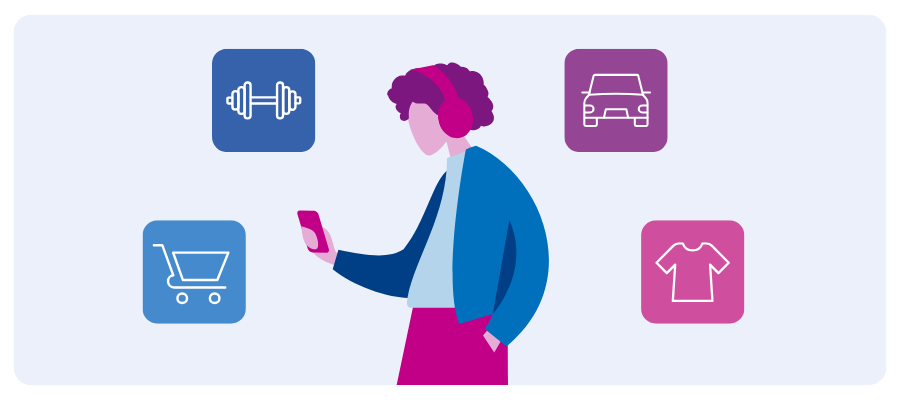
Audacy’s expertise in understanding listener behavior ensures that audio campaigns feel like a natural part of daily life. Experian’s data helps advertisers identify the right audiences, while Audacy ensures the message is delivered at the right time. Together, we help brands create campaigns that resonate deeply with listeners. By meeting audiences in their moments of focus, audio becomes a powerful tool for building meaningful and lasting connections.
“Audio is a companion in people’s daily rituals. Whether it’s doing dishes, folding laundry, or going for a run, you have audio going in your ears, and you’re really engaged with it. From an advertising perspective, that’s incredibly powerful because listeners are paying attention to the content.”
AudacyKevin Greenwald, SVP of Advertising and Audience Products
Making sense of scattered listening habits
Today’s listeners consume audio across a variety of devices and platforms. Devices like smart speakers and smart home hubs now account for over 27% of digital audio time spent daily among U.S. adults, highlighting the growing role of connected devices in audio consumption. When listeners bounce between apps, stations, and devices, it’s easy for advertisers to lose track of them. Audacy’s advanced platform capabilities, combined with Experian’s identity solutions, simplify this process by providing a unified view of audience behavior, ensuring campaigns remain cohesive.
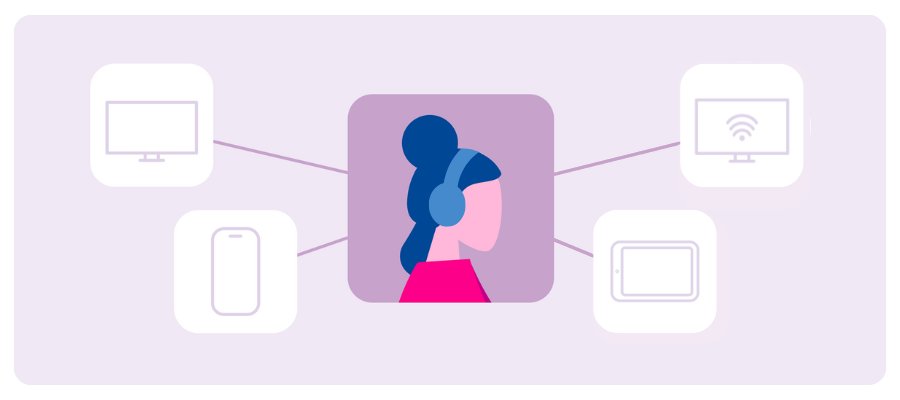
Audio is highly adaptable, letting advertisers tweak a message on the fly by shifting tone, length, or format to stay relevant in the moment. This flexibility ensures that campaigns remain cohesive and impactful, no matter where or how listeners engage.
“Audio has a degree of flexibility that other channels don’t. You’re not tied to a programming clock, and ad lengths can vary. It’s also easy to create a great audio ad quickly, which makes it a channel ripe for experimentation and innovation.”
AudacyKevin Greenwald, SVP of Advertising and Audience Products
Following listeners wherever they go
Today’s listeners don’t stay in one place: they bounce from live radio in the morning to streaming music during the day, then wind down with a favorite podcast at night. For advertisers, that creates a challenge: how do you keep up with an audience that’s always moving? Without a unified view of the listener journey, campaigns can lose impact. With the right insights, though, every handoff becomes an opportunity to stay relevant and connected.
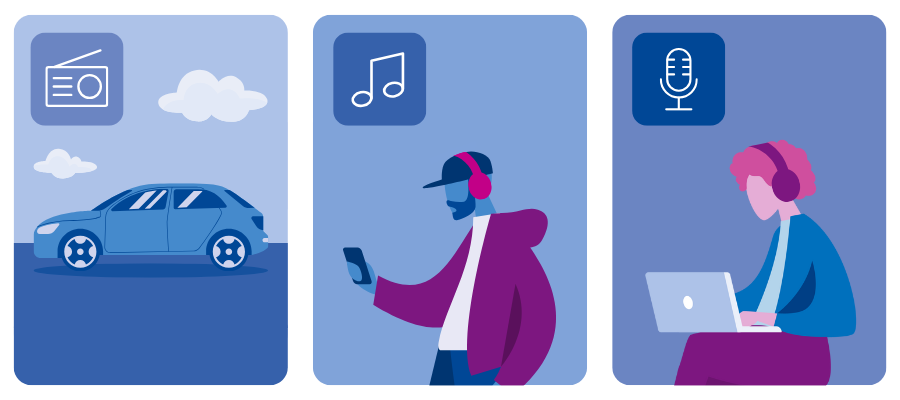
Audacy’s platform, combined with Experian’s identity solutions, bridges these gaps. Together, we help you follow your audience wherever they go, creating consistent experiences that drive results. This approach improves targeting and ensures that messages remain impactful.
“I hope that there’s a day coming where we can understand ad exposure in the car as well as more cars are connected and things like that. That would be really powerful.”
AudacyKevin Greenwald, SVP of Advertising and Audience Products
Your audience is listening, let’s make sure they hear you
Audio helps you connect with your audience in moments other channels miss. With Experian’s marketing data and Audacy’s expertise, you can simplify cross-platform targeting, improve campaign measurement, and create messages that truly resonate. Let’s work together to make your message heard.
Let’s talk audio strategy. Contact us today
About our experts

Kevin Greenwald
SVP of Advertising and Audience Products, Audacy
Kevin Greenwald is the SVP of Advertising & Audience Products, where he partners closely with Audacy’s sales team to deliver leading ad product and measurement capabilities for their clients.

Crystal Jacques
VP of Enterprise Partnerships, Experian
Crystal Jacques is the VP of Enterprise Partnerships, leading Experian’s go-to-market team across all verticals. With over ten years of experience in the Identity space, Crystal brings a wealth of expertise to her role. She joined Experian in 2020 through the Tapad acquisition, following her successful stint as the head of Global Channel Partnerships for Adbrain, which The Trade Desk later acquired.
Latest posts

Identified in The 2021 Digital Advertising Trends Report published by Postclick, marketers are striving to improve and enhance their segmentation and targeting strategies in their digital ad campaigns. Carlos Lopez, SVP of Brand Planning at Digitas Health predicted that in 2021, the challenge will be to overcome the death of third-party cookies and still deliver a personalized advertising experience. It’s fair to say that his prediction will still be impacting marketers past 2021 with the delay of cookie deprecation. These goals along with the constantly changing digital landscape paint a challenging picture for even the most advanced marketers. Marketers can be prepared for the next era of digital marketing by finding the right mix of partners that offer privacy-safe, cookie-free solutions. Smart marketers will employ these solutions and compare these results with data from cookies. The Tapad + Experian Take The Tapad Graph enables brands, agencies, and ad tech platforms to identify and target individuals and households across their digital touchpoints. With this data, they can personalize messages across devices, measure and optimize throughout the customer journey, and then report back on conversions at the individual and household levels. Tapad, now part of Experian, leverages a machine learning algorithm that determines these connections at scale by using probabilistic models with authenticated, privacy-safe, real-time data. There are a myriad of cookieless IDs emerging in the marketplace, and it’s not likely going to be a one size fits all situation. In order to be prepared for the next era of digital marketing, marketers should diversify ID partners and be proactive with testing while the cookie is still around to benchmark against. With Switchboard, a module within The Tapad Graph, we’ve been able to develop connections between traditional digital identifiers (IP Addresses, MAIDs, CTV IDs) and the new wave of cookieless IDs (UID2.0, Panorama ID, ID5 ID) that will be utilized in the future. Here’s an example of what The Tapad Graph and Switchboard looks like at the Household level with various traditional digital identifiers and cookieless IDs. Get in touch
Marketers are under more pressure than ever before to prove ROI and efficiency of marketing activities in relation to business performance. On top of that, there are new privacy regulations and uncertainty around what new technologies will have to be implemented in order to replace the granular level targeting and measurement the industry historically has used third-party cookies for. It’s clear marketers are going to need the right tech stack and partners to continue to prove their team’s efficacy. We recently partnered with Forrester Consulting to evaluate the current state of customer data-driven marketing and surveyed over 300 global marketing decision makers at the brand and agency levels. We found that marketing is facing increased demands today, insights from the study include:Consumers expect brands to deliver engaging experiences across highly fragmented journeys. Seventy-two percent of decision-makers reported that customers demand more relevant, personalized experiences at the time and place of their choosing. Marketing runs on data, but the rules governing customer data usage are changing quickly. More than 70% of study participants stated that consumer data is the lifeblood of their marketing strategies, fueling the personalized, omnichannel experiences customers demand. These demands paint a challenging picture. Just as marketers are poised (and tasked) with delivering greater value to their organizations and customers, the ground rules are changing and threatening their ability to deliver. Indeed, 62% of respondents said that the forces of data deprecation will have either a “Significant” (40%) or “Critical” (21%) impact on their marketing strategies over the next two years. Effective identity resolution can help brands prepare for data deprecation challenges Marketers face a daunting landscape, but they can leverage the data, technology, and processes that comprise identity resolution to address business objectives, combat ecosystem complexity, and future-proof customer engagement efforts. By utilizing identity resolution, marketers will be able to match and connect multiple identifiers across devices and touchpoints. This allows for a cohesive, omnichannel view that enables brands to continue to deliver personalized and contextually relevant messages throughout the customer journey and without the use of cookies. The identity graph is the underlying infrastructure that defines connections between the numerous, fluid, and disparate identifiers created during moments of consumer engagement, turning disparate signals into addressable and actionable steps. These connections enable brands to bolster their ability to gain deeper customer insights and power audience building, attribution, and connected measurement. Identity resolution encompasses a wide range of capabilities that support an equally diverse set of marketing use cases. These include the targeting, personalization, and measurement of both known and pseudonymous audiences in the offline and digital worlds, which enables marketers to improve customer data management, drive more effective personalization, and gain insights and efficiencies through measurement across touchpoints. By taking the time to vet the privacy procedures and data collection processes of identity solutions you can reduce your regulatory risk and maintain customer trust. In an open-ended survey response, a marketer shared, “We’ve found that users are willing to volunteer data when they understand what it’s being used for and are asked for clear consent.” Finding the right partners to help navigate the changes The scramble to find an alternative to third-party cookies has slowed down since Google announced they will be delaying their cookie removal until late 2023. However, this gives marketers a unique opportunity to take advantage of the additional time and feel more prepared and confident in their solutions. With the delay, marketers can now test ID solutions and compare apples to apples with data from the third-party cookie while it’s still active and addressable. Test and find a solution that works now, so there are no surprises once cookies have finally made their way out the door in 2023. At Tapad, a part of Experian, we’ve developed a solution that provides agnostic interoperability for the myriad of cookieless identifiers emerging in the market. As a new module in the Tapad Graph, Switchboard will connect traditional digital identifiers to cookieless IDs to support the entire ad ecosystem with privacy-safe future-proof identity resolution. Get in touch
Email hashing was originally intended to be used as an email security feature that has ended up being a very powerful marketing tool. A hashed email is a cryptographic function that changes an email address to a random code which can be used as an anonymous customer identifier. This code is privacy-safe and cannot be traced back to the customer’s email address. However, this hashed email can function like a digital passport that traces every behavior and action a customer takes when logged into an account that is authenticated with an email, making hashed emails a goldmine for customer data. Today emails are used across traditional publishers and within the CTV ecosystem; tying them to more consumer touch points than ever before. Why the emphasis now? Cookies are on their way out the door and have been the primary way that many marketers have tracked their existing and potential customers. In order to replace this granular level of data, marketers are likely going to need multiple solutions. With so many cookieless solutions and IDs appearing in the marketplace, the mapping of the customer journey is bound to be fragmented. Relying on first-party data, such as hashed email, is just one way to reduce that fragmentation; as it can serve as an authenticated starting point for cross-device identity resolution that can be leveraged for targeting, personalization and measurement. How can Tapad + Experian help? Tapad + Experian's Hashed Email Onboarding is a privacy-safe way to connect consumer email addresses to their related digital devices and other digital identifiers through high precision probabilistic identity. By onboarding hashed emails and incorporating them within your Tapad Graph file you can: Build a more holistic view of individuals and households and their relationship to email addresses in your first-party data set Leverage these relationships for increased cross-device scale for targeting Employ personalization tactics at the household or individual level across devices Create new audience segments and look-alike models for cross-channel activation Design more inclusive measurement and attribution for customer journey mapping Tapad, a part of Experian has built a hashed email onboarding product feature that works with the existing flexibility of The Tapad Graph to deliver the most holistic consumer view, combined with the attributes you need, in the structure that works best for your business objectives. Get in touch