At A Glance
First-party data for commerce media networks (CMNs) provides a direct connection to shopper behavior that advertisers value. But logged-in users and loyalty members only tell part of the story. Connecting fragmented identities and adding context beyond the observed behaviors can help CMNs turn more of the data they already own into consumer intelligence that works across media channels, while keeping their customer relationships at the center.Key takeaways
- First-party data can leave coverage gaps between the shoppers a CMN knows and the audiences it can consistently recognize and reach.
- Experian’s identity resolution and enrichment solutions help commerce media networks connect fragmented signals and add context beyond the direct customer relationship.
- CMNs can focus on closing their first-party data gaps and building a more complete view of their consumers. Our neutral approach helps them activate and measure campaigns across platforms without building separate integrations for every partner, while giving them the flexibility to work with their preferred technology and media partners.
Owning first-party data gives CMNs a strong foundation. The next step is connecting shopper data across customer relationship management (CRM), digital, and TV. Identity resolution helps CMNs link interactions across channels so they can recognize and reach consumers more consistently.
Media networks know what people browse and buy, loyalty programs create direct customer relationships, and transaction data gives advertisers a valuable connection between media and commerce. But logged-in and loyalty data rarely represent every shopper interaction. CMNs need to connect these signals to build a more complete view of their consumers and put that insight into action.

A shopper might research a product anonymously on mobile, buy it in-store without using a loyalty account, and then return using a different email address. By connecting these interactions, CMNs can build a more complete view of their consumers and better understand how shoppers engage across channels.
Multiply that across millions of interactions, and the challenge grows. Guest transactions can sit outside loyalty profiles, identifiers change, and shoppers move between stores, websites, apps, and devices. A CMN may have plenty of first-party data and still see only part of its audience.
The addressability gap starts inside the data
CMNs face an addressability gap when disconnected shopper data limits their ability to recognize and reach consumers beyond their own properties. Connecting loyalty profiles, transactions, and digital identifiers helps CMNs extend their reach across connected TV (CTV), social, and programmatic media.
Market concentration makes that challenge more pressing. Amazon and Walmart will capture more than 89% of incremental U.S. retail media spending in 2026. Their large logged-in audiences and extensive commerce data give them an advantage. Other CMNs can compete by making better use of the shopper data they already have.

Identity resolution helps CMNs close the addressability gap by connecting logins, devices, email addresses, and transactions to consistent consumer and household identities. This helps CMNs recognize shoppers across channels and reach more of their audience.
Our neutral infrastructure helps CMNs use that identity foundation across their preferred technology and media partners. They can build on existing investments, strengthen cross-platform addressability, and maintain flexibility without relying on a single provider.
A transaction tells you what happened, not the whole story
CMNs can build more valuable audiences for advertisers by enriching their first-party shopper data with deeper consumer insights. This helps them improve audience segmentation, strengthen their advertising offerings, and create more opportunities to generate revenue.
Purchase data reveals what shoppers buy, but it doesn’t always explain who they are or what else matters to them. A retailer may know that someone buys organic groceries every week or recently purchased paint and power tools. Two shoppers who bought the same product may represent very different audiences for advertisers.
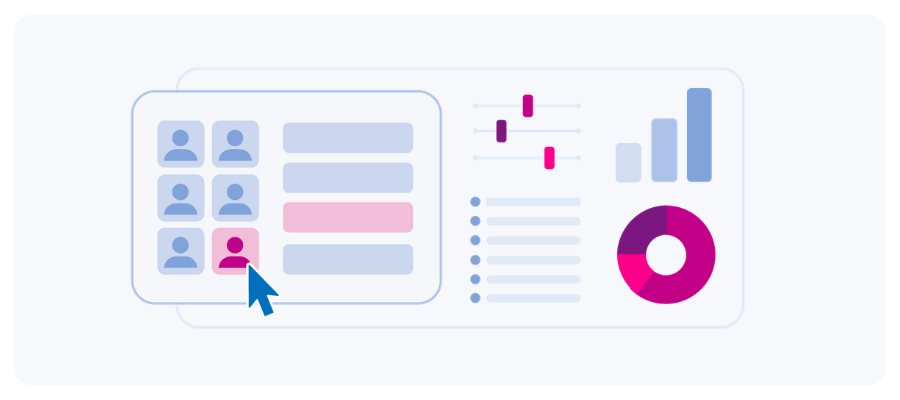
Experian’s Enrichment capabilities help CMNs look beyond transactions by appending demographic and behavioral attributes from Experian Marketing Data to their first-party shopper data. These additional insights help CMNs refine segmentation, inform modeling, and create more relevant audiences for advertisers. With richer consumer insights, CMNs can turn transaction data into more valuable advertising offerings, helping them create new revenue opportunities while maintaining their direct shopper relationships.
Keep first-party data connected across media
CMNs can get more value from their first-party data by keeping consumer identities and audience definitions consistent across media channels. Connecting shopper signals and adding consumer context helps them build audiences they can activate, collaborate with advertisers, and measure across platforms.
Keeping audiences consistent across media channels can be challenging as CMNs move between platforms and partners. Audiences can lose scale when they reach another environment, and differences in how partners recognize consumers can create gaps in activation and measurement.
Our neutral infrastructure helps CMNs keep their first-party data connected across their preferred technology and media partners. They can maintain control over their data and identity, build on existing investments, and avoid relying on a single provider.
Experian helps CMNs strengthen their first-party data foundation for use across existing systems and media channels. With our identity resolution and offline identity append capabilities, CMNs can share first-party data with us to connect disparate records to individuals and households and add missing offline identifiers. We then return the data so CMNs can use it across their existing systems and preferred partners.
By keeping first-party data connected across media, CMNs can extend the value of their shopper relationships, support advertiser campaigns, and make better use of their existing technology investments.
More addressable data creates more places to grow
Connecting shopper data across media helps CMNs expand their addressable audiences and create more advertising opportunities.
A more complete, addressable audience can give advertisers more ways to use first-party data that makes a CMN distinct. It can help networks extend those audiences beyond owned-and-operated properties into CTV, social, programmatic, and other environments where shoppers spend their time.
CMNs can build on their existing technology investments by improving the quality and consistency of their first-party data. With a stronger identity foundation, they can better understand their customers, activate audiences across channels, and measure campaign outcomes.
CMNs can strengthen their advertising offerings by turning more of their existing shopper data into audiences advertisers can reach across channels. By recognizing more consumers across channels and building more relevant audiences, they can create additional media opportunities for advertisers while keeping their first-party data at the center of their business.
Our neutral infrastructure helps CMNs extend the value of their first-party data across media environments while maintaining control over their customer relationships, technology investments, and partner choices.
Connect with us to gain a more complete understanding of your customers
Click here to view Experian’s U.S. Consumer Data Privacy Notice.
This site is protected by reCAPTCHA and the Google Privacy Policy and Terms of Service apply.
About the author

Colleen Dawe
VP, Advertiser Partnerships
Colleen Dawe is VP, Advertiser Partnerships at Experian Marketing Services, where she oversees revenue growth and client success, helping advertisers harness data and identity to fuel marketing strategies. With over 15 years of experience spanning TV and digital media, she brings deep expertise in data, identity, activation, and measurement to help her clients connect innovation with business outcomes.
FAQs
The first-party data gap for CMNs is the difference between the shopper data a CMN owns and the first-party data it can consistently connect and use. Anonymous interactions, disconnected identifiers, and incomplete customer records can leave part of the shopper relationship outside a CMN’s addressable audience.
CMNs can use identity resolution to connect fragmented shopper signals and enrichment to add relevant context beyond the direct customer relationship. Neutral infrastructure helps them put that consumer intelligence to work across activation and measurement, using their existing technology and preferred partners to extend reach and improve outcomes.
Neutral infrastructure gives CMNs greater control over how they use their customer data and identity across platforms, partners, and channels. Neutral infrastructure that integrates with existing workflows can help a network expand addressability, preserve choice, and adapt its media strategy without rebuilding its customer data foundation whenever its needs change.
Latest posts
To our valued customers and partners, it’s been an exciting week here at Tapad! As announced in a press release this morning, Tapad is now a member of the Experian family. We’re thrilled to continue to grow as a leader in identity resolution under the umbrella of a global expert in data, analytics and technology. Tapad and Experian are deeply connected by our commitment to serving the needs of our customers; and with a focus on quality of the data we provide, we have a common goal for the future of identity in the advertising ecosystem. As part of this announcement, we wanted to assure you, our valued customer, that we remain deeply committed to serving you today just as we always have. Nothing will change in your daily operations with Tapad. Experian immediately recognized that the success and growth of Tapad was directly tied to the strength and depth of its team members. As such, the acquisition will not result in any changes to day-to-day contacts at Tapad, or processes with weekly graph deliveries and other product support. Experian’s faith and investment in Tapad’s future and the future of identity resolution underscores what we’ve always believed our products could achieve and that we will be able to continue serving brands, advertisers, publishers, and the advertising and marketing ecosystem for years to come. On a personal note, I am excited to be transitioning my role as Chief Operating Officer of Tapad to the General Manager position of a global business that’s achieved exponential growth over the past several years; culminating in this strategic acquisition that will no doubt bring even more value to our customers in the future. We remain committed to open communication and welcome any questions you may have. Thank you,Mark Connon | General Manager, Tapad Contact us today
Addressable TV has been through a transformation in the past year. Streaming content has become the most coveted space for creators and advertisers with the rise of new apps and platforms; but the influx of stay-at-home orders around the country have shifted television viewership as we know it, and streaming apps are popping up in droves to take advantage. So, how can you? With no shortage of opportunities to advertise on addressable TV and CTV, how does it fit into the media mix? And furthermore, how can you attribute this household-level device into your overall strategy? Tying it all together Layering addressable TV within digital ad campaigns couldn’t be easier today — but applying the right targeting and cadence between all of your digital efforts; and tying them together in attribution takes the right kind of data. Marketers can use CTV identifiers coupled with other device identifiers available in The Tapad Graph to not only target impressions but also map addressable TVs within the consumer journey; and unify strategies between household decision makers to better personalize messaging. 1 The Trade Desk Q2 2020 Earnings Call Transcript, August 2020; 2 iSpot Report, via Deadline, July 2020; 3 Flixed.io, January 2020 Contact us today
For the past several years ad-tech defined the value of identity at the individual level; made possible by the evolution of data, technology and machine-learning. But, earlier this year COVID-19 set in motion many shifts in consumer digital behavior. The more we’ve been working and learning from home, using devices that are shared amongst an entire household, the more apparent it is that marketers need to shift their strategies to align with these changes. Did you know the average household owns eleven or more connected devices? And the longer we’ve been at home, the more these devices are shared by multiple individuals. If you’re looking for a few simple ways to evolve from an individual focused strategy to a household strategy, here’s a good place to start: Audience segmentation Traditionally, audiences are built with a narrow focus on a single user, and what known attributes about that individual or their brand engagement can be leveraged for a targeting strategy. Now that screens are being shared between multiple users in a home, how can you be sure you’re identifying them correctly, and thus, segmenting them in the right buckets for targeting? The key lies in the ability to connect those points through identity resolution. Using ad exposure from household level devices, followed by a second engagement from an individual within that household can indicate a user is a better candidate for purchase or conversion than others. So before you build audiences for targeting, you can qualify them at the household level for segmentation with more confidence. Example: An auto advertiser uses audience segments from a third party provider such as ‘auto intenders’ to target individuals with new pricing offers. They would continue retargeting these users, unaware that some are connected in the same household, and thus are probably not all in the market to actually get a new car. By bucketing users that share a common household device within this third party segment, they can hone in on which individuals are actually in-market for a car and evolve their strategy to be more effective. Targeting Retargeting, frequency capping and sequential messaging have always been meant for an individual user — the more they’re exposed to your brand in a personalized way, the more likely they are to take the desired action. But, have you considered that multiple users could have a shared initial exposure to your brand? Today, you can target a household of potential consumers on a shared device like a CTV, and employ those retargeting strategies based on that common initial exposure. Starting at the household level, means you can compare movement through the funnel between different individuals in that household, and tailor your targeting accordingly. Perhaps you realize only one person in that household will convert and you tailor messaging to them more frequently, while confidently suppressing the other individuals. Example: a CPG brand uses OTT advertising, but doesn’t incorporate it within their sequential strategy, because they consider it just a ‘brand awareness’ opportunity. By using OTT more strategically as a household level engagement, it can reveal which individuals within a household are more favorable towards a brand further down the funnel. So, you can spend impressions targeting those users, rather than wasting impressions on multiple individuals within the household. Measurement Measurement and attribution are imperative to understanding the path to purchase and making strategies more efficient over time. Often that efficiency involves adding or removing devices and channels from a targeting strategy based on their contribution to an action or conversion by an individual. This year we’re seeing addressable TV devices explode in use, which are shared at the household level. Even desktop computers are being used by more people in the home due to COVID-19. So, assuming a linear path of attribution by an individual is missing the full picture. Identity resolution can help you understand where messaging was more effective for some users in the household than others, and leverage that insight to continue more effective strategies in the future. Example: Without a household view, a direct-to-consumer brand would assume all interactions from one device would be coming from a single individual, and that could create a higher cost-per analysis. By incorporating the household level devices into attribution models, they can find efficiencies between touch points of multiple users, and learn how those split off into individual paths to conversion. Not only can this DTC create a more effective model, but they can use that model to create cost efficiencies in the future. Contact us today