
Key takeaways
- First-party data records what happened inside one customer relationship. It can’t show the life stage, household makeup or financial pressure behind a purchase.
- Context earns its place in a customer record when it’s accurate, governed, and tied to a decision like segmentation, modeling or personalization.
- Governed context improves segmentation, prospecting, retention outreach and personalization by adding life stage, financial pressure and household signals.
- Experian maintains more than 5,000 consumer attributes, averaging roughly 250 per person, built with privacy and governance controls and grounded in durable identity.
A brand can have five years of purchase history, a loyalty program with millions of records, and a fully built-out customer data platform, and still not know why a customer walked away last quarter. First-party data has become one of the clearest ways brands can differentiate, which is exactly why it’s worth asking what more of it can and can’t do.
First-party data describes a relationship, not the whole person
A customer’s purchase history, site visits, app activity, and loyalty behavior are accurate records of what happened inside that one relationship. They don’t show who that person is beyond the transaction, the life stage, household makeup, or financial pressure that actually shapes a decision. Every brand runs into this limit eventually, no matter how much first-party data it has collected.
More sources isn’t the same question as better sources
The common response is to add more data sources. Third-party data, contextual signals, geographic data, each layered on to fill in what first-party data can’t see alone. Combining sources like this can expand what a brand can see.
It doesn’t automatically mean every layer earns its place in the customer record. Volume and quality are different questions, and only one of them is guaranteed by adding another source. A pile of attributes from unverified providers can sit alongside a brand’s best first-party and third-party data without ever being governed or relevant enough to act on with confidence.
Relevant, governed context is the differentiator, not another data source
Adding a new data type isn’t the same as adding context that’s actually relevant to the decision in front of you. A longer list of attributes doesn’t make a customer record more useful on its own, whatever source it came from. Context earns its place in that record when it’s accurate, tied to a real decision, like segmentation, modeling, or personalization, and usable within the governance standards a brand already holds itself to.

That’s a higher bar than volume. It’s also the one that actually changes outcomes. Predictive models and AI-driven decisioning only raise that bar. The more decisions get automated, the more they depend on inputs that are relevant, not just abundant.
What governed context actually changes
When a customer record includes real-world context, demographic, lifestyle, behavioral, and household signals that are built and governed responsibly, the decisions drawn from it change in specific ways.
- Segmentation reflects who people actually are, not just how they’ve transacted so far.
- Prospecting can find people who resemble a brand’s best customers in ways that matter, not just in surface-level behavior.
- Retention improves when outreach reflects a fuller picture of the person, not just their last transaction.
- Planning and personalization can account for the realities, like life stage or financial pressure, that shape whether a message lands.
That context is only as useful as the identity foundation underneath it. Context grounded in durable identity moves with a brand across the platforms, partners, and activation paths it already uses, rather than sitting locked inside one system.
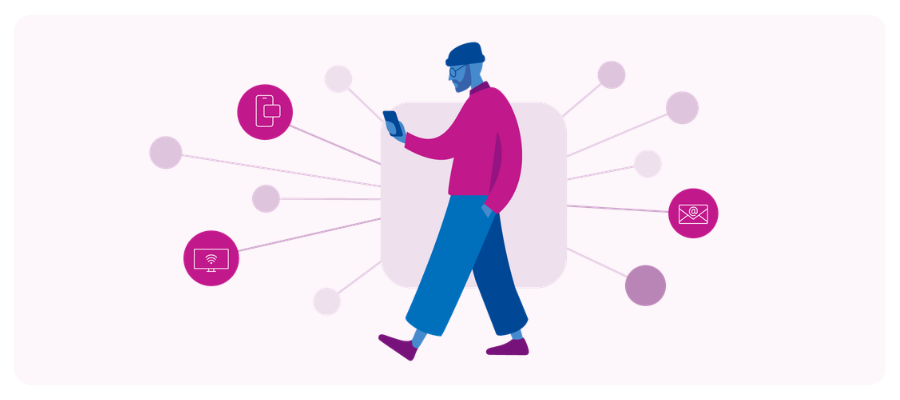
At Experian, we maintain more than 5,000 consumer attributes, averaging roughly 250 per person, built and maintained with privacy and governance controls in mind. That depth creates the most value when it extends a brand’s own first-party foundation, grounded in identity and usable across the activation paths a brand already relies on, not locked into a single platform or vendor.
Context, not volume, is the differentiator
Owning first-party data was the starting point. It was never the finish line, and adding more sources on top of it isn’t the finish line either unless each one clears the same bar. The brands that get the most value out of their customer data in the next few years will know exactly what their data still can’t tell them, and will go find that missing context in a way they can trust and govern.
That’s the work I’d focus on, making the first-party data a brand already has tell a fuller, more accurate story about the people behind it, rather than acquiring more data for its own sake. If you want to talk through what that could look like for your first-party data, connect with our team.
About the author

Kevin Dunn
Chief Revenue Officer, Experian
Kevin Dunn joins Experian Marketing Services with more than 20 years of leadership experience across marketing and advertising technology, most recently serving as Senior Vice President of Brands and Agencies at LiveRamp. In that role, he led growth across retail, CPG, travel, hospitality, financial services, and healthcare, overseeing new business, account expansion, and channel partnerships.
Kevin is known for building cohesive, accountable teams and leading with optimism, clarity, and a strong sense of shared purpose. His leadership philosophy centers on empowering people, driving positive outcomes for clients and fostering a culture where teams can grow, take smart risks, and succeed together.
Latest posts

With the growth of digital marketing and the targeting capabilities associated with online outreach, many predicted that this would mark the end of direct mail advertising. But if Millennials have anything to say about it, that’s not going to happen anytime soon. Yes, believe it or not, Millennials are driving the resurgence of direct mail advertising, and many leading brands are now pivoting their omnichannel marketing plans to include direct mail. And with the USPS reporting more than 75.7 billion in marketing mail volume in 2019, this trend shows no sign of slowing down. Including direct mail in your plans may give your brand a better chance of reaching your audience. Why? 1. Millennials actually like getting mail.While most of us have decried “junk mail” as being environmentally unfriendly or just a pain to deal with, Millennials actually enjoy physical mail. Valassis recently cited research from USPS Customer & Market Insights stating that Millennials spend the most time sorting mail (about six minutes compared to the average, which is four minutes), plus they’re opening mail and reading it (at eight minutes versus the average of seven minutes). Valassis also conducted a study that showed that 68% of Millennials read print ads or inserts from retailers, and 64% prefer getting them through the mail. So, while digital outreach may be convenient, it hasn’t completely decimated the desire for that old-school, hands-on experience of opening and reading something that’s addressed to you. 2. Millennials respond to a multi-channel approach.Oftentimes, marketers think of omnichannel as being a combination of digital and TV, but when you add print into the mix, it can make an even bigger impact on Millennial audiences. Valassis found that 60% of consumers are more likely to make a purchase after seeing an ad when it’s presented across both offline and online channels, while 72% of Millennial parents say print ads encourage them to go online and make a purchase from that retailer. 3. Millennials think physical mail makes for a more personal approach.You’d think that e-mail would feel more personal, but with the influx of spam most people get, that’s just not the case. In fact, 67% of people see physical mail as being more personal than an e-mail, with seven out of 10 saying they prefer receiving actual mail over digital mail. And for marketers looking to make a one-to-one connection, this is music to their ears. With changing marketing plans, the mailbox has less competition than the inbox. Getting a catalog at their door with the perfect offer at the perfect time helps the marketer make the direct connection. 4. Direct mail lasts longer than digital mail.That may seem like an obvious statement, but there’s more to it than you think. When an e-mail arrives in someone’s inbox, it’s easy to ignore it, read the subject line and forget about it, or even just randomly delete it, if spam filters don’t take care of that on their own. But the average lifespan of a piece of direct mail is 17 days, which may account for how direct mail generates purchases five times larger than e-mail campaigns. It’s harder to ignore when it’s in your house and you have to physically handle it as opposed to just clicking a mouse to get rid of it. 5. Millennials trust direct mail.It’s true—research shows that 90% of Millennials think direct mail advertising is reliable. Plus, Millennials are 24% more likely to show mail to others, compared to 19% of non-Millennials… which means if they find a deal they like in the mail, they’re probably going to spread the word. Contact us today
Marketers are always looking for creative ways to get the most out of their digital marketing investments. While there may be different paths to optimization, reducing media spend and cutting costs without sacrificing ROI is ideal. We empower marketers to take back control of their budgets and reinvent their media strategies by leveraging the right data at the right time. And, given today’s challenging climate, there’s no better time. Every Business Has Different Deeds Whether you’re a direct-to-consumer brand building a loyal customer base or a financial service simply letting customers know you’re here for them during a challenging time– identity resolution is essential to connecting with your audience without breaking the bank. That’s why we have built solutions that provide flexibility and control when you need it most. Putting Data Into Action Experian’s “Tapad Graph” is a global, privacy-safe cross device graph is one powerful file. Updated weekly, and containing customized device IDs and digital attributes, The Tapad Graph enables smarter targeting strategies and a reduction of wasted impressions. What that means is more marketing efficiency and a stronger ROI for your business. Saving resources and money sound good to you? This guide breaks down four ways you can implement cost savings measures without sacrificing performance or prohibiting KPIs. Frequency Capping and Suppression Clustering device IDs by the individual and household means you have access to more ways to reach consumers, but it doesn’t always mean you should be using all of them across every campaign. Hone in on the channels and devices where consumers make most of their lower funnel decisions and purchases – and cap brand-awareness level placements or aspirational media that requires more exposure to generate engagement. This doesn’t mean limiting the devices you target, but being more aware of how often you’re targeting the same person across those devices. If you’ve successfully begun, or heck, even completed the consumer journey with an individual, congratulations. Now, you may want to consider what to do with the rest of the digital devices and users in that same household. Sure, there’s a time for conquesting an entire home of purchasers, but that’s not always the most effective way to maximize your media. That’s why The Tapad Graph is built to be flexible, providing a holistic view of all individuals and their associated devices and digital IDs – so you can suppress them once you’ve conquested the household decision maker or achieved the desired lower funnel activity. Save those impressions for someone else and save money for yourself. The great thing is whether you’re uploading this data into a DMP or a DSP, you can segment your target audience with a frequency cap threshold or suppress them entirely. Not only can you apply these tactics across traditional digital media, but we can include Connected TVs for OTT targeting as well, making your media strategy as holistic as your identity resolution tactics. Cross-Device Targeting and Attribution Consumer behavior and device trends are changing these days, so shouldn’t your digital marketing change too? Desktop usage is now up as much as 22%* as more people are working and learning from home. And remember that old iPad? With more people at home, we’re dusting off more devices and tablet activity is increasing more than 30%*. Sure, people are still constantly on mobile– but it might be time to consider implementing cross-device targeting and optimization for those dayparts when their focus is elsewhere. Identity resolution should be a key element of customer journey mapping and attribution in order to truly give credit to the right channels and build a baseline for the right cost-per modelling. Coupling The Tapad Graph with raw events data can granularly attribute engagement, actions and conversions at the digital ID, device, and even user-level – thereby teaching you more about your customer’s preferences. Leverage these insights to create more tailored messaging and promotions on your owned and operated channels, to funnel impressions to specific screens and platforms, and to target users based on where they are in the purchase funnel. Data That Gives You Control If you’re already implementing cross-device, have you started suppressing the devices where engagement with your brand isn’t happening? That’s right, you can use The Tapad Graph after-the-fact as well. Weekly graph updates with 60-day look-backs enable weekly campaign optimizations. That gives you the flexibility and control to avoid devices and platforms where users aren’t as active. You can only make decisions based on the data you have in front of you, so make sure you’re partnering with the right solutions for your business. Does identity resolution sound like something you need? Contact us and we can help you get started with all that The Tapad Graph has to offer. Contact us today
Tapad, part of Experian, integrates with MediaJel’s current advertising solutions will enable U.S. brands to benefit from improved cross-device reach and targeting capabilities NEW YORK, April 14, 2020 /PRNewswire/ — Tapad, part of Experian and a global leader in digital identity resolution, has partnered with MediaJel, a leading provider of advertising and marketing solutions for regulated markets. The partnership will enhance MediaJel’s current offering, enabling brands to further improve their digital marketing campaigns, and thereby, return on investment. Tapad’s global, privacy-safe digital cross-device solution, The Tapad Graph, will complement MediaJel’s state-of-the-art advertising solutions to identify and resolve fragmentation created by a consumer’s researching and purchasing behavior across multiple digital devices. For MediaJel, this provides customers with an opportunity for incremental efficiencies across a number of use-cases, including reach extension, targeting, ad frequency capping, suppression, and attribution. Dash Rothberg, Senior Vice President of Strategic Partnerships at MediaJel commented, “With an endless list of considerations across consumer behavior, marketing fragmentation, and today’s ongoing device proliferation – optimizing digital campaigns can be challenging for most brand advertisers. We partnered with Tapad after testing multiple cross-device solutions in the market but concluded that The Tapad Graph provided us with a blend of scale, quality, flexibility, and privacy-safe data to meet our customer needs.” Mike Dadlani, Vice President of Agency Partnerships at Tapad added: “Our partnership with MediaJel is an exciting one. Not only will their portfolio of clients be enabled to more effectively execute and optimize cross-device campaigns, but they will also realize longer-term benefits from improved attribution and consumer insights.” To learn more about Tapad and our digital identity resolution capabilities, visit our identity page. About Tapad Tapad, Inc. is a global leader in digital identity resolution. The Tapad Graph and its related solutions provide a transparent, privacy-safe approach connecting brands to consumers through their devices globally. Tapad is recognized across the industry for its product innovation, workplace culture, and talent, and has earned numerous awards including One World Identity’s 2019 Top 100 Influencers in Identity Award. Headquartered in New York, Tapad also has offices in Chicago, London, Oslo, Singapore, and Tokyo. About MediaJel Founded in 2017, MediaJel acts as a full-service agency that provides advertising and marketing solutions from brand building and search optimizations to campaign execution and online-offline attribution. Built with proprietary technology, the MediaJel.io platform leverages unique actionable data for brands and agencies to effectively execute high-performance marketing campaigns. With “Data Ethics” being the core of the business, all aspects are brand safe and compliant for regulated industries. Contact us today