
Key takeaways
- First-party data records what happened inside one customer relationship. It can’t show the life stage, household makeup or financial pressure behind a purchase.
- Context earns its place in a customer record when it’s accurate, governed, and tied to a decision like segmentation, modeling or personalization.
- Governed context improves segmentation, prospecting, retention outreach and personalization by adding life stage, financial pressure and household signals.
- Experian maintains more than 5,000 consumer attributes, averaging roughly 250 per person, built with privacy and governance controls and grounded in durable identity.
A brand can have five years of purchase history, a loyalty program with millions of records, and a fully built-out customer data platform, and still not know why a customer walked away last quarter. First-party data has become one of the clearest ways brands can differentiate, which is exactly why it’s worth asking what more of it can and can’t do.
First-party data describes a relationship, not the whole person
A customer’s purchase history, site visits, app activity, and loyalty behavior are accurate records of what happened inside that one relationship. They don’t show who that person is beyond the transaction, the life stage, household makeup, or financial pressure that actually shapes a decision. Every brand runs into this limit eventually, no matter how much first-party data it has collected.
More sources isn’t the same question as better sources
The common response is to add more data sources. Third-party data, contextual signals, geographic data, each layered on to fill in what first-party data can’t see alone. Combining sources like this can expand what a brand can see.
It doesn’t automatically mean every layer earns its place in the customer record. Volume and quality are different questions, and only one of them is guaranteed by adding another source. A pile of attributes from unverified providers can sit alongside a brand’s best first-party and third-party data without ever being governed or relevant enough to act on with confidence.
Relevant, governed context is the differentiator, not another data source
Adding a new data type isn’t the same as adding context that’s actually relevant to the decision in front of you. A longer list of attributes doesn’t make a customer record more useful on its own, whatever source it came from. Context earns its place in that record when it’s accurate, tied to a real decision, like segmentation, modeling, or personalization, and usable within the governance standards a brand already holds itself to.

That’s a higher bar than volume. It’s also the one that actually changes outcomes. Predictive models and AI-driven decisioning only raise that bar. The more decisions get automated, the more they depend on inputs that are relevant, not just abundant.
What governed context actually changes
When a customer record includes real-world context, demographic, lifestyle, behavioral, and household signals that are built and governed responsibly, the decisions drawn from it change in specific ways.
- Segmentation reflects who people actually are, not just how they’ve transacted so far.
- Prospecting can find people who resemble a brand’s best customers in ways that matter, not just in surface-level behavior.
- Retention improves when outreach reflects a fuller picture of the person, not just their last transaction.
- Planning and personalization can account for the realities, like life stage or financial pressure, that shape whether a message lands.
That context is only as useful as the identity foundation underneath it. Context grounded in durable identity moves with a brand across the platforms, partners, and activation paths it already uses, rather than sitting locked inside one system.
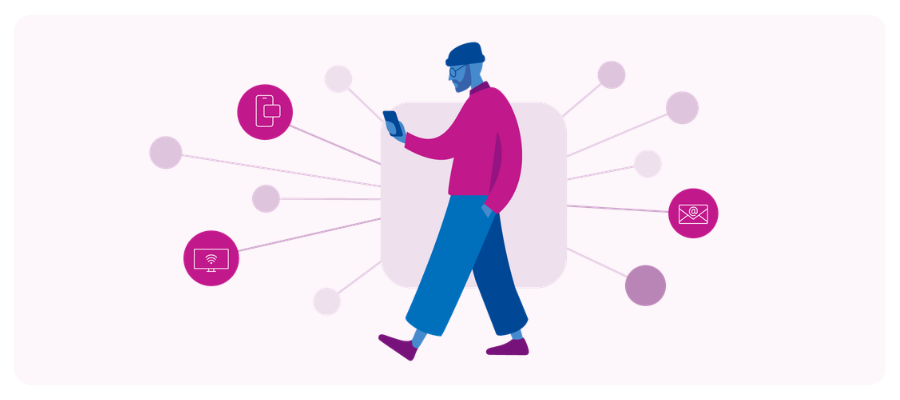
At Experian, we maintain more than 5,000 consumer attributes, averaging roughly 250 per person, built and maintained with privacy and governance controls in mind. That depth creates the most value when it extends a brand’s own first-party foundation, grounded in identity and usable across the activation paths a brand already relies on, not locked into a single platform or vendor.
Context, not volume, is the differentiator
Owning first-party data was the starting point. It was never the finish line, and adding more sources on top of it isn’t the finish line either unless each one clears the same bar. The brands that get the most value out of their customer data in the next few years will know exactly what their data still can’t tell them, and will go find that missing context in a way they can trust and govern.
That’s the work I’d focus on, making the first-party data a brand already has tell a fuller, more accurate story about the people behind it, rather than acquiring more data for its own sake. If you want to talk through what that could look like for your first-party data, connect with our team.
About the author

Kevin Dunn
Chief Revenue Officer, Experian
Kevin Dunn joins Experian Marketing Services with more than 20 years of leadership experience across marketing and advertising technology, most recently serving as Senior Vice President of Brands and Agencies at LiveRamp. In that role, he led growth across retail, CPG, travel, hospitality, financial services, and healthcare, overseeing new business, account expansion, and channel partnerships.
Kevin is known for building cohesive, accountable teams and leading with optimism, clarity, and a strong sense of shared purpose. His leadership philosophy centers on empowering people, driving positive outcomes for clients and fostering a culture where teams can grow, take smart risks, and succeed together.
Latest posts

CPG companies often base marketing decisions on custom market positioning studies, surveys and generic consumer personas. There’s a better way…
Study reveals that brands with more mature identity programs were significantly more likely to be successful in achieving their key objectives Tapad, a part of Experian, a global leader in cross-device digital identity resolution and a part of Experian, has commissioned Forrester Consulting, part of a leading research and advisory firm, to conduct a new study that evaluates the current state of customer data-driven marketing and explores how marketers can use identity solutions to deliver privacy safe and engaging experiences, in an evolving data landscape. The study highlights the changing ground rules for digital marketing and the threat that poses to marketers’ ability to deliver against long standing KPIs and campaign goals. Nearly two-thirds (62%) of respondents said that the forces of data deprecation will have a significant (40%) or critical (21%) impact on their marketing strategies over the next two years. Among those surveyed, identity resolution strategies have surfaced as an opportunity to create more powerful customer experiences, with 66% aiming to have it help improve customer trust and implement more ethical data collection and use practices, while nearly 60% believe it will point the way to more effective personalization and data management practices. Although organizations are eager to implement identity resolution strategies, a complex web of solutions and partners makes execution a challenge. For example, respondents report using at least eight identity solutions on average, across nearly six vendor partners, and they expect that fragmentation to persist in the ‘cookieless’ future. Additionally, brands’ identity resolution technologies typically represent a patchwork of homegrown and commercial solutions. Eighty-one percent of respondents use both in-house and commercial identity resolution tools today, and 47% use a near-equal blend of the two. Despite the challenges, many brands have the foundation for a strong identity resolution strategy in place, and they are thriving as a result. Specifically, more mature brands were 79% more successful at improving privacy safeguards to reduce regulatory and compliance risk, 247% more successful at improving marketing ROI, and over four times more effective at improving customer trust compared to their low-maturity peers. Additional insights include: Marketers Are Increasingly Playing a Key Strategic Role Within the Organization, But There is a Mandate to Demonstrate Value. Nearly three-quarters of respondents in our study agree the marketing function is more strategically important to their organization than it used to be, while almost two-thirds agree there’s more pressure than ever to prove the ROI or business performance of their activities. Consumers Expect Brands to Deliver Engaging Experiences Across Highly Fragmented Journeys: Tapad, a part of Experian found that 72% of respondents agree that customers demand more relevant, personalized experiences at the time and place of their choosing. At the same time, 67% of respondents recognize that customer purchase journeys take place over more touchpoints and channels than ever, and 59% of respondents agree that those journeys are less predictable and linear than they once were. Marketing Runs on Data, But the Rules Governing Customer Data Usage are Ever-Evolving: According to the study, 70% of decision-makers agree that consumer data is the lifeblood of their marketing strategies – fueling the personalized, omnichannel experiences customers demand. At the same time, 69% of respondents recognize that customers are increasingly aware of how their data is being used. At least two-thirds agree that data deprecation, including tighter restrictions on data use (66%), as well as operating system and browser changes impacting third-party cookies (68%) means that legacy marketing strategies are unlikely to remain viable in the long-term.“ Our latest survey findings give us a better understanding of how our customers and other companies around the world are trying to master the relationship between people, their data and their devices,” said Mark Connon, General Manager at Tapad, a part of Experian. “This research shows why it’s fundamental for the industry to continuously work to develop solutions that are agnostic. Tapad, a part of Experian has worked tirelessly to deliver on this with our Tapad Graph, and by introducing solutions like Switchboard to help the evolving ecosystem and in turn helping customers reap the benefits of better identity in both short and long-term.” The study is founded on an online survey of over 300 decision-makers at global brands and agencies, which was fielded from March to April, 2021. Data deprecation and identity are fast-developing, moving targets, so this study delivers targeted insights and recommendations for how to prepare for coming shifts in customer data strategies – whether they manifest tomorrow or a year from now. Get in touch

With the recent announcement of delaying third-party cookie deprecation to 2024, the industry has more time to rethink how to identify and communicate with consumers.