At A Glance
First-party data creates value when marketers activate it. In 2026, leading brands will move beyond data collection by connecting, enriching, and activating their first-party data across channels. With identity as the foundation, first-party data activation improves relevance, efficiency, and measurement. Experian helps marketers turn static records into scalable audiences that perform across media.Why does activation expand the value of first-party data?
First-party data already delivers value through insight, personalization, and owned-channel engagement. In 2026, marketers expand that value by activating first-party data across owned and paid media channels. Activation is how existing data investments scale beyond CRM into broader audience strategies.
Simply capturing customer data used to feel like a win. Building a CRM, capturing emails, and logging transactions delivered valuable insights and fueled owned channels like email and direct mail. But that was largely where activation stopped.
In 2026, that mindset is no longer enough. Owning first-party data is now just the starting point. The real advantage comes from what marketers do next. Safely turning static records into addressable, scalable audiences is where first-party data can continue to prove its value.
How are marketers shifting from data collection to data connection?
As signals fragment, marketers are shifting from data collection to data connection to make first-party data usable across channels. Experian supports this shift by helping marketers onboard and resolve their data into a clean, connected foundation using our identity graphs. Connecting offline and online interactions allows brands to unify customer data across touchpoints to make it actionable. That connection enables more use cases, from audience activation and measurement to personalization and cross-channel optimization.
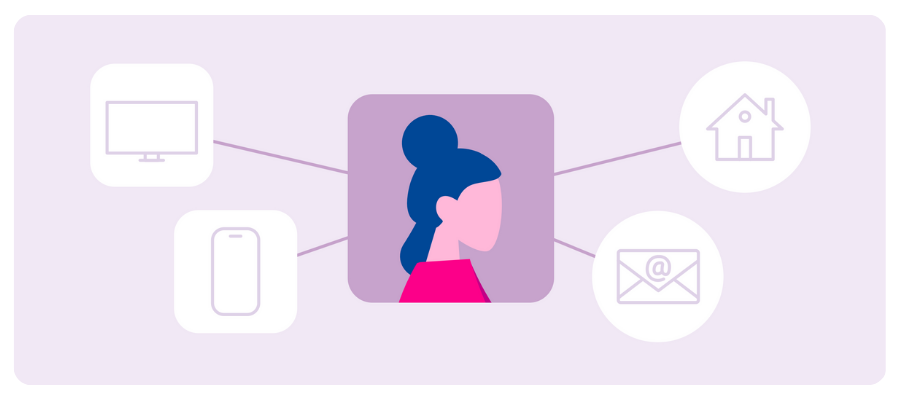
Most brands recognize the value of their own data. Fewer have the infrastructure to make it work across the media ecosystem. Data often sits in silos, disconnected from activation platforms, analytics, and measurement. Without the ability to unify, enrich, and deploy that data, first-party data remains underutilized.
In 2026, leading marketers are closing that gap by turning first-party data into audiences they can reach across owned and paid channels, bringing consistency to targeting and measurement. That same connectivity also enables better suppression, allowing brands to avoid targeting existing customers in prospecting campaigns. For consumers, this reduces irrelevant and repetitive ads. For marketers, it improves efficiency and protects the customer experience.
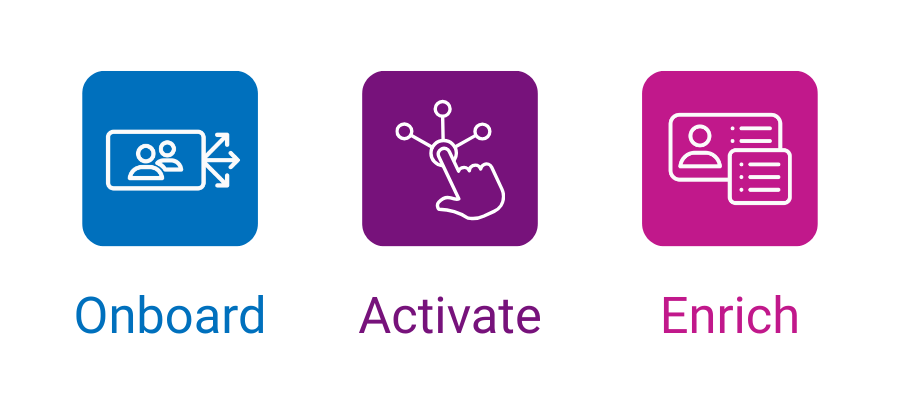
With Experian’s identity foundation in place, first-party data becomes usable across the media ecosystem. Marketers can enrich their first-party data with behavioral, demographic, and lifestyle insights, combined with trusted partner data, and activated across channels like social, programmatic, and TV, from a single environment.
Why is first-party data becoming central to media planning?
First-party data has become central to media planning because it gives marketers control, consistency, and continuity across channels. As media environments fragment, first-party data provides a stable signal that supports activation, personalization, and measurement at scale.
Rather than relying on any single data source, marketers are increasingly combining their own first-party data with trusted third-party and partner data to extend reach, improve relevance, and fill gaps in their own insights. Doing so effectively requires deterministic matching, privacy-first infrastructure, and partners that can support both owned and syndicated data at scale.
This approach allows brands to maintain control over their customer relationships while continuing to utilize third-party data for prospecting, modeling, and performance optimization across channels. As a result, first-party data activation is now central to how media strategies are planned and executed.

2026 Digital trends and predictions report
Our 2026 Digital trends and predictions report is available now and reveals five trends that will define 2026. From curation becoming the standard in programmatic to AI moving from hype to implementation, each trend reflects a shift toward more connected, data-driven marketing. The interplay between them will define how marketers will lead in 2026.
What business impact does first-party data activation deliver?
First-party data activation delivers measurable business impact, including:
- 70% of B2B marketers plan to increase their use of first-party data, more than any other data strategy.
- 67% percent of brands and 80% of publishers expect to grow their first-party data sets in the next year.
- The payoff is tangible. Activating first-party data can reduce customer acquisition costs by up to 50% and drive a 10-15% lift in revenue.
Activation drives efficiency. Brands that put their own data to work see lower acquisition costs and stronger revenue lift. These gains come from relevance. When marketers activate audiences built from known customer relationships, they reduce waste and optimize toward outcomes that matter.
Experian’s Audience Engine supports this model at scale. Audience Engine helps marketers onboard and activate first-party data through a single unified platform. It connects more than 3,500 syndicated audiences, over 50 media platforms, and 20+ third-party data providers. Marketers can combine, gain insights from, and deploy first-party data quickly.

What should marketers plan for first-party data activation in 2026?
In 2026, marketers should plan for first-party data to operate across onboarding, activation, and measurement as a connected workflow. Planning now centers on interoperability, scalable activation tools, and privacy-forward enrichment rather than isolated data use cases. Identity underpins each of these three shifts.
Why first-party data activation matters to marketers in 2026
In 2026, first-party data delivers value when marketers activate it across channels. The opportunity is to extend the value of what already exists through activation, enrichment, and identity-led connection across channels. That means uncovering insights within your existing customer base, building lookalikes from your highest-value audiences, and activating those segments across every channel.
With Experian’s Audience Engine, marketers can onboard, enrich, and activate their first-party data in one secure, interoperable platform. Identity connects to outcomes. Performance becomes measurable. Privacy stays at the core.
To explore this trend and the others shaping marketing in 2026, download our 2026 Digital trends and predictions report.
Ready to connect with our team?
About the authors

Doug McLennan
Sr. Director, Product Management, Experian
Doug McLennan is the Senior Director of Product Management at Experian Marketing Services where he is focused on product strategy for activation. His past work includes managing syndicated audiences at Oracle Data Cloud and building personalized video ad products at an agency. Doug lives in Colorado and skis as much as his family will allow.

Rachael Weinstein
Director of Product Management, Experian
Rachael Weinstein is the Director of Product Management at Experian Marketing Services where she is focused on product strategy. Previously, she held product roles in advanced TV at WarnerMedia and worked in analytics across multiple startups.
First-party data activation FAQs
First-party data activation means using a brand’s own customer data to build addressable audiences across paid and owned channels. Experian’s identity spine connects, enriches, and activates that first-party data consistently while preserving control and privacy.
First-party data needs identity to connect customer records across devices, platforms, and environments into a unified view. Experian identity resolution makes it possible to activate, measure, and manage frequency consistently across paid and owned media.
First-party data activation improves efficiency by reducing waste and increasing relevance. Marketers focus spend on known and modeled audiences, suppress existing customers in prospecting, and optimize toward outcomes rather than impressions.
Experian supports first-party data activation by resolving, enriching, and activating customer data using identity as the foundation. Through Audience Engine, Experian enables onboarding, audience creation, cross-channel activation, and measurement within one environment.
Latest posts

Cross-device matching and pixel-based foot traffic attribution reporting empower digital marketers with greater control of location-based campaigns.RALEIGH, N.C. (PRWEB) AUGUST 04, 2020 Tapad, part of Experian a global leader in digital identity resolution, and Reveal Mobile, a leader in location-based marketing, today announced a collaboration that combines Tapad's digital cross-device matching technology and pixel-based attribution features with Reveal Mobile’s VISIT Local, the software that hundreds of digital agencies and brands use for location-based analytics. The partnership is designed to drive improved performance by optimizing ad targeting and messaging for location-based campaigns. Powered by Tapad’s privacy-safe cross device matching, marketers using VISIT Local to power location-based campaigns can enhance how they reach shoppers. When one member of a household shops for groceries, clothes, household goods or any other consumer item, a conversation between multiple members of the household typically takes place beforehand. With cross device matching, marketers can reach everyone who has influence over what to buy and where to buy it. VISIT Local users can expand location-based services with a single click to include devices that share the same household, including targeting across multiple devices owned by the same user, allowing advertisers to maximize messaging and increase their share of wallet among consumers. “VISIT Local has always given our customers access to high-intent location-based audiences. With the addition of cross device matching from Tapad, advertisers can boost audience sizes up to 300 percent while maintaining full confidence in quality and relevance,” says Brian Handly, CEO of Reveal Mobile. “VISIT Local users can now apply multiple criteria and attributes to a single location-based audience, giving them the advanced control and transparency they need.” As reliable attribution becomes increasingly complex for marketers and ad buyers who need to prove value, the addition of Tapad’s pixel-based foot traffic attribution to VISIT Local enables the measurement of actual campaign effectiveness by tying ad views to in-store foot traffic. This new feature, which will be available in VISIT Local this fall, lets Reveal Mobile customers understand who visited a retail location as a result of being served an ad, providing a more accurate view into return on ad spend during and after advertising campaigns. “Tapad’s goal is to empower marketers with digital advertising efficiencies at scale across devices,” says Mark Connon, COO of Tapad. “With cross device matching and pixel-based foot traffic attribution, marketers using VISIT Local can better address the consumer’s preferences and habits, and deliver them consistently actionable information on user behavior. These capabilities advance location-based advertising in ways marketers need and want.” In addition to these new features, VISIT Local’s location-based audience builder now enables marketers to create custom audiences made up of people who have visited different places on different dates. This gives VISIT Local users the ability to segment and create the most highly targeted audiences possible. For example, a marketer who wants to advertise for a chain of restaurants can easily target visitors of different competitors in different cities. Or a marketer who wants to advertise vacation destinations can target people who have been to various resorts at different times of year. Or a marketer who wants to advertise the release of new music can target people who have been to concert venues in different cities on different dates. “Many of our customers need to create highly custom audiences so they can run experiments, test messaging, and run increasingly competitive campaigns,” says Handly. “Everyone who uses VISIT Local can now apply multiple criteria and attributes to a single location-based audience, giving them the advanced control and transparency they need.”To learn more about Tapad’s digital identity resolution products, visit our identity solution page. To learn more about Reveal Mobile’s location-based marketing offerings, visit http://www.revealmobile.com. About TapadTapad, Inc. is a global leader in digital identity resolution. The Tapad Graph, and its related solutions, provide a transparent, privacy-safe approach connecting brands to consumers through their devices globally. Our one-of-a-kind Graph Select offering enables marketers the flexibility and freedom of choice to correlate devices to varied objectives, driving campaign effectiveness and business results. Tapad is recognized across the industry for its product innovation, workplace culture and talent, and has earned numerous awards including One World Identity's 2019 Top 100 Influencers in Identity Award. Headquartered in New York, Tapad also has offices in Chicago, London, Oslo, Singapore and Tokyo. About Reveal MobileReveal Mobile is a leader in location-based marketing, analytics, audiences, and attribution. Creator of VISIT Local, VISIT Match and VISIT Data, the company’s products help digital agencies, brands and retailers of any size leverage location data to understand and reach the right audiences. Reveal Mobile is CCPA compliant and a member of the Network Advertising Initiative, which conducts an annual privacy certification. The company is based in Raleigh, NC. For more information, visit https://revealmobile.com. Contact us today
Overview Chartable leverages The Tapad Graph to improve cross-device attribution rates and remove non-addressable IPs for clients. Challenge Chartable needs to differentiate between consumer and potential business IP addresses to provide accurate household modeling and reduce excess data for their customers. Podcasting generally only has access to IP addresses as a form of digital ID which limits its ability to connect activity to individuals and extend it across all devices. The Tapad + Experian solution Using Tapad, now a part of Experian, Chartable is able to cut through the noise of IP data and discard any addresses deemed a shared IP or business. Then, Tapad + Experian connects individual users to their other digital IDs and users in their household; creating a richer attribution model for Chartable customers. Increase in podcast attribution rates Contact us today

With the growth of digital marketing and the targeting capabilities associated with online outreach, many predicted that this would mark the end of direct mail advertising. But if Millennials have anything to say about it, that’s not going to happen anytime soon. Yes, believe it or not, Millennials are driving the resurgence of direct mail advertising, and many leading brands are now pivoting their omnichannel marketing plans to include direct mail. And with the USPS reporting more than 75.7 billion in marketing mail volume in 2019, this trend shows no sign of slowing down. Including direct mail in your plans may give your brand a better chance of reaching your audience. Why? 1. Millennials actually like getting mail.While most of us have decried “junk mail” as being environmentally unfriendly or just a pain to deal with, Millennials actually enjoy physical mail. Valassis recently cited research from USPS Customer & Market Insights stating that Millennials spend the most time sorting mail (about six minutes compared to the average, which is four minutes), plus they’re opening mail and reading it (at eight minutes versus the average of seven minutes). Valassis also conducted a study that showed that 68% of Millennials read print ads or inserts from retailers, and 64% prefer getting them through the mail. So, while digital outreach may be convenient, it hasn’t completely decimated the desire for that old-school, hands-on experience of opening and reading something that’s addressed to you. 2. Millennials respond to a multi-channel approach.Oftentimes, marketers think of omnichannel as being a combination of digital and TV, but when you add print into the mix, it can make an even bigger impact on Millennial audiences. Valassis found that 60% of consumers are more likely to make a purchase after seeing an ad when it’s presented across both offline and online channels, while 72% of Millennial parents say print ads encourage them to go online and make a purchase from that retailer. 3. Millennials think physical mail makes for a more personal approach.You’d think that e-mail would feel more personal, but with the influx of spam most people get, that’s just not the case. In fact, 67% of people see physical mail as being more personal than an e-mail, with seven out of 10 saying they prefer receiving actual mail over digital mail. And for marketers looking to make a one-to-one connection, this is music to their ears. With changing marketing plans, the mailbox has less competition than the inbox. Getting a catalog at their door with the perfect offer at the perfect time helps the marketer make the direct connection. 4. Direct mail lasts longer than digital mail.That may seem like an obvious statement, but there’s more to it than you think. When an e-mail arrives in someone’s inbox, it’s easy to ignore it, read the subject line and forget about it, or even just randomly delete it, if spam filters don’t take care of that on their own. But the average lifespan of a piece of direct mail is 17 days, which may account for how direct mail generates purchases five times larger than e-mail campaigns. It’s harder to ignore when it’s in your house and you have to physically handle it as opposed to just clicking a mouse to get rid of it. 5. Millennials trust direct mail.It’s true—research shows that 90% of Millennials think direct mail advertising is reliable. Plus, Millennials are 24% more likely to show mail to others, compared to 19% of non-Millennials… which means if they find a deal they like in the mail, they’re probably going to spread the word. Contact us today