At A Glance
Advertisers are embracing CTV, data collaboration, and AI to deliver more personalized, efficient, and impactful campaigns, transforming living rooms into interactive hubs, utilizing creator-led programming, and streamlining workflows. At Cannes Lions 2025, industry leaders highlighted how privacy-first data practices, supply path optimization, and AI-powered tools are reshaping the advertising ecosystem - areas where Experian plays a key role in enabling trusted, measurable, and innovative outcomes.As artificial intelligence (AI), connected TV (CTV), and data collaboration continue to advance, advertisers are discovering new ways to meet audiences where they are; on their terms and in their spaces. These innovations are creating opportunities to deliver more personalized, impactful campaigns that were unimaginable just a few years ago. At Cannes Lions 2025, we sat down with industry leaders from Butler Till, Comcast Advertising, Index Exchange, IQVIA Digital, Optable, PMG, Samsung Ads, and Sports Innovation Lab.
From reimagining the living room experience to using AI in practice for better outcomes, here’s what we learned about the trends driving advertising forward.
1. CTV turns living rooms into active spaces
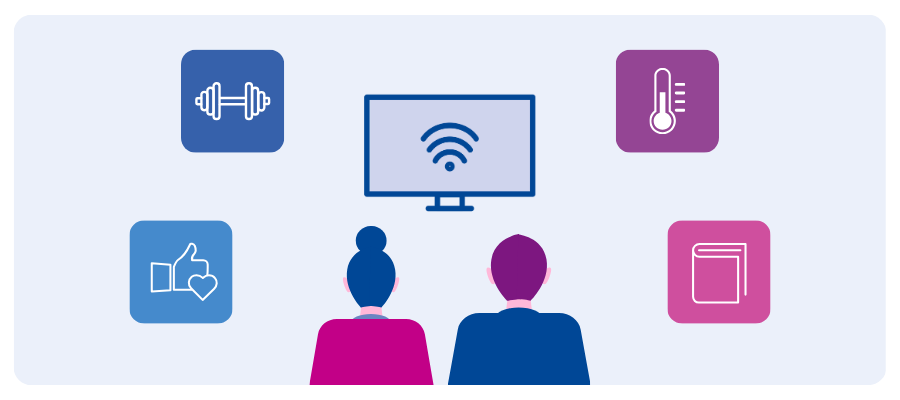
CTV has turned the living room into a hub of interaction, discovery, and commerce. Younger audiences are using their TVs like mobile devices; streaming, learning, and even controlling their homes. This shift is creating new opportunities for advertisers to deliver relevant, personalized experiences where audiences are already engaged. With premium content and interactive tools, the living room is no longer just a passive space, it’s where attention meets action, and where brands can connect with audiences in meaningful ways.
How Experian helps
With Experian, advertisers can connect first-party data with CTV IDs, ensuring accurate and measurable targeting while maintaining a privacy-first approach. That means brands reach viewers with messages that feel personal, without losing trust.
“We surveyed 1,000 smart TV owners and found that younger audiences are using their TVs like mobile devices. Two-thirds use them for social media, 40% for self-improvement like Coursera or TED Talks, and 25% for interactivity; controlling appliances or home temperatures. Interactivity with connected TVs is skyrocketing.”
Samsung Ads Justin Evans
2. Creators build stronger connections with audiences
Creators are no longer limited to social media; they are now a driving force in CTV. Creator led programming is capturing attention and driving post view actions, offering advertisers a unique way to connect with passionate, engaged audiences. By thinking of creators as “micro networks” with built in communities, advertisers can meet fans where they already gather and deliver authentic, impactful messages that resonate.

How Experian helps
Experian helps advertisers tap into the creator economy by identifying topical audiences that align with influencer niches—like food, travel, gaming and entertainment—and activating them across the open web. Through Audigent’s integration with DV360, brands can pair Experian’s expansive audience targeting capabilities with Audigent’s Curated Deals to reach engaged viewers in creator-led environments. This approach ensures ads appear where audiences are most receptive, enhancing relevance and performance.
“The creator economy is moving into TV. It’s incredible to see social influencers, once dominant on platforms, now creating high quality content for streaming, networks, and more.”
Butler/TillGina Whelehan
3. Data collaboration that drives better results
Advertisers rely on data to reach the right audiences, but privacy concerns are reshaping how it’s collected, shared, and used. Data collaboration enables brands to combine multiple data sets (like first-party data and syndicated audiences) to improve planning, activation, and measurement. While privacy remains a priority, the focus is on creating actionable insights that drive better results and build trust with consumers. By focusing on consented, privacy safe identity solutions, advertisers can achieve better outcomes while respecting consumer privacy; a win-win for brands and audiences alike.
How Experian helps
Experian’s privacy-first approach ensures that all data activation occurs with compliance and consent. By maintaining high match rates, offering flexible collaboration options (including clean rooms, first-party data onboarding, and syndicated audiences) and adhering to transparent methodologies, Experian facilitates seamless collaboration between brands, publishers, and platforms. This helps build trust and strengthen long-term connections with audiences.
“The area we’re most excited about is identity resolution on the publisher side. Publishers can reinsert signal and create better results for advertisers. This wasn’t always well-articulated, but today we have case studies proving publishers can help improve outcomes.”
OptableVlad Stesin
4. Optimizing supply paths for better outcomes
Supply path optimization (SPO) helps advertisers improve campaign efficiency by increasing viewability and reducing waste. Supply-side decisioning builds on this by identifying the audiences advertisers want to reach, the content those audiences consume, and the publishers with the most relevant inventory. Together, these strategies create a more intelligent and efficient ecosystem, ensuring ads are delivered in the right context, to the right people, on the right platforms.

How Experian helps
Experian’s data solutions, including both Experian’s and Audigent’s contextual and identity capabilities, are available across sell-side (SSPs) and buy-side (DSPs) platforms, enabling smarter decision-making throughout the media supply chain. Audigent’s direct integrations with publishers provide an unfiltered view into available inventory, offering deeper insights that inform campaign optimization. These insights can be activated in real time and transacted within advertisers’ existing buying platforms.
By powering real-time intelligence across the ecosystem, from advertisers to DSPs, SSPs, and publishers, Experian and Audigent help drive better outcomes, more efficient media spend, and greater value for all participants.
“Sell-side decisioning activates the intelligence of the exchange, along with partners like Experian, to optimize auctions in real time. This helps pre-decision buys that flow to the DSPs, making the buying process smarter, more efficient, and ultimately driving better value for marketers and publishers.”
Index ExchangeMike McNeeley
5. AI that streamlines agency workflows

AI is a practical tool that agencies are using to streamline workflows and deliver better results. From planning and pacing to creative iteration, AI is helping teams move faster and smarter. In fact, 67% of global marketing and communications professionals now use AI for content creation frequently or all the time, underscoring its role in modern workflows. The key is to think of AI as a navigator, not a replacement. It handles repetitive tasks, freeing up teams to focus on strategy and creativity, while enabling faster tests, fewer dead ends, and better client clarity.
How Experian helps
Experian uses AI and machine learning to deliver highly personalized marketing solutions. In our Digital Graph, advanced clustering algorithms analyze household and individual device connections, improving targeting and measurement accuracy. We also use AI powered audience recommendations to create tailored audience solutions for clients. Our contextual data models, powered by Audigent’s contextual engine, further improve this process by analyzing bidstream traffic in real time, ensuring audiences are aligned with the most relevant inventory.
“We’ve extended our platform with Marketplace, which lets us integrate third-party partners, new tech, and data seamlessly into activation. Clients are asking for this level of innovation, especially with the speed at which AI is evolving and transforming what’s possible in marketing.”
PMGSam Bloom
Connecting the dots: Data, creativity, and outcomes
The common thread across these insights is how we connect with audiences, collaborate on data, and create meaningful outcomes. By reimagining the living room experience and utilizing AI and creator-led programming, brands are embracing innovation.
How Experian helps
Experian helps you build privacy-first identity foundations, collaborate seamlessly, optimize supply paths, streamline with AI, and connect through creators.
Let’s start a conversation
FAQs
CTV brings premium, interactive streaming to the largest screen at home, allowing brands to reach engaged viewers with measurable, personalized experiences.
It’s the consented, secure use of first-party and partner data (often via clean rooms) to improve planning, activation, and measurement without exposing raw consumer data.
SPO streamlines the path from advertiser to publisher, reducing waste and improving quality. Sell-side decisioning adds real-time intelligence to the exchange, delivering the proper context and audience more efficiently.
Creator-led programming functions like “micro networks” with built-in communities, helping brands show up where fans are already engaged and ready to act.
Viewers use TVs like mobile devices, discovering content, learning, shopping, and interacting; advertisers can meet their intent and drive post-view actions.
Latest posts
Up next in our Ask the Expert series, Ben Rothke, Senior Information Security Manager, reviews two certifications that should be part of your information security strategy: Service Organization Control (SOC) 2 Type 2 and International Organization for Standardization (ISO) 27001. Tapad, a part of Experian, is 27001 and SOC 2 Type 2 compliant. Two information security certifications you can trust Seals from Good Housekeeping and Underwriters Laboratories give consumers confidence that they can trust the product that they’re buying. For IT solutions or service providers, what, or who can you turn to for that seal of approval? There are many equivalent third-party attestations you can use. But which should you trust? The International Organization for Standardization (ISO) 27001 The American Institute of Certified Public Accountants (AICPA) System and Organization Controls (SOC) International Organization for Standardization (ISO) 27001 is an international standard for information security from the ISO. ISO 27001 is globally acknowledged and sets requirements for controls, maintenance, and certification of an information security management system (ISMS). This international standard provides organizations with a framework to identify, manage and reduce risks related to the security of information System and Organization Controls (SOC) The SOC, as defined by the AICPA, is a set of audit reports. SOC reports, like 27001 certificates, are used by service organizations to give their customers the confidence they have adequate information security controls in place to protect the data that they handle. SOC 2 is an assessment of controls at a service organization regarding security, availability, processing integrity, confidentiality, and privacy. The purpose of the report is to provide extensive information and assurance to a broad range of users about the controls at a service organization that are relevant to the security, availability, and processing integrity of the systems that process user data, as well as the confidentiality and privacy of the information processed by these systems. Why ISO 27001 and SOC 2 are important The value of these third-party attestations is two-fold: Organizations can show they have passed an independent external audit Third-party attestations save organizations the time of having to do their own audits In addition to 27001 and SOC 2 Type 2 compliance, we are also certified with ISO 27017 and 27018, which are add-ons to 27001 that are specific to cloud computing. We take the security and privacy of our customers’ data as seriously as they do. Every cloud service provider (CSP) has a responsibility matrix that details what security and privacy tasks they are responsible for and which ones the customer is responsible for. Any cloud customer that needs to be made aware of what their security tasks are is putting themselves at risk. So, when you want to engage a CSP, ask them for their attestations. They worked hard for them and will be proud to share their compliance. We’re powered by decades of setting standards in marketing services At Experian, we’re a privacy-first business. We’re highly focused on respecting people, their data, and their privacy. We continue to show our dedication to information security by completing these security audits every year. The constant changes to data compliance regulations can be challenging to navigate, but you don’t have to do it alone. Contact us today. We will be your guide so you can ethically and confidently reach your customers. Contact us today Contact us today About our expert Ben Rothke, Senior Information Security Manager Ben Rothke, CISSP, CISA, is a Senior Information Security Manager at Tapad, a part of Experian. He has over 25 years of industry experience in information systems security and privacy. His areas of expertise are in risk management and mitigation, security and privacy regulatory issues, cryptography, and security policy development. Ben is the author of Computer Security – 20 Things Every Employee Should Know (McGraw-Hill), and writes security and privacy book reviews for the RSA Conference Blog and Security Management magazine. Latest posts

Experian kicks off the AdTech year at CES What better way to jump-start start 2023 than a trip to Las Vegas for the Consumer Electronics Show (CES). Our team was thrilled to participate in this annual kick-off with the AdTech community. The uniqueness of what CES has become for our industry can be defined as the intersection between technology brands, digital, television, and AdTech. CES creates the space necessary for marketing and advertising leaders to collaborate to drive rewarding outcomes for the year ahead. Our goal in attending CES was to connect with our partners, clients, and industry leaders to build relationships, form strategic plans, and listen. The opportunity to learn about our industry’s challenges and goals enables us to develop initiatives, drive success, and support our clients and partners. Keep reading for our 2023 CES AdTech recap. “I have been to CES too many times to mention the number; this year was as energetic, collaborative, engaged, and effective as I can ever recall. Our presence was first-class and meticulously organized, which made our interactions as robust as possible. It's a team effort, and we appreciate all the work that goes into this event. “ – Greg Koerner, Vice President of Digital Advertising Sales Our CES AdTech recap Supporting publishers and advertisers is top of mind for us. Many of our conversations focused on the technologies we deliver or collaborate with our partners to provide. Clean rooms and activation were two common themes throughout our discussions. Clean rooms Consumer privacy, regulatory requirements, and data deprecation are driving the AdTech industry to talk about and explore clean rooms. There’s a need to address data collection, storage, analysis, and sharing. Clean rooms are a potential solution that can standardize data and address interoperability issues. Activation In 2023, we predict that digital activation will increase. We continue to see increased demand for environments where alternative identifiers are being transacted (like demand side platforms and video). Social platforms will continue to experience volatility and advertisers will shift their focus to demand-side, video, and supply-side platforms. Download our 2023 Digital audience trends and predictions report to learn where you should activate your audiences in 2023. We can help plan your 2023 digital activation strategy. How we support clean rooms and activation Our Consumer Sync and Consumer View products support these areas and can help you understand people better–so you and your customers can connect with confidence. What is Consumer Sync? Consumer Sync, our consumer identity product, enables signal agnostic collaboration across marketers and technologies, bringing together digital devices, IDs, households, and attributes. Consumer Sync’s Resolution and Collaboration solutions can help you gain a better understanding of your consumers and make identities actionable in any environment. What is Consumer View? Consumer View, our data discovery product, offers marketers a robust, privacy-first understanding of their customers and prospects. Grounded in consumer identity, Consumer View provides the data foundation to engage consumers where, when, and how they want. Consumer View’s Audience and Attribution solutions provide expansive coverage so that you can fill in the gaps to better understand your prospects. Additionally, our collaborative efforts with strong partnerships across the clean room ecosystem and with our activation partners help our clients serve the best ads, at the best times, to the right audience. “CES is back and was a great way to kick off the new year! We were able to meet with a high volume of clients to eagerly talk about building new solutions for the TV space. We are excited to see where these conversations lead in the next few months.” – Ali Mack, Senior Director of TV Advertising Sales Let’s navigate what’s new in our industry, together We can help you connect with your consumers in innovative, impactful ways. Contact us to continue the conversation and learn more about our Consumer Sync and Consumer View products. We can help you take advantage of the opportunities on the horizon. Get in touch

2022 was a year of adjustment. Consumers adjusted to a post-pandemic world and returned to pre-pandemic shopping behaviors. Consumers adjusted their budgets as the price of goods skyrocketed, as a result of high inflation. To combat inflation, the U.S. Federal Reserve adjusted interest rates. This further restricted consumer buying power. The AdTech ecosystem also experienced adjustments. Google adjusted the date of cookie deprecation. Federal legislation forced technology companies to adjust their consumer privacy practices. Marketers and advertisers adjusted how they address interoperability issues by investing in clean room solutions. This year of adjustment makes it harder to predict where consumers will spend and how marketers should plan their digital audience strategies. What will 2023 bring to AdTech? Download our 2023 AdTech trends and predictions report to access our forecast to help you plan for 2023. Our report will answer: How has digital activation changed over the last four years? What are the top advertising platforms? Which digital audiences are advertisers buying? Do digital audience strategies vary by vertical? Our AdTech trends forecast In 2023, digital activation will increase. Digital audience activation continues to grow at a significant rate despite market shocks like the pandemic, inflation, and higher interest rates. Given the current economic uncertainty, we predict that marketers will look toward tried and true channels where they are confident they will have quality audiences, inventory, and be able to drive ROI. What will digital activation look like in 2023? Between 2018-2021, digital audience activation increased annually by 46%. Using projected 2022 results, between 2018-2022, it will increase annually by 34%. We anticipate continued growth in 2023. Top advertising platforms in 2023 2023 will see increased digital activation, but which platforms will advertisers use to serve their ads? Advertisers will shift their focus to demand-side, video, and supply-side platforms. Social media platforms will continue to experience volatility. Advertisers will place bigger bets on the combination of addressable and CTV. Our report will also reveal which platforms are creating a path toward a post-cookie future and where data-sharing relationships will become the strongest. The most popular advertiser audiences trending now in AdTech Which digital audiences are advertisers buying? Demographics Modeled Lifestyles Behavioral Custom Audiences Traditional targeting methods like Demographics and Modeled Lifestyles are the baseline of many marketing strategies. We predict that we will continue to see marketers activate against these data sets. Digital audience strategies by vertical Digital audience strategies vary by vertical. Download our report to uncover the digital audiences purchased by advertisers in the following industries: Financial Services Health Retail & CPG Technology & Communication Download our new 2025 Digital trends and predictions report Marketers, agencies, and platforms are facing new challenges as privacy regulations evolve, AI technology advances, and consumer behaviors shift. Our latest report highlights actionable strategies for navigating these changes and improving how you connect with audiences, measure impact, and deliver results. What you’ll learn Navigating signal loss: Explore the rise of alternative IDs and contextual targeting as privacy regulations and signal loss reshape data-driven advertising. Connected TV (CTV): Understand the growth of connected TV (CTV), the importance of frequency capping, and strategies for effective audience activation. Omnichannel campaigns: Learn how marketers are moving from channel-specific strategies to audience-led omnichannel campaigns that tell a more cohesive story. Retail media networks: Learn how retail media networks (RMNs) are capitalizing on enriched first-party data to learn more about their customers and reach them across on-site and off-site inventory. Curation: Examine how curation is transforming programmatic campaigns by combining audience, contextual, and supply chain signals to deliver premium inventory packages that maximize addressability, efficiency, and performance. Download now Get in touch