At A Glance
AdTech can feel overwhelming with all its jargon, but we're breaking it down café-style. From first-party data and identity resolution to clean rooms and ID-free targeting, this guide breaks down the essential terms marketers need to know.In this article…
If you’ve ever sat in a meeting and heard an AdTech term you didn’t understand, you’re not alone. The industry evolves as quickly as a café turns over tables on a busy weekend. Even seasoned regulars can get tripped up by the jargon.
So instead of scratching your head over the “menu,” let’s walk through some of the most common terms: served café-style.
The ingredients: The many flavors of first-party data
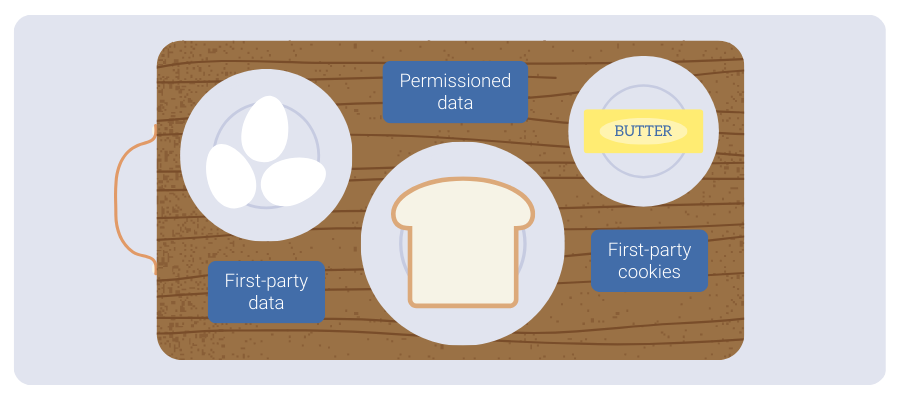
Every meal starts with ingredients, and in AdTech, those ingredients are data. First-party data is not just one thing: it’s more like everything your favorite neighborhood café knows about you.
First-party data
The café knows your coffee preferences because you’ve told them directly; whether by ordering at the counter, calling in, or placing an order online. This is information you’ve willingly provided through your interactions, and it belongs only to that café.
First-party cookies
The barista writes down your preferences in a notebook behind the counter, so next time you walk in, they don’t have to ask. First-party cookies remember details to make your experience smoother, but only for that café.
Authenticated identity
A loyalty app that connects online orders to in-person visits. By logging in, you’re saying, “Yes, it’s really me.” Authenticated identity is proof that the customer isn’t just a face in line, but someone with a verified profile.
Persistent identity
Recognizing you whether you order through the app or in person. Persistent identity enables the ability to keep track of someone across different touchpoints, consistently, without confusing them with someone else.
Permissioned data
Agreeing to join the loyalty program and get emails. Permissioned data is a connection to the customer that the customer proactively shared with the café by signing up for their loyalty program or email newsletter.
Each piece comes from direct interactions, stored and used in different ways. That’s what makes first-party data nuanced. The saga of third-party cookie deprecation and changing privacy regulations makes it important to understand which types of data you can collect and use for marketing purposes.
And once you have those ingredients, the next step is making sure you recognize how they fit together, so you can see each customer clearly. That’s where identity resolution comes in.
The recipe: Bringing the ingredients together with identity resolution
At the café, identity resolution is what helps the staff recognize you as the same customer across every interaction. Without it, they might think you’re two different people; one who always orders breakfast and another who sometimes picks up pastries to go.
Matching
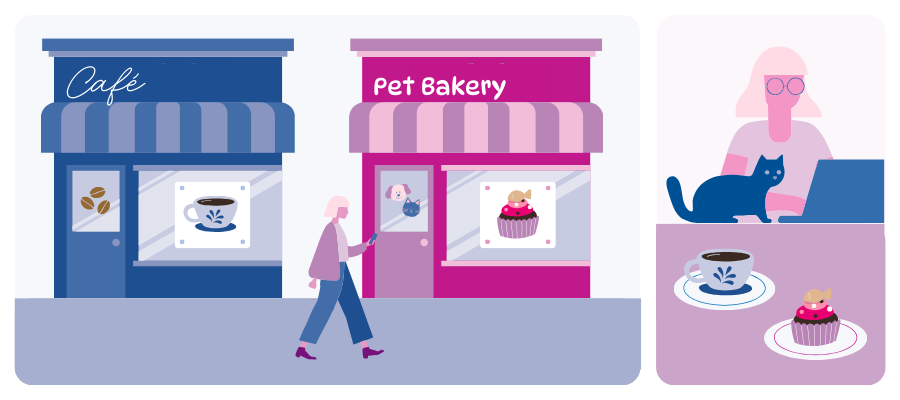
The café has a loyalty program, and the pet bakery next door has one too. When they match records across their two data sets, they realize “M. Jones” from the café is the same person as “Michelle Jones” from the bakery. That connection means they can activate a joint promotion, like free coffee with a dog treat, without either business handing over their full customer lists. In marketing, matching works the same way, linking records across data sets for activation so campaigns reach the right people.

Deduplication
Collapses duplicate profiles into a single, clean record, so you don’t get two birthday coupons, even though that would be nice to get.
That’s what Experian does at scale: we connect billions of IDs in a privacy-safe way, so you can get an accurate picture of your audience.
And once you can recognize your customers across touchpoints, the next challenge is collaborating across systems and partners for deeper insights. That’s where the behind-the-counter processes come in.
Behind the counter: Crosswalks and clean rooms
At a café, these terms are like the behind-the-counter processes that keep everything running smoothly. They may sound technical, but they all serve the same purpose: helping data collaborate across different sources, while keeping sensitive information safe. The goal is a better “meal” for the customer, deeper insights, better targeting, and more personalized campaigns. Here’s how they work.
Crosswalks
The café partners with the pet bakery next door. They both serve a lot of the same people, but they track them differently. With a crosswalk, they can use a shared key to recognize the same customer across both businesses, so you get a coffee refill, and your dog gets a treat, without either one handing over their full customer list. A crosswalk is the shared system that lets both know it is really you, without swapping personal details. It’s the bridge connecting two silos of data.
Clean rooms
The café and the pet bakery want to learn more about their shared customers, like whether dog owners are more likely to stop by for brunch on weekends. Instead of swapping their full records, they bring their data into another café’s private back room, a clean room, where they can compare trends safely and privately. Both get useful insights, while customer details stay protected. That’s a clean room: secure collaboration without exposing sensitive data.
Of course, sharing and protecting data is only part of the picture. The real test comes when you need to serve customers in new ways, especially as the industry moves beyond cookies.
Serving customers in new ways: Cookie-free to ID-free
Targeting has evolved beyond cookies, just like cafés no longer rely only on notebooks to remember regulars.
ID-free targeting
The café looks at ordering patterns, like cappuccinos selling on Mondays and croissants on Fridays, without tracking who’s ordering what. Instead of focusing on who the customer is, the café tailors choices based on the context of the situation, like time of day or day of the week. This is like contextual targeting, serving ads based on the environment or behavior in the moment, rather than on personal identity.

ID-agnostic targeting
The café realizes customers show up in all sorts of ways: walk in, online ordering, delivery. Each channel has its own “ID,” a name on the app, a credit card, or a loyalty profile. ID-agnostic targeting means no matter how you order, the café can still serve you without being locked into one system.
Just like cafés no longer rely only on notebooks to keep track of regulars, marketers no longer have to depend solely on cookies. Today, there are multiple paths, cookie-free, ID-free, and ID-agnostic, that can all help deliver better, more relevant experiences.
But even with new ways to reach people, one big question remains: how do you know if it’s actually working? That’s where measurement and outcomes come into play.
Counting tables vs. counting sales
At the café, measurement and outcomes aren’t the same.
Measurement
Tables filled, cups poured, specials ordered.
Outcomes
What it all means: higher revenue, more loyalty sign-ups, or increased sales from a new promotion.
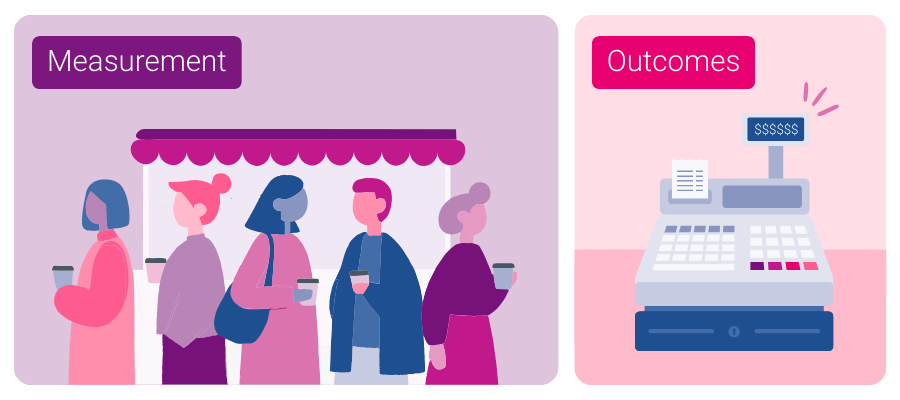
Both matter. Measurement shows whether the café is running smoothly, but outcomes prove whether the promotions and strategies are truly paying off. Together, they help connect day-to-day activity to long-term success.
All of this brings us back to the bigger picture: understanding the menu well enough to enjoy the meal.
From menu to meal
In AdTech, there will always be new terms coming onto the menu. What matters most is understanding them well enough to know how they help you reach your business goals. Just like at the café, asking a question about the specials isn’t foolish. It’s how you make sure you get exactly what you want. The more we, as an industry, understand the “ingredients” of data and identity, the better we can cook up new solutions that serve both brands and consumers. After all, the goal isn’t just to talk about the menu, it’s to enjoy the meal.
At Experian, we help brands turn that menu into action. From identity resolution to privacy-safe data collaboration, our solutions make it easier to connect with audiences, activate campaigns, and measure real outcomes.
If you’re ready to move from decoding the jargon to delivering better customer experiences, we’re here to help
About the author

Brandon Alford
Group Product Manager, Experian
Brandon Alford is a seasoned professional in the AdTech ecosystem with a focus on identity, audience, measurement, and privacy-forward solutions. He has spent his career helping advertisers and publishers navigate the complexities of digital advertising and privacy, bringing a practical and forward-looking perspective to industry challenges and innovation.
AdTech jargon FAQs
First-party data is information a customer shares directly with a brand, like purchase history, preferences, or sign-ups. It’s the most valuable and privacy-safe data marketers can use to build personalized campaigns.
Identity resolution ensures a brand can recognize the same customer across different touchpoints. Matching links records across data sets (e.g., between partners) so campaigns reach the right people without exposing full customer lists.
A crosswalk bridges two data systems with a shared key to recognize the same customer, while a clean room allows partners to analyze data together securely without exposing sensitive details.
Cookie-free and ID-free targeting shift focus away from tracking individuals, instead tailoring ads based on context (like time of day or content being viewed) or allowing flexibility across multiple IDs.
Measurement tracks activity (like clicks or visits), while outcomes prove business impact (like sales, loyalty, or revenue). Both are essential, but outcomes show whether strategies are truly effective.
Experian provides tools for identity resolution, privacy-safe data collaboration, and campaign measurement, helping marketers move from understanding the “menu” of AdTech terms to achieving real results.
Latest posts
1,000+ ready-made segments, available for activation within Nexxen Audigent, a part of Experian, has officially launched its audiences in the Nexxen demand-side platform (DSP), pairing premium publisher audiences with Nexxen’s streamlined connected television (CTV) and omnichannel buying workflow. Audigent transforms real engagement from premium publishers into over 1,000 ready-to-activate segments—spanning beauty, finance, travel, and more. Three key benefits Signal quality Verified publisher data drives higher match rates and wider look-alike reach. Media impact Reach up to 92 million entertainment fans, 78 million retail shoppers, or 71 million finance intenders across CTV, online video (OLV), and display without guesswork. Privacy and compliance Every segment is built from opt-in, first-party data and delivered through Audigent’s privacy-by-design framework. How Audigent and Nexxen boost your campaigns Now live in the Nexxen DSP, Audigent’s premium audiences plug directly into your existing buying workflow—making it easier than ever to plan, activate, and optimize at scale. Audigent utilizes cookieless, first-party IDs sourced directly from its premium publisher network, allowing advertisers to future-proof campaigns and continue to reach real people across browsers, devices, and CTV. Vertical use cases Auto Target auto intenders as they research new models, then retarget them on CTV during primetime motorsports broadcasts. Retail and CPG Engage retail shoppers with dynamic product ads ahead of peak sales weekends, bridging display and CTV for sequential storytelling. Travel and Hospitality Reach travel planners with destination-specific offers the moment they begin searching for flights. Finance Serve relevant credit card or fintech messaging to finance enthusiasts researching personal finance content. Premium audiences, measurable performance As a part of Experian, Audigent’s audience solution complements our broader identity resolution and activation capabilities, ensuring consistency across every channel. Together with Nexxen’s unified tech stack, advertisers can launch ads faster while respecting consumer privacy. Audience data, targeting, and media all sit in one workflow, making results easy to see and optimize. Contact us Latest posts

Marketing without segmentation is a lot like shouting into a crowded room and hoping the right person hears you. Without a clear way to communicate in a noisy marketing environment, your message gets lost in the mix. With segmentation, you can identify your target audience, speak to their needs, and deliver the right message at the right moment. Companies that use segmentation are 130% more likely to understand customer motivations, resulting in more effective campaigns and deeper audience relationships. In this article, we’ll break down four of the most effective customer segmentation methods, when to use each, and how Experian’s audience solutions can help. What is segmentation in marketing? Segmentation is the process of splitting a large audience into smaller groups that share similar traits, like demographics, location, behavior, or firmographic characteristics. As a marketer, these segments enable you to choose channels, messaging, and offers that resonate with each group. Whether you’re targeting new homeowners in Texas, loyalty shoppers in retail, or small business decision-makers in finance, segmentation helps you stand out to them and get results. Why should marketers segment their audiences? Effective audience segmentation fuels accuracy, performance, and personalization at scale. Here's why you should invest your time and marketing budget in honing your audience segments. Maximize your marketing ROI Nobody wants to waste money talking to the wrong crowd. Using various methods of segmentation, you can focus on those who want to hear from you — and the payoff can be huge. For marketing channels like email, segmentation can drive up to 760% more revenue than non-segmented campaigns. The more targeted your message, the better the return. Create a unified omnichannel strategy Segmentation helps ensure that every channel, from email and social media to display, SMS, and direct mail, operates from the same playbook. Once you define your target audience segments, you also need a trusted identity partner to sync them across platforms and environments. This ensures you can deliver consistent, personalized experiences at every touchpoint and your audience receives the same message in the proper context, regardless of where they engage. Strengthen customer loyalty Roughly 75% of consumers are loyal to brands that “get” them. When you strive to understand your customers, they’re more likely to stay. Segmentation enables you to personalize communications based on your target segment’s values, behaviors, or preferences, encouraging repeat business. Expand into new markets With segmentation, you can analyze existing customers to identify common traits and use that data to pinpoint similar groups in new regions or markets. For example, if your top customers are middle-class parents in suburban areas, you can target lookalike segments in other cities with tailored messaging. This makes it easier to expand with confidence, knowing you're reaching people who are more likely to convert. Lower customer acquisition costs Rather than forcing you to cast a wide net, segmentation enables you to focus your budget on high-potential audiences across channels, reduce acquisition costs, and minimize wasted spend on low-intent audiences. Four segmentation methods and examples Let’s look at four different methods of market segmentation. We’ll define each, share when to use them, and give real-world examples to help you apply them. 1. Demographic segmentation Demographic segmentation breaks your audience into groups based on gender, income, age, education, marital status, occupation, and household size. It’s one of the most foundational segmentation methods because it’s easy to implement and often tied directly to buying behavior. Demographic data makes it easier to get the tone, offer, and channel right from the start. And when you combine demographic segmentation with other segmentation methods, such as behavior or location, the impact multiplies. When to use it Use demographic segmentation when your product or service is clearly more relevant to people in a specific life stage, income bracket, or household type. Among all methods of market segmentation, demographic data is often the easiest starting point. It’s especially effective for industries such as financial services, healthcare, education, retail, and others, where consumer needs change based on demographics. Examples As a real-world example, a health supplement company used Experian data to segment its ambassador program audience into four demographic groups based on lifestyle and household makeup. These included younger singles, value-seeking families, high-income spenders, and older empty nesters. Applying these insights at registration allowed the brand to deliver personalized, channel-specific communications that boosted acquisition and retention. The approach led to stronger engagement and more meaningful customer connections. 2. Geographic segmentation This method of market segmentation categorizes people by location, including country, region, state, city, zip code, or even climate. It’s a simple yet effective way to tailor your marketing, as location often influences everything from lifestyle and language to shopping habits and product needs. It’s most often used among brands with physical locations or region-specific campaigns. Whether you're promoting snow boots in Colorado or sunscreen in California, geographic segmentation helps you stay relevant to the local context. When to use it Geographic segmentation is ideal when your offer or message changes depending on climate, culture, availability, or local regulations. It’s also helpful for planning market expansion or testing the performance of different methods of market segmentation across regions. Examples One home furnishings retailer partnered with Experian to understand how customer needs varied across store locations. Using a mix of client data and Experian demographics, we segmented stores based on their surrounding customer base, like urban, white-collar shoppers in metro centers versus lower-income households in more remote cities. These insights enabled the retailer to tailor inventory, marketing strategies, and ad copy for each store type, resulting in more relevant customer experiences. 3. Behavioral segmentation Behavioral segmentation centers on how people live their lives — their interests, habits, and decision-making patterns. It includes factors like past purchases, engagement frequency, brand loyalty, product usage, browsing patterns, and responsiveness to offers or promotions. Among all of the segmentation methods, this one provides insight into intent, helping you go beyond who your audience is to understand what they do. You can use behavioral insights to re-engage former customers with relevant offers, reward loyal buyers with personalized perks, or guide high-intent shoppers toward conversion with timely nudges. When to use it Behavioral segmentation is best when you want to personalize based on intent, habits, or engagement stage. It's particularly useful for retention, reactivation, or cross-selling strategies. Examples In practice, a national big-box retailer partnered with Experian to better understand customer behavior during grocery store visits. The goal was to identify distinct “trip missions” that could drive category trial and increase basket size. We analyzed everything from basket contents to customer composition and segmented visits into 11 unique missions. For example, the “All Aisles Online” segment represented large households (often homeowners with families) stocking up on household staples through online orders. In contrast, the “Marketable Mission” segment captured smaller, likely renter households making quick trips for non-essentials. These behavioral insights empowered the retailer to adjust promotions based on the intent behind each visit, strengthen customer relationships, and drive growth. 4. Firmographic segmentation (B2B) Firmographic segmentation is like demographic segmentation for businesses. It groups B2B audiences based on attributes such as annual revenue, location, company size, industry, and organizational structure. You can also segment by job title or decision-maker role to better target key stakeholders. This method is great for aligning your messaging, sales strategy, or product offerings with the unique needs of various business types. A startup in the tech sector will likely respond to a very different pitch than an enterprise manufacturer, and firmographic data helps you speak to both with precision. When to use it Use firmographic segmentation when marketing to other businesses, especially when your product or service has different benefits depending on business size or sector. Examples Recently, a B2B client partnered with Experian to gain a deeper understanding of the revenue potential of their existing business customers. Using firmographic data, we segmented the client’s customers into distinct groups based on the characteristics most strongly tied to spending behavior. For each segment, we calculated potential spend, defined as the 80th percentile of annual spend within that segment. This allowed the client to identify high-value accounts with untapped growth potential. For example, one customer, ABC Construction, had spent $4,750. But based on their segment’s profile, their annual potential was $9,000. That insight revealed a $4,250 opportunity to deepen the relationship through more targeted marketing and sales efforts. Best practices for market segmentation Regardless of the segmentation method you use, the following best practices will help you maximize the benefits of your efforts. Start with clean, reliable data Segments are only as good as the data behind them. If your data is outdated, inaccurate, or incomplete, your segments will result in ineffective targeting and a wasted budget. Utilize accurate, compliant, up-to-date sources like Experian Marketing Data, ranked #1 in accuracy by Truthset, to ensure your targeting is on point. Test and refine segments continuously Business goals, market conditions, and behaviors are constantly changing. What worked last month or even last week might not work today. By adjusting your segments over time, you make sure your marketing stays relevant, focused, and effective. Use A/B testing, performance metrics, and audience analytics to iterate on your segments and improve results over time. Align segments with personalized messaging and offers Each segment has distinct needs, preferences, and motivations, which means generic messaging won’t resonate effectively. Once you’ve built your segments, personalize your creative, copy, and offers to appeal to each group and increase the likelihood of engagement and conversions. Integrate segmentation across all platforms If someone sees one message in an email and a completely different one in an ad or on your website, it creates confusion and weakens trust. From CRMs and email platforms to ad tech and analytics tools, make sure your segmentation method is applied consistently across every channel to improve performance and build a cohesive brand experience. Segment your audiences with Experian Effective audience segmentation is at the heart of every successful marketing strategy, but in this fragmented, privacy-conscious landscape, grouping your audience into meaningful, actionable subgroups is more challenging than ever. That’s where we come in. With coverage of the entire U.S. population, Experian helps marketers define and categorize broad audiences into precise segments using rich data on demographics, behaviors, financial profiles, and lifestyle traits. These insights make it easier to personalize messaging, optimize media spend, and drive better outcomes. From ready-to-use syndicated audiences to custom segments and even Contextually-Indexed Audiences that align targeting with content, Experian offers flexible segmentation solutions that perform across digital, TV, programmatic, and social channels. In our most recent release, we introduced over 750 new and updated audience segments across key categories, including a brand-new category for Experian, giving marketers more accurate, behavior-based targeting options than ever before. 135+ new CPG audiences, a brand-new category for Experian, built from opt-in loyalty card and receipt scan data 240+ new automotive audiences covering ownership and in-market shoppers 100+ new high-spending behavior audiences focused on specific merchant categories 24 new wealth and income segments with refined household net worth tiers 13 new lifestyle-based housing audiences for family- and household-focused targeting 250+ refreshed financial segments with improved naming conventions for better discoverability and clarity Together, these segments give marketers more accuracy to reach high-intent consumers based on real-world behaviors, spending patterns, and financial capacity. Audience solutions powered by consumer insights Experian Marketing Data, one of the most comprehensive and accurate consumer databases in the U.S., is the core of our segmentation capabilities. Backed by over 5,000 demographic and behavioral attributes, it helps you understand not just who your customers are but how they live, shop, spend, and engage, too. Each audience segment is built with privacy and precision in mind, using a blend of demographic data, financial behaviors, lifestyle signals, and media habits. With these consumer insights, we’ll help you uncover meaningful patterns that lead to smarter strategy. Experian’s pre-built audiences Our syndicated audiences are pre-built, ready-to-activate segments based on shared characteristics from age and income to purchase behavior and lifestyle indicators. When speed and scale are a priority, these segments offer a fast, effective way to reach your target audience. Experian’s 2,400+ syndicated audiences are available directly on over 30 leading television, social, and programmatic advertising platforms, as well as within Audigent for activation within private marketplaces (PMPs). Here’s what’s new from our August 2025 release: CPG shoppers by category (e.g., Frozen Food Shoppers, Multi-Vitamin Shoppers) Luxury EV owners and auto brand shoppers (e.g., Rivian, Polestar, Cadillac) High spenders in specific categories (e.g., men's grooming and women's accessories) Ultra high-net-worth households (e.g., Net Worth $50M+) and likely home sellers Young Family Homeowners and Growing Family Apartment Renters Custom audiences for specialized targeting Need a custom audience? Reach out to our audience team, and we can help you build and activate an Experian audience on your preferred platform. Additionally, work with Experian’s network of data providers to build audiences and send to an Audigent PMP for activation. Contextually-Indexed Audiences Experian’s Contextually-Indexed Audiences offer a privacy-safe way to reach relevant consumers in the moments that matter without relying on identity signals or third-party cookies. These segments combine Experian’s consumer insights with page-level content signals, enabling you to align targeting with intent and mindset, even in cookieless or ID-constrained environments. Want to take your segmentation strategy to the next level? Let’s talk. We’ll help you define your audience in ways that drive real results. Talk to our team about your segmentation methods today Latest posts

Healthcare and Life Sciences teams map the patient journey to spot care gaps and guide interventions. However, clinical records cover only what happens inside clinics, not the forces driving patient decisions. Enriching these records with lifestyle, socioeconomic, and consumer-behavior insights reveals the “why” behind health outcomes. That’s where non-clinical insights step in – revealing the real-world forces that shape patient results. To address these blind spots, Experian and Komodo Health have teamed to integrate de-identified insights from millions of patient journeys with Experian’s socioeconomic and lifestyle data. This enriched view lets enterprises see each journey in full, identify care disparities, and craft smarter strategies – while rigorously protecting privacy. Driving tangible outcomes and better patient care This collaboration focuses on turning insights into action. With Experian and Komodo's integrated clinical, socioeconomic, and lifestyle data, Healthcare and Life Sciences teams can move from insight to accuracy, building adherence programs, finding hard-to-reach patients, and demonstrating treatment success. They can: Layer Komodo’s de-identified patient-level medical and pharmacy insights and analytics with Experian lifestyle and socioeconomic attributes Segment patient populations by condition, treatment history, and socioeconomic status Prioritize outreach – reducing waste and focusing resources where care is needed most For instance: Neighborhood-level gaps Identify opportunities to capture untreated patients and improve clinical trial inclusion. Income-related support Flag populations most likely to benefit from cost-saving programs, ensuring communications highlight co-pay assistance or financial relief options. Inside the data stack At the core of Komodo Health's AI-enabled healthcare analytics platform is its Healthcare Map®. This innovative tool integrates de-identified patient-level medical and pharmacy claims data from the patient journeys of over 330 million unique individuals – providing insights on diagnoses, treatments, outcomes, and care patterns across the United States. Experian enhances this data by adding socioeconomic and lifestyle characteristics that influence up to 80% of health outcomes. Together, this combined data effectively addresses essential questions such as: Which neighborhoods face the highest diabetes risk? Where is therapy abandonment spiking? When should co-pay assistance messages drop? How can we accelerate HCP outreach or clinical-trial recruitment? Experian's socioeconomic and lifestyle insights: Fueling data-driven care decisions In this context, Experian provides valuable insights into socioeconomic factors and lifestyle patterns, covering everything from household composition and income ranges to psychographics and other attributes that help build a broader understanding of an individual's circumstances. Where deep patient understanding, health engagement, and real-world evidence converge As healthcare marketing, patient engagement, and real-world data converge, the Experian and Komodo collaboration is empowering Healthcare and Life Sciences teams with fast, actionable insights. Fusing de-identified patient-level clinical data with socioeconomic and lifestyle attributes helps teams engage the right patients, and fuels research from product launches to community programs. It elevates experiences while proving impact with real-world evidence. Ready to utilize these insights? Latest posts