At A Glance
Local advertisers face unique challenges, from limited budgets to fragmented audiences and the need for measurable results. Experian’s trusted data, combined with Madhive’s Maverick AI platform, equips advertisers with the insights and tools needed to create impactful campaigns. This collaboration simplifies campaign management, helping advertisers connect with the right audiences.Identity-led local advertising that works
Local advertisers run on tight budgets, short timelines, and constant pressure to prove what works. Every dollar must count. In this Ask the Expert session, Aaron Brown, Chief Scientist at Madhive, joins Ali Mack, VP of AdTech Sales at Experian, to discuss how the Maverick AI platform helps local advertisers make confident decisions, act on clear recommendations, and see outcomes they can stand behind.
Why local campaigns demand accuracy, and how to deliver it
Local teams juggle multiple channels, changing budgets, and heavy performance expectations. To stay competitive, local teams need quick answers to three critical questions:
- Which households are most valuable to reach?
- Which channels work best in their market?
- Are campaigns on on track, day by day?
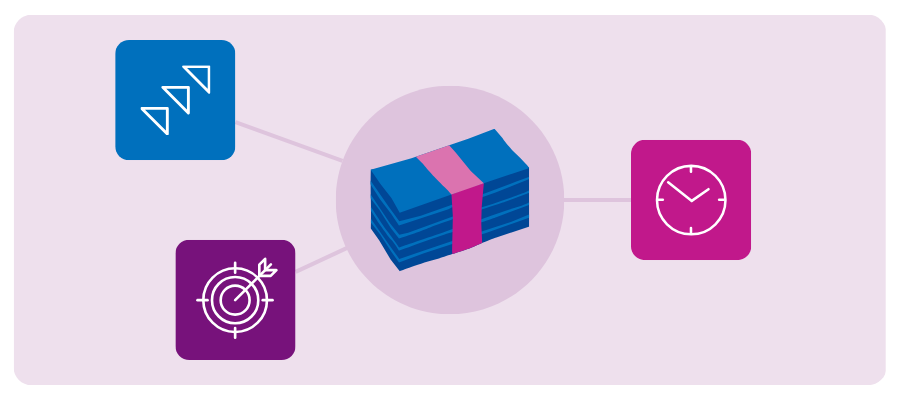
Delivering that level of accuracy means working from a single, trusted view of households, channels, and performance, powered by clean, connected, and continuously updated data.
“When you think about local, these aren’t enormous budgets. These businesses depend on success from day one and are still finding their footing. There’s a wealth of nuanced information we need to hear from advertisers to ensure their campaigns succeed, and a wealth of insights we need to deliver back. It’s a real-time matching problem at scale to make sure everything runs profitably for our customers.”
MadhiveAaron Brown, Chief Scientist
Why Experian data is the foundation of local planning
Data is the foundation of effective local advertising, but not all data is created equal. For local advertisers, the real advantage comes from high-quality, actionable data that pinpoints likely customers and reduces wasted spend.
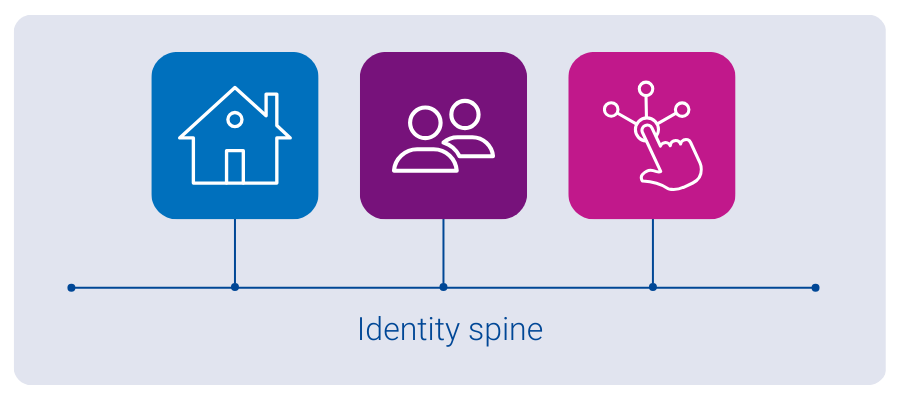
Experian Marketing Data provides the identity and insights spine that helps local advertisers:
- Identify the right households in each market
- Build consistent, people-based audiences across partners
- Activate with confidence and measure outcomes on the same foundation
Madhive’s data marketplace builds on this identity layer, curating trusted data sets that advertisers can integrate directly into planning and activation.
“We’re focused on creating perfect matches between businesses and consumers. The right data is critical, which is why we started the data marketplace. It’s a curated, opinionated take on the best data to drive outcomes for the companies that depend on us.”
MadhiveAaron Brown, Chief Scientist
Madhive’s Maverick AI at the core of local advertising
Madhive’s Maverick AI is the AI-powered operating system for local media. Built as a foundational layer behind Madhive’s entire workflow, Maverick AI connects the dots across planning, targeting, reporting, and storytelling. Its purpose is simple yet transformative: turn fragmented data and advertiser inputs into actionable insights at scale.
What makes Maverick AI different?
“Maverick AI exists to connect local advertisers with data like Experian’s. Its ability to collaborate and tell stories back to advertisers is one of its greatest strengths.”
MadhiveAaron Brown, Chief Scientist
How Maverick AI and Experian Marketing Data turn transparency into results
Maverick AI turns performance transparency into aligned plans and faster optimizations for local advertisers and agencies. Paired with Experian’s identity data, advertisers get an accurate, household-level view of real people in real locations. That lets them build consistent local audiences, reach those audiences across connected television (CTV), social, and the open web, and confidently tie ad exposure back to outcomes that matter in each market.

“Maverick AI is the foundational layer behind all our operations – targeting, reporting, and storytelling. It connects data across organizations and advertisers, including trusted data sources like Experian. AI works tirelessly to pick up context, connect the dots, and deliver great results end-to-end for our customers.”
MadhiveAaron Brown, Chief Scientist
Your next local campaign starts with Madhive and Experian

Local advertising performance starts with a trusted identity foundation. With Experian data and Madhive’s Maverick AI platform, local advertisers can define the right households once, activate their campaigns across CTV and digital channels, and measure outcomes with confidence. Many brands are increasing investment in AI-powered planning to cut waste and grow on-target reach. Let’s work together to make your next campaign a success.
Let’s solve your local advertising challenges today
About our experts

Aaron Brown
Chief Scientist, Madhive
Aaron Brown is Chief Scientist at Madhive, where he leads Mad Labs, the company’s advanced innovation division. With a background spanning mathematics, computer science, and law, Aaron specializes in applying complex technical and theoretical breakthroughs to real-world business challenges. Before joining Madhive, he worked at the machine learning startup Intelligent Life. A graduate of Boston University with degrees in Mathematics and Computer Science, he also holds a J.D. from the University of Southern Queensland and lives in New York City.

Ali Mack
VP of AdTech Sales, Experian
Ali Mack leads Experian’s AdTech business, overseeing global revenue across the company’sexpansivetech and media portfolio. With over a decade of experience in digital and TV advertising, Ali drives strategic growth by aligning sales, customer success, and solutions teams to deliver impactful outcomes for clients and partners.
She has successfully guided teams through two major acquisitions, integrating sales organizations and product portfolios into unified go-to-market strategies. Under her leadership, Experian has consistently exceeded revenue targets while fostering collaborative, results-driven teams and mentoring emerging leaders. Working closely with finance, product, and marketing, Ali develops strategies that support a diverse ecosystem of publishers, brands, and technology partners, positioning Experian at the forefront of data-driven advertising and identity resolution.
FAQs
Local advertisers face tight budgets, short timelines, and high pressure for results. They must reach the right households, tailor messaging, and optimize campaigns across zip codes. Experian’s data solutions and Madhive’s Maverick AI platform help overcome challenges like location targeting and data activation without losing signal.
Madhive’s Maverick AI platform centralizes operations, targeting, and reporting while enabling granular local planning at scale. It integrates Experian’s data to target households accurately, optimize campaigns across markets, and deliver measurable results, even for advertisers with limited budgets.
Madhive’s Maverick AI platform provides transparency and clear recommendations, aligning advertisers on goals. Experian’s data solutions further enhance this process by providing a unified view of audience behavior, ensuring campaigns remain cohesive and effective across all channels.
Latest posts

With the recent announcement of delaying third-party cookie deprecation to 2024, the industry has more time to rethink how to identify and communicate with consumers.

As today’s digital landscape gets more and more complicated there are more ways for brands to connect with users and drive purchases and more ways for ad tech to target and measure those touch points. As in-person shopping picks up steam due to the re-normalization of society post-COVID 19; the connection between digital ads and in-person purchases needs to be made once again. With the rise of Connected TV throughout the pandemic there are even more digital opportunities to target a user. But how do you make sure that those brand engagements are captured and correctly attributed to offline purchases and conversions? The answer lies in a holistic identity resolution strategy. Cross-device identity resolution with The Tapad Graph connects the identifiers and devices of individuals within a household to each other; enabling targeting, frequency capping, extension, segmentation and measurement or attribution between devices; including Connected TV and hashed (privacy-protected) email addresses along with Cookies, Mobile Ad Ids and IP Address. Brands can join their first-party data to The Tapad Graph to execute strategies that connect online and offline data for pre, mid and post-campaign efficiencies. Let’s imagine a scenario in which an outdoor retail brand is targeting users watching specific content on a Connected TV device. Powered by identity resolution, they start with a general ad on CTV and continue targeting down individual paths with each user. When one of them converts in store and makes a purchase; the outdoor retailer can connect that action through location and in-store traffic data with the cross-device identity resolution used to execute the digital campaign. Now the actions of the user online and offline are resolved for more accurate measurement and attribution after the campaign ends. But it doesn’t stop there– the brand's CRM data can be reactivated for the next digital campaign and leveraged to capitalize on the most effective media mix for the user who made the purchase previously. These combined insights can be invaluable in shaping up future campaign strategies with geo-contextual ads, recommended additional products and personalization to help drive more conversions and purchases in-store or online. As in-person shopping picks back up and marketers are tasked once again with balancing online and in-store KPIs, the right identity resolution strategy can unlock necessary efficiencies for retailers, ad tech vendors and agencies tasked with supporting these initiatives. Get in touch

Experian Marketing Services and Data Quality President Genevieve Juillard recently sat down with Zach Rodgers, host of the AdExchanger Talks podcast to discuss the future of identity, the importance of data transparency and privacy, and our recent acquisition of Tapad. Genevieve focused on the opportunity for our industry to reimagine an advertising ecosystem that is resilient and adaptable; one that takes advantage of emerging data and prioritizes data transparency and consumer privacy. She also discussed the importance of advertising strategies that put consumers at the heart of every decision and give them more control over their data. Genevieve shared with AdExchanger that Experian’s acquisition of Tapad, a global leader in digital identity resolution, was a natural fit for our company. Tapad’s approach and role in the ecosystem is very much aligned with Experian’s, which is to develop solutions that are resilient to industry and consumer changes. The combination of our capabilities supports interoperability across all types of identifiers, both online and offline, and will position us to help our clients navigate the post-third-party cookie world. To learn more about Experian’s plans to support an effective advertising ecosystem that will evolve with our dynamic industry, listen to the full podcast Embracing ‘Healthy Fragmentation’ In Ad Tech, With Genevieve Juillard. Get in touch