At A Glance
As CTV viewership grows, marketers face challenges in targeting and measurement across fragmented platforms. Identity resolution and audience strategies, supported by Experian’s syndicated audiences and privacy-safe solutions, help DSPs and advertisers reach high-value audiences, improve campaign accuracy, and drive measurable outcomes.In our Ask the Expert Series, we interview leaders from our partner organizations who are helping lead their brands to new heights in AdTech. Today’s interview is with George Castrissiades, General Manager of Connected TV at AdRoll.
Premium reach and fragmentation
As viewer attention fragments across platforms, how should marketers redefine “premium reach” in CTV to prioritize engagement and audience quality over scale alone?

A few years ago, ad supported streaming over-indexed on younger adults, those without much financial history and much more budget conscious. It would have been fair for B2B brands to assume that maybe they weren’t going to find their C-Suite audiences on those channels, and so connected TV(CTV) was positioned as a top of funnel tactic aimed at retail. But that’s all changed – ad-free prices are going up, and ad supported tiers are the norm across the majority of channels. 66% of adults have at least one ad supported streaming channel, and adults today spend nearly as much time streaming movies and TV as they spend on their mobile phones. Now that ad viewing audiences on CTV really span the full spectrum of demo, techno, and firmographic segments, savvy marketers should partner with platforms that offer breadth and depth of targeting and measurement to find the highest value audiences wherever they’re watching CTV and serve them highly relevant ads that draw their attention towards the screen. I know I’m jumping out of my seat whenever I see an AdTech or MarTech ad.
Identity and relevance
What does a strong identity framework unlock for delivering household- and person-level relevance across screens, and how does it reshape audience planning?
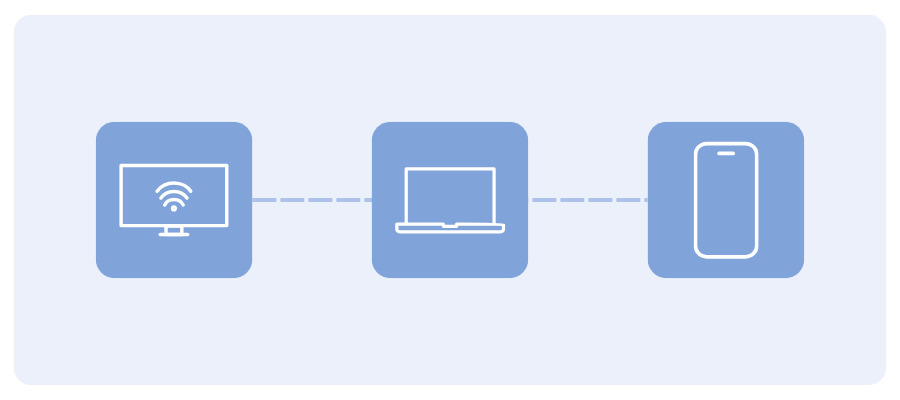
In privacy-safe ecosystems, people want to share less data and log in to websites and browsers less frequently. If you can’t resolve a household ID to a CTV device through Safari and other sources of obfuscated identity, you’re going to end up losing a lot of signal along the way. On top of that, targeting smaller, higher-value audiences means this attrition can have a profound impact on your ability to build meaningful reach and use audience forecasts to predict scale. A strong identity framework is the key to maintaining as much of your planned audience as possible and staying true to initial forecasts.
AI and outcome planning
How is AI evolving CTV from tactical bidding to strategic outcome planning, and what mechanisms are in place to validate true performance lift?

Tomorrow isn’t guaranteed, especially not in advertising. Audiences change where and when they consume media, and so shifting budget to a placement that did well yesterday is like buying a stock when it’s outperforming – the gains might be gone by then! Predictive AI is bridging the gap to find the highest value and most engaged audiences in real time, versus being purely reactive. This helps drive outcomes which we see in the form of pipeline influence, ROAS, and site traffic lift – without exponentially increasing costs. The same is true for account-based marketing(ABM) outcomes – there’s a blend of signals, account “fit” and intent data that needs to be evaluated in a deeper, more intelligent way. AI is helping to find those highest value accounts, even before they’re in market, which means smart marketers aren’t showing up late to the party.
Measurement and incrementality
What privacy-safe, closed-loop measurement frameworks should become standard to prove incremental visits and sales from CTV campaigns?

Working with a dedicated multichannel, full-funnel ad and marketing platform like AdRoll can easily let you know when a user arrives at your site and makes a purchase, but understanding how that customer arrived there and which tactics deserve the credit requires a deeper, more sophisticated workflow. Our partnership with Experian allows all devices in a household to ladder back up to a household ID, so we can ensure accuracy without pivoting on anything personally identifiable. This works perfectly in CTV, an environment that follows an app workflow of user resettable device IDs rather than IP address or email but always connects seamlessly to web tokens including cookies. Accuracy, scale, and privacy are maintained in a proven way – you see this tech underpinning the infrastructure of streaming across all the biggest players, so marketers can rest easy.
Creative and commerce
How can creative sequencing and shoppable TV experiences convert living-room attention into commerce without compromising user experience or feeling intrusive?

I like to say that CTV trades attention for action. Users lean back and focus on the messaging and visuals of the big screen rather than scrambling for the mouse or tapping to close some intrusive pop-up. This focus means that the messaging is absorbed more quickly, but creatives can wear out their welcome just as fast. Sequential messaging really helps to move the messaging along without subjecting the viewer to longer ads where attention wanes, but also increases brand recall and specific product information because the story evolves with each impression. This is a great tactic to use when you want a viewer to take a specific action later – but shoppable ads can help motivate a user to act now, and new formats can really simplify things. Shoppable can feel out of range for most – the top players in this space own major e-comm storefronts and then tie them back into their own demand-side platforms (DSPs), content, and streaming devices. For the rest of us, dipping our toes in slowly through simple and cheap solutions like QR codes can connect audiences right to a web experience from their TVs, or intermediate solutions like interactive video ads. Users love to play around with fun on-screen experiences, and there’s a whole spectrum of crawl/walk/run options available.
Trust and governance
Which shared guardrails—brand safety, fraud control, and frequency management- are essential to unlocking sustainable, scaled investment in CTV?

I’ve always thought of CTV inventory analogously to high-end watches – if you buy from the source or a well-known, reputable dealer, you’re probably buying the real thing. But that fancy timepiece the guy was selling outside the bar, that you swore looked real? Probably not. Untrusted resellers and too-good-to-be-true pricing might mean you’re running ads on a screen at a lonely gas station at 3 am to an audience of no one, and that’s not even the worst case scenario. Good relationships and deep pockets can solve brand safety and fraud issues, but not every advertiser is going to have those resources. Brand safety and fraud prevention can reduce workload and help distinguish the good stuff from the growing pool of gray area, arguably, CTV inventory that isn’t what was promised to a customer. Outsourcing this trust also goes a long way, with buyers knowing you’re not grading your own homework. Frequency management is equally as important. Once you have your audience and your good supply, it’s important not to abuse a single household just because they meet your targeting criteria. Reach is your best friend with CTV.
Data and audience strategy
How do Experian’s syndicated audiences provide a consistent, scalable foundation for planning, activation, and measurement across CTV and digital, and what outcomes are clients seeing?

We love to talk about how Experian’s data is such an integral part of so much of streaming’s architecture, and the fact that it’s built on deterministic datasets means you’re getting scaled audiences built on knowledge rather than best guesses. That means a lot when working across multiple channels, privacy-safe environments, and households with an ever-growing number of connected devices. Our customers are always delighted at how precise targeting can be, especially in the B2B/B2C space – and knowing the size of those audiences helps them to understand how budget transforms into reach in a more predictable way. It’s confidence-inspiring to point to a new audience and tell your client that these are their future customers. The best part is showing them the outcomes reporting – we consistently see a massive spike in site traffic and engagement on days when a new Experian syndicated audience is launched!
Contact us
FAQs
Identity resolution ensures marketers can connect devices and maintain audience accuracy. Experian’s identity solutions help reduce data loss and improve audience forecasts, making campaigns more effective.
With viewer attention spread across platforms, marketers need tools that offer both broad and detailed targeting. Experian’s syndicated audiences provide reliable, scalable data to help identify and reach high-value audiences across channels.
Techniques like sequential messaging and shoppable ads keep viewers engaged and encourage action. Simple tools like QR codes or interactive video ads can connect audiences to web experiences directly from their TVs.
Strong identity frameworks help DSPs maintain accurate targeting and audience reach, even in privacy-focused environments. By connecting devices to household IDs, solutions like Experian’s Digital Graph ensure DSPs can deliver relevant ads and measure performance effectively across channels.
About our expert

George Castrissiades
General Manager of Connected TV, AdRoll
George leads the CTV go-to-market strategy at NextRoll, driving rapid growth and adoption of the channel for both B2B and B2C customers. With a track record of building and scaling CTV solutions, he is focused on developing a strategic playbook that accelerates success in the evolving digital advertising landscape.
Before joining NextRoll, George spearheaded CTV product innovation at iSpot.tv and held leadership roles in product and operations at YouTube, VICE Media, Crackle, Roku, and Innovid. His expertise spans product development, monetization, and market expansion.

About AdRoll
AdRoll is a connected advertising platform built for growth-minded marketers. With powerful AI, flexible campaign tools, and seamless integrations, AdRoll helps mid-sized businesses turn complexity into clarity and clicks into customers. The AdRoll platform delivers full-funnel performance through multi-channel advertising, audience insights, and cross-channel attribution, supporting marketers across industries including ecommerce, technology, financial services, education, and more. For B2B teams, AdRoll ABM extends these capabilities with account-based precision, multi-touch campaigns, and real-time buyer intelligence. Backed by nearly 20 years of data and award-winning support, AdRoll enables marketing teams to advertise smarter, move faster, and achieve more, all from one place.
Latest posts

Tom Rolph, VP EMEA at Tapad, part of Experian, says that ad-sponsored streaming services can be successful if they can deliver a higher quality viewer experience than other streaming services. Last week, Hulu, the streaming service acquired by Fox and now owned 60 per cent by Disney, announced it will be regularising its ad loads. The streaming service will be bringing ad breaks down to 90 seconds in an effort to deliver a better viewer experience. This is a positive move from Hulu and one which other ad-supported streaming services should follow in order to be successful in a competitive market. Previously ad breaks on Hulu could vary wildly, from 180 seconds to 240 seconds, due to existing deals with its three owners: Disney, Comcast and AT&T. Over in the UK, we haven’t suffered from quite as inconsistent an approach as in the US, but there is still viewer frustration with the ad experience on ITV Hub and All4, where the problem tends to be over exposure of the same ad. Therefore, this move to standardise ad break lengths for streaming platforms is one that should be embraced on both sides of the pond. An important shift in this space will be to limit the number of ads during each show, but have better ad targeting to minimise repetitive advertising and increase the ROI of ad spend. All of which can be accomplished by investing in identity resolution products that can support CTV devices. Last year Ofcom found that in the UK subscriptions to Netflix, Amazon and NOW TV have risen above those to traditional pay TV services. With Netflix and Amazon both ad-free and NOW TV only a limited ad funded model, it’s clear that there is a growing appetite for ad-free viewing models. A fact that is only further supported when you consider the role of the BBC and BBC iPlayer. But the picture isn’t entirely negative for ad-funded models. There is demand for great content on ad-funded services in the UK, with ITV Hub boasting over 1bn requests and 540m hours of TV watched. The ITV Hub mobile app has also been downloaded on over 27m devices across the country – with over 22m people now registered to ITV Hub database, including more than half of Britain’s 16-24 year olds. However, to continue to attract and retain younger viewers, the experience will have to improve. There are several areas where ad-supported streaming providers need to improve in order to remain top players in this space: Ad experienceAs explored above, both volume and repetition of ads can be a turn off for viewers, but with Brits already spending a total of £303.16m every month on TV streaming services, according to Finder.com, there is potential for free, ad-funded models to flourish as people hit a limit on what they are willing to spend. There are already signs of improvement with the ad experience, with ITV just signing a deal with Amobee to allow for addressable ads on ITV Hub, while Sky’s AdSmart technology remains best in class and has now crossed over the pond to be used by Comcast stablemate NBC. Server reliabilityA cursory search finds little evidence of ongoing reliability problems with Netflix, but much evidence of problems with ITV Hub and All4, which are both prone to crashing. To compete with bigger players with massive server farms, server capacity needs to be tackled. This is especially true when it comes to live events, where many people will recall ITV Hub’s famous fails during the World Cup. While even some of the larger players have had similar streaming issues (for example, Amazon’s move into live sports streaming when they had to pull UK streaming of the US Open Tennis due to user complaints), viewing experience should be prioritised as the space gets increasingly competitive. Getting the content rightAmazon and Netflix have huge content budgets, but UK broadcasters remain strong in this regard, Channel 4 has enjoyed viewing figures of 7.5m for the Great British Bake Off, while ITV pulled in 13.7m for I’m A Celebrity. By building on UK-specific content that speaks to UK audiences, ad-supported streaming services can continue to pull in more viewers. Mobile accessMore and more Brits are choosing to watch TV content on their smartphone or tablet, according to UKOM-approved comScore data. In fact, 6.5m adults visited the BBC iPlayer app to watch video on either a smartphone or tablet, edging out Netflix which attracted 5.8m Getting the experience right on mobile, with the option to download content so it can be viewed in areas of low or no signal, is key.If UK ad-supported TV stations can crack these key areas for their Connected TV offering then they will be set up to succeed and offer a true home-grown alternative to the US streaming giants. Full article here. Contact us today

Tapad’s, part of Experian, SVP of Identity shows us how marketers might communicate seamlessly through emerging channels like voice, the smart home, and, yes, podcasts.In his relatively new role as senior vice president of identity at Tapad, a part of Experian, Ajit Thupil keeps a close eye on the evolution of marketing as it becomes more intent on using data and identity technology to track ROI. Here he sits with Chris Wood at Tapad’s New York offices to discuss the future of identity. (To capture the inventive atmosphere at this location, the room they chatted in was named after Leonardo da Vinci.) For Thupil, it all comes back to the customer, whether it’s a brand client or a consumer. Brands want measurability and customers demand a seamless experience across the many devices they use in a day. While consumers are understandably reticent about giving up personally identifiable information (PII), current identity solutions use anonymous data profiles to connect the dots at the individual or household level. Given the frequency that users switch devices, along with their tendency to share bigger screens like TVs, there’s no dearth of challenges for this “head of problem solving” to solve. Contact us today
Tapad, part of Experian, brings global insights to arm Treasure Data’s enterprise CDP technology
FeaturedJoint solution will enhance accuracy and reach across North America, EMEA and APAC NEW YORK, April 17, 2019 /PRNewswire/ — Tapad, a global marketing technology company and leader in digital identity resolution solutions, today announced a new joint capability with Arm®Treasure DataTM , a leader in enterprise customer data management. The partnership combines The Tapad GraphTM technology with Arm Treasure Data’s robust enterprise Customer Data Platform (CDP), enabling advertisers in the Arm Treasure Data marketplace to access Tapad’s datasets. With the integration of Tapad’s Graph and Arm Treasure Data’s existing first party data, marketers will be able to deliver scalable, cross-device messaging with precision. In addition, marketers can benefit from anonymous customer journey analysis, audience expansion and online and offline attribution. Arm Treasure Data’s APAC market customers will have access to expanded audience reach by leveraging Tapad’s global, proprietary datasets. While Tapad will be able to extend its presence into the APAC region, tapping into Arm Treasure Data’s existing footprint. “The Tapad GraphTM is a trusted and established platform with a history of innovation,” said Stephen Lee, Senior Director, Business Development, Arm Treasure Data. “Integrating Tapad’s technology into the Arm Treasure Data CDP will allow for streamlined experiences across markets, achieving global scalable reach.” For more information about The Tapad GraphTM, or to request a demo, visit our identity page. About Tapad Tapad, Inc. is a global marketing technology company and leader in digital identity resolution solutions. The Tapad GraphTM, and related solutions, provide a privacy-safe approach to connecting device identifiers to brand and marketer data, thereby allowing for enhanced measurement, attribution, reach and ROI of marketing campaigns. The Tapad GraphTM enables marketers around the world to maximize campaign effectiveness and drive business results. Tapad is recognized across the industry for its innovation, growth and workplace culture, and has earned numerous awards, including the TMCnet Tech Culture Award. Based in New York, Tapad also has offices in Chicago, London, Oslo, Singapore and Tokyo, and is a wholly owned subsidiary of Telenor Group. About Treasure Data Arm Treasure Data enterprise Customer Data Platform (CDP) unifies data from multiple sources – online, offline, IoT and device generated data – and empowers enterprises to disrupt their markets with superior customer experiences. Our customers are creating transformational customer relationships by connecting the data dots with our CDP. Arm Treasure Data is fully owned by Arm Holdings and has a global customer base of over 300 enterprises including Fortune 500 and Global 2000 companies. Our clients manage over 130 trillion records, resulting in more predictable and profitable business results. Contact us today