At A Glance
-Experian’s 2026 State of advertising report shows that advertising trends in 2026 will be defined by how well organizations connect data, identity, and measurable outcomes. Leaders across the ecosystem point to five themes: AI that reshapes workflows, measurement that guides decisions earlier, identity and privacy as strategic inputs, channels aligning around outcomes, and identity connecting planning, activation, and measurement.What advertising trends does Experian’s 2026 State of advertising report highlight?
2026 State of advertising report
Experian’s 2026 State of advertising report shows that advertising trends in 2026 will be defined by how well organizations connect data, identity, and measurable outcomes. Our 2026 State of advertising report brings together perspectives from 14 leaders operating across key parts of the advertising ecosystem to show how these shifts are taking shape in practice.
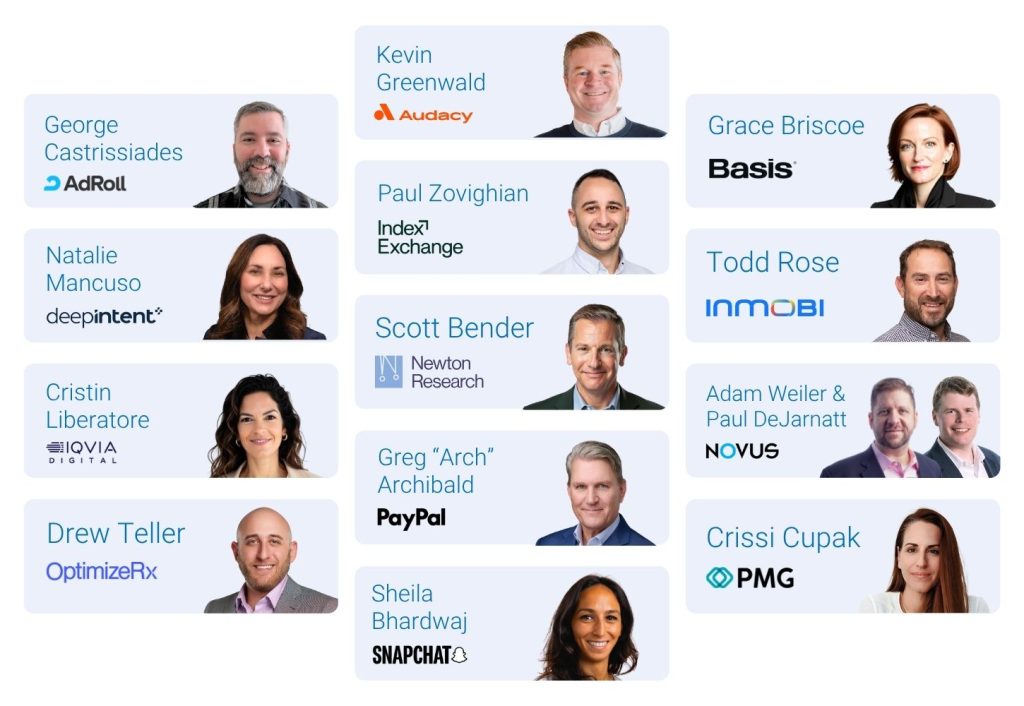
Who’s featured in Experian’s 2026 State of advertising report?
Our 2026 State of advertising report includes perspectives from 14 leaders across the ecosystem covering a variety of topics including:
These perspectives reflect directional signals from leaders across the ecosystem. They are not exhaustive views of any one vertical. They are operational insights from teams navigating change in real time.
In addition to the written analysis, you can watch the full one-on-one Q&A conversations with each partner here.
What signals are shaping advertising trends in 2026?
Five signals are shaping advertising trends in 2026. Together, they explain why advertising trends in 2026 center on clarity, connection, and measurable outcomes. Across every conversation with our partners, five themes stand out:
Below, we spotlight three perspectives from our report.
Scott Bender’s perspective on AI-driven workflows
Scott Bender, Head of Publisher & Platform Partnerships at Newton Research, is a media and AdTech veteran who has led go to market and revenue teams across traditional media, retail media, consulting, andearly stagestartups, helping organizations translate data and product strategy into scalable commercial growth.
How is AI moving upstream into planning and measurement?
AI is changing how teams work before campaigns run. Teams apply AI to planning and measurement first, then scale into activation with clear rules and human oversight.
AI’s first impact is operational
Teams are applying AI to planning and measurement before activation. The early gains are showing up in analytics, forecasting, and workflow compression, especially in areas constrained by time and data science resources.
Automation works when humans define the rules
Repeatable, rules-based processes are where AI performs best today. Strategy, guardrails, and judgment remain human-led. AI scales execution without removing accountability.
The biggest barrier in AI is rethinking workflows
AI adoption slowswhen teams try tolayer automation onto legacy playbooks.Progress happens when workflows are redesigned for agentic execution,rather thanhuman-only processes.

“The workflows we’ve built for humans don’t always make sense for AI. Progress comes when teams redesign how work gets done, not when they simply add automation.”
Newton ResearchScott Bender, Head of Publisher & Platform Partnerships
If advertisers fix one thing in 2026
Focus on data context. Not perfect data, but a clear semantic layer that defines what data means and how it should beinterpreted andused.
Watch our agentic media panel at CES 2026
Greg “Arch” Archibald’s perspective on commerce media’s expansion
Greg “Arch” Archibald is VP, Global Ad Sales at PayPal. A sales leader fornearly 25years,Arch has worked at some of the largest AdTech companies in the world. Now with PayPal Ads, he is helping build the foundation upon which advertisers can use true intent-based signals to inform advertising campaigns.
How is commerce media expanding beyond retail?
Commerce media is extending into more ecosystems and more purchase moments. Commerce media is defined through transactions that show what people buy, not intent signals that imply what people might buy.
Commerce media is defined bytransactions,not intent
Commerce media is fundamentally powered by transactional data. Unlike retail media, which is often intent-led and vertically confined, commerce media spans horizontally across merchants, payment platforms, and ecosystems,providinga clearer view of the full consumer purchase journey.
Transactional data is the true differentiator
As basic targeting and inventory become commoditized, the ability to activate transactional signals at scale is what separates effective commerce media strategies. These signals help brands connect upper-funnel investment to conversion and prove measurable outcomes.
On-site validates performance,off-site drives reach
Effective commerce strategies balance both on-site and off-site, focusing less on where ads run and more on who is being reached based on real purchase behavior.

“Transactional data is a powerful signal that helps brands reach consumers more effectively and connect upper-funnel investment to measurable outcomes.”
PayPalGreg “Arch” Archibald, VP, Global Ad Sales
If advertisers fix one thing in 2026
Prioritize transactional signals over intent proxies to connect spend to outcomes.
Cristin Liberatore’s perspective on healthcare marketing
Cristin Liberatore, Sr. Director, Commercial Strategy for Pharma, IQVIA Digital, has over a decade of experience leading commercial and product strategy for data‑driven healthcare solutions, developing frameworks at IQVIA Digital that connect data, analytics, and omnichannel execution to drive meaningful business results.
How do identity and privacy work together in regulated markets like healthcare?
Healthcare marketing uses a dual approach that reflects distinct audiences and data environments. Teams succeed when they connect identity and privacy through governance that supports personalization and outcome measurement.
Healthcare requires two playbooks: HCP and consumer
On the healthcare professional (HCP) side, personalization benefits from deterministic identity and high-fidelity signals that enable “read, respond, act” marketing. On the consumer side, data is more disparate, making identity resolution and privacy-safe connection across data sets essential for relevant personalization.
Timeliness is the difference between insight and impact
Healthcare data varies widely in latency. The most effective marketing is powered bytimelysignals. Fresh signals influence whether brands respond in meaningful moments along diagnostic and treatment pathways.
Sustainable identity depends on governance
An identity spine paired with de-identification methodology and strong compliance frameworks allows exposure to connect to outcomes such as script lift, without compromising privacy.

“Across data, activation, and measurement, healthcare marketing works best when privacy and personalization are balanced, as that push pull is ubiquitous with consumer marketing in healthcare.”
IQVIA DigitalCristin Liberatore, Sr. Director, Commercial Strategy for Pharma
If advertisers fix one thing in 2026
Invest in a connected identity spine that balances timeliness, personalization, and privacy across the full care journey.
Watch our healthcare marketing panel at CES 2026
What do 2026 advertising trends mean for advertisers?
In 2026, success will be shaped by how well advertisers connect data, decisioning, and outcomes across an increasingly complex ecosystem. The leaders featured in this report consistently point to connection as the defining factor for progress.
The shifts advertisers must act on
- Audiences, not channels, define strategy. Planning anchored in identity and behavior scales more effectively across screens, platforms, and formats.
- Measurement moves upstream. Outcomes now inform optimization in real time, rather than serving a post-campaign validation.
- First-party data becomes infrastructure. Activation, data governance, and interoperability matter more than ownership alone.
- AI accelerates decisions, not accountability. Automation works best when paired with clear rules, transparency, and human oversight.
- Privacy is a growthlever.Consent-driven, privacy-first design enables durable performance at scale.
Advertisers that lead in 2026 will:
- Connect planning, activation, and measurement into a single operating framework
- Invest in data and identity foundations beforeexpanding intonew channels
- Work withpartners that reduce fragmentation, not add to it
To see how these signals play out across AI, commerce media, healthcare, and more, download our 2026 State of advertising report and watch the Q&A videos with our partners.
FAQs
A CMO should treat advertising trends in 2026 as a shift in how teams plan, activate, and measure, not a channel shift. Teams get stronger performance when they connect data, identity, and measurement into one decision loop that guides planning, activation, and optimization.
Measurement moves closer to the moment of decision when teams use outcomes to steer optimization in real time. That approach turns measurement into a planning input that shapes budget allocation, audience strategy, and creative decisions across the lifecycle of a campaign.
Experian helps marketers connect identity, data, and measurement so teams plan and activate with consistency across platforms. Experian’s data and identity foundation supports audience connection and privacy-forward activation, and Experian’s measurement approach links media exposure to outcomes for clearer decisioning.
Latest posts

Tapad expands linear TV analytics solution, enabling optimal reach and frequency across TV and digital platforms NEW YORK, Jan. 24, 2017 /PRNewswire/ – Tapad, now a part of Experian, has partnered with WideOrbit, the leading provider of advertising management software for media companies, to develop the industry's first programmatic TV-buying platform powered by a device graph. Tapad is the leading provider of unified, cross-screen marketing technology solutions and was first to market with a device graph, the Tapad Device Graph™. WideOrbit's robust supply platform and industry-leading footprint offers access to premium TV inventory on top networks, reaching more than 99 million households across local affiliates. The partnership pairs Tapad's demand-side technology with WideOrbit's supply-side inventory. As a result, marketers can leverage cross-device audiences in their TV buys for the first time. Additionally, integrating the Tapad Device Graph™ with digital feedback loops and audiences both accelerates optimization and enables precise audience discovery for TV marketers. "The integration of WideOrbit's quality TV supply takes orchestrated cross-screen media buys to the next level," said Marshall Wong, Tapad's SVP of TV market development. "Marketers can now optimize TV campaigns within days instead of weeks. This also untethers them from buying against generic demographics like age and gender. By allowing brands to employ their own CRM or third-party data, we can move them much closer to audiences who will take action." "Integrating Tapad's device graph with WideOrbit's programmatic marketplace delivers enormous value to marketers looking to add TV to cross-device campaigns," said Ian Ferreira, EVP of programmatic at WideOrbit. "Television still delivers the most efficient reach of any medium, and Tapad's platform now allows marketers to purchase premium broadcast inventory that extends the power of cross-screen campaigns to TV with a single, unified solution." "Our clients build lasting relationships with consumers through thoughtful and pioneering marketing," said Jeff Giacchetti, VP of digital at Mediavest Spark. "The strategic partnership of demand-side technology and supply-side inventory makes it easier for brands to find efficient, incremental reach and are critical in this endeavor." For more information about Tapad's cross-platform advertising solutions, please visit https://www.experian.com/marketing/consumer-sync. Contact us today
Global Engineering Team Staffing Up New Oslo Hub; Nordic Operational Team Also Slated for Q1'17 NEW YORK, Jan. 11, 2017 /PRNewswire/ – Tapad, now a part of Experian, the leader in cross-device marketing technology, is opening an office in downtown Oslo, Norway, effective January 16, 2017. This development reflects Tapad's continued growth following its acquisition by the Telenor Group in early 2016. Tapad Oslo will be comprised of a globally-focused engineering team as well as an upcoming operational headquarters for the region. Jeff Olchovy, a senior Tapad developer and one of its earliest employees, will forge the company's Nordic engineering presence by supporting the build-out of the team. The initial hiring plan of more than 20 open positions includes roles such as Head of Engineering, Senior Software Engineers and Solution Engineers. Plans for Tapad's Nordic Region business line, including its leadership, will be announced within the first quarter of 2017. "Given the caliber of technical talent and our extensive network in the region, Oslowas the logical choice at this stage of our growth," says Dag Liodden, Tapad CTO and co-founder. "This enables us to continue building out our innovative team on a global scale in a region that is close to our hearts and minds." In collaboration with its New York-based developers, Tapad's Oslo-based engineers will continue to advance the company's renowned product portfolio, such as the Tapad Device Graph™. An early adopter of Scala and big data processing technologies, Tapad has long been an influencer in U.S. tech. "As the head of our platform group, which daily processes several petabytes of data and is the foundation for all of our real-time systems, Jeff is a highly respected engineer," said Pål Høye, Tapad's senior vice president of engineering. "Given his experience and skillset, he is ideally suited to find and lead an innovative team focused on building the industry-leading products we are known for." About TapadTapad Inc. is a marketing technology firm renowned for its breakthrough, unified, cross-device solutions. With 91.2% data accuracy confirmed by Nielsen, the company offers the largest in-market opportunity for marketers and technologies to address the ever-evolving reality of media consumption on smartphones, tablets, home computers and smart TVs. Deployed by agency trading desks, publishers and numerous Fortune 500 brands, Tapad provides an accurate, unified approach to connecting with consumers across screens. In 2015, Tapad began aggressively licensing its identity management solution, the Tapad Device Graph™, and swiftly became the established gold-standard throughout the ad tech ecosystem. Tapad is based in New York and has offices in Atlanta, Boston, Chicago, Dallas, Detroit,Frankfurt, London, Los Angeles, Miami, Minneapolis, San Francisco and Toronto. Tapad's numerous awards include: EY Entrepreneur of The Year (East Coast) 2014, among Forbes' Most Promising Companies two year's running, Deloitte's Technology Fast 500, Crain's Fast 50, Entrepreneur 360, Digiday Signal Award, iMedia ASPY Award and a MarCom Gold Award. Contact us today
Are Traasdahl, CEO and founder of Tapad, the leader in cross-device marketing technology and now a part of Experian, has been named Founder of the Year by the Global Startup Awards. The Global Startup Awards' Founder of the Year Award recognizes an individual that has pushed the boundaries of technology to empower new innovations and ideas. The Global Startup Awards places each year's regional category winners against each other to determine whose achievements stand out from the rest of the startup ecosystem through nomination, voting and jury evaluation. In May 2016, the Nordic Startup Awards named Traasdahl Founder of the Year. "Are is a force of nature and his creativity and passion know no boundaries, it seems," said George Tilesch, Global Startup Awards juror and U.S. managing partner of Innomine Group. "Extra kudos for the mentoring work and the Norwegian superfund plans. Are knows giving back is of the utmost importance." "Are is a superstar within the Norwegian startup ecosystem," said Kim Balle, founding partner and CEO of the Global Startup Awards. "From the jury feedback I could see that not only are his impressive achievements the reason for their rating, but also his focus and ability to give back to the startup scene played an important factor in him winning the category." "It is an enormous honor to be named Founder of the Year by the Global Startup Awards," said Traasdahl. "I am so committed to fostering entrepreneurship both at Tapad and throughout the startup space. This win is a remarkable bookend for a stellar year that began with our acquisition by the Telenor Group and continued with best-in-class product innovation, superior solutions for our clients and our Propeller Program that is so dear to my heart." Tapad's Propeller Program hosts five early-stage companies at Tapad's New York headquarters for one year to mentor them through global expansion. The participants of this inaugural program come from Traasdahl's native Norway. For more information on the Global Startup Awards, please visit: http://www.globalstartupawards.com/#gsa. Contact us today