
Small Business Matters is written and managed by the Experian Small Business team. Subscribe for business credit education, expert advice, and helpful articles to build a strong knowledge of business credit so you can scale and grow your business.

Business Credit Reports & Scores

Experian Business Credit Reports and Scores

Your business has a credit score too and it can be pivotal to your success. Learn more about building strong business credit.

Read more

Customer Testimonials

Experian Customer Testimonials

Hear what Experian small business customers have to say about our credit report subscriptions; and the difference it makes.

View Testimonials

News & Research

Experian News & Research

Stay ahead of the curve by being informed about industry trends and policies that impact small businesses.

Read more


The latest from our experts

Loading…
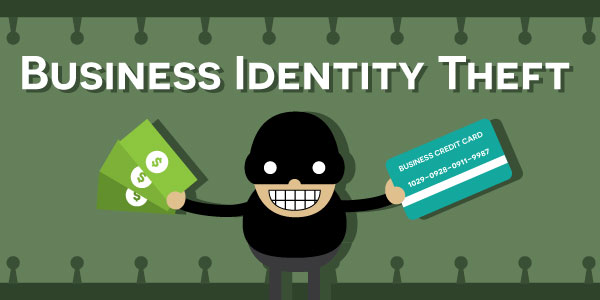
Business Identity Theft Is On The Rise–Don’t Be A Victim

The Looming Shadow: Protecting Your Business from Identity Theft While personal identity theft has garnered significant attention, a less-discussed yet equally concerning issue silently plagues businesses across the United States: business identity theft. With over 1.4 million cases of business identity theft reported annually, the number of compromised businesses paints a grim picture, highlighting the urgent need for awareness and proactive measures. Dormant Danger: A Breeding Ground for Theft One of the primary targets for business identity theft lies in dormant entities. These are businesses that have ceased operations but haven't officially dissolved, leaving their information vulnerable in state filing systems. Criminals, capitalizing on the assumption that such businesses lack active monitoring, exploit these vulnerabilities to steal essential details like tax IDs, business names, and credit histories. Armed with this information, they can create fraudulent accounts, rack up significant debts, and damage the business's reputation – all while the rightful owner remains blissfully unaware. The Allure of Big Game The potential gains from business identity theft are significantly higher compared to individual targets. Dormant businesses, often boasting established credit histories and existing relationships with creditors, offer criminals access to lines of credit worth tens or even hundreds of thousands of dollars. The lack of immediate scrutiny due to dormancy allows the theft to fester, leading to substantial financial losses by the time it's discovered. Dissolving the Threat: Proactive Steps to Safeguard Your Business The good news is that this vulnerability can be eliminated by properly dissolving your business. Here's a three-pronged approach: Complete Dissolution: Don't leave your business in a dormant state. Seek approval from partners (if applicable) and initiate the official dissolution process. Formalize the Closure: File the necessary Certificates of Dissolution with the state and the IRS, indicating the business's complete termination. Notify Creditors & Settle Debts: Inform creditors of the closure and settle any outstanding accounts before finalizing the dissolution. If applicable, distribute remaining assets according to partnership agreements. By following these steps, you effectively remove your business from the state filing system, eliminating the very foundation for potential criminal exploitation. Beyond Dissolution: Continuous Vigilance Even after proper dissolution, maintaining vigilance is crucial. Regularly monitor your business credit report for suspicious activity, and consider subscribing to credit monitoring services for added security. A Collective Responsibility Combating business identity theft requires a collective effort. Sharing awareness within the business community, encouraging proper dissolution practices, and advocating for stricter regulations against fraudulent use of business information are all crucial steps towards building a safer environment for everyone. Have You Been Impacted? Sharing Your Story Matters If you've been a victim of business identity theft, your story matters. Share your experience with us to raise awareness and empower others to take preventative measures. Remember, together, we can build a stronger defense against this growing threat.

Aug 11,2022 by Gary Stockton

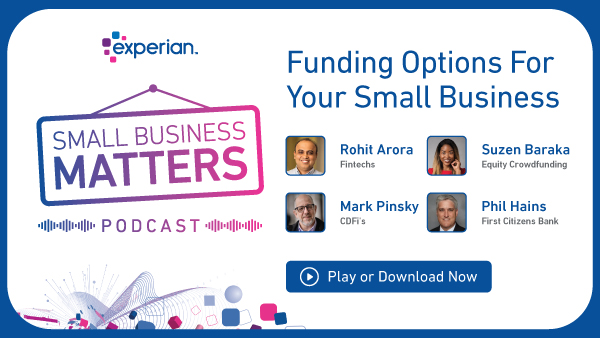
Financing Options For Your Small Business

  If you are considering small business financing options, or feeling unsure which type of financial institution might be best to work with, this episode of the Small Business Matters podcast is just for you as we focus on small business finance with four organizations that cater to small businesses. Our episode consists of four separate interviews ranging from Fintech, to CDFI, to Equity Crowd Funding and a top-tier brick-and-mortar bank, about how they serve small businesses. You can find links to the full interviews with each guest below. Fintech Standout Biz2Credit Streamlines Funding Process for Small Business Rohit Arora is one of the country's leading experts in small business finance. His company, Biz2Credit, uses technology to streamline business funding. In our interview, we talk about the origins of the company and the FinTech space, and how they are helping small businesses with useful tools like the BizAnalyzer which enables small businesses to benchmark how they are performing compared to other businesses in their space, and the Small Business Lending Index, which reports on lending trends on their platform. Watch Full Interview with Rohit Arora CDFI’s Provide Myriad Assistance to Small Businesses and Entrepreneurs CDFI stands for Community Development Financial Institution, they are mission-driven community resources for small business financing options, and they play a crucial role in the financial ecosystem. We spoke with Mark Pinsky, Founding Partner of CDFI Friendly America, an organization established to help existing CDFI’s serve bigger markets.  They have done some incredible things with CDFI's located in cities like Bloomington, Indiana, and big plans for the future. We talked about what characteristics CDFI’s look for in small businesses and entrepreneurs they work with, and what CDFI Friendly America has planned for major city expansions in the near future. Watch Full Interview with Mark Pinsky Seed at the Table Offers Innovative Crowdfunding for Small Businesses and Investors to Help Close the Racial Funding Gap Seed at the Table is a mission-driven crowdfunding platform committed to connecting diverse entrepreneurs with investors. They raised $1.3 million in less than a year for businesses founded by women, and people of color. Co-Founder Suzen Baraka sat down with Experian’s Emily Garman to talk about their mission, and some of the early successes they have had working with underserved small businesses. Watch Full Interview with Suzen Baraka First Citizens is Banking on Strong Relationships with Small Businesses As America's largest family-controlled bank, First Citizens Bank has been supporting consumers and small businesses across the US for more than 120 years. They operate more than 600 locations in 22 states and recently merged with CIT Group, making them one of the top 20 US banks. We spoke with the bank’s Senior Director of Business Credit, Phil Hains,  about how they support small businesses, what a small business should have in place before seeking funding, and how the bank is embracing Diversity, Equity and Inclusion in their branches through their bankers and the greater small business community. Watch Full Interview with Phil Hains
Jul 19,2022 by Gary Stockton

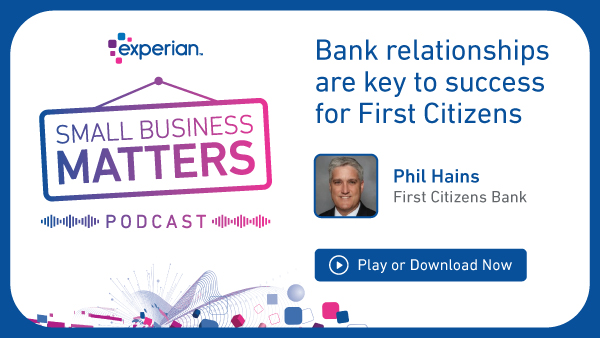
First Citizens Bank is Banking on Strong Relationships with Small Businesses

Experian is delighted to speak with Phil Hains from First Citizens Bank for the Small Business Matters podcast this week. As America's largest family-controlled bank, First Citizens Bank has been supporting consumers and small businesses across the US for more than 120 years. They operate more than 600 locations in 22 states and recently merged with CIT Group, making them one of the top 20 US banks.

Jul 19,2022 by Gary Stockton

Fintech Standout Biz2Credit Streamlines Funding Process for Small Business

  One of the biggest disruptions that smartphones brought about was shopping for and applying for business loans. Explosive innovation in this space gave birth to a new category of financial service companies called Fintechs. Rohit Arora is one of the country's leading experts in small business finance. His company, Biz2Credit, uses technology to streamline the business funding process for small businesses. Rohit also oversees the Biz2Credit Small Business Lending Index, a widely reported monthly snapshot of small business loan approvals. And we wanted to ask him all about that and how business credit helps solve this small business matter of getting funded. Watch Our Interview What follows is a lightly edited transcript of our interview. [Gary Stockton]: So could you give us a little bit of a background on how Biz2Credit got started and really what inspired you back in the old days of 2007? [Rohit Arora]: Yeah. So Biz2Credit as a company, you know, me and my brother, we started it in late 2007, early 2008 time period in New York with the mission to help small businesses, you know, at that point of time to get access to credit. So those were the days when the mortgage boom was at its fullest, and it was very easy to get a mortgage, but very difficult to get a business loan. And we thought like, whatever, we’ll build out a platform. These were pre-FinTech days, pre-API days. And we thought we can build out a platform that can help businesses to, you know, get access to credit the right way. So our mission and aim always were not to sell any leads to anyone. Our mission was to reach the right business customer and give them the right tools to go in and look at what their various options are at the same time, they should be able to give us access to their data, and financial data, so that we can run all the data analytics, do this scorecard, and then go back to the lenders and give them a complete picture of the credit profile of these borrowers and then help both sides to get what they want. [Rohit Arora]: So for business owners, it was trying to get a loan in a time-bound fashion, because for them, timing is everything. You know, they have a big opportunity cost. And for a lot of lenders, if I ever do a hundred thousand dollar loan or $150,000 loan, it's very tough for me to do manual processing. You know, it's very expensive and I don't know how to do it because small business loans or consumer loans are not just predicated on their personal credit scores. So what do I do to streamline this process? And since small businesses are very asynchronous in nature, you know, it was a big opportunity as well as the challenge that, how do you standardize a lot of these underwriting norms so that you can get them the best possible outcome. [Gary Stockton]: Yeah. So, so why do you think that small businesses are turning to Fintechs? Was there anything that happened there that opened up that opportunity for the new FinTech companies? [Rohit Arora]: So I think two or three things. So the first wake-up call was during the 2008, and 2009 crisis when, you know, small businesses suffered disproportionately. Most of the challenges happened in the mortgage space. I still remember looking at data that the highest delinquency rate during that time period in small business loans, even in the DSB portfolio, was only 4%. The SBA was the only federal agency during the 2008 crisis that did not need a federal bailout, unlike Fannie Mae or Freddie Mac, and so many banks, you know, that everybody needed a bailout because of what they were doing in deep market space. [Rohit Arora]: But in spite of that deal, they saw the biggest contraction in the supply of credit actually after the crisis started and that persisted for years and years. And that was also a time when smartphones were just coming out. So 2007, 2008 was the time period when finally small business owners had internet in their hands and they could do whatever they wanted to do. So I think that was an interesting point because smartphones led to building application programming APIs, and doing things in a very different way, which was not possible prior to the advent of smartphones. So a combination of a huge financial crisis, disruption of a lot of existing relationships, a lot of banks going under or mergers and acquisitions happening. A lot of large banks, like Bank of America, and Wells Fargo, totally withdrew from this market; the small business lending markets were not very active. And then, you know, people just started to go online, like for everything else. And that was the first breakthrough for fintech on digital lending platforms like ours. And then I think over time, it started getting better ecosystem plays. So as I remember, you know, more people started shifting to cloud accounting, more people went to making payments online; the advent of companies like the Squares of the world and everything, you know, that led one thing to the other. And then I think there was another mini-crisis in 2016, 2017, when, again, the credit got tighter. So that was the second piece. And then obviously COVID. COVID was a game changer because everything shut down, and you couldn't go to a bank branch even if you wanted. You know, it was the first time in the history of America that the US Government said, okay, I'm going to give more money to small businesses than to anybody else, consumers or anybody else. And they gave $1.3, $1.4 trillion to small businesses. And that's where, you know, the whole thing changed because everything was digital. Everything was online and even banks that never had any digital channels were scampering overnight to build something online and do something around it. And I think the behavior of the customers and small businesses now is ok with change. [Gary Stockton]: Yes. Wow. So it's been quite, quite a journey for your organization. And I remember in the early days of this space, the banks were partnering with many FinTech companies because they had older systems, but the fintech were more nimble and could put together solutions quite quickly. Is that still happening, Rohit? [Rohit Arora]: So I think there has been a lot of evolution in fintech itself. You know, a lot of fintech have come and gone. Banks have tried various models. Initially, it was like, give me leads and I will handle it; to saying that fintech are going to compete against us. So we need to bring something our own. To a point in the post-COVID world, we have a platform or an offering on this that we license our platform to banks and other lending institutions. And we are seeing extremely strong demand in that space. So in the last six, seven months we have signed up at least 30, 40 banks. You know, we'll close this year, the signing a hundred plus banks on that platform. And we're seeing the overall appetite among banks to do the whole nine yards of small business lending from origination to underwriting, to closing and even account opening, for funding these loans. And also I think what is starting to happen is that there is a clear divide between banks that are more forward-looking now, and want to do something more aggressively, and banks which are still, thinking about it. Or, or they're just looking for an ability to get acquired. So we see a tremendous amount of consolidation coming in the banking industry over the next three years because the branch networks are mostly useless, and the cost of maintaining and operating a branch network is increasing every day. And within high inflation, the cost of minimum wage going up, just staffing a lot of these branches is a big challenge for a lot of banks. And most of the customers don't want to go to a branch anymore. They want the full digital experience. So I think those things are really leading to more consolidation in the banking industry that also leads to more partnerships. But at the same time, we also foresee that players who are digital in nature, whether it's a bank or a non-bank, it doesn't matter anymore, we'll gain more and more markets. [Gary Stockton]: Yes. So you produce the Biz2Credit Small Business Lending Index. Could you tell us a little bit about that? What does that do and who's the audience for that? [Rohit Arora]: So we really started Small Business Lending Index in early 2011, because that was a time when there was a lot of credit crunch that things were just starting to come back. And a lot of business owners and even policymakers wanted to know what is happening in the industry in terms of access to credit, what's happening in terms of who's giving what kind of loans or credit facilities? As a business owner, I want to know who's going to be the best option for me. So, we have a marketplace where we have multiple kinds of lenders and we have all of this data because we process a large number of loan applications every month. And then we came up with the idea to start a lending index based on that data that we already had and see how it compares, and how we benchmark different kinds of lending institutions or different kinds of channels or financing. So it could be banks, non-banks, other institutional investors also. And that has become a very good flagship indicator about access to credit, what needs to be done, and how it needs to happen. And over time we have seen some very clear results, like pre-COVID. It was rising for two, three years, COVID came, it just stalled or dropped very significantly. It's coming back again, but very slow. So I think that that clearly captures what's happening in the market, what the trends are. And then it's also great to predict when the next recession comes because a lot of people are predicting there'll be the next recession. You know, what could happen during that kind of a recession for small business credit? [Gary Stockton]: So what if I'm a small business and I come to Biz2Credit, are there tools that you offer them to determine whether they qualify for financing? [Rohit Arora]: So that's a very good question. One is our platform for business owners is free of cost. Second thing is that we provide them with what we call the Virtual CFO platform where they can come in, they can fill out their application, they can benchmark their businesses with other businesses in their geography, industry, sub-industry, age, revenue kind of stuff. They can see what are the things that they're doing better, where they can do better. So simple things like, if they have a lot of bounced payments in their accounts, that leads to more overdraft fees because overdraft fees are still very persistent in the business space while they're going away in the consumer space. So how much money they're spending on that, how that impacts their business credit. That's on the negative side. On the positive side is like, they are balancing their books well, they are able to pay the bills on time. They're able to collect money on time. They have been consistently growing their business, they're improving their margins. So that also shows up. So they call it the Virtual CFO tool, because what that does is it helps them to understand their business better, benchmark it, and also understand that if they go to a lender, what they're really looking for is that business to lend them money. [Rohit Arora]: So we've had a record number of small businesses started during the pandemic, I think in 2021, it was like 5.4 million new business. And many of these are going to be unscored for a period of time here. Are you able to use credit scores or are you looking at cashflow info? How are you making decisions on some of the newer businesses that are starting up? Yeah. So that's a good question and a hard problem to solve because when the business is very young, you know, how do you score them? Because an easy way is to just look at the FICO score of the business owner. And we have seen that historically most of the lenders have still usede the FICO score of a business owner trying to judge a business. And we have found that is not a very good indicator. It's a leading indicator, but not really a good indicator in terms of how the business will do. So I think what we have done is we have put our own proprietary scores where we take into account their business cashflow industry; the age of business, what kind of margins they're making compared to what other businesses in their industry or subgroup are making, you know, how good is their AR? How strong is their online presence? So while you don't put that online presence in our scorecard, that's stuff that you're looking at. But I think a lot of our scorecard really goes into cashflow. A lot of it goes into knowing things like, whether they are able to maintain minimum cash balances in their accounts? Are they able to pay their bills on time? Are they able to collect money on time? Are they able to improve their margins over time? You know, I'll be able to, you know, keep consistently growing their business, you know, and also during the downturn when, when it has happened and we have a lot of data during downturns, you know, how bad, how much much the business dropped by, whether it's more than 10%, 15, 20%, or was it like 60, 70% kind of stuff. But that's also a very good indicator to see that in case when a recession comes or something happens to their business, then how resilient their businesses are to those crises [Gary Stockton]: Yes. Business owners right now, they're really under,quite a bit of pressure on two fronts. I mean, we've got a labor shortage and then we've had a degree of supply chain issues that's causing now inflation. Are you seeing greater demand for financing, additional financing to assuage some of that? Or what are the business owners taking out loans for? [Rohit Arora]: I think the top two or three worries have been, how do I recover my growth in the post COVID world? Because most of these small business owners, except the ones in the digital industries, have suffered a lot, their revenues have dropped a lot. Haven't really gone back to pre-pandemic levels. They are getting closer to it, but still a long way. And then the pandemic was not kind to them. I think the good thing in the pandemic that happened was that they got a lot of money from the government. A lot of it got converted into grant money. So that really became almost like an equity infusion. So that's a good thing that the debt burden on them is significantly lower than what it was even pre COVID. Having said that, I think the worry is how good they get the growth back now. Now in order to get the growth back, how do they get people back to work? You know, because today minimum wages have gone up massively. It's like $20 plus. So while state governments can say that, okay, I can pay people $10, $12, $15 an hour, today in any business, if you want a good worker to work for you, it's $20 plus, plus healthcare. So, one, it's hard to find workers, you know to find people, even if you are willing to pay more money. Then the other thing is cost of significant economy. So how do you, you know, balance your own business when you have to increase the prices, but you cannot increase it so much that your customers go away, or they revolt against that and it's impacting your margins. [Rohit Arora]: Has that led to higher credit demand over the last three months? Yes, absolutely. And I think now the bigger worry also would be with hiring, with higher inflation, higher interest rates, because most of these small business loans in this country are floating rate loans. They are linked to prime. So it's unlike a mortgage where you can get a fixed rate and you can be locked in for 5, 10, 15 years. Every time the Fed raises the interest rate, most of the business loans or lines of credit cost just go up. So there's no way you can hedge. So that's going to be an added problem because they'll have to pay more on those. And then if recession comes in, then obviously it looks like more asset price recession, and it means street economy recession. But if a recession comes in and consumer spending drops, and that's going to impact small businesses. [Gary Stockton]: Excellent. Well, Rohit, this has been very insightful. Where can our audience learn more about Biz2Credit and everything you've got going on there? [Rohit Arora]: So we have our website Biz2Credit.com. We have a knowledge center out there. We publish our index. We publish our report on woman entrepreneurs. we publish a report on thetop 25 cities for small businesses in May, which is National Small Business Month. We do a Latino business study, so we do a lot of research work. We do a lot of pro bono work. We do a lot of webinars, a lot of town halls with Bankers, with the Senior Policymakers, US Senators, Congressmen, and Congresspeople. So absolutely you can come on Biz2Credit.com. You can subscribe to our newsletter. You can go to our knowledge center, and then we have a very good social media presence. [Gary Stockton]: Excellent. Thanks so much for coming on the show today.

Jul 19,2022 by Gary Stockton

CDFI’s Provide Myriad Assistance to Small Businesses and Entrepreneurs

  CDFIs, or, Community Development Financial Institutions, are a cherished resource for underserved markets and populations. They play a crucial role in the financial ecosystem, but what if your community does not have a CDFI? We spoke with Mark Pinsky from CDFI Friendly America for the Small Business Matters podcast this week, to hear all about their mission to help CDFI's serve bigger markets. Watch Our Interview This segment of the episode begins at 9:43.   What follows is a lightly edited transcript of our interview. [Gary Stockton]: So Mark, could you start by telling us about CDFI Friendly America and what your primary mission is? [Mark Pinsky]: Absolutely, CDFI Friendly America is a new effort, with a goal to help CDFI's find market opportunities in communities that are not currently being served all across the country. Big cities, small towns, wherever there's a need. We're trying to figure out how to introduce them to each other. [Gary Stockton]: And there are different kinds of CDFIs. As I researched this story, there's not just one type. Could you kind of explain the difference? [Mark Pinsky]: Sure. CDFIs Community Development Financial Institutions is a category of financial institutions. They're private sector financial institutions; their primary purpose is to create benefits for underserved people in communities. And they do come in four main types. Two of them are insured depositories. So community development banks and community development credit unions, are the insured depositories, and two of them are not community development loan funds, which are the most populous type of CDFI, the most common kind of CFI, and community development venture funds, or equity funds, that do equity financing and small businesses. [Gary Stockton]: Excellent. So serving underserved small businesses, they really do a great job. How do they reach out and help? [Mark Pinsky]: Well, the key to what community development financial institutions do is that they stay very close to the market. They know the market, they know the people that they're working with, or the community that they're working with, and they try and provide financing that's organized around what the borrower needs, what the business, what the entrepreneur needs to be successful. And they have a lot of experience now doing that, more than 40 years experience in some instances. And they're very good at understanding what it takes for new businesses, for businesses that have been unable to get access to financing for some number of years, they're good at helping businesses get through hard times and help them prepare and be ready and have all the skills that they need to succeed. [Gary Stockton]: So do they only help small businesses that have been declined or having trouble finding financing through a bank? [Mark Pinsky]: You know, it's an interesting thing. Often their borrowers are small businesses that haven't been able to get financing through a bank, or who perhaps have been approached by predatory, small business lenders, which is an issue that we all worry about and are struggling to figure out what to do. But often they also are, particularly when you're dealing with Black and Latinx entrepreneurs, they're often a business or entrepreneurs who are what we call discouraged businesses, right. They haven't been able to even make the approach to the bank because they just feel like they're going to get “no,” they're going to get a negative answer out of it. And so often with CDFIs, it's business owners like that, as well as those who've been turned down. You know, one of the things that's interesting is many CDFIs, more than ever now, have referral agreements with banks where banks aren't able to say yes, for some reason or another, it has to do with their regulatory structure or credit structure. And, and CDFI's are really happy to try and figure out how to make it work. We tend to say in the CFI world, we tell them, we tell the banks, we tell others, don't say no, say CDFI! And CDFIs tend to say, “don't say, no, say not yet,” because we're committed to trying to help those businesses get to the point where they can get access to the financing they need so they can succeed. [Gary Stockton]: Yeah. Yeah. It's as I researched this, you know, that there were some really impressive stories. One that I've read about in Chicago with a company called The Hatchery, can you give our listeners a little background on what happened there? [Mark Pinsky]: Sure, absolutely. The Hatchery is about a 67,000 square foot incubator really for food entrepreneurs in a Westfield/West Garfield Park in Chicago. Garfield Park is an overwhelmingly black community. And a couple of CDFI's got together – IFF is one of the CDFi's for community businesses, and bundled together some financing. Some of it was through tax credit, some of it was conventional financing. Some of it was CDFI financing. The two, I think, cost about 34 million, some years ago. They put together an all purpose, all service food incubator, where they did business training, they had kitchens, they had access to expertise, everything from bookkeeping to marketing, and it's been a tremendous success. There's something; I can't remember the number of jobs, something like 900 jobs they projected by the end of next year have been created out of this. There are at least 25 businesses that have already been created that have grown out of this. And you know, what they did was they went into a place and took something that was often cultural in communities. And that is their food and what they prepare and what they sell. It may not be prepared food, things that are conventional or familiar to conventional financial institutions, but given a chance, you know, the food entrepreneurs at The Hatchery and in many other places are just; given the chance, given a little bit of support there, they're driven to succeed. And so there have been something like a hundred food innovations that have come out at this point, have come out of The Hatchery. So it's not only breeding successful businesses. It's really strengthening the community and strengthening the culture of the community. [Gary Stockton]: That's a wonderful success story. [Mark Pinsky]: It's a great success. [Gary Stockton]: Now talking about childcare; 90% of childcare businesses are women-owned. And we know that childcare as a category was left out of the initial round of the PPP funding, but did CDFIs work with childcare businesses? [Mark Pinsky]: Yeah. CDFIs. So a little backstory to that. It was in the late 1990s when everyone realized as the financing, the money coming out of Washington and out of the state governments was changing, that the childcare facilities and early care facilities needed to come up with a new sort of business model in some ways. And CDFI has played a really important part. There was a bank no longer around now that approached the CDFI industry and provided a combination of grant funding for innovations and debt financing that really figured out a new way of helping childcare facilities succeed. And so CDFI has played a really critical role in helping rethink the business in a sense, but still the economics of childcare, as you know, I'm sure are really difficult: either have to charge young parents a lot of money, or you've got to figure out some way to subsidize the business in some way. And so, yeah, it's often women that are the entrepreneurs; 90% sounds about right. And you know, so there are examples. I think we had talked about an example in Boise, Idaho, where it was just during COVID, that really was struggling, but a CFI was able to step in and ultimately provide some PPP financing. But then on the other side of that we provide the financing that was intended to help businesses, small businesses recover, including nonprofit businesses recover from the impact of COVID and  childcare was really hard hit because people were staying home, couldn't send their kids to childcare. So the businesses were really hard hit. And then, you know, the access to finance was really limited. So it was a hard thing. I'll tell you, we're doing some work now in, in Fort Worth, Texas, where we've been meeting with a group called the Childcare Alliance, which has been able to rally a significant amount of funding from both the County, Terran County and from the City of Fort Worth. [Mark Pinsky]: And now they're trying to say, how do we work with CDFI's? And that's what we're doing there, trying to help them work with CDFIs. How do we work with CDFI's to really leverage this investment that the public sector has made so that the private sector (ie; CDFi's and banks and others) can really sort of bring back to the life of the childcare network that's there. A really dynamic leader. That’s always the case with entrepreneurs. And I'm really excited about that. I think that's a great example where CDFIs play a role that that others can't. [Gary Stockton]: That's wonderful. And that's actually how you and I got engaged in the beginning. I'd read that about the work that you were doing in Fort Worth and your organization, you have worked with several cities, so you go into–I mean, Indiana, you did a number of projects there too, right? [Mark Pinsky]: That's right. We're working now with about 15 different cities. Very different types, very different places. But it started in Bloomington, Indiana where they simply wanted one CDFI financing. The mayor had come out of the CDFI industry, newly elected mayor at the time in 2017, John Hamilton. And they were trying to figure out how do they get CDFI financing there? And the only way to do it was to innovate a new model, which has become CDFI Friendly America. And, but yeah, so Fort Worth is a really interesting example of that. We started out in Bloomington just with the idea that we were going to sort of go to smaller markets that would never be big enough to support a CDFI, that would never be an X sort of an economy of scale that would make it work for CDFIs. And what we figured out was that there was deal flow there, and there was pipeline; therefore for CDFIs, that is. the real small businesses and other opportunities, but they weren't big enough to support any one CFI. [Mark Pinsky]: So if we could get multiple CDFIs engaged with the city, as we now have in Bloomington, we could make CDFI financing available without creating sort of the overhead burden of asking a CDFI to be there full time, which wouldn't have met the needs anyway. So, yeah, we started there, but in Fort Worth moved to a different point, which is that there are major cities, Fort Worth is the 12th largest city in the United States. Most people don't realize that, but it is likely that it will surpass Dallas in total population in the next 10 years or so. It's growing at a very fast rate. It's a very diverse city, it's a majority minority city. And what we discovered there was that CDFI financing was really lagging for no obvious reason. I mean, you know, we can go back and reconstruct it. But for example, we look at CDFI lending, we can do this any place in the country, but we looked at CDFI lending there over the last 15 years. And it averaged out to be about $39 per person in CDFI financing, just to compare that the national number which is about $235 per person. So not only did Fort Worth lag the national level, it lagged Dallas, which was at $71, and the State of Texas, which was $109. And I don't think of the State of Texas as being that well served by CDFI's. So what we discovered was in big cities, there are what I would think of as sort of infill opportunities. There are major needs there. So Fort Worth has been remarkable, and we're still in the startup phase, but has been a remarkable success, CFI Friendly Fort Worth now has about 18 or 19 CDFI's who are looking at financing opportunities there. We've identified about $125 million in demand. Not all of it's going to get financed, but there's a lot of demand there and we think we're just scratching the surface. And transactions are starting to close, now, we've just been at it for about a month.  We have three small businesses that have closed deals. We think there will be a lot more. I've told the people there that I think we'll do at least a quarter of a billion dollars over five years. I think we'll do more than that. But I think that it will do at least a quarter of a billion dollars in financing. And it's just opened our eyes up to the fact, you know, I live in the city of Philadelphia, and in Philadelphia we have some extraordinary CDFI's, but we have a huge unmet need for black and Latino entrepreneurs in this city. [Mark Pinsky]: Banks have struggled to figure out how to try and address it. And I don't think anybody thinks that that the needs are being met. And so even in a city where we have extraordinary CDFIs working in other areas and serving part of the need, we've discovered that there is a tremendous need for CDFI friendly strategies. So, you know, we are, boy, are we busy! We are just a startup ourselves and we're in that good stage of startup, which is you have way more demand than you can possibly meet. So we're trying to figure out how to, how to ramp up ourselves. [Gary Stockton]: That's wonderful. So what should a small business looking for funding have ready when they go in to meet with their local CDFI? What makes them a good prospect? [Mark Pinsky]: Sure. Well, obviously, everybody's looking for entrepreneurs who are passionate about what they do and to be a small business owner, you have to be passionate about what you do. It's the only way to get going, right? So we're looking for that. We want to understand their story. We want to understand their vision, what they hope to create, we want to create some income for the micro entrepreneur; even if it's a one-person business and we just need to be able to create some steady income. But we want them to come up with their story. We want them to come in with whatever financial information they have. If they have bank account information, we want to see that. If they have tax returns, we want to see that. We don't expect people to come in, and be ready to push the button and apply for financing. [Mark Pinsky]: We understand that we're going to work. We're going to help understand where they are, where they need to be. Whether there are things need to look for before they apply for financing, or whether there are things that can be part of the financing as they apply for financing, or even after they receive financing. We often see that it's not unusual for CDFI's with small businesses to provide post credit technical assistance, particularly in things like bookkeeping, reporting, that kind of thing, which is hard. Well, one of the big banks did some research. A number of years ago, they found out that most small businesses, most entrepreneurs spend no more than three hours a year thinking about their credit needs. And just because they're busy, they're working 18 hours a day to make it go right. And we have to figure out a way to make it work for them, particularly when you're dealing with underserved or discouraged entrepreneurs. Because they're not used to this. They're not used to being in financing mode. And so, you know, we have to meet them where they are and make sure that we're providing the support that they need, the scaffolding that they need to add to what they're doing. That's not to take away anything from their efforts, but to make their business successful. You know, most entrepreneurs are not finance people. And so we're happy to go in and take a look at whatever they can bring to the table and figure out how to help them get where they want to get. [Gary Stockton]: It really does sound like your CDFI, they're a partner. They're helping you. They want you to succeed. And in a lot of cases that I've read about, it isn't a lot of money for some of these small micro businesses. You know, it could literally be maybe $5,000. I don't know, maybe less, if it's a gardening business, it's tools, you know, maybe a truck that gets better mileage. [Mark Pinsky]: And CDFI's will do for micro businesses, we'll do loans as small as $500, sometimes less, in order to help somebody get started. And there are CDFIs that do small business financing that sort of mezzanine financing for growth companies. That's $10 million, right? So there's a whole range. The challenge, and this is one of the things to do with CFI Friendly America, the challenge is finding the right CDFI for the entrepreneur, right? Not every small business lender is the same, just like not every small business is the same. We're in the business of finding the right match, the right introduction. And generally then we can get out of the way because the CDFI and entrepreneurs, you know, they find a way to work together and they're off and running. But one thing that’s important to understand is that technical assistance that we provide is core to our business model. And what we're willing to do is give up a little bit of margin in order to provide the assistance that in the long-term is going to help the business succeed or the borrower succeed. But that technical assistance also becomes a risk mitigant, and CDFIs for small business or affordable housing or commercial real estate have a tremendous track record of performance over about 40 years where the net charge offs in our business are a little bit higher, but within 10 basis points of what banks have, banks achieve in conventional markets. So we specialize in managing risk and non-conventional markets, and we're very good at it. Part of the key to that is the partnership as you described it that we have with our borrowers. [Gary Stockton]: Awesome stuff. Well, Mark, this has been such an informative discussion on CDFI's for me, where can our listeners find out more information? [Mark Pinsky]: So if they want to find out about CDFI Friendly America, they can go to our site, which is cdfifriendlyamerica.com. If they want to find CDFI that are already working, where they are, there are two good sources. One is, there's a program in the federal government called the CDFI Fund. And the department of treasury that's cdfifund.gov. And there, you can find a list of all the CDFIs that are working. And then the organization that I led for many years Opportunity Finance Network, which does, which is sort of the industry trade, go to ofn.org. And it has a member locator for those CDFIs that are member of OFN. You can get a lot of information about them there. So, at this point, in fact, I would say that CDFis have become well enough known that if you were to go in and do a search, whether you're using Google or Duck Duck Go and look for “CDFI [name of the city],” there's a good chance you'll find it that way too, which wasn't true 20 years ago, I promise you! But it's kind of good that it is now. So it makes it easier for people to find the resources they need to succeed for entrepreneurs to do it efficiently. [Gary Stockton]: It's been a pleasure speaking with you today on Small Business Matters. Thank You. [Mark Pinsky]: Thank you.

Jul 19,2022 by Gary Stockton

Seed at the Table Offers Innovative Crowdfunding for Small Businesses and Investors to Help Close the Racial Funding Gap

Seed At The Table is a mission-driven, equity crowdfunding platform committed to connecting diverse entrepreneurs with non-accredited investors looking to obtain equity or debt exposure at modest investment amounts. Emily Garman spoke with Suzen Baraka, Seed's Chief Administrative Officer to learn how they are working with small businesses and entrepreneurs.

Jul 19,2022 by Gary Stockton

Experian employees share why they’re proud to “bring their whole selves to work” at Experian

Experian is proud to include people of all genders on our team. In fact, Experian has made great strides in being a premier LGBTQ+ friendly workplace. For the 4th consecutive year, Experian North America has achieved a 100% rating on the Corporate Equality Index by the Human Rights Campaign Foundation. Fortune and Great Place to Work have named Experian North America as one of the Best Workplaces for Diversity. These designations reflect the commitment we've made to not only hiring LGBTQ+ people, but elevating them to high levels within the company, and welcoming them to "bring their whole selves to work" each day. Hear from a few Experian employees about what they love about working here! My Experian family also gets to know the "real me" For Grace, bringing her whole self to work at Experian means that she gets to fully and authentically be exactly who she is. "The same Grace that my friends, family and people outside of work get to know, my Experian family gets to know also," she said. "And something that makes me so proud is that I not only get to make impacts from a business perspective in my sales role, I get to make an impact here on the employees through my Pride leadership role. How cool is that?!" "At Experian, all your identities are seen and valued" Jose (he, him, his) is a DE&I engagement manager for Experian, and is proud to work for Experian, he said, because "they recognize me in all my identities, especially my gay identity. This week is actually Pride week at Experian, and we are having such a great week with all the activities planned for all our employees. I am also fortunate enough to be on our steering committee, to help navigate and instruct what we are doing for our LGBTQ+ community and allies at Experian. So come join us, and learn more about what we're doing as a company internally and externally," Jose said. "Experian has created a LGBTQ+ friendly workplace where your identities don't have to be separate" Emily joined Experian a little over six months ago and did so because of our diverse and inclusive culture. She feels she can bring her whole self to work, she feels more relaxed and present with her co-workers. "I grew up in the 70s and 80s in Oklahoma. I didn't ever think it was possible to have the life I wanted, because I didn't see anyone living that life," she said. "Things have changed a lot since then. But I think people of my generation tend to have this idea that you don't bring anything "personal" to work, because at work you have this "professional" persona, and that's different than the person you are with your friends and family. Experian has dared to envision, and create, a workplace where those identities don't have to be separate."

Jun 16,2022 by Gary Stockton

Experian Pride: Talking Workplace Inclusion with LGBTQ Business Owners

During Pride month, Experian wants to shine a light on Diversity, Equity, and Inclusion by sharing stories told by LGBTQ business owners, policymakers, or anyone who believes actions speak louder than words when it comes to creating jobs, equality and inclusion in the workplace. This week we speak with three guests who share insights and expertise around LGBTQ+ inclusion in the business environment. The video and transcript of our interview are below. [Emily]: Hello, everyone. And welcome to Experian's Small Business Matters podcast. I'm Emily Garman with Experian Business Information Services. My pronouns are she and hers. It's Pride month, and I'm so excited to have three very special guests with me today. You know, Experian is a big company, and we believe we have a responsibility to set the bar for diversity, equity, inclusion, and belonging in the workplace. And one of the ways we do that is by giving our listeners on this podcast the chance to walk in somebody else's shoes for a while. So in today's episode, you're going to meet two LGBTQ business owners who are working hard and achieving success by showing up every day and making connections with their clients and customers. You'll also hear from an organization that exists to create and serve those connections in the business community. So if you're an LGBTQ business owner, or you're thinking about starting a business, we think you are amazing and brave! And our goal is to inspire you and give you some real world information you can use today in your journey. And if you're not an LGBTQ business owner, we think you'll still be inspired, and we'll also be dropping some action items that you can take today to make sure that your business is inclusive and welcoming to employees, customers, and clients of all genders. So let's get to it. Really quick, let me introduce our guests. First, we have Braxton Fleming, founder of Stealth Bros & Co, a company that makes custom medical supplies that are stealthy discreet, and very, very cool. Braxton is also a nurse who served during the COVID pandemic! Braxton, thank you for your service as a nurse. And tell us a little bit about Stealth Bros & Co, how you got started, how things are going, and tell us your pronouns, please. [Braxton]: Absolutely. My pronouns are he and him. And first and foremost, I just want to say thank you for having me on! I'm grateful to share space with all of you today. The way that I got started with Stealth Bros & Co was honestly, I obsessed over YouTube videos when I first started to transition, because I felt so connected to a community that I really didn't have prior knowledge to before my transition. So, as I was watching these videos, I was indirectly assessing people and realizing that there was nowhere safe for them to place their syringes and medications. And I, as I too, was taking the medications, I needed somewhere safe, neat, and discreet to hold all of my medical needs. So that's really what helped push the idea of creating Stealth Bros. I wanted to build something that helped me build community, because I felt so connected to the brotherhood of, you know, females to males [FTM] that I needed. I felt like I needed to come in and do something. And also I wanted to raise money for my top surgery. So I figured what better way than to raise it within my community. And I can also give back to them by creating my own lane so that I could also work with other LGBTQ business owners that I looked up to at the time. So that's really how I got started and where we're at now is just, we're on another level now, which is, you know, major thanks to NGLCC because if it wasn't for joining NGLCC, I don't think that I would be in the position that I am today with my business, just from the networking and the opportunities that have been placed up for me. Stealth Bros is going to be a household name soon. And if it wasn't for NGLCC, I wouldn't have had that opportunity. So that's where we're going. That's what's going on right now. And I'm just super pumped to be here. So thank you. [Emily]: That's great. Thank you so much, Braxton. We're also happy to have Rex Wilde of Rex Wilde Consulting here today. Rex provides transgender inclusion training and consults with companies all over the world on how they can become more inclusive specifically of their transgender and nonbinary employees and customers. So Rex, tell us about what you do and please let us know your pronouns. [Rex]: Absolutely. Thank you so much, Emily, for having me. I'm so excited to be here with everyone today. My name is Rex Wilde. I use they and them pronouns, and I'm the founder and CEO of Rex Wilde Consulting, where I work directly with businesses and corporations, both nationally and internationally on TGX, or trans and gender expansive inclusion in the workplace. And so that happens through a couple of ways, whether through training and getting education to employees on trans, non-binary, and gender expansive individuals, and also how to take direct action to be supportive of trans folks in their workplaces, their coworkers, colleagues, and the communities that they serve as well. I work on policy consulting, so helping to create new policies around bathrooms, pronouns, etc., not only helping to create those policies, but also seeing the rollout so that folks, no matter at their level of understanding, are able to understand what the policies are and implement them appropriately and effectively to create more inclusive workplace environments for folks who are trans non-binary and gender expansive. [Emily]: That's fantastic. Rex, I'm so glad you're here. And then of course, the person who brought us all together, Sabrina Kent is Executive Vice President of Programs and External Affairs for the NGLCC, which is the national LGBT Chamber of Commerce. She is going to share some resources for all businesses, so everyone listening is going to find something really valuable in what she has to say. Welcome Sabrina. Tell us about the NGLCC and what are your pronouns? [Sabrina]: Thanks so much, Emily. I'm so excited to be here with you all I'm Sabrina Kent. I use she, her pronouns. I am our EVP of programs and external affairs at the National LGBT Chamber of Commerce, affectionately known as NGLCC. NGLCC was founded in 2002. It's actually our 20th anniversary year right now, which is very exciting. You know, we were founded in the Bush administration. It was a very different time for LGBTQ folks. And I don't say that to say that everything is perfect now because it's not; if it were, organizations like mine wouldn't exist. But the core work of what we do is to support LGBTQ business owners, to economically empower the LGBTQ business community. There are an estimated 1.4 million LGBTQ business owners in the US who contribute an estimated $1.7 trillion annually to the U S economy. That's trillion with a T! And our voices deserve to be heard, and our businesses deserve to be included in procurement opportunities. So that's exactly what we do: we partner with companies like Experian. At this moment we have over 400 corporate partners in the Fortune 1000 who are working with NGLCC to include LGBTQ businesses in their supply chain. We also advocate on the local and state level and also federal level again, to include LGBTQ businesses in public sector opportunities. There are 53 affiliate chambers across the US, nearly 30 more globally in over 30 countries now, which is very exciting. So pretty much wherever you are in the world at this point, there's likely an LGBTQ chamber of commerce nearby. [Emily]: Wow, fantastic. Thank you Sabrina. So now that we've met everybody here, I want to get into the questions and we'll kind of take it person by person here. So my first question, I'd like to start with Sabrina, and then if, if Rex or Braxton, if you all want to kind of weigh on this too. You know, there are many challenges to being LGBTQ and unique challenges to being trans and nonbinary. And those challenges have huge impact on the trans community and on trans individuals. And we talk a lot about those challenges, and those challenges are accurate and they certainly deserve attention. However, I think we also need narratives of trans success and trans normalcy, and that's one of the reasons I wanted to bring you all here today. But I think some people might say, well, all people face challenges when they're starting businesses are growing their business. So why is it important that we spotlight LGBTQ business owners, and particularly trans business owners now, I mean, it's pride month, but why do we need to look at these stories more closely? [Sabrina]: Yeah, I think that's a really great, great question. You know, first and foremost, I think for any business owner, the first thing that you're probably thinking about is access to capital. And so let's focus in on the LGBTQ community right now, because you can get married in 50 states as an LGBTQ person right now. And in over half of the states in this country, you can legally be denied access to credit and financing because you are LGBTQ. So there are unquestionable barriers to entry for the LGBTQ community. And when our identities intersect, whether it be with race, gender, gender expression, and so forth, those challenges only become more difficult. And I'm glad today's conversation is going to be about trans joy and LGBTQ joy and success. But there are very real challenges that LGBTQ business owners face. If I am a trans entrepreneur in New York city and I'm discriminated against in lending, my options for recourse are going to look very different than how they may look for a trans woman entrepreneur in Arkansas, for example. [Sabrina]: And so it's really this patchwork of opportunities, or am I going to lose my contract if the company that I'm working with finds out that I'm an LGBTQ business owner? I can't think of a single instance in which a heterosexual cisgender business owner has lost a contract because of their sexual orientation or gender identity and expression. And so for us, our work is to ensure that our business owners can enter all facets of life anywhere in the country and ensure that they aren't going to lose opportunity simply because of who they are or who they love. [Emily]: Any of the two of you Braxton, or Rex?  You'd like to weigh in on that a little bit? [Rex]: Yeah, absolutely. I mean, taking, you know, a different approach. And I think everything that Sabrina said is just so apt and important for us to understand, you know, one of the things that I've had to navigate in my experience as a trans and non-binary business owner has been, when I first thought about the idea of starting my own business, the first thing I started doing was listening to podcasts and stories and reading books about other entrepreneurs who started their journey. And what did it look like for them? What did it look like for them from the moment they had an inkling that they might want to start something, and then actually being able to put that into action and seeing their vision come true. And with that, you know, we don't have a lot of representation around trans and non-binary folks and LGBTQ folks at large, who are successful business owners first and foremost, do they exist? Absolutely they do. Without a doubt, you know, me and Braxton are right here. And the network of folks who are LGBTQ business owners within the NGLCC is just such a huge, incredible network. However, those are not the stories that are immediately available when we're looking for stories of successful entrepreneurs. And so one of the reasons I think that having visibility is so important, is so that folks who have shared identities know that their identity does not need to be a barrier to being able to start a business and to being a successful entrepreneur and business owner. For me, having stories of trans success, having stories of LGBTQ business success has been such an important thing for me to recognize and realize, you know, that there are possibility models that really show me what's possible for me. By me being open about my own entrepreneurial journey as a non-binary person, that I am also able to show folks who are just starting out their entrepreneurial journey or for trans and non-binary youth, for example, what the possibilities of their future can look like. And that those possibilities are endless. [Emily]: So Braxton, when you were starting out your business, when you had that inkling and idea, what did you find most helpful? I mean, what would you tell to somebody in your shoes, you know, whenever you started out? Was it advice, resources, books? What would you say to somebody who's just starting out? [Braxton]: The books definitely helped me in the podcast and YouTube. I definitely just dove into self care and I really focused on what I wanted. And for me, my business is more like my life's path, my passion. So I didn't put the pressure of, 'I need to build this business to create wealth.' I was really creating this business because it was a part of me. It was a passion of mine and I wanted to build community. So I didn't put the pressure on it. And I feel like when you're starting a business, you can't put the pressure of, you know, creating wealth. Of course, we all want to create wealth, but at the end of the day it is the passion and the self-awareness of who you are and where you want to take your life, that's what's going to help you move forward and really make an impact with your business. [Emily]: And I know when you and I were talking earlier, something you mentioned too, was that you, you filled a void, there was not a product that existed in the marketplace that filled the need that you had. And so you thought, well, I can take this somewhere. [Braxton]: Yes, absolutely. Absolutely. And I feel like I realized that, you know, as I was creating the business,  I knew that we needed it. I just didn't realize how many other communities needed it as well. And when I reached the end of that first year and I realized, 'Hey, I put so much money into my support fund and not into the Brax fund.' You know, I gave away all that money to someone else. I said, you know what? This is really impacting people. This is really moving in a way where people are telling me, it's making them feel, it made them feel better, you know, it's helped them. It's given them a reason to make sure they're taking it on time and things of that nature. So it's an amazing experience to be a part of it. [Emily]: Yeah. I noticed when we're talking about thinking about resources that are available to people who are interested in starting a business, a place that you would kind of typically turn might be a local chamber of commerce. And so you both have mentioned the NGLCC. Sabrina can you give us some more information about what the NGLCC can offer to LGBTQ business owners and what are the benefits of being part of that community? [Sabrina]: Absolutely. Yeah. I think first and foremost, we provide our primary product, if you will, which is LGBT business enterprise certification. This is modeled off of the certification for women and minority-owned businesses. The disability and veteran chambers have modeled their certification off of ours. This is sort of the gold standard for corporations to confirm that yes, the business is in fact diverse owned. They can count them and include them as such in their supply chain, but that's just step one. Certification is just getting your foot in the door. In order to get certified with us, you need to be a member of your local chamber of commerce, and that waives the certification fee with NGLCC. That allows you to really get in on the ground in your local community, start networking and building those connections, and then come to us nationally to be connected with larger national corporate opportunities or even international corporate opportunities, but also have access to work with fellow LGBTQ business owners. Outside of that, education, resource sharing, mentorship–these are huge for us. I always say Braxton is like my model of the certified business that has taken advantage of absolutely everything that we have to offer. Rex did the exact same thing. They got certified at the start of the pandemic and just wanted to dive right in. They took part in our TGX initiative, our trans and gender expansive initiative at NGLCC. And these two are great examples of people that are putting their certification to work for them because they're showing up to educational programs, they're responding to RFPs, they're learning how to write capabilities statements, they're really being present. And your certification will only work for you as much as you're willing to work for your certification. So there's a world of opportunity that certification opens, but it's not your golden ticket to the contract. It's what you do with it that will push you over that line of success. Sort of like what Braxton was talking about at the beginning. [Emily]: That's so true. It is so much about what you put into it yourself. But the community certainly helps too, and I want to just clarify one point for our listeners. So you mentioned local chambers. So most cities and towns have a chamber of commerce, but do you have branches in cities and towns across the country? Or are there partner affiliate organizations? [Sabrina]: Yeah, so all of our affiliate organizations, with the exception of NGLCC New York, are wholly owned, independent organizations who are affiliated through the NGLCC network. And that means that these affiliates are meeting a gold standard for what it means to serve their local LGBTQ businesses. So each affiliate is a little bit different in their own right, But at the end of the day, we're all there with the ultimate goal of serving our stakeholders. And then we are able to share resources back with our affiliates to help them grow and scale and continue to serve their local communities in a better way. [Emily]: I want to shift a little bit here and kind of go back to Rex with their expertise about this, because this is something important for the many, many business owners who listen to this podcast. They work in large companies and small. And so Rex, I think that many businesses of all sizes and industries are realizing that when employees feel accepted and comfortable and welcome at work, that everyone wins. You know, at Experian we have a motto in our HR–this is what actually encouraged me to apply Experian–and it is "bring your whole self to work." So what are some important things that somebody can do, whether they're a small business owner of a single retail shop in a town, or they're an HR director for a global company, what can they do to make employees of all genders and all identities feel like they can bring their whole selves to work? [Rex]: That's such a great question. And I think we could spend hours talking about all of the different ways that that could look! But I think one place to start is really having an intention behind what you are actually culturally going after. And so like this idea with Experian, right, where you are setting up a culture to be able to bring your whole self to work. Now, on a pragmatic level, what that might look like, for example, if you are a brand that is starting out, and you want to make sure you're encompassing of all genders across the spectrum? What that might look like is making sure that the language that you use around your messaging to your customers, to your employees, whomever it may be, is really conscientious of the fact that there are folks that exist across the gender spectrum–men and women and genders in between and beyond that as well. [Rex]: And so culturally, when we're working within companies, the reality is that a lot of people haven't had direct exposure to individuals who are trans, non-binary, or gender expansive. And because of that, they might not always know what the cultural norms are, or what's appropriate in terms of things like language pronouns, or how to ask the right questions. Or if questions that they're asking about folks who are gender diverse are appropriate or being asked in an appropriate way. And so for me, that really comes from a standpoint of needing to have education and cultural understanding of some of the norms and best practices around folks who are transgender, expansive, et cetera. So if I'm talking to someone who's, you know, the director of HR at their organization, they really are the stakeholder for being able to help with employee education in that realm. And making sure that employees are able to engage in thoughtful, authentic, and educational conversations around how to be more welcoming to someone who is a trans or gender expansive person. And part of that is just understanding that you might not know a perspective of someone who holds a different identity than you. You know, I remember one of the things that we were talking about before, Emily, was this idea that non-binary folks often have really different experiences from folks who identify as binary. Or folks who are binary trans people as well, who will have experiences where if you go into a public space, for example, and there's only a men's room and a women's room. There's not an all-gender facility available; from my perspective, as someone who is non-binary, what does that mean for me? That means that I have to think to myself, you know, what is the safest space for me to go into right now, when I'm offered only sex-segregated facilities? It means that I have to assume, okay, what gender am I most likely to be perceived as right now? And then make a choice that doesn't align with my identity, but feels like the safest option for me in the physical sense. So, understanding that those are lived realities and lived perspectives that exist with folks who are a part of the greater TGX community is so important. And understanding how you might need to set up systems, or how you might need to set up education, or how you might need to have a perspective shift to understand the cultural differences that exist for folks across the TGX spectrum. [Emily]: You really hit on there what I've been trying to articulate. What I've been thinking about this and preparing this is–that is why it's so important to get as much of these things as right as we can. In terms of making an environment for our employees and our coworkers and our clients and customers. And it's why using people's pronouns correctly is important. It is, it is why having gender neutral bathrooms matters. It's why dress codes and appearance guidelines are a big deal. Because the more time that somebody has to spend masking their true self, or trying to fit in in this way, or maybe they're afraid to talk about their family, or mention what they did this weekend, because it involved a same sex partner or something like that, the more they have to hide and mask their true self–and that is energy depleting. And the more you have to do that, the less you're able to focus on your work, and doing your job, and just being a person in the world. And that's something that people who are straight cis-gender, they fit in the binary. They just don't think about that. And I think you've given us a lot to think about where we can really be in somebody else's shoes for a while, so that emotional labor really adds up and can take a toll on a person too. I'm sorry to say we are out of time. Sabrina, Rex, Braxton: I just want to extend my deep gratitude to each of you for being here today and taking the time to prepare and do this with me. Your journeys, and the things that you've shared are really inspiring. Your practical advice and wisdom can give us all just a lot to think about, and, more importantly, not just think about, but do. We can take some action to make things better for the people we care about that are in our work communities. Thanks to everybody who's joined us, and those who are listening to the recording. We will have contact information for all of our guests down in the body of this post. Check there in case you need a very fly dopp kit, some sage guidance and wisdom for your business, or you're interested in being part of or supporting the national LGBT chamber of commerce. So thanks again for joining us, and happy Pride month! Especially to our GLBTQ business owners, from Experian Business Information Services!

Jun 09,2022 by Gary Stockton

How to Get Money to Start a Business

In celebration of National Small Business Week, today’s Guest Post comes from small business influencer Barbara Weltman, who shares insights on how to get money to start a business. Barbara Weltman (@BarbaraWeltman) is an attorney, a prolific author with such titles as J.K. Lasser’s Small Business Taxes and J.K. Lasser’s Guide to Self-Employment, and a trusted advocate for small businesses and entrepreneurs. She is also the publisher of Idea of the Day® and Big Ideas for Small Business® at www.barbaraweltman.com as well as host of a monthly radio show. She’s been named one of the 100 Small Business Influencers five years in a row. It takes money to start a business and get your idea off the ground. Depending on the nature of your business, you may require only a little bit of cash—your seed money—or you may need considerable funds. You can borrow money (debt) or find investors (equity) to meet your capital requirements. Here are some funding options to explore. Self-funding According to the National Venture Capital Association (NVCA), 82 percent of all businesses start with the owner’s personal resources. These can come in a variety of ways: Personal savings. This is the best source of capital because there are no strings attached—no repayments, no interest cost, no timing issues. Credit card borrowing. Using personal credit cards to start a business is pretty common. Sergy Brin and Larry Page did this to start Google in the 1990’s. The biggest downside: the high interest rate. Home equity borrowing. If you own a home that’s worth more than your mortgage, you can borrow with a home equity loan (the lender sets the borrowing limits). The downside: If the business fails and you can’t repay the loan, you could lose your home. Caution: Don’t dip into your 401(k) and IRAs to start businesses. Doing this not only costs you in taxes up front, but if the business fails, you lose your retirement savings. Check out our interview with Christina Edel on taking on business debt >> Loans and lines of credit Don’t expect to walk into your neighborhood bank to get a loan for starting your business. Even SBA loans, which are commercial loans guaranteed by the U.S. Small Business Administration, usually aren’t available for startups. If you have an excellent credit score—680 or better—you may qualify for a personal loan, but interest on such borrowing is high, even in today’s low interest environment. With a good credit score, your business may qualify for a line of credit; your personal guarantee can swing this financing. You only pay interest on the portion of the line you draw upon. For example, if you have a $50,000 line of credit and use $20,000, you pay interest on $20,000. NVCA reports that 41 percent of startup funding comes from loans and lines of credit. Family and friends A rich uncle or a fabulous friend may help you get started by either investing in your business or giving you a loan, as about a quarter of all business startups do. But ask yourself whether your relationships will sour if the business doesn’t succeed and your investor or lender loses money. Crowdfunding This relatively new way to find capital for a business can be done in a variety of ways: mere contributions (with no repayment by you), loans as discussed earlier, or, most recently, equity crowdfunding. All together this source of funding from strangers online accounts for about 3 percent of startup funds, according to the NVCA. Conclusion These are just the most common ways to find the cash to get started. You don’t have to choose just one resource; you can combine your options to raise the amount of money required. For example, you may have your friend invest some money and use your personal credit card to buy equipment or other items needed to open your doors for business. Just make sure you know what you’re getting into so you can succeed.

May 03,2022 by Gary Stockton

Follow Us!

Subscribe to our blog

Enter your name and email for the latest updates.

This site is protected by reCAPTCHA and the Google Privacy Policy and Terms of Service apply.

Get your business credit report now. Start by searching for your business.

Explore the Experian Small Business Index