Loading...

Why data-driven curation is a rising star in performance marketing

Published: November 18, 2025 by Experian Marketing Services

At A Glance

Curation is changing how media is bought and sold, moving beyond open auctions and static site lists to more efficient deals. By combining unique data, real-time supply connections, and continuous optimization, curated PMPs reduce waste and improve results. Audigent's, a part of Experian, solutions help marketers achieve measurable outcomes with curated strategies that deliver better targeting, higher engagement, and improved ROI.

If you buy media today, you’re already feeling the shift: the best results don’t always come from broad, open auctions or static “safe site” lists; they’re coming from deals that combine the right data with the right inventory and let algorithms optimize in real time. That’s curation. And when it’s done right, it reduces data and media waste for buyers and raises eCPMs (effective cost per thousand impressions) and win rates for publishers.
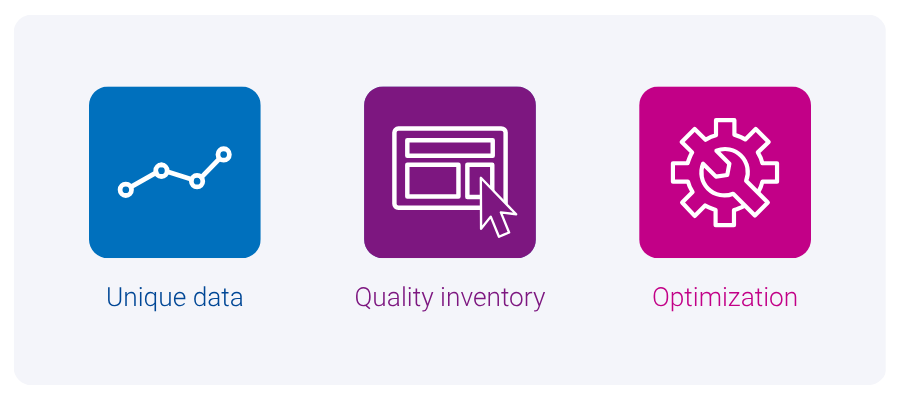
Unique data, quality inventory, optimization

As part of our Cannes Content Studio series, leaders from Butler/Till, Index Exchange, OpenX, PubMatic, and Yieldmo discuss how curation cuts waste and lifts results.

What is real curation?

Real curation isn’t “packaging inventory.” It’s a strategic framework built on three pillars:

Unique data

1. Unique data

Privacy-compliant and accurate.

Strong supply connections

2. Strong supply connections

Access to quality inventory from publishers at scale.

optimization tools

3. Optimization tools

To measure, refine, and improve performance throughout the campaign lifecycle.

Why it matters: Manual approaches hit a ceiling. They can’t react quickly to shifting content, identity signals, or auction dynamics. That’s where technology partners come in, keeping the optimization loop running continuously.

Intelligence at every touchpoint

Curation isn’t about shifting control between platforms. It’s about better brand decisions, connecting opportunity-rich supply to the brand’s preferred buying platform and enriching each buy with audience data.In practice, supply-side platforms (SSPs) are ingesting richer signals to route inventory more effectively and support frequency caps and deal prioritization, in collaboration with demand-side platforms (DSPs).

“I think we’re seeing a shift toward bringing more DSP capabilities into the SSP, like supply-side targeting and data driven curation. Advancements in areas like CTV are enabling targeting based on content signals, and SSPs are pulling in more data to inform which supply is sent to the DSP, helping with things like frequency caps.”

OpenXMatt Sattel

Why page-level targeting beats static lists

Static domain lists were a useful first step for quality control. The intent was sound, but the approach was too cumbersome for today’s signal-rich buying. Today, AI and contextual engines read the page, not just the site, and adapt in real time.

Why page-level targeting beats static lists

Page-level logic delivers three key benefits:

  1. Accuracy by targeting high-intent, page-level content.
  2. Relevance by matching the creative to both the content and the audience context.
  3. Speed by enabling campaigns to move away from underperforming pages in real time, without waiting for a manual trafficking change.

“AI-driven contextual engines evaluate the page, not just the domain, to curate inventory in real time. That moves curation from static allowlists to adaptive logic for greater accuracy, relevance, and speed.”

YieldmoSophia Su

Partnerships broaden who influences the buy

Partnerships broaden who influences the buy

Curation works when publishers, agencies, data partners, and platforms share signals and KPIs.

  • Horizontal curation (across multiple SSPs) assembles broader, higher-quality reach and resilience, ideal for scale and diversity of supply.
  • Vertical curation (an SSP’s in-house product) provides deep controls within a single exchange, useful for specific inventory strategies.
  • Creative and data now shape supply and demand: better creative decisioning, tested against richer signals, improves outcomes.

DSPs remain central for activation and pacing. But the sell-side’s growing intelligence means more accurate inventory routing and signal application before a bid ever fires.

“Curation will continue to evolve through deeper data partnerships and expanded use across publishers and agencies, with more sophisticated types of optimization. DSPs will remain critical to activation, even as sell-side decisioning plays a larger role in identifying and shaping the supply to select.”

Index ExchangeMike McNeeley

Curation delivers access and measurable performance
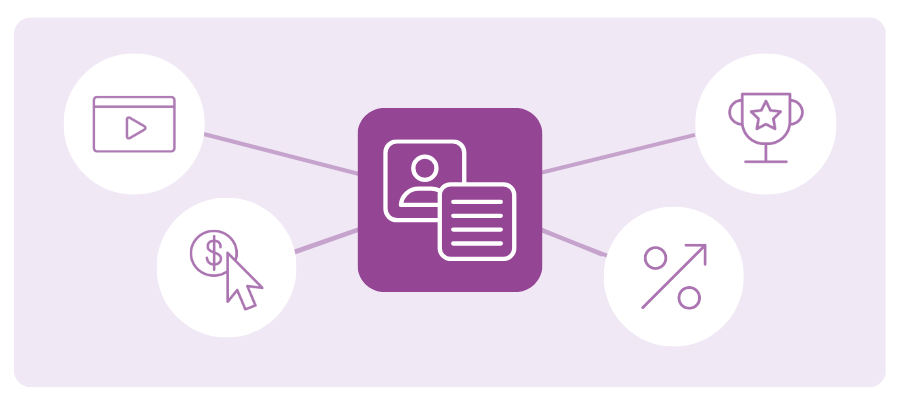
Curation delivers access and measurable performance 

Here’s what curated deals are delivering.

For buyers

ResultType of result
36-81%savings on data segments
10-70%lower cost per click (CPCs)
1.5-3xhigher click-through rates (CTRs)
10-30%higher video completion rates

For publishers

ResultType of result
20%bid density
118%win rate
10%revenue on discovered inventory
25%eCRM on incremental impressions

Why it works: When data, supply, and optimization are integrated, you reduce waste, surface better impressions, and let algorithms compound your advantage. That’s why curated private marketplaces (PMPs) have grown at ~19% compound annual growth rate (CAGR) since 2019.

“Publishers using supply-side curation see ~15% more diverse buyers and 20–25% better performance than buy-side-only targeting. Smarter packaging and signal application tighten auctions and strengthen outcomes.”

PubmaticHoward Luks

Holistic curation streamlines planning and outcomes
Holistic curation streamlines planning and outcomes 

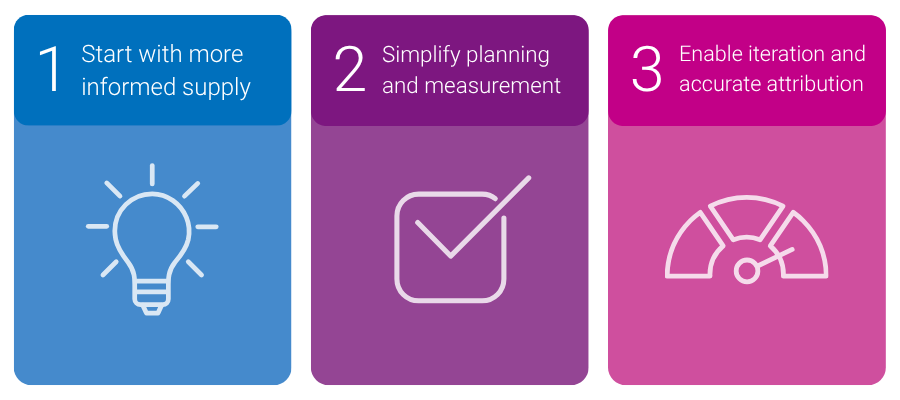
Curation adds the data layer earlier in the buying process, starting at the supply-side. This creates more opportunities to reach the right audience and improves scale and performance. By replacing multiple line items with a single curated deal, campaign setup becomes faster and less error-prone. Curated deals also simplify measurement by including the necessary context for accurate attribution, while dynamic adjustments ensure campaigns remain optimized without requiring manual updates.

“Publishers using supply-side curation see ~15% more diverse buyers and 20–25% better performance than buy-side-only targeting. Smarter packaging and signal application tighten auctions and strengthen outcomes.”

Butler/TillGina Whelehan

It’s much more streamlined, bringing more pieces together so we’re thoughtful and holistic. Adding the audience and data element creates more scale and strategy in how we curate supply and data, and ultimately better results for clients.

The bottom line

Curation has matured from buzzword to performance system. DSPs still anchor activation and pacing, but better sell-side pipes now pre-route inventory and apply signals before any bid starts, making the whole system faster and more accurate. When you combine unique signals, tight supply connections, and always-on optimization, you gain addressability, reduce waste, and achieve better business outcomes for both buyers and sellers.

Curation isn’t just a trend; it’s where programmatic advertising is headed. Start testing curated PMPs today to see the difference for yourself.

Explore curated PMPs with Audigent

This site is protected by reCAPTCHA and the Google Privacy Policy and Terms of Service apply.


Curation FAQs

What is curation in performance marketing?

Curation in performance marketing is the process of combining data, inventory, and optimization to deliver better results. Audigent supports curated strategies through privacy-safe data and advanced integrations.

How does curation benefit marketers?

Curation reduces wasted spend by targeting high-quality impressions and optimizing campaigns in real time. Audigent’s solutions help marketers achieve higher click-through rates, lower costs, and better engagement across channels.

What are curated PMPs, and why are they important?

Curated PMPs are deals that use curated data and inventory to deliver measurable results. They help buyers save on data costs, improve ad performance, and achieve better video completion rates, while publishers see higher win rates and revenue.

How does Audigent support curated strategies?

Audigent provides unique data assets, privacy-safe integrations, and optimization tools that help marketers and publishers create curated deals. Our solutions ensure campaigns are more efficient, targeted, and effective from start to finish.

What’s the difference between horizontal and vertical curation?

Horizontal curation combines inventory across multiple platforms for broader reach and diversity, while vertical curation focuses on deep control within a single platform. Both approaches can be tailored to specific campaign goals with Audigent’s expertise.


Latest posts
Loading…
Audigent, a part of Experian, was named Microsoft Advertising’s Curator of the Year 

Audigent, a part of Experian, was named Microsoft Advertising’s Curator of the Year. The honor recognizes Audigent’s leadership for advancing privacy-safe, sell-side curation that packages high-quality audiences with premium supply for measurable campaign performance. Once only a buzzword, curation has become a mainstream strategy for activating advertisers’ first-party data and streamlining programmatic buying. To recognize this shift and the leaders driving it, Microsoft introduced Curate and established the Curator of the Year award to celebrate excellence in this category. Audigent was recognized for: End-to-end curation from audience planning through activation for outcomes-based, closed-loop programs. Breadth of deal and supply types using unique datasets, real-time supply connections and always-on optimization. Data-driven activation with curation across a large publisher footprint that utilizes Experian marketing data, first-party data, and partner audiences. Audigent’s unique, contextual, and predictive audience data solutions are built into all programmatic media buying. The combination of Audigent’s Real-Time Data and Curation Platform and first-party data, along with Experian identity and optimization, turns real engagement into ready-to-activate audiences. These audiences are available within Microsoft Curate and across omnichannel buying. "Audigent is proud to be named Microsoft Advertising’s Curator of the Year. This is a clear validation of the work our team has done to make curation the new standard in data-driven programmatic activation. We will continue to set the standard by expanding curated deals in Microsoft Curate. This will help maximize efficiency across the bidstream.”Chris Meredith, Head of Supply Side Partnerships Together, Experian and Audigent connect identity to inventory, enabling advertisers to reach the right audiences with precision and scale. By harnessing Experian identity and audience solutions and activating Audigent-curated deals in Microsoft Curate, brands can unlock new levels of efficiency and performance across every programmatic channel. This recognition sets the stage for even greater innovation, collaboration, and results in the year ahead. Ready to design your curated library? Let's connect Latest posts

Nov 06,2025 by Experian Marketing Services

The end of the Wild West in third-party data 

How third-party data has changed and why it matters in 2025 For years, third-party data operated in an expansive, lightly regulated marketplace: fast-moving, high-growth, and filled with players eager to capitalize on digital marketing’s demand for audience insights.   That era is over. Regulatory scrutiny, stricter compliance standards, and rising consumer expectations have already transformed the market. Today, third-party data belongs to partners with proven expertise and built-in compliance. This isn’t a space for opportunistic newcomers; it’s one that rewards long-term commitment and trust.  Even the rapid rise of retail media networks (RMNs) reflects this shift. These platforms are built on long-standing, trusted relationships between brands, retailers, and data partners, utilizing that foundation in new ways to reach audiences responsibly and effectively. The best providers have already made this transition; those still “shifting” are catching up. From growth to governance: A market defined by accountability The third-party data ecosystem has matured. After years of rapid expansion and recalibration, the market has stabilized around a new standard: data quality and regulatory accountability. Third-party data enriches first-party insights with attributes such as income, gender, and interests that round out the customer view. But when the industry grew unchecked, unreliable providers diluted quality and trust. This resulted in a decline in the overall value and reliability of the third-party data marketplace. That breakdown led directly to today’s privacy laws, now active across more than 20 U.S. states and numerous countries worldwide. These regulations reflect a permanent consumer expectation: relevance delivered responsibly. Consumers aren’t rejecting personalization; they’re rejecting how it’s been done in the past. They still want relevant, tailored experiences, but they expect brands to deliver them through ethical, transparent data practices. Does third-party data still matter in a privacy-first era?  Third-party data isn’t disappearing, if anything, it’s become more important. Brands will always need additional insight to deepen customer understanding; first-party data alone only reflects what’s already known. The industry has entered a mature phase where data quality and compliance are table stakes. The companies leading today built their data infrastructure on rigorous standards, regulatory foresight, and transparent governance. That same foundation powers the next wave of innovation, including the explosive growth of RMNs. RMNs rely on responsibly sourced third-party data to enrich shopper insights, validate audiences, and extend addressability beyond their own walls. Trusted data partners make that expansion possible, connecting retail environments with broader media ecosystems while maintaining privacy and accuracy. High-quality, compliant third-party data remains essential because it: Fills knowledge gaps Good third-party marketing data complements first-party insights with demographic, behavioral, and transactional context, providing the missing puzzle pieces to complete the full customer profile.  Improves accuracy Filling in gaps in customer understanding helps you identify, reach, and engage your customers more effectively. This helps improve the delivery of relevant messages and offers to your customers and prospects across channels.  Builds connections Third-party data helps brands build loyalty with consumers by speaking to their interests, and intent behind purchases.  Fuels prospecting Third-party data can help you find your best prospects. By enriching customer files, you can understand who your best customers are, and how to find more of them. By modeling this data, you can determine who your best customers are and source prospects similar to them.  Advancements in AI and machine learning are reshaping how this data is used across the ecosystem. What was once primarily a buy-side tactic is now expanding into the sell-side, where publishers and platforms are using data to curate, package, and activate audiences more intelligently. As AI enhances modeling accuracy and automation, third-party data will play an even greater role in connecting brands and consumers in more meaningful, privacy-conscious ways.  The bottom line: it’s not about having more data; it’s about having better, verified data you can trust. How can you spot a trustworthy data partner?  The strongest third-party data partners demonstrate accountability through experience, infrastructure, and integrity. Swipe right on the perfect data partner Look for providers that: Operate with clear data principles  Trustworthy partners publish and follow codified data principles that guide every step of data handling. Experian adheres to a set of global data principles designed to ensure ethical practices and consumer protection across all our operations. Treat new privacy regulations as routine  For mature providers, evolving privacy laws are routine, not disruptive. At Experian, privacy and compliance have long been built in. Every partner and audience goes through Experian’s rigorous review process to meet federal, state, and local consumer privacy laws. Decades of experience have shaped processes that emphasize risk mitigation, transparency, and accountability. Stay deeply connected  Leading data companies maintain deep relationships with technology partners and industry and regulatory groups to ensure that ethical data practices are put into practice and their customers are aware of platform-specific regulations. Experian's relationships with demand-side platforms (DSPs), supply-side platforms (SSPs), and even social platforms like Meta, ensures we are aware of any platform-specific initiatives that may impact audience targeting. We’re also active participants in many trade groups to ensure that the industry puts ethical data practices in place to ensure consumers still receive personalized experiences but their data usage and collection is opt-in, transparent and handled with their privacy at the center of the transaction. Have a proven track record in the industry  Longevity matters in a regulated and compliance-driven industry. Providers that have thrived through economic cycles and regulatory shifts are the ones equipped for the future. The ability to source high-quality third-party data is core to their business, not an afterthought. Our data is ranked #1 in accuracy by Truthset, giving our clients confidence that every decision they make is backed by the industry’s most reliable insights. Why the future of third-party data depends on accountability  The third-party data industry has already crossed the threshold from expansion to accountability. The companies leading this era have established their credibility through governance and proof. The future belongs to providers that:  Build with regulatory foresight  Maintain rigorous quality assurance  Prioritize partnership over profit The Wild West days are long gone. The third-party data ecosystem is now defined by stability, transparency, and shared responsibility. Partner with Experian for data you can trust and results you can prove  When accuracy and accountability define success, you need a partner built on both. Work with the company that’s setting the standard for responsible data-driven marketing and helping brands connect with people in meaningful, measurable ways.  Get started About the author Jeremy Meade VP, Marketing Data Product & Operations, Experian Jeremy Meade is VP, Marketing Data Product & Operations at Experian Marketing Services. With over 15 years of experience in marketing data, Jeremy has consistently led data product, engineering, and analytics functions. He has also played a pivotal role in spearheading the implementation of policies and procedures to ensure compliance with state privacy regulations at two industry-leading companies. Third-party data FAQs What is third-party data? Third-party data is information collected by organizations that don’t have a direct relationship with the consumer. It supplements first-party data by adding demographic, behavioral, and interest-based insights. Why are privacy regulations reshaping data practices? Privacy regulations are reshaping data practices because consumers expect control over how their information is used. That expectation led directly to today’s privacy laws, now active across more than 20 U.S. states and numerous countries worldwide. These regulations reflect a permanent consumer expectation: relevance delivered responsibly. Consumers aren’t rejecting personalization; they’re rejecting how it’s been done in the past. They still want relevant, tailored experiences, but they expect brands to deliver them through ethical, transparent data practices. Laws like the CCPA and state-level privacy acts enforce this expectation, holding brands and data providers accountable for the ethical use of data. Can brands still use third-party data safely? Yes, brands can still use third-party data safely when sourced responsibly. Partnering with established, compliant providers like Experian ensures both legal protection and data accuracy.  How does Experian ensure compliance with evolving privacy regulations? Experian adheres to a set of global data principles designed to ensure ethical practices and consumer protection across all our operations. At Experian, privacy and compliance have long been built in. Every partner and audience goes through Experian’s rigorous review process to meet federal, state, and local consumer privacy laws. Decades of experience have shaped processes that emphasize risk mitigation, transparency, and accountability. Experian's relationships with demand-side platforms (DSPs), supply-side platforms (SSPs), and even social platforms like Meta, ensures we are aware of any platform-specific initiatives that may impact audience targeting. We’re also active participants in many trade groups to ensure that the industry puts ethical data practices in place to ensure consumers still receive personalized experiences but their data usage and collection is opt-in, transparent and handled with their privacy at the center of the transaction. What should marketers look for in a data partner? Marketers should look for transparency, longevity, and evidence of compliance when looking for a data partner. The best partners can clearly explain how their data is sourced, validated, and maintained. Read Experian's guide on how you can swipe right on the perfect data partner here. Latest posts

Oct 30,2025 by Jeremy Meade, VP, Marketing Data Product & Operations

What “good data” really means in the age of AI

What makes data “good” in the age of AI? In AI-driven marketing, data quality now defines success. “Good data” in AI isn’t about volume; it’s about the balance of accuracy, freshness, consent, and interoperability. As algorithms guide decisions, they must learn from data that’s both accurate and ethical. At Experian, we believe good data must meet four conditions: 1. Accurate Verified and anchored in real human identity. 2. Fresh Continuously updated to reflect today’s consumers. 3. Consented Collected and governed transparently. 4. Interoperable Easily integrated across platforms through a secure, signal-agnostic identity spine, enabling seamless data activation. This is the data AI can trust and the data that keeps marketing relevant, predictive, and privacy-first. Listen to InfoSum's Identity Architect's podcast for more on AI, outcomes, and curation Why does data accuracy matter more than ever? AI models are only as intelligent as their inputs. Incomplete or inconsistent data leads to bad predictions and wasted spend. As the industry moves toward agentic advertising, where autonomous systems handle campaign buying and optimization, data accuracy becomes even more critical. If your ad server or audience data is flawed, these new AI agents will simply automate bad decisions faster. Experian applies rigorous quality filters and conflict resolution rules to ensure our data is both deterministic and accurate. Deterministic signals alone don’t guarantee accuracy; they must be verified, deduplicated, and contextualized. Our identity resolution process anchors every attribute to real people, giving brands and platforms the confidence that every insight stems from truth, not noise. Our data is ranked #1 in accuracy by Truthset, giving our clients confidence that every decision they make is backed by the industry’s most reliable insights. See how Experian's Digital Graph improved attribution accuracy for a demand-side platform (DSP) with 84% of IDs resolved Just because it is deterministic, doesn’t mean it’s highly accurate. You still need to refine and validate your data to make sure it tells a consistent story. You need to anchor your data around real people. Calculate the real impact of data accuracy Why does AI need fresh data? Outdated data can’t predict tomorrow’s behavior. AI thrives on recency. At Experian, our audiences are refreshed continuously to mirror real-world signals, from purchase intent to media habits, so every campaign reflects what’s happening now, not six months ago. And we don’t just advocate for fresh data, we rely on it ourselves. Our own AI-powered models, used across our audience and identity platforms, are continuously retrained on the most current, consented signals. This allows us to see firsthand how freshness drives better accuracy, faster optimization cycles, and more relevant outcomes. But freshness alone isn’t enough. With predictive insights, our models go beyond describing the past. They forecast behaviors, fill gaps with inferred attributes, and recommend next-best audiences, helping you anticipate opportunity before it happens. Fresh and predictive data means you’re reaching people in the moment that matters and shaping what comes next. With AI, that’s what defines performance. Explore Experian's most popular audiences, ready to activate now How do consent and governance build trust in AI? Responsible AI starts with responsible data. With 20 U.S. states now enforcing privacy laws, data compliance isn’t optional, it’s operational. At Experian, privacy and compliance are built in. Every data signal, attribute, audience, and partner goes through our rigorous review process to meet federal, state, and local consumer privacy laws. With decades of experience in highly regulated industries, we’ve built processes that emphasize risk mitigation, transparency, and accountability. Governance isn’t just about regulation, it’s also about innovation done right. We drive transparent and responsible innovation through safe, modular experimentation, from generative applications to agentic workflows. By balancing bold ideas with ethical guardrails and staying ahead of evolving legislation, we ensure our innovations protect consumers, brands, and the broader ecosystem while moving the industry forward responsibly. Compliance and governance aren’t just boxes to check; they’re the foundation that gives AI its license to operate. How does interoperability enable AI’s full potential? AI delivers its best insights when data connects seamlessly across fragmented environments. Our signal-agnostic identity spine allows data to move securely between platforms (connected TV, retail media networks, and demand-side platforms) without losing context or compliance. Interoperability isn’t just about moving data between systems; it’s about connecting insights across them. When signals connect across environments, AI gains a more complete view of the customer journey revealing true behavior patterns, intent signals, and cross-channel impact that would otherwise remain hidden. This unified perspective allows AI to connect insights in real time, improving predictions, performance, and personalization while protecting privacy. Where do AI and human oversight meet? AI can make marketing more predictive, but people make it meaningful. At Experian, our technology brings identity, insight, and generative intelligence together so brands, agencies, and platforms can reach the right people with relevance, respect, and simplicity. Our AI-powered models surface connections, recommend audiences, and uncover insights that would take humans months to find. But our experts shape the process, crafting the right inputs, ensuring data quality, reviewing model outputs, and refining recommendations based on industry knowledge and client goals. It’s this partnership between advanced AI and experienced people that turns predictions into actionable, trustworthy solutions. What “good data” looks like in action “Good data” becomes most powerful when it’s put to work. At Experian, our marketing data and identity solutions help brands and their partners connect accurate, consented, and interoperable data across the ecosystem, turning insight into measurable outcomes. Learn more about Experian's data solutions Learn more about Experian's identity solutions When Windstar Cruises and their agency partner MMGY set out to connect digital media spend to real-world bookings, they turned to Experian’s marketing data and identity solutions to close the attribution loop. By deploying pixels across digital placements and using Experian’s identity graph to connect ad exposure data with reservation records, we created a closed-loop attribution system that revealed the full traveler journey, from impression to confirmed booking. The results were clear: 6,500+ bookings directly tied to digital campaigns, representing more than $20 million in revenue, with a 13:1 ROAS and $236 average cost per booking. Attributed audiences booked $500 higher on average, and MMGY’s Terminal audience segments powered by Experian data achieved a 28:1 ROAS. This collaboration shows that responsible, high-quality data and AI-driven insights don’t just tell a better story; they deliver measurable business performance. Download the full case study How to choose the partner built for responsible AI Why the future of AI depends on “good” data The next phase of AI-driven marketing won’t be defined by who has the most data, but by who has the best. Leaders will: Operate with clear data principles grounded in transparency and truth Build consent and compliance into every workflow Keep data accurate, current, and interoperable Pair automation with human oversight   AI success starts with good data. And good data starts with Experian, where accuracy, privacy, and purpose come together to make marketing more human, not less. Partner with Experian for AI you can trust About the author Budi Tanzi VP, Product, Experian Budi Tanzi is the Vice President of Product at Experian Marketing Services, overseeing all identity products. Prior to joining Experian, Budi worked at various stakeholders of the ad-tech ecosystem, such as Tapad, Sizmek, and StrikeAd. During his career, he held leadership roles in both Product Management and Solution Engineering. Budi has been living in New York for almost 11 years and enjoys being outdoors as well as sailing around NYC whenever possible. "Good" data in AI FAQs What defines “good data” according to Experian? At Experian, we define "good data" as the balance of accuracy, consent, freshness, and interoperability. We apply rigorous governance, validation, and cleansing across every signal to ensure that AI systems learn from real-time behaviors, not assumptions. This approach turns data into a foundation for reliable, ethical, and high-performing intelligence. How does Experian ensure AI-ready data accuracy? Experian ensures AI-ready data accuracy through advanced cleansing, conflict resolution, and human anchoring. Experian ensures AI models rely on verified, high-quality inputs. Experian's data is ranked #1 in accuracy by Truthset. Can Experian help brands stay compliant with privacy laws? Yes, Experian can help brands stay compliant with privacy laws. Experian’s privacy-first governance framework integrates ongoing audits, legal oversight, and consent management to ensure compliance with all federal, state, and global privacy laws. Compliance isn’t an afterthought; it’s embedded in every step of our data lifecycle. How does Experian make AI more human? Experian makes AI more human by pairing innovation with human oversight to ensure AI helps marketers understand people, not just profiles. At Experian, we believe the future of marketing is intelligent, respectful, and human-centered. AI has long been part of how we help brands connect identity, behavior, and context to deliver personalization that balances privacy with performance. Our AI-powered solutions combine predictive insight, real-time intelligence, and responsible automation to make every interaction more relevant and ethical. Where can marketers access Experian’s high-quality data? Marketers can activate Experian's high-quality data directly in Experian’s Audience Engine, or on-the-shelf of our platform partners where Experian Audiences are ready to activate. Built on trusted identity data and enhanced with partner insights, it’s where accuracy meets accessibility, helping brands power campaigns with confidence across every channel. Latest posts

Oct 29,2025 by Budi Tanzi, VP, Product

Subscribe to our newsletter

Enter your name and email for the latest updates

This site is protected by reCAPTCHA and the Google Privacy Policy and Terms of Service apply.

About Experian Marketing Services

At Experian Marketing Services, we use data and insights to help brands have more meaningful interactions with people. As leaders in the evolution of the advertising landscape, Experian Marketing Services can help you identify your customers and the right potential customers, uncover the most appropriate communication channels, develop messages that resonate, and measure the effectiveness of marketing activities and campaigns.

Visit our website

Subscribe to our newsletter

Stay up to date on the latest industry news and receive expert tips from our marketing experts.
Subscribe now!