Loading...

Why activation and measurement will finally connect in 2026

Published: January 26, 2026 by Ali Mack, VP, AdTech Sales

At A Glance

In 2026, marketing activation and measurement will operate as a single, connected system. Identity allows insights to guide decisions while campaigns run, not after they end. Experian helps marketers unify planning, activation, and outcome validation so performance signals inform action in real time and business impact stays visible throughout the campaign lifecycle.

For years, marketers have worked around a familiar disconnect. Campaigns go live first. Measurement follows later. Insights arrive after audiences are reached, and budgets are committed.

That gap has slowed decisions, blurred performance signals, and limited marketers’ ability to respond when it counts.

In 2026, that model changes. Activation and measurement no longer operate as separate steps. They function as a single system, where insight informs action as campaigns unfold. Consistency across identity, data, and decision-making sits at the center of this shift, connecting the full campaign lifecycle from planning through outcomes.

How is marketing measurement shifting from post-campaign reporting to in-flight intelligence in 2026?

Marketing measurement in 2026 is moving from retrospective reporting to real-time input that shapes campaigns while they run. Instead of explaining performance after delivery, measurement now guides creative, audience, and channel decisions as verified outcomes appear.

Historically, measurement worked like a post-mortem. Dashboards showed what happened after campaigns ended, or weeks after impressions were delivered. Those insights supported long-term planning but rarely influenced performance in the moment.

That dynamic has changed.

Today, marketers embed measurement directly into activation. Campaigns adapt while they run. Creative evolves based on engagement quality. Audience strategies adjust as verified outcomes come into view. Channel investments respond to performance signals, not assumptions.

Connected ecosystems make this possible. Experian helps marketers plan, activate, and measure within a single framework by linking audiences, identity, and outcomes. When planning and performance live in the same environment, insight becomes actionable in the moment.
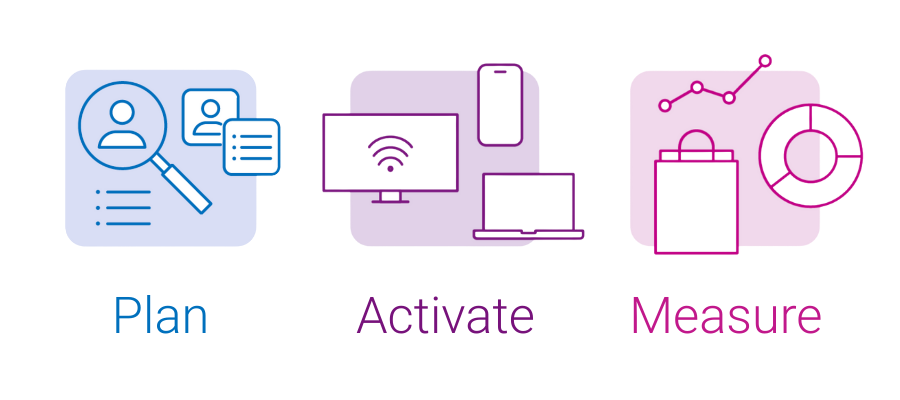
Plan, activate, and measure

Why is identity the connective layer between activation and measurement?

Identity provides the consistent thread that links planning, activation, and outcomes into a unified system. Without it, marketers rely on proxy signals and disconnected views of performance.

For years, fragmented identity frameworks made it difficult to connect media exposure to real-world outcomes. Without a consistent way to recognize audiences across planning, activation, and measurement, marketers relied on proxy metrics and modeled assumptions.

That’s changing as identity becomes interoperable across the ecosystem.

Experian’s Digital and Offline Graphs help marketers onboard and resolve their data into a clean, connected foundation that supports everything that follows. From building audiences enriched with behavioral, demographic, and lifestyle insights, to activating those audiences across channels like connected TV (CTV), social, and programmatic through direct integrations with more than 200 platforms.
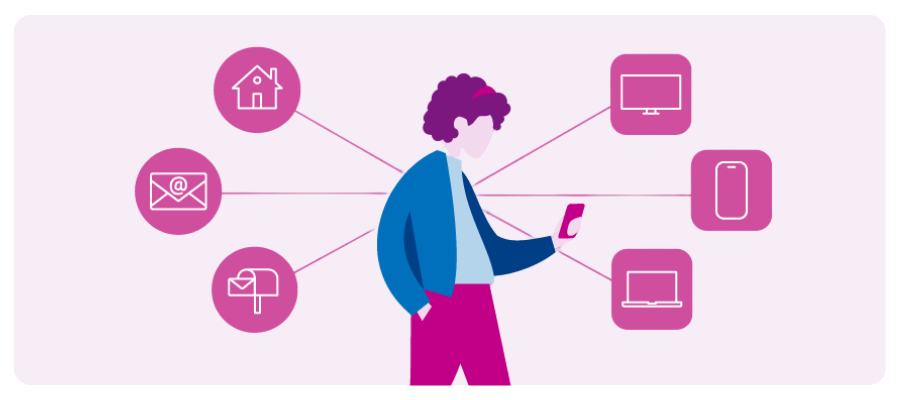
A person looking at their phone surrounded by icons for household, TV, mobile phone, laptop, mailbox, and email.

When identity stays consistent from the first impression through final outcome, marketers gain a clearer view of what drives performance and where to act next.

Our 2026 Digital trends and predictions report is available now and reveals five trends that will define 2026. From curation becoming the standard in programmatic to AI moving from hype to implementation, each trend reflects a shift toward more connected, data-driven marketing. The interplay between them will define how marketers will lead in 2026.

How does closed-loop measurement become standard in 2026?

Closed-loop measurement is becoming the default as activation and measurement come together. Marketers now tie exposure directly to verified business outcomes instead of relying on inferred signals.

In partnership with MMGY Global, we helped Windstar Cruises connect digital impressions directly to bookings. The result was more than 6,500 verified bookings and $20 million in revenue tied back to campaign exposure. That translated to a 13:1 return on ad spend.

This level of accountability changes how marketers optimize. Instead of relying on clicks or inferred intent, teams can measure outcomes that reflect business impact. Store visits. Purchases. Site activity. These signals now guide decisions while campaigns are live.

Through curated private marketplace deals and supply-path optimization, Experian also helps reduce cost, and improve reach and performance. With Experian and Audigent operating as one, marketers gain access to scalable, privacy-conscious data solutions that support both addressability and accountability across the supply chain.

What should marketers plan for as activation and measurement connect in 2026?

Marketing teams should prepare for an operating model built around continuous feedback, unified systems, and verified outcomes. This shift changes how success is defined and managed.

Marketers should plan for:

Always-on feedback loops

Real-time signals guide creative, audience, and channel decisions while campaigns are in flight.

Unified planning, activation, and outcome validation

Integrated identity and audience frameworks allow marketers to trace value across every impression, not just the last click.

Outcome-based performance signals

Measurement will focus less on surface-level performance and more on true business impact, including sales, bookings, and long-term value.

Greater use of first-party data

Connected first-party data supports consistent activation and outcome validation across channels.

Whether you’re activating your own data or reaching new audiences, Experian connects every stage of the campaign. From early planners to last-minute buyers, we help you show up in the moments that matter and prove what is working.

The takeaway

Marketing’s next chapter centers on connection.

As data systems unify, activation and measurement operate as one. Insight flows directly into action. Decisions are guided by intelligence, not delayed reporting.

With Experian, marketers plan, reach, and measure in a connected cycle. Every impression is measurable. Every audience is accurate. Every decision is powered by data ranked #1 in accuracy by Truthset.

To explore this trend and the others shaping marketing in 2026, download our 2026 Digital trends and predictions report.

Ready to connect with our team?

This site is protected by reCAPTCHA and the Google Privacy Policy and Terms of Service apply.


About the author

Ali Mack, VP of AdTech Sales, Experian

Ali Mack

VP, AdTech Sales, Experian

Ali Mack leads Experian’s AdTech business, overseeing global revenue across the company’s expansive tech and media portfolio. With over a decade of experience in digital and TV advertising, Ali drives strategic growth by aligning sales, customer success, and solutions teams to deliver impactful outcomes for clients and partners.

She has successfully guided teams through two major acquisitions, integrating sales organizations and product portfolios into unified go-to-market strategies. Under her leadership, Experian has consistently exceeded revenue targets while fostering collaborative, results-driven teams and mentoring emerging leaders. Working closely with finance, product, and marketing, Ali develops strategies that support a diverse ecosystem of publishers, brands, and technology partners, positioning Experian at the forefront of data-driven advertising and identity resolution.


FAQS

How is marketing measurement shifting from post-campaign reporting to in-flight intelligence in 2026?

Marketing measurement in 2026 is moving from retrospective reporting to real-time input that shapes campaigns while they run. Instead of explaining performance after delivery, measurement now guides creative, audience, and channel decisions as verified outcomes appear. Connected ecosystems make this possible. Experian helps marketers plan, activate, and measure within a single framework by linking audiences, identity, and outcomes. When planning and performance live in the same environment, insight becomes actionable in the moment.

Why is identity the connective layer between activation and measurement?

Identity provides the consistent thread that links planning, activation, and outcomes into a unified system. Without it, marketers rely on proxy signals and disconnected views of performance. Experian’s Digital and Offline Graphs help marketers onboard and resolve their data into a clean, connected foundation that supports everything that follows. From building audiences enriched with behavioral, demographic, and lifestyle insights, to activating those audiences across channels like connected TV (CTV), social, and programmatic through direct integrations with more than 200 platforms.

How does closed-loop measurement become standard in 2026?

Closed-loop measurement is becoming the default as activation and measurement come together. Marketers now tie exposure directly to verified business outcomes instead of relying on inferred signals. In partnership with MMGY Global, we helped Windstar Cruises connect digital impressions directly to bookings. The result was more than 6,500 verified bookings and $20 million in revenue tied back to campaign exposure. That translated to a 13:1 return on ad spend.

What should marketers plan for as activation and measurement connect in 2026?

Marketers should plan for: always-on feedback loops, unified planning, activation, and outcome validation, outcome-based performance signals, and greater use of first-party data. Whether you’re activating your own data or reaching new audiences, Experian connects every stage of the campaign. From early planners to last-minute buyers, we help you show up in the moments that matter and prove what is working.


Latest posts

Loading…
Quality matters: Calculating the real impact of data accuracy

Originally appeared in MarketingProfs We all understand the importance of data quality. Metrics like third-party validations, match rates, and accuracy scores help us assess data quality on its own terms. Yet too often, organizations struggle to connect high-quality data with real-world business outcomes. How does data accuracy directly impact the ability to reach target audiences and campaign performance? Scale and cost: The tradeoffs of accuracy Marketers are frequently incentivized to prioritize broad reach, even at the expense of precision. This often leads to decisions driven by short-term gains—reaching more people at a lower cost. The temptation is deceptively straightforward, but deep down we know overly simplistic approaches are likely to fall short. Cheaper data solutions, even if they seem to provide greater reach, mask a deeper issue. The data may not be accurate. In fact, the initial savings from cheaper data typically result in higher long-term costs due to inefficiencies and waste that are hard to track. Unless you’re carefully evaluating your campaign results, it can be difficult to see where the inefficiencies are creeping in. The hidden cost of inaccurate data Programmatic platforms make it easy for mistargeted impressions to slip through unnoticed. Common issues include: Stale data, where consumer behaviors and locations have changed but the data hasn’t. Inactive signals, where you think a digital identifier like a device ID is addressable, but the device hasn’t been used in months. Disparate or duplicative data, where you think you’re reaching three people but in fact it’s just one person who you’re frequency bombing. Nobody likes getting the same ad over and over again. It’s like if your co-worker messaged you “hey” five times in a row. Direct mail waste is tangible: towering stacks of returned mail serve as undeniable reminders of inefficiency, not to mention the financial costs of wasted postage. Digital campaigns, by contrast, often obscure their inefficiencies within complex programmatic platforms or impression reports. It’s like watching a gust of wind scatter piles of paper into the ether—it's hard to track and quantify. As a result of these data inaccuracies, brands mistakenly assume they’re optimizing their budgets when, in fact, they’re hemorrhaging money and reaching the wrong people with a message they don’t care about. It’s a marketer’s nightmare scenario. The perceived savings from cheaper, less accurate data turn out to be an illusion. The compounding effect of inaccurate data Consider a situation where an inaccurate insight or signal prompts a brand to adjust its targeting toward an underperforming segment. Each new campaign uses this flawed data to guide its optimizations, amplifying the waste. What starts as a minor inefficiency quickly becomes a significant budget drain, funneling resources into segments that aren’t delivering. If you bake a cake but use salt instead of sugar–each new ingredient only makes the final product more unpalatable. With ad targeting, the feedback loop created by optimization tools exacerbates this issue. Decisions are made based on misleading metrics, perpetuating flawed strategies and causing brands to over-invest in underperforming tactics. Without scrutiny, brands risk building entire strategies on fundamentally flawed insights. The value of investing in the highest quality data With accurate data, brands can zero in on the right audience. This is particularly critical in lookalike modeling. By enriching customer files, brands can understand the nuances of who their best customers are—and how to find more of them. Tailored messaging, based on a consumer’s actual behaviors and interests, deepens engagement. Conversion rates rise as campaigns meet customer needs. Accurate data also provides insights that aren’t immediately obvious. Sometimes, seemingly minor behaviors or unexpected demographic segments can emerge as key drivers of conversions. It’s like finding the one avocado at the grocery store that’s perfectly ripe…you’re well on your way to delicious guacamole. To truly grasp the impact of data accuracy, traditional validation metrics such as third-party assessments (e.g. Truthset) should be paired with other performance indicators that show you how well data reflects actual consumer behavior. With this complete picture in view, the choice is obvious: quality data is worth the premium.  Acting on what the data tells you Collecting accurate data is just the first step—the real challenge is having the ability to act on what it reveals. Many brands enter campaigns with preconceived notions about their target audience, only to find the data tells a different story. Ignoring these insights stifles growth. The value of data-driven marketing lies in trusting the insights and adapting strategies accordingly.  How to test if your current approach is working We understand that changing data providers can feel daunting, but there are low-lift ways to explore whether your current approach is truly delivering. Test the waters by selecting an Experian Audience on a major platform or building a custom audience to see how your campaigns perform. Alternatively, collaborate with Experian’s insights team to gain a deeper understanding of your audience and determine if it aligns with your current strategy. It’s a small step that could lead to a big impact. Get in touch with our team today Latest posts

Apr 01,2025 by Jeremy Meade, VP, Marketing Data Product & Operations

A deep dive with an Experian partner, Open X

In our Ask the Expert Series, we interview leaders from our partner organizations who are helping lead their brands to new heights in AdTech. Today’s interview is with Brian Chisholm, SVP of Strategic Partnerships at OpenX.   About OpenX OpenX is an independent omni-channel supply-side platform (SSP) and a global leader in supply-side curation, transparency, and sustainability. Through its 100% cloud-based tech stack, OpenX powers advertising across CTV, app, mobile web, and desktop, enabling publishers to deliver marketers with improved performance and dynamic future-proofed solutions. With a 17-year track record of programmatic innovation, OpenX is a direct and trusted partner of the world’s largest publishers, working with more than 130,000 premium publisher domains and over 100,000 advertisers. As the market leader in sustainability, OpenX was the first AdTech company to be certified as CarbonNeutral™ and third-party verified for achieving its SBTi Net-Zero targets. Learn more at www.openx.com.  Collaboration solves programmatic challenges Could you share the story behind the partnership between OpenX and Experian and how this collaboration differs from typical data-provider/DSP or SSP relationships in the market? What unique challenges in programmatic advertising does this partnership solve?   OpenX first partnered with Experian in 2019 when we were building the industry’s first data-driven supply-side curation platform. Being the only SSP with a proprietary people-based identity graph (further enriched by Experian) gives OpenX a unique set of capabilities that are only growing in value in the market. We are seeing retail media networks, large agency planning platforms, and indie and specialty shops lean into OpenX’s tools to match, activate, and measure people-based audiences through our robust curation platform and premium supply.   Enhancing campaigns with data enrichment How does combining Experian's marketing data with OpenX's technology create tangible benefits for advertisers, agencies, and publishers?    Last year, we expanded our partnership with Experian to enrich our digital IDs with Experian’s Digital Audiences, essentially making Experian data available directly to marketers across all OpenX supply and formats, including CTV. For marketers, this direct integration increases both match and activation rates. Meaning, not only do we match more of the starting audience universe to our system, we then provide more opportunities to identify and transact on those users in the bidstream. The result is greater reach for buyers even in previously unaddressable environments like Safari or mobile web – and publishers benefit from the increased addressability OpenX provides their supply.   Delivering impactful inventory solutions OpenX has been enhancing its curation offerings beyond just providing curated marketplaces. Could you describe the strategic shift you’re making in how you package and deliver inventory?    At OpenX, we have a broader and more dynamic view of curation. It’s not just about gathering data or bundling inventory; it’s about layering on identity-based precision, enabling the targeting of the right audiences with premium, brand-safe inventory for our clients.  We saw the value of curating inventory and audiences on the supply side early on.  We started by building capabilities for our own exchange and then found that our approach created tremendous value for data owners and marketers alike. Over the past five years, we’ve been continuously investing our curation platform capabilities to super serve those partners. As a result, we have what we think is by far the most robust and flexible platform in the market.  We can match and integrate with any kind of data, curate supply at a granular level, activate audiences and help measure outcomes in multiple ways. We also provide turnkey integrations to third-party platforms.  Balancing customization with scalability in deals There's often tension between customization and scalability when it comes to curated deals. How does OpenX strike the right balance to meet varied advertiser objectives while ensuring operational efficiency for publishers?   Truthfully, we’re not finding that scale suffers with curation. We currently have 237 million monthly active users in our exchange that we can match and activate curated deals against. That’s a unique claim for an SSP, and we back it up with our identity graph. This directly benefits our publishers who see a 20% increase in overall bid density and a 118%+ increase in win rate for curated deals vs. open market.    Data-driven curation done on the supply side offers efficiency and drives results for buyers, while publishers are able to activate their own first-party data programmatically, increase their monetization, and maximize the value of their inventory.  As the industry continues to adapt to a privacy-first, consent-based ecosystem, data-driven curation will play a key part in ensuring both sides of the marketplace continue to thrive.   Driving results with CTV curation Connected TV is arguably the most dynamic channel in programmatic right now. How do curation improvements accelerate more precise or outcome-based targeting in CTV environments?    I want to take this a step further and say that biddable is the future of CTV. Not only does biddable enable advertisers to purchase closer to campaign activation, it gives buyers the option to curate deals, flexibility, addressability and ease of transacting at will. No minimums, no commitments.    Our CTV strategy has been centered around combining flexibility, efficiency, and real-time optimization capabilities with access to premium, direct, glass-on-wall inventory. TV by OpenX, powers the direct activation of curated audiences at scale through data-driven, contextual, attention, and sustainability offerings.    What does this mean for buyers?  Advertisers can choose from any one of OpenX’s 250+ data partners, including Experian, to target an audience via CTV inventory using OpenX’s cross-platform identity graph. This setup allows buyers to increase scale and optimize toward their desired campaign outcomes via their preferred DSP. The focus on inventory quality and scale combined with advanced targeting curation provides a key driver of performance in CTV.  Identity resolution for better CTV measurement In a channel as fragmented as CTV, measuring performance can be complex. What role does identity resolution play in better measurement and attribution? How do Experian's identity capabilities integrate within your platform to drive measurable outcomes?   We talked about the value of audience targeting via curation above. Another critical driver is our ability to power true closed-loop measurement for advertisers or partners like retail media networks. OpenX is able to provide automated log-level reporting via BIDS, which includes exposed IDs from our proprietary ID graph back to our partners in near real time.    This closed-loop attribution enables partners to measure real-world outcomes like ROAS, conversion rates and incrementality. Insights and learnings from data can then be used to make optimizations mid-campaign, to further improve performance. Measurement starts with having a strong foundation to identity resolution – which Experian helps us achieve.   Tailoring audience strategies in the auto sector The automotive vertical demands highly specific audience insights—everything from in-market signals to lifestyle and aftermarket service and parts data. How does the Experian–OpenX partnership enhance audience strategies in auto?   Experian’s deterministic data, combined with the OpenX identity graph, empowers buyers with identity tools to create targeted audience segments of likely auto intenders. For verticals that have high customer acquisition costs like auto, these insights are particularly valuable, as buyers often struggle to identify their audiences at scale in environments that drive campaign performance.   Experian’s automotive data is one of our most requested audiences from buyers. We match Experian’s high-quality data directly to our platform, often leveraging Experian’s IDs, which leads to greater scale and fidelity. In addition, our platform can curate supply to a granular level to drive results for buyers.  Complying with evolving privacy regulations With data privacy regulations multiplying—like GDPR, CCPA, and others—how does OpenX’s direct connection with Experian ensure responsible data usage and compliance?    At OpenX, we don’t see privacy regulations as a challenge but rather an opportunity. Instead, it’s a key differentiator for us. We’ve had a strong focus on data and identity since 2017, and we believe that if you’re talking about these topics but not talking about privacy, you’re missing an important piece of the equation.   Regardless of the environment — CTV, mobile, app, or web — in today’s privacy-focused world, success in data and identity is inseparable from a commitment to privacy. We support this obligation with dedicated leadership that helps our partners navigate evolving global regulations, including critical areas like child-directed content under new laws from Australia to Maryland.  Thanks for the interview. Any recommendations for our readers if they want to learn more? To learn more about our solutions and partnership opportunities, visit the OpenX website or contact your Experian account representative to schedule your free match test.  Contact us About our expert Brian Chisholm, Senior Vice President of Strategic Partnerships, OpenX  Brian Chisholm is the Senior Vice President of Strategic Partnerships at OpenX, where he spearheads the curation, data, and identity efforts. He and his team have been instrumental in building out OpenX’s industry-leading curation platform and partnerships.   With more than two decades of experience in digital media, Brian has developed partnerships that leverage and expand OpenX’s core technology assets and deliver material value for the company’s buyer, publisher, and platform partners. Before joining OpenX, Brian held senior roles at innovative startups and digital stalwarts, including Overture/Yahoo, SpotRunner, and Apptera.  Latest posts

Mar 24,2025 by Experian Marketing Services

How the sell-side is tackling identity challenges

Media is changing and the sell-side is stepping boldly into the identity jungle—a dense and complex environment where privacy regulations, evolving signals, and advertiser expectations make every step an adventure. It’s not about survival; it’s about navigation. Experian’s identity solutions offer sell-side players like connected TV (CTV) publishers, supply-side platforms (SSPs), and open web publishers a roadmap to deliver rich consumer insights and build addressable audiences. Here’s how different stakeholders are navigating the landscape—and why having the right sherpa makes all the difference. CTV publishers: Turning anonymous viewers into addressable audiences The surge in CTV viewing, fueled by the shift from linear TV to digital streaming, has made it a critical channel for marketers—but navigating the identity jungle isn’t the same for every platform. For major players like Netflix, Hulu, and Max, where users log in to access content, the challenge isn’t identifying viewers but enriching their profiles. By layering behavioral and purchase data onto these profiles, platforms can go far beyond insights on media habits to create highly attractive audience segments for marketers to target. For free ad-supported streaming TV (FAST) platforms like Tubi, where logins aren’t required to watch content, the jungle is denser. These platforms have unknown viewers they can’t identify, which limits their ability to know who the customer is and reach them with relevant ads. By utilizing identity solutions, FAST platforms can turn unknown users into addressable audiences, resolving viewership at the household or individual level. This transformation allows for personalized, relevant ads that increase engagement, boost inventory value, and unlock new revenue opportunities. How Experian can help Imagine a CTV platform struggling with anonymous viewers on its FAST channels, where users tune in without logging in. Using Experian’s household-level data, the platform can convert these anonymous sessions into known, addressable audiences. This allows for personalized, precisely targeted ads that boost viewer engagement and significantly increase ad inventory value. For platforms with logged-in users, Experian takes it further by enriching profiles with behavioral and purchase data. This deeper understanding enables even more precise ad targeting, stronger advertiser demand, driving higher CPMs, and ultimately greater revenue growth. With Experian, CTV publishers turn anonymity into opportunity and build meaningful connections across their audience. SSPs: Delivering premium audiences across channels SSPs are under pressure to differentiate themselves in a competitive marketplace. The days of simply aggregating inventory are gone; today, SSPs must prove their worth by delivering premium value to advertisers and publishers. Addressability is a cornerstone of this strategy. By combining demographic and behavioral data with offline and digital identifiers, SSPs can build and deliver high-quality audiences across various channels. At the same time, supply path optimization (SPO) is taking center stage. SPO acts as a machete in the underbrush, clearing out unnecessary intermediaries and reducing costs while creating direct, transparent pathways to premium, brand-safe inventory. When paired with identity data, SSPs can offer buyers precisely targeted audiences, more premium inventory and a streamlined supply path. How Experian can help Imagine an SSP striving to stand out in a crowded market by delivering premium value to advertisers and publishers. Experian’s Digital Graph and Marketing Attributes empowers SSPs to enhance addressability and audience insights by combining digital identifiers with demographic and behavioral data. This enriched understanding of an audience leads to greater reach for the buy side and higher revenue for publishers. Additionally, these capabilities enable SSPs to form exclusive inventory partnerships, positioning them as go-to sources for high-value audiences. With Experian’s solutions, SSPs can differentiate themselves by delivering superior targeting, deeper audience understanding, and streamlined supply paths that drive measurable results for advertisers and publishers alike. Open web publishers: Promoting addressability and audience understanding For open web publishers, programmatic advertising has created opportunities—and challenges. Inventory commoditization makes it difficult to stand out and often leads to suppressed CPMs. To compete, publishers need data and identity solutions that enable them to differentiate their inventory and reveal the true value of their audience. Similar to FAST publishers, the jungle for open web publishers often starts with anonymous visitors. Recognizing and identifying all their users allows publishers to present advertisers with rich audience insights that lead to more efficiently targeted ads. Publishers are now equipped to fight commoditization and maximize revenue potential. How Experian can help Imagine an open web publisher striving to deliver more value to advertisers in a crowded programmatic landscape. Experian’s identity solutions help publishers turn anonymous traffic into addressable audiences, enabling them to understand their visitors and provide richer audience insights. This allows advertisers to target ads more effectively, increasing engagement and driving higher ad revenue. With the ability to recognize their visitors and offer actionable data, publishers can break free from commoditization. Experian empowers publishers to maximize their inventory’s value and help marketers drive results. Turning identity challenges into a strategic advantage The identity jungle can feel daunting, but for those willing to explore its opportunities, the rewards are immense. Sell-side players—CTV publishers, SSPs, and open web publishers—have the tools to not just navigate but thrive in this dense and dynamic ecosystem. By embracing data-driven strategies and identity solutions, they can uncover new paths to audience engagement, inventory value, and revenue growth. Get started today Read our companion article to learn how the buy-side is approaching data and identity challenges. Read now Contact us Latest posts

Mar 20,2025 by Colleen Dawe, VP, Advertiser Partnerships

Subscribe to our newsletter

Enter your name and email for the latest updates

This site is protected by reCAPTCHA and the Google Privacy Policy and Terms of Service apply.

About Experian Marketing Services

At Experian Marketing Services, we use data and insights to help brands have more meaningful interactions with people. As leaders in the evolution of the advertising landscape, Experian Marketing Services can help you identify your customers and the right potential customers, uncover the most appropriate communication channels, develop messages that resonate, and measure the effectiveness of marketing activities and campaigns.

Visit our website

Subscribe to our newsletter

Stay up to date on the latest industry news and receive expert tips from our marketing experts.
Subscribe now!