At A Glance
Third-party data has moved from a fast-growth, loosely governed environment into one defined by trust, transparency, and compliance. Marketers are now looking for partners with institutional experience and rigorous data standards—not opportunistic providers chasing short-term gains. The brands that win will treat responsible data sourcing as the foundation of their customer strategy.How third-party data has changed and why it matters in 2025
For years, third-party data operated in an expansive, lightly regulated marketplace: fast-moving, high-growth, and filled with players eager to capitalize on digital marketing’s demand for audience insights.
That era is over. Regulatory scrutiny, stricter compliance standards, and rising consumer expectations have already transformed the market. Today, third-party data belongs to partners with proven expertise and built-in compliance. This isn’t a space for opportunistic newcomers; it’s one that rewards long-term commitment and trust.
Even the rapid rise of retail media networks (RMNs) reflects this shift. These platforms are built on long-standing, trusted relationships between brands, retailers, and data partners, utilizing that foundation in new ways to reach audiences responsibly and effectively.
The best providers have already made this transition; those still “shifting” are catching up.
From growth to governance: A market defined by accountability
The third-party data ecosystem has matured. After years of rapid expansion and recalibration, the market has stabilized around a new standard: data quality and regulatory accountability.
Third-party data enriches first-party insights with attributes such as income, gender, and interests that round out the customer view. But when the industry grew unchecked, unreliable providers diluted quality and trust. This resulted in a decline in the overall value and reliability of the third-party data marketplace.
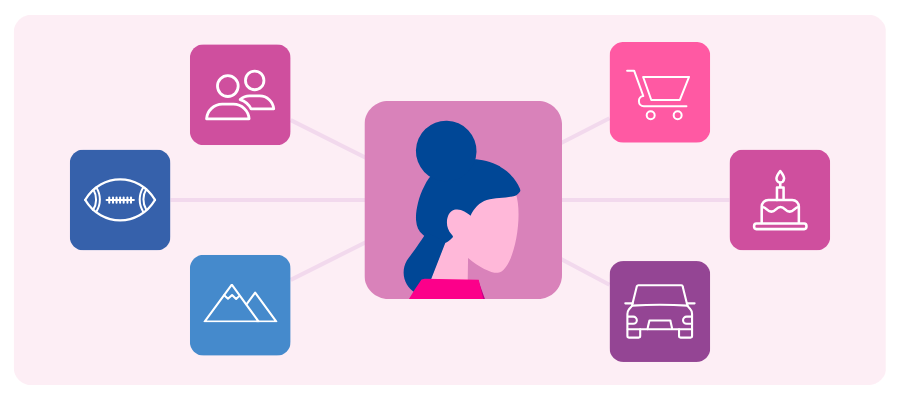
That breakdown led directly to today’s privacy laws, now active across more than 20 U.S. states and numerous countries worldwide. These regulations reflect a permanent consumer expectation: relevance delivered responsibly. Consumers aren’t rejecting personalization; they’re rejecting how it’s been done in the past. They still want relevant, tailored experiences, but they expect brands to deliver them through ethical, transparent data practices.
Does third-party data still matter in a privacy-first era?
Third-party data isn’t disappearing, if anything, it’s become more important. Brands will always need additional insight to deepen customer understanding; first-party data alone only reflects what’s already known.
The industry has entered a mature phase where data quality and compliance are table stakes. The companies leading today built their data infrastructure on rigorous standards, regulatory foresight, and transparent governance.
That same foundation powers the next wave of innovation, including the explosive growth of RMNs. RMNs rely on responsibly sourced third-party data to enrich shopper insights, validate audiences, and extend addressability beyond their own walls. Trusted data partners make that expansion possible, connecting retail environments with broader media ecosystems while maintaining privacy and accuracy.
High-quality, compliant third-party data remains essential because it:
Advancements in AI and machine learning are reshaping how this data is used across the ecosystem. What was once primarily a buy-side tactic is now expanding into the sell-side, where publishers and platforms are using data to curate, package, and activate audiences more intelligently. As AI enhances modeling accuracy and automation, third-party data will play an even greater role in connecting brands and consumers in more meaningful, privacy-conscious ways.
The bottom line: it’s not about having more data; it’s about having better, verified data you can trust.
How can you spot a trustworthy data partner?
The strongest third-party data partners demonstrate accountability through experience, infrastructure, and integrity.
Look for providers that:
Why the future of third-party data depends on accountability
The third-party data industry has already crossed the threshold from expansion to accountability. The companies leading this era have established their credibility through governance and proof. The future belongs to providers that:
- Build with regulatory foresight
- Maintain rigorous quality assurance
- Prioritize partnership over profit
The Wild West days are long gone. The third-party data ecosystem is now defined by stability, transparency, and shared responsibility.
Partner with Experian for data you can trust and results you can prove
When accuracy and accountability define success, you need a partner built on both. Work with the company that’s setting the standard for responsible data-driven marketing and helping brands connect with people in meaningful, measurable ways.
Get started
About the author

Jeremy Meade
VP, Marketing Data Product & Operations, Experian
Jeremy Meade is VP, Marketing Data Product & Operations at Experian Marketing Services. With over 15 years of experience in marketing data, Jeremy has consistently led data product, engineering, and analytics functions. He has also played a pivotal role in spearheading the implementation of policies and procedures to ensure compliance with state privacy regulations at two industry-leading companies.
Third-party data FAQs
Third-party data is information collected by organizations that don’t have a direct relationship with the consumer. It supplements first-party data by adding demographic, behavioral, and interest-based insights.
Privacy regulations are reshaping data practices because consumers expect control over how their information is used. That expectation led directly to today’s privacy laws, now active across more than 20 U.S. states and numerous countries worldwide. These regulations reflect a permanent consumer expectation: relevance delivered responsibly. Consumers aren’t rejecting personalization; they’re rejecting how it’s been done in the past. They still want relevant, tailored experiences, but they expect brands to deliver them through ethical, transparent data practices. Laws like the CCPA and state-level privacy acts enforce this expectation, holding brands and data providers accountable for the ethical use of data.
Yes, brands can still use third-party data safely when sourced responsibly. Partnering with established, compliant providers like Experian ensures both legal protection and data accuracy.
Experian adheres to a set of global data principles designed to ensure ethical practices and consumer protection across all our operations. At Experian, privacy and compliance have long been built in. Every partner and audience goes through Experian’s rigorous review process to meet federal, state, and local consumer privacy laws. Decades of experience have shaped processes that emphasize risk mitigation, transparency, and accountability. Experian’s relationships with demand-side platforms (DSPs), supply-side platforms (SSPs), and even social platforms like Meta, ensures we are aware of any platform-specific initiatives that may impact audience targeting. We’re also active participants in many trade groups to ensure that the industry puts ethical data practices in place to ensure consumers still receive personalized experiences but their data usage and collection is opt-in, transparent and handled with their privacy at the center of the transaction.
Marketers should look for transparency, longevity, and evidence of compliance when looking for a data partner. The best partners can clearly explain how their data is sourced, validated, and maintained. Read Experian’s guide on how you can swipe right on the perfect data partner here.
Latest posts
Retail media networks (RMNs) are on track to capture over $128 billion in ad spend by 2028, growing nearly 25% year over year. But behind this rapid expansion, RMNs face a challenge that could slow their momentum: they lack the complete picture of their customers. Retailers sit on a goldmine of first-party data—loyalty programs, online purchases, and in-store transactions—but their customer view is often fragmented, incomplete, or entirely anonymous. Without a strong identity foundation, RMNs struggle to: Scale advertiser reach beyond logged-in users Seamlessly match audiences across channels (CTV, programmatic, social) Deliver the precise targeting and measurement that advertisers demand The reality? Data is only valuable if it’s usable. And right now, too many RMNs are leaving value on the table. The identity challenge: If you can’t see it, you can’t monetize it Retailers have two types of customers: Known customers: Logged-in or self-identified users with purchase history and identifiable attributes. Unknown customers: Shoppers who browse, purchase in-store, or check out as guests—leaving behind only partial or anonymous data. Although many retailers have a loyalty program, it’s unlikely they are capturing a full view of all of their customers, especially outside of their four walls. When retailers don’t know their customers, they can’t effectively: Understand what messages will resonate with what audiences Extend their audiences beyond their owned platforms Provide advertisers with the reach and addressability they demand Accurately measure media performance and prove ROI But this challenge isn’t unsolvable—it’s an identity problem, and Experian is built to fix it. The missing link: Clean, enriched, and connected data Assuming your data is ready to activate is a costly mistake. Too often, RMN data is messy, siloed, and incomplete, making it difficult to deliver the precision and performance advertisers expect. Experian flips the script—helping RMNs transform fragmented signals into a complete, connected picture of their audience. Here’s how Experian helps RMNs go from fragmented to first-class Clean and optimize We organize messy customer data, removing duplicates and filling in gaps. Enrich and enhance Our insights add depth to profiles with demographics, behavior, and purchase intent signals. For example, an RMN may know a shopper recently bought a car seat—but not that they lease a luxury SUV. That auto data is critical to securing auto ad dollars, and it’s exactly the kind of insight Experian provides. Expand and connect Using digital identifiers like hashed emails (HEMs), mobile ad IDs (MAIDs), and connected TV (CTV) IDs, we help extend audience reach across every channel advertisers care about. The result? A complete and addressable audience picture that RMNs can activate confidently—on-site and off. We partnered with one of the largest RMNs in the world to overhaul its first-party shopper data ahead of industry changes. By anchoring its data to stable digital IDs, addressability skyrocketed by nearly 300%. That’s the Experian difference—turning guesswork into confidence. Retailers who master identity will win the RMN race In an increasingly competitive RMN landscape, identity isn’t optional—it’s everything. Advertisers demand scale, accuracy, and measurable impact. Only RMNs with a robust identity foundation will rise above the competition. RMNs that prioritize identity resolution and data enrichment will: Drive more revenue by increasing the size of their addressable audience Keep advertisers engaged with better targeting and measurement Capture RMN market share by offering scale and accuracy Don’t just compete—lead. Ready to transform? Experian will show you how Fixing data inside the RMN ecosystem is just the beginning. In part two, we’ll cover: Why RMNs should be activating their enriched first-party data across CTV, programmatic, and social. Why off-site expansion is the future of maximizing revenue. How Experian’s data and identity solutions power off-site activation. Experian isn’t just part of the RMN conversation. We’re driving it. Let’s talk. Connect with our team Latest posts

As privacy regulations, signal loss, and consumer expectations change, marketers face growing challenges in creating meaningful connections. In our latest Ask the Expert segment, Tom Wolfe, SVP at Viant, and Ali Mack, VP of AdTech Sales at Experian explore how first- and third-party data strategies, advancements in connected TV (CTV), and AI tools empower marketers to build smarter campaigns tailored to modern demands. Identity-driven advertising built on first-party data With the decline of traditional third-party signals and the rise of privacy-first advertising, first-party data is more important than ever. By collecting data directly from customers, marketers ensure they have accurate, user-consented data to fuel personalized advertising. Viant’s identity graph takes these first-party signals—such as email addresses, household locations, and phone numbers—and connects them with additional attributes in a privacy-safe way. This approach empowers marketers to build precise audience segments without relying on cookies, which Viant phased out over a decade ago. Combining first-party data and privacy-first solutions to build trust By combining first-party data strategies with privacy-first solutions, marketers can build long-term success while earning consumer trust. The Viant Household ID eliminates reliance on cookies while enabling secure, compliant campaign management. Additionally, Viant's partnerships with cleanrooms further protect their clients' data integrity and ensure smooth collaboration between trusted parties. Beyond safeguarding consumer information, the Viant ecosystem allows their clients to integrate data seamlessly from audience segmentation to campaign activation and reporting. How first and third-party data work together While first-party data is crucial for precise, personalized advertising, it isn’t always sufficient—especially for smaller or emerging brands that haven’t yet amassed audience data. Third-party data plays a pivotal role in these scenarios by supplementing first-party insights, offering a broader view of consumer behavior, leading to new growth opportunities. Viant collaborates with partners like Experian to help marketers seamlessly merge their customer information with additional consumer insights. Viant and their clients benefit from Experian's identity data to match various identifiers such as hashed emails, device IDs, or other platform-specific tags and map them back to a single consumer profile. With a unified view of the consumer, marketers can refine targeting, expand their reach, and maintain consistency across channels. By utilizing first- and third-party data solutions, marketers can build well-rounded, effective campaigns that resonate with diverse audiences. “Our clients have embraced the Viant Household ID because it powers a comprehensive, seamless flow from segment creation to targeting, activation, and measurement.” Tom Wolfe, SVP Business Development, Viant CTV as a core marketing channel CTV is emerging as the core platform for immersive and effective advertising by merging the visual storytelling power of traditional TV with the precision of digital tools. Viant helps marketers optimize CTV capabilities by building connections between premium publishers and data, allowing marketers to personalize experiences. Whether it’s tailored ads for families watching a live sports event or pinpointing niche interests, CTV enables marketers to reach diverse audiences with meaningful ads. Beyond awareness, Viant drives results for their clients and monitors that performance across each stage of the funnel. Marketers can use the key insights to optimize their media buys on CTV and achieve even higher ROI. Viant takes CTV performance a step further with its direct access programs. Stronger data matching via publisher partnerships improves accuracy, helping marketers connect with their ideal audience. Viant’s recent data shows that campaigns incorporating CTV achieve a conversion rate of 12.89%, outperforming campaigns lacking it by a wide margin. This dramatic improvement highlights the power of precise targeting combined with Viant’s advanced CTV tools. For marketers, this translates to impactful storytelling supported by tangible results. “CTV drives high-level brand awareness via sight, sound, motion, and emotion, but it also powers activity through the funnel.” Tom Wolfe, SVP Business Development, Viant AI is streamlining marketing from start to finish AI is transforming advertising by automating tasks like performance tracking and audience segmentation, allowing marketers to focus on strategy and creativity. At Viant, AI is part of the company’s DNA, helping marketers drive more efficient and effective campaigns. With real-time data insights and streamlined processes, teams can quickly refine messaging and optimize budgets. This efficiency not only saves time but also empowers marketers to channel their energy into creating impactful strategies that resonate with their audiences. The integration of AI into Viant’s ecosystem also simplifies overall workflows, optimizing campaign execution from start to finish. With performance tracking made easier and segmentation automated, marketers can rely on data accuracy and actionable insights to make confident decisions. How Experian and Viant work together Experian's syndicated audiences—demographic, auto, TV, FLA (Financial Fair Lending Act), and more—are available within Viant's platform. Experian's partnership with Viant enables the deployment of custom audiences specifically designed to meet distinct campaign objectives. Together, Experian and Viant provide solutions that support first-party data strategies, third-party data integration, CTV optimization, AI-driven insights, and identity resolution, creating a cohesive and privacy-forward marketing ecosystem. “At Viant, we focus on the sensible, scalable, impactful opportunities.” Tom Wolfe, SVP Business Development, Viant Watch the full Q&A Visit our Ask the Expert content hub to watch the full conversation with Tom and Ali and learn more about Viant’s scalable identity solutions. Contact us About our expert Tom Wolfe, SVP Business Development, Viant As SVP of Business Development at Viant, Tom and his team forge strategic business partnerships that fuel the company's growth and business strategy. He is a seasoned industry veteran with more than 25 years of expertise in content distribution, advertising, and technology, particularly in CTV. Throughout his career, Tom has played a pivotal role in establishing and managing multiple businesses at major companies such as Roku, TiVo, YuMe, and Comcast. Additionally, he has provided valuable advisory services to organizations including VIZIO, Vice Media, and many others across the ecosystem. Tom holds a B.A. in Political Science from Lehigh University and has shared his knowledge as a guest lecturer at both New York University and Drexel University. Latest posts

At this year’s Shoptalk, one thing was crystal clear: Retailers are no longer just competing on price or product—they’re competing on experience. And in that race, customer expectations are not just the starting line—they’re the finish line, too. Over three days of discussions, demos, and side conversations, Shoptalk 2025 delivered a fresh look at how brands and advertisers are adapting to an increasingly blended retail environment. The show spotlighted not just what's new in retail media and AdTech—but how the industry is rethinking the entire shopper journey. What we heard again and again on the ground was this: there is no one-size-fits-all playbook anymore. Every retailer is navigating their own unique mix of identity, data, tech, and consumer needs. The winners will be those who stay nimble while staying connected to what customers actually want. Experience is everything Across sessions and show floor chats, the core message was this: customers expect more—and retailers must rise to meet that moment. Whether it’s a personalized in-store interaction or a seamless connected TV (CTV) ad experience, people want value, inspiration, and storytelling wherever they shop. That means digital and physical channels must work together effortlessly. Retailers aren’t just “digitizing” the in-store experience anymore—they’re rethinking how to make the entire shopping journey feel easy, consistent, and enjoyable. This shift isn’t just about touchpoints. It’s about changing the way retailers think about the customer experience. Loyalty isn’t a program, it’s every interaction Loyalty emerged as a major theme—one that goes well beyond points and perks. Speakers from Wayfair, DSW, and Lowe’s emphasized that every customer interaction, not just formal programs, should be viewed as an opportunity to build emotional loyalty. Sarah Crockett, CMO of DSW, shared that emotional tactics resonate more deeply than transactional rewards—echoing a broader shift toward customer-centric, experience-driven engagement. “Loyalty today isn’t just about perks. It’s about trust, connection, and knowing your customer on a deeper level. Every interaction is a chance to build that relationship.”Sam Zahedi, Sr. Enterprise Partnerships Manager Retail media gets real Retail media networks (RMNs) took center stage, but the tone is changing. With so many players flooding the space, retailers and advertisers alike are asking tougher questions: How do you stand out? How do you prove value? And perhaps most critically—how do you build trust? Standardization came up in several sessions, but as Harvey Ma from Sam’s Club MAP pointed out, standardization alone won’t fix what's been lost: foundational trust and transparency. Advertisers want more than impressions—they want insights, outcomes, and measurement they can count on. “There’s no one playbook—nor should there be. Every retailer, every RMN, and every customer is different. Success comes from building strategies as unique as the audiences they serve.”Anne Passon, Sr. Director, Sales, Retail Many brands came to our team asking how Experian can help extend their audiences into new environments like social and CTV. Here’s how we do it: We work with our RMN partners to take their organized, clean, complete, and highly usable customer records and expand them to include other digital identifiers. By adding digital IDs such as hashed emails (HEMs), mobile ad IDs (MAIDs), CTV IDs, and Universal IDs like Unified I.D. 2.0 (UID2) or ID5, we ensure that the retailer's entire customer base can be reached. On their own, RMNs only know the digital identity of a portion of their customer base. With Experian's help, they can add digital IDs to their entire customer base. As a result, marketers can reach all of an RMN's customers, including those whose identities were previously unknown. They can reach these customers both onsite and offsite, thanks to the array of addressable IDs we provide. This increase in addressability leads to higher revenue for the RMN. Moving at the speed of people One of the most thought-provoking moments came from Nikki Laughlin from McClatchy Media during a Brand Innovators session. She asked a simple but powerful question: How can we move at the speed of people if we’re always looking backward at data? It’s a challenge we’re hearing more often—marketers want to be proactive, not just reactive. That requires faster insights, cleaner connections between signals, and a shift from static audiences to living, evolving ones. Experian's identity and data solutions aren’t just about better targeting—they’re about helping brands activate smarter, faster, and with more confidence across the full media ecosystem. A marketplace of possibilities The best part of Shoptalk? The spontaneous moments. The side conversations where ideas turned into opportunities. We had several discussions that signaled new partnerships on the horizon—some with current clients, others brand new. What united them was a desire to co-create: to build something more tailored, more agile, more customer-first. Of course, there were also shared challenges. Retailers are navigating how to stay customer-centric while grappling with complex, sometimes controversial tech—from AI to influencers to evolving data privacy norms. But if there was one consistent thread, it was this: retailers are hungry for clarity and collaboration. Forget the playbook, follow the customer Shoptalk 2025 reminded us that while tech and trends come and go, the most successful retail strategies still start with one thing: knowing your customer. That’s what fuels smarter activation, stronger measurement, and more meaningful experiences—whether online, in-store, or across emerging media channels. If you're rethinking your retail strategy or want to explore how Experian can support your goals across identity, retail media, or CTV, let’s talk. Let's connect and explore what's possible Latest posts