After another week under the sun at Cannes Lions 2025, one thing is abundantly clear: our industry is done talking about possibilities — it’s ready to act. From speaking engagements to packed suite meetings, and even stateside through our “Can’t Cannes” activations, the appetite for change was real — and we were right at the center of it.

A front-row seat to innovation
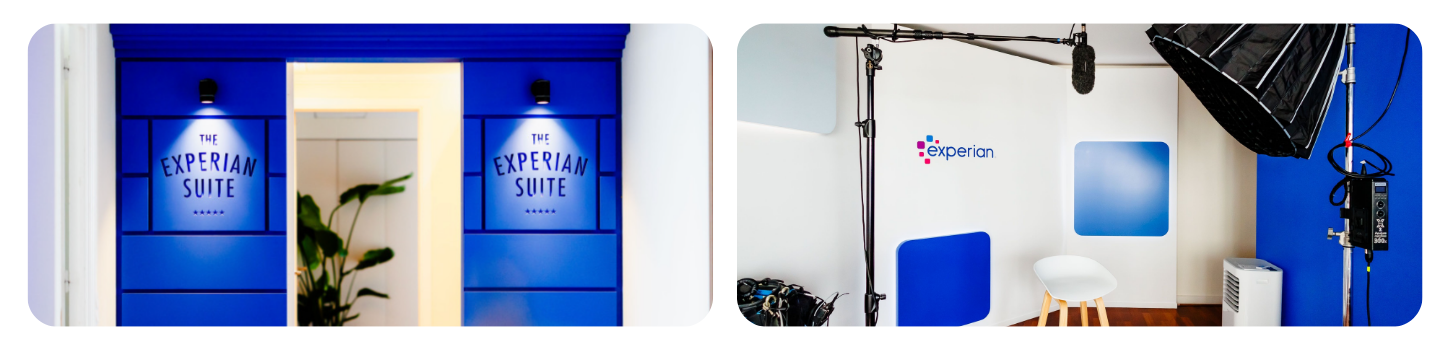
Experian made a powerful impact across the Croisette, partnering with Audiostack, Basis, Infillion, IQVIA, Magnite, NextRoll, Odeeo, OpenX, The Female Quotient, and the Unplugged Collective x The Digital Marketer, to contribute to some of the week’s most insightful conversations. Our thought leaders were everywhere—on stage, in studio interviews, at executive roundtables—offering a clear voice on retail media growth, pharma advertising disruption, AI innovation, and identity-driven personalization.
Three themes that defined the week
1. AI gets real
If 2024 was the year of AI buzz, then 2025 is the year AI found its footing. Conversations shifted from “what if” to “what now.”
While the promise of AI was front and center, conversations with clients and partners highlighted that we’re still in the foundational phase. Real-world applications—from creative optimization to predictive segmentation—are gaining traction, but long-term value will depend on robust data architecture and trustworthy identity frameworks.
MiQ and PMG debuted AI-integrated platforms that demonstrated how AI can automate creative, optimize budget allocation, and personalize media in real time. AI has moved from sidekick to strategist.
“Last year it was all about AI, but in a very general sense. This year, it’s about specific applications — a clear sign AI is evolving from a talking point into product.”
Budi Tanzi, VP, Product
2. Outcomes > impressions
Outcomes may have been a buzzword at Cannes, but as several industry leaders pointed out, simply saying “we drive outcomes” isn’t enough—it risks sounding like table stakes. In today’s performance-driven environment, what matters is how companies define and deliver those outcomes in unique ways. The most compelling conversations weren’t about generic promises, but about clear strategies: challenging assumptions, leaning into strengths, and making specific choices that tie data, media, and technology to measurable impact.
“By using consistent identity across planning, activation, and measurement, marketers can connect ad exposure to real-world outcomes—whether that’s an online conversion, an in-store visit, or a new customer relationship.”
Chris Feo, Chief Business Officer
3. Curation isn’t just a tactic
Curation is quickly becoming the industry’s preferred approach to cutting through complexity. As marketers contend with signal loss and inconsistent inventory quality, the shift from broad access to intentional activation is gaining momentum. At Experian, we see curation not just as packaging, but as strategic alignment—where identity, data, and inventory come together in purpose-built environments that reduce waste, enhance safety, and drive performance.
“Supply-side data activation and optimization, aka “curation,” is an alternative to the traditional approach to data activation. Unlike the traditional DMP-to-DSP activation flow, curation allows buyers to leverage supply-path data more directly. The upshot? Improved performance and pricing for media agencies and brand advertisers.”
Drew Stein, Managing Director, Audigent
Bringing the Cannes experience stateside
Not everyone can make it to the South of France—so we brought Cannes to them. Our “Can’t Cannes” events in the U.S. offered local clients a first-class experience filled with insights and networking, minus the jet lag.

Final takeaways
This year’s festival made one thing clear: real progress requires more than innovation; it requires integration. And that’s where Experian is focused—connecting identity to activation, and data to outcomes, in ways that are practical, scalable, and privacy-resilient.
If I had to sum it up?
- AI is progressing from abstract to application
- Curation beats clutter
- Partnership is power
- And everyone’s aligned around performance
We’re grateful to have been part of these conversations and even more excited about where they’ll lead next.
Let’s continue the conversation
If you’re exploring how to connect identity to performance, or simplify the way you activate, measure, and grow, we’d love to talk.
Latest posts

Experian kicks off the AdTech year at CES What better way to jump-start start 2023 than a trip to Las Vegas for the Consumer Electronics Show (CES). Our team was thrilled to participate in this annual kick-off with the AdTech community. The uniqueness of what CES has become for our industry can be defined as the intersection between technology brands, digital, television, and AdTech. CES creates the space necessary for marketing and advertising leaders to collaborate to drive rewarding outcomes for the year ahead. Our goal in attending CES was to connect with our partners, clients, and industry leaders to build relationships, form strategic plans, and listen. The opportunity to learn about our industry’s challenges and goals enables us to develop initiatives, drive success, and support our clients and partners. Keep reading for our 2023 CES AdTech recap. “I have been to CES too many times to mention the number; this year was as energetic, collaborative, engaged, and effective as I can ever recall. Our presence was first-class and meticulously organized, which made our interactions as robust as possible. It's a team effort, and we appreciate all the work that goes into this event. “ – Greg Koerner, Vice President of Digital Advertising Sales Our CES AdTech recap Supporting publishers and advertisers is top of mind for us. Many of our conversations focused on the technologies we deliver or collaborate with our partners to provide. Clean rooms and activation were two common themes throughout our discussions. Clean rooms Consumer privacy, regulatory requirements, and data deprecation are driving the AdTech industry to talk about and explore clean rooms. There’s a need to address data collection, storage, analysis, and sharing. Clean rooms are a potential solution that can standardize data and address interoperability issues. Activation In 2023, we predict that digital activation will increase. We continue to see increased demand for environments where alternative identifiers are being transacted (like demand side platforms and video). Social platforms will continue to experience volatility and advertisers will shift their focus to demand-side, video, and supply-side platforms. Download our 2023 Digital audience trends and predictions report to learn where you should activate your audiences in 2023. We can help plan your 2023 digital activation strategy. How we support clean rooms and activation Our Consumer Sync and Consumer View products support these areas and can help you understand people better–so you and your customers can connect with confidence. What is Consumer Sync? Consumer Sync, our consumer identity product, enables signal agnostic collaboration across marketers and technologies, bringing together digital devices, IDs, households, and attributes. Consumer Sync’s Resolution and Collaboration solutions can help you gain a better understanding of your consumers and make identities actionable in any environment. What is Consumer View? Consumer View, our data discovery product, offers marketers a robust, privacy-first understanding of their customers and prospects. Grounded in consumer identity, Consumer View provides the data foundation to engage consumers where, when, and how they want. Consumer View’s Audience and Attribution solutions provide expansive coverage so that you can fill in the gaps to better understand your prospects. Additionally, our collaborative efforts with strong partnerships across the clean room ecosystem and with our activation partners help our clients serve the best ads, at the best times, to the right audience. “CES is back and was a great way to kick off the new year! We were able to meet with a high volume of clients to eagerly talk about building new solutions for the TV space. We are excited to see where these conversations lead in the next few months.” – Ali Mack, Senior Director of TV Advertising Sales Let’s navigate what’s new in our industry, together We can help you connect with your consumers in innovative, impactful ways. Contact us to continue the conversation and learn more about our Consumer Sync and Consumer View products. We can help you take advantage of the opportunities on the horizon. Get in touch

2022 was a year of adjustment. Consumers adjusted to a post-pandemic world and returned to pre-pandemic shopping behaviors. Consumers adjusted their budgets as the price of goods skyrocketed, as a result of high inflation. To combat inflation, the U.S. Federal Reserve adjusted interest rates. This further restricted consumer buying power. The AdTech ecosystem also experienced adjustments. Google adjusted the date of cookie deprecation. Federal legislation forced technology companies to adjust their consumer privacy practices. Marketers and advertisers adjusted how they address interoperability issues by investing in clean room solutions. This year of adjustment makes it harder to predict where consumers will spend and how marketers should plan their digital audience strategies. What will 2023 bring to AdTech? Download our 2023 AdTech trends and predictions report to access our forecast to help you plan for 2023. Our report will answer: How has digital activation changed over the last four years? What are the top advertising platforms? Which digital audiences are advertisers buying? Do digital audience strategies vary by vertical? Our AdTech trends forecast In 2023, digital activation will increase. Digital audience activation continues to grow at a significant rate despite market shocks like the pandemic, inflation, and higher interest rates. Given the current economic uncertainty, we predict that marketers will look toward tried and true channels where they are confident they will have quality audiences, inventory, and be able to drive ROI. What will digital activation look like in 2023? Between 2018-2021, digital audience activation increased annually by 46%. Using projected 2022 results, between 2018-2022, it will increase annually by 34%. We anticipate continued growth in 2023. Top advertising platforms in 2023 2023 will see increased digital activation, but which platforms will advertisers use to serve their ads? Advertisers will shift their focus to demand-side, video, and supply-side platforms. Social media platforms will continue to experience volatility. Advertisers will place bigger bets on the combination of addressable and CTV. Our report will also reveal which platforms are creating a path toward a post-cookie future and where data-sharing relationships will become the strongest. The most popular advertiser audiences trending now in AdTech Which digital audiences are advertisers buying? Demographics Modeled Lifestyles Behavioral Custom Audiences Traditional targeting methods like Demographics and Modeled Lifestyles are the baseline of many marketing strategies. We predict that we will continue to see marketers activate against these data sets. Digital audience strategies by vertical Digital audience strategies vary by vertical. Download our report to uncover the digital audiences purchased by advertisers in the following industries: Financial Services Health Retail & CPG Technology & Communication Download our new 2025 Digital trends and predictions report Marketers, agencies, and platforms are facing new challenges as privacy regulations evolve, AI technology advances, and consumer behaviors shift. Our latest report highlights actionable strategies for navigating these changes and improving how you connect with audiences, measure impact, and deliver results. What you’ll learn Navigating signal loss: Explore the rise of alternative IDs and contextual targeting as privacy regulations and signal loss reshape data-driven advertising. Connected TV (CTV): Understand the growth of connected TV (CTV), the importance of frequency capping, and strategies for effective audience activation. Omnichannel campaigns: Learn how marketers are moving from channel-specific strategies to audience-led omnichannel campaigns that tell a more cohesive story. Retail media networks: Learn how retail media networks (RMNs) are capitalizing on enriched first-party data to learn more about their customers and reach them across on-site and off-site inventory. Curation: Examine how curation is transforming programmatic campaigns by combining audience, contextual, and supply chain signals to deliver premium inventory packages that maximize addressability, efficiency, and performance. Download now Get in touch

Viewers shift between streaming services, live TV, and on-demand content across multiple devices, making it harder to know exactly who sees your message. Instead of wondering if your ads are reaching the right viewers, it's important to have a clearer understanding of viewing behaviors so you can focus your efforts on the audiences that matter most to your campaign. Experian has collaborated with The Advertising Research Foundation (ARF) to create new opportunities for marketers. By combining data from the ARF’s DASH (Device and Account Sharing) study with Experian Marketing Data, we’ve developed a new way for you to understand and reach modern TV viewers. Instead of estimating who might see your message, you gain a clearer view of viewing behavior and can align activation with the audiences that matter to your campaign. What is the DASH study? The DASH study, developed by the ARF together with the National Opinion Research Center (NORC) and seven industry sponsors, including Experian, provides a detailed picture of how American households consume TV and digital media. This research offers an unbiased and accurate view of media habits, measuring everything from device usage to streaming account sharing. When this viewership data is combined with Experian Marketing Data, it allows for the creation of unique audience segments. These segments are built on real-world media and device usage, providing a more accurate representation of how people watch, share, and engage with TV content. This combination of identity and connectivity helps marketers understand exactly how people engage with media, technology, and their favorite brands. “Television viewing behavior has undergone a massive transformation, making it challenging for advertisers to reach their target audience and optimize frequency. These audiences give advertisers invaluable tools for managing their campaigns in an increasingly fragmented environment.”Doug McLennan, Director of Product Management How do DASH audiences help? By using the DASH study, Experian developed TV audience segments that reflect how people truly interact with content. These audiences provide the insights you need to align your campaigns with actual media consumption habits, helping you reach viewers with more relevant messages. This approach moves beyond basic demographics. It allows you to connect with people based on specific behaviors, such as co-viewing, screen preferences, or household streaming habits. The result is a more focused and efficient advertising strategy that delivers better outcomes. “DASH has established itself as a reliable and unbiased calibration set, a “true North”, for media measurement. Our collaboration with Experian puts the power and precision of DASH in the hands of marketers and advertisers as well.” Paul Donato, Chief Research Officer Which audience segments help you target viewers more effectively? These audience segments make it possible to find specific types of viewers and align your marketing campaigns with their media usage. Whether you’re connecting with people who are receptive to ads, households that enjoy shows together, or individuals who are frequent streamers, you can approach campaigns with greater accuracy and confidence. We’re pleased to introduce these segments and continue our partnership with the ARF, creating new opportunities to help you build effective connections with your target audiences. Explore some of our key audience segments: Ad Acceptors: Viewers who are more open to watching advertisements. Ad Avoiders: People who actively try to skip or block ads. Co-Watchers: Households where multiple people view content together. Solo Watchers: Individuals who typically watch TV by themselves. Paid TV High Spenders: Households that subscribe to multiple paid TV or streaming services. Large Screen Viewers: People who primarily watch content on large television screens. Small Screen Viewers: Individuals who prefer watching on smaller devices like tablets or phones. How can I use these audiences? Experian’s DASH audiences are available in your demand-side platform (DSP) of choice, ready for activation across all offline and online channels. This easy access means you can build more effective campaigns without changing your existing workflow. Using these segments, you can manage your advertising with greater confidence. You gain the tools needed to navigate the fragmented media environment and ensure your campaigns are seen by the right people. This targeted approach helps you maximize the impact of your marketing efforts and achieve your goals. Strengthen your TV planning and activation with DASH audiences. Are you ready to connect with your audience in a more meaningful way? FAQs What is the DASH study? The DASH study, developed by ARF, provides an unbiased view of how American households consume TV and digital media. It measures device usage, streaming habits, and account sharing to create a detailed picture of media consumption. How does Experian help advertisers understand media habits? Experian combines its Marketing Data with insights from studies like DASH to create audience segments based on real-world behaviors. This allows advertisers to align their campaigns with how people actually consume content. What types of audiences can I target with these segments? Audience segments include Ad Acceptors, Co-Watchers, Solo Watchers, Paid TV High Spenders, and Large or Small Screen Viewers, enabling precise targeting based on viewing habits. Why is understanding viewing behavior important for advertisers? By focusing on actual media consumption habits, advertisers can deliver more relevant messages, reduce wasted impressions, and improve the overall effectiveness of their campaigns. Latest posts