Originally appeared in The Current
Forget the cookie delay — AI is already rewriting the rules of advertising.
While the industry was busy debating yet another postponement of Chrome’s third-party cookie phaseout, AI quietly became the most disruptive force in marketing. But here’s the twist: AI doesn’t work without identity. If marketers want results — real outcomes, not just impressions — they need to prioritize the data that makes AI go.
First-party data strategies are now mainstream. Interoperable identity solutions like Unified I.D. 2.0 (UID2) and ID5 are gaining adoption across the open web. Connected TV (CTV) has grown into a performance-focused, cookieless channel. Contextual and geo-based targeting have become smarter and more scalable. Identity graphs are helping marketers stitch together signals across devices, platforms, and channels.
The foundation for a better ecosystem isn’t being built — it’s already here.
The AI hype is over — and the stakes are higher
It’s no longer buzz. AI is here, and it’s already reshaping how we plan, activate, and measure advertising.
We’re seeing the rise of agentic AI: systems that don’t just surface insights but act on them. These AI agents are identifying patterns, building audiences, optimizing media buys, and analyzing performance. AI is helping marketers stop guessing and start improving.
But there’s a catch — one we can’t afford to overlook.

AI is only as good as the data it works with. “Garbage in, garbage out.” as the saying goes. And in advertising, that means if you don’t know who you’re reaching, even the smartest AI won’t drive results. To unlock AI’s full potential, marketers need a strong, privacy-safe identity foundation.
Identity is the fuel that makes AI work
AI can personalize creative, optimize in-flight campaigns, and even recommend which channels to prioritize — but it can’t do any of that well without context. And context starts with identity.
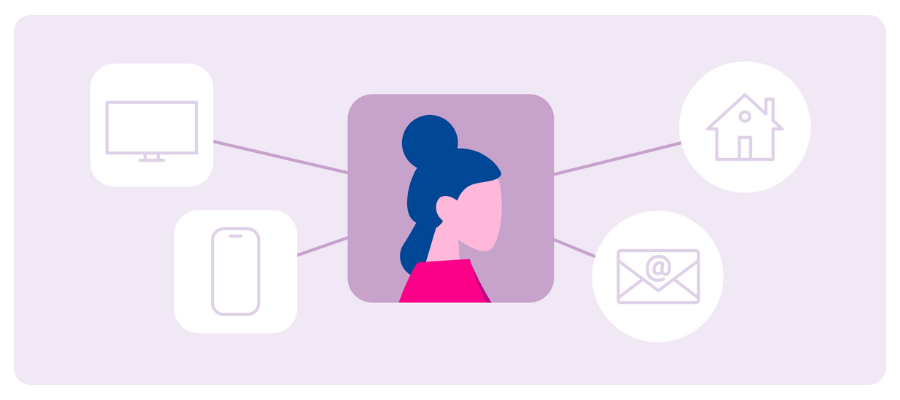
Identity connects signals from different devices, logins, channels, and interactions to real people. It tells your AI models who you’re talking to — not just what they clicked. That kind of clarity gives AI the power to make smarter predictions, uncover insights, and deliver relevance at scale. Without identity, AI is guessing. With identity, it’s delivering.
Identity is the foundation of the outcomes era
We’re living in a performance-driven age. Impressions and clicks are no longer enough. Marketers today are being judged by real outcomes: incremental sales, customer acquisition, revenue lift, and long-term value.
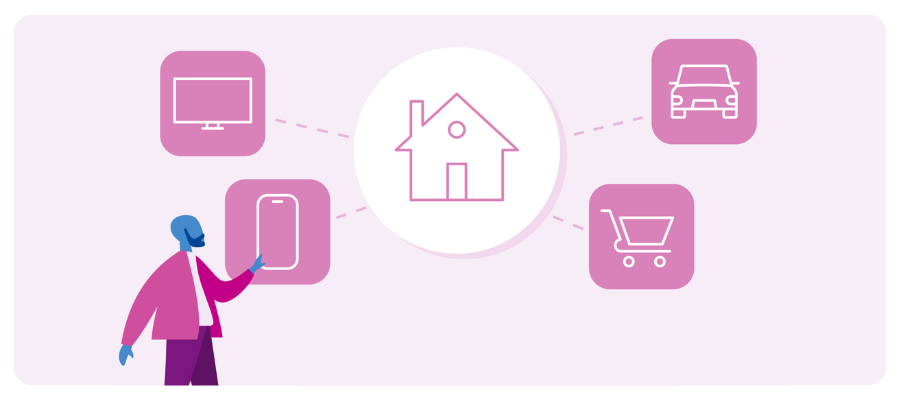
To measure those outcomes, you need to know who you reached — and whether they took action. Identity makes that connection possible. It links ad exposure to real-world results. It enables accurate attribution across channels. It powers personalization at every stage of the journey, making every impression more valuable.
This is the outcomes era, and identity is what makes it measurable.
Commerce media and CTV show what’s possible
Two of the fastest-growing channels — commerce media and CTV — are great examples of identity in action.
At Experian, we’ve invested in this future. Our recent acquisition of Audigent brings together data, identity, and activation — under one roof — built to support both AI-driven planning and outcome-based performance.
How marketers can win now
To stay ahead in a world defined by AI and outcomes, marketers need to:
It’s not about rebuilding everything. It’s about building on what’s already working.
Final thought: Identity is the bridge
AI is raising the bar, and outcomes are the new standard. But neither works without identity. The marketers who win won’t treat identity as a compliance checkbox — they’ll treat it as their competitive edge.
Get started with us today
Latest posts

NEW YORK, Oct. 24, 2019 /PRNewswire/ – Tapad, part of Experian and a global leader in digital identity resolution, today announced a new partnership with Retargetly, a leading independent full stack data company. The partnership combines Tapad's cross-device identity resolution technology with Retargetly's robust data toolset, allowing brands and agencies using Retargetly's platform to seamlessly access an expanded audience across devices, without compromising precision. In addition to reach expansion, Tapad's global, privacy-safe digital cross-device solution, The Tapad Graph, enables Retargetly's brand and agency clients a more holistic digital customer journey analysis, and efficient campaign capabilities like frequency capping and online attribution. At the same time, Tapad will be able to extend its presence into the LATAM region, tapping into Retargetly's existing regional footprint. "Combining The Tapad Graph's technology with Retargetly's platform will enable customers to make holistic, data-driven decisions that increase the ROI of their campaigns," said Chris Feo, SVP of Global Data Licensing and Strategic Partnerships at Tapad. "We can now offer advertisers the value of both technologies to optimize their marketing initiatives across the globe by creating seamless experiences across multiple devices and channels." Understanding a consumer's cross-device journey is a marketing necessity. A recent study showed that 75% of consumers expect a consistent experience from brands1. With the number of devices per individual rapidly increasing, digital identity resolution becomes essential to create that streamlined experience consumers crave. "Similarly to Tapad, our goal is to offer marketers a suite of products that can increase the ROI of their campaigns," said Juan Amuchastegui, Head of Product at Retargetly. "In order to achieve this, marketers need digital cross-device identity resolution to gain attribution, acquisition and reach expansion capabilities. We chose Tapad as our partner because The Tapad Graph has differentiated global scale, and privacy-safe measures, which we knew would benefit our clients' campaigns." Santi Darmandrail, Managing Director at Retargetly added, "Across the Americas our clients choose to work with us because of our scale, our precision, and our unique approach to what data can do to transform business outcomes. In that scenario, partnering with Tapad and integrating The Tapad Graph onto our platform was really a no-brainer and we are beyond excited to be making that available for our more than 700 clients across the region." To learn more about Tapad and our digital identity resolution products, visit our identity solutions page. About Tapad Tapad, Inc. is a global leader in digital identity resolution. The Tapad Graph, and its related solutions, provide a transparent, privacy-safe approach connecting brands to consumers through their devices globally. Tapad is recognized across the industry for its product innovation, workplace culture and talent, and has earned numerous awards including One World Identity's 2019 Top 100 Influencers in Identity Award. Headquartered in New York, Tapad also has offices in Chicago, Denver, London, Oslo, Singapore and Tokyo. About Retargetly: Retargetly is the leading independent data solution from Latam. Their proprietary platform processes over 25 billion data events a month and transforms them into actionable analytics that drive business results across the board. The recently launched Retargetly Audience Platform (RAM) is the number one data exchange in Latin America, with over 1000 active buyers and millions of dollars traded every year. Regargetly provides services across Latam and has offices in Buenos Aires, Mexico City, São Paulo and New York. For more information, visit www.retargetly.com. Contact us today
NEW YORK, Oct. 16, 2019 /PRNewswire/ – Tapad, part of Experian and a global leader in digital identity resolution, and The Trade Desk, a global advertising technology leader, partnered to integrate The Trade Desk's unified ID solution in April 2019. The Trade Desk's unified ID solution's objective is to serve as a standardized cookie ID to help marketers reach more of their audience on the open internet. After an initial six month period, Tapad reports significant adoption rates and enhanced customer results since their joint integration in April. As a result of the partnership, client brands, agencies, DMPs/ DSPs, Data Providers, Mobile Networks and Measurement/Analytics Providers, saw increased match rates up to 38% and more global coverage without compromising precision. With this combined offering, Tapad's global, privacy-safe digital cross-device solution, The Tapad Graph, connects brands with consumers over 4 billion devices globally. "There is a need for digital identity solutions outside the walled gardens that can accommodate the need for both precision and scale," said Chris Feo, SVP of Strategy and Global Partnerships at Tapad. "Through our partnership with The Trade Desk, we are empowering companies to have a comparable digital identity resolution across the open web as compared to the walled garden environments." Over 25 companies who license The Tapad Graph, such as Annalect, Semasio, Retargetly, and ThinkCX, have also included The Trade Desk's unified ID solution as a key identifier in their graph output. "The vast improvement in scale that Tapad has seen illustrates the value digital identity resolution products can bring for brands," said Nate Gawel, General Manager of Data Partnerships at The Trade Desk. "We're looking forward to continuing work with Tapad to prove that the open internet can deliver the very same benefits many reserve for large platforms." Adoption of the unified ID solution allows all parties across the supply chain (SSPs, DSPs, DMPs and data providers) to utilize The Trade Desk's cookie footprint to increase their own cookie coverage across the global independent internet. For more information, please visit The Trade Desk's unified ID solution site, or https://www.experian.com/marketing/consumer-sync to learn more about Tapad's digital identity resolution products. About Tapad:Tapad, Inc. is a global leader in digital identity resolution. The Tapad Graph, and its related solutions, provide a transparent, privacy-safe approach connecting brands to consumers through their devices globally. Our one-of-a-kind Graph Select offering enables marketers the flexibility and freedom of choice to correlate devices to varied objectives, driving campaign effectiveness and business results. Tapad is recognized across the industry for its product innovation, workplace culture and talent, and has earned numerous awards including One World Identity's 2019 Top 100 Influencers in Identity Award. Headquartered in New York, Tapad also has offices in Chicago, London, Oslo, Singapore and Tokyo. About The Trade Desk:The Trade Desk™ is a technology company that empowers buyers of advertising. Through its self-service, cloud-based platform, ad buyers can create, manage, and optimize digital advertising campaigns across ad formats and devices. Integrations with major data, inventory, and publisher partners ensure maximum reach and decisioning capabilities, and enterprise APIs enable custom development on top of the platform. Headquartered in Ventura, CA, The Trade Desk has offices across North America, Europe, and Asia Pacific. To learn more, visit thetradedesk.com or follow us on Facebook, Twitter, LinkedIn and YouTube. Contact us today

Gen Z is ready to be noticed and become a force to be reckoned with in the market. In the auto market alone, Gen Z made up 3.8 percent of all new vehicle registrations in the first quarter of 2019.