Loading...

How to build a stronger identity framework in a multi-signal world

Published: January 9, 2026 by Henry Schenker, Group Product Manager

At A Glance

The challenge facing marketers today is not the decline of a single identifier, but the fragmentation of signals across browsers, devices, apps and platforms. A resilient identity framework unifies these signals into a consistent, privacy-safe view of the consumer, allowing marketers to reach, measure and optimize across environments that expose different identifiers.

Why an identity framework matters more than any single identifier

The challenge facing marketers today isn’t a single identifier on a deprecation timeline; it’s the increasing fragmentation of signals and identifiers across browsers, devices, apps, and platforms. This shift introduces complexity into how audiences are reached and measured, as signals behave differently in every environment, and it becomes more complex to piece together a complete view of the consumer.
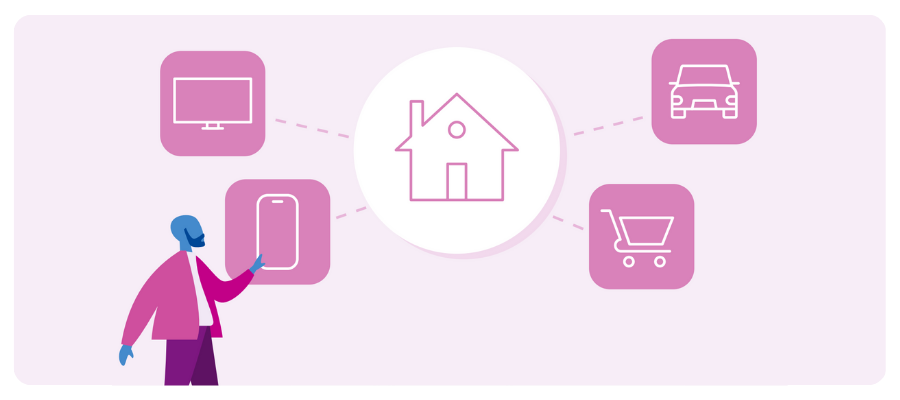
An icon of a house in the center with icons around it that represent a TV, mobile phone, shopping cart, and car with a man on the bottom left-hand side.

Each environment contributes to its own set of visibility gaps, making identity less predictable and more uneven. The result is a patchwork of inconsistent identity signals rather than a single, predictable decline.

While you can’t control how platforms evolve, you can control how you respond to fragmentation. The future won’t be defined by the loss of any single identifier, but by your ability to unify, interpret, and activate the many signals that remain. Marketers who adopt a flexible, identity framework will be best positioned to create consistency in an otherwise fragmented landscape.

At Experian, we believe flexibility starts with intelligence. For decades, we’ve used AI and machine learning to help marketers understand people’s behavior more clearly, respect their privacy, and deliver messages that drive business outcomes. Our technology brings identity, insight, and intelligence together, so even as the number of signals grows and becomes more varied across environments, marketers can reach the right people with relevance, respect, and simplicity. This intelligence acts as the connective tissue across fragmented ecosystems, ensuring marketers can recognize and reach audiences consistently wherever they appear.

What forces are driving fragmentation in identity and signals?

Changes to traditional IDs

Since Apple introduced App Tracking Transparency (ATT), access to the Identifier for Advertisers (IDFA) has become inconsistent across apps and devices. Google’s evolving Android privacy roadmap adds another layer of variability, fragmenting mobile addressability. Safari and Firefox have long restricted third-party cookies, while Chrome continues to support them for now. This creates different signal availability across browsers, contributing to an uneven and increasingly fragmented identity landscape on the open web.

Shifts in signals

IPv4 to IPv6 migration introduces mismatched identity structures that complicate continuity across environments.

Platform-driven fragmentation

Closed ecosystems and uneven adoption of evolving RTB standards (like OpenRTB 2.6 updates designed to support new identifiers and consent signals) create differences in which identifiers and consent signals are shared in the bidstream. At the same time, the rise of alternative or “universal” IDs—often developed by individual platforms, publishers, or technology companies—means that multiple ID types can appear within the same auction, each with its own structure, rules, and level of support. These differences reduce interoperability across platforms and contribute to a more fragmented activation landscape.

Each change creates an identity silo. Together, they form an ecosystem defined by fragmentation rather than absence. Without an identity framework, these environments operate as disconnected identity islands.

A multi-ID world requires a unified identity framework

Alternative IDs play an important role, but they also expand the number of signals marketers must reconcile. Without a consistent identity layer, more IDs often mean more complexity—not more clarity. Common alternative IDs in use today:

  • UID2: The Trade Desk’s Unified I.D. 2.0, an iteration of their original Unified ID 1.0, which was still reliant on third-party cookies, creates persistent IDs with user-provided email addresses and phone numbers.
  • ID5: This independent identity provider builds an identity infrastructure that powers addressable advertising across channels. It can create an ID based on both deterministic and probabilistic data.
  • Hadron ID: Hadron ID is a unique, interoperable identity system (including first-party, audience-based, contextual, deterministic, and probabilistic) developed by Audigent, now part of Experian, to drive revenue for publishers by making their audience data and inventory actionable for media buyers.

Industry reports suggest roughly one-third to two-fifths of open-auction traffic carries alternative IDs, sometimes multiple per request. Among Experian clients, adoption of alternative IDs rose 50% year over year, with a 30% increase in IDs resolved to individuals via our Digital Graph.

Identity isn’t disappearing; it’s multiplying. A modern identity framework resolves these identifiers into a single, privacy-safe consumer view.

Why CTV makes an identity framework essential

Beyond alternative IDs, device-level identifiers also play a major role in today’s ecosystem and add to the fragmentation marketers must navigate. Connected TV (CTV) environments introduce additional fragmentation.

CTV IDs

A CTV ID is an identifier used to deliver, target, and measure ads on CTV devices, including smart TVs, streaming devices, gaming consoles, and more. Unlike MAIDs, which act as universal device identifiers across apps, CTV environments often generate multiple, platform-specific IDs for the same physical device. Different operating systems, publishers, or streaming platforms may each assign their own identifier—such as Roku ID for Advertisers, Amazon Fire Advertising ID, Samsung TIFA, or Apple IDFA for CTV. As a result, a single household or TV can appear under several distinct IDs, making cross-app or cross-platform recognition more complex and further reinforcing the need for a unified identity framework.

Experian’s identity framework is powered by predictive and generative intelligence that makes resolution faster and more human-centered. Our AI models fill gaps where data signals are missing, infer behaviors responsibly, and continuously optimize for accuracy, so marketers can personalize ads responsibly, even in a fragmented ecosystem. More importantly, our framework normalizes signals across disconnected environments, creating a consistent identity spine that follows the consumer through their fragmented digital journey.

An identity framework connects online and offline signals

Fragmentation extends beyond digital environments. Marketers manage offline data from in-store transactions, loyalty programs, household identifiers, and phone numbers that rarely align cleanly with digital signals.
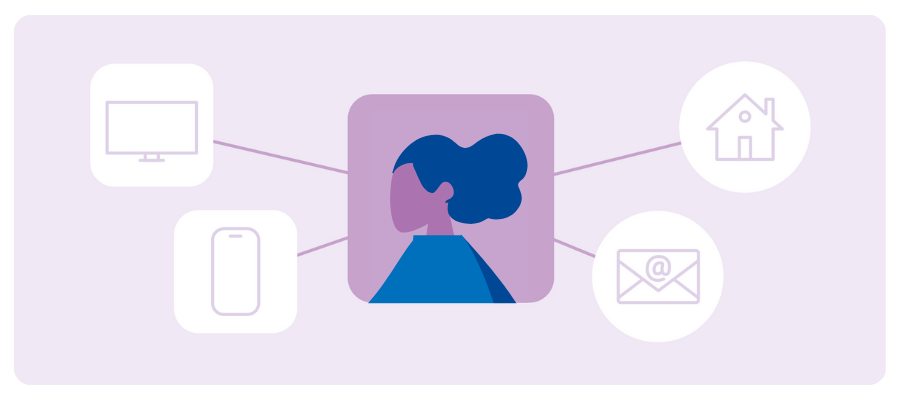
An icon of a woman in the center with icons around her for TV, mobile phone, email, and home.

As consumers move between online and offline touch points, an identity framework connects these signals into a coherent view of the individual. This foundation allows marketers to recognize the same consumer across environments that expose different identifiers.

Four keys to future-proofing your media with an identity framework

1. Know your customer: Unify and enrich your first-party data

First-party data is a marketer’s most durable asset, but it’s often scattered and incomplete.

  • Unify it: Bring CRM records, site interactions, and loyalty data into a single platform to build a holistic customer view. Use Offline Identity Resolution to resolve your first-party offline personally identifiable information (PII) back to a consolidated consumer profile, removing duplication of users in your data set.
  • Enrich it: Append Experian Marketing Attributes to uncover demographics, lifestyle markers, and purchase behaviors you can’t see on your own, and use Offline Identity Append to fill in missing offline data points (such as name, address, phone, etc.) to create a more complete and actionable customer profile.
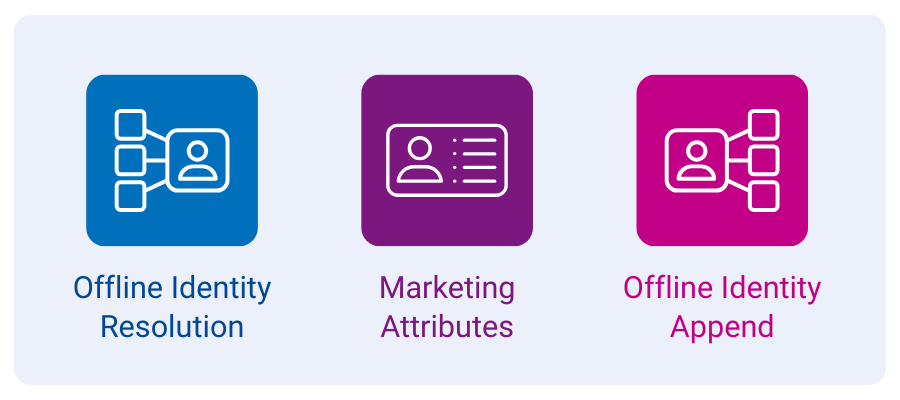
Experian's Offline Identity Resolution, Marketing Attributes, and Offline Identity Append

This gives you richer profiles that drive more personalized targeting and messaging. Fragmented ecosystems make unified first-party data even more essential. A connected view allows marketers to anchor identity against a stable, proprietary foundation. As identifiers vary across environments, marketers need flexible, privacy-first ways to understand where their audiences are and how to reach them.

2. Find your customer: Expand how you discover and reach audiences in a fragmented landscape

As identifiers vary across environments, marketers need flexible, privacy-first ways to understand where their audiences are and how to reach them.

  • Contextual signals: Experian’s Contextually-Indexed Audiences map content to consumer insights, so you can target intent-rich environments.
  • Geographic insights: Our Geo-Indexed Audiences help you find regions that over-index for specific traits and activate them across your preferred platforms.
  • Syndicated and Partner Audiences: Choose from 3,500+ prebuilt segments or 30+ partner data sources spanning health, retail, travel, and more.
  • Curation: As a full-service curation partner, we enable private marketplace (PMP) deals that are privacy-safe, identity-agnostic, and performance-optimized.
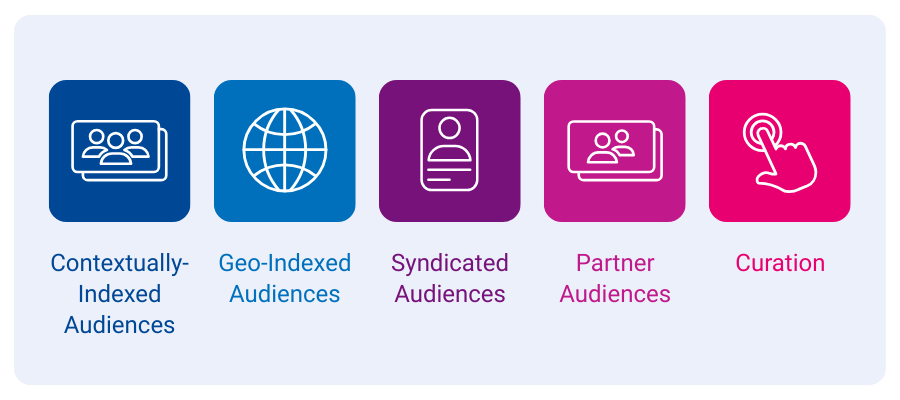
Icons that represent Experian's Contextually-Indexed Audiences, Geo-Indexed Audiences, Syndicated Audiences, Partner Audiences, and Curation.

Together, these approaches help you confidently reach your audiences – using multiple types of signals that complement your identity strategy and create a clearer picture across fragmented environments.

3. Reach your customer: Maximize scale through interoperability

As signals and identifiers proliferate across environments, interoperability is essential to maintain consistent reach. Experian’s Offline and Digital Graphs unify disparate signals (MAIDs, CTV IDs, alternative IDs, IP, and more) so marketers can recognize and engage audiences reliably across channels, devices, and platforms.
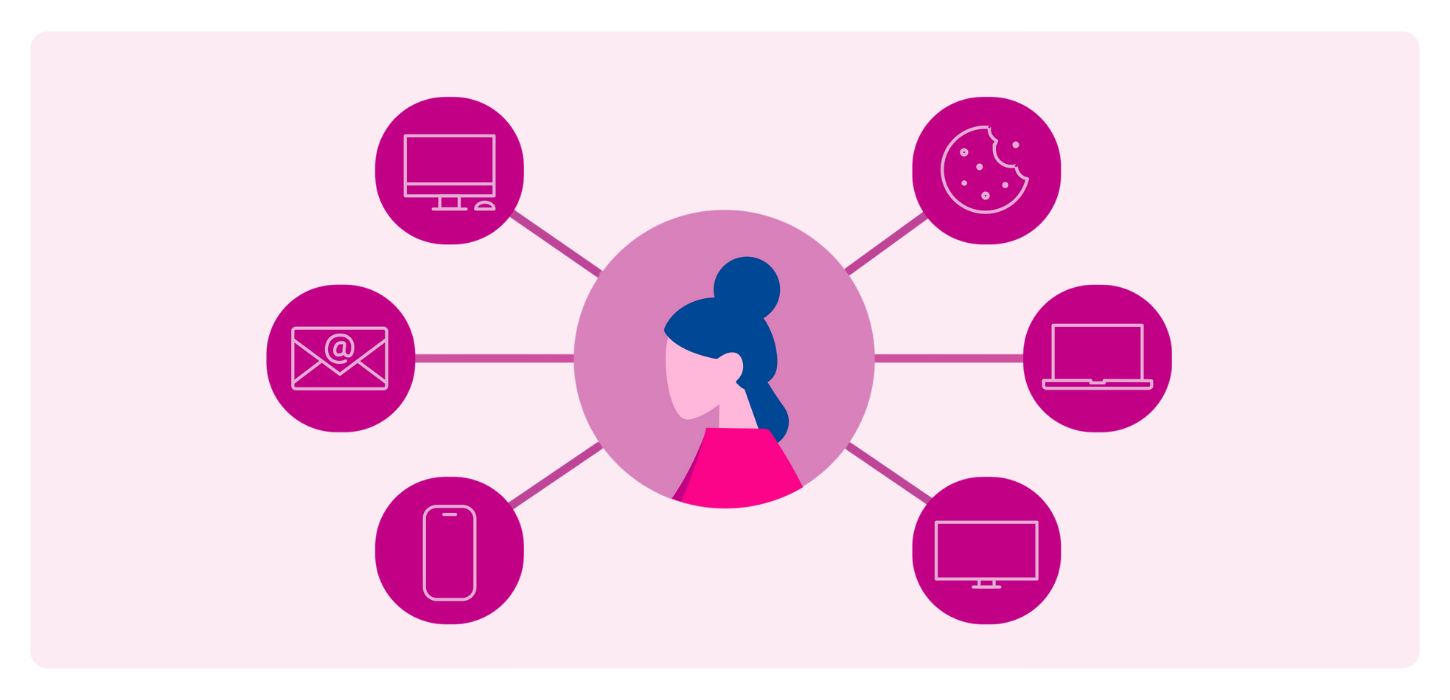
An icon of a woman in a center circle with different cirlces around her with icons for a desktop computer, email, mobile phone, TV, laptop, and cookie.

Interoperability matters because it turns a collection of disconnected identifiers into a coherent identity framework that can actually be activated. The following capabilities demonstrate how that comes to life.

  • Unified identity: Create a consistent view of your audience, even when different environments expose different identifiers. Experian’s identity framework connects these signals into a single, actionable identity spine.
  • Expanded reach: OpenX enriched its supply-side identity graph with Experian’s audiences, making our data available directly across OpenX supply and formats. By matching more of the starting audience and identifying more users in the bidstream, marketers see higher match and activation rates, extending reach in hard-to-address environments like Safari and mobile web.

Measure success: Optimize based on outcomes

If you can’t measure your marketing, you can’t improve it. Experian Outcomes, powered by our holistic understanding of the user across online and offline touch points, closes the loop by connecting media exposures to real-world actions (store visits, purchases, or site conversions).

An icon of a person with graphs and charts on their left and right sides.

With these insights, you can:

  • Prove ROI across digital and TV
  • Attribute success to the right channels and tactics
  • Continuously refine targeting, creative, and spend allocation

Outcome-based measurement makes your strategy adaptive, so dollars flow to what drives results.

As signals multiply across environments, connecting exposures to outcomes requires a unified identity foundation. Experian closes the loop by unifying exposures across disconnected touch points, enabling holistic attribution and optimization. Our AI-powered simplicity drives continuous improvement. From predictive modeling to agentic workflows that automate optimization, we’re investing in generative AI to help marketers spend less time on manual setup and more time on strategy and outcomes.

The Experian identity framework advantage

Experian connects fragmented signals into a single, actionable identity framework built for long-term resilience.

What our identity framework delivers

  • Interoperability: We support all major identifiers, including alternative IDs, IP address (v4 and v6), contextual signals, and both first- and third-party data.
  • Flexibility: Whether you’re activating syndicated audiences, tapping into partner audiences from 30+ data providers, or curating custom segments through Audigent, our solutions meet you where you are.
  • Scale: With four billion IDs resolved in our Digital Graph and 280 million telephones in our Offline Graph, we deliver unmatched reach across digital and offline environments.
  • AI that makes marketing more human: We bring together identity, insight, and automation through responsible AI, helping marketers see audiences clearly, act with intelligence, and optimize with respect for privacy.

Our approach is delivering results across a range of programmatic players. These outcomes demonstrate how a unified identity framework delivers performance in environments where signals, identifiers, and devices operate in silos.

Proven results powered by Experian’s identity framework

  • Sonobi increased programmatic addressability across the mobile web by 25% and delivered a 20% lift in impression value through our identity graph, driving stronger campaign connections and greater publisher returns.
  • One DSP used our Digital Graph to match more MAIDs, CTV IDs, and IP addresses to online conversions, enabling increased accuracy of their attribution and measurement. They achieved an 84% synced ID rate and a 9% increase in match rate.
  • For Cuebiq, we significantly increased match rates and resolved data from cookieless environments, such as Safari. By combining separate data streams and resolving 85% of total events to a household, Cuebiq expanded on the household IDs to identify MAIDs that are observed in-store, enabling accurate cross-channel measurement.
  • Our Digital Graph allowed MiQ and their clients to expand the reach of their seed audiences across devices by 51% and cookieless IDs by 64%. As a result, MiQ can provide marketers with future-proofed connected planning, advanced targeting, and precise measurement.

We’re your partner in building identity framework that lasts: resilient to change, adaptive to new signals, and focused on outcomes.

What comes next for signals and identity?

The future isn’t defined by any single identifier. It’s defined by the ability to unify and activate across a fragmented identity ecosystem. The winners will be those who adopt interoperable, outcome-driven identity frameworks today.

Those strategies will increasingly be powered by responsible AI, systems that simplify workflows, predict opportunity, and optimize in real time while keeping people at the center. At Experian, we see AI not as automation for its own sake, but as a way to make marketing more human, relevant, and respectful.

Your playbook for navigating fragmentation

Experian connects the fragmented identity ecosystem, unifying alternative IDs, IP signals, contextual data, and first- and third-party assets into a consistent, actionable identity foundation. With proven lift across partners like Sonobi and new offerings like Contextually-Indexed Audiences, we help you build campaigns that perform in a fragmented landscape.

Download our 2026 Digital trends and predictions report to explore how identity, interoperability, and measurement will define the future of advertising.


About the author

Henry Schenker, Group Product Manager, Experian

Henry Schenker

Group Product Manager, Experian

Henry has nearly 15 years of experience in Digital Advertising, Social Media Marketing, Data Licensing & Analytics, Front-End Engineering, Technical Architecture & Integrations, Profit & Loss Management, and Enterprise-Level Contract Negotiation across the U.S., EMEA, and Asia Pacific regions.

Prior to re-joining Experian, Henry held critical go-to-market and product roles at noted industry-disruptors Media.Monks and Attain. From 2018 – 2020, he served as the Vice President, APAC of Innovid (now publicly traded, NYSE:CTV), leading the company’s expansion into Japan, Singapore, and Australia. The preceding 4 years with Tapad (acquired by Experian), allowed Henry to become a seasoned Sales Engineer, grow and lead a global Technical Integrations team, and relocate to Singapore, leading sales and operations in the APAC region. Before beginning his career and learning front-end engineering on-the-job at Wyng (formerly Offerpop), Henry received a dual-major (BA/BS) in Sociology and Economics & Finance from Bard College in New York.


FAQs

Why is signal and identity fragmentation increasing across digital and offline channels?

Signal and identity fragmentation is increasing across digital and offline channels because consumers now engage across more devices, platforms, and environments. Each environment introduces its own identifiers and privacy rules. This growth creates more signals overall, which increases the need for unification rather than reliance on a single ID.

How should marketers think about alternative IDs in a multi-signal ecosystem?

Alternative IDs add reach and coverage when they connect through a common identity framework. They work best alongside first-party data, device identifiers, and contextual signals. Resolution turns multiple IDs into one consistent view of the consumer.

What role does unified identity play in CTV and cross-device media?

CTV environments often assign multiple platform-specific identifiers to the same household or device. A unified identity layer links those identifiers together. This approach supports consistent audience recognition across streaming apps, devices, and digital channels.

How does unified identity support accurate measurement and attribution?

Unified identity connects media exposure to outcomes across digital, TV, and offline touch points. It enables marketers to see how different channels contribute to real actions like visits or purchases. Measurement improves when identity remains consistent across the full journey.

Why does an identity strategy matter beyond digital advertising?

Identity extends into offline signals such as transactions, loyalty activity, and household data. A unified foundation aligns online and offline interactions into one coherent profile. This connection supports planning, activation, and measurement across the entire customer experience.


Latest posts

Loading…
Advertising trends with retail media networks in 2023

In this article…What are retail media networks?How important is it to advertise with RMNs?Trends with big RMNsReasons behind these trendsCrafting your RMN ad strategy Digital advertising experienced a transformative shift in 2023, with retail media networks emerging as a focal point for advertisers seeking precision and efficacy. These networks defined how brands connect with consumers, utilizing the unique environment of digital storefronts to deliver targeted and personalized advertisements. Below, we'll discuss the diverse landscape of retail media networks, examples of these platforms, and how Experian is at the forefront of empowering advertisers within this evolving marketing ecosystem.  What are retail media networks?  A retail media network (RMN) is an advertising platform retailers use in their digital storefronts or online platforms. It lets brands and advertisers promote their products or services directly within the retail environment where consumers make purchasing decisions. Unlike traditional advertising channels, RMNs use the retailer's first-party data to offer targeted and personalized advertising experiences.  How important is it to advertise with RMNs?  RMNs offer advertisers a unique advantage — a rich set of first-party data on consumers, both on and off the platform. On-platform data includes user engagement insights, demographic information, and behavioral patterns. RMNs offer off-platform first-party data, such as cross-channel integration and CRM data integration. This data is especially important as the industry sees a shift away from the reliance on third-party cookies.  One of the key challenges brands face is the lack of tracking abilities through the customer journey. However, the closed-loop measurement and attribution capabilities within RMNs help advertisers track the entire consumer journey, linking campaign spend directly to final sales and in-store purchases. The precision and accountability offered by RMNs make them a crucial strategy in the ever-evolving world of digital advertising.  Trends with big RMNs  Here is a list of retail media networks and their performance in 2023. The information below offers insights into their reach and effectiveness in driving sales and brand visibility. Amazon  According to Pacvue’s Q4 guide, Amazon Media Network experienced a year-over-year decline in its daily spend. However, a notable quarterly increase of 3.2% suggests a recent expansion in this ad type. The current average CPC for Amazon-sponsored products is $1.21, marking a substantial 7.1% year-over-year increase. Return on ad spend (ROAS) showed a 1.5% year-over-year decrease but increased by 6.1% quarter-over-quarter, potentially caused by more efficient campaigns. The beauty category showed a particularly strong performance with a remarkable 69.4% year-over-year increase.  Walmart Walmart's advertising revenues are surging at a rate twice that of Amazon, according to the Pacvue Q4 report. This quarter, the Walmart Media Network experienced a substantial 40% boost in ROAS, now at $6.93. This advancement can be attributed to strategic adjustments in the algorithm and bid rules and the incorporation of new bid features. Walmart's CPC also witnessed a noteworthy 18.3% year-over-year decrease and a 14.5% year-over-year surge in average ad spend. Walmart's growth trajectory emphasizes the shift in consumer behavior toward product discovery, as many consumers research products on the website before purchasing.  Kroger Kroger developed an advanced retail media network that launched in October 2023. Their platform offers advertisers a more streamlined way to activate, measure, and optimize their campaigns, leading to improved advertising performance. The self-serve advertising platform lets advertisers promote products across the Kroger family of brands. Kroger is the biggest grocery chain in the country with a strong first-party shopper data set, providing more advanced audience targeting than many other grocery RMNs. Target Target launched its retail media network, Roundel, in 2016 to enhance the connection between brands and guests through curated media experiences. Roundel uses Target’s rich insights to create personalized advertising campaigns, reaching guests across several platforms and premium publishers. Over the past two years, Roundel has experienced over 60% growth, delivering over one billion in value for Target in 2021 and 2022. With a team of over 500 members, the platform differentiates itself by offering easy-to-use advertising solutions to brands of all sizes. Target plans to launch Roundel Media Studio, a self-service buying tool, in early 2024. Marriott In partnership with Yahoo, Marriott has created a travel media network that lets advertisers target consumers based on the hotel chain’s guest data. This collaboration allows ads to be strategically placed on various platforms, including the hotel’s websites. Marriott Media Network’s rollout will start on mobile platforms similar to traditional RMNs. Over time, it will extend to include ad placements on TV screens in guest rooms, Wi-Fi portals, and various digital screens in other areas, like lobbies and bars. This innovative approach in the hotel industry offers marketers diverse opportunities to reach their target audience. Nordstrom Nordstrom Media Network has shown considerable success, generating over $40 million in revenue and collaborating with several brand partners. Introduced in 2019, this network initially experimented with off-site campaigns and later expanded to on-site sponsored ads in 2021. Nordstrom Media Network offers data from 32 million customers and digital properties with nearly two billion annual visits. The network’s focus on personalizing the customer experience helps it stand out in the competitive retail media space and makes it a valuable player in the evolving digital advertising landscape. CVS  With CVS Media Exchange, advertisers have access to a data set of 74+ million customers. This platform creates tailored campaigns for companies, helping their ads reach customers at the most critical points in their shopping journey. With options like display, video, audio, social, and in-store ad options, advertisers are seeing increases in product purchases and brand awareness.  Instacart  Instacart has a retail media network through its own platform and a tool called Carrot Ads, which helps grocery store chains develop RMNs through Instacart. It has a network of over 1,400 retail brands, helping advertisers reach their target audience. Advertisers have access to insights and automation to create relevant ads and track their progress.  Companies like Sprouts are using Carrot Ads to create and grow their own RMNs. Together, Instacart and Sprouts offer brands a unique opportunity by facilitating targeted online campaigns on Sprouts’ website. This collaboration provides access to metrics like sales and ROAS, offering a comprehensive view of campaign performance.  DoorDash DoorDash offers a comprehensive suite of advertising tools for restaurants and brands to expand their reach on the DoorDash marketplace. This flexible advertising platform extends across diverse categories, like restaurants, grocery, convenience, alcohol, and more. The platform has demonstrated success with an average return on ad spend of 4.1x from sponsored product campaigns and an average of 70% new-to-brand customers.  Reasons behind these trends  The surge in advertising trends within RMNs can be attributed to several critical factors, including the following:  Rising retail media competition  The competitive landscape within the retail world has intensified, with major players competing for a larger share of the advertising pie within their respective RMNs. This surge in competition among retailers like Lowe’s One Roof, Sprouts, 84.51, and Albertson’s Media Collective has led to a continual evolution of features and capabilities. Advertisers benefit from this competitive spirit because it drives innovation and offers enhanced tools and opportunities to refine their advertising strategies. The competitive edge creates an environment where RMNs continually improve and adapt to meet the needs of both advertisers and consumers.  Third-party cookie deprecation  Major web browsers are getting rid of third-party cookies, so advertisers must reevaluate their targeting and tracking strategies. Because of this, the first-party stronghold of RMNs is particularly valuable. Advertisers can rely on their reservoir of first-party data with RMNs to maintain effective audience targeting and measurement capabilities. The emphasis on first-party data aligns with advertisers' needs in the post-cookie era, making RMNs crucial partners in the pursuit of effective and privacy-conscious advertising solutions.  Crafting your RMN ad strategy  Crafting an effective RMN ad strategy is a multifaceted process that involves careful planning. You start with clean, scaled, and scoped data, then everything waterfalls from there. When done correctly, you reach the right audience, your ROAS/ROI results improve, your marketing spend is more effective, and your advertisers want to spend more with your RMN. Here are steps to consider when developing your RMN ad strategy. Choose the best RMN partner for your needs  Selecting the right partner is a critical first step. Ensure your partner seamlessly integrates with your existing MarTech stack, avoiding any additional workload for your existing team. A symbiotic relationship with your RMN partner enhances collaboration and streamlines your advertising initiatives.  Experian’s comprehensive data and identity solutions can help RMNs maximize their opportunity, with our new solution tailored to enhance RMNs’ strength in first-party shopper data. Experian’s solution helps RMNs unlock expanded customer insights, enriched audiences for activation, identity resolution for cross-channel audience targeting, and real-time measurement and attribution. This comprehensive solution is designed to help RMNs capture more advertising revenue. Our goal is to ensure you capture the most advertising dollars and make your RMN operate at its peak performance. Learn more here Utilize third-party data  One of the cornerstones of an effective RMN strategy is the integration of third-party data. This is where Experian steps in as a critical ally. Experian's robust third-party data solutions can enhance an RMN’s first-party data to create more scale and scope for RMN audiences. This, in turn, will open up more opportunities for advertiser investment.  Utilize first-party data  The main advantage of RMNs is the access to first-party data. Advertisers can use this data to create personalized and targeted campaigns. By tailoring your messages based on consumer expectations, preferences, behaviors, and purchase history, you create a more engaging and relevant ad experience. This not only boosts the effectiveness of your campaigns but also fosters a deeper connection between your brand and the audience.  Promote relevant products  Personalized ads are crucial for capturing audience attention and driving conversions. With retail media platforms, advertisers can personalize their campaigns to individual shoppers. Promoting products that align with your audience's specific needs and preferences increases the likelihood of conversions.  Consider the consumer journey  Strategic ad placement within the consumer journey is pivotal. Consider targeting consumers late in the decision-making process when they're in a shopping mindset. Placing ads at this point in the customer journey increases the chance of converting prospects into customers. Understanding the customer journey within an RMN system allows for a more targeted and impactful advertising strategy.  Measure data and adapt  The final step in the process is continuous measurement and adaptation. Retail media platforms include powerful analytics tools that let advertisers track and analyze ad performance in real time. Use these insights to adapt your strategy. A data-driven approach ensures your campaign remains responsive to the changing marketing dynamics.  Elevate your advertising strategy with Experian  Transform your advertising strategy with Experian's cutting-edge Consumer View solutions. These advanced tools excel in audience segmentation and easily integrate your first-party data with our comprehensive third-party insights. This ensures the seamless activation of your data across online and offline channels. Experian also has custom audiences and audiences that are available on-the-shelf of most major platforms. This and our onboarding capabilities make Experian the perfect partner for your RMN strategy. Connect with a member of our team today to take the next step in elevating your advertising campaigns. Connect with us Latest posts

Feb 13,2024 by Experian Marketing Services

Three audience categories for political campaign marketing

As we approach the 2024 election season, the advertising landscape is poised for tremendous growth, with political ad spending projected to surpass $10 billion. With Kamala Harris entering the race, spending priorities have moved, especially in key states like Ohio, where the Senate race alone has already seen $300 million in ad spending. Connected TV’s (CTV’s) share of political ad spending is set to jump from 2.7% in 2020 to 12.8% this year. The Harris campaign is leading the charge, allocating $200 million for digital ads, much of which will go to streaming platforms.  During this political campaign marketing season, effective audience targeting is crucial, as it holds the potential to sway voters, shape public opinion, and ultimately determine election outcomes. In this blog post, we'll highlight political audiences that can assist political campaigns and organizations in connecting with their desired audiences in a meaningful and impactful way. What separates Experian's syndicated audiences Experian’s 2,400+ syndicated audiences are available directly on over 30 leading television, social, programmatic advertising platforms, and directly within Audigent for activation within private marketplaces (PMPs).   Reach consumers based on who they are, where they live, and their household makeup. Experian ranked #1 in accuracy by Truthset for key demographic attributes. Access to unique audiences through Experian’s Partner Audiences available on Experian’s data marketplace, within Audigent for activation in PMPs and directly on platforms like DirectTV, Dish, Magnite, OpenAP, and The Trade Desk. Three political campaign marketing audience categories Over 240 politically relevant audiences are available on-the-shelf of leading TV, demand, and supply platforms to help your political partners gain share based on three political audience categories: Political affiliations Political personas Relevant ballot initiative audiences Let's break down each category and which audiences you can use in your political campaign marketing to target voters this upcoming election season. Political affiliations Target audiences could include those who are likely to be in the Democratic, Independent, or Republican parties, or are likely to not be registered to a political party. Our political affiliation audiences use a foundation of voter registration data with Experian's advanced statistical models to reach voters at scale, based on their political party. Here are four audience segments that you can activate to target voters based on their predicted party affiliation: Political Affiliation > Democrat Political Affiliation > Republican Political Affiliation > Independent/Other Political Affiliation > Unregistered Political personas One key target audience could be voters who are likely to be influenced by a political candidate's renewable energy program. Additional target audiences could include those who are likely to be influenced by a candidate's position on the economy or healthcare. Here are 10 audience segments that you can activate to target voters based on their viewpoints on key political issues: Political Personas > Political Unregistered Liberal Leaning Political Personas > Political Unregistered Conservative Leaning Political Personas > Committed Democrats Political Personas > Moderate Democrats Political Personas > Political Leaning Liberals Political Personas > Liberal Leaning Independents Political Personas > Conservative Leaning Independent Political Personas > Political Leaning Conservatives Political Personas > Moderate Republicans Political Personas > Committed Republicans To reach voters who believe the environment is a key political issue, you can layer in our GreenAware audiences with our Political Personas audiences: GreenAware > Behavioral Greens GreenAware > Think Greens GreenAware > Potential Greens GreenAware > True Browns Psychographic/Attitudes > Shopping Behavior > Smart Greens To reach voters based on their regional voting patterns, you can use our new battleground counties and district audiences: Affiliation Switcher Counties   Battleground Counties  House Battleground Districts  Democrat Counties Republican Counties Independent Counties Relevant ballot initiative audiences You can also reach voters based on their attitudes and behaviors related to key ballot measures. Let's walk through a few examples below and highlight relevant syndicated audiences that you can activate during the 2024 political campaign marketing season. Local and national ballot initiative support Consumer behaviors are often great predictors of down-ballot initiatives. For example, military families may show favor toward initiatives supporting veterans, households with children present may show more interest in school funding, and those interested in the environment will favor green initiatives. Experian offers an array of consumer behavior and interests audiences to help you fine-tune your targeting and messaging strategies. Lifestyle and Interests (Affinity) > Occupation > Military – Active Demographics > Presence of Children > Ages: 0-18 Charitable causes Understanding where consumers are actively donating to charitable causes paints a clear picture into their political interests. Lifestyle and Interests (Affinity) > Charitable Causes > Contributes to Political Charities Consumer Financial Insights > Discretionary Spend – Donations > $1,000-$1,999 Demographics Demographics play a critical role into voter opinions with presence of children, age, and household income influencing decisions at the polls. Geo-Indexed > Demographics > Household Income: $50,000-$74,999 Geo-Indexed > Demographics > Education: Bachelor Degree Demographics > Presence of Children > Ages: 10-12 Demographics > Marital status > Single Demographics > Ages > 19-24 Lifestyle and Interests (Affinity) > Moms, Parents, Families > Mothers with infant child(ren) (0-3 yrs old) Millions of campaign dollars were wasted in the 2022 midterm elections when voters were targeted with ads for issues and candidates they couldn’t vote for. Using advances in geo-targeting can help save wasted spend and ensure relevant messages reach the right voters. Finance Income and large financial decisions often trigger changes in perspective and influence voter behaviors. Financial FLA Friendly1 > Income > $1,000-$24,999 Financial FLA Friendly > In Market New Mortgage Financial FLA Friendly > In Market Auto Loan Media consumption and engagement Media consumption and engagement offers great insights into how voter interest, current channel engagement, and engagement in political issues. TrueTouch: Communication Preferences > Engagement Channel Preference > Email Engagement TrueTouch: Communication Preferences > Engagement Channel Preference > Streaming TV Social Media > Snapchat Purchase Transactions > Ad Responders > Digital Television (TV) > Ad Avoiders/Ad Acceptors > Ad Acceptors Mosaic Proprietary persona-based audience solution that combines demographic and behavioral data to create a holistic view of voters and their interests. Mosaic – Personas – Lifestyle and Interests > Group O: Singles and Starters > O55 – Family Troopers Occupation Provides the opportunity to deliver targeted messaging on measures based on a consumer’s occupation. Demographics > Occupation > Management/Business and Financial Operations Demographics > Occupation > Sales Demographics > Occupation > Farming/Fish/Forestry Consumer Behaviors > At-Home: Retired/Empty Nesters Consumer Behaviors > Occupation: Education Personal views Understand consumers personal views around family, their social and work life. Psychographic/Attitudes > Personal Views > Work Centered Psychographic/Attitudes > Personal Views > Family Centered Psychographic/Attitudes > Personal Views > Social Isolation We can help you match your message to your audience With Experian's political audiences, you can confidently execute your political campaign marketing, knowing our audiences are based on voter registration data and advanced predictive technology. Our highly accurate models are validated by our expert audience team to ensure precise targeting and drive impact and influence with the right audience. We understand that finding a trusted data provider can be a challenge, which is why we make it easy to access our syndicated audiences. For a full list of all of Experian's syndicated audiences, download our syndicated audiences guide. Download our syndicated audiences guide You can activate our political audiences on-the-shelf of most major platforms. Can't find the audience you're looking for or need a custom audience? Connect with our audience team for more information. Additionally, work with Experian’s network of data providers to build audiences and send to an Audigent PMP for activation. Connect with our audience team Footnote “Fair Lending Friendly” indicates data fields that Experian has made available without use of certain demographic attributes that may increase the likelihood of discriminatory practices prohibited by the Fair Housing Act (“FHA”) and Equal Credit Opportunity Act (“ECOA”). These excluded attributes include, but may not be limited to, race, color, religion, national origin, sex, marital status, age, disability, handicap, family status, ancestry, sexual orientation, unfavorable military discharge, and gender. Experian’s provision of Fair Lending Friendly indicators does not constitute legal advice or otherwise assures your compliance with the FHA, ECOA, or any other applicable laws. Clients should seek legal advice with respect to your use of data in connection with lending decisions or application and compliance with applicable laws. Latest posts

Jan 30,2024 by Hayley Schneider, Sr. Manager, Content Marketing

Advances in retail media — and what they mean for the future of advertising

In this article…Benefits of retail media for advertisersRetail media network use case: Experian's impactful marketing attribution with a discount store giantKroger Precision Marketing’s newly announced platformHome Depot retail media Amazon retail mediaWalmart retail mediaThe future of RMNs Retail media networks (RMNs) are an exciting innovation within the advertising industry. A retail media network refers to an advertising platform that a retailer owns, providing marketers with the opportunity to buy advertising space on the retailer's digital platforms as well as extend their reach offsite with key platforms the retailer has partnered with to open up their media buying to advertisers. The retailer uses first-party data and customer insights to create new advertising opportunities and connect with shoppers throughout their buying journey.  In this article, we’ll discuss the significant advances in retail media trends and technology — and their implications for the future of advertising. Benefits of retail media for advertisers Every online impression counts in the digital era, making retail media especially advantageous for advertisers. It yields new opportunities for advertisers to thrive, which we’ll discuss below.  Get access to first-party data First-party data is a valuable asset for advertisers. Retail media networks offer advertisers direct access to customer insights from the retailer's data vault, which helps them create highly personalized ad campaigns and connect with current and potential customers. Custom marketing options for each brand Retail media provides brands with various marketing options, from product listings to onsite display advertising. These options allow advertisers to customize their approach, deliver tailored messages to their target audience, and meet consumers where they are. Reach new customers Retail media networks empower advertisers to connect with new and existing customers using retailers’ extensive digital presence. These networks extend beyond a retailer's own website and allow brands to tap into a broader audience base; major RMNs often have a significant offsite presence and provide advertisers with opportunities to reach consumers across various digital touchpoints and platforms beyond the retailer's controlled environment. This reach enhances brand visibility, engages diverse audiences, and contributes to the growth of customer acquisition.  Closer proximity to purchase decisions Another benefit of retail media is its ability to position brands closer to the point of purchase in the customer journey. Targeted, data-driven advertising strategically placed across various touchpoints enables retailers to influence consumers when they are already lower in the purchase funnel. This proximity increases the likelihood of faster purchase decisions, especially when complemented by strategies such as timely offers and retargeting, expediting the decision-making and conversion processes. Consumers prefer personalized advertising Research has shown that approximately 50% of consumers will spend more money with companies that personalize their e-commerce retail experience. Ads relevant to a consumer’s interests and aligned with their behaviors make shoppers more likely to engage with a brand and find it easier and more convenient. As retailers honor consumer preferences for personalized advertising, they’ll find it easier to align with consumer preferences and provide an improved shopping experience. Retail media network use case: Experian's impactful marketing attribution with a discount store giant Experian’s past collaboration with a discount store giant involved implementing a comprehensive marketing attribution strategy. The primary goal was to effectively demonstrate brand campaign performance and optimize ad spend within the retail media network. We built a full-stack attribution solution that connected their offline and online data, and our approach was as follows: We started by collecting exposure data from all touchpoints, such as the website, app, and offsite display and social, to turn anonymous exposures into identified individuals and households.  Additionally, we gathered debit and credit card transaction data from in-store and online points of sale to better understand purchase behavior. We also unveiled new demographic insights for the retailer.  To streamline the decision-making process, we provided an easy-to-read reporting tool that showcased vital performance metrics.  Takeaways from the collaboration emphasized the importance of: Understanding the audience seeing the ads and those making purchases. Analyzing incremental lift and identifying insights or trends. Sharing these valuable insights across the organization and with advertisers to inform future campaigns and brand positioning. Utilizing recent trends in the retail media landscape This case study serves as a prime example of how recent retail media trends are shaping a data-centric, integrated, and insights-driven future for advertising in retail. Our marketing attribution strategy aligns with the industry's shift toward data-driven decision-making in RMNs.  Today, retailers are adopting full-stack attribution solutions like ours, enabling them to connect offline and online data to understand customer interactions better. This reflects the trend of looking for a holistic view of customer journeys and highlights the importance of integrating diverse data sources to understand consumers comprehensively. Moreover, our strategy to transform anonymous exposures into identified individuals, integrate transaction data, unveil new demographic insights, and provide an easy-to-read reporting tool mirrors the trends of enhanced personalization, merging online and offline data, and simplifying analytics within RMNs.  Using new retail media Our introduction of a user-friendly reporting tool highlights the potential of new retail media to change how advertisers analyze data and gain actionable insights. It emphasizes the value of advanced tools in optimizing ad campaigns, measuring performance metrics, and informing future strategies. New technology will continue to drive effective marketing attribution and shape the future of retail advertising. Kroger Precision Marketing’s newly announced platform Kroger Precision Marketing (KPM) represents another excellent retail media use case. The retail media arm of the popular supermarket chain is looking to the future with the launch of its advertising platform. KPM is committed to innovation, and this move underscores its desire to be at the forefront of the retail media landscape. Let's take a closer look at some of the essential features of this new platform. In-house KPM recently announced the launch of an in-house advertising platform — a significant shift from their previous practices, where they relied on external tools and systems for their retail media services. By bringing the ad technology in-house, KPM has greater control, flexibility, and the ability to align its platform precisely with its retail media goals. This decision enhances Kroger’s self-sufficiency and enables quicker adaptation to evolving market demands.  KPM’s new in-house platform was officially rolled out on October 13, 2023, and is redefining how advertisers interact with Kroger’s expansive base of consumers. Easier for media buyers KPM's in-house platform is also focused on providing better tools for media buyers. The platform is designed to offer advanced automation and optimization capabilities that will make campaigns more efficient and data-driven. By using this platform, media buyers can easily reach the right audience, customize their messages, and fine-tune their campaigns — all in one place. Integrated platform KPM’s new platform will integrate with existing ad campaigns and eventually encompass all their retail media options. This interoperability makes migrating ongoing campaigns easy and minimizes disruptions to advertising efforts. In the long run, the platform will serve as the foundation for all KPM's retail media services. Advertisers will have a one-stop solution for on-site and off-site media channels to ensure consistency and efficiency in retail media strategies. KPM's emerging retail media solutions demonstrate a commitment to advertisers and their changing needs in a shifting digital era. Home Depot retail media  Home Depot, a well-known player in the home improvement retail industry, has made great strides in retail media. With an impressive annual customer transaction count of 1.7 billion and 3.6 billion visits to homedepot.com, their Retail Media+ platform provides advertisers with unparalleled visibility, reaching 198 million individual customers across 2,322 stores, according to their site. The benefits of Retail Media+ also include 24/7 self-service access to advertising portals, real-time reporting for campaign optimization, and dedicated support. What Home Depot’s Retail Media+ does right Home Depot’s Retail Media+ has set itself apart through strategic initiatives that prioritize enhancements to the shopper experience. Here's a closer look at what makes Home Depot's approach to RMN noteworthy: Seamless integration: Retail Media+ seamlessly integrates into the customer's journey without disrupting their experience. The platform allows the delivery of targeted ads across various Home Depot-owned spaces, including the website, app, in-store, email, and offsite channels like social and video. Supplier-centric ad inventory: Home Depot allocates the majority of its RMN ad inventory to suppliers. This ensures the ads presented to customers align closely with the products available at Home Depot for a natural connection between onsite and in-store experiences. Customer-centric approach: Melanie Babcock, Vice President of Retail Media+ and Monetization at The Home Depot, emphasizes maintaining a customer-centric perspective. The goal is not merely to monetize the website but to enhance the customer journey by incorporating suppliers into the process. This approach contributes to a more personalized and relevant shopping experience. Exploration of offsite opportunities: Home Depot is actively exploring opportunities to expand its RM+ platform beyond onsite channels. Initiatives include piloting in-store video screens and venturing into connected TV (CTV). By considering the entire customer journey, Home Depot aims to provide value to suppliers while gaining deeper insights into customer behavior. Strategic use of data science: With the help of data scientists, Home Depot ensures personalized precision in its advertising efforts. This aligns with the shopper's preferences and needs and makes the ads more relevant and engaging. Ongoing adaptation and expansion: Home Depot's proactive stance is evident in its continuous efforts to adapt and expand its RMN initiatives. The exploration of offsite channels, partnerships with platforms like Roku and Disney Advertising, and the piloting of in-store video screens showcase a commitment to staying at the forefront of evolving digital retail trends. Home Depot's success with their RMN stems from its commitment to creating a symbiotic relationship between customers, suppliers, and the retail brand. Home Depot has set a benchmark for RMNs by aligning advertising efforts with the customer's journey and embracing technological advancements. Amazon retail media Amazon Advertising, the retail media division of Amazon, has become another dominant force in the industry. Let’s take a quick look at what they’ve done well and what they could improve. Scale of Amazon’s retail media In 2022, eMarketer estimated that Amazon commanded a 76.9% share of retail digital media spend, blowing its competitors out of the water. Walmart, the second-largest player, trailed far behind with a 6.1% share. This underscores Amazon's unparalleled influence and market presence in the digital advertising landscape and solidifies its position as the go-to platform for advertisers looking to reach a massive audience. What works for Amazon Amazon has an unmatched advantage when it comes to personalizing ads and delivering relevant content to consumers. With over 200 million Prime members in the U.S. alone, Amazon has access to vast amounts of valuable data that spans shopping habits, preferences, and more. This data is invaluable for advertisers looking to target their audiences with precision, and it gives Amazon a significant edge in the market.  What needs to change Although Amazon continues to thrive, there’s always room for improvement. For instance, to attract brand dollars, traditional retailers are starting to concentrate on channels where Amazon has less historical dominance, such as in-store experiences and email marketing. Understanding this potential, Amazon has been experimenting with email tools to enhance merchant-audience connections and widen its reach. As ad sales' profitability becomes more significant, incorporating these offerings into Amazon's retail media strategy could further strengthen its market position. Walmart retail media Walmart has been working hard to become a more dominant retail media force. Walmart Connect, the retailer’s retail media network, has done an excellent job bridging the gap between online and in-store activities. It provides a unique closed-loop system that connects online and in-store activity on an unprecedented scale. This mechanism offers advertisers a comprehensive view of Walmart customers’ behavior, giving them valuable insights and measurable business results. With this closed-loop approach, advertisers can access a holistic view of customer activity and achieve successful marketing campaigns. How Walmart ties together online and in-store activities Walmart’s massive brick-and-mortar presence and its comprehensive online platform provide a complete view of customer behavior and preferences. This synergy between the digital and physical is a compelling selling point for advertisers that gives them a holistic view of consumer interactions. Walmart's connected shopping experience integrates both online and in-store activities, allowing advertisers to engage with customers from the research stage to the online or in-store purchase stage of the buying journey.  New features and technology Walmart’s retail media platform is trying As part of their innovative initiatives, Walmart Connect introduced the "Holiday Hub," recognizing Walmart as America's go-to holiday shopping destination. Advertisers can use this hub to gain key customer insights and implement product best practices to ensure a meaningful omnichannel connection during the holiday season. In terms of new features and technology, Walmart Connect provides various advertising options to help brands stand out from the crowd: The Search feature ensures visibility when customers actively search for products, with ads appearing prominently in search results and on browse pages.  Display ads, strategically placed on Walmart.com, the Walmart app, and across the web, aim to make a premium impression on customers based on their omnichannel Walmart history.  For in-store influence, Walmart Connect offers opportunities to inspire shoppers through digital TV and point-of-purchase screens across 4,700+ Walmart stores.  Walmart's closed-loop measurement uniquely enables advertisers to correlate online ads with purchases, providing unparalleled scale and accuracy in measuring campaign impact. Whether for a small business or a global brand, Walmart Connect offers solutions to help marketers discover new and effective ways to connect with their target audience. The future of RMNs The future of retail media networks (RMNs) is bright and holds exciting possibilities. These five key dynamics will likely drive retail media evolution: Smaller retailers getting into the RMN game With each passing day, more small brands are becoming active with RMNs. This trend is highly beneficial, bringing diversity, competition, expanded reach, and collaborative potential to the landscape. The future of RMNs is expected to be shaped by a mix of established and emerging brands. This will create an inclusive environment for advertisers and consumers alike. Potential for cross-platform campaigns Cross-platform campaigns in RMNs allow advertisers to create a cohesive, impactful, and data-driven advertising approach across different retail media networks. This shift in campaign strategy aligns with the dynamic nature of consumer interactions in the digital landscape, as it provides a comprehensive solution for brands that seek to enhance their presence and influence across diverse channels. Targeted vs. personalized ads Personalized ads are becoming a notable trend in RMNs and replacing targeted ads. This means RMNs now provide consumers with more relevant and tailored content based on their interests and preferences. The shift is driven by the increasing demand for personalization and the need to improve the consumer shopping experience. RMN advertisers must take advantage of these personalized ad opportunities to create stronger brand awareness. Conversions vs. brand awareness Advertisers often struggle when deciding whether to focus more on conversions or brand awareness. For a well-rounded strategy, RMN advertisers should craft campaigns that balance these two goals. Using the data and insights from RMNs, advertisers can personalize their messaging to drive sales and build and reinforce brand recognition. This approach can help RMN advertisers make brand awareness a central component of their advertising efforts. Third-party data integration to enhance data and audiences As RMNs evolve, data expansion is essential for targeted, personalized, and contextually relevant advertising experiences and will help drive the future success of retail media. Advertisers using third-party data, in particular, can unlock new dimensions in audience targeting to create more tailored and impactful campaigns. Third-party data allows for a broader understanding of customer behaviors and preferences and facilitates relevant content delivery.  Data insights for more connected, tailored advertising Moving forward, it will also be important for advertisers to achieve a consistent view across online, app, and in-store activities. They need to understand where customers prefer to be reached and where they are most likely to engage so they can ensure a strategic alignment of messaging and optimize the effectiveness of their retail media strategies. The future of RMNs lies in using comprehensive data insights for more connected and personalized advertising.  What about AI? Where is it useful? In the retail media context, AI (Artificial Intelligence) enhances advertisers’ capabilities by providing valuable insights and automation to drive more effective and personalized ad campaigns. AI helps analyze vast amounts of data, predict consumer behavior, and empower advertisers with the tools to optimize their strategies. Ultimately, it helps them deliver more tailored, relevant content to consumers that best aligns with their interests and preferences.  Humans still needed to drive change While AI is a critical technology in retail media, it doesn’t replace the need for human expertise. People are still essential for driving change, making strategic decisions, and ensuring AI-driven solutions align with business objectives. Moving forward, advertisers will need to utilize both AI-driven capabilities and human expertise to see the greatest success. A connected customer identity is the key to success  The future of advertising lies in the seamless integration of customer identity across various touchpoints. Experian's cutting-edge solutions are leading the way in this transformation. We can help businesses navigate this dynamic environment with helpful tools that unlock a comprehensive view of audiences and facilitate effective campaigns across multiple channels.  Partner with Experian to achieve retail media success Experian’s comprehensive data and identity solutions can help RMNs maximize their opportunity, with our new solution tailored to enhance RMNs’ strength in first-party shopper data. Experian’s solution helps RMNs unlock expanded customer insights, enriched audiences for activation, identity resolution for cross-channel audience targeting, and real-time measurement and attribution. This comprehensive solution is designed to help RMNs capture more advertising revenue. Our goal is to ensure you capture the most advertising dollars and make your RMN operate at its peak performance. Read more here Our Consumer Sync solutions can connect customers across multiple touchpoints and channels, specifically bridging the gap between online and in-store to ensure a holistic view and strategy for audiences, campaigns, and performance. With access to over 2,500 frequently updated data points, we have the depth and breadth of data needed to supplement your audience strategy. We’ll help you unlock a broad view of your audiences to see well-rounded profiles, gain the reach required to access your audience across multiple channels, and turn opportunities into revenue. Additionally, our Consumer View solutions can help deepen your understanding of your customers, their behaviors, and campaign success.  Connect with a member of our team today to get started. Latest posts

Jan 23,2024 by Experian Marketing Services

Subscribe to our newsletter

Enter your name and email for the latest updates

This site is protected by reCAPTCHA and the Google Privacy Policy and Terms of Service apply.

About Experian Marketing Services

At Experian Marketing Services, we use data and insights to help brands have more meaningful interactions with people. As leaders in the evolution of the advertising landscape, Experian Marketing Services can help you identify your customers and the right potential customers, uncover the most appropriate communication channels, develop messages that resonate, and measure the effectiveness of marketing activities and campaigns.

Visit our website

Subscribe to our newsletter

Stay up to date on the latest industry news and receive expert tips from our marketing experts.
Subscribe now!