Setting sail
For hospitality and travel marketers, understanding which marketing efforts lead to actual bookings can be a tidal shift. Windstar Cruises—renowned for its intimate yachts and off-the-beaten-path itineraries—wanted data-driven visibility into how digital media placements translated into confirmed reservations. Windstar turned to the strategic media expertise of MMGY, a leading integrated marketing company dedicated to the travel, tourism, and hospitality industries and Experian’s marketing data and identity solutions to bridge this gap. Together, they developed a closed-loop attribution system that directly tied digital campaigns to offline passenger bookings.
The challenge: Blind spots in the booking journey
Windstar Cruises had plenty of top-of-funnel metrics—impressions, clicks, website sessions, cruise quote requests—but struggled to connect these indicators to confirmed reservations. Without that link, it wasn’t easy to pinpoint which audience segments were most valuable in their marketing campaigns or accurately measure return on ad spend (ROAS). Traditional attribution methods and limited booking system data painted an incomplete picture, leaving Windstar to wonder which media channels and audience strategies were truly driving revenue.
MMGY and Experian: Bridging data gaps to power attribution
Comprehensive pixel tag
MMGY designed an online-offline measurement strategy and coordinated with Experian to deploy pixels across Windstar’s digital media placements. These pixels captured valuable event-level data—ad exposures, clicks, site visits, and more—so that every interaction could be matched back to a future booking if it occurred.
Identity resolution and data enrichment
Using the Experian identity graph, Experian matched Windstar’s reservation data with its extensive consumer database. This approach provided a precise, individual-level view of how digital interactions translated into real-world sales. By combining pixel data (which identifies who viewed specific ads) with reservation data (which shows who ultimately made a booking), the solution delivered a comprehensive, end-to-end, multi-touch perspective on the customer journey.
Advanced audience segmentation
Utilizing MMGY’s powerful Terminal audience modeling platform—which integrates MMGY Travel Intelligence performance and intent data, Experian’s consumer intent data, and the client’s first-party data— MMGY in conjunction with Experian’s marketing analytics team developed custom audiences designed to drive incremental traveler growth.
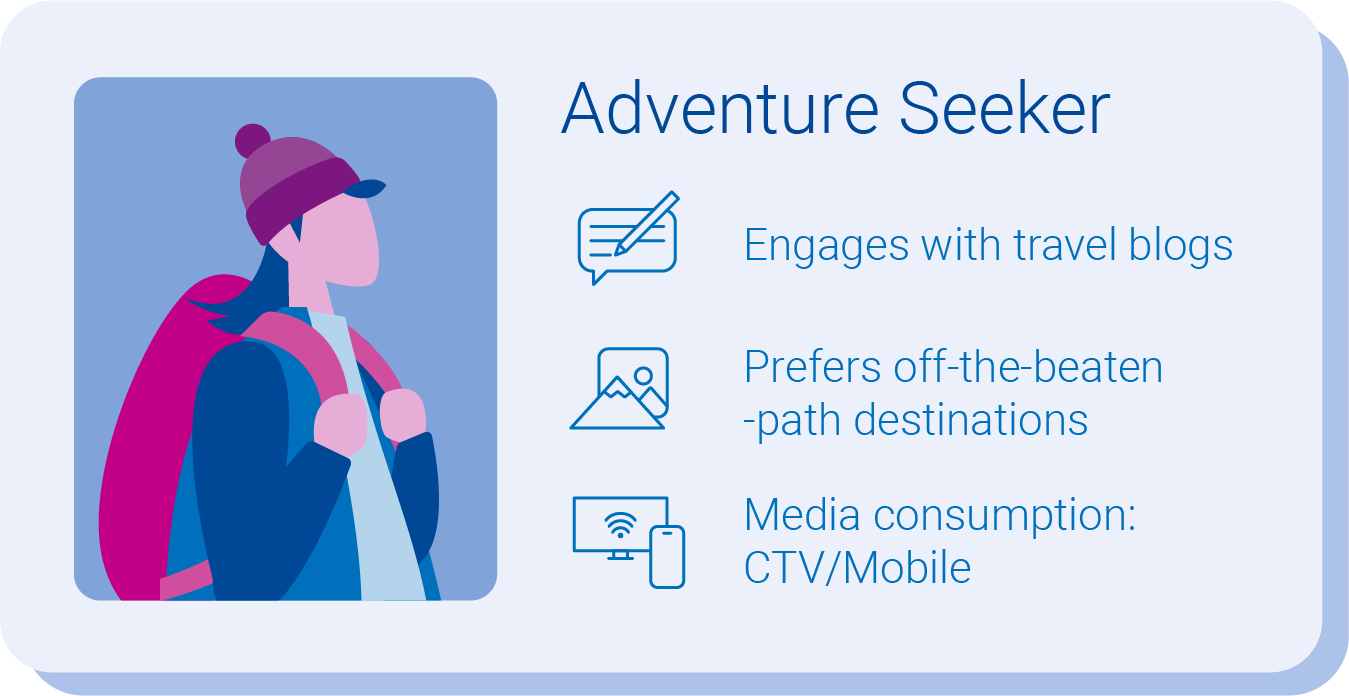
These audience segments identified travelers most likely to engage in the unique travel experiences Windstar offers. The insights revealed not only who these travelers are, but also where they consume media, how they make travel decisions, and what influences their purchasing behavior. This data guided the development of hyper-targeted media buys, ensuring Windstar’s messaging reached the right people on the right platforms at the right time—maximizing engagement and driving qualified leads.
The results: Mapping spend to bookings
By utilizing data connectivity and measurement, Windstar gained the insights needed to optimize every aspect of its marketing—audiences, media placements, channels, and more. This data-driven approach revealed which tactics were most effective and enabled Windstar to refine campaigns in real-time for maximum impact.
- 6,500+ bookings attributed to digital efforts: Over 6,500 bookings—valued at over $20 million—were tied to specific MMGY-managed placements, demonstrating which data-driven tactics led passengers to book. This level of attribution was only possible because we helped Windstar measure and connect the right data points.
- 13:1 ROAS: By investing $1.48 million in highly trackable, data-informed media, Windstar achieved an impressive 13:1 return on ad spend. Data connectivity gave Windstar the clarity needed to target the right audiences and channels—turning every $1 of spend into $13 of bookings.
- Actionable cost per booking benchmark: Armed with the ability to map ad spend to individual bookings, Windstar’s average cost per booking settled at $236. With insight into which audiences and placements performed best, Windstar adjusted its strategy in real-time, lowering acquisition costs across the board.
- High-value reservations: Attributed bookings were, on average, $500 higher in value than non-attributed bookings. By focusing on the right customer segments and messages—determined through precise measurement and segmentation—Windstar secured more bookings and maximized revenue per guest.
- Terminal Audiences outperformed: For Terminal-targeted segments, the ROAS soared to 28:1 with nearly half the cost per booking compared to non-Terminal audiences. This outcome illustrates how advanced data segmentation and connectivity deliver more profitable guests at lower acquisition costs—further proof that continuous optimization grounded in real data pays off.
What this means for travel and hospitality
Windstar’s success story illuminates a bigger truth for the travel and hospitality industry: closing the attribution loop is no longer optional. In a fiercely competitive marketplace, brands need concrete proof that their marketing investments drive awareness and translates into real revenue. By marrying MMGY’s travel-specific marketing acumen with Experian’s marketing data and identity solutions, travel brands can:
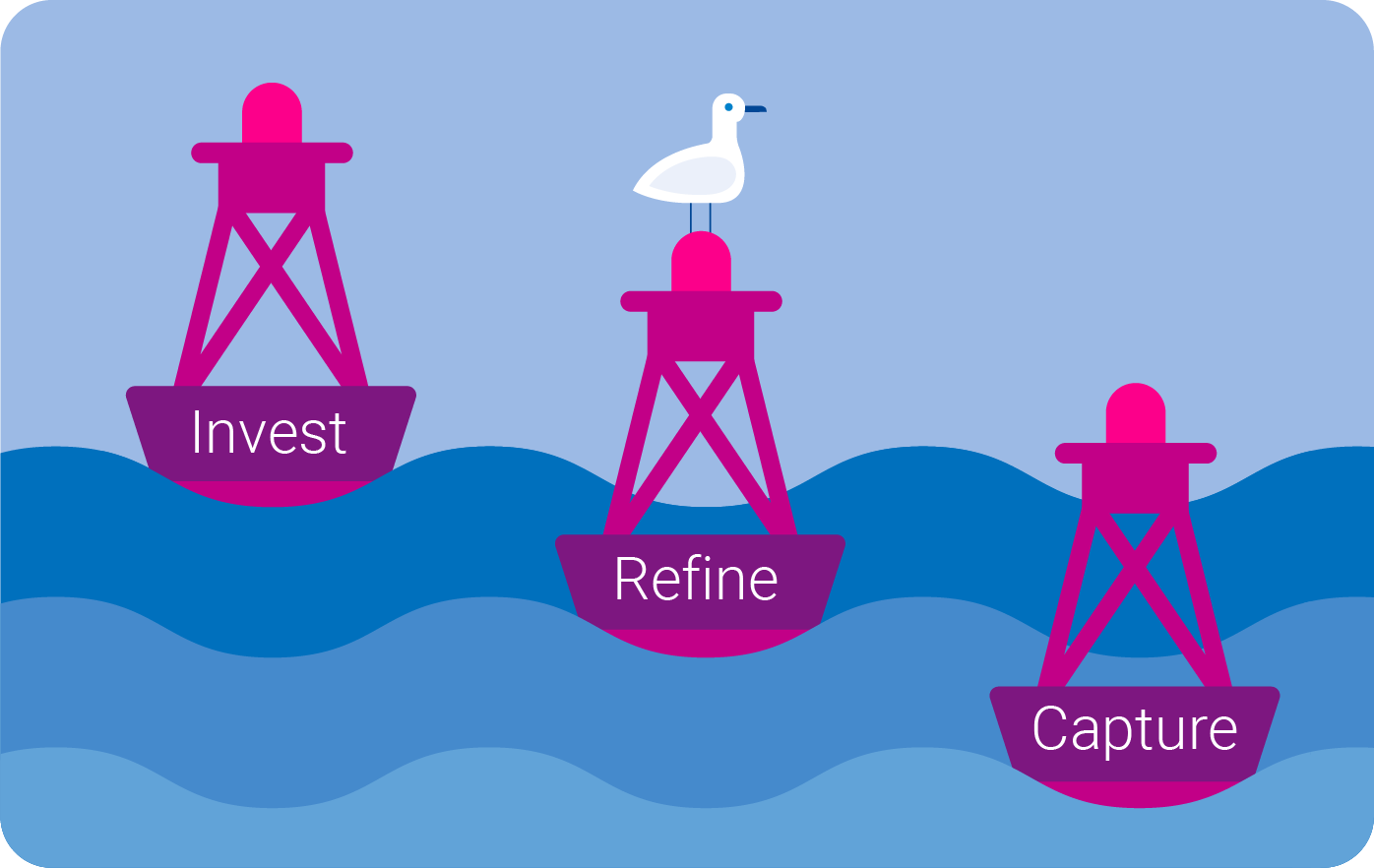
- Invest with confidence: Marketing investment flows to the most effective channels and placements based on actual bookings, not superficial metrics.
- Refine strategies: Real-time attribution data creates a feedback loop marketers can use to iterate on messaging, creativity, and targeting for even stronger results.
- Capture higher-value guests: Pinpointing and appealing to likely travelers allows marketers to increase booking volume and total revenue per booking.
Charting a course for data-driven success
By seamlessly linking digital exposure to confirmed reservations, Experian and MMGY gave Windstar Cruises the compass they needed to navigate the complexities of digital marketing confidently. This new level of insight is empowering Windstar to double down on the campaigns, creatives, and segments that move the needle the most.
For travel and hospitality brands worldwide, data-driven attribution goes beyond simply understanding what happened—it’s about shaping what comes next. When marketing decisions are guided by real customer journeys and precise ROI metrics, brands can make more innovative investments, foster stronger guest relationships, and chart a course toward sustainable growth. Ready to embark on your own data-driven journey?
Contact us to learn how Experian and MMGY can help you create impactful, measurable marketing strategies.
Contact us
About MMGY
MMGY is a leading integrated marketing company dedicated to the travel, tourism, and hospitality industries. With deep expertise spanning research, brand strategy, media planning, and creative execution, MMGY helps global travel brands forge meaningful connections with consumers. By utilizing data-driven insights, cutting-edge technology, and decades of experience, MMGY delivers strategic programs that capture attention and drive measurable results for its clients—ensuring that every marketing investment is tied to clear business outcomes.
Latest posts
Have you wondered how the shift toward real-time data is reshaping the way companies connect with consumers? Traditional methods of third-party data collection and demographic targeting are being replaced by more privacy-conscious approaches. In our next Ask the Expert segment, we explore how Experian and Captify’s partnership is harnessing the power of real-time onsite search data to enhance personalized advertising, address identity fragmentation, and provide valuable insights for navigating modern advertising challenges. We’re joined by industry leaders, Amelia Waddington, Chief Product Officer at Captify, and Chris Feo, Experian’s SVP of Sales & Partnerships. In this segment, they discuss the complexities of identity and the innovative use of real-time data in digital advertising. Watch the full Q&A below to learn more about these topics and discover how the collaborative efforts of Experian and Captify are shaping the future of personalized advertising. Understanding the power of real-time marketing data Real-time data provides an up-to-the-minute view of consumer behavior, enabling marketers to make quick, informed decisions. Captify’s use of real-time search data allows for immediate insights, contrasting with traditional third-party data, which often involves delay and prompted answers. This approach allows marketers to see trends and reactions as they unfold, making it possible to tweak campaigns and strategies and always reach the most in-market consumers. By using Captify’s real-time data, we can predict consumer interests and adapt to market changes quickly. Staying ahead of market trends with predictive analytics Captify analyzes more than a billion search signals daily, giving brands a detailed look at changes in audience behavior. These real-time insights help businesses make timely adjustments and reach their audiences in the moments that matter. Beyond digital media, Captify's multi-channel activation strategy extends to platforms such as connected TV and digital out-of-home, ensuring messages remain relevant and effective. How Experian and Captify work together Imagine being able to tailor your ads to consumers' needs and interests in real time. Our partnership with Captify enhances ad targeting and measurement by combining Experian’s vast Digital Graph with Captify’s real-time intent data. "Captify has evolved beyond relying on third-party cookies in isolation and now uses the Experian Graph to provide a more holistic view of identity at both the individual and household levels" says Amelia Waddington, Chief Product Officer at Captify. As privacy concerns grow, we have built and continue to invest in a signal-agnostic Digital Graph that can make connections across a wide range of identifiers, including the Experian Living Unit ID (LUID). The LUID is a unique identifier representing each household in the United States, based on real households and real people. This allows essential demographic information to be enriched to a household, enriching first-party data with detailed consumer insights, like age, gender, historical purchase behavior, and future purchase intent. By continuously adding new data and building fresh audiences and segments, we provide greater insights into the consumer base. Our Digital Graph serves as Captify’s identity spine, allowing them to connect identifiers together at both the person and household levels. This helps their clients target ads more accurately across different channels, making it easier to track and understand consumer behavior across platforms like TV, digital, and radio. Here are five key ways our partnership enhances ad targeting and measurement: Enhancing personalized advertising with real-time insights Identity fragmentation is a challenge for marketers because consumer data is scattered across different devices and platforms, making it difficult to effectively understand and target consumers. Experian and Captify’s partnership provides the fuel to help advertisers by integrating real-time search data with identity graphs, allowing for accurate targeting across various channels. By combining Experian’s robust Digital Graph with Captify’s real-time intent data, advertisers can deliver highly personalized ads on connected TV that retain their relevance and impact, no matter where the consumer engages with the content. "We ingest the Experian Graph as part of our internal Graph, allowing us to connect identifiers together at both person and household levels, which aligns with our expansion into TV, out-of-home, and audio channels."Amelia Waddington, Chief Product Officer, Captify Addressing identity fragmentation A fragmented identity occurs when consumer data is scattered across different devices and platforms, making it difficult to effectively understand and target consumers. Advertisers need holistic media plans instead of fragmented strategies that risk disengaging consumers, while publishers must demonstrate their platforms’ value by targeting seamlessly. By enriching and distributing thousands of demographic and behavioral segments, Experian provides the essential data needed to effectively target diverse audiences. Experian’s Digital Graph complements Captify’s data by connecting various identifiers, providing a complete view of individuals and households. This approach helps advertisers overcome fragmentation challenges, and ensure their messages reach the right audience across multiple touchpoints. Optimizing creative content dynamically Using real-time data, advertisers can adjust creative elements of their ads to better match consumer interests. This means changing parts of an ad, like images or text, based on current audience data, making it more relevant to the consumer. By partnering with Experian, Captify continues to see a rounded view of a consumer, allowing them to provide clients around the globe with data-driven creatives. These creatives achieve better results than standard ones and enable more meaningful connections with consumers. Integrating search data into connected TV Real-time search data plays a crucial role in enhancing the effectiveness of connected TV (CTV) advertising. Captify’s identity solution uses persistent identifiers from the Experian Digital Graph to extract value from onsite search data. Machine learning technology then categorizes these searches to understand consumer intent and create highly relevant audiences. By integrating Captify’s consumer intent data, advertisers can deliver more targeted and relevant ads on CTV platforms. This integration helps marketers reach viewers with content that resonates. Ensuring multi-channel message consistency Consistency in messaging across multiple channels is key for maintaining brand integrity and consumer trust. By using Experian's identity data, Captify ensures that advertisers can deliver cohesive messages across various platforms, including TV, digital, and radio. This integration not only enhances ad targeting precision but also solidifies the brand’s presence, ensuring that every touchpoint reinforces the same core message for a unified brand experience. Watch the full Q&A Visit our Ask the Expert content hub to watch Amelia and Chris’ full conversation. In their discussion, they cover identity beyond identifiers, personalized advertising strategies, and the evolving consumer journey. Amelia and Chris also share about interoperability challenges in CTV and how Captify is using alternative IDs like Unified I.D. 2.0 (UID2). Watch now Contact us About our experts Amelia Waddington, Chief Product Officer, Captify Amelia is Chief Product Officer at Captify, leading the Product, Engineering, Partnerships and Insight teams globally. During her three years at Captify, Amelia has delivered on her product vision to put Captify’s Search Intelligence in the hands of all advertisers—unlocking competitive advantage for clients and partners in a way that’s omnichannel, strategic, open and future-proof. She has launched Captify's Advanced TV, cookieless and data partnerships product lines. Amelia brings over a decade of experience in driving product strategy, underpinned by expertise across data science, machine learning, and analytics. She has a PhD in computational neuroscience and previous roles include product leadership at LiveRamp and Aimia. Chris Feo, SVP, Sales & Partnerships, Experian As SVP of Sales & Partnerships, Chris has over a decade of experience across identity, data, and programmatic. Chris joined Experian during the Tapad acquisition in November 2020. He joined Tapad with less than 10 employees and has been part of the executive team through both the Telenor and Experian acquisitions. He’s an active advisor, board member, and investor within the AdTech ecosystem. Outside of work, he’s a die-hard golfer, frequent traveler, and husband to his wife, two dogs, and two goats! Latest posts

Holiday 2024 campaign planning is already underway, and the competition for attention will be fierce. Before budgets are finalized and promotions launch, it’s worth taking a data-led look at trends from Black Friday 2023, and what that means for your 2024 strategy. Experian’s data shows that although shoppers remained cost-conscious, they didn’t stop spending. They simply changed how they spent—shopping earlier, mixing online and in-store purchases, and prioritizing value and convenience. For marketers, these behaviors highlight the importance of connected, data-driven experiences built on trusted identity and insight. 2025 Holiday spending trends and insights report Download our latest report, in collaboration with GroundTruth, for data-driven insights you can use to refine your messaging and reach the right audience in their preferred channels this holiday season. Download What 2023 taught us about holiday spending Consumer spending slowed but didn’t stop. Inflation and cautious budgets reshaped buying habits, yet U.S. shoppers spent a record $9.8 billion online, a 7.5% increase year-over-year. In-store visits grew 4.6%, proving omnichannel engagement is now standard. Shopify also reported $4.1 billion in global sales across apparel, beauty, and home goods, with 75% of purchases on mobile. Key takeaway for 2024Consumers didn’t stop spending, they became more deliberate. Marketers must meet value-conscious shoppers with connected, data-driven experiences across every channel. When consumers shopped in 2023 Shoppers didn’t wait for Black Friday weekend. Experian’s 2023 Holiday spending trends and insights report found that early deal-seeking peaked in October, as shoppers responded to pre–Black Friday promotions. Cyber Week (Black Friday through Cyber Monday) still played a major role, representing 8% of total holiday spending. Key takeaway for 2024Start promotions earlier and align creative, audience targeting, and measurement strategies by mid-summer to capture early intent. View our 2025 Holiday spending trends and insights here. Behavioral spending trends to expect in 2024 Marketers can expect several 2023 Black Friday trends to continue through the 2024 holiday season: Online and mobile will dominate Online spending continues to outpace in-store, and mobile is leading the charge. In 2023, 54% of all online Black Friday sales occurred on mobile, up 10% year-over-year. Optimizing mobile UX, digital wallets, and push notifications will be critical to keep brands visible at the point of decision. Consumers will shop earlier Gallup found that one in four consumers now starts holiday buying by September. Marketers need to push planning and production cycles forward and launch early-bird incentives across digital and in-store channels. Experiences over things as gifts will grow A growing segment of shoppers, particularly those with higher disposable income, are gifting experiences (concert tickets, classes, travel packages) over physical items. In a 2023 survey, one in five respondents said they’d prefer to get an experience as a gift over an item. Retailers can adapt by bundling tangible gifts with experiences or hosting “giftable” events that deepen engagement. Preference for digital channels will continue Connected TV (CTV) ad spend is expected to grow 20% in 2024, offering new opportunities to reach audiences where they watch. With Experian’s identity and audience solutions, you can target consistently across CTV, social, and digital platforms to manage frequency and performance more effectively. What consumers bought in 2023 Clothing and electronics led both in-store and online purchases in 2023, followed by toys, health and beauty, and household appliances. CategoryPercent of in-store buyersPercent of online buyersClothing and accessories82%79%Electronics73%66%Toys49%44%Health and beauty48%44%Household appliances44%36% These patterns show that trusted brands win across every channel. Marketers can use Experian’s purchase-based and category-specific audiences to target high-intent buyers ready to buy both online or in-store. Marketing strategies that worked in 2023 Last year was a year of growth, albeit slow growth, despite economic uncertainty. Here are some of the marketing strategies deployed that contributed to this growth. Influencer collaborations Influencers shaped shopping behavior more than ever: seven in 10 shoppers said creator recommendations influenced a purchase. Live product showcases and social content helped brands reach new audiences and reinforce trust. Cross-channel marketing campaigns Successful brands unified experiences across email, SMS, CTV, and web. To maximize sales during the Cyber Five holiday season, activate Experian Audiences as part of your omnichannel campaign. Our offerings include meticulously curated behavioral segments based on discount indicators such as Black Friday, Cyber Monday, and Coupons/Sales. These segments help you target shoppers who are ready to take advantage of your promotions and are primed for early conversion. Our marketing data was ranked #1 in accuracy by Truthset, which means you can power better marketing initiatives, like insights, targeting, and measurement using the highest rated data. App-only and loyalty offers App-exclusive deals boosted app-driven sales by 12% year-over-year. Brands that offered exclusive deals through their mobile apps incentivized customers to download and use the app for their purchases, which helped to increase sales through a dedicated channel. Limited-time and early-access offers Flash deals, one-day sales, and member-only previews continued to drive urgency during Cyber Week. Retailers that offered limited, targeted value (like Bath & Body Works single-day storewide promotions) achieved higher conversion efficiency than broad discounting. Predictions for Black Friday 2024 Based on what we’ve seen in 2023, we expect the following trends to shape consumer behavior on Black Friday and beyond in 2024. Mobile will lead digital sales Expect mobile to exceed 55% of online sales. Black Friday mobile orders increased from 2022 to 2023, with over 50% of all Black Friday sales occurring on smartphones. As a marketer, this means you should ensure your website is optimized for smartphones and tablets. Ensure load speed is quick, navigation is simple, designs are intuitive, and mobile payment options are available. You also have an opportunity to invite your customers to sign up for SMS or push notifications so they can shop deals immediately after they’re rolled out. While mobile should be a priority, we still recommend investing in multiple channels to capture online shoppers everywhere they’re buying. Our Offline and Digital Graphs can help you unify data, capture user activity, and view your target audience holistically to optimize ad spend, allocate resources effectively, and improve ROI. Early planning will define success Brands will finalize creative and inventory by midsummer to meet September shoppers. Data enrichment can help you prepare early Black Friday promos by providing deeper insights into your customers and what they want. On average, Experian has 250 behavioral and demographic marketing attributes per individual, which means we can decorate households and people with marketing data to get a full customer profile and fill in any gaps you have on your audience. You can also consider implementing sell-side targeting to help your promotions reach the right people. BNPL usage will rise As inflation persists in the U.S., shoppers will still be looking for ways to stretch their money this year, and many may seek out BNPL arrangements. According to Deloitte, 37% of shoppers have used these services, and these arrangements have proven to increase conversions by up to 30%. With so many shoppers wanting the financial convenience of making large purchases without the immediate financial burden, marketers can use data enrichment to identify their target segments most likely to use BNPL and create personalized offers and promotions for them. Your strategy should include high-value offers and messaging that appeal to budget-conscious shoppers and a checkout optimized for BNPL options. Channel switching will surge Consumers will move fluidly between mobile, web, and in-store experiences, which means integrating data from various touchpoints will be crucial to understanding and predicting customer behavior. Marketers must develop cohesive omnichannel strategies with consistent messaging and promotions across channels. Your campaigns should span multiple channels so customers can engage with your brand in various ways. We work with major platforms, marketers, and agencies, which means we have existing partnerships across the ecosystem for you to connect with and bring your consumer data to life to meet your needs. Paid search will drive the most sales Adobe reported paid search as the largest revenue driver during Cyber Week 2023, responsible for 30% of online sales. In 2024, marketers should prioritize paid search strategies and focus on using relevant, high-performing keywords for your campaigns. You can continuously refine your strategies using AI and data analytics to target high-intent customers. Additionally, integrating insights from customer behavior data will help you create more personalized, impactful ad copy and heighten the effectiveness of your paid search efforts. How Experian enables 2024 holiday success Experian’s marketing solutions help brands connect identity, insights, and outcomes across every touchpoint: Audience intelligence. Activate curated seasonal and behavioral audiences based on verified purchasing and discount-seeking patterns. Identity connection. Link ad exposures to household and individual behaviors through Experian’s Digital Graph connecting digital and offline data for a unified customer view. Omnichannel activation. Reach shoppers across more than 150 channels through our data and technology partnerships. Performance measurement. Use Experian Outcomes and lift analysis to tie spend directly to visits, conversions, and sales impact. Drive your 2024 holiday success with Experian The brands that win Black Friday 2024 will be those that plan early, act confidently, and measure with accuracy. Experian’s identity and data foundation powers connected commerce across every channel. Download our 2024 report here Download our 2025 report with GroundTruth here Get in touch with our team to plan your 2024 Black Friday and holiday campaigns. Get started Latest posts

At Experian, we power data-driven advertising through connectivity. Today, we're excited to introduce our newest offering, which helps drive that connectivity: Experian's Collaboration in clean rooms. This offering is now generally available in InfoSum, AWS Clean Rooms, and others. Experian can now facilitate successful data collaboration across multiple secure environments, such as at Experian, through crosswalks, and now in clean rooms. Whether you are a marketer or partner, introducing Experian’s signal-agnostic offline and digital identity graphs into your clean rooms lets you run identity resolution directly in the clean room. This means your data remains secure, while you and your partner experience higher match rates and you maximize your clean room investment, leading to: More resolved data More valuable insights and smarter activation More accurate and complete measurement A leap forward in data collaboration Backed by Experian’s Global Data Principles, Experian's deep roots in identity and data security offer the most effective and trusted ways to match data and protect consumer privacy. Our signal-agnostic approach means we can resolve all types of offline and digital identity signals, which is valuable now and will become even more valuable as third-party cookies go away. Additionally, data hygiene is built right into our collaboration offering, helping to improve match rates. The benefits of working with Experian’s rich identity data in a clean room environment are obvious so it is no surprise to see that 55% of data clean room users are using identity solutions in data clean rooms. What are data clean rooms? Data clean rooms are a tool typically used for data sharing, built on top of cloud providers such as AWS clean rooms. They protect data privacy while facilitating data collaboration among clients, marketers, businesses, and their partners. As the industry places greater emphasis on data security, clean rooms have emerged as secure environments that allow companies to: Enhance user privacy protection Minimize the impact of cookie deprecation Secure collaboration with data partners The industry has quickly realized that, for what clean rooms offer by way of privacy and security, they lack resolution capabilities, typically yielding subpar match rates. Benefits of Experian's Collaboration in clean rooms offering Built upon Experian’s rich offline and digital identity foundation, with support for various identifiers across platforms, Collaboration in clean rooms helps clients maximize the value of their data and meet the diverse needs of modern business. Through Experian's Collaboration in clean rooms offering, you can: Collaborate with partners for richer data insights Achieve higher match rates Improve audience building Produce more accurate and complete reports Ensure data privacy Regardless of the identifier type you are looking to collaborate on, Experian has the identity data to support you and your partner. This leads to higher match rates and more resolved data for you to use to benefit your media initiatives. Get started with Collaboration in clean rooms today Get the most out of your first-party data with Collaboration in clean rooms, which is essential for businesses that want to compete in a fast-paced market and connect with consumers in today’s data-driven world. We understand the importance of data collaboration and make seamless, secure data sharing possible between partners. Connect with us today to find out how Experian's Collaboration in clean rooms offering ensures privacy while allowing you to extract valuable data insights for smarter data-driven advertising. Start collaborating Latest posts