At A Glance
Experian and Yieldmo collaborate to help marketers navigate signal loss with privacy-safe contextual advertising. By combining Experian’s identity solutions with Yieldmo’s advanced targeting, this collaboration enables effective audience engagement in a world with fewer traditional signals.Note: While third-party cookies are no longer being phased out, this webinar was recorded in 2023 when cookie deprecation was still a key industry focus. The strategies discussed reflect that time frame and remain relevant for addressing broader signal loss challenges.
With major browsers discontinuing support for third-party cookies, marketers must rethink how to identify and engage their audiences. Contextual advertising offers a privacy-safe solution by combining contextual signals with machine learning to deliver highly targeted campaigns. In a Q&A with our experts with eMarketer, Jason Andersen, Senior Director of Strategic Initiatives and Partner Solutions at Experian, and Alex Johnston, Principal Product Manager at Yieldmo, we discuss how contextual advertising addresses signal loss, improves addressability, and delivers better outcomes for marketers.

The macro trends impacting marketers
How important is it for digital marketers to stay informed about the changes coming to third-party cookies, and what challenges do you see signal loss creating?
Jason (Experian): Third-party cookies have already been eliminated from Firefox, Safari, and other browsers, while Chrome has held out. It’s just a matter of time before Chrome eliminates them too. Being proactive now by predicting potential impacts will be essential for maintaining growth when the third-party cookie finally disappears.

Alex (Yieldmo): Third-party cookie loss is already a reality. As regulations like the General Data Protection Regulation (GDPR) and the California Consumer Privacy Act (CCPA) take effect, more than 50% of exchange traffic lacks associated identifiers. This means that marketers have to think differently about how they reach their audiences in an environment with fewer data points available for targeting purposes. It’s no longer something to consider at some point down the line – it’s here now! Also, as third-party cookies become more limited, reaching users online is becoming increasingly complex and competitive. Without access to as much data, the CPMs (cost per thousand impressions) that advertisers must pay are skyrocketing because everyone is trying to bid on those same valuable consumers. It’s essential for businesses desiring success in digital advertising now more than ever before.
Solving signal loss with contextual advertising
How does contextual advertising help marketers engage audiences with new strategies like machine learning and artificial intelligence (AI)?
Jason (Experian): Contextual advertising helps marketers engage audiences by combining advanced machine learning with privacy-safe strategies. We focus on using AI and machine learning to better understand behavior, respect privacy, and deliver insights. As third-party cookies go away, alternative identifiers are coming to market, like Unified I.D. 2.0 (UID2). These are going to be particularly important for marketers to be able to utilize them. As cookie syncing becomes outdated, marketers will have to look for alternative methods to reach their target audiences. It’s essential to look beyond cookie-reliant solutions and use other options available regarding advertising.
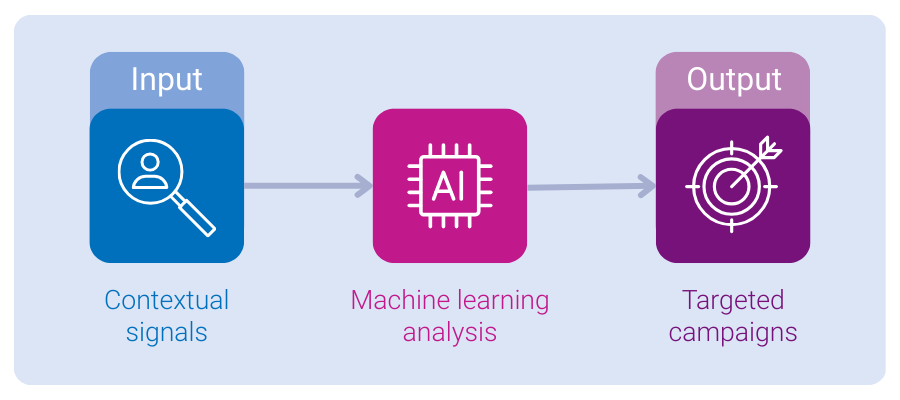
Alex (Yieldmo): There’s been a renaissance in contextual advertising over the last couple of years. Three key drivers are shaping this shift:
- The loss of identity signals is forcing marketers to rethink how they reach audiences.
- Advances in machine learning allow us to analyze more granular contextual signals, identifying patterns that are most valuable to advertisers.
- Tailored models now use these signals to deliver more effective campaigns. This transformation is occurring because of our ability to capture and operate on richer, more detailed data.
Reach consumers with advanced addressability
How does advanced contextual advertising help marketers reach non-addressable audiences?
Jason (Experian): Advanced contextual advertising helps marketers reach non-addressable audiences by taking a set of known data (identity) and drawing inferences from it with all the other signals we see across the bidstream. It’s about using a small seed set of customers, those who have transacted with you before or match your target audience, and training contextual models to make the unknown known. Now we can go out and find users surfing on any of the other sites that traditionally don’t have that identifier for that user or don’t at that moment in time and start to be able to advertise to them based on the contextually indexed data.

Alex (Yieldmo): I think the exciting opportunity for many people in the industry is figuring out how to reach your known audience in a non-addressable space, that is based on environmental and non-identity based signals, that helps your campaign perform. Machine learning advancements allow you to take your small sample audience and uncover those patterns in the non-addressable space. High-quality, privacy-resilient data sets are critical for building these campaigns. Companies like Experian, with deep, rich training data, are well positioned to support advertisers in building extension audiences.
Creative strategies that improve ad performance
Why does creative strategy remain essential for digital advertising success?
Jason (Experian): Creative strategy remains essential because it provides valuable signals for targeting and engages audiences effectively. In this advanced contextual world, good creative in the proper ad format that you can test and learn from is paramount. It comes back to that feedback loop. We can use that as another signal in this equation to develop and refine the right set of audiences for your targeting needs.
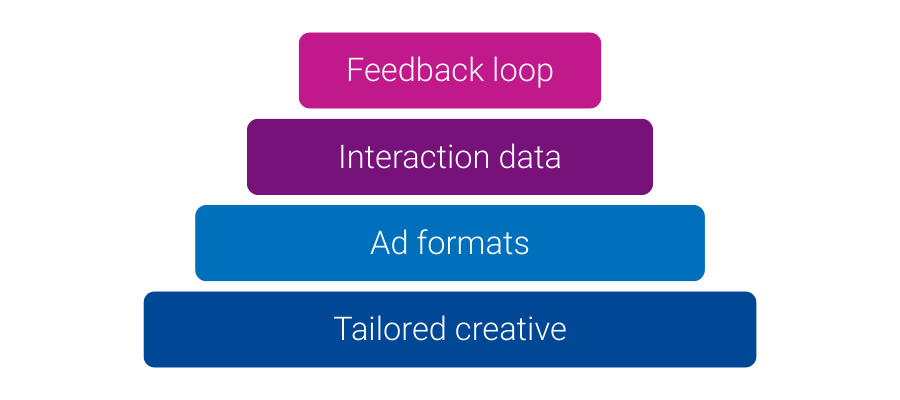
Alex (Yieldmo): Creative and ad formats are powerful signals for understanding audience engagement. At Yieldmo, we collect interaction data every 200 milliseconds, such as scrolling behavior or time spent on an ad. This data fills the gap between clicks and video completions, helping us build models that predict downstream actions. Tailoring creative to specific audience groups has always been one of the best ways to improve performance, and it remains essential in this new era of contextual advertising. Throughout my career, I learned that designing or tailoring your creative to different audience groups is one of the best ways to improve performance. We ran many lift studies with analysis to understand how you can tailor creative customized for individual audiences. That capability and the ability to do that on an identity basis is.
Our recommendations for actionable marketing strategies
Do you have recommendations for marketers building out their yearly strategies or a campaign strategy?
Jason (Experian): My recommendation for marketers building out their yearly strategies is to be proactive and start testing and learning these new solutions now. I mentioned addressability and being in the right place at the right time. That’s easier in today’s third-party cookie world. But as traditional identity is further constricted, you will have these first-party solutions that will not be at scale, so you’re less likely to find your user at the scale you want. It would be best if you thought about how to reach that user at the right place at the right time. They may not be seen from an identity basis. They might not be at the right place at the right time when you were delivering or trying to deliver an ad. But you increase your chance of reaching them by building these advanced contextual targeting audiences using this privacy-safe seed ‘opted-in’ user set; this is a way to cast that wider net and achieve targeted scale.
Alex (Yieldmo): Build your seed lists, test your formats with different audiences, and understand what’s resonating with whom. Take advantage of some of the pretty remarkable advances in machine learning that are allowing us, really, for the first time to fully uncork the potential and the opportunity with contextual in a way that we’ve never done before.
Contact us
About our experts

Jason Andersen
Senior Director, Strategic Initiatives and Partner Solutions, Experian
Jason Andersen heads Strategic Initiatives and Partner Enablement for Experian Marketing Services. He focuses on addressability and activation in digital marketing and working with partners to solve signal loss. Jason has worked in digital advertising for 15+ years, spanning roles from operations and product to strategy and partnerships.

Alex Johnston
Principal Product Manager, Yieldmo
Alex Johnston is the Principal Product Manager at Yieldmo, overseeing the Machine Learning and Optimization products. Before joining Yieldmo, Alex spent 13 years at Google, where he led the Reach & Audience Planning and Measurement products, overseeing a 10X increase in revenue. During his time, he launched numerous ad products, including YouTube’s Google Preferred offering. To learn more about Yieldmo, visit www.yieldmo.com.

About Yieldmo
Yieldmo is an advertising platform that fuses media and creative to meet audiences in the moments that matter. Using proprietary data and AI, Yieldmo uses advanced targeting to deliver context-aware creative when and where it’s most effective, all while respecting user privacy. The result: ads that belong on inventory brands trust. For more information, please visit www.yieldmo.com.
Contextual advertising FAQs
Contextual advertising works by targeting audiences based on the content they’re engaging with, rather than relying on personal identifiers or traditional tracking methods. Yieldmo’s platform uses advanced contextual signals and machine learning to deliver relevant ads in privacy-safe ways.
Contextual advertising addresses signal loss by focusing on environmental and content-based signals instead of relying on thir-dparty cookies or other traditional identifiers. Experian’s identity solutions complement this approach by enabling marketers to connect with audiences in a compliant and scalable way.
Creative is important in contextual advertising because it engages audiences and provides valuable signals for targeting. Yieldmo’s platform collects interaction data, such as scrolling and time spent on ads, to refine campaigns and improve performance.
Marketers can reach non-addressable audience through advanced contextual targeting, which uses known data, like seed audiences, to identify patterns and extend reach. Experian’s identity solutions and contextual data from, Audigent, a part of Experian, help marketers connect with these audiences in privacy-safe and effective ways.
Latest posts

Reach de-identified patient and provider segments at scale across every channel. Pharmaceutical brands and media platforms, including connected TV (CTV), can activate HIPAA-compliant audiences built on real-world clinical and claims data through a new collaboration between PurpleLab and Experian. Targeting de-identified audiences is essential for engaging the right patients at pivotal moments in their health journey, maximizing ROI while safeguarding privacy and improving outcomes. Overall, prescription drugmakers spent $2.97 billion on national TV advertising in the first half of 2025, a 12.2% year-over-year increase, underscoring the growing demand for scalable, privacy-compliant healthcare advertising in premium media environments. Now, whether you're a pharma advertiser launching a new therapy or a platform curating health-focused inventory, PurpleLab’s integration refreshes the media planning ecosystem, offering marketers easier access to the audiences needed to drive impact. Activate with accuracy and scale PurpleLab’s de-identified healthcare segments, categorized by condition, treatment, specialty, and prescription behavior, are now accessible through Experian's data marketplace, streamlining media planning. This integration enables PurpleLab’s privacy-safe audiences to travel from discovery to omnichannel delivery. Experian then handles onboarding, activation, and audience expansion, in accordance with HIPAA and with industry standards. Utilizing Experian’s identity graph, spanning household and individual-level insights, as well as marketing attributes, these healthcare audiences can be: Onboarded securely, matching hashed emails or tokens to digital identifiers Activated across major channels, including CTV, mobile, display, and social Expanded with confidence, reaching more of the target population, patients, or healthcare professionals, without relying on third-party cookies This infrastructure unlocks greater scale and completeness for niche pharma audiences that have historically been hard to reach in digital and streaming environments. For brands navigating fragmented media and tightening privacy regulations, this collaboration provides the clarity and consistency they’ve been seeking. “We know healthcare marketers are under pressure to get it right: to respect privacy, be accurate, and scale. That’s why we’re excited to bring PurpleLab audiences into the Experian data marketplace and make them available through Audigent’s curated deals. It gives pharmaceutical brands and platforms a clear way to plan and measure campaigns, with the assurance that they’re reaching patients and providers when it matters in the right way.”Kim Gilberti, General Manager Curation through Audigent: Premium supply meets premium data For advertisers seeking turnkey media solutions, PurpleLab audiences are now also available through Audigent’s curated deals. Audigent’s curated deals simplify media buying by packaging PurpleLab’s clinically grounded audiences with premium, brand-safe inventory, thus creating a unified package. Instead of stitching together data and supply separately, media buyers can now access pre-built or custom-curated media deals where PurpleLab audiences are already integrated, ideal for health and wellness programming, premium CTV, or contextual content aligned to therapeutic areas. This approach gives marketers both efficiency and accuracy, streamlining execution while maintaining compliance and relevance. “Bringing together PurpleLab’s clinically precise audiences with Experian’s powerful identity and activation capabilities, and pairing it with Audigent’s premium inventory, gives advertisers more than a turnkey solution. It’s the power to launch campaigns that truly resonate, with data and media working in harmony from day one to deliver both efficiency and impact."Scott Ronay, VP, Advertising Sales Real-world use cases: Accuracy with purpose CTV awareness for cardiovascular therapies A cardiovascular brand is launching a CTV campaign to reach healthcare providers involved in treatment decisions. Using PurpleLab’s provider-level segments from the Experian data marketplace, a brand can activate audiences across brand-safe, streaming environments. This strategy enables meaningful engagement with prescribers while maintaining scale and compliance across CTV and complementary digital channels. Cross-device activation for high-impact health campaigns A biotech firm promoting a new therapy needs to reach patients who are likely to have a relevant condition, based on modeled audience segments. Using PurpleLab’s real-world patient segments, the advertiser activates across mobile, display, and CTV, with Experian’s identity graph ensuring household-level consistency across devices. Privacy and scale are preserved, while the brand ensures it’s not wasting impressions on ineligible or misaligned audiences. Closed-loop measurement, built for healthcare Beyond targeting, the PurpleLab–Experian integration empowers advertisers to measure real-world outcomes, not just digital proxies. By utilizing tokenization, Experian enables ad exposure data to be securely matched back to de-identified health events within PurpleLab’s platform. This means marketers can assess outcomes such as: Prescription lift among exposed vs. unexposed audiences Healthcare professional engagement and treatment initiation Patient adherence or follow-through behavior This type of closed-loop reporting is critical in pharma, where traditional metrics like clicks or impressions do not reflect business impact. Now, with token-based match-back, brands can see whether their campaigns are driving real results, securely and compliantly. Ready to reach the right patients and providers securely and at scale? Explore PurpleLab audiences in the Experian data marketplace and Audigent curated deals to activate clinically grounded, privacy-compliant segments across CTV, display, mobile, and more. Contact us Latest posts

Programmatic media buying isn’t getting any easier. Buyers face rising signal loss, shrinking margins, and growing pressure to perform in a privacy-first world. Add in fragmented tech, shifting privacy regulations, and inconsistent identity signals, and reaching the right audience at scale has never been more complex (or costly). Meanwhile, advertisers demand more transparency, publishers want control, and consumers expect relevance without feeling watched. Open exchanges, legacy data management platforms (DMPs), and spray-and-pray strategies just aren’t cutting it. That’s why curation has become a trending topic in the AdTech space. In programmatic advertising, curation refers to the strategic integration of enriched data and quality inventory into a single package — often executed as a private marketplace (PMP) deal. This approach reshapes how campaigns are built, activated, and optimized by enabling performance-ready buys that reduce waste, increase relevance, and give marketers greater control over outcomes. It’s no wonder then that curation investments are accelerating, PMPs are gaining traction, and buyers are shifting budgets accordingly. Over 66% of the $150 billion+ open exchange programmatic market now flows through curated PMPs, with industry giants like Google publicly backing curation as a core strategy. So what exactly is programmatic curation, and why is it becoming essential for privacy-conscious, performance-driven marketers? Let’s break it down. What does programmatic curation mean in AdTech? Programmatic curation is the process of filtering, structuring, and packaging enriched data with high-quality programmatic inventory — enhanced by real-time optimization to create more targeted, efficient, and transparent media buys. Instead of buying at scale and hoping for the best, curation prioritizes accuracy and value over volume, resulting in more targeted, efficient, and transparent media buys. As privacy regulations reshape targeting, curation is becoming a key differentiator in an increasingly crowded AdTech space. It connects robust data with quality supply, helping marketers stay effective while giving publishers new ways to monetize with control. But not all curation is created equal. Programmatic curation requires three core elements: 1. Unique data Unique, privacy-compliant, and valuable. 2. Strong supply connections Access to quality inventory from publishers at scale. 3. Optimization tools To measure, refine, and improve performance during a campaign and improve performance throughout the campaign lifecycle. Without all of these elements, a so-called “curator” may simply be repackaging inventory without delivering the full value of a curated approach. Why does curation still matter with cookies sticking around? While third-party cookies and mobile IDs like IDFA haven’t gone away, the industry has already pivoted in anticipation of their decline. Even without Google flipping the switch, signal loss is here thanks to Apple’s ATT, tighter compliance rules, and new tracking restrictions. Marketers are dealing with less data, more fragmentation, and fewer reliable IDs. So if you want to run an effective, scalable media campaign today, you need tools that go beyond third-party cookies. That’s why programmatic curation is gaining ground as a better, more sustainable way to buy media. Investments in programmatic curation are growing, and not just for identity resolution. Marketers are leaning in because it: Combines verified audience data with premium inventory Supports ID-free or context-aware targeting Enables scalable, identity-agnostic strategies Improves data quality through enrichment Creates more controlled, pre-approved media paths via PMPs Experts anticipate that, at some point, publishers will have to lean into this method. “Curation will be bigger than header bidding and as big as programmatic or RTB — that’s our bet.”Andrew Casale, CEO Whether cookies stay or go in the future, curation works for an ecosystem that demands smarter, cleaner, and adaptable media buying. What are the benefits of curation and who wins? Curation is one of the few innovations in AdTech delivering meaningful wins across the ecosystem. By bringing better data, cleaner supply, and more intentional targeting into programmatic advertising, it helps brands, agencies, and media buyers drive stronger performance, gives publishers more control, and creates a more respectful experience for consumers. And unlike traditional approaches, curation is built for what’s now and what’s next. Here’s how each group benefits and why it matters. Brands and agencies Curation helps brands and agencies run smarter, more efficient campaigns by connecting high-quality data with premium supply. It delivers: More efficient supply paths with less waste and better performance Lower costs than DMP segments and open exchange buys Cleaner, pre-vetted inventory that aligns with audience and brand goals Future-proofed buying via cookieless and log-level data integrations Stronger targeting and measurement driven by enriched data and actual usage signals instead of modeled assumptions Better outcomes through real-time supply and data optimization Publishers For publishers, curation makes inventory more addressable without giving up control. It enables: Smarter packaging that aligns with buyer needs and campaign goals Higher CPMs by curating inventory above open exchange floors More control over how audiences are accessed and how inventory is monetized Access to higher-value demand through curated, data-backed deals Better protection of proprietary audience in a privacy-conscious environment Consumers At the end of the chain, curation improves the ad experience for those who matter most: your audience. It supports: Higher-quality content alignment for more natural, less disruptive ad experiences tailored to their interests Less invasive tracking, as targeting becomes more data-smart and privacy-aware, with reduced reliance on legacy identifiers and personally identifiable information (PII). Curation is setting a new standard for how data, inventory, and experience come together across the ad ecosystem. When media is smarter, cleaner, and more intentional, everyone wins. What’s Experian’s role in powering curation? With the acquisition of Audigent, Experian is now more than just a premier data provider. We’re also a full-service curation partner. Together, we deliver end-to-end programmatic curation across data, inventory, and optimization, helping brands and publishers unlock smarter, more scalable media strategies. What Experian + Audigent enable Whether you need speed-to-market with pre-curated deals or white-glove custom deals, Experian and Audigent make it easier to activate high-performing, privacy-compliant campaigns at scale with: End-to-end curation across data, inventory, and real-time optimization Pre-packaged and custom PMP deals with built-in performance signals Scalable, privacy-first media solutions aligned to brand objectives, verticals, and KPIs These aren’t just theoretical; curated marketplace deals are already delivering measurable gains. In OpenX, Audigent-curated campaigns increased bid competition by 20% and drove a 118% spike in impressions won over a two-month period. Key benefits for partners By bringing together our data depth and Audigent’s curation technology, we offer our partners a full suite of value-added capabilities, including: High-quality, verified data ranked #1 in accuracy by Truthset and powered by Experian’s identity graph and deep programmatic data insights Data enrichment layers that boost addressability, accuracy, and contextual relevance Privacy-compliant infrastructure built for secure, cookieless data use at scale Platform integration across leading demand-side platforms (DSPs) and supply-side platforms (SSPs) for seamless activation and optimization How Boiron achieved smarter reach with Audigent’s curated PMP strategy A leading homeopathic brand partnered with Audigent to scale customer acquisition for its flu relief product without increasing media investment. They wanted to reach new, privacy-compliant audiences while improving CPA across display and video. Using Audigent’s curated SmartPMPs and CognitivePMPs, the campaign delivered measurable performance improvements: 80% lower CPA on display than historical benchmarks 40% lower CPA on video 30% reduction in data costs Significant media efficiency gains through real-time supply and data optimization Fully future-proof targeting with zero reliance on cookies or MAIDs See how Boiron’s success story is just one example of how curated deals backed by Experian identity and Audigent’s optimization technology can deliver efficiency and impact in a privacy-conscious environment. Our curation capabilities Together with Audigent, our curated solutions go beyond basic packaging. Every deal is designed for performance, privacy, and relevance, so you can activate smarter media with greater confidence: Deal ID-ready audiences for fast, turnkey activation Performance-specific curation, including viewability, CTR, and outcome-based targeting Custom audience + inventory packages tailored to campaign goals Vertical-specific curation for industries like auto, retail, CPG, and financial services Real-time optimization signals embedded into every curated deal Don’t wait: Curate today The future of programmatic advertising won’t be won by those waiting for perfect signals, clean cookies, or simplified tech stacks. It’ll be won by marketers and publishers who embrace smarter, cleaner ways to activate their data, inventory, and strategy now. With Experian and Audigent, you’re not just getting better data but also a partner that helps you activate it with accuracy, privacy, and performance at scale. Whether you’re trying to reduce media waste, gain supply path control, or future-proof your campaigns, curated deals can get you there faster. Let’s build a curation strategy that gives you control in a chaotic ecosystem. Latest posts

Traditional audience signals are fading, and the industry is facing a new reality: identity is no longer just about connectivity, it’s about outcomes. At Cannes Lions 2025, leaders from AdRoll, LG Ad Solutions, Magnite, MiQ, OpenAP, PubMatic, Stirista, Tatari shared how innovative identity approaches are cutting through the noise, improving performance, and delivering real ROI. Their insights reveal a clear path forward for those ready to turn identity into a performance driver. Here’s how you can apply the same principles to drive performance. 1. Make identity a performance engine Treating identity as a performance driver leads to measurable results by creating a clear connection between marketing efforts and outcomes. Identity resolution enables the effective retargeting of audiences, accurate performance attribution across connected TV (CTV), and personalized campaigns across multiple channels. By building household-level graphs and incorporating alternative identifiers, marketers can maintain accuracy as traditional signals change. Activating first-party data across both digital and offline channels ensures that every interaction, whether on-screen or in-store, can be tied back to specific actions, helping optimize campaigns, and improve ROI. How Experian helps Experian’s Consumer Sync solutions create a clean foundation and persistent identity spine by resolving and expanding your first-party data across digital and offline IDs (hashed emails, mobile ad IDs, CTV IDs). This enables activation across omnichannel campaigns, from CTV to social, and connects data to outcomes. "Identity resolution is very important to our overall strategy today. Without that identity linkage, we couldn’t speak the same language as our clients. For example, a client might want to target people who engaged with their brand’s website four days ago via CRM data. Without identity resolution, that’s not possible. But with it, we’re changing the narrative – making TV a hospitable place for deploying first-party data and driving outcomes."Mike Brooks 2. Build trust through responsible data practices Consumer trust begins with responsible data practices that prioritize transparency and privacy. Deterministic match rates ensure accuracy by connecting data points with confidence, while clear methodologies provide visibility into how data is used. These practices improve overall campaign performance and protect consumer privacy by ensuring that every interaction is respectful. How Experian helps Experian’s privacy-first approach ensures that all data activation occurs with compliance and consent. By maintaining high match rates and adhering to transparent methodologies, Experian helps build trust and strengthen long-term connections with audiences. "If people don't take any precautions and they don't actually care about data in the public, they probably don't care about it in private. Experian cares about data privacy and compliance, and that made it a no-brainer for us to work with them. When we combined our focus on privacy with Experian’s expertise, we knew we had to do it right – and we did."Henry Olawoye 3. Expand reach while maintaining high match rates Having more data points to identify individuals leads to higher match rates and broader reach. Enriching records with additional identifiers, like hashed emails, MAIDs, and CTV IDs, makes it easier to connect data across channels and create a unified view of each person. This approach ensures that campaigns can scale effectively while maintaining the accuracy needed to deliver personalized experiences. How Experian helps With a database of over 5,000 attributes spanning 15 verticals and categories, Experian provides a comprehensive view of consumers through a single provider. By sourcing data from over 200 sources (including public records, consumer surveys, and purchase records), Experian enables the creation of detailed audience profiles. This enriched data focuses on identity, creating a unified view of individuals that helps pinpoint the best opportunities to engage effectively across channels and deliver measurable outcomes tailored to specific audience needs. "We’ve been able to extend our IDs by an average of 6.5 different identifiers, with a 70% match rate. That extension is huge – it underpins a lot of the connectivity in our platform and allows us to bring 300 data feeds together to make the most of them."Georgiana Haig 4. Create unified campaigns with interoperability Fragmented data often leads to fragmented results. Interoperability ensures that data from different platforms and systems can work together, creating a unified view that makes measurement and attribution more actionable. How Experian helps Experian simplifies interoperability by ensuring consistent data usage from activation and measurement. By connecting data from various sources, Experian enables a cohesive strategy where insights can be shared across publishers, measurement providers, and ad servers, ensuring campaigns remain aligned and effective at every stage. "The ecosystem benefits from optimized interoperability. We’re focused on allowing advertisers to work seamlessly across IDs and identity solutions – from activation to resolution – so the same data set is used consistently across publishers, measurement providers, currencies, programmatic ecosystems, and ad servers."Chris LoRusso 5. Use AI to amplify, not replace, strategy Artificial intelligence (AI) is transforming how campaigns are optimized, but its success depends on clean, consented identity foundations. AI can analyze vast amounts of data to refine targeting, manage frequency, and uncover new efficiencies, but only when built on a strong identity framework. How Experian helps Experian uses AI and machine learning to deliver highly personalized marketing solutions. Advanced clustering algorithms in Experian’s Digital Graph analyze and create household and individual device connections, improving targeting and measurement accuracy, while machine learning models improve consumer insights by inferring household composition where data is limited. These innovations enable AI tools to quickly generate tailored audience solutions, analyze contextual signals in real time, and identify opportunities that improve results while maintaining a human centered approach to decision making. "AI is a copilot to your marketing initiatives. For it to perform, it needs insights and information to learn from. That’s why having a strong foundational data asset rooted in deterministic data is so important."Howard Luks Five moves to turn identity into profit Here are five steps to get started: 1. Audit your data health Make sure your audience data is accurate, up-to-date, and complete so you’re starting from a strong foundation. 2. Layer in more context Enrich your records with details, like lifestyle, interests, or buying behaviors, that help you speak your audience’s language. 3. Unify touchpoints across channels Link your data so you can see the same person or household whether they’re engaging on CTV, mobile, desktop, in-store, or through other touchpoints. 4. Activate AI for stronger campaigns Use AI tools to fine-tune targeting, control ad frequency, and find hidden opportunities once your foundation is solid. 5. Align data across systems Ensure interoperability so data from different platforms and systems can work together, creating a unified view for actionable insights. The common thread across these insights is connection: connecting data, teams, and outcomes. Marketers who act on these imperatives will be ready for whatever new channel, format, or privacy rule comes next. Let’s start a conversation about how Experian can help you turn identity into ROI Latest posts