At A Glance
Experian and Yieldmo collaborate to help marketers navigate signal loss with privacy-safe contextual advertising. By combining Experian’s identity solutions with Yieldmo’s advanced targeting, this collaboration enables effective audience engagement in a world with fewer traditional signals.Note: While third-party cookies are no longer being phased out, this webinar was recorded in 2023 when cookie deprecation was still a key industry focus. The strategies discussed reflect that time frame and remain relevant for addressing broader signal loss challenges.
With major browsers discontinuing support for third-party cookies, marketers must rethink how to identify and engage their audiences. Contextual advertising offers a privacy-safe solution by combining contextual signals with machine learning to deliver highly targeted campaigns. In a Q&A with our experts with eMarketer, Jason Andersen, Senior Director of Strategic Initiatives and Partner Solutions at Experian, and Alex Johnston, Principal Product Manager at Yieldmo, we discuss how contextual advertising addresses signal loss, improves addressability, and delivers better outcomes for marketers.

The macro trends impacting marketers
How important is it for digital marketers to stay informed about the changes coming to third-party cookies, and what challenges do you see signal loss creating?
Jason (Experian): Third-party cookies have already been eliminated from Firefox, Safari, and other browsers, while Chrome has held out. It’s just a matter of time before Chrome eliminates them too. Being proactive now by predicting potential impacts will be essential for maintaining growth when the third-party cookie finally disappears.

Alex (Yieldmo): Third-party cookie loss is already a reality. As regulations like theGeneral Data Protection Regulation (GDPR) and the California Consumer Privacy Act(CCPA) take effect, more than 50% of exchange traffic lacks associated identifiers. This means that marketers have to think differently about how they reach their audiences in an environment with fewer data points available for targeting purposes. It’s no longer something to consider at some point down the line – it’s here now! Also, as third-party cookies become more limited, reaching users online is becoming increasingly complex and competitive. Without access to as much data, the CPMs (cost per thousand impressions) that advertisers must pay are skyrocketing because everyone is trying to bid on those same valuable consumers. It’s essential for businesses desiring success in digital advertising now more than ever before.
Solving signal loss with contextual advertising
How does contextual advertising help marketers engage audiences with new strategies like machine learning and artificial intelligence (AI)?
Jason (Experian): Contextual advertising helps marketers engage audiences by combining advanced machine learning with privacy-safe strategies. We focus on using AI and machine learning to better understand behavior, respect privacy, and deliver insights. As third-party cookies go away, alternative identifiers are coming to market, like Unified I.D. 2.0 (UID2). These are going to be particularly important for marketers to be able to utilize them. As cookie syncing becomes outdated, marketers will have to look for alternative methods to reach their target audiences. It’s essential to look beyond cookie-reliant solutions and use other options available regarding advertising.
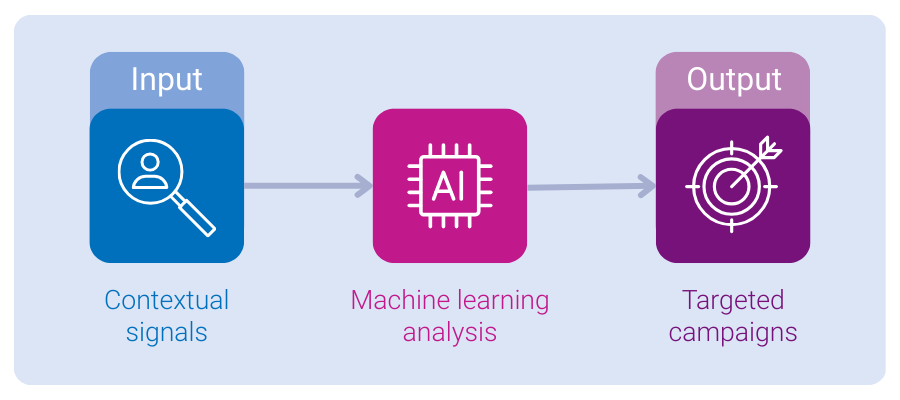
Alex (Yieldmo): There’s been a renaissance in contextual advertising over the last couple of years. Three key drivers are shaping this shift:
- The loss of identity signals is forcing marketers to rethink how they reach audiences.
- Advances in machine learning allow us to analyze more granular contextual signals, identifying patterns that are most valuable to advertisers.
- Tailored models now use these signals to deliver more effective campaigns. This transformation is occurring because of our ability to capture and operate on richer, more detailed data.
Reach consumers with advanced addressability
How does advanced contextual advertising help marketers reach non-addressable audiences?
Jason (Experian): Advanced contextual advertising helps marketers reach non-addressable audiences by taking a set of known data (identity) and drawing inferences from it with all the other signals we see across the bidstream. It’s about using a small seed set of customers, those who have transacted with you before or match your target audience, and training contextual models to make the unknown known. Now we can go out and find users surfing on any of the other sites that traditionally don’t have that identifier for that user or don’t at that moment in time and start to be able to advertise to them based on the contextually indexed data.

Alex (Yieldmo): I think the exciting opportunity for many people in the industry is figuring out how to reach your known audience in a non-addressable space, that is based on environmental and non-identity based signals, that helps your campaign perform. Machine learning advancements allow you to take your small sample audience and uncover those patterns in the non-addressable space. High-quality, privacy-resilient data sets are critical for building these campaigns. Companies like Experian, with deep, rich training data, are well positioned to support advertisers in building extension audiences.
Creative strategies that improve ad performance
Why does creative strategy remain essential for digital advertising success?
Jason (Experian): Creative strategy remains essential because it provides valuable signals for targeting and engages audiences effectively. In this advanced contextual world, good creative in the proper ad format that you can test and learn from is paramount. It comes back to that feedback loop. We can use that as another signal in this equation to develop and refine the right set of audiences for your targeting needs.
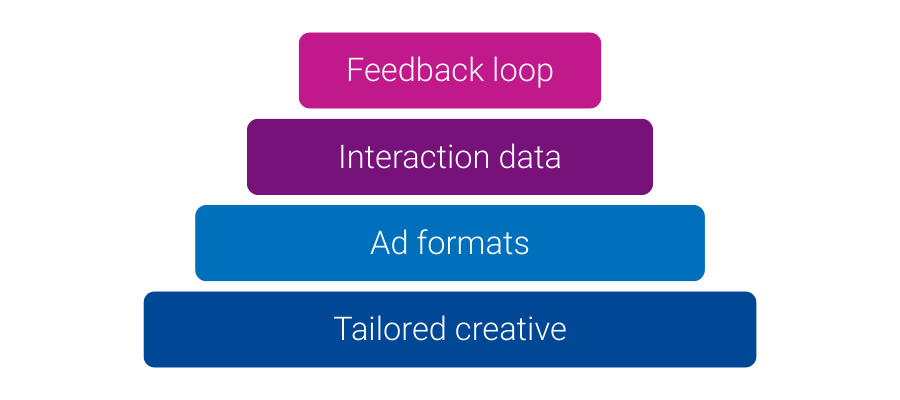
Alex (Yieldmo): Creative and ad formats are powerful signals for understanding audience engagement. At Yieldmo, we collect interaction data every 200 milliseconds, such as scrolling behavior or time spent on an ad. This data fills the gap between clicks and video completions, helping us build models that predict downstream actions. Tailoring creative to specific audience groups has always been one of the best ways to improve performance, and it remains essential in this new era of contextual advertising. Throughout my career, I learned that designing or tailoring your creative to different audience groups is one of the best ways to improve performance. We ran many lift studies with analysis to understand how you can tailor creative customized for individual audiences. That capability and the ability to do that on an identity basis is.
Our recommendations for actionable marketing strategies
Do you have recommendations for marketers building out their yearly strategies or a campaign strategy?
Jason (Experian): My recommendation for marketers building out their yearly strategies is to be proactive and start testing and learning these new solutions now. I mentioned addressability and being in the right place at the right time. That’s easier in today’s third-party cookie world. But as traditional identity is further constricted, you will have these first-party solutions that will not be at scale, so you’re less likely to find your user at the scale you want. It would be best if you thought about how to reach that user at the right place at the right time. They may not be seen from an identity basis. They might not be at the right place at the right time when you were delivering or trying to deliver an ad. But you increase your chance of reaching them by building these advanced contextual targeting audiences using this privacy-safe seed ‘opted-in’ user set; this is a way to cast that wider net and achieve targeted scale.
Alex (Yieldmo): Build your seed lists, test your formats with different audiences, and understand what’s resonating with whom. Take advantage of some of the pretty remarkable advances in machine learning that are allowing us, really, for the first time to fully uncork the potential and the opportunity with contextual in a way that we’ve never done before.
Contact us
About our experts

Jason Andersen
Senior Director, Strategic Initiatives and Partner Solutions, Experian
Jason Andersen heads Strategic Initiatives and Partner Enablement for Experian Marketing Services. He focuses on addressability and activation in digital marketing and working with partners to solve signal loss. Jason has worked in digital advertising for 15+ years, spanning roles from operations and product to strategy and partnerships.

Alex Johnston
Principal Product Manager, Yieldmo
Alex Johnston is the Principal Product Manager at Yieldmo, overseeing the Machine Learning and Optimization products. Before joining Yieldmo, Alex spent 13 years at Google, where he led the Reach & Audience Planning and Measurement products, overseeing a 10X increase in revenue. During his time, he launched numerous ad products, including YouTube’s Google Preferred offering. To learn more about Yieldmo, visit www.yieldmo.com.

About Yieldmo
Yieldmo is an advertising platform that fuses media and creative to meet audiences in the moments that matter. Using proprietary data and AI, Yieldmo uses advanced targeting to deliver context-aware creative when and where it’s most effective, all while respecting user privacy. The result: ads that belong on inventory brands trust. For more information, please visit www.yieldmo.com.
Contextual advertising FAQs
Contextual advertising works by targeting audiences based on the content they’re engaging with, rather than relying on personal identifiers or traditional tracking methods. Yieldmo’s platform uses advanced contextual signals and machine learning to deliver relevant ads in privacy-safe ways.
Contextual advertising addresses signal loss by focusing on environmental and content-based signals instead of relying on thir-dparty cookies or other traditional identifiers. Experian’s identity solutions complement this approach by enabling marketers to connect with audiences in a compliant and scalable way.
Creative is important in contextual advertising because it engages audiences and provides valuable signals for targeting. Yieldmo’s platform collects interaction data, such as scrolling and time spent on ads, to refine campaigns and improve performance.
Marketers can reach non-addressable audience through advanced contextual targeting, which uses known data, like seed audiences, to identify patterns and extend reach. Experian’s identity solutions and contextual data from, Audigent, a part of Experian, help marketers connect with these audiences in privacy-safe and effective ways.
Latest posts

What challenge did the pet brand face? A national e-commerce pet supplier wanted to expand into audio advertising to diversify beyond display campaigns. But with only one team member available to test this new channel, they faced three hurdles: Prove performance in a new channel Run lean with limited bandwidth Show purchase intent, engaged site visits, and completion rates fast They needed a partner to handle execution and supply optimization so their lean team could focus on strategy and selling audio internally. Hear how we're working with Audacy to help our clients connect beyond the screen Tune in here The solution: How did Experian Curated Deals help? Audigent, a part of Experian, ran point on setup, optimization, and real-time reporting. The brand turned to Experian Curated Deals. Together we: Streamlined access to curated inventory, cutting intermediaries and boosting efficiency Handled campaign setup and supply-side optimization Delivered real-time demand-side platform (DSP) reporting for agile targeting refinements Provided an extension of their in-house team, giving them bandwidth to focus on pitching audio internally “What stood out about Experian was their real-time control and the depth of their trading team. I knew I could hand them a campaign, and they’d run with it.”Programmatic Media Lead, National e-commerce pet supplier Want to see the full case study? Download it here What results did the campaign deliver? In just a few months, audio transformed from a small test into a top-performing channel: Exceeded KPIs by 63% Increased purchase intent and engagement vs. competing platforms Matched display performance without creative refreshes or incentive overlays Earned budget increases, positioning audio as a long-term investment Reduced internal setup time, freeing the team for strategic projects “Experian became more than just a media partner: they filled critical gaps that would typically require outsized investment in internal resourcing.”CMO, National e-commerce pet supplier Explore more examples of how brands are driving performance with Experian Windstar Cruises Leading athletic retailer Swiss Sense Why does this matter for marketers? For marketers, audio isn’t experimental anymore. It’s a proven channel that can drive both engagement and conversions. This case study shows how brands can: Use Experian Curated Deals to validate new channels with minimal risk. Lean on Experian to handle execution, freeing teams to focus on growth. Drive meaningful engagement and purchase intent, not just impressions. For marketers navigating limited resources and pressure to prove ROI fast, Experian Curated Deals provides both performance and confidence. Want to beat your campaign goals by double digits? Contact us today Curated Deals FAQs What is Experian Curated Deals? Experian Curated Deals streamline access to premium media inventory by eliminating unnecessary intermediaries, optimizing efficiency, and ensuring campaigns perform against KPIs. Why use curated deals for audio advertising? Curated deals help brands test and validate audio quickly, without the heavy lift of manual setup and supply path management. Can audio really drive conversions? Yes. In this case, audio campaigns not only exceeded awareness and engagement goals but also matched the conversion performance traditionally associated with display. How does Experian support lean teams? By managing setup, supply optimization, and reporting, Experian acts as an extension of your team, reducing internal workload while driving performance. Latest posts

In our Ask the Expert Series, we interview leaders from our partner organizations who are helping lead their brands to new heights in AdTech. Today’s interview is with Paul Zovighian, VP of Marketplaces at Index Exchange. Sell-side activation vs. buy-side packaging What’s fundamentally changed with sell-side decisioning, and how does it now diverge from traditional buy-side packaging? Sell-side decisioning is programmatic’s next major evolution – one that redefines how intelligence enters the transaction. Advances in infrastructure and computing power now allow supply-side platforms(SSPs) to act in the crucial pre-bid moment, enriching impressions with context, quality, and data before they reach the buy side. This isn’t just about efficiency; it’s about unlocking new value. Smarter requests mean buyers see only the most relevant opportunities, while publishers gain recognition for the true worth of their audiences and environments. We’re still at the beginning of this shift. Many players still package inventory without engaging in real pre-bid intelligence. As the market matures, the companies that evolve toward sell-side decisioning will be the ones to set the pace for programmatic’s future. Economic shifts with scaled curation As curation scales, what economic levers shift for both publishers and buyers, and how do those shifts influence deal structure and media planning? As curation scales, one of the most powerful levers is data. It’s the industry’s most valuable asset, and on Index it keeps its full worth. We don’t take a platform cut or add hidden fees, so data partners benefit from the clearest, most efficient economics in the market. Data vendors gain confidence that their economics aren’t eroded by a platform tax. For publishers, this means stronger yield and more ad spend flowing directly into working media. When data retains its full value, it enhances how impressions are packaged, priced, and differentiated—driving more competition for quality inventory and more opportunities for revenue. For buyers, it means compressed supply paths and total transparency – they know exactly what they’re paying for. With no intermediaries and full transparency into economics, buyers gain a clearer view of where their budgets go and the confidence that their investments reach real audiences in trusted environments. They benefit from cleaner supply chains, better performance, and more meaningful alignment between spend and outcome. The result is a healthier marketplace where both sides benefit from efficiency, fairness, and scale. Moving decisions upstream for value What decisions historically made in DSPs should now move upstream to publishers or SSPs to unlock more value, and which should remain buy-side? Decisioning is no longer confined to demand-side platforms(DSPs). We can enrich impressions by applying intelligence — via data, algorithms, creative technology, and more, before they even reach the buy side — adding context, filtering out low-quality supply, and expanding audience discovery. This isn’t about shifting roles; DSPs remain critical for campaign strategy, optimization, and budget allocation. The sell side simply ensures every bid request is smarter from the start, creating more value for all parties. In doing so, we also alleviate pressure on DSPs — enabling more comprehensive data discovery by searching for signals at the top of the funnel, prior to optimization. That means DSPs can focus on what they do best, supported by a cleaner, more transparent supply path. Index Marketplaces use cases explained Index Marketplaces is designed to enable the strength of our partners, and Experian brings one of the broadest sets of demographic and audience insights in the industry. That scale enables a wide variety of applications, from more precise audience activation to deeper measurement and analytics. What’s different on the sell side is how those insights are applied. By activating Experian’s syndicated audiences directly at the point of decision, their value is realized in real time and across the full scale of the open internet. Buyers gain a clearer path to relevant audiences, and publishers benefit from stronger alignment between data and media. It’s an approach that ensures partners like Experian can maximize the impact of their assets while helping the market move toward more intelligent, performance-driven activation. Identity signals with stronger privacy For identity partners like Experian, what’s the right way to bring audience, context, and propensity signals into sell-side activation? The beauty of sell-side decisioning is that it reduces the hops in how identity signals are applied. Without it, IDs have to travel through multiple platforms, creating extra handoffs and additional risks of data loss or leakage. With sell-side decisioning, those signals are obfuscated under a deal ID and applied directly at the point of decision. That means audience, context, and propensity data are activated securely, without ever leaving the sell-side environment. For partners like Experian, it’s the cleanest path to value: fewer hops, stronger privacy protection, and clearer economics for everyone in the chain. Contact us About our expert Paul Zovighian VP of Marketplaces, Index Exchange Paul Zovighian carries over a decade of industry expertise, stemming from his analytics and optimization roots to his current post as VP, Marketplaces, where he is focused on the commercial activation of Index’s newest product, Index Marketplaces. Previously, in his role as VP of corporate development, Paul led Index’s first-ever business acquisition. In his spare time, he enjoys long walks on the beach and befriending cats in NYC’s thriving bodega community. About Index Exchange Index Exchange is a global advertising supply-side platform enabling media owners to maximize the value of their content on any screen. They’re a proud industry pioneer with over 20 years of experience connecting leading experience makers with the world’s largest brands to ensure a quality experience for consumers. FAQs What is sell-side decisioning, and why is it important? Sell-side decisioning allows publishers to add intelligence, like audience data and context, before ad impressions are sent to buyers. This makes the process more efficient and ensures advertisers see only the most relevant opportunities. How does sell-side decisioning differ from traditional buy-side packaging? Traditional buy-side packaging happens after impressions are sent to demand-side platforms (DSPs). Sell-side decisioning moves some of that intelligence upstream, enriching impressions earlier and reducing inefficiencies. What does "curation" mean in this context, and how does it benefit publishers and advertisers? Curation refers to the process of organizing and enriching ad inventory with data and context. For publishers, it leads to better yield and more ad spend going directly to their media. For advertisers, it means clearer, more transparent supply paths. How does sell-side decisioning improve privacy? By applying audience and identity signals directly on the sell side, data stays within a secure environment. This reduces the number of platforms handling sensitive information, lowering the risk of data loss or leakage. What role does Experian play in sell-side decisioning? Experian provides demographic and audience insights that are activated directly at the point of decision. This helps advertisers reach the right audiences more effectively while ensuring publishers can maximize the value of their inventory. Why is moving decisioning upstream beneficial for DSPs? When publishers and SSPs handle some decisioning earlier, DSPs can focus on campaign strategy and optimization. This creates a cleaner, more efficient process for everyone involved. What is a deal ID, and how does it enhance privacy? A deal ID is a unique identifier used in programmatic advertising to bundle audience and context signals securely. It ensures data is applied without being exposed or shared across multiple platforms. Latest posts

As artificial intelligence (AI), connected TV (CTV), and data collaboration continue to advance, advertisers are discovering new ways to meet audiences where they are; on their terms and in their spaces. These innovations are creating opportunities to deliver more personalized, impactful campaigns that were unimaginable just a few years ago. At Cannes Lions 2025, we sat down with industry leaders from Butler Till, Comcast Advertising, Index Exchange, IQVIA Digital, Optable, PMG, Samsung Ads, and Sports Innovation Lab. From reimagining the living room experience to using AI in practice for better outcomes, here’s what we learned about the trends driving advertising forward. 1. CTV turns living rooms into active spaces CTV has turned the living room into a hub of interaction, discovery, and commerce. Younger audiences are using their TVs like mobile devices; streaming, learning, and even controlling their homes. This shift is creating new opportunities for advertisers to deliver relevant, personalized experiences where audiences are already engaged. With premium content and interactive tools, the living room is no longer just a passive space, it’s where attention meets action, and where brands can connect with audiences in meaningful ways. How Experian helps With Experian, advertisers can connect first-party data with CTV IDs, ensuring accurate and measurable targeting while maintaining a privacy-first approach. That means brands reach viewers with messages that feel personal, without losing trust. “We surveyed 1,000 smart TV owners and found that younger audiences are using their TVs like mobile devices. Two-thirds use them for social media, 40% for self-improvement like Coursera or TED Talks, and 25% for interactivity; controlling appliances or home temperatures. Interactivity with connected TVs is skyrocketing.”Justin Evans 2. Creators build stronger connections with audiences Creators are no longer limited to social media; they are now a driving force in CTV. Creator led programming is capturing attention and driving post view actions, offering advertisers a unique way to connect with passionate, engaged audiences. By thinking of creators as “micro networks” with built in communities, advertisers can meet fans where they already gather and deliver authentic, impactful messages that resonate. How Experian helps Experian helps advertisers tap into the creator economy by identifying topical audiences that align with influencer niches—like food, travel, gaming and entertainment—and activating them across the open web. Through Audigent’s integration with DV360, brands can pair Experian's expansive audience targeting capabilities with Audigent's Curated Deals to reach engaged viewers in creator-led environments. This approach ensures ads appear where audiences are most receptive, enhancing relevance and performance. “The creator economy is moving into TV. It’s incredible to see social influencers, once dominant on platforms, now creating high quality content for streaming, networks, and more.”Gina Whelehan 3. Data collaboration that drives better results Advertisers rely on data to reach the right audiences, but privacy concerns are reshaping how it’s collected, shared, and used. Data collaboration enables brands to combine multiple data sets (like first-party data and syndicated audiences) to improve planning, activation, and measurement. While privacy remains a priority, the focus is on creating actionable insights that drive better results and build trust with consumers. By focusing on consented, privacy safe identity solutions, advertisers can achieve better outcomes while respecting consumer privacy; a win-win for brands and audiences alike. How Experian helps Experian’s privacy-first approach ensures that all data activation occurs with compliance and consent. By maintaining high match rates, offering flexible collaboration options (including clean rooms, first-party data onboarding, and syndicated audiences) and adhering to transparent methodologies, Experian facilitates seamless collaboration between brands, publishers, and platforms. This helps build trust and strengthen long-term connections with audiences. “The area we’re most excited about is identity resolution on the publisher side. Publishers can reinsert signal and create better results for advertisers. This wasn’t always well-articulated, but today we have case studies proving publishers can help improve outcomes.” Vlad Stesin 4. Optimizing supply paths for better outcomes Supply path optimization (SPO) helps advertisers improve campaign efficiency by increasing viewability and reducing waste. Supply-side decisioning builds on this by identifying the audiences advertisers want to reach, the content those audiences consume, and the publishers with the most relevant inventory. Together, these strategies create a more intelligent and efficient ecosystem, ensuring ads are delivered in the right context, to the right people, on the right platforms. How Experian helps Experian’s data solutions, including both Experian’s and Audigent’s contextual and identity capabilities, are available across sell-side (SSPs) and buy-side (DSPs) platforms, enabling smarter decision-making throughout the media supply chain. Audigent’s direct integrations with publishers provide an unfiltered view into available inventory, offering deeper insights that inform campaign optimization. These insights can be activated in real time and transacted within advertisers’ existing buying platforms. By powering real-time intelligence across the ecosystem, from advertisers to DSPs, SSPs, and publishers, Experian and Audigent help drive better outcomes, more efficient media spend, and greater value for all participants. “Sell-side decisioning activates the intelligence of the exchange, along with partners like Experian, to optimize auctions in real time. This helps pre-decision buys that flow to the DSPs, making the buying process smarter, more efficient, and ultimately driving better value for marketers and publishers.” Mike McNeeley 5. AI that streamlines agency workflows AI is a practical tool that agencies are using to streamline workflows and deliver better results. From planning and pacing to creative iteration, AI is helping teams move faster and smarter. In fact, 67% of global marketing and communications professionals now use AI for content creation frequently or all the time, underscoring its role in modern workflows. The key is to think of AI as a navigator, not a replacement. It handles repetitive tasks, freeing up teams to focus on strategy and creativity, while enabling faster tests, fewer dead ends, and better client clarity. How Experian helps Experian uses AI and machine learning to deliver highly personalized marketing solutions. In our Digital Graph, advanced clustering algorithms analyze household and individual device connections, improving targeting and measurement accuracy. We also use AI powered audience recommendations to create tailored audience solutions for clients. Our contextual data models, powered by Audigent’s contextual engine, further improve this process by analyzing bidstream traffic in real time, ensuring audiences are aligned with the most relevant inventory. “We’ve extended our platform with Marketplace, which lets us integrate third-party partners, new tech, and data seamlessly into activation. Clients are asking for this level of innovation, especially with the speed at which AI is evolving and transforming what’s possible in marketing.”Sam Bloom Connecting the dots: Data, creativity, and outcomes The common thread across these insights is how we connect with audiences, collaborate on data, and create meaningful outcomes. By reimagining the living room experience and utilizing AI and creator-led programming, brands are embracing innovation. How Experian helps Experian helps you build privacy-first identity foundations, collaborate seamlessly, optimize supply paths, streamline with AI, and connect through creators. Let's start a conversation FAQs What is CTV, and why does it matter now? CTV brings premium, interactive streaming to the largest screen at home, allowing brands to reach engaged viewers with measurable, personalized experiences. What is data collaboration, and how does it stay privacy-first? It’s the consented, secure use of first-party and partner data (often via clean rooms) to improve planning, activation, and measurement without exposing raw consumer data. What do “SPO” and sell-side decisioning actually do? SPO streamlines the path from advertiser to publisher, reducing waste and improving quality. Sell-side decisioning adds real-time intelligence to the exchange, delivering the proper context and audience more efficiently. How are creators changing TV advertising? Creator-led programming functions like “micro networks” with built-in communities, helping brands show up where fans are already engaged and ready to act. How are living rooms becoming “active spaces”? Viewers use TVs like mobile devices, discovering content, learning, shopping, and interacting; advertisers can meet their intent and drive post-view actions. Latest posts