Contextual ad targeting paves the way for new opportunities
Advertisers and marketers are always looking for ways to remain competitive in the current digital landscape. The challenge of signal loss continues to prompt marketers to rethink their current and future strategies. With many major browsers phasing out support for third-party cookies due to privacy and data security concerns, marketers will need to find new ways to identify and reach their target audience. Contextual ad targeting offers an innovative solution; a way to combine contextual signals with machine learning to engage with your consumers more deeply through highly targeted accuracy. Contextual advertising can help you reach your desired audiences amidst signal loss – but what exactly is contextual advertising, and how can it help optimize digital ad success?
In a Q&A with our experts, Jason Andersen, Senior Director of Strategic Initiatives and Partner Solutions with Experian, and Alex Johnston, Principal Product Manager with Yieldmo, they explore:
- The challenges causing marketers to rethink their current strategies
- How contextual advertising addresses signal loss
- Why addressability is more important than ever
- Why good creative is still integral in digital marketing
- Tips for digital ad success

By understanding what contextual advertising can offer, you’ll be on the path toward creating powerful, effective campaigns that will engage your target audiences.
Check out Jason and Alex’s full conversation from our webinar, “Making the Most of Your Digital Ad Budget With Contextual Advertising and Audience Insights” by reading below. Or watch the full webinar recording now!
Macro impacts affecting marketers
How important is it for digital marketers to stay informed about the changes coming to third-party cookies, and what challenges do you see signal loss creating?
Jason: Marketers must stay informed to succeed as the digital marketing landscape continuously evolves. Third-party cookies have already been eliminated from Firefox, Safari, and other browsers, while Chrome has held out. It’s just a matter of time before Chrome eliminates them too. Being proactive now by predicting potential impacts will be essential for maintaining growth when the third-party cookie finally disappears.

Alex: Jason, I think you nailed it. Third-party cookie loss is already a reality. As regulations like the General Data Protection Regulation (GDPR) and the California Consumer Privacy Act (CCPA) take effect, more than 50% of exchange traffic lacks associated identifiers. This means that marketers have to think differently about how they reach their audiences in an environment with fewer data points available for targeting purposes. It’s no longer something to consider at some point down the line – it’s here now!
Also, as third-party cookies become more limited, reaching users online is becoming increasingly complex and competitive. Without access to as much data, the CPMs (cost per thousand impressions) that advertisers must pay are skyrocketing because everyone is trying to bid on those same valuable consumers. It’s essential for businesses desiring success in digital advertising now more than ever before.

Contextual ad targeting: A solution for signal loss
How does contextual ad targeting help digital marketers find new ways to reach and engage with consumers? What can you share about some new strategies that have modernized marketing, such as machine learning and Artificial Intelligence (AI)?
Jason: We’re taking contextual marketing to the next level with advanced machine learning. We are unlocking new insights from data beyond what a single page can tell us about users. As third-party cookies go away, alternative identifiers are coming to market, like RampID and UID2. These are going to be particularly important for marketers to be able to utilize.
As cookie syncing becomes outdated, marketers will have to look for alternative methods to reach their target audiences. It’s essential to look beyond cookie-reliant solutions and use other options available regarding advertising.
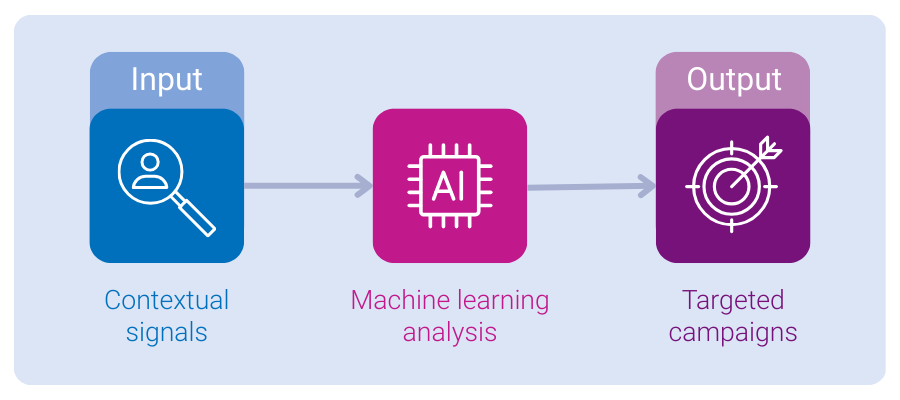
Alex: I think, as Jason alluded to, there’s a renaissance in contextual advertising over the last couple of years. If I were to break this down, there are three core drivers:
- The loss of identity signals. It’s forcing us to change, and we must look elsewhere and figure out how to reach our audiences differently.
- There have been considerable advances in our ability to store and operate across a set of contextual signals far more extensive than anything we’ve ever worked with in the past and in far more granular ways. That’s a huge deal because when it comes to machine learning, the power and the impact of those machine learning models are entirely based on how extensive and granular the data set is that you can collect. Machine learning can pull together critical contextual signals and figure out which constellations, or which combinations of those signals, are most predictive and valuable to a given advertiser.
- We can tailor machine learning models to individual advertisers using all those signals and find patterns across those in ways that were previously impractical or unfeasible. The transformation is occurring because of our ability to capture much more granular data, operate across it, and then build models that work for advertisers.

Addressability: Connect your campaigns to consumers
How does advanced contextual targeting help marketers reach non-addressable audiences?
Jason: Advanced contextual targeting allows us to take a set of known data (identity) and draw inferences from it with all the other signals we see across the bitstream. It’s taking that small seed set of either, customers that transacted with you before that you have an identity for, or customers that match whom you’re looking for. We can use that as a seed set to train these new contextual models. We can now look at making the unknown known or the unaddressable addressable. So, it’s not addressable in an identity sense, it is addressable in a contextual or an advanced contextual sense that’s made available to us, and we can derive great insight from it.
One of the terms I like to use is contextual indexing. This is where we take a set of users we know something about. So, I may know the identity of a particular group of households, and I can look at how those households index against any of the rich data sets available to us in any data marketplace, for example, the data Yieldmo has. We can look at how that data indexes to those known users to find patterns in that data and then extrapolate from that. Now we can go out and find users surfing on any of the other sites that traditionally don’t have that identifier for that user or don’t at that moment in time and start to be able to advertise to them based on the contextually indexed data.

Historically, we’ve done some contextual ad targeting based on geo-contextual, and this is when people wanted to do one to one marketing, and geo-contextual outperformed the one to one. But marketers weren’t ready for alternatives to one to one yet. We want marketers to start testing these solutions. Advertisers must start trying them, learning how they work, and learn how to optimize them because they are based on a feedback loop, and they’re only going to get better with feedback.
Alex: Jason, you described that perfectly. I think the exciting opportunity for many people in the industry is figuring out how to reach your known audience in a non-addressable space, that is based on environmental and non-identity based signals, that helps your campaign perform. Your known audience are people that are already converting – those who like your products and services and are engaged with your ads. Machine learning advancements allow you to take your small sample audience and uncover those patterns in the non-addressable space.
It’s also worth noting that in this world in which we are using seed audiences, or you are using your performing audiences to build non-addressable counterpart targeting campaigns, having high-quality, privacy-resilient data sets becomes incredibly important. In many cases, companies like Experian, who have high quality, deep rich training data, are well positioned to support advertisers in building those extension audiences. As we see the industry evolve, we’re going to see some significant changes in terms of the types of, and ways in which, companies offer data, and make that available to advertisers for training their models or supporting validation and measurement of those models.
Jason: Addressable users, the new identity-based users, are critical to marketers’ performance initiatives. They’re essential to training the models we’re building with contextual advertising. Together, addressable users and contextual advertising are a powerful combination. It’s not just one in isolation. It’s not just using advanced contextual, and it’s not just using the new identifiers. It’s using a combination to meet your performance needs.
It’s imperative to start thinking about how you can begin building your seed audiences. What can you start learning from, and how do you put contextual into play today? You are looking to build off a known set and build a more advanced model. These can be specialized models based on your data. You can hone in and create a customized model for your customer type, their profile, and how they transact. It’s a greenfield opportunity, and we’re super excited about the future of advanced contextual targeting.

Turn great creative into measurable data points
Why does good creative still play an integral part in digital advertising success?
Jason: Good creative has always been meaningful. It’s vital in getting people to click on your ad and transact. But it’s becoming increasingly important in this new world that we’re talking about, this advanced contextual world. The more signal that we can get coming into these models, the better. Good creative in the proper ad format that you can test and learn from is paramount. It comes back to that feedback loop. We can use that as another signal in this equation to develop and refine the right set of audiences for your targeting needs.
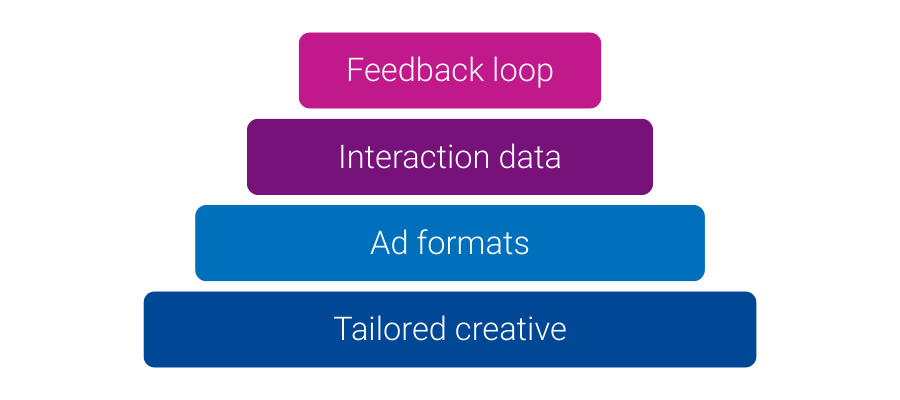
Alex: If you imagine within the broader context of identity and signal loss, creative and ad format becomes incredibly powerful signals in understanding how different audiences interact with and engage with different creative. In the case of the formats that serve on the Yieldmo exchange, we’re collecting data every 200 milliseconds around how individual users are engaging with those ads. Interaction data like the user scrolling back or the number of pixel seconds they stay on the screen, fills this critical gap between video completes and clicks. Clicks are sparse and down the funnel, and views and completes are up the funnel. All those attention and creative engagement type metrics occupy the sweet spot where they’re super prevalent, and you can collect them and understand how different audiences engage with your ads. That data lets you build powerful models because they predict all kinds of other downstream actions.
Throughout my career, I learned that designing or tailoring your creative to different audience groups is one of the best ways to improve performance. We ran many lift studies with analysis to understand how you can tailor creative customized for individual audiences. That capability and the ability to do that on an identity basis is starting to deteriorate. The ability to do that using a sample of data or using a smaller set of users, either where you’re inferring characteristics or you’re looking at the identity that does exist in a smaller group, becomes powerful for being able to customize your creative to tell the right story to the right audience. When you layer together all the interaction data collected at the creative level on top of all the contextual and environmental signals, you can build powerful models. Whether those are driving proxy metrics, or downstream outcomes, puts us in a powerful position to respond to the broader loss of identity that we’ve relied on for so many years.

Our recommendations for marketers for 2023 and beyond
Do you have recommendations for marketers building out their yearly strategies or a campaign strategy?
Jason: Be proactive and start testing and learning these new solutions. I mentioned addressability and being in the right place at the right time. That’s easier in today’s third-party cookie world. But as traditional identity is further constricted, you will have these first-party solutions that will not be at scale, so you’re less likely to find your user at the scale you want. It would be best if you thought about how to reach that user at the right place at the right time. They may not be seen from an identity basis. They might not be at the right place at the right time when you were delivering or trying to deliver an ad. But you increase your chance of reaching them by building these advanced contextual targeting audiences using this privacy-safe seed ‘opted-in’ user set; this is a way to cast that wider net and achieve targeted scale.
Alex: Build your seed lists, test your formats with different audiences, and understand what’s resonating with whom. Take advantage of some of the pretty remarkable advances in machine learning that are allowing us, really, for the first time to fully uncork the potential and the opportunity with contextual in a way that we’ve never done before.
Jason: At the end of the day, it’s making the unaddressable addressable. So, it’s a complementary strategy; having that addressable piece will feed the models. But also, that addressable piece still needs to be identity-based, addressable still needs to be part of your overall marketing strategy, and you need to complement it with other strategies like advanced contextual targeting. The two of them together are super complimentary. They learn from each other, and it’s a cyclical loop. Now is the time to take advantage and start testing and understanding how these solutions work.

We can help you get started with contextual ad targeting
Contextual advertising can help you stay ahead of the curve, identify your target audience, and continue to drive conversions despite signal loss. We’ve partnered with Yieldmo to help make sure that your marketing campaigns are reaching the right target audiences on the platforms that are most relevant. To get started with contextual ad targeting to reach the right audience at the right time and drive conversions, contact our marketing professionals. Let’s get to work, together.
Find the right marketing mix in 2023

Check out our webinar, “Find the right marketing mix with rising consumer expectations.” Guest speaker, Nikhil Lai, Senior Analyst from Forrester Research, joins Experian experts Erin Haselkorn, and Eden Wilbur. We discuss:
- New data on the complexity and uncertainty facing marketers
- Consumer trends for 2023
- Recommendations on finding the right channel mix and the right consumers
Get in touch
About our experts

Jason Andersen, Senior Director, Strategic Initiatives and Partner Solutions, Experian
Jason Andersen heads Strategic Initiatives and Partner Enablement for Experian Marketing Services. He focuses on addressability and activation in digital marketing and working with partners to solve signal loss. Jason has worked in digital advertising for 15+ years, spanning roles from operations and product to strategy and partnerships.

Alex Johnston, Principal Product Manager, Yieldmo
Alex Johnston is the Principal Product Manager at Yieldmo, overseeing the Machine Learning and Optimization products. Before joining Yieldmo, Alex spent 13 years at Google, where he led the Reach & Audience Planning and Measurement products, overseeing a 10X increase in revenue. During his time, he launched numerous ad products, including YouTube’s Google Preferred offering. To learn more about Yieldmo, visit www.Yieldmo.com.
Latest posts

Retail media networks (RMNs) rank among the fastest-growing media channels. According to eMarketer, retail media spend is forecasted to account for more than a fifth of overall digital spending in 2025, and retail media spend will grow by 21.8%. For RMNs, the path to realizing this opportunity is marked by navigating through a series of critical stages, each with its own set of challenges and solutions. Retail media strategies Simply put, RMNs need to know who their customers are, where they are, and how to reach them to succeed. But we know nothing is that simple. This blog post reviews the three pivotal stages of RMN success, offering a roadmap for networks aiming to optimize their operations and claim their share of the rapidly growing category. Stage 1: Develop a data foundation In a world where traditional tracking methods are fading, first-party data has become essential for targeted advertising. Retailers have a wealth of this valuable data due to their direct consumer relationships. The initial step in establishing an RMN is to organize and utilize this data effectively. Steps to develop a data foundation: Organize data: Bring together fragmented shopper data, loyalty program information, and other customer data into a unified location. Clean and deduplicate this data to create consistent customer profiles. Enhance profiles: Gain insights into your customers and your brand’s customers so you can learn who your best, lapsed, and non-customers are. Append additional attributes to your shopper data, including media consumption habits, lifestyle preferences, demographic information, and more. Use identity graphs: Identity providers, like Experian, enable you to learn about the anonymous – and known – visitors on your platform and organize disparate customer data points into households. This will allow RMNs to connect addressable identifiers to the household, making it easier to reach customers across channels. Create audience segments: With a solid data foundation, RMNs can build audience segments beyond basic shopper data. These segments will make your data more attractive and actionable for media buyers. For example, consider a retailer that knows its shoppers are primarily young professionals, but a CPG brand wants to target not only these shoppers but also young professionals who are parents. By partnering with an identity solution provider like Experian, the retailer can append additional data to identify and target the young parents within their existing customer base, enabling the CPG brand to reach both audience segments effectively. “Retail media networks thrive on clean, accurate, and actionable data. Simply put, it's crucial to know who your customers are, when they're most engaged, and where to reach them to drive effective marketing strategies and maximize ROI.”anne passon, sr. director, sales, retail Stage 2: Become a publisher for optimal retail media growth The next step for RMNs is to transition from building a data foundation to helping marketers reach their target audience, essentially becoming a publisher. This involves two main processes: organizing advertising inventory and connecting it to demand. Steps to become a publisher: Audit and organize inventory: Conduct a thorough review of all existing ad spaces, including websites, apps, and in-store placements. Identify gaps and consider creating new advertising opportunities, such as website and app features, interactive digital experiences, or expanded in-store touchpoints. Connect inventory to demand: Integrate the organized inventory with platforms, allowing advertisers to access it easily. This often involves using supply-side platforms (SSPs) and demand-side platforms (DSPs). Continuing with our example, the CPG brand can work with its DSP or SSP partners and easily access your ad inventory, and effectively target the young professional and young parent audience segments. Stage 3: Scale inventory for retail media growth As RMNs progress to the final stage of their success journey, they may face the challenge of limited inventory within their owned and operated (O&O) channels. To meet marketers' expansive reach requirements and to continue to drive growth and profitability for their organizations, RMNs must expand their inventory beyond O&O. Steps to scale inventory: Utilize data collaboration tools: Clean rooms allow secure merging and enrichment of data from various sources, creating richer audience profiles while maintaining privacy. Resolve identity and enhance addressability: Identity graphs help resolve known customer identifiers (e.g. emails) into addressable IDs (e.g. mobile IDs and connected TV IDs), which can be used to reach customers across all the platforms they consume media. Expand audience reach: Onboarders, like Experian, help extend data and audiences to programmatic destinations beyond a retailer's O&O inventory. By mapping audiences to digital identifiers maintained by identity partners, RMNs can significantly widen their reach, meeting advertisers' needs for engaging with broader and more diverse audience segments. The CPG brand can now reach young professionals and young parents on the retailer’s platform and in all the other places where they consume media, like watching their favorite shows on connected TV (CTV) or browsing the web on their phones. Measurement across stages for retail media growth Measurement is crucial and must be conducted during and after a campaign to understand and validate performance. Here are two types of measurement to consider: Cross-device campaign measurement: Measure performance by connecting an ad exposure in one environment (e.g. CTV) to an action in another (e.g. mobile purchase). This holistic, cross-device approach requires a partner for identity resolution as it will ensure that the impact of a campaign is fully understood. Aggregate performance analysis: Understand performance in aggregate across several campaign studies. Receive independent third-party measurement validation that you can promote to advertisers to drive increased spend. For our CPG brand, these measurement reports ensure that they can track the performance of their campaigns from the initial exposure on a CTV to the final purchase made on a mobile device, providing comprehensive insights and validation of their advertising strategy. The retailer can aggregate these studies and promote their network’s effectiveness to prospective advertisers. Accelerate retail media growth with strategic partnerships The journey through the stages of RMN success is riddled with deep technical challenges that are often beyond the institutional capabilities of non-media businesses. The intricacies of data management, audience insights, identity resolution, precise cross-device targeting, and measurement require specialized expertise and technologies that may not be readily available in-house. RMNs stand to benefit from forging strategic partnerships with companies that possess not only the necessary technological tools but also a profound understanding of the media landscape. The steps outlined here will accelerate your growth and ensure you capitalize on the opportunity in front of you. Connect with a member of our team to learn how we can support your journey toward RMN success. Contact us to enhance your retail media strategies Latest posts

Get ready for Cannes Lions 2024—the advertising industry is buzzing with excitement. This year's event promises to be a center of innovation, ideas, and networking. Here are five themes we expect will take center stage in conversations and how Experian can help marketers be prepared for what’s ahead. Cookie deprecation and signal loss At Cannes Lions 2024, the theme of transitioning to a cookieless advertising ecosystem is likely to dominate discussions. The saga of cookie deprecation continues to unfold, with Google recently pushing back the demise of third-party cookies once again. Experian remains fully committed to prioritizing continued testing of different industry solutions, including the Google Privacy Sandbox, to help customers prepare for a future without cookies. We've identified six viable alternatives to third-party cookies, how these alternatives fall short, and how Experian can help you navigate these alternatives. With Experian, the loss of cookies does not equate to a loss of coverage. With our strong roots in offline data and significant investments in our Graph, Experian ensures uninterrupted and effective marketing with robust signal coverage, with or without cookies. Based on early tests, we expect our Graph to maintain 97% of its household coverage. Read how MiQ, a leader in the cookieless era, strengthened its Identity Spine with the integration of Experian’s cross-device Graph here. Commerce The theme of commerce is poised to be a central topic of discussion at Cannes Lions 2024, reflecting the emergence and growth of retail media networks (RMNs). Evolving customer expectations are a key driver, with consumers demanding seamless and personalized experiences across all touchpoints of their shopping journey. The importance of bridging physical and digital experiences to create a cohesive customer journey will undoubtedly feature prominently in discussions at Cannes. Experian's Consumer Sync offerings facilitate seamless integration between online and in-person interactions, fostering a cohesive approach to engaging audiences across various platforms while measuring campaign effectiveness. As we heard at Shoptalk 2024, the evolution of retail media is propelling us into a new era of advertising and first-party data monetization. The integration of e-commerce with advertising presents an exciting opportunity for brands to drive direct sales through ads displayed within retail platforms, blurring the lines between marketing and commerce. Our Consumer View solutions provide access to over 5,000 demographic and behavioral data points, enriching your customer profiles for deeper insights. By combining first-party data with Experian's industry-leading data sets, you can create bespoke audience segments that drive increased return on investment (ROI), going beyond conventional category-based targeting strategies. Looking ahead, the future outlook for RMNs remains promising, with anticipated growth and expansion as brands increasingly recognize the value of reaching consumers precisely at the point of purchase. Connected TV At Cannes Lions 2024, we anticipate discussions to focus on how connected TV (CTV) can continue to live up to its promise. CTV is the most rapidly expanding advertising channel in the U.S and 95% of advertisers plan to increase their share of spend on programmatic CTV in 2024, according to The Trade Desk's latest CTV report. The growing adoption of CTV among viewers, driven by factors like quality content, reduced ad interruptions, and cost-saving alternatives to traditional cable, signals a shift in consumer behavior that marketers cannot afford to overlook. Experian supports the growth of advertising interest in CTV through our signal-agnostic Graph that connects CTV IDs, universal IDs like Unified I.D. 2.0 (UID2), IPs, and mobile ad IDs (MAIDs) for effective activation. Our digital identity resolution with Activity Feed provides insights into CTV viewership behavior, linking CTV exposure to e-commerce conversions. CTV also enables greater collaboration, and we've recently announced new partnerships with CTV industry leaders Microsoft, Samsung, Attain, Sonobi, and EDO. Consumer privacy Consumers are increasingly aware of privacy concerns surrounding their data and numerous laws are going into effect across the U.S. at the state level. Most recently, there has been momentum on a federal data privacy law. We expect consumer privacy to be a significant topic of discussion at Cannes Lions 2024, reflecting the growing importance of ethical data practices in advertising. In a recent Q&A with Datavant, Jeremy Meade, VP of Marketing Data & Product Operations at Experian, highlights the importance of balancing data privacy and utility, focusing on "data for good" practices while using de-identification techniques to support research without compromising consumer privacy. Our Geo-Indexed audiences are an example of how Experian can help you reach your audience while balancing data privacy and accuracy. Our Geo-Indexed audiences combine location data with audience insights to deliver targeted marketing solutions. These audiences are created without the use of sensitive personal information, so you can confidently reach your target audience without sacrificing data privacy. With deep roots in data protection and security, you can confidently partner with Experian as we proactively stay ahead of regulations and strictly follow all consumer privacy laws. Campaigns and competition The theme of campaigns and competition is poised to be an important discussion point, driven by the convergence of major global events like the U.S. presidential election and this summer’s games—both occurring once every four years. These landmark occasions present opportunities for marketers to craft targeted campaigns that resonate with specific audience segments. As we approach the 2024 election season, the advertising landscape is primed for growth, with political ad spending projected to exceed $10 billion. Effective audience targeting during this crucial period can sway voters, shape public opinion, and influence election outcomes. Experian's 240+ politically relevant syndicated audiences, including our 10 political personas, enable a nuanced understanding of voter viewpoints and empower tailored engagement strategies to connect more effectively with constituents. At the same time, this summer’s games in Paris offer a unique opportunity for sports marketing. With one billion viewers expected to tune in, the global spectacle presents a platform to engage with passionate sports audiences worldwide. Using Experian's syndicated audiences, marketers can precisely target sporting goods shoppers, avid fans, athletes, and spectators alike. The combination of these major events emphasizes the need for careful planning and data-driven strategies and marketers should take advantage of the excitement surrounding both events. Follow us on LinkedIn or sign up for our email newsletter for more informative content on the latest industry insights and data-driven marketing. Contact us Latest posts

With the back-to-school season approaching, marketers are preparing to engage both eager students and parents. Our Q&A video with Experian experts shares our predictions and tips for the 2024 back-to-school season so you can craft effective back-to-school marketing campaigns. From early campaign launches to the rise of online shopping and budget-conscious consumer behaviors, let’s explore what lies ahead and how brands and agencies can prepare. What separates Experian's syndicated audiences Experian’s 2,400+ syndicated audiences are available directly on over 30 leading television, social, programmatic advertising platforms, and directly within Audigent for activation within private marketplaces (PMPs). Reach consumers based on who they are, where they live, and their household makeup. Experian ranked #1 in accuracy by Truthset for key demographic attributes such as Presence of Children. Access to unique audiences through Experian’s Partner Audiences available on Experian’s data marketplace, within Audigent for activation in PMPs and directly on platforms like DirectTV, Dish, Magnite, OpenAP, and The Trade Desk. Watch the highlights from our video below. Three trends for the 2024 back-to-school marketing season Campaigns will start earlier We expect back-to-school marketing efforts to kick off earlier than usual. Brands will launch campaigns with special promotions to secure mind and market share ahead of competitors. Additionally, the traditional back-to-school season is extending, urging marketers to prolong their campaigns to capture the attention of consumers who are taking more time to make purchasing decisions. Online shopping will continue to rise The surge in online shopping during the pandemic has become a lasting trend – and is especially appreciated by busy parents seeking convenience. Brands should focus on enhancing online and mobile shopping experiences, including options for in-store pickup and delivery. Marketers should prioritize their online presence and optimize e-commerce platforms, including experimenting with shoppable ads on connected TV (CTV), to meet the needs of families shopping for back-to-school supplies. Budget consciousness is top of mind With inflation on the rise and tighter budgets at home, households are becoming more selective in their back-to-school spending. Marketers should align their efforts with value-driven products and prioritize advertising that resonates with these financial priorities. Strategies for brands and agencies Next, let's explore strategies brands and agencies can use to prepare for the upcoming back-to-school season. Brands First, we'll highlight three recommended strategies for brands. Maintain an evergreen presence Launch your back-to-school campaigns early and maintain a steady presence throughout the season. Experian's TrueTouchTM audience insights can guide your channel selection for maximum impact, helping you decide on key channels such as email, digital video, or specific social media platforms. Build loyalty programs that deepen customer relationships Use your customer data to create loyalty programs that foster stronger connections with your audience. By using insights from Experian, you can gain a holistic understanding of customer profiles and identify potential back-to-school prospects within your existing customer base. On average, Experian has 250 behavioral and demographic marketing attributes per individual, which means we can decorate households and people with marketing data to get a full customer profile and fill in any gaps you have on your audience. Prioritize value and convenience Offer flexible shopping options like in-store, online, and buy online, pick up in-store (BOPIS) to cater to busy families. Partner with services like Shipt or Instacart to streamline shopping experiences. Agencies Now, we'll share two ways agencies can effectively prepare for the back-to-school season. Engage early and extend your campaigns Initiate conversations with brands earlier to ensure timely planning and execution. Extend campaign durations to capture late-decision makers. Adapt your channel strategies Shift focus to digital channels like CTV and social media, aligning with evolving consumer habits and preferences. Experian works with major platforms, marketers, and agencies, which means we have existing partnerships across the ecosystem for you to connect with and bring your consumer data to life to meet your needs. Watch the full Q&A The 2024 back-to-school season promises new challenges and opportunities for marketers. By starting campaigns earlier, optimizing online experiences, and aligning with budget-conscious consumers, brands and agencies can position themselves for success. Watch our full Q&A video where our experts cover: Tactics we predict marketers will employ to navigate signal loss Which channels will be the most successful Recommended audiences for targeting And more! Watch now Need a custom audience? Reach out to our audience team and we can help you build and activate an Experian audience on the platform of your choice. Additionally, work with Experian’s network of data providers to build audiences and send to an Audigent PMP for activation. Contact us Latest posts