At A Glance
Marketers are using AI to better understand audiences, improve efficiency, and build privacy-first identity solutions. At Cannes Lions 2025, leaders shared how AI and structured data help deliver relevant messages, adapt to consumer needs, and build trust. Experian supports this through ethical efforts and innovative solutions.Artificial intelligence (AI) is becoming a bigger part of modern advertising, changing how brands connect with people. At Experian, we believe this technology should make marketing more human, not less. We use AI to help marketers understand consumer behavior, respect privacy, and deliver messages that matter.
As part of our latest Cannes Content Studio series, we spoke with leaders from AdRoll, MiQ, OpenX, Optable, PMG, PubMatic, and Yieldmo. Their insights show a clear path forward; one where technology supports human strategy to create more meaningful connections.
1. How does AI help you see audiences more clearly?
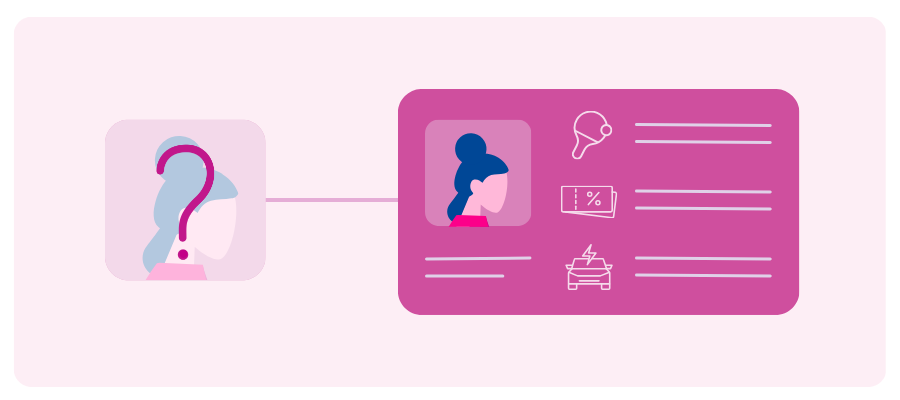
AI decodes complex behavioral signals to reveal the values and mindsets behind decisions, and increasingly, it predicts what audiences will care about next. This allows marketers to deliver timely, relevant messages that resonate with audiences. At Experian, we help brands use these insights to connect more meaningfully and ethically.
Takeaway: Experian’s tools help brands uncover audience insights, enabling more meaningful and ethical connections.
2. Where does AI actually save time, and improve results?

Running campaigns is time-consuming. Solutions like Agentic AI now orchestrate end-to-end campaign workflows, audience building, trafficking, QA, pacing, and routine optimizations, so teams focus on strategy and creativity. Many leaders (94%) are investing broadly in AI to drive efficiency and impact, and 49% of marketers use it daily for image and video generation, shifting repetitive tasks from people to tools. By quickly combining past and current performance data, AI can pre-optimize before launch and refine mid-flight, while marketers steer the message and experience.
“AI uses past campaign data to optimize performance before launch, continues learning during the campaign, and refines strategies based on the insights it generates, driving better results over time.”
PubMaticHoward Luks
Takeaway: Experian’s solutions streamline campaign workflows, allowing marketers to focus on creativity and strategy while improving results.
3. How do AI and human strategy work together in real time?
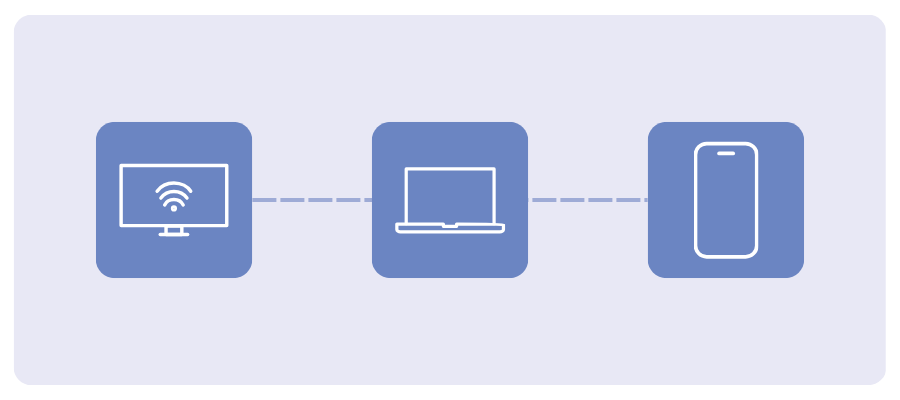
AI handles real-time data analysis and optimization, freeing marketers to focus on strategy, messaging, and creativity. By defining audiences once and activating them across platforms, teams can adapt quickly and confidently. At Experian, we combine machine intelligence with human insight to deliver smarter, more agile campaigns.
“AI analyzes data, pulls insights, and automates optimizations, allowing marketers to focus on strategy, messaging, and creativity instead of spending time digging through numbers and data.”
AdRollLizzie Chapman
Takeaway: Experian solutions empower marketers to adapt quickly and confidently, combining human strategy with insights.
4. What does privacy-first look like now?

Relying on simple, static data points is no longer enough. A modern approach to identity blends deterministic data (like known identifiers) with modeled components, ensuring data remains de-identified where possible. Clear, transparent guardrails, permitted-use policies, retention limits, sensitive-category blocks, and audit trails, help brands balance personalization with privacy, build trust, and respect user choice.
“A new blend of identity systems combines deterministic data, known identifiers, and model driven components, creating fresh ways to address identity and activate campaigns with precision.”
OptableVlad Stesin
Takeaway: Experian’s privacy-first identity solutions help brands balance personalization with safety, ensuring trust and compliance.
5. Which new data signals matter, and why?

AI is unlocking a new generation of data signals, like content context, sentiment, emotional tone, suitability, attention, and commerce intent, that go beyond legacy identifiers like cookies and demographics. These signals can help brand messages appear in the most relevant environments and by high-value audiences. Used well, they improve relevance, avoid placements near unsuitable or off-brand content, and drive stronger campaign outcomes.
“Unlocking new data sets (like emotion, sentiment, and context), AI is creating innovative ways to connect client content with advertising opportunities and rethink how we approach the market.”
PMGSam Bloom
Takeaway: Experian’s solutions use advanced data signals to help marketers create more effective and innovative campaigns.
Why Experian for human-centered AI?

We deliver on the promise of AI-powered marketing through five pillars:
- See audiences clearly across households, individuals, and devices.
- Recommend next‑best audiences and automate setup for faster execution.
- Adapt in real‑time to keep relevance high.
- Innovate responsibly with strong governance and transparency.
- Plan, activate, and measure campaigns on one unified platform.
The future of intelligent marketing
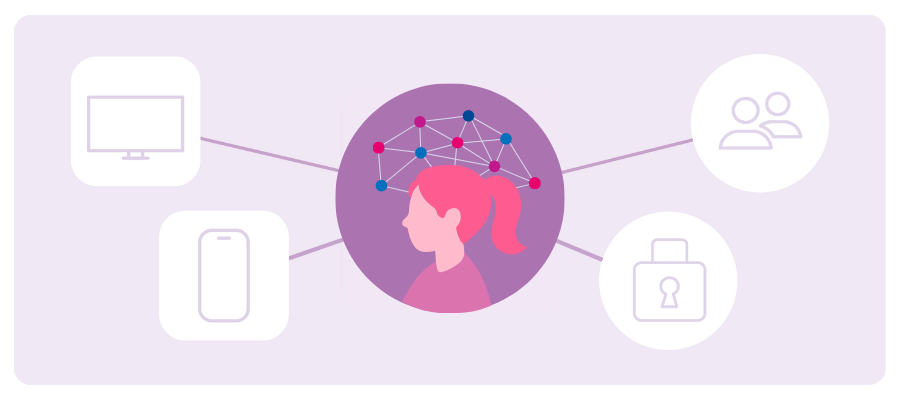
AI will keep accelerating, but the goal stands: make marketing more human. Teams that blend privacy‑first identity, predictive insight, AI‑powered simplicity, and real‑time intelligence will earn trust and drive outcomes. Experian helps you bring those pieces together so every campaign moves from assumptions to clarity, and from activity to measurable results.
Talk to Experian about building human-centered AI into your marketing strategy
AI marketing trends FAQs
AI analyzes complex signals, behaviors, values, and mindsets to provide a clearer picture of what matters to audiences. That clarity makes messaging feel personal and relevant. Learn more about Experian’s Digital Graph and how it can help marketers understand audiences better.
Automation reduces manual setup and reporting, so teams focus on strategy and creative. Nearly half of marketers (49%) use AI daily for image and video generation, reflecting this shift.
Smarter activation across platforms means defining audiences once, then carrying them across channels with live feedback, so relevance and suitability stay high. See how Experian enables smarter activation with our data and identity solutions.
Privacy‑first identity blends deterministic and modeled components, keeping data de‑identified where possible. Experian’s solutions balance personalization with safety. Learn about Experian’s identity solutions is changing identity.
AI systems rely heavily on brand‑managed sources. 86% of citations come from websites, listings, and reviews, so clean, accurate, structured data makes your answers and your brand more discoverable. Discover how Experian supports structured data for AI-driven marketing.
Latest posts

In our Ask the Expert series, we interview leaders from our partner organizations who are helping lead their brands to new heights in AdTech. Today’s interview is with Brian Mandelbaum, CEO and Co-Founder at Attain. About Attain Built for privacy — with visibility across all retailers, verticals and purchases — Attain provides solutions for the modern marketer. Its real-time measurement and optimization solutions coupled with high-fidelity audiences and proprietary insights enable marketers to drive valuable business outcomes. The power of transaction-based audiences Attain’s real-time transaction data provides a 360-degree view of consumer behavior. What makes this approach more effective than traditional demographic or behavioral targeting? Attain is the industry’s most trusted source of live purchase data, powered by a robust panel of 8 million fully permissioned consumers. Our platform delivers unmatched, real-time visibility into consumer purchase behavior across retailers, industries, and payment methods. Marketers gain deep insights — such as in-store vs. online purchases, payment methods, purchase frequency, cart contents, and average transaction value — enabling more precise audience targeting and media strategies. With Attain’s rich, transaction-based data, marketers can optimize campaigns with direct, actionable sales signals. Ensuring data accuracy and relevance Attain curates audiences using real-time transaction data, but advertisers often ask whether this data is deterministic or probabilistic. Can you clarify your methodology, and if probabilistic, how do you ensure accuracy and representation across the entire US population? Our transaction data comes directly from the largest live purchase data panel in the U.S. Covering over 10,000+ merchants and $600B in cumulative spend, our dataset offers a complete and dynamic view of real-world purchase behavior. Using advanced machine learning, we scale this data to represent the entire U.S. population with unmatched accuracy, ensuring a balanced and unbiased reflection of consumer spending patterns. Our rigorous methodology eliminates outliers, continuously optimizing for precision and stability, so marketers can trust our insights for better targeting, measurement, and optimization. Privacy-first data practices Attain is built on a privacy-first, consumer-permissioned model. There are many ways to capture purchase data—why did Attain choose a panel-based approach, and how does this method compare to other collection strategies in terms of accuracy, scale, and compliance? Attain’s panel-based approach is the foundation of our privacy-first, consumer-permissioned model. By capturing real-time transaction data directly from our opted-in consumer panel, we ensure unmatched accuracy and ethical data sourcing — paramount in today’s privacy-conscious world. In exchange for sharing their data, consumers receive valuable benefits like early wages, savings tools, and shopping rewards, with no hidden fees. Unlike legacy third party data providers, our directly sourced transaction data provides deeper, more precise insights, enabling highly granular and actionable audience segments. Our continuously growing panel reflects a broad cross-section of U.S. consumers while maintaining strict privacy and compliance standards. We fully adhere to regulations like CCPA and GDPR, giving both consumers and advertisers confidence in the responsible use of data. Attain’s approach delivers the ideal balance of accuracy, scale, and compliance—while prioritizing consumer trust. Cross-channel addressability With brands activating audiences across display, mobile, and CTV, how does Attain’s purchase data help advertisers refine their cross-channel strategies? Attain’s purchase data empowers advertisers to refine cross-channel strategies with smarter, data-driven insights. Our real-time transaction-based audiences enable scalable activation across display, social, online video, and addressable TV — ensuring campaigns reach high-intent buyers more likely to convert. By applying purchase-based audiences across all channels, marketers are utilizing the strongest signals possible, which enables a more effective holistic strategy to drive to that ultimate sales outcome. Whether through social media, TV/CTV, mobile, or programmatic platforms, Attain helps brands connect with consumers at key moments in their buying journey, maximizing media impact with real behavioral insights instead of proxies. With an expansive and growing network of media partners, Attain ensures brands reach their audiences wherever they are, delivering consistent, high-impact messaging. Whether optimizing for brand awareness or performance, our data helps marketers make smarter decisions to drive superior results. Proven performance with live purchase feedback Attain moves beyond traditional proxy metrics by providing live purchase data. How does this help advertisers optimize campaigns while they’re still running? What sets Attain’s audiences apart isn’t just the data fidelity and holistic coverage of consumer behavior, it's that they’re built and validated using live, privacy-safe purchase signals. Advertisers can execute campaigns confidently, knowing that they’re reaching real consumers based on recent, real-world transactions, not outdated models or inferred, probabilistic behaviors. Attain’s ability to measure sales lift across a wide range of inputs means that marketers can easily understand which audiences are driving actual sales outcomes during flight. This unlocks smarter mid-campaign optimizations, discovering new audiences, and fine-tuning targeting — to ensure audience performance continually improves against real revenue goals. Attain’s closed-loop approach gives advertisers a faster path from targeting to transaction, helping brands maximize the value of every impression. Industry-specific use cases Beyond CPG, Attain supports industries like QSR, retail, and financial services. Can you share a compelling example of how brands in these verticals are utilizing your audiences? Attain’s audiences provide a comprehensive view of the consumer, capturing all aspects of their purchase behaviors — from travel and dining to TV content consumption and shopping habits. This broad perspective offers brands a far richer set of buying signals than ever before, enabling them to make more informed decisions across the entire consumer journey. Quick service restaurants (QSR): With a comprehensive view across all transaction types (cash, credit, debit) – Attain enables QSRs to capture a full picture of customer spend at their nationwide locations. Ensuring these brands have holistic coverage across all sales channels, powered by a direct relationship with the consumer, Attain captures transactions both in-store, online, and through 3P delivery apps like UberEats and Grubhub. This powers Attain’s deep insights, which QSRs can use for intelligent, precise targeting- including frequent visitors, competitive share, products purchased, and more. QSRs can use this data to solve a variety of business objectives, like retention/growth, competitive conquesting, and more. Retail: In retail, Attain provides a wide range of audience segments, including loyalty shoppers, in-market buyers, competitive shoppers, and even adjacent buyers who may be interested in similar products. By combining these segments, retailers can optimize their campaigns to target real-time shoppers with the highest intent, rather than relying on outdated or generalized profiles that other providers might offer. Additionally, with our industry-leading refresh rate, brands benefit from the most up-to-date data, ensuring their campaigns are always aligned with the latest consumer behaviors. Financial services: In the financial services sector, Attain’s purchase data helps identify consumers who are actively considering financial products such as credit cards or loans. By understanding their purchasing behaviors, marketers can deliver highly personalized and relevant offers to those already displaying intent, leading to better conversion rates and more effective acquisition strategies. Integration with Experian's marketplace Attain is now available through the Experian marketplace. How does this integration make it easier for advertisers to activate and scale your audiences? Attain’s integration with Experian marketplace makes it easier than ever for advertisers to activate our purchase-based audiences across TV, social, and programmatic. This partnership makes Attain’s data even more accessible, supporting our mission to build the most comprehensive and trusted consumer data ecosystem. With direct access to our real-time audiences within Experian’s marketplace, advertisers can more efficiently launch campaigns at scale and make more precise, data-driven decisions. As one of Experian’s inaugural partners, we’ve already seen strong adoption and demand, reinforcing the value of this partnership. The future of transaction-based targeting As the use of transaction data in advertising continues to grow, what changes do you anticipate in how brands will apply it for targeting and measurement? And how is Attain evolving its approach to support those shifts? As transaction data reshapes advertising, brands can shift from targeting probabilistic audiences to reaching high-intent consumers for greater ad relevance and conversions. Purchase data also unlocks highly accurate incrementality measurement, closing the loop and revealing which tactics and channels drive true incremental sales. Attain’s platform is built for outcomes-driven advertising, capturing data across the entire media cycle to continuously optimize performance. As we continue to make investments in AI and machine learning into our platform, our insights will become even more actionable and efficient — helping brands maximize impact, drive incrementality, and fuel long-term growth. Thanks for the interview. Any recommendations for our readers if they want to learn more? To explore our audience segments, visit the Attain website or contact your Experian account representative to schedule your free match test. Contact us today About our expert Brian Mandelbaum, CEO and Co-Founder, Attain Brian Mandelbaum, a veteran entrepreneur and investor, is the co-founder and CEO of Attain, North America’s largest opt-in purchase platform. Prior to Attain, Brian founded Clearstream TV, a data-enabled video distribution platform acquired by Engine Group in 2015. He brings over 20 years of experience in data-driven digital media, collaborating with top agencies and major brands. Latest posts

Retail media networks (RMNs) are on track to capture over $128 billion in ad spend by 2028, growing nearly 25% year over year. But behind this rapid expansion, RMNs face a challenge that could slow their momentum: they lack the complete picture of their customers. Retailers sit on a goldmine of first-party data—loyalty programs, online purchases, and in-store transactions—but their customer view is often fragmented, incomplete, or entirely anonymous. Without a strong identity foundation, RMNs struggle to: Scale advertiser reach beyond logged-in users Seamlessly match audiences across channels (CTV, programmatic, social) Deliver the precise targeting and measurement that advertisers demand The reality? Data is only valuable if it’s usable. And right now, too many RMNs are leaving value on the table. The identity challenge: If you can’t see it, you can’t monetize it Retailers have two types of customers: Known customers: Logged-in or self-identified users with purchase history and identifiable attributes. Unknown customers: Shoppers who browse, purchase in-store, or check out as guests—leaving behind only partial or anonymous data. Although many retailers have a loyalty program, it’s unlikely they are capturing a full view of all of their customers, especially outside of their four walls. When retailers don’t know their customers, they can’t effectively: Understand what messages will resonate with what audiences Extend their audiences beyond their owned platforms Provide advertisers with the reach and addressability they demand Accurately measure media performance and prove ROI But this challenge isn’t unsolvable—it’s an identity problem, and Experian is built to fix it. The missing link: Clean, enriched, and connected data Assuming your data is ready to activate is a costly mistake. Too often, RMN data is messy, siloed, and incomplete, making it difficult to deliver the precision and performance advertisers expect. Experian flips the script—helping RMNs transform fragmented signals into a complete, connected picture of their audience. Here’s how Experian helps RMNs go from fragmented to first-class Clean and optimize We organize messy customer data, removing duplicates and filling in gaps. Enrich and enhance Our insights add depth to profiles with demographics, behavior, and purchase intent signals. For example, an RMN may know a shopper recently bought a car seat—but not that they lease a luxury SUV. That auto data is critical to securing auto ad dollars, and it’s exactly the kind of insight Experian provides. Expand and connect Using digital identifiers like hashed emails (HEMs), mobile ad IDs (MAIDs), and connected TV (CTV) IDs, we help extend audience reach across every channel advertisers care about. The result? A complete and addressable audience picture that RMNs can activate confidently—on-site and off. We partnered with one of the largest RMNs in the world to overhaul its first-party shopper data ahead of industry changes. By anchoring its data to stable digital IDs, addressability skyrocketed by nearly 300%. That’s the Experian difference—turning guesswork into confidence. Retailers who master identity will win the RMN race In an increasingly competitive RMN landscape, identity isn’t optional—it’s everything. Advertisers demand scale, accuracy, and measurable impact. Only RMNs with a robust identity foundation will rise above the competition. RMNs that prioritize identity resolution and data enrichment will: Drive more revenue by increasing the size of their addressable audience Keep advertisers engaged with better targeting and measurement Capture RMN market share by offering scale and accuracy Don’t just compete—lead. Ready to transform? Experian will show you how Fixing data inside the RMN ecosystem is just the beginning. In part two, we’ll cover: Why RMNs should be activating their enriched first-party data across CTV, programmatic, and social. Why off-site expansion is the future of maximizing revenue. How Experian’s data and identity solutions power off-site activation. Experian isn’t just part of the RMN conversation. We’re driving it. Let’s talk. Connect with our team Latest posts

As privacy regulations, signal loss, and consumer expectations change, marketers face growing challenges in creating meaningful connections. In our latest Ask the Expert segment, Tom Wolfe, SVP at Viant, and Ali Mack, VP of AdTech Sales at Experian explore how first- and third-party data strategies, advancements in connected TV (CTV), and AI tools empower marketers to build smarter campaigns tailored to modern demands. Identity-driven advertising built on first-party data With the decline of traditional third-party signals and the rise of privacy-first advertising, first-party data is more important than ever. By collecting data directly from customers, marketers ensure they have accurate, user-consented data to fuel personalized advertising. Viant’s identity graph takes these first-party signals—such as email addresses, household locations, and phone numbers—and connects them with additional attributes in a privacy-safe way. This approach empowers marketers to build precise audience segments without relying on cookies, which Viant phased out over a decade ago. Combining first-party data and privacy-first solutions to build trust By combining first-party data strategies with privacy-first solutions, marketers can build long-term success while earning consumer trust. The Viant Household ID eliminates reliance on cookies while enabling secure, compliant campaign management. Additionally, Viant's partnerships with cleanrooms further protect their clients' data integrity and ensure smooth collaboration between trusted parties. Beyond safeguarding consumer information, the Viant ecosystem allows their clients to integrate data seamlessly from audience segmentation to campaign activation and reporting. How first and third-party data work together While first-party data is crucial for precise, personalized advertising, it isn’t always sufficient—especially for smaller or emerging brands that haven’t yet amassed audience data. Third-party data plays a pivotal role in these scenarios by supplementing first-party insights, offering a broader view of consumer behavior, leading to new growth opportunities. Viant collaborates with partners like Experian to help marketers seamlessly merge their customer information with additional consumer insights. Viant and their clients benefit from Experian's identity data to match various identifiers such as hashed emails, device IDs, or other platform-specific tags and map them back to a single consumer profile. With a unified view of the consumer, marketers can refine targeting, expand their reach, and maintain consistency across channels. By utilizing first- and third-party data solutions, marketers can build well-rounded, effective campaigns that resonate with diverse audiences. “Our clients have embraced the Viant Household ID because it powers a comprehensive, seamless flow from segment creation to targeting, activation, and measurement.” Tom Wolfe, SVP Business Development, Viant CTV as a core marketing channel CTV is emerging as the core platform for immersive and effective advertising by merging the visual storytelling power of traditional TV with the precision of digital tools. Viant helps marketers optimize CTV capabilities by building connections between premium publishers and data, allowing marketers to personalize experiences. Whether it’s tailored ads for families watching a live sports event or pinpointing niche interests, CTV enables marketers to reach diverse audiences with meaningful ads. Beyond awareness, Viant drives results for their clients and monitors that performance across each stage of the funnel. Marketers can use the key insights to optimize their media buys on CTV and achieve even higher ROI. Viant takes CTV performance a step further with its direct access programs. Stronger data matching via publisher partnerships improves accuracy, helping marketers connect with their ideal audience. Viant’s recent data shows that campaigns incorporating CTV achieve a conversion rate of 12.89%, outperforming campaigns lacking it by a wide margin. This dramatic improvement highlights the power of precise targeting combined with Viant’s advanced CTV tools. For marketers, this translates to impactful storytelling supported by tangible results. “CTV drives high-level brand awareness via sight, sound, motion, and emotion, but it also powers activity through the funnel.” Tom Wolfe, SVP Business Development, Viant AI is streamlining marketing from start to finish AI is transforming advertising by automating tasks like performance tracking and audience segmentation, allowing marketers to focus on strategy and creativity. At Viant, AI is part of the company’s DNA, helping marketers drive more efficient and effective campaigns. With real-time data insights and streamlined processes, teams can quickly refine messaging and optimize budgets. This efficiency not only saves time but also empowers marketers to channel their energy into creating impactful strategies that resonate with their audiences. The integration of AI into Viant’s ecosystem also simplifies overall workflows, optimizing campaign execution from start to finish. With performance tracking made easier and segmentation automated, marketers can rely on data accuracy and actionable insights to make confident decisions. How Experian and Viant work together Experian's syndicated audiences—demographic, auto, TV, FLA (Financial Fair Lending Act), and more—are available within Viant's platform. Experian's partnership with Viant enables the deployment of custom audiences specifically designed to meet distinct campaign objectives. Together, Experian and Viant provide solutions that support first-party data strategies, third-party data integration, CTV optimization, AI-driven insights, and identity resolution, creating a cohesive and privacy-forward marketing ecosystem. “At Viant, we focus on the sensible, scalable, impactful opportunities.” Tom Wolfe, SVP Business Development, Viant Watch the full Q&A Visit our Ask the Expert content hub to watch the full conversation with Tom and Ali and learn more about Viant’s scalable identity solutions. Contact us About our expert Tom Wolfe, SVP Business Development, Viant As SVP of Business Development at Viant, Tom and his team forge strategic business partnerships that fuel the company's growth and business strategy. He is a seasoned industry veteran with more than 25 years of expertise in content distribution, advertising, and technology, particularly in CTV. Throughout his career, Tom has played a pivotal role in establishing and managing multiple businesses at major companies such as Roku, TiVo, YuMe, and Comcast. Additionally, he has provided valuable advisory services to organizations including VIZIO, Vice Media, and many others across the ecosystem. Tom holds a B.A. in Political Science from Lehigh University and has shared his knowledge as a guest lecturer at both New York University and Drexel University. Latest posts