
Key takeaways
- First-party data records what happened inside one customer relationship. It can’t show the life stage, household makeup or financial pressure behind a purchase.
- Context earns its place in a customer record when it’s accurate, governed, and tied to a decision like segmentation, modeling or personalization.
- Governed context improves segmentation, prospecting, retention outreach and personalization by adding life stage, financial pressure and household signals.
- Experian maintains more than 5,000 consumer attributes, averaging roughly 250 per person, built with privacy and governance controls and grounded in durable identity.
A brand can have five years of purchase history, a loyalty program with millions of records, and a fully built-out customer data platform, and still not know why a customer walked away last quarter. First-party data has become one of the clearest ways brands can differentiate, which is exactly why it’s worth asking what more of it can and can’t do.
First-party data describes a relationship, not the whole person
A customer’s purchase history, site visits, app activity, and loyalty behavior are accurate records of what happened inside that one relationship. They don’t show who that person is beyond the transaction, the life stage, household makeup, or financial pressure that actually shapes a decision. Every brand runs into this limit eventually, no matter how much first-party data it has collected.
More sources isn’t the same question as better sources
The common response is to add more data sources. Third-party data, contextual signals, geographic data, each layered on to fill in what first-party data can’t see alone. Combining sources like this can expand what a brand can see.
It doesn’t automatically mean every layer earns its place in the customer record. Volume and quality are different questions, and only one of them is guaranteed by adding another source. A pile of attributes from unverified providers can sit alongside a brand’s best first-party and third-party data without ever being governed or relevant enough to act on with confidence.
Relevant, governed context is the differentiator, not another data source
Adding a new data type isn’t the same as adding context that’s actually relevant to the decision in front of you. A longer list of attributes doesn’t make a customer record more useful on its own, whatever source it came from. Context earns its place in that record when it’s accurate, tied to a real decision, like segmentation, modeling, or personalization, and usable within the governance standards a brand already holds itself to.

That’s a higher bar than volume. It’s also the one that actually changes outcomes. Predictive models and AI-driven decisioning only raise that bar. The more decisions get automated, the more they depend on inputs that are relevant, not just abundant.
What governed context actually changes
When a customer record includes real-world context, demographic, lifestyle, behavioral, and household signals that are built and governed responsibly, the decisions drawn from it change in specific ways.
- Segmentation reflects who people actually are, not just how they’ve transacted so far.
- Prospecting can find people who resemble a brand’s best customers in ways that matter, not just in surface-level behavior.
- Retention improves when outreach reflects a fuller picture of the person, not just their last transaction.
- Planning and personalization can account for the realities, like life stage or financial pressure, that shape whether a message lands.
That context is only as useful as the identity foundation underneath it. Context grounded in durable identity moves with a brand across the platforms, partners, and activation paths it already uses, rather than sitting locked inside one system.
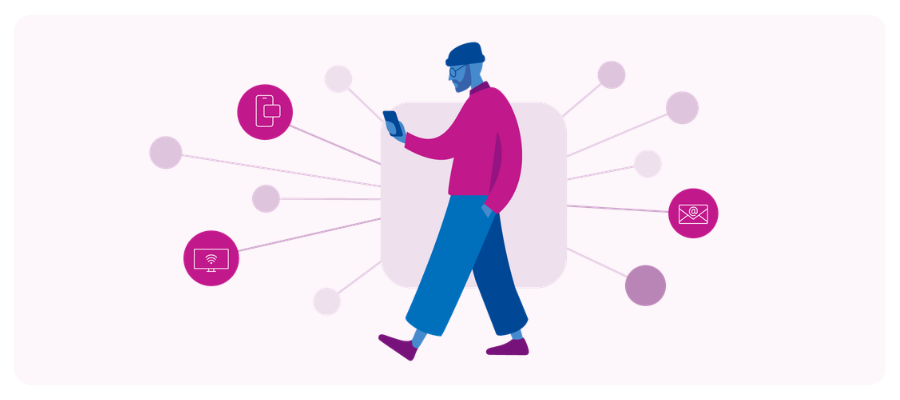
At Experian, we maintain more than 5,000 consumer attributes, averaging roughly 250 per person, built and maintained with privacy and governance controls in mind. That depth creates the most value when it extends a brand’s own first-party foundation, grounded in identity and usable across the activation paths a brand already relies on, not locked into a single platform or vendor.
Context, not volume, is the differentiator
Owning first-party data was the starting point. It was never the finish line, and adding more sources on top of it isn’t the finish line either unless each one clears the same bar. The brands that get the most value out of their customer data in the next few years will know exactly what their data still can’t tell them, and will go find that missing context in a way they can trust and govern.
That’s the work I’d focus on, making the first-party data a brand already has tell a fuller, more accurate story about the people behind it, rather than acquiring more data for its own sake. If you want to talk through what that could look like for your first-party data, connect with our team.
About the author

Kevin Dunn
Chief Revenue Officer, Experian
Kevin Dunn joins Experian Marketing Services with more than 20 years of leadership experience across marketing and advertising technology, most recently serving as Senior Vice President of Brands and Agencies at LiveRamp. In that role, he led growth across retail, CPG, travel, hospitality, financial services, and healthcare, overseeing new business, account expansion, and channel partnerships.
Kevin is known for building cohesive, accountable teams and leading with optimism, clarity, and a strong sense of shared purpose. His leadership philosophy centers on empowering people, driving positive outcomes for clients and fostering a culture where teams can grow, take smart risks, and succeed together.
Latest posts

Tapad’s TV analytics solutions now include premium national cable inventory– Travelocity asserts industry need, praises partnership — NEW YORK, February 28, 2017 — Tapad, a part of Experian, has announced its partnership with clypd, the leading audience-based sales platform for television advertising. By integrating clypd’s national cable network inventory, the partnership will expand Tapad’s extensive supply of TV inventory to include premium national cable inventory. Tapad is the leading provider of privacy-safe, cross-screen marketing technology solutions and was first-to-market with a device graph. Clypd’s robust sell-side advertising platform was one of the first built exclusively for the television industry, empowering media owners with solutions that deliver workflow automation, data-enhanced decisioning and, overall, maximize TV campaign performance. Through this partnership, Tapad’s Device Graph-powered TV tools will work in tandem with clypd’s sales platform to enable more precise audience engagement for TV ad buys. This will enable marketers to integrate their customer data or third-party digital segments into Tapad’s TV platform and use them to precisely engage their audience across clypd’s industry-leading footprint of national TV inventory. Campaigns are then optimized using Tapad’s graph-powered TV attribution, ensuring ads are aligned with the best context for each brand’s message. “Clypd is a pioneer in building TV marketplaces,” says Marshall Wong, SVP of TV market development at Tapad. “They were quick to recognize the benefits a device graph could bring to TV so that advertisers can activate linear inventory curated for any digital audience.” “Tapad’s TV activation platform increases the efficiency in which marketers can reach their intended audience on traditional linear TV,” says Doug Hurd, co-founder and EVP of business development at clypd. “Their customized, data-driven campaigns launch with precision and really increase the value marketers can extract from linear TV inventory.” “At Travelocity, we are always looking for ways to more efficiently reach our target audiences,” says Ashley Parker, head of brand marketing at Travelocity. “The combination of traditional linear TV and solutions like this offering from Tapad and clypd are bringing both the tools and the supply to make this vision a reality.” Contact us today
Dextro clients to achieve increased accuracy in cross-device consumer measurement and engagement NEW YORK, Feb. 6, 2017 /PRNewswire/ — Dextro Analytics, a pure play analytics company that harnesses the power of human learning and artificial reasoning to drive more informed and effective consumer marketing, is partnering with Tapad, the leading provider of unified, cross-screen marketing technology solutions and now a part of Experian. The deal is effective immediately and the scope of the partnership covers North America. Additional terms were not disclosed. Leveraging Tapad’s privacy-safe Device Graph™, Dextro Analytics will be able to significantly bolster its insight engine to decode complex customer journeys. Armed with more relevant, actionable insights, marketers can use Dextro’s cross-screen, closed-loop measurement systems to reach and engage the right customer at the right time through the right channel. “Being able to accurately map consumer preferences, behaviors and journeys in a privacy-safe and unified way across devices is still one of the biggest pain points for marketers,” said Ajith Govind, co-founder of Dextro Analytics. “At the same time, this partnership engages customers with the right message at the right time.” “Detecting latent patterns and signals, and tracing backward- and forward-looking behavioral characteristics, are keys to sustaining a competitive advantage in a crowded space,” said Manmit Shrimali, co-founder of Dextro Analytics. “With the proliferation of data and devices, connecting the dots is of paramount importance.” “Dextro is solving some of the biggest challenges in analytics today,” said Pierre Martensson, GM of Tapad’s data division. “Our partners consistently see notable improvements in both budget allocation and device optimizations after integrating with the Tapad Device Graph, and I have every confidence that Dextro will be among them.” For more information about Dextro Analytics’ revolutionary approach to using human learning and artificial intelligence algorithms to solve business and analytical problems, please visit http://dextroanalytics.com/. For more information about Tapad’s cross-platform advertising solutions, please visit https://www.experian.com/marketing/consumer-sync. Contact us today
NEW YORK & LOS ANGELES / BUSINESS WIRE / Jan. 30, 2017– Tapad, part of Experian, and Rubicon Project (NYSE: RUBI) announced today a new global partnership offering a unified, cross-device campaign delivery solution within an automated advertising marketplace. Tapad is the leading provider of unified, cross-screen marketing technology solutions and Rubicon Projectoperates one of the largest advertising marketplaces in the world. The Tapad Device Graph™, which enables buyers to expand their high-value display data signals to associated mobile devices, will be integrated across Rubicon Project’s leading advertising exchange and Orders platform, significantly improving consumer mobile reach. The new global partnership will empower Buyers within Rubicon Project’s exchange to find and engage audiences across their entire digital experience. Rubicon Project operates one of the world’s largest mobile exchanges connecting to approximately 1 billion unique mobile devices globally. “We’re excited to partner with Tapad to continue to provide our customers the very best data for managing their advertising businesses,” said Harry Patz, Chief Revenue Officer, Rubicon Project. “Cross-device delivery is crucial for buyers today with more than 81% of internet users currently relying on more than one device for digital access[1]. Through our partnership, buyers will be able to extend their desktop private marketplace campaigns to mobile, allowing them to find and engage their audience across devices, anywhere in the world. The net result will also benefit sellers; the increase in mobile reach will better position publishers and app developers to strategically capitalize on their inventory, ultimately increasing bid rates and mobile revenue across the board.” “Our partnership with Rubicon Project marks the first time advertisers and publishers alike are able to use cross-device solutions at significant scale outside of Google and Facebook,” said Pierre Martensson, GM of Tapad’s Data Division and APAC. “Our Device Graph will help Rubicon Project’s advertisers make more informed buying decisions and find the audiences who matter most.” Barry Adams, VP of Commercial Development at Bidswitch, said, “As digital advertising moves away from desktop and increasingly toward a mobile-first model, cross device data becomes critical to finding consumers. The rich data buyers will now be able to leverage at scale through the Tapad and Rubicon Project integration will enable us to provide a state-of-the-art cross-screen solution for the 150+ buying platforms that use our service, and the tens of thousands of advertisers they represent.” For more information about Rubicon Project’s inventory, please visit www.rubiconproject.com. For more information about Tapad’s cross-platform advertising solutions, please visit https://www.experian.com/marketing/consumer-sync. Contact us today