At A Glance
First-party data creates value when marketers activate it. In 2026, leading brands will move beyond data collection by connecting, enriching, and activating their first-party data across channels. With identity as the foundation, first-party data activation improves relevance, efficiency, and measurement. Experian helps marketers turn static records into scalable audiences that perform across media.Why does activation expand the value of first-party data?
First-party data already delivers value through insight, personalization, and owned-channel engagement. In 2026, marketers expand that value by activating first-party data across owned and paid media channels. Activation is how existing data investments scale beyond CRM into broader audience strategies.
Simply capturing customer data used to feel like a win. Building a CRM, capturing emails, and logging transactions delivered valuable insights and fueled owned channels like email and direct mail. But that was largely where activation stopped.
In 2026, that mindset is no longer enough. Owning first-party data is now just the starting point. The real advantage comes from what marketers do next. Safely turning static records into addressable, scalable audiences is where first-party data can continue to prove its value.
How are marketers shifting from data collection to data connection?
As signals fragment, marketers are shifting from data collection to data connection to make first-party data usable across channels. Experian supports this shift by helping marketers onboard and resolve their data into a clean, connected foundation using our identity graphs. Connecting offline and online interactions allows brands to unify customer data across touchpoints to make it actionable. That connection enables more use cases, from audience activation and measurement to personalization and cross-channel optimization.
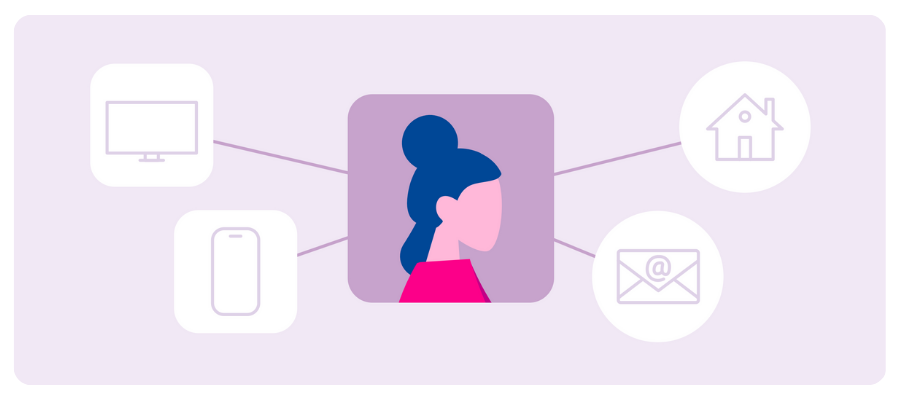
Most brands recognize the value of their own data. Fewer have the infrastructure to make it work across the media ecosystem. Data often sits in silos, disconnected from activation platforms, analytics, and measurement. Without the ability to unify, enrich, and deploy that data, first-party data remains underutilized.
In 2026, leading marketers are closing that gap by turning first-party data into audiences they can reach across owned and paid channels, bringing consistency to targeting and measurement. That same connectivity also enables better suppression, allowing brands to avoid targeting existing customers in prospecting campaigns. For consumers, this reduces irrelevant and repetitive ads. For marketers, it improves efficiency and protects the customer experience.
With Experian’s identity foundation in place, first-party data becomes usable across the media ecosystem. Marketers can enrich their first-party data with behavioral, demographic, and lifestyle insights, combined with trusted partner data, and activated across channels like social, programmatic, and TV, from a single environment.
Why is first-party data becoming central to media planning?
First-party data has become central to media planning because it gives marketers control, consistency, and continuity across channels. As media environments fragment, first-party data provides a stable signal that supports activation, personalization, and measurement at scale.
Rather than relying on any single data source, marketers are increasingly combining their own first-party data with trusted third-party and partner data to extend reach, improve relevance, and fill gaps in their own insights. Doing so effectively requires deterministic matching, privacy-first infrastructure, and partners that can support both owned and syndicated data at scale.
This approach allows brands to maintain control over their customer relationships while continuing to utilize third-party data for prospecting, modeling, and performance optimization across channels. As a result, first-party data activation is now central to how media strategies are planned and executed.

2026 Digital trends and predictions report
Our 2026 Digital trends and predictions report is available now and reveals five trends that will define 2026. From curation becoming the standard in programmatic to AI moving from hype to implementation, each trend reflects a shift toward more connected, data-driven marketing. The interplay between them will define how marketers will lead in 2026.
What business impact does first-party data activation deliver?
First-party data activation delivers measurable business impact, including:
- 70% of B2B marketers plan to increase their use of first-party data, more than any other data strategy.
- 67% percent of brands and 80% of publishers expect to grow their first-party data sets in the next year.
- The payoff is tangible. Activating first-party data can reduce customer acquisition costs by up to 50% and drive a 10-15% lift in revenue.
Activation drives efficiency. Brands that put their own data to work see lower acquisition costs and stronger revenue lift. These gains come from relevance. When marketers activate audiences built from known customer relationships, they reduce waste and optimize toward outcomes that matter.
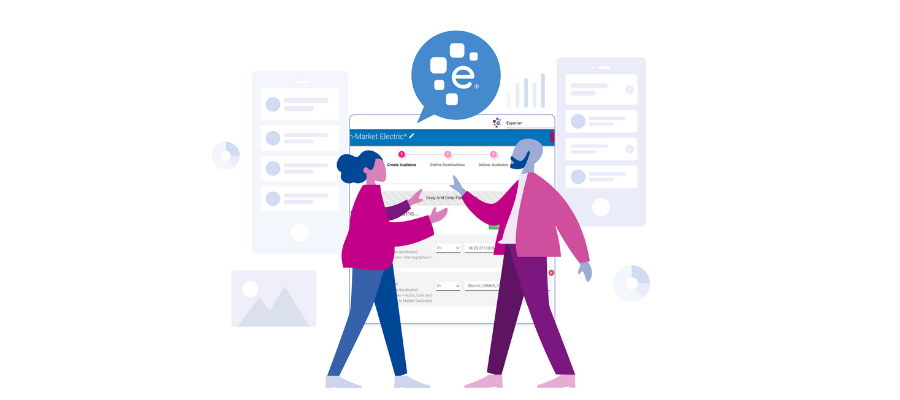
Experian’s Audience Engine supports this model at scale. Audience Engine helps marketers onboard and activate first-party data through a single unified platform. It connects more than 3,500 syndicated audiences, over 50 media platforms, and 20+ third-party data providers. Marketers can combine, gain insights from, and deploy first-party data quickly.
What should marketers plan for first-party data activation in 2026?
In 2026, marketers should plan for first-party data to operate across onboarding, activation, and measurement as a connected workflow. Planning now centers on interoperability, scalable activation tools, and privacy-forward enrichment rather than isolated data use cases. Identity underpins each of these three shifts.
Why first-party data activation matters to marketers in 2026
In 2026, first-party data delivers value when marketers activate it across channels. The opportunity is to extend the value of what already exists through activation, enrichment, and identity-led connection across channels. That means uncovering insights within your existing customer base, building lookalikes from your highest-value audiences, and activating those segments across every channel.
With Experian’s Audience Engine, marketers can onboard, enrich, and activate their first-party data in one secure, interoperable platform. Identity connects to outcomes. Performance becomes measurable. Privacy stays at the core.
To explore this trend and the others shaping marketing in 2026, download our 2026 Digital trends and predictions report.
Ready to connect with our team?
About the authors

Doug McLennan
Sr. Director, Product Management, Experian
Doug McLennan is the Senior Director of Product Management at Experian Marketing Services where he is focused on product strategy for activation. His past work includes managing syndicated audiences at Oracle Data Cloud and building personalized video ad products at an agency. Doug lives in Colorado and skis as much as his family will allow.

Rachael Weinstein
Director of Product Management, Experian
Rachael Weinstein is the Director of Product Management at Experian Marketing Services where she is focused on product strategy. Previously, she held product roles in advanced TV at WarnerMedia and worked in analytics across multiple startups.
First-party data activation FAQs
First-party data activation means using a brand’s own customer data to build addressable audiences across paid and owned channels. Experian’s identity spine connects, enriches, and activates that first-party data consistently while preserving control and privacy.
First-party data needs identity to connect customer records across devices, platforms, and environments into a unified view. Experian identity resolution makes it possible to activate, measure, and manage frequency consistently across paid and owned media.
First-party data activation improves efficiency by reducing waste and increasing relevance. Marketers focus spend on known and modeled audiences, suppress existing customers in prospecting, and optimize toward outcomes rather than impressions.
Experian supports first-party data activation by resolving, enriching, and activating customer data using identity as the foundation. Through Audience Engine, Experian enables onboarding, audience creation, cross-channel activation, and measurement within one environment.
Latest posts

My Experian Marketing Services’ colleagues and resident data experts Bill Tancer and Marcus Tewskbury answered the above question for marketers during our recent 2012 Holiday Planning Webinar. The webinar recapped key 2011 holiday marketing results, plus featured trends, benchmarks and recommendations for a successful and profitable 2012 holiday shopping season.
Thanks to simulcast streaming of games online and via mobile apps, die-hards are better equipped to keep track of multiple games at once. Those who stream games online live in every corner of the country, but some locales are more likely to log on for their March Madness fix than others.
I’ve had several requests to provide some numbers on finance.google.com in light of their redesign this week. Here are some quick daily stats from this week: On Wednesday 12/13/06, Google Finance ranked 16th in our Business & Finance – Business Information category with .78% market share of visits for the category up from last Wednesday’s 22nd position with .68% market share. Still the industry leader, Yahoo! Finance with 37.3% market share for the category, has over 50x the market share of Google Finance. Here’s a daily marketshare of visits chart for Google Finance: With a clearly compelling set of features and slick design, why is the gap between Google Finance and Yahoo! Finance so large? Aside for brand and switching cost issues, One possible explanation is the differences in distribution channels for the two finance sites. For 12/13/06, Google received 57% of its traffic from the Google homepage (www.google.com) primarily from search on stock ticker symbols. Yahoo! Finance in contrast received only 1.7% of its traffic from search with over 55% of its traffic coming from the Yahoo! front page and My Yahoo! pages. Contact us today