At A Glance
First-party data creates value when marketers activate it. In 2026, leading brands will move beyond data collection by connecting, enriching, and activating their first-party data across channels. With identity as the foundation, first-party data activation improves relevance, efficiency, and measurement. Experian helps marketers turn static records into scalable audiences that perform across media.Why does activation expand the value of first-party data?
First-party data already delivers value through insight, personalization, and owned-channel engagement. In 2026, marketers expand that value by activating first-party data across owned and paid media channels. Activation is how existing data investments scale beyond CRM into broader audience strategies.
Simply capturing customer data used to feel like a win. Building a CRM, capturing emails, and logging transactions delivered valuable insights and fueled owned channels like email and direct mail. But that was largely where activation stopped.
In 2026, that mindset is no longer enough. Owning first-party data is now just the starting point. The real advantage comes from what marketers do next. Safely turning static records into addressable, scalable audiences is where first-party data can continue to prove its value.
How are marketers shifting from data collection to data connection?
As signals fragment, marketers are shifting from data collection to data connection to make first-party data usable across channels. Experian supports this shift by helping marketers onboard and resolve their data into a clean, connected foundation using our identity graphs. Connecting offline and online interactions allows brands to unify customer data across touchpoints to make it actionable. That connection enables more use cases, from audience activation and measurement to personalization and cross-channel optimization.
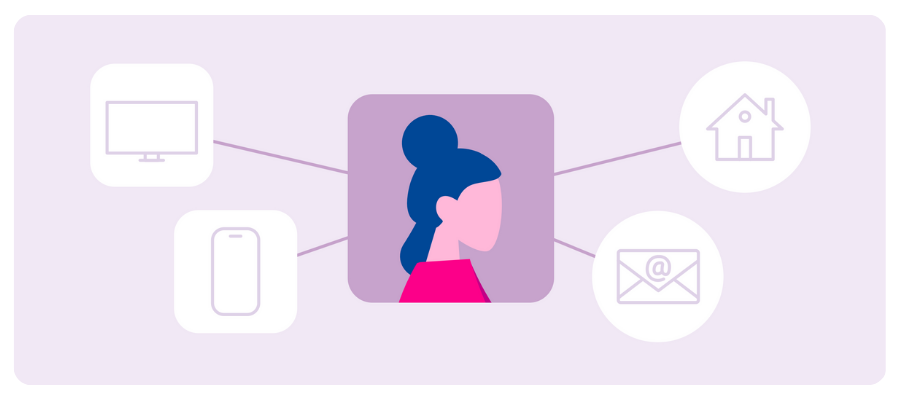
Most brands recognize the value of their own data. Fewer have the infrastructure to make it work across the media ecosystem. Data often sits in silos, disconnected from activation platforms, analytics, and measurement. Without the ability to unify, enrich, and deploy that data, first-party data remains underutilized.
In 2026, leading marketers are closing that gap by turning first-party data into audiences they can reach across owned and paid channels, bringing consistency to targeting and measurement. That same connectivity also enables better suppression, allowing brands to avoid targeting existing customers in prospecting campaigns. For consumers, this reduces irrelevant and repetitive ads. For marketers, it improves efficiency and protects the customer experience.
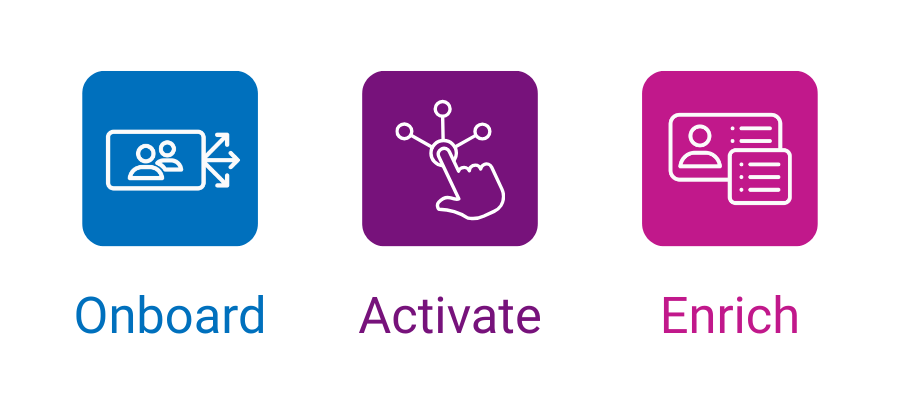
With Experian’s identity foundation in place, first-party data becomes usable across the media ecosystem. Marketers can enrich their first-party data with behavioral, demographic, and lifestyle insights, combined with trusted partner data, and activated across channels like social, programmatic, and TV, from a single environment.
Why is first-party data becoming central to media planning?
First-party data has become central to media planning because it gives marketers control, consistency, and continuity across channels. As media environments fragment, first-party data provides a stable signal that supports activation, personalization, and measurement at scale.
Rather than relying on any single data source, marketers are increasingly combining their own first-party data with trusted third-party and partner data to extend reach, improve relevance, and fill gaps in their own insights. Doing so effectively requires deterministic matching, privacy-first infrastructure, and partners that can support both owned and syndicated data at scale.
This approach allows brands to maintain control over their customer relationships while continuing to utilize third-party data for prospecting, modeling, and performance optimization across channels. As a result, first-party data activation is now central to how media strategies are planned and executed.

2026 Digital trends and predictions report
Our 2026 Digital trends and predictions report is available now and reveals five trends that will define 2026. From curation becoming the standard in programmatic to AI moving from hype to implementation, each trend reflects a shift toward more connected, data-driven marketing. The interplay between them will define how marketers will lead in 2026.
What business impact does first-party data activation deliver?
First-party data activation delivers measurable business impact, including:
- 70% of B2B marketers plan to increase their use of first-party data, more than any other data strategy.
- 67% percent of brands and 80% of publishers expect to grow their first-party data sets in the next year.
- The payoff is tangible. Activating first-party data can reduce customer acquisition costs by up to 50% and drive a 10-15% lift in revenue.
Activation drives efficiency. Brands that put their own data to work see lower acquisition costs and stronger revenue lift. These gains come from relevance. When marketers activate audiences built from known customer relationships, they reduce waste and optimize toward outcomes that matter.
Experian’s Audience Engine supports this model at scale. Audience Engine helps marketers onboard and activate first-party data through a single unified platform. It connects more than 3,500 syndicated audiences, over 50 media platforms, and 20+ third-party data providers. Marketers can combine, gain insights from, and deploy first-party data quickly.

What should marketers plan for first-party data activation in 2026?
In 2026, marketers should plan for first-party data to operate across onboarding, activation, and measurement as a connected workflow. Planning now centers on interoperability, scalable activation tools, and privacy-forward enrichment rather than isolated data use cases. Identity underpins each of these three shifts.
Why first-party data activation matters to marketers in 2026
In 2026, first-party data delivers value when marketers activate it across channels. The opportunity is to extend the value of what already exists through activation, enrichment, and identity-led connection across channels. That means uncovering insights within your existing customer base, building lookalikes from your highest-value audiences, and activating those segments across every channel.
With Experian’s Audience Engine, marketers can onboard, enrich, and activate their first-party data in one secure, interoperable platform. Identity connects to outcomes. Performance becomes measurable. Privacy stays at the core.
To explore this trend and the others shaping marketing in 2026, download our 2026 Digital trends and predictions report.
Ready to connect with our team?
About the authors

Doug McLennan
Sr. Director, Product Management, Experian
Doug McLennan is the Senior Director of Product Management at Experian Marketing Services where he is focused on product strategy for activation. His past work includes managing syndicated audiences at Oracle Data Cloud and building personalized video ad products at an agency. Doug lives in Colorado and skis as much as his family will allow.

Rachael Weinstein
Director of Product Management, Experian
Rachael Weinstein is the Director of Product Management at Experian Marketing Services where she is focused on product strategy. Previously, she held product roles in advanced TV at WarnerMedia and worked in analytics across multiple startups.
First-party data activation FAQs
First-party data activation means using a brand’s own customer data to build addressable audiences across paid and owned channels. Experian’s identity spine connects, enriches, and activates that first-party data consistently while preserving control and privacy.
First-party data needs identity to connect customer records across devices, platforms, and environments into a unified view. Experian identity resolution makes it possible to activate, measure, and manage frequency consistently across paid and owned media.
First-party data activation improves efficiency by reducing waste and increasing relevance. Marketers focus spend on known and modeled audiences, suppress existing customers in prospecting, and optimize toward outcomes rather than impressions.
Experian supports first-party data activation by resolving, enriching, and activating customer data using identity as the foundation. Through Audience Engine, Experian enables onboarding, audience creation, cross-channel activation, and measurement within one environment.
Latest posts

NEW YORK, June 1, 2016 /PRNewswire/ — Are Traasdahl, CEO and founder of Tapad, the leader in cross-device marketing technology and now a part of Experian, has been named Founder of the Year by the Nordic Startup Awards. The Nordic Startup Awards' Founder of the Year Award recognizes an individual that has shown exceptional achievements in fundraising, customer growth, financial savvy, and/or leadership throughout the past year. The Nordic Startup Awards evaluates hundreds of players in the startup ecosystem, ranging from investors and founders, to developers and journalists in Denmark, Sweden, Iceland, Norway and Finland. Taking place in two stages, each country selects its nominees for consideration for the regional awards which were held in Iceland on May 31, 2016. Traasdahl is recognized for his continuous investment in Tapad as a whole, as well as his dedication to growing and developing Tapad since founding the company in 2010. He has led Tapad from startup through a steady period of growth resulting in an acquisition by the Telenor Group for $360 million in February 2016. "I am truly honored to be named Founder of the Year by the Nordic Startup Awards, among so many other remarkable leaders in the space," said Traasdahl. "That said, this has always been a team effort. We started Tapad with the goal of giving employees unprecedented growth opportunities while developing breakthrough solutions for our clients. This is a win for everyone at Tapad who has committed themselves to these principles over the past four-and-a-half years." Tapad is reinforcing its commitment to fostering entrepreneurship with the launch of their new Propeller Program. Through Propeller, Tapad will host five early-stage companies at Tapad's New York headquarters for a year to set them up for global expansion. In its inaugural year, the first participants will come from Traasdahl's native Norway. For more information on the Nordic Startup Awards, please visit: http://www.nordicstartupawards.com. Contact us today
NEW YORK, May 4, 2016 /PRNewswire/ – Tapad, the leader in cross-device marketing technology and now a part of Experian, has been honored with two iMedia ASPY Awards. Announced on May 3rd at the iMedia Summit in Lost Pines, TX, Tapad's 2016 ASPY Awards include "Best Customer Service" and "Best Mobile Partner." In 2015, Tapad's proprietary technology, Tapad Device Graph™, was named "Best New Media Innovation" and Tapad employee Chris Martin was awarded the "Rising Star Award." The iMedia ASPY Awards – determined exclusively by agency votes – recognize the industry's top marketing technology, media companies and publishers for outstanding service to agencies. The award for "Best Customer Service" recognizes Tapad's client services team and their dedication to helping agencies fully understand their consumers' behavior and achieve the best cross-screen campaign ROI through Tapad's Campaign Pulse and TV Pulse analytics reporting. The "Best Mobile Partner" win recognizes the abilities of the Tapad Device Graph™ to deliver unified cross-screen solutions for the company's partners. "We are privileged to have a talented and dynamic group of people on our client services team, and we are honored to be recognized by iMedia Connection and our agency partners," said Tapad Founder and CEO, Are Traasdahl. "We have always strived to provide the best solutions and the best customer support, so it's extremely gratifying to be rewarded for our efforts. If our clients and partners are happy, we are happy." For more information on the iMedia ASPY Awards please visit: http://aspyawards.com. Read the full press release here. Contact us today
Cross-screen marketing tech firm, Tapad, drove unified campaign; partnered with Statiq to measure cross-screen impact on in-store visits LONDON, March 8, 2016 /PRNewswire/ – Carat North completed the UK's most comprehensive digital campaign with Tapad, the leader in cross-device marketing technology and now a part of Experian. Coupled with location-based audience data from Statiq, this marks the first time a UK-company has measured the impact of unified, cross-screen campaign on in-store visits. Carat North served display and video ads to grocery shoppers for the leading retailer ASDA from August through October. During the campaign, Tapad utilized Statiq's audience data to measure which users visited a store after being exposed* to the campaign's ad on multiple devices. The digital campaign demonstrated a lift of 59% for in-store visits when users were exposed to ads on three devices over people who were shown an ad only on onescreen. Those who engaged with the ad were also 411% more likely to visit an ASDA store. Of those who were exposed to an ad, 248% were more likely to visit a store. Impressions served to mobile devices saw the highest success rate with an in-store visit lift of 67%. The campaign leveraged Tapad's proprietary technology, The Device Graph™, which Nielsen confirmed Tapad's cross device accuracy to be 91.2%, to serve ads sequentially on connected devices belonging to the same user. CARAT NORTH: "The ability to know which devices belong to our customer, coupled with the ability to deliver the right ad, and right message, wherever they are and on whatever device they're using, has been something this industry has long needed," said Steve Thornton, Digital Account Manager, Carat North. "We're impressed with the results that have come from the work with Tapad and Statiq for this media-first, and look forward to continuing to offer these solutions to clients like ASDA. Matching unified cross-device capabilities with real insights on campaign performance is an invaluable advantage in the marketing world." TAPAD: "This campaign is a perfect example of the capabilities of cross-device advertising," said Are Traasdahl, Founder and CEO, Tapad. "In addition to reaching users across devices, we're able to analyze campaign results and determine how different combinations of ad exposure, creative type or view frequency affected their decision to visit a location." STATIQ: "As a location data specialist, Tapad is our ideal partner – they are an industry leader and by working with them we are able to determine the impact unified messaging has on real world consumer behaviours," said Dean Cussell, Co-Founder of Statiq. "We believe this type of analysis will significantly aid brands in optimising future ad spend." About Carat North Carat North is a leading independent media planning & buying specialist in digital and non-traditional media solutions. Owned by global media group Dentsu Aegis Network, the Carat network is more than 6,700 people in 130 countries worldwide across 170 cities. Carat defined the sector when established as the world's first media independent in 1968 and is now Europe's largest media network, a position held for more than 15 years. For more information visit www.carat.co.uk About Tapad Tapad Inc. is a marketing technology firm renowned for its breakthrough, unified, cross-device solutions. With 91.2% data accuracy confirmed by Nielsen, the company offers the largest in-market opportunity for marketers and technologies to address the ever-evolving reality of media consumption on smartphones, tablets, home computers and smart TVs. Deployed by agency trading desks, publishers and numerous Fortune 500 brands, Tapad provides an accurate, unified approach to connecting with consumers across screens. In 2015, Tapad began aggressively licensing its identity management solution, the Tapad Device Graph™, and swiftly became the established gold-standard throughout the ad tech ecosystem. Tapad is based in New York and has offices in Atlanta, Boston, Chicago, Dallas, Detroit,Frankfurt, London, Los Angeles, Miami, Minneapolis, San Francisco and Toronto. TechCrunch called the powerhouse Tapad team "a hell of a list of entrepreneurs who created some of the most valuable online advertising companies of the last decade." Among Tapad's numerous awards: EY Entrepreneur of The Year (East Coast) 2014, among Forbes' Most Promising Companies two year's running, Deloitte's Technology Fast 500, Crain's Fast 50, Entrepreneur 360, Digiday Signal Award, iMedia ASPY Award, and a MarCom Gold Award. Read the full release here. *Tapad utilized Statiq's audience data to measure which users visited a store during, or within one month of, being exposed to the campaign's ad on multiple devices. Contact us today