At A Glance
Advertisers are embracing CTV, data collaboration, and AI to deliver more personalized, efficient, and impactful campaigns, transforming living rooms into interactive hubs, utilizing creator-led programming, and streamlining workflows. At Cannes Lions 2025, industry leaders highlighted how privacy-first data practices, supply path optimization, and AI-powered tools are reshaping the advertising ecosystem - areas where Experian plays a key role in enabling trusted, measurable, and innovative outcomes.As artificial intelligence (AI), connected TV (CTV), and data collaboration continue to advance, advertisers are discovering new ways to meet audiences where they are; on their terms and in their spaces. These innovations are creating opportunities to deliver more personalized, impactful campaigns that were unimaginable just a few years ago. At Cannes Lions 2025, we sat down with industry leaders from Butler Till, Comcast Advertising, Index Exchange, IQVIA Digital, Optable, PMG, Samsung Ads, and Sports Innovation Lab.
From reimagining the living room experience to using AI in practice for better outcomes, here’s what we learned about the trends driving advertising forward.
1. CTV turns living rooms into active spaces
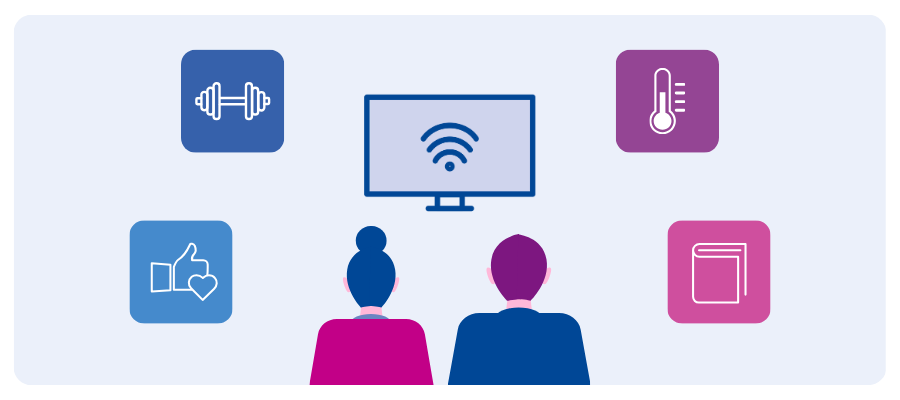
CTV has turned the living room into a hub of interaction, discovery, and commerce. Younger audiences are using their TVs like mobile devices; streaming, learning, and even controlling their homes. This shift is creating new opportunities for advertisers to deliver relevant, personalized experiences where audiences are already engaged. With premium content and interactive tools, the living room is no longer just a passive space, it’s where attention meets action, and where brands can connect with audiences in meaningful ways.
How Experian helps
With Experian, advertisers can connect first-party data with CTV IDs, ensuring accurate and measurable targeting while maintaining a privacy-first approach. That means brands reach viewers with messages that feel personal, without losing trust.
“We surveyed 1,000 smart TV owners and found that younger audiences are using their TVs like mobile devices. Two-thirds use them for social media, 40% for self-improvement like Coursera or TED Talks, and 25% for interactivity; controlling appliances or home temperatures. Interactivity with connected TVs is skyrocketing.”
Samsung Ads Justin Evans
2. Creators build stronger connections with audiences
Creators are no longer limited to social media; they are now a driving force in CTV. Creator led programming is capturing attention and driving post view actions, offering advertisers a unique way to connect with passionate, engaged audiences. By thinking of creators as “micro networks” with built in communities, advertisers can meet fans where they already gather and deliver authentic, impactful messages that resonate.

How Experian helps
Experian helps advertisers tap into the creator economy by identifying topical audiences that align with influencer niches—like food, travel, gaming and entertainment—and activating them across the open web. Through Audigent’s integration with DV360, brands can pair Experian’s expansive audience targeting capabilities with Audigent’s Curated Deals to reach engaged viewers in creator-led environments. This approach ensures ads appear where audiences are most receptive, enhancing relevance and performance.
“The creator economy is moving into TV. It’s incredible to see social influencers, once dominant on platforms, now creating high quality content for streaming, networks, and more.”
Butler/TillGina Whelehan
3. Data collaboration that drives better results
Advertisers rely on data to reach the right audiences, but privacy concerns are reshaping how it’s collected, shared, and used. Data collaboration enables brands to combine multiple data sets (like first-party data and syndicated audiences) to improve planning, activation, and measurement. While privacy remains a priority, the focus is on creating actionable insights that drive better results and build trust with consumers. By focusing on consented, privacy safe identity solutions, advertisers can achieve better outcomes while respecting consumer privacy; a win-win for brands and audiences alike.
How Experian helps
Experian’s privacy-first approach ensures that all data activation occurs with compliance and consent. By maintaining high match rates, offering flexible collaboration options (including clean rooms, first-party data onboarding, and syndicated audiences) and adhering to transparent methodologies, Experian facilitates seamless collaboration between brands, publishers, and platforms. This helps build trust and strengthen long-term connections with audiences.
“The area we’re most excited about is identity resolution on the publisher side. Publishers can reinsert signal and create better results for advertisers. This wasn’t always well-articulated, but today we have case studies proving publishers can help improve outcomes.”
OptableVlad Stesin
4. Optimizing supply paths for better outcomes
Supply path optimization (SPO) helps advertisers improve campaign efficiency by increasing viewability and reducing waste. Supply-side decisioning builds on this by identifying the audiences advertisers want to reach, the content those audiences consume, and the publishers with the most relevant inventory. Together, these strategies create a more intelligent and efficient ecosystem, ensuring ads are delivered in the right context, to the right people, on the right platforms.

How Experian helps
Experian’s data solutions, including both Experian’s and Audigent’s contextual and identity capabilities, are available across sell-side (SSPs) and buy-side (DSPs) platforms, enabling smarter decision-making throughout the media supply chain. Audigent’s direct integrations with publishers provide an unfiltered view into available inventory, offering deeper insights that inform campaign optimization. These insights can be activated in real time and transacted within advertisers’ existing buying platforms.
By powering real-time intelligence across the ecosystem, from advertisers to DSPs, SSPs, and publishers, Experian and Audigent help drive better outcomes, more efficient media spend, and greater value for all participants.
“Sell-side decisioning activates the intelligence of the exchange, along with partners like Experian, to optimize auctions in real time. This helps pre-decision buys that flow to the DSPs, making the buying process smarter, more efficient, and ultimately driving better value for marketers and publishers.”
Index ExchangeMike McNeeley
5. AI that streamlines agency workflows

AI is a practical tool that agencies are using to streamline workflows and deliver better results. From planning and pacing to creative iteration, AI is helping teams move faster and smarter. In fact, 67% of global marketing and communications professionals now use AI for content creation frequently or all the time, underscoring its role in modern workflows. The key is to think of AI as a navigator, not a replacement. It handles repetitive tasks, freeing up teams to focus on strategy and creativity, while enabling faster tests, fewer dead ends, and better client clarity.
How Experian helps
Experian uses AI and machine learning to deliver highly personalized marketing solutions. In our Digital Graph, advanced clustering algorithms analyze household and individual device connections, improving targeting and measurement accuracy. We also use AI powered audience recommendations to create tailored audience solutions for clients. Our contextual data models, powered by Audigent’s contextual engine, further improve this process by analyzing bidstream traffic in real time, ensuring audiences are aligned with the most relevant inventory.
“We’ve extended our platform with Marketplace, which lets us integrate third-party partners, new tech, and data seamlessly into activation. Clients are asking for this level of innovation, especially with the speed at which AI is evolving and transforming what’s possible in marketing.”
PMGSam Bloom
Connecting the dots: Data, creativity, and outcomes
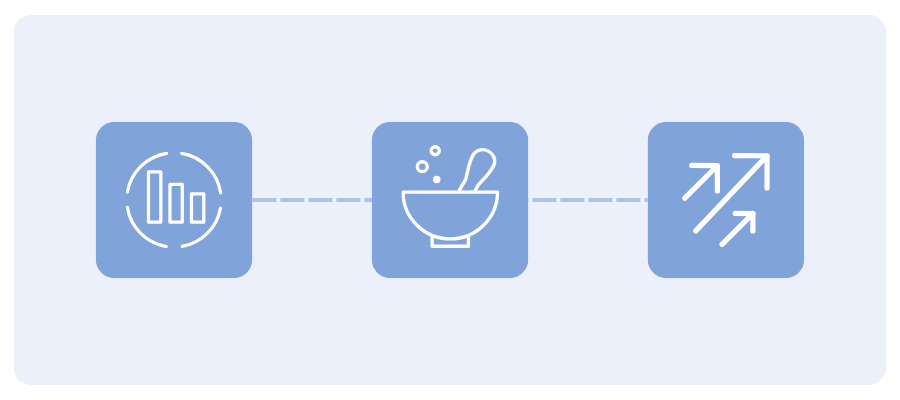
The common thread across these insights is how we connect with audiences, collaborate on data, and create meaningful outcomes. By reimagining the living room experience and utilizing AI and creator-led programming, brands are embracing innovation.
How Experian helps
Experian helps you build privacy-first identity foundations, collaborate seamlessly, optimize supply paths, streamline with AI, and connect through creators.
Let’s start a conversation
FAQs
CTV brings premium, interactive streaming to the largest screen at home, allowing brands to reach engaged viewers with measurable, personalized experiences.
It’s the consented, secure use of first-party and partner data (often via clean rooms) to improve planning, activation, and measurement without exposing raw consumer data.
SPO streamlines the path from advertiser to publisher, reducing waste and improving quality. Sell-side decisioning adds real-time intelligence to the exchange, delivering the proper context and audience more efficiently.
Creator-led programming functions like “micro networks” with built-in communities, helping brands show up where fans are already engaged and ready to act.
Viewers use TVs like mobile devices, discovering content, learning, shopping, and interacting; advertisers can meet their intent and drive post-view actions.
Latest posts

The Tapad Device Graph™ Will Expand Sizmek’s Cross-Device Reach and Improve the Efficiency and Precision of Digital Advertising NEW YORK, November 16, 2017 – Tapad, part of Experian and a leader in cross-device marketing technology, today announced a new global partnership with Sizmek, the largest independent buy-side advertising platform delivering impressions that inspire. By integrating the Tapad Device Graph™, Sizmek will enhance its AI-powered predictive capabilities to deliver accurate, cross-device messaging at global scale in a privacy-safe environment. Combined with Sizmek’s existing data enablement, creative optimization and media execution capabilities, the proprietary Tapad Device Graph improves the efficiency and precision of digital advertising by accurately matching people and devices. This enables advertisers to get a clear view of individual customer journeys, achieve scale without compromising on efficiency, and uncover new opportunities for conversion. Sizmek’s customers will have access to Tapad’s globally compliant and privacy-safe datasets across the Americas, EMEA, and APAC. With deeper knowledge of consumer preferences, purchase intent and conversion behaviors, Sizmek and its customers are able to enhance advertising strategies including cross-device audience identification and more. “Tapad is known for their strong cross-device capabilities, and their offering is an excellent addition to our growing program for best-of-breed data and measurement partners" says Mike Caprio, Sizmek’s Chief Growth Officer. “For our customers, this partnership will add further people-based marketing precision and reach to our comprehensive offerings around creative optimization, data enablement and media execution." This partnership comes at a time of a massive shift in the marketing technology industry. Companies like Tapad and Telenor, as well as Rocket Fuel and Sizmek, are joining forces to adopt those technologies that are most efficient and accurate at reaching consumers at scale in a personalized and non-intrusive way. The combination of Tapad and Sizmek’s offerings will provide international marketers with exceptional resources to lead a more cost effective and results driven campaign. Contact us today

The Tapad Device Graph™ increases Throtle’s amplification by 475 percent. NEW YORK, Nov. 1, 2017 /PRNewswire/ – Tapad, now a part of Experian, the leader in cross-device marketing technology, today announced a partnership with Throtle, a leading data onboarding company. The Tapad Device Graph™ will enhance Throtle's best-in-class onboarding capabilities by providing accurate and privacy-safe cross-device reach as well as precise audiences at scale. In partnership with Tapad, Throtle will deterministically link its services to a corroborated individual with hundreds of targeting attributes. This linkage allows Throtle to offer true cross-device identity management and identity resolution services to accompany its robust onboarding capabilities. Throtle will also work with Tapad to validate its device graph, building larger, more comprehensive audience segments. To date, the Tapad Device Graph™ has connected 61 percent of Throtle IDs to related ones in the graph, with an average amplification rate of 475 percent for Throtle's IDs, or 4.8 new IDs per each of Throtle's. Throtle has also seen its overall match rates involving Tapad's identity insights rise an average of 15 percent since the inception of the partnership. More specifically, Tapad's mobile advertising IDs (MAIDs) have increased Throtle's in-app identity inventory by 35 percent. "Tapad has proven to be a trusted source for cross-device matching and has a tremendous reputation in the advertising and marketing technology industries for delivering superior precision and scale with the utmost dedication to privacy," says Paul Chachko, CEO, Throtle. "Since we first began our test phase, and continuing through to this day, Tapad has met and exceeded our expectations for what a partner should be." With Tapad's strong commitment to precision and accuracy, Throtle was confident that this partnership would prove to be the right choice for the strategic expansion of its platform. Not only does Tapad deliver in-depth insights, parsing deterministic from probabilistic linkages, but its pool of device-level touchpoints enables Throtle to increase scale without seeing a decline in precision. For more information about the Tapad Device Graph™, or to request a demo, visit https://www.experian.com/marketing/consumer-sync About TapadTapad Inc. is a marketing technology company renowned for its breakthrough, unified, cross-device solutions. The company's signature Tapad Device Graph™ connects millions of consumers across billions of devices. The world's largest brands and most effective marketers entrust Tapad to provide an accurate, privacy-conscious, and unified approach to connecting with consumers across screens. In 2015, Tapad began licensing the Tapad Device Graph™ and swiftly became the established gold-standard throughout the ad tech ecosystem. Tapad is based in New York and has offices in Boston, Chicago, Dallas, Detroit, London, Los Angeles, Miami, Oslo, San Francisco, Singapore, and Tokyo. Tapad's numerous awards include: Forbes' Most Promising Companies, Deloitte's Technology Fast 500, Crain's Fast 50, TMCnet Tech Culture Award, and Global Startup Award's "Startup Founder of the Year". In 2016, Tapad was acquired by the Telenor Group, one of the world's largest mobile operators. About ThrotleThrotle is a data onboarding company focused on deterministic matching and identity resolution, empowering brands with true individual-based marketing. Our data centric onboarding approach guarantees the highest level of accuracy, scale, and responsiveness for our clients. For more information on Throtle, please visit, throtle.io. Contact us today
Autotrader leverages The Tapad Device GraphTM to achieve higher performance and reach new audiences across all devices New York, NY – September 6, 2017 – Tapad, the leader in cross-device marketing technology and now a part of Experian, today revealed findings from a campaign conducted with Autotrader which connects with more actual car buyers than any other third-party listing site.* Autotrader’s premium audience, combined with the Tapad Device GraphTM, delivered significant audience extension across desktop, mobile, and tablet to drive awareness and maximize both reach and delivery across screens. To help analyze shopping behaviors across multiple devices, the global automotive brand for this campaign turned to Autotrader and Tapad, who created a cross-device pre-roll video strategy with a focus on viewability, concentrating on potential customers already searching for vehicles. By using a one-to-one connection, instead of look-alike modeling, Tapad also ensured that the automotive brand discovered only new consumers across all of their devices. This approach discovered a new potential audience of more than 14 million consumers, eliminated communication waste and the risk of duplicates, increased overall performance, and ensured more of their campaign dollars reached meaningful audiences. Overall, this case study represents a leap forward in terms of audience-based targeting and the highly-sought after multi-touch attribution modeling. “We really enjoy working with the team at Tapad to help execute our Audience Extension campaigns”, said Lynne Green, product manager at Autotrader. “Their ability to meet the demands of an ever-changing industry, as well as their dependable customer service has allowed us to confidently deliver against our unique in-market automotive audience and provide our clients ongoing messaging opportunities to our audience beyond Autotrader.com.” “How identity relates to conversion behavior is a complex part of any advertising campaign,” said Jeff Kelosky, RVP and head of global automotive at Tapad. “After identifying auto consumer’s behavioral patterns and device usage while shopping for vehicles, we knew we could successfully help Autotrader and its automotive brand clients maximize campaign viewability and drive results.” To learn more about using Audience Extension with Autotrader, click here. For more about the Tapad Device GraphTM, or to request a demo, visit https://www.experian.com/marketing/consumer-sync Contact us today