Loading...

How AI, CTV, and data collaboration are changing the way we advertise

Published: October 5, 2025 by Experian Marketing Services

At A Glance

Advertisers are embracing CTV, data collaboration, and AI to deliver more personalized, efficient, and impactful campaigns, transforming living rooms into interactive hubs, utilizing creator-led programming, and streamlining workflows. At Cannes Lions 2025, industry leaders highlighted how privacy-first data practices, supply path optimization, and AI-powered tools are reshaping the advertising ecosystem - areas where Experian plays a key role in enabling trusted, measurable, and innovative outcomes.

As artificial intelligence (AI), connected TV (CTV), and data collaboration continue to advance, advertisers are discovering new ways to meet audiences where they are; on their terms and in their spaces. These innovations are creating opportunities to deliver more personalized, impactful campaigns that were unimaginable just a few years ago. At Cannes Lions 2025, we sat down with industry leaders from Butler Till, Comcast Advertising, Index Exchange, IQVIA Digital, Optable, PMG, Samsung Ads, and Sports Innovation Lab.

From reimagining the living room experience to using AI in practice for better outcomes, here’s what we learned about the trends driving advertising forward.

1. CTV turns living rooms into active spaces
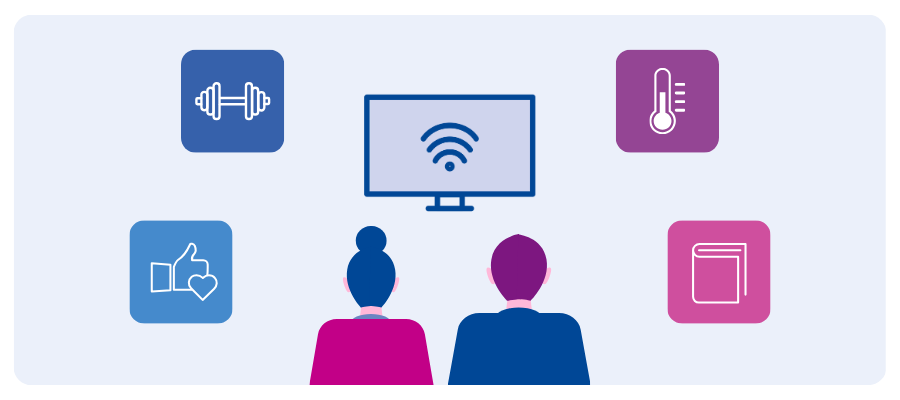
CTV turns living rooms into active spaces

CTV has turned the living room into a hub of interaction, discovery, and commerce. Younger audiences are using their TVs like mobile devices; streaming, learning, and even controlling their homes. This shift is creating new opportunities for advertisers to deliver relevant, personalized experiences where audiences are already engaged. With premium content and interactive tools, the living room is no longer just a passive space, it’s where attention meets action, and where brands can connect with audiences in meaningful ways.

How Experian helps

With Experian, advertisers can connect first-party data with CTV IDs, ensuring accurate and measurable targeting while maintaining a privacy-first approach. That means brands reach viewers with messages that feel personal, without losing trust.

“We surveyed 1,000 smart TV owners and found that younger audiences are using their TVs like mobile devices. Two-thirds use them for social media, 40% for self-improvement like Coursera or TED Talks, and 25% for interactivity; controlling appliances or home temperatures. Interactivity with connected TVs is skyrocketing.”

Samsung Ads Justin Evans

2. Creators build stronger connections with audiences

Creators are no longer limited to social media; they are now a driving force in CTV. Creator led programming is capturing attention and driving post view actions, offering advertisers a unique way to connect with passionate, engaged audiences. By thinking of creators as “micro networks” with built in communities, advertisers can meet fans where they already gather and deliver authentic, impactful messages that resonate.

Creators build stronger connections with audiences

How Experian helps

Experian helps advertisers tap into the creator economy by identifying topical audiences that align with influencer niches—like food, travel, gaming and entertainment—and activating them across the open web. Through Audigent’s integration with DV360, brands can pair Experian’s expansive audience targeting capabilities with Audigent’s Curated Deals to reach engaged viewers in creator-led environments. This approach ensures ads appear where audiences are most receptive, enhancing relevance and performance.

“The creator economy is moving into TV. It’s incredible to see social influencers, once dominant on platforms, now creating high quality content for streaming, networks, and more.”

Butler/TillGina Whelehan

3. Data collaboration that drives better results
Data collaboration that drives better results

Advertisers rely on data to reach the right audiences, but privacy concerns are reshaping how it’s collected, shared, and used. Data collaboration enables brands to combine multiple data sets (like first-party data and syndicated audiences) to improve planning, activation, and measurement. While privacy remains a priority, the focus is on creating actionable insights that drive better results and build trust with consumers. By focusing on consented, privacy safe identity solutions, advertisers can achieve better outcomes while respecting consumer privacy; a win-win for brands and audiences alike.

How Experian helps

Experian’s privacy-first approach ensures that all data activation occurs with compliance and consent. By maintaining high match rates, offering flexible collaboration options (including clean rooms, first-party data onboarding, and syndicated audiences) and adhering to transparent methodologies, Experian facilitates seamless collaboration between brands, publishers, and platforms. This helps build trust and strengthen long-term connections with audiences.

“The area we’re most excited about is identity resolution on the publisher side. Publishers can reinsert signal and create better results for advertisers. This wasn’t always well-articulated, but today we have case studies proving publishers can help improve outcomes.”

OptableVlad Stesin

4. Optimizing supply paths for better outcomes

Supply path optimization (SPO) helps advertisers improve campaign efficiency by increasing viewability and reducing waste. Supply-side decisioning builds on this by identifying the audiences advertisers want to reach, the content those audiences consume, and the publishers with the most relevant inventory. Together, these strategies create a more intelligent and efficient ecosystem, ensuring ads are delivered in the right context, to the right people, on the right platforms.

Optimizing supply paths for better outcomes

How Experian helps

Experian’s data solutions, including both Experian’s and Audigent’s contextual and identity capabilities, are available across sell-side (SSPs) and buy-side (DSPs) platforms, enabling smarter decision-making throughout the media supply chain. Audigent’s direct integrations with publishers provide an unfiltered view into available inventory, offering deeper insights that inform campaign optimization. These insights can be activated in real time and transacted within advertisers’ existing buying platforms.

By powering real-time intelligence across the ecosystem, from advertisers to DSPs, SSPs, and publishers, Experian and Audigent help drive better outcomes, more efficient media spend, and greater value for all participants.

“Sell-side decisioning activates the intelligence of the exchange, along with partners like Experian, to optimize auctions in real time. This helps pre-decision buys that flow to the DSPs, making the buying process smarter, more efficient, and ultimately driving better value for marketers and publishers.”

Index ExchangeMike McNeeley

5. AI that streamlines agency workflows

AI streamlines agency workflows

AI is a practical tool that agencies are using to streamline workflows and deliver better results. From planning and pacing to creative iteration, AI is helping teams move faster and smarter. In fact, 67% of global marketing and communications professionals now use AI for content creation frequently or all the time, underscoring its role in modern workflows. The key is to think of AI as a navigator, not a replacement. It handles repetitive tasks, freeing up teams to focus on strategy and creativity, while enabling faster tests, fewer dead ends, and better client clarity.

How Experian helps

Experian uses AI and machine learning to deliver highly personalized marketing solutions. In our Digital Graph, advanced clustering algorithms analyze household and individual device connections, improving targeting and measurement accuracy. We also use AI powered audience recommendations to create tailored audience solutions for clients. Our contextual data models, powered by Audigent’s contextual engine, further improve this process by analyzing bidstream traffic in real time, ensuring audiences are aligned with the most relevant inventory.

“We’ve extended our platform with Marketplace, which lets us integrate third-party partners, new tech, and data seamlessly into activation. Clients are asking for this level of innovation, especially with the speed at which AI is evolving and transforming what’s possible in marketing.”

PMGSam Bloom

Connecting the dots: Data, creativity, and outcomes

The common thread across these insights is how we connect with audiences, collaborate on data, and create meaningful outcomes. By reimagining the living room experience and utilizing AI and creator-led programming, brands are embracing innovation.
Connecting the dots: Data, creativity, and outcomes

How Experian helps

Experian helps you build privacy-first identity foundations, collaborate seamlessly, optimize supply paths, streamline with AI, and connect through creators.

Let’s start a conversation

This site is protected by reCAPTCHA and the Google Privacy Policy and Terms of Service apply.


FAQs

What is CTV, and why does it matter now? 

CTV brings premium, interactive streaming to the largest screen at home, allowing brands to reach engaged viewers with measurable, personalized experiences. 

What is data collaboration, and how does it stay privacy-first? 

It’s the consented, secure use of first-party and partner data (often via clean rooms) to improve planning, activation, and measurement without exposing raw consumer data. 

What do “SPO” and sell-side decisioning actually do? 

SPO streamlines the path from advertiser to publisher, reducing waste and improving quality. Sell-side decisioning adds real-time intelligence to the exchange, delivering the proper context and audience more efficiently. 

How are creators changing TV advertising? 

Creator-led programming functions like “micro networks” with built-in communities, helping brands show up where fans are already engaged and ready to act. 

How are living rooms becoming “active spaces”? 

Viewers use TVs like mobile devices, discovering content, learning, shopping, and interacting; advertisers can meet their intent and drive post-view actions. 


Latest posts

Loading…
Navigating a cookieless future: Supply-side think tank recap

A few weeks ago, Experian and OpenX hosted a supply-side think tank at our New York City office. Over 70 industry leaders met to talk about targeting in a cookieless future and how we can reach consumers in intentional ways.  Publishers and supply-side partners shared what challenges they face, what solutions they’re considering, and what the future holds once the third-party cookie begins to deprecate in 2024. In this blog post, we’ll cover the top challenges, cookieless solutions, and actionable strategies we discussed at the event that can help publishers, their partners, and agencies make informed decisions about how to navigate tomorrow’s digital ecosystem.  Four main challenges  Four main challenges were discussed at the event:  First-party data monetization  Publishers possess a wealth of first-party data, but collecting and centralizing this information can be difficult for actionable insights. Streamlining data centralization and organizing first-party data is crucial for effective decision-making. Even with a wealth of first-party data, it's important to be aware of any blind spots in your data and enrich those gaps with data partners rooted in offline connections.  “We appreciate the opportunity to participate in the supply-side think tank led by OpenX and Experian, two industry leaders in navigating a cookieless future. We're excited to collaborate with them on testing privacy sandbox APIs, identity resolution products, and audience development tools to enhance creator monetization and support an open internet amidst rapid technological and regulatory shifts.” Patrick McCann, SVP, Research, Raptive Lack of authenticated data and persistent IDs  The deprecation of third-party cookies means there will be a shortage of authenticated user data and persistent identifiers. Without this information, targeting and personalization become more challenging. Participants discussed the need to find alternative ways to gather and use personal data responsibly. It’s time to start evaluating data partners who have accurate, multi-source compiled, privacy-compliant data with the dedication to reach and recency. Fragmentation and scale with alternative IDs currently in the market  The multitude of alternative identifiers in the market poses a challenge for publishers. Each of these identifiers comes with its own set of rules and integration processes, leading to fragmentation and complexity. Publishers must find ways to navigate this landscape. Look to ID agnostic partners who provide a way to access multiple IDs at scale.   “The industry needs a more streamlined standard to integrate alternative IDs, given the ongoing challenges of third-party cookie deprecation, measurement, and clean rooms. This burden falls heavily on product and engineering teams, who must prioritize and address these issues one at a time.” Ryan Boh, Head of Identity, Lockr Time  Cookie deprecation is almost here. It is crucial to organize your legal, engineering, and product resources, and align internal go-to-market strategies. Establish partnerships that work with your team to follow these timelines and help build phased or cohesive strategies to prepare for a path to monetization. It is imperative to establish a sense of urgency and not wait for others to take the lead. Start testing now to determine if your infrastructure is ready and capable. Many partners who attended the think tank offered insights on how they’ve been tackling challenges to help their industry peers. Solutions and action plans for a cookieless future  Participants discussed ways they are starting to prepare for a cookieless future and other approaches on their roadmaps:  Work with data partners heavily rooted in offline data across the ecosystem  Enriching your first-party data with partners who rely on offline IDs can help bridge gaps in your audience knowledge. This approach allows you to build a more complete audience profile while third-party cookies are still operational.   Experian is rooted in deterministic offline data and has decades of experience managing it safely. We have insights on over 250 million U.S. consumers and 126 million U.S. households. With our digital technology assets, we bring in 4 billion devices and 1 trillion device signals to definitively connect offline records to online identifiers. With Experian identity widespread adoption throughout the industry, we're able to provide a common language for us all to collaborate. Experian identity organizes people into households, links their digital devices and IDs to them, enriches their identity with behavioral attributes, and then makes this data actionable in any environment, all while maintaining consumer privacy and data regulations. “Experian’s supply-side think tank provided a platform for publishers and AdTech companies to discuss the challenges posed by cookie deprecation, privacy regulation updates, and identity restrictions. It highlighted the need for AdTech companies to assist publishers in addressing anonymous users without requiring a value exchange — fostering a mutually beneficial and privacy-compliant open web solution.”Anthony Caccioppoli, Head of AdTech & Solutions, Insider Develop your own persistent ID  Creating and maintaining a proprietary persistent ID can be a valuable cookieless solution. It provides control and independence in the new environment post cookie, giving publishers the ability to maintain a consistent user profile.  Use your data to expand contextual targeting opportunities  Contextual targeting involves placing ads based on the content of the web page rather than user data. In the absence of cookies, this strategy can prove effective in reaching relevant audiences.  “The masking or deprecation of IP addresses will eventually impact the availability of addressable IDs in non-authenticated web environments. In addition to ensuring maximum resiliency of our Graph and increasing support for authentication-based IDs, we are also investing in research and development around the use of other signals, such as contextual data, to maintain behavioral targeting inside non-authenticated environments. We will be sharing our findings and future plans in this space in the coming months.”Budi Tanzi, VP, Product, Experian Facilitate a knowledge exchange  Reach out to your network to find out what others are testing and what’s working. Start collaborating with agencies and brands across the buy-side to meet their needs.  “The collaborative spirit displayed by our partners constantly inspires me. Listening to the obstacles our industry faces allows this community to build strong relationships, create action plans, and deliver true value.”Carly Allcorn, Account Executive, Publisher & Supply-Side Partnerships, Experian Invest in an identity graph  Invest in an identity graph provider to sync first-party cookies and addressable IDs. This ensures that your data remains accessible and actionable in a cookieless world.  “Many participants at our think tank with Experian expressed the need to find an identity solution while also exploring other ways they can start to address cookie deprecation while maintaining business as usual.” Callie Askenas, Director of Publisher Development, OpenX How Experian and OpenX can help  Graph from Experian captures all available digital identifiers in real-time and resolves them back to individuals and households. We’re signal agnostic, continuously expand the IDs we support, and futureproof identity resolution through a combination of deterministic, probabilistic, and cookieless identifiers.   Experian is a key player in OpenX’s OpenAudience solution and helps to power many of their data segments as well as their identity graph. While OpenX collaborates with a variety of providers and operates a fully interoperable platform, Experian remains valuable to the core technology within OpenX’s supply-side platform (SSP).  Experian can help you prepare for the cookieless future  It’s clear that the cookieless future poses some unique challenges for publishers, but there are solutions. Publishers and their supply-side partners can come up with strategies to target consumers in intentional ways by continually testing multiple identifiers and cookieless solutions, developing their own persistent ID, creating velvet rope content, and returning to contextual targeting. Collectively, these actionable strategies can help ensure that publishers have a more successful transition into a cookieless future.   Experian has been preparing for signal loss for quite some time and we continue to make substantial investments to ensure our resiliency and the resiliency of our customers. We continue to diversify our signal creating profiles with more persistent identifiers which allows us to pair authentication-based universal identifiers such as UID2 into our Graph seamlessly.   Experian is ready and we are here to navigate the future of privacy together.   To find out more about how Experian can help you prepare for the cookieless future, get in touch with a member of our team today.  Get ready for the cookieless future with Experian Latest posts

Nov 15,2023 by Hayley Schneider, Sr. Manager, Content Marketing

Experian’s Graph adds support for Unified I.D. 2.0 (UID2)

Cookies are leaving us, but that doesn’t have to mean performance has to. That’s why Experian is taking the steps needed to future-proof identity in our Graph, including adding Unified ID 2.0 (UID2) from The Trade Desk. Experian currently supports UID2 in our Graph outputs for demand-side platforms (DSPs). UID2 support in our Graph outputs will be available to all approved partners by December 2023. In this blog post, we talk about why cookieless IDs, like UID2, that are coming to market because of cookie deprecation, are important, and how incorporating cookieless IDs into an identity graph can help you prepare for a cookieless future. What are cookieless IDs? Like cookies, cookieless IDs provide you with a comprehensive view of a consumer’s digital activity. Unlike cookies, identity providers produce cookieless IDs, using user-consented data and deterministic and probabilistic data signals (like hashed emails or mobile ad IDs). Cookieless IDs are a newer identifier that allows the advertising industry to maintain our understanding of consumers’ digital actions, helping to ensure we continue to generate smart, data-driven insights, targets, activation strategies, personalized experiences, and measurement and attribution. Why should you incorporate cookieless IDs into an identity graph? Adding cookieless IDs to an identity graph allows for licensees of the graph to: Resolve the universal ID to a consolidated consumer profile and know which other digital IDs tie to the cookieless ID Establish a unified view of the consumer with a privacy-compliant ID Produce data-driven and informed advertising strategies that still drive results, without the use of cookies Experian’s Graph Experian’s Graph is one of the most robust and signal agnostic identity graphs in the market. Experian’s Graph supports most digital IDs, including cookieless IDs, such as ID5, UID2, and Hadron ID. When you license Experian’s Graph, you increase your ability to better understand the different digital IDs that tie to a household or individual. Additionally, with our cookieless ID support, you can continue to understand your consumer and their digital IDs in the cookieless world. Why is it crucial to include UID2 support in Experian's Graph outputs? The Trade Desk is the largest, independent demand-side platform. They’ve created a cookieless ID, UID2, that they hope can power the advertising world to come across the open web. UID2 is an alternative solution to third-party cookies that when utilized in an identity graph, can offer a clearer picture of your consumer, enabling frequency controls and better management, across both digital and connected TV (CTV). Approved DSPs can add UID2s to their Experian Graph, giving them access to one of the more trusted and prominent cookieless IDs in the market today. Additionally, DSPs can use this identifier to decide whether to bid on certain inventory or not, on behalf of their advertiser partner. And, if we hedge our bets, it will only grow in prominence and use. While only available to approved DSPs today for use in the Experian Graph, the forthcoming encrypted UID2 token will provide this capability to the entire ecosystem, which allows us all to speak the same language and operate as efficiently as possible. "We are excited to support UID2, one of the premier IDs to support the future of addressability across the open internet, in the Experian Graph. We continue to see the adoption of UID2 across the demand-side ecosystem, increasing addressability across growing channels like CTV and beyond. I am personally excited to see how this momentum continues to increase over the remainder of 2023 and into 2024."chris feo, svp, sales & partnerships, experian Future-proof your identity strategy with Experian Graph and UID2 We’ve seen the impact that cookies have had on digital advertising and marketing. With the impending third-party cookie deprecation, you will need to adopt alternative cookieless ID solutions such as Unified ID 2.0. Experian is well-positioned to help you navigate this change, offering UID2 support in our Graph outputs for all approved partners by December 2023. Take the right steps now to future-proof your identity strategy and discover lasting success even without cookies. Alongside Experian’s Graph solution, you can achieve resilience in an ever-changing world of digital marketing and advertising. Now is the time to get ready for a cookieless future. Connect with an Experian team member to learn more about our Graph capabilities today. Learn more about Experian's Graph today Latest posts

Nov 09,2023 by Dylan Rothenberg, Product Marketing Manager

Three steps to maximize your data collaboration strategies for 2023 and 2024

In this article…How data collaboration is evolving from 2023 to 2024How to create efficient data collaboration strategies We live in a data-driven world, and businesses need effective data collaboration strategies to remain successful. Before you determine your 2023 and 2024 data collaboration options, it’s essential to understand what data collaboration is. In short, it involves sharing and combining data from multiple sources to better understand a customer base and make informed marketing decisions. Read on to learn more about our three-step plan to create new data collaboration strategies, how it’s evolving, and what we do to ensure our solutions help maintain your company’s data privacy. How data collaboration is evolving from 2023 to 2024 Data collaboration strategies continually evolve thanks to changing industry dynamics and new technologies. As we move from 2023 to 2024, we’ll likely see collaboration extending outside businesses, meaning data can be shared with external partnerships in the form of a data ecosystem. A data ecosystem is a platform that combines numerous information points, including packages, algorithms, and cloud-computing services, to allow businesses to store, analyze, and use the data they’ve collected. To ensure you’re ready for 2024 data collaboration, you’ll need to take a forward-thinking approach toward new data strategies. How to create efficient data collaboration strategies Here are our three steps for efficient collaboration to make the most of 2023 data collaboration and prepare for 2024. Identify your collaboration goal What are you hoping to gain from data collaboration? Do you understand the audience you’re trying to target and what you want regarding outcomes? To measure your success, you should set short- and long-term goals surrounding data collaboration in 2023 and 2024. Maximize the value of your data One of the most important reasons to gather data is to discover in-depth insights into your audience and the effectiveness of your marketing efforts. You’ll be able to identify hidden patterns and pinpoint trends you may not have noticed before. With this information, you can make more strategic marketing decisions to stay competitive in your industry. Resolve digital identities Collaborating on data with trusted partners can help you gain a more complete view of your customers by building comprehensive digital profiles. Resolving digital identities can provide greater insight into online and offline behavior of individual consumers, allowing you to better connect with your target audience and boost brand loyalty. Find an alternative to third-party cookies Digital privacy regulations are getting more strict, which is why it’s so important to find more secure alternatives to third-party cookies. By collaborating on data, you can gather essential insights without relying on cookies. This means you’ll still get the information you want while complying with privacy regulations. Choose the right collaboration partner Before you choose a data collaboration partner, it’s essential to ensure their privacy standards align with yours. How do they collect data and use it ethically and responsibly? At Experian, we are dedicated to protecting consumers and delivering responsible and transparent data practices. We focus on five Global Data Principles — security, accuracy, fairness, transparency, and inclusion — to ensure we treat data carefully and respectfully while boosting economic growth and resilience in the marketing environment. When you partner with us for data collaboration, you can trust that your data is protected in a system built for 2023 data collaboration needs — both known and unknown — while still evolving for 2024 and beyond. Choose a secure environment for collaboration Data collaboration security is vital to safeguard your business and consumers’ information. You can make sure your new data collaboration options are protected in several ways. We’ve outlined three options below. Collaboration in clean rooms Clean rooms are secure, private environments where data is shared and analyzed without exposing the underlying raw data. This ensures that sensitive information remains protected and insights are discovered securely. Experian has vetted clean room partners if this is an option you prefer while still getting industry-leading identity resolution. Collaboration directly Collaborating directly with your partner can be a good option if you have robust security measures. Encryption, access controls, and regular audits are essential to maintain data security in direct collaborations. Collaboration with Experian We excel at meeting our clients where they are and accommodating their technical capabilities and how they manage their data. We offer a secure and compliant environment for data collaboration. Our data collaboration solutions are designed to protect your data while enabling deeper insights. At Experian, we understand the importance of data privacy, and our platform reflects our commitment to safeguarding your information. Enable deeper insights and activation with Experian’s data collaboration solution Data collaboration is crucial in today’s business world, and Experian’s solutions are designed to help you bring together your 2023 and 2024 data collaboration strategies securely and efficiently. With Experian, you can unlock deeper insights, resolve digital identities, and confidently navigate the evolving data privacy landscape. If you’re looking for the right partner to enhance data collaboration to drive growth and innovation in your business, you’ll find a secure environment and the right partner with Experian. Contact us today to get started. Contact us Latest posts

Oct 17,2023 by Experian Marketing Services

Subscribe to our newsletter

Enter your name and email for the latest updates

This site is protected by reCAPTCHA and the Google Privacy Policy and Terms of Service apply.

About Experian Marketing Services

At Experian Marketing Services, we use data and insights to help brands have more meaningful interactions with people. As leaders in the evolution of the advertising landscape, Experian Marketing Services can help you identify your customers and the right potential customers, uncover the most appropriate communication channels, develop messages that resonate, and measure the effectiveness of marketing activities and campaigns.

Visit our website

Subscribe to our newsletter

Stay up to date on the latest industry news and receive expert tips from our marketing experts.
Subscribe now!