Loading...

How AI, CTV, and data collaboration are changing the way we advertise

Published: October 5, 2025 by Experian Marketing Services

At A Glance

Advertisers are embracing CTV, data collaboration, and AI to deliver more personalized, efficient, and impactful campaigns, transforming living rooms into interactive hubs, utilizing creator-led programming, and streamlining workflows. At Cannes Lions 2025, industry leaders highlighted how privacy-first data practices, supply path optimization, and AI-powered tools are reshaping the advertising ecosystem - areas where Experian plays a key role in enabling trusted, measurable, and innovative outcomes.

As artificial intelligence (AI), connected TV (CTV), and data collaboration continue to advance, advertisers are discovering new ways to meet audiences where they are; on their terms and in their spaces. These innovations are creating opportunities to deliver more personalized, impactful campaigns that were unimaginable just a few years ago. At Cannes Lions 2025, we sat down with industry leaders from Butler Till, Comcast Advertising, Index Exchange, IQVIA Digital, Optable, PMG, Samsung Ads, and Sports Innovation Lab.

From reimagining the living room experience to using AI in practice for better outcomes, here’s what we learned about the trends driving advertising forward.

1. CTV turns living rooms into active spaces
CTV turns living rooms into active spaces

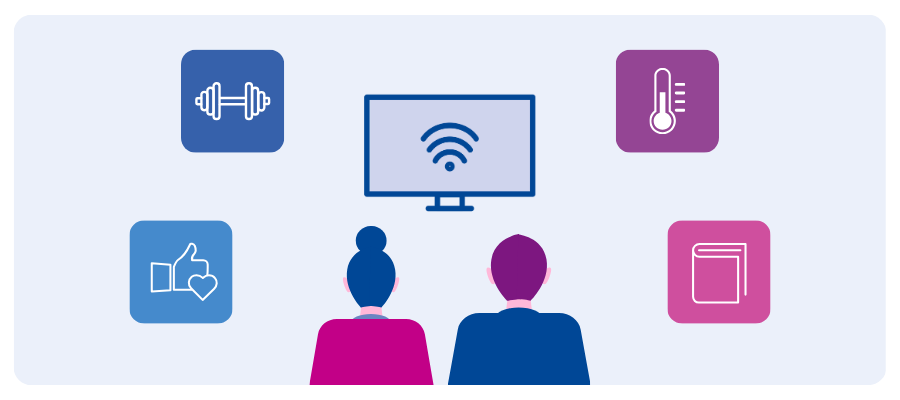
CTV has turned the living room into a hub of interaction, discovery, and commerce. Younger audiences are using their TVs like mobile devices; streaming, learning, and even controlling their homes. This shift is creating new opportunities for advertisers to deliver relevant, personalized experiences where audiences are already engaged. With premium content and interactive tools, the living room is no longer just a passive space, it’s where attention meets action, and where brands can connect with audiences in meaningful ways.

How Experian helps

With Experian, advertisers can connect first-party data with CTV IDs, ensuring accurate and measurable targeting while maintaining a privacy-first approach. That means brands reach viewers with messages that feel personal, without losing trust.

“We surveyed 1,000 smart TV owners and found that younger audiences are using their TVs like mobile devices. Two-thirds use them for social media, 40% for self-improvement like Coursera or TED Talks, and 25% for interactivity; controlling appliances or home temperatures. Interactivity with connected TVs is skyrocketing.”

Samsung Ads Justin Evans

2. Creators build stronger connections with audiences

Creators are no longer limited to social media; they are now a driving force in CTV. Creator led programming is capturing attention and driving post view actions, offering advertisers a unique way to connect with passionate, engaged audiences. By thinking of creators as “micro networks” with built in communities, advertisers can meet fans where they already gather and deliver authentic, impactful messages that resonate.

Creators build stronger connections with audiences

How Experian helps

Experian helps advertisers tap into the creator economy by identifying topical audiences that align with influencer niches—like food, travel, gaming and entertainment—and activating them across the open web. Through Audigent’s integration with DV360, brands can pair Experian’s expansive audience targeting capabilities with Audigent’s Curated Deals to reach engaged viewers in creator-led environments. This approach ensures ads appear where audiences are most receptive, enhancing relevance and performance.

“The creator economy is moving into TV. It’s incredible to see social influencers, once dominant on platforms, now creating high quality content for streaming, networks, and more.”

Butler/TillGina Whelehan

3. Data collaboration that drives better results
Data collaboration that drives better results

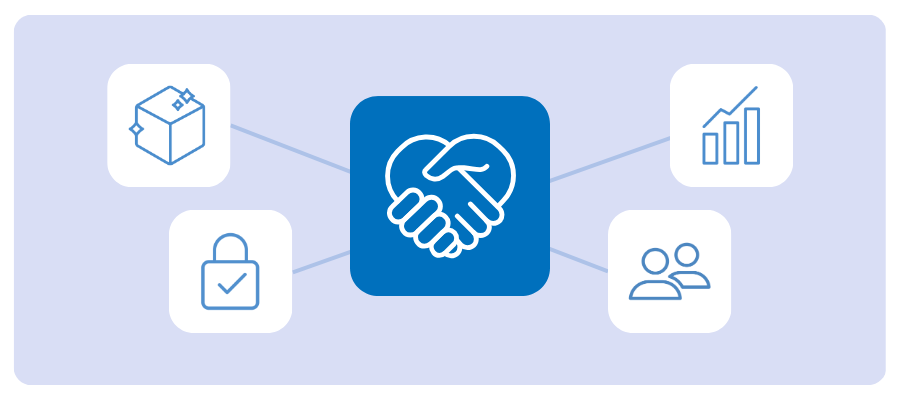
Advertisers rely on data to reach the right audiences, but privacy concerns are reshaping how it’s collected, shared, and used. Data collaboration enables brands to combine multiple data sets (like first-party data and syndicated audiences) to improve planning, activation, and measurement. While privacy remains a priority, the focus is on creating actionable insights that drive better results and build trust with consumers. By focusing on consented, privacy safe identity solutions, advertisers can achieve better outcomes while respecting consumer privacy; a win-win for brands and audiences alike.

How Experian helps

Experian’s privacy-first approach ensures that all data activation occurs with compliance and consent. By maintaining high match rates, offering flexible collaboration options (including clean rooms, first-party data onboarding, and syndicated audiences) and adhering to transparent methodologies, Experian facilitates seamless collaboration between brands, publishers, and platforms. This helps build trust and strengthen long-term connections with audiences.

“The area we’re most excited about is identity resolution on the publisher side. Publishers can reinsert signal and create better results for advertisers. This wasn’t always well-articulated, but today we have case studies proving publishers can help improve outcomes.”

OptableVlad Stesin

4. Optimizing supply paths for better outcomes

Supply path optimization (SPO) helps advertisers improve campaign efficiency by increasing viewability and reducing waste. Supply-side decisioning builds on this by identifying the audiences advertisers want to reach, the content those audiences consume, and the publishers with the most relevant inventory. Together, these strategies create a more intelligent and efficient ecosystem, ensuring ads are delivered in the right context, to the right people, on the right platforms.

Optimizing supply paths for better outcomes

How Experian helps

Experian’s data solutions, including both Experian’s and Audigent’s contextual and identity capabilities, are available across sell-side (SSPs) and buy-side (DSPs) platforms, enabling smarter decision-making throughout the media supply chain. Audigent’s direct integrations with publishers provide an unfiltered view into available inventory, offering deeper insights that inform campaign optimization. These insights can be activated in real time and transacted within advertisers’ existing buying platforms.

By powering real-time intelligence across the ecosystem, from advertisers to DSPs, SSPs, and publishers, Experian and Audigent help drive better outcomes, more efficient media spend, and greater value for all participants.

“Sell-side decisioning activates the intelligence of the exchange, along with partners like Experian, to optimize auctions in real time. This helps pre-decision buys that flow to the DSPs, making the buying process smarter, more efficient, and ultimately driving better value for marketers and publishers.”

Index ExchangeMike McNeeley

5. AI that streamlines agency workflows

AI streamlines agency workflows

AI is a practical tool that agencies are using to streamline workflows and deliver better results. From planning and pacing to creative iteration, AI is helping teams move faster and smarter. In fact, 67% of global marketing and communications professionals now use AI for content creation frequently or all the time, underscoring its role in modern workflows. The key is to think of AI as a navigator, not a replacement. It handles repetitive tasks, freeing up teams to focus on strategy and creativity, while enabling faster tests, fewer dead ends, and better client clarity.

How Experian helps

Experian uses AI and machine learning to deliver highly personalized marketing solutions. In our Digital Graph, advanced clustering algorithms analyze household and individual device connections, improving targeting and measurement accuracy. We also use AI powered audience recommendations to create tailored audience solutions for clients. Our contextual data models, powered by Audigent’s contextual engine, further improve this process by analyzing bidstream traffic in real time, ensuring audiences are aligned with the most relevant inventory.

“We’ve extended our platform with Marketplace, which lets us integrate third-party partners, new tech, and data seamlessly into activation. Clients are asking for this level of innovation, especially with the speed at which AI is evolving and transforming what’s possible in marketing.”

PMGSam Bloom

Connecting the dots: Data, creativity, and outcomes

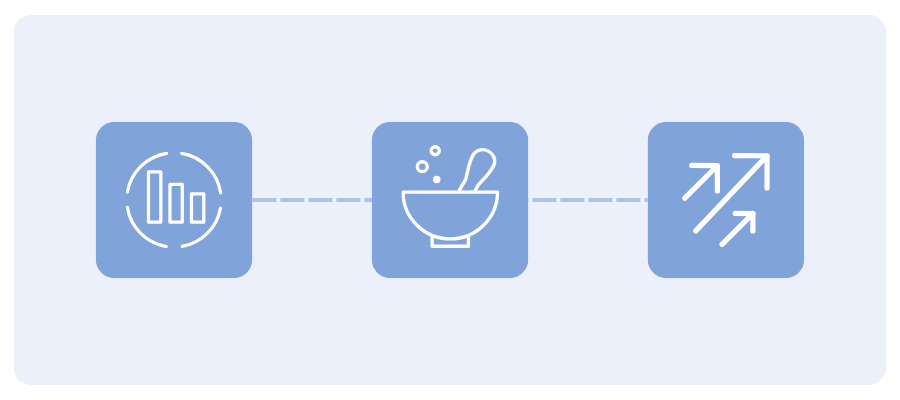
The common thread across these insights is how we connect with audiences, collaborate on data, and create meaningful outcomes. By reimagining the living room experience and utilizing AI and creator-led programming, brands are embracing innovation.
Connecting the dots: Data, creativity, and outcomes

How Experian helps

Experian helps you build privacy-first identity foundations, collaborate seamlessly, optimize supply paths, streamline with AI, and connect through creators.

Let’s start a conversation

This site is protected by reCAPTCHA and the Google Privacy Policy and Terms of Service apply.


FAQs

What is CTV, and why does it matter now? 

CTV brings premium, interactive streaming to the largest screen at home, allowing brands to reach engaged viewers with measurable, personalized experiences. 

What is data collaboration, and how does it stay privacy-first? 

It’s the consented, secure use of first-party and partner data (often via clean rooms) to improve planning, activation, and measurement without exposing raw consumer data. 

What do “SPO” and sell-side decisioning actually do? 

SPO streamlines the path from advertiser to publisher, reducing waste and improving quality. Sell-side decisioning adds real-time intelligence to the exchange, delivering the proper context and audience more efficiently. 

How are creators changing TV advertising? 

Creator-led programming functions like “micro networks” with built-in communities, helping brands show up where fans are already engaged and ready to act. 

How are living rooms becoming “active spaces”? 

Viewers use TVs like mobile devices, discovering content, learning, shopping, and interacting; advertisers can meet their intent and drive post-view actions. 


Latest posts

Loading…
Less hype, more action: Three trends from Cannes Lions 2025

After another week under the sun at Cannes Lions 2025, one thing is abundantly clear: our industry is done talking about possibilities — it’s ready to act. From speaking engagements to packed suite meetings, and even stateside through our “Can’t Cannes” activations, the appetite for change was real — and we were right at the center of it. A front-row seat to innovation Experian made a powerful impact across the Croisette, partnering with Audiostack, Basis, Infillion, IQVIA, Magnite, NextRoll, Odeeo, OpenX, The Female Quotient, and the Unplugged Collective x The Digital Marketer, to contribute to some of the week’s most insightful conversations. Our thought leaders were everywhere—on stage, in studio interviews, at executive roundtables—offering a clear voice on retail media growth, pharma advertising disruption, AI innovation, and identity-driven personalization. Three themes that defined the week 1. AI gets real If 2024 was the year of AI buzz, then 2025 is the year AI found its footing. Conversations shifted from “what if” to “what now.” While the promise of AI was front and center, conversations with clients and partners highlighted that we’re still in the foundational phase. Real-world applications—from creative optimization to predictive segmentation—are gaining traction, but long-term value will depend on robust data architecture and trustworthy identity frameworks. MiQ and PMG debuted AI-integrated platforms that demonstrated how AI can automate creative, optimize budget allocation, and personalize media in real time. AI has moved from sidekick to strategist. "Last year it was all about AI, but in a very general sense. This year, it’s about specific applications — a clear sign AI is evolving from a talking point into product.”Budi Tanzi, VP, Product 2. Outcomes > impressions Outcomes may have been a buzzword at Cannes, but as several industry leaders pointed out, simply saying “we drive outcomes” isn’t enough—it risks sounding like table stakes. In today’s performance-driven environment, what matters is how companies define and deliver those outcomes in unique ways. The most compelling conversations weren’t about generic promises, but about clear strategies: challenging assumptions, leaning into strengths, and making specific choices that tie data, media, and technology to measurable impact. "By using consistent identity across planning, activation, and measurement, marketers can connect ad exposure to real-world outcomes—whether that’s an online conversion, an in-store visit, or a new customer relationship."Chris Feo, Chief Business Officer 3. Curation isn't just a tactic Curation is quickly becoming the industry’s preferred approach to cutting through complexity. As marketers contend with signal loss and inconsistent inventory quality, the shift from broad access to intentional activation is gaining momentum. At Experian, we see curation not just as packaging, but as strategic alignment—where identity, data, and inventory come together in purpose-built environments that reduce waste, enhance safety, and drive performance. "Supply-side data activation and optimization, aka “curation,” is an alternative to the traditional approach to data activation. Unlike the traditional DMP-to-DSP activation flow, curation allows buyers to leverage supply-path data more directly. The upshot? Improved performance and pricing for media agencies and brand advertisers."Drew Stein, Managing Director, Audigent Bringing the Cannes experience stateside Not everyone can make it to the South of France—so we brought Cannes to them. Our “Can’t Cannes” events in the U.S. offered local clients a first-class experience filled with insights and networking, minus the jet lag. Final takeaways This year’s festival made one thing clear: real progress requires more than innovation; it requires integration. And that’s where Experian is focused—connecting identity to activation, and data to outcomes, in ways that are practical, scalable, and privacy-resilient. If I had to sum it up? AI is progressing from abstract to application Curation beats clutter Partnership is power And everyone’s aligned around performance We’re grateful to have been part of these conversations and even more excited about where they’ll lead next. Let’s continue the conversation If you're exploring how to connect identity to performance, or simplify the way you activate, measure, and grow, we’d love to talk. Latest posts

Jun 25,2025 by Dave Rosner, VP, Marketing, Audigent

The unexpected upside of a cookieless future that never came

Originally appeared in AdExchanger Google’s decision not to deprecate cookies in the Chrome browser after all caused a stir across the industry. Companies invested heavily in developing solutions aligned with the Privacy Sandbox as a survival tactic for the post-cookie landscape. At first glance, Google’s about-face may appear to undercut those efforts. It’s easy, and perhaps even satisfying for some – but inaccurate – to say “all that effort was for nothing.” Given Chrome’s dominance among browsers, AdTech companies had no choice but to prepare for “what if” scenarios. The same goes for cookie deprecation. Google’s plan to end support for third-party cookies would have removed a mechanism that has been a cornerstone of addressability for the past 15 years. To be clear, those efforts have not been wasted. They spurred innovation across the AdTech landscape, driving progress in privacy-first targeting, alternative identifiers, supply-path data activation, and real-time data enrichment – all of which will pay dividends for years to come. Whether born directly from Privacy Sandbox participation or inspired by the broader trend toward privacy reform, industry-wide preparation for cookie loss and browser disruption has yielded tangible benefits. Pressure from Google, Apple, and evolving regulations served as a catalyst for modernization that could shape the next decade of advertising technology. An industry anchored in product innovation AdTech is a fundamentally product-driven industry defined by short innovation cycles and the imperative to build and test rapidly. This DNA enables companies to stay resilient, evolve and deliver innovation. Change is good. Disruption can be even better – but only for those who embrace it. Google’s evolving stance on cookies and Privacy Sandbox doesn’t negate what’s been learned. If anything, it underscores the need to keep innovating. The next wave of disruption is likely right around the corner. The payoff While some may argue that the time and effort spent preparing for cookie loss was wasted, those efforts have functioned as a forcing mechanism for several innovations in data activation. Supply-side data activation and optimization, aka “curation,” is an alternative to the traditional approach to data activation. Unlike the traditional data management platform (DMP) to demand-side platform (DSP) activation flow, curation allows buyers to utilize supply-path data more directly. The upshot? Improved performance and pricing for media agencies and brand advertisers. As curation continues to evolve, it’s poised to play a central role in how advertisers and publishers transact. Real-time data enrichment is another area that has benefited from this period of accelerated innovation. Many companies were compelled to improve their tech stacks to align with Sandbox protocols.  These updates, particularly in real-time data enrichment capabilities, are now laying the groundwork for future data activation strategies across both the buy and sell-sides. Exiting out of tunnel vision Over the past five years, the AdTech industry has invested deeply in planning for a future without cookies. Still those investments have been well worth it. While cookies are not going away, the broader deprecation of signal continues. The work that was done to prepare will inevitably inform the next evolution of our industry. Contact us Latest posts

Jun 16,2025 by Drew Stein, Audigent Managing Director, Experian

Proof that a connected approach to planning, activation, and measurement outperforms

Marketers are under more pressure than ever to deliver personalized, high-performing campaigns—while navigating tighter budgets, shifting privacy expectations, and fragmented tech stacks. Despite an explosion of tools and data sources, the fundamentals of marketing haven’t changed. Every great campaign still starts with a simple question: Who are we trying to reach? The answer depends on how well you understand your customers. Increasingly, that understanding is hampered by data silos, inconsistent identity signals, and disconnected workflows between planning, activation, and measurement. When those pieces don’t align, it leads to inefficient spending, incomplete insights, and missed opportunities. To move forward, marketers need more than better tools—they need a more connected approach. Start with a complete view of the customer The foundation of effective marketing is understanding your audience—not just who they are, but what they care about and how to reach them across devices and platforms. That starts with building a complete customer profile. For many marketers, this means linking persistent offline data—such as name and address—with fresh digital signals like device IDs and online behaviors. When combined, these elements provide a high-fidelity view of the customer that can be enriched with attributes like demographics, purchase behavior, and lifestyle interests. This kind of profile doesn’t just help you understand people—it helps you build audience segments that actually perform. Whether you’re working with your own CRM data or third-party sources, the ability to create addressable segments that are both accurate and scalable is what separates good campaigns from great ones. 🛳️ That’s exactly what MMGY did for Windstar Cruises. By layering first-party data with behavioral and demographic insights, they built custom audiences that more than doubled campaign benchmarks. 🎮 Gaming platform Unity tapped into Experian audiences to understand player behaviors across web, mobile, and connected TV (CTV). These insights helped their advertisers reach gaming audiences more effectively—tailoring creative and delivery to real-world preferences, not assumptions. Activate with precision, not just volume Knowing your audience is only half the battle. The next challenge is reaching them—consistently and efficiently—across multiple channels. This is where fragmentation can creep back in. All too often, marketers build audiences in one system, but activate in another, causing data loss and targeting mismatches. A more connected strategy uses the same identity and audience spine across planning and activation, reducing signal loss and improving accuracy. 👉 Curated private marketplaces (PMPs), for example, allow marketers to match high-quality audiences with premium inventory in a targeted, transparent, and efficient way. These deals let marketers align their spending with their goals—whether that’s lowering cost-per-acquisition or boosting reach in a key vertical. Performance results are bearing this out: PMG By using Audigent’s curated PMP approach in combination with Experian audience data, they delivered campaigns that were 44% more cost-efficient across CTV. Boiron For Boiron, a homeopathic brand, using curated media buying reduced data costs by 30% and beat CPA goals for both video and display by more than 40%. Index Exchange Publishers benefit, too. When Index Exchange included Audigent-curated inventory in their PMPs, they saw an average 70% revenue lift for mobile and a 13% lift for CTV. When identity, audience, and inventory are aligned, everyone benefits—marketers, publishers, and consumers. Measure what matters Too often, measurement is treated as an afterthought. But in a connected campaign, it’s built in from the beginning. By using consistent identity across planning, activation, and measurement, marketers can connect ad exposure to real-world outcomes—whether that’s an online conversion, an in-store visit, or a new customer relationship. This kind of closed-loop measurement turns marketing into a learning engine. You don’t just see what happened—you understand why it happened and can use that information to improve the next campaign. 🛳️ In the case of Windstar Cruises, MMGY used Experian identity to precisely measure how digital ad exposures translated into bookings. That kind of visibility gives marketers more than a report card. It gives them the feedback they need to optimize smarter next time—and prove ROI every time. The future is connected To meet today’s demands, marketers need a new way of working—one that starts with a complete understanding of the customer, builds addressable audiences on a strong identity foundation, activates them precisely across channels, and measures impact in real time. The marketers embracing this approach are already seeing results: stronger performance, more efficient spending, and deeper insights that power what comes next. The future won’t be built on more tools—it will be built on more connection. Connect with us Latest posts

Jun 12,2025 by Christopher Feo, Chief Business Officer

Subscribe to our newsletter

Enter your name and email for the latest updates

This site is protected by reCAPTCHA and the Google Privacy Policy and Terms of Service apply.

About Experian Marketing Services

At Experian Marketing Services, we use data and insights to help brands have more meaningful interactions with people. As leaders in the evolution of the advertising landscape, Experian Marketing Services can help you identify your customers and the right potential customers, uncover the most appropriate communication channels, develop messages that resonate, and measure the effectiveness of marketing activities and campaigns.

Visit our website

Subscribe to our newsletter

Stay up to date on the latest industry news and receive expert tips from our marketing experts.
Subscribe now!