At A Glance
AdTech can feel overwhelming with all its jargon, but we're breaking it down café-style. From first-party data and identity resolution to clean rooms and ID-free targeting, this guide breaks down the essential terms marketers need to know.In this article…
If you’ve ever sat in a meeting and heard an AdTech term you didn’t understand, you’re not alone. The industry evolves as quickly as a café turns over tables on a busy weekend. Even seasoned regulars can get tripped up by the jargon.
So instead of scratching your head over the “menu,” let’s walk through some of the most common terms: served café-style.
The ingredients: The many flavors of first-party data
Every meal starts with ingredients, and in AdTech, those ingredients are data. First-party data is not just one thing: it’s more like everything your favorite neighborhood café knows about you.
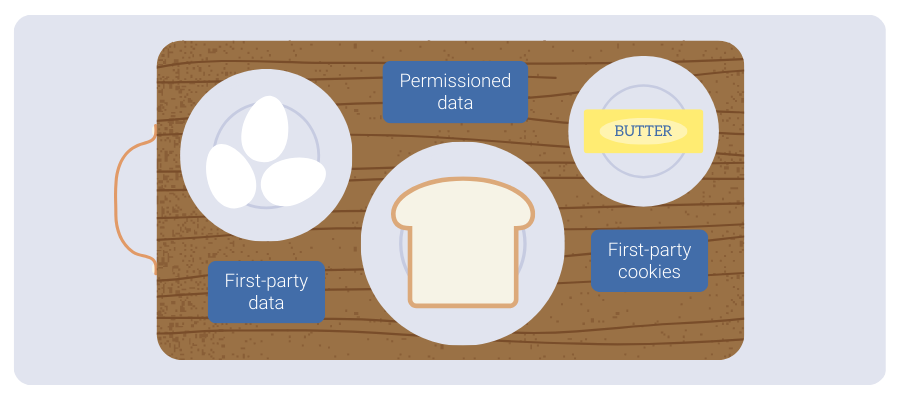
First-party data
The café knows your coffee preferences because you’ve told them directly; whether by ordering at the counter, calling in, or placing an order online. This is information you’ve willingly provided through your interactions, and it belongs only to that café.
First-party cookies
The barista writes down your preferences in a notebook behind the counter, so next time you walk in, they don’t have to ask. First-party cookies remember details to make your experience smoother, but only for that café.
Authenticated identity
A loyalty app that connects online orders to in-person visits. By logging in, you’re saying, “Yes, it’s really me.” Authenticated identity is proof that the customer isn’t just a face in line, but someone with a verified profile.
Persistent identity
Recognizing you whether you order through the app or in person. Persistent identity enables the ability to keep track of someone across different touchpoints, consistently, without confusing them with someone else.
Permissioned data
Agreeing to join the loyalty program and get emails. Permissioned data is a connection to the customer that the customer proactively shared with the café by signing up for their loyalty program or email newsletter.
Each piece comes from direct interactions, stored and used in different ways. That’s what makes first-party data nuanced. The saga of third-party cookie deprecation and changing privacy regulations makes it important to understand which types of data you can collect and use for marketing purposes.
And once you have those ingredients, the next step is making sure you recognize how they fit together, so you can see each customer clearly. That’s where identity resolution comes in.
The recipe: Bringing the ingredients together with identity resolution
At the café, identity resolution is what helps the staff recognize you as the same customer across every interaction. Without it, they might think you’re two different people; one who always orders breakfast and another who sometimes picks up pastries to go.
Matching
The café has a loyalty program, and the pet bakery next door has one too. When they match records across their two data sets, they realize “M. Jones” from the café is the same person as “Michelle Jones” from the bakery. That connection means they can activate a joint promotion, like free coffee with a dog treat, without either business handing over their full customer lists. In marketing, matching works the same way, linking records across data sets for activation so campaigns reach the right people.

Deduplication
Collapses duplicate profiles into a single, clean record, so you don’t get two birthday coupons, even though that would be nice to get.
That’s what Experian does at scale: we connect billions of IDs in a privacy-safe way, so you can get an accurate picture of your audience.
And once you can recognize your customers across touchpoints, the next challenge is collaborating across systems and partners for deeper insights. That’s where the behind-the-counter processes come in.
Behind the counter: Crosswalks and clean rooms
At a café, these terms are like the behind-the-counter processes that keep everything running smoothly. They may sound technical, but they all serve the same purpose: helping data collaborate across different sources, while keeping sensitive information safe. The goal is a better “meal” for the customer, deeper insights, better targeting, and more personalized campaigns. Here’s how they work.
Crosswalks
The café partners with the pet bakery next door. They both serve a lot of the same people, but they track them differently. With a crosswalk, they can use a shared key to recognize the same customer across both businesses, so you get a coffee refill, and your dog gets a treat, without either one handing over their full customer list. A crosswalk is the shared system that lets both know it is really you, without swapping personal details. It’s the bridge connecting two silos of data.
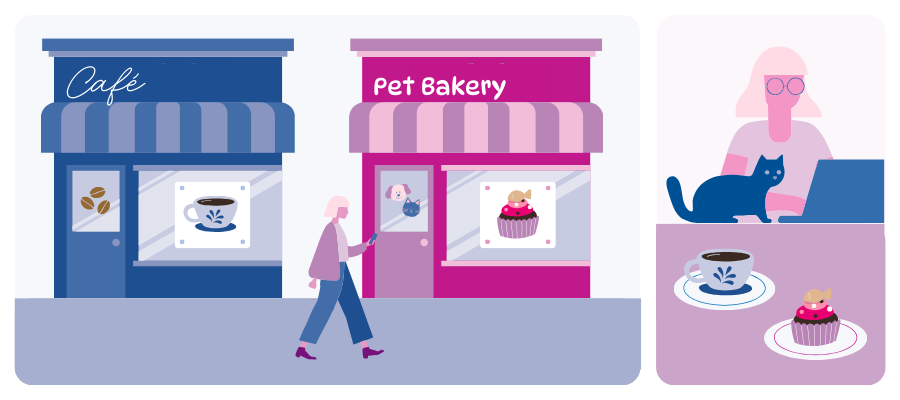
Clean rooms
The café and the pet bakery want to learn more about their shared customers, like whether dog owners are more likely to stop by for brunch on weekends. Instead of swapping their full records, they bring their data into another café’s private back room, a clean room, where they can compare trends safely and privately. Both get useful insights, while customer details stay protected. That’s a clean room: secure collaboration without exposing sensitive data.
Of course, sharing and protecting data is only part of the picture. The real test comes when you need to serve customers in new ways, especially as the industry moves beyond cookies.
Serving customers in new ways: Cookie-free to ID-free
Targeting has evolved beyond cookies, just like cafés no longer rely only on notebooks to remember regulars.
ID-free targeting
The café looks at ordering patterns, like cappuccinos selling on Mondays and croissants on Fridays, without tracking who’s ordering what. Instead of focusing on who the customer is, the café tailors choices based on the context of the situation, like time of day or day of the week. This is like contextual targeting, serving ads based on the environment or behavior in the moment, rather than on personal identity.

ID-agnostic targeting
The café realizes customers show up in all sorts of ways: walk in, online ordering, delivery. Each channel has its own “ID,” a name on the app, a credit card, or a loyalty profile. ID-agnostic targeting means no matter how you order, the café can still serve you without being locked into one system.
Just like cafés no longer rely only on notebooks to keep track of regulars, marketers no longer have to depend solely on cookies. Today, there are multiple paths, cookie-free, ID-free, and ID-agnostic, that can all help deliver better, more relevant experiences.
But even with new ways to reach people, one big question remains: how do you know if it’s actually working? That’s where measurement and outcomes come into play.
Counting tables vs. counting sales
At the café, measurement and outcomes aren’t the same.
Measurement
Tables filled, cups poured, specials ordered.
Outcomes
What it all means: higher revenue, more loyalty sign-ups, or increased sales from a new promotion.
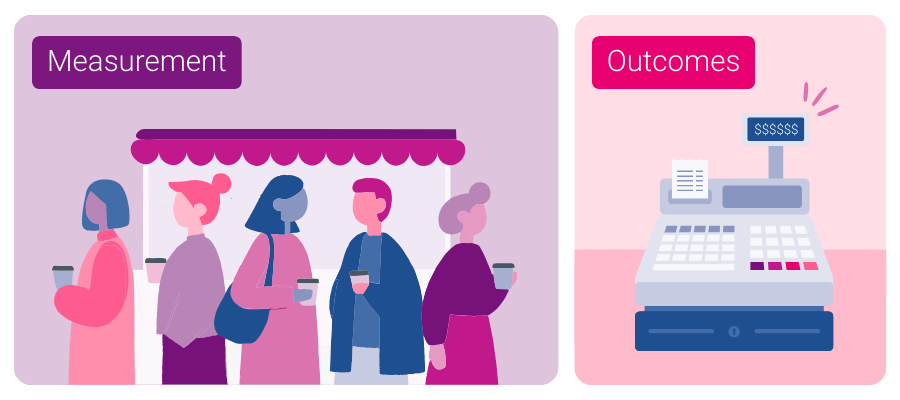
Both matter. Measurement shows whether the café is running smoothly, but outcomes prove whether the promotions and strategies are truly paying off. Together, they help connect day-to-day activity to long-term success.
All of this brings us back to the bigger picture: understanding the menu well enough to enjoy the meal.
From menu to meal
In AdTech, there will always be new terms coming onto the menu. What matters most is understanding them well enough to know how they help you reach your business goals. Just like at the café, asking a question about the specials isn’t foolish. It’s how you make sure you get exactly what you want. The more we, as an industry, understand the “ingredients” of data and identity, the better we can cook up new solutions that serve both brands and consumers. After all, the goal isn’t just to talk about the menu, it’s to enjoy the meal.
At Experian, we help brands turn that menu into action. From identity resolution to privacy-safe data collaboration, our solutions make it easier to connect with audiences, activate campaigns, and measure real outcomes.
If you’re ready to move from decoding the jargon to delivering better customer experiences, we’re here to help
About the author

Brandon Alford
Group Product Manager, Experian
Brandon Alford is a seasoned professional in the AdTech ecosystem with a focus on identity, audience, measurement, and privacy-forward solutions. He has spent his career helping advertisers and publishers navigate the complexities of digital advertising and privacy, bringing a practical and forward-looking perspective to industry challenges and innovation.
AdTech jargon FAQs
First-party data is information a customer shares directly with a brand, like purchase history, preferences, or sign-ups. It’s the most valuable and privacy-safe data marketers can use to build personalized campaigns.
Identity resolution ensures a brand can recognize the same customer across different touchpoints. Matching links records across data sets (e.g., between partners) so campaigns reach the right people without exposing full customer lists.
A crosswalk bridges two data systems with a shared key to recognize the same customer, while a clean room allows partners to analyze data together securely without exposing sensitive details.
Cookie-free and ID-free targeting shift focus away from tracking individuals, instead tailoring ads based on context (like time of day or content being viewed) or allowing flexibility across multiple IDs.
Measurement tracks activity (like clicks or visits), while outcomes prove business impact (like sales, loyalty, or revenue). Both are essential, but outcomes show whether strategies are truly effective.
Experian provides tools for identity resolution, privacy-safe data collaboration, and campaign measurement, helping marketers move from understanding the “menu” of AdTech terms to achieving real results.
Latest posts

Learn how Experian’s Marketing Attributes can help you find, reach, and influence your customers.

Discover how Experian and MMGY drove closed-loop measurement for Windstar Cruises, connecting digital marketing efforts to real bookings.
Linear TV remains a valuable advertising medium in 2024. It still has many benefits, especially when combined with digital channels.