Loading...

Activate B2B audiences across every screen with Audigent, Dun & Bradstreet, and Experian

Published: December 2, 2025 by Experian Marketing Services

At A Glance

Audigent, Dun & Bradstreet, and Experian simplify B2B marketing by combining trusted business data, curated audience activation, and advanced identity resolution. This partnership helps marketers reach verified decision-makers across channels like CTV and display, ensuring accurate targeting, consistent audience identity, and measurable results while maintaining privacy compliance.

Audigent, a part of Experian, Dun & Bradstreet, and Experian are collaborating to help business-to-business (B2B) marketers target more effectively. Now, B2B marketers can reach verified decision-makers, keep the same audience across channels, and activate on connected TV (CTV) and digital via the Experian data marketplace. Together, Dun & Bradstreet’s trusted business data, Audigent’s curation and Deal ID activation, and Experian’s identity resolution drive efficient, measurable results.
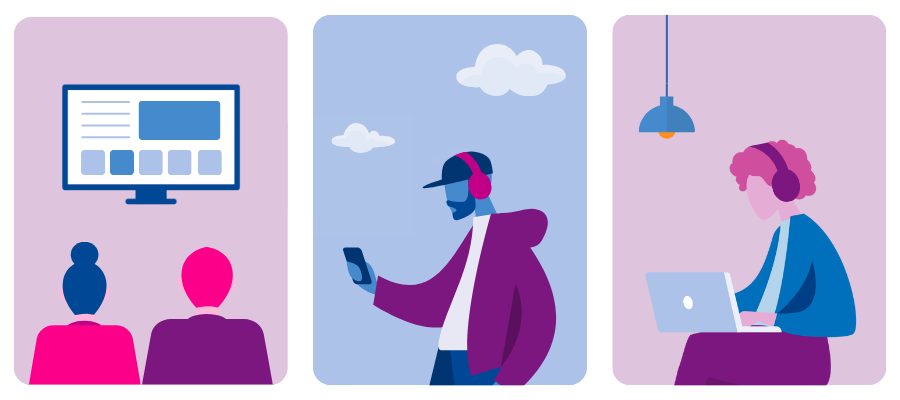
Three scenes showing people engaging with media: watching TV, using a mobile phone outdoors, and working on a laptop with headphones

Unify identity and engage B2B audiences
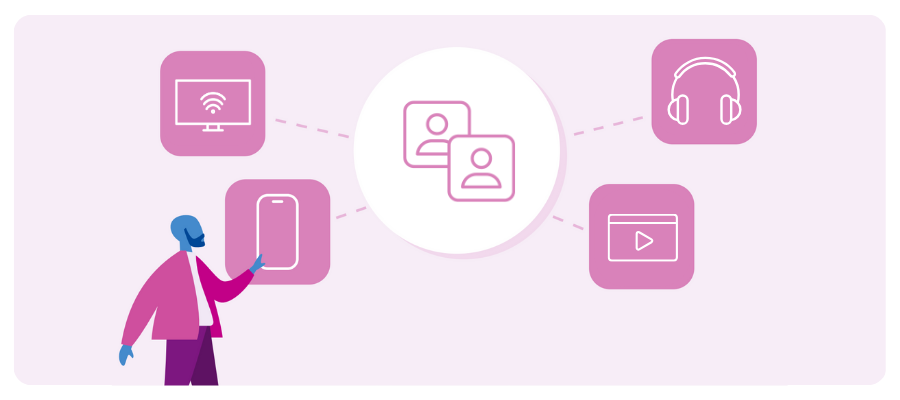
Illustration of an audience icon connected to multiple channels, including TV, mobile, audio, and video

With Audigent, Dun & Bradstreet, and Experian working together, you get one dependable way to recognize the same companies and roles everywhere you run. Dun & Bradstreet’s D-U-N-S® Number, serves as a stable company identifier, so offline business details map to the right digital profiles, and you can reach verified decision-makers with confidence.

Through Audigent and Experian, you can access 400+ Dun & Bradstreet B2B audience segments, matched to a Deal ID and activated via Audigent’s curation engine and Experian’s data marketplace. This provides real-time B2B targeting across connected television (CTV), display, native, audio, and online video (OLV).

Utilize differentiated data

Dun & Bradstreet audiences are built on verified offline signals (e.g., company, industry, size, role, seniority) linked to the proprietary D-U-N-S® Number for deterministic matching. High-quality firmographic attributes become actionable segments you can activate in leading programmatic platforms. The result: privacy-compliant, performance-driven campaigns with omnichannel B2B targeting.

multiple upward arrows icon

Unmatched scale

Dun & Bradstreet’s Data Cloud spans over 600 million businesses across industries and regions, offering unparalleled depth for B2B targeting.

hashtag symbol icon

Verified business identity

The D-U-N-S® Number links verified offline business data to digital environments, enabling accurate and scalable activation.

secure padlock with a checkmark icon

Privacy-first design

Data undergoes rigorous validation and is compliant with major global regulations (General Data Protection Regulation (GDPR), California Consumer Privacy Act (CCPA)), enabling responsible activation.

commercial building icon

Trusted by the enterprise

Over 85% of Fortune 500 companies rely on Dun & Bradstreet B2B data for its depth, accuracy, and broad coverage of small and medium-sized businesses (SMBs).

Three ways unified B2B identity improves media performance

  1. Target with accuracy: Use deterministic firmographics. Dun & Bradstreet’s D-U-N-S® Number anchors a consistent way to recognize the same company, linking offline signals to authenticated business entities.
  2. Reduce waste: Activate curated PMPs for efficient spend. Audigent’s curation engine packages those audiences into Deal IDs and routes through cleaner, more predictable supply paths, so more budget reaches the buyers that matter. Publishers see up to 75% net revenue increase after fees, while brands save 36–81% on data segments and achieve 10–30% higher video completion rates.
  3. Stay consistent: Maintain identity across all channels. Use the same audience criteria across CTV, display, native, audio, social, and OLV to improve match consistency without relying solely on third-party cookies.

Improve addressability with Experian’s Digital Graph
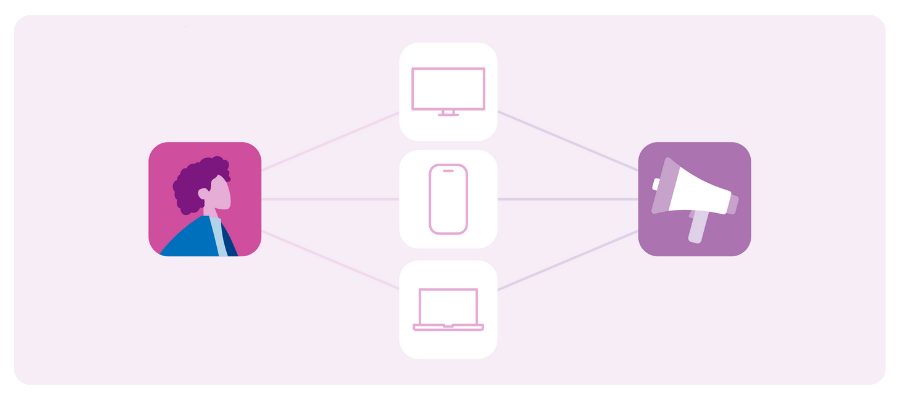
Illustration showing a person connected to devices like TV, mobile, and laptop, leading to a megaphone icon

Advertisers can use Dun & Bradstreet’s off-the-shelf segments to target specific audiences accurately across channels. By connecting Experian’s Digital Graph with Dun & Bradstreet’s company and contact data, marketers gain a clear advantage: one durable identity that improves match rates, keeps reach consistent across CTV and digital, and aligns targeting with measurement.

What that means in practice:

  • Higher match rates without third-party cookies.
  • Expect consistent reach across CTV and digital with one audience anchored to the same identity.
  • Cleaner measurement because activation and identity stay in sync.

Suggested use cases

Below are simple ways to put this to work, using Dun & Bradstreet business data and Audigent Deal IDs so the same audience runs and measures the same everywhere.

briefcase icon

Target key decision-makers

Reach professionals in Finance, Sales, Healthcare, and IT/Technology by job role, company size, and industry, driving awareness and consideration across complex buying committees.

briefcase icon

Reach SMB owners

Target companies with fewer than 50 employees to connect with small-business owners and operators. Activate across channels via Audigent Deal IDs for consistent delivery and measurement.

Achieve more with Audigent, Dun & Bradstreet, and Experian

Together, Audigent, Dun & Bradstreet, and Experian allow marketers to activate high-quality B2B audiences with confidence, delivering relevant and efficient campaigns. By pairing Dun & Bradstreet’s trusted business data and proprietary D-U-N-S® Number with Audigent’s curation engine, you get deterministic, privacy-compliant targeting at scale, now boosted by Experian’s identity for consistent cross-channel reach.

Ready to activate your next B2B audience? Talk to an Experian expert today

This site is protected by reCAPTCHA and the Google Privacy Policy and Terms of Service apply.


FAQs

What makes Dun & Bradstreet’s data unique for B2B targeting?

Dun & Bradstreet’s data is anchored by the D-U-N-S® Number, a persistent business identifier that links offline signals like company size, industry, and role to digital environments. This ensures accurate, scalable, and privacy-compliant targeting.

How does Experian enhance cross-channel reach?

Experian’s Digital Graph connects devices and IDs at the household level, enabling consistent audience identity across channels, even in cookieless environments. This ensures higher match rates and reliable measurement.

What is Audigent’s role in this collaboration?

Audigent’s curation engine creates audience-aligned Deal IDs and PMPs, optimizing supply paths for efficient media buying. This reduces waste and improves campaign performance with cleaner, more predictable targeting.

How does this solution support ABM strategies?

Marketers can build role-based segments (e.g., IT Directors at mid-sized companies) and activate them across CTV and digital channels. Sequential messaging tailored to buying stages helps accelerate pipeline and drive engagement.


Latest posts

Loading…
Increase healthcare equity with the social determinants of health

Over the past two decades, we’ve seen healthcare become increasingly interconnected. Healthcare systems can share a patient's clinical information in a variety of ways. A Pharmacy Benefits Manager can share it through an Electronic Health Record. An MRI scanner can also capture and store patient images on a picture archiving and communication system (PACS). Despite this wealth of information, according to the CDC, 20 million U.S. citizens don’t have access to medical care when they need it. A patient’s well-being should represent more than their clinical data. How can we increase access to care for those individuals? We can look towards non-clinical factors, like the social determinants of health, for answers. Coordinate care for at-risk patients What if you could identify patients who are likely to readmit due to factors outside of their medical conditions? We can use demographic, geographic, and socioeconomic data to discover patients that need greater access to care. The social determinants of health (SDOH) can uncover factors that may increase the burden of disease for some populations. What are the social determinants of health? They are the conditions in the environments where people are born, live, learn, work, play, worship, and age. Think of factors like safe housing, transportation, job opportunities, and education. These conditions can affect a wide range of health, functioning, and quality-of-life outcomes and risks. What insights can the social determinants of health reveal? Experian Health’s Social Determinants of Health solution offers holistic insight into the financial, transportation, and technological barriers individuals may experience. These barriers could hinder their access to care, medication, food, and housing. It's important to find a solution like ours that offers prioritized, proactive suggestions for interventions that help remove or reduce such barriers for improved health outcomes. Our rich household data sets can provide key insights into the SDOH. This data can answer key questions such as: Are there existing populations with housing instability issues? How much price sensitivity do consumers have for medication? Are there markets or locations that have food instability issues? Is transportation an issue that makes it hard for patients to access care facilities? Are there geographic influences that drive or prevent diagnosis and care? In the chart below, we break down the SDOH into five categories. We outline key considerations that offer insights to provide patient-specific context for your caregivers. Finally, we present patient engagement strategies that are SDOH factor-specific and based on best practice interventions and program types.                                   Social determinants of health data in action While much of healthcare focuses on clinical outcomes, our Consumer View data can provide a wealth of insight into a variety of non-clinical factors that can influence quality of care. A profile of core demographics such as age, ethnicity, and gender can uncover new opportunities or highlight areas where engagement does not align with medical research. We can discover patients at-risk for not being able to access essential services utilizing key, social determinants of health and geographic profiling. When combined with core demographics like age, gender, and ethnicity, we can compare any patient population against expected SDOH norms to uncover significant gaps in access to care. Our data shows that: 1 in 12 households have no access to a vehicle 1 in 4 households are sensitive to the cost of medication 1 in 5 households have very low technology sophistication 1 in 7 households live below the federal poverty level Once you have this data, what can you do with it? You can develop an inclusive education and communication campaign with our data-driven content and contact engagement solution. This solution empowers you to pair the perfect messaging styles with the right channels to deliver a personalized experience to broaden your reach. For those individuals who have little access to technology, an email campaign may not reach them. We can identify additional engagement channels like the traditional newspaper, radio, direct mail, or even broadcast TV to determine the best medium to expand your market while increasing access to care. By using decision making styles and engagement channels, together we can reduce the burden of care on the medically underserved. Let’s drive inclusive healthcare together Develop a more holistic view of your patient population while increasing healthcare equity. We can help you use the social determinants of health for actionable care management. Contact us to learn how you can fold this data into your healthcare ecosystem. Get in touch

Oct 17,2022 by Experian Marketing Services

The data sharing era. What it means for you.

Next up in our Ask the Expert series, we hear from Sarah Ilie and Lauren Portell. Sarah and Lauren talk about the internet’s value exchange – what we gain and lose when it’s so easy to share our information. Is convenience hurting or helping us?  The age of connectivity  Today, it’s almost unimaginable to think about how your day-to-day life would look without the convenience of the internet, smartphones, apps, and fitness trackers; the list goes on and on. We live in the age of connectivity. We have the convenience to buy products delivered to our homes on the same day. We can consume content across thousands of platforms. We also have watches or apps that track our health with more granularity than ever before.   The internet's value exchange In exchange for this convenience and information, we must share various kinds of data for these transactions and activities to take place. Websites and apps give you the option to “opt in” and share your data. They also often let you know that they are collecting your data. This can feel like an uncomfortable proposition and an invasion of privacy to many people. What does it mean to opt-in to a website or app’s tracking cookies?  What value do we exchange?  What opting in means for you  Opting in to cookies means that you are allowing the app or website to track your online activity and collect anonymous data that is aggregated for marketing analytics. The data provides valuable information to understand users better to create better online experiences or offer more useful products and content.    Granting access to “tracking” offers several benefits to users such as a customized, more personal user experience or advertising that is more likely to be relevant. For example, let’s imagine you have recently been using an app or website to plan a camping trip. By sharing your data, the website or app has visibility into what is interesting or useful to you which can lead to related content suggestions (best campsites) or relevant advertising and product recommendations (tents and camping equipment).     It’s important to know that the marketing data collected when you opt in is extremely valuable. The revenue that advertising generates is often very important to websites and apps because this is how they make money to continue providing content and services to consumers.     Data privacy practices  Privacy concerns regarding how companies and developers use tracking information have risen over the last couple of years and have resulted in additional protection for consumers’ privacy while still allowing companies to improve their products and advertising. One big step in this direction has been simply making people aware that their data is being collected, why it’s being collected, and providing users with the option to share this data for marketing analytics through opting-in or not.     Other important steps to maintain online privacy include formal legal legislation and self-regulation. The right to privacy is protected by more than 600 laws between individual states and federal legislation and the U.S. House Committee on Energy and Commerce recently voted to pass the American Data Privacy and Protection Act.  Additionally, marketing organizations such as the Interactive Advertising Bureau and Association of National Advertisers regulate themselves with codes of conduct and standards given there is so much attention on privacy issues.    Is the internet's value exchange worth it?  The data that we choose to share by opting in has a lot of benefits for us as consumers. There are laws in place to protect our data and privacy. Of course, it’s important to be aware that data is collected and used for marketing purposes, but it’s also reasonable to share a certain amount of data that translates into benefits for you as well.  The best data unlocks the best marketing. Contact us to tap into the power of the world’s largest consumer database. Learn how you can use Experian Marketing Services' powerful consumer data to learn more about your customers, drive new business, and deliver intelligent interactions across all channels.  Meet the Experts:  Lauren Portell, Account Executive, Advanced TV, Experian Marketing Services  Sarah Ilie, Strategic Partner Manager, Experian Marketing Services  Get in touch

Oct 11,2022 by Experian Marketing Services

Ask the Expert: Hashed Email

We’re excited to introduce our new Q&A series, Ask the Expert! Ask the Expert will feature a series of conversations with product experts. We’ll spotlight and dive into the areas you care most about: identity resolution, targeting, attribution, and more. Our first segment features a conversation on Hashed Email. Jeff Tognetti, the Product Development Team Lead at DealerX joins us to chat with Experian’s Chief Revenue Officer, Chris Feo. Chris and Jeff review how to future-proof your identity strategy by exploring Hashed Email use cases, technical details, and offer an expert point of view on the cookieless future.   Let’s review a few highlights from their conversation. DealerX’s use case  When DealerX first started working with us, we focused on digital identity. DealerX wanted to understand the browsing habits of their first-party shoppers that relate to their clients:   What they’re doing  How they’re interacting with client sites and products  Apply those learnings to target them across the web   Eliminate ad fraud and targeting waste  Our partnership gave DealerX the ability to take an anonymous consumer from anywhere across their portfolio of customers and understand who they are, while in an anonymous state. Then, they could activate on any channel where that consumer may be in the market for a product. This allowed DealerX to resolve who these people are as they browse the web, leading to reduced ad spend and targeting waste.   This was the original and primary use case for DealerX when partnering with us. So, when did Hashed Email come into the mix for DealerX? Before we dive into the specifics, let’s take a step back and understand Hashed Email.  What is Hashed Email?  Hashed Email is a privacy-safe identifier that can further enrich the connection between the online (digital) and offline (real world) ecosystems. When paired with the Tapad Graph with access to Tapad’s universe of email data, it can provide maximum coverage for targeting and measurement when combined with IDs such as cookies, mobile ad IDs (MAIDs), connected TV (CTV) IDs, and IP addresses.  Email hashing uses a method of coding to transform an email address into a jumble of numbers and letters so that it’s fully pseudonymized and privacy safe. Hashed emails can then be used as a digital identifier when a user is logged in to that email and trace their activity – without linking back to the user’s real email address. This allows marketers to collect data on their users and understand their behavior without knowing their email address – a win for both consumer privacy and marketer insight.  DealerX & Hashed Email  DealerX was one of our first customers to onboard Hashed Email to the Tapad Graph. Adding Hashed Email gave them a privacy-compliant way to work with identity and resolve what a user did on their site. This allowed them to gain insight into where an ad and impression was served; even the day and time these actions occurred.  Now, we’re not the only data partner that DealerX works with. Many companies offer the notion of converting email to a digital ID in a privacy-safe way. How does DealerX evaluate the right data partner?  Evaluating the right data partner  When we say, ‘data partner,’ we’re referring to the data, the service, and the support. The most important characteristics to consider when choosing a data partner, according to DealerX, include:  Technical prowess  Efficiency  Agility  Scalability  Why did DealerX choose to partner with us? Our services met the characteristics they were looking for in a data partner. We grew the product by iterating on features that worked best for Jeff and his team. The rollout was organized, efficient, and lacked bureaucracy, which can slow down an implementation timeline.  While we started our relationship with DealerX as a vendor, now we're partners. How did we transition from vendor to partner? Transitioning from vendor to partner  The key to a great partnership is trust. It’s tough to navigate an ecosystem with numerous companies that claim to have the same products and services. The relationship will start off as vendor-client, and both teams will get to know each other’s strengths and weaknesses. As the vendor makes your work seamless and offers an efficient implementation process, the relationship turns into a partnership.  There’s more!  This is just a taste of Chris and Jeff’s conversation. Visit the Ask the Expert content hub to watch a recording of the conversation. Stay tuned for future segments in our Ask the Expert series. We’re just getting started!  Get in touch About DealerXIn just a few short years, DealerX has grown to serve 1,000’s of Tier 3 dealerships across all brands, enterprise partners and OEMs. Their keen approach to data, analytics, machine learning and programmatic initiatives have led DealerX to quickly become the most savvy player in the automotive space. DealerX has helped automotive retailers save 10’s of millions of dollars by avoiding fraud and eliminating wasteful ads pends, while dramatically reducing “cost per sale." In doing so, their partners significantly outperform those leveraging generic “one size fits all” competitive offerings. To learn more, visit their website at Dealerx.com.

Sep 06,2022 by Experian Marketing Services

Subscribe to our newsletter

Enter your name and email for the latest updates

This site is protected by reCAPTCHA and the Google Privacy Policy and Terms of Service apply.

About Experian Marketing Services

At Experian Marketing Services, we use data and insights to help brands have more meaningful interactions with people. As leaders in the evolution of the advertising landscape, Experian Marketing Services can help you identify your customers and the right potential customers, uncover the most appropriate communication channels, develop messages that resonate, and measure the effectiveness of marketing activities and campaigns.

Visit our website

Subscribe to our newsletter

Stay up to date on the latest industry news and receive expert tips from our marketing experts.
Subscribe now!