Loading...

Activate B2B audiences across every screen with Audigent, Dun & Bradstreet, and Experian

Published: December 2, 2025 by Experian Marketing Services

At A Glance

Audigent, Dun & Bradstreet, and Experian simplify B2B marketing by combining trusted business data, curated audience activation, and advanced identity resolution. This partnership helps marketers reach verified decision-makers across channels like CTV and display, ensuring accurate targeting, consistent audience identity, and measurable results while maintaining privacy compliance.

Audigent, a part of Experian, Dun & Bradstreet, and Experian are collaborating to help business-to-business (B2B) marketers target more effectively. Now, B2B marketers can reach verified decision-makers, keep the same audience across channels, and activate on connected TV (CTV) and digital via the Experian data marketplace. Together, Dun & Bradstreet’s trusted business data, Audigent’s curation and Deal ID activation, and Experian’s identity resolution drive efficient, measurable results.

Three scenes showing people engaging with media: watching TV, using a mobile phone outdoors, and working on a laptop with headphones

Unify identity and engage B2B audiences
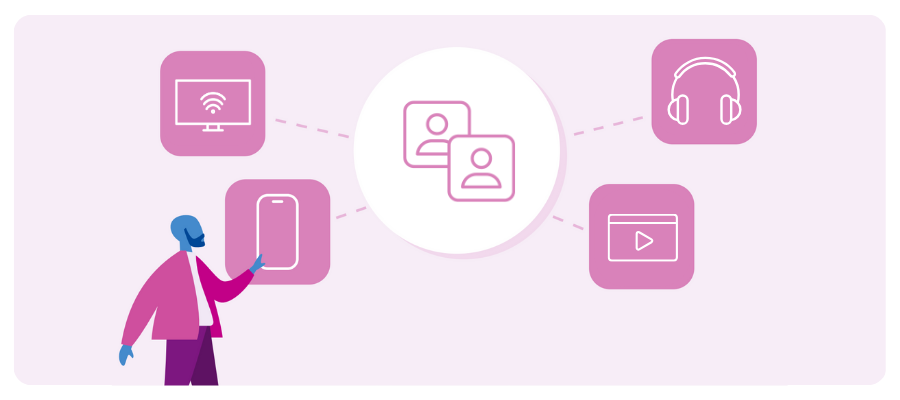
Illustration of an audience icon connected to multiple channels, including TV, mobile, audio, and video

With Audigent, Dun & Bradstreet, and Experian working together, you get one dependable way to recognize the same companies and roles everywhere you run. Dun & Bradstreet’s D-U-N-S® Number, serves as a stable company identifier, so offline business details map to the right digital profiles, and you can reach verified decision-makers with confidence.

Through Audigent and Experian, you can access 400+ Dun & Bradstreet B2B audience segments, matched to a Deal ID and activated via Audigent’s curation engine and Experian’s data marketplace. This provides real-time B2B targeting across connected television (CTV), display, native, audio, and online video (OLV).

Utilize differentiated data

Dun & Bradstreet audiences are built on verified offline signals (e.g., company, industry, size, role, seniority) linked to the proprietary D-U-N-S® Number for deterministic matching. High-quality firmographic attributes become actionable segments you can activate in leading programmatic platforms. The result: privacy-compliant, performance-driven campaigns with omnichannel B2B targeting.

multiple upward arrows icon

Unmatched scale

Dun & Bradstreet’s Data Cloud spans over 600 million businesses across industries and regions, offering unparalleled depth for B2B targeting.

hashtag symbol icon

Verified business identity

The D-U-N-S® Number links verified offline business data to digital environments, enabling accurate and scalable activation.

secure padlock with a checkmark icon

Privacy-first design

Data undergoes rigorous validation and is compliant with major global regulations (General Data Protection Regulation (GDPR), California Consumer Privacy Act (CCPA)), enabling responsible activation.

commercial building icon

Trusted by the enterprise

Over 85% of Fortune 500 companies rely on Dun & Bradstreet B2B data for its depth, accuracy, and broad coverage of small and medium-sized businesses (SMBs).

Three ways unified B2B identity improves media performance

  1. Target with accuracy: Use deterministic firmographics. Dun & Bradstreet’s D-U-N-S® Number anchors a consistent way to recognize the same company, linking offline signals to authenticated business entities.
  2. Reduce waste: Activate curated PMPs for efficient spend. Audigent’s curation engine packages those audiences into Deal IDs and routes through cleaner, more predictable supply paths, so more budget reaches the buyers that matter. Publishers see up to 75% net revenue increase after fees, while brands save 36–81% on data segments and achieve 10–30% higher video completion rates.
  3. Stay consistent: Maintain identity across all channels. Use the same audience criteria across CTV, display, native, audio, social, and OLV to improve match consistency without relying solely on third-party cookies.

Improve addressability with Experian’s Digital Graph
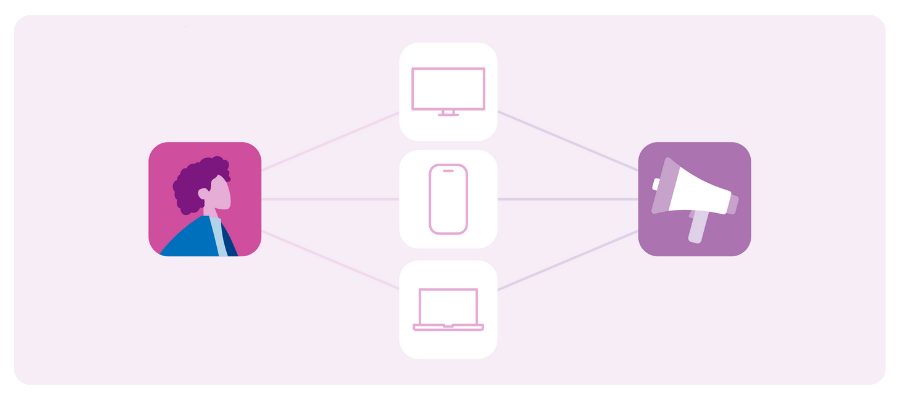
Illustration showing a person connected to devices like TV, mobile, and laptop, leading to a megaphone icon

Advertisers can use Dun & Bradstreet’s off-the-shelf segments to target specific audiences accurately across channels. By connecting Experian’s Digital Graph with Dun & Bradstreet’s company and contact data, marketers gain a clear advantage: one durable identity that improves match rates, keeps reach consistent across CTV and digital, and aligns targeting with measurement.

What that means in practice:

  • Higher match rates without third-party cookies.
  • Expect consistent reach across CTV and digital with one audience anchored to the same identity.
  • Cleaner measurement because activation and identity stay in sync.

Suggested use cases

Below are simple ways to put this to work, using Dun & Bradstreet business data and Audigent Deal IDs so the same audience runs and measures the same everywhere.

briefcase icon

Target key decision-makers

Reach professionals in Finance, Sales, Healthcare, and IT/Technology by job role, company size, and industry, driving awareness and consideration across complex buying committees.

briefcase icon

Reach SMB owners

Target companies with fewer than 50 employees to connect with small-business owners and operators. Activate across channels via Audigent Deal IDs for consistent delivery and measurement.

Achieve more with Audigent, Dun & Bradstreet, and Experian

Together, Audigent, Dun & Bradstreet, and Experian allow marketers to activate high-quality B2B audiences with confidence, delivering relevant and efficient campaigns. By pairing Dun & Bradstreet’s trusted business data and proprietary D-U-N-S® Number with Audigent’s curation engine, you get deterministic, privacy-compliant targeting at scale, now boosted by Experian’s identity for consistent cross-channel reach.

Ready to activate your next B2B audience? Talk to an Experian expert today

This site is protected by reCAPTCHA and the Google Privacy Policy and Terms of Service apply.


FAQs

What makes Dun & Bradstreet’s data unique for B2B targeting?

Dun & Bradstreet’s data is anchored by the D-U-N-S® Number, a persistent business identifier that links offline signals like company size, industry, and role to digital environments. This ensures accurate, scalable, and privacy-compliant targeting.

How does Experian enhance cross-channel reach?

Experian’s Digital Graph connects devices and IDs at the household level, enabling consistent audience identity across channels, even in cookieless environments. This ensures higher match rates and reliable measurement.

What is Audigent’s role in this collaboration?

Audigent’s curation engine creates audience-aligned Deal IDs and PMPs, optimizing supply paths for efficient media buying. This reduces waste and improves campaign performance with cleaner, more predictable targeting.

How does this solution support ABM strategies?

Marketers can build role-based segments (e.g., IT Directors at mid-sized companies) and activate them across CTV and digital channels. Sequential messaging tailored to buying stages helps accelerate pipeline and drive engagement.


Latest posts
Loading…
Are walled gardens in 2024 still a marketing challenge?

In this article…What is a walled garden?Integrated marketing is more important than everPerspectives on walled gardens from Cannes Lions 2023Walled gardens aren’t going away in the near futureThe fuure of walled gardens Digital marketers face an ongoing challenge in the form of "walled gardens," closed online ecosystems where it is difficult to access user data. As we get ready for 2024, it's more important than ever for marketers to evaluate the current challenges and opportunities surrounding walled gardens and to take stock of the impact of walled gardens in marketing as an industry. What is a walled garden? A walled garden is a closed online ecosystem controlled entirely by one tech company. Advertising on these ecosystems is fairly locked down, as major tech companies with walled gardens tend to tightly control access to the user data, content, and advertising that appears within the ecosystems. Some examples of walled garden ecosystems include Google, Facebook, Amazon, and Apple. These walled gardens have particular advantages, like access to massive user bases and precise targeting within the individual ecosystems. It can also be difficult to reach said audiences outside of the ecosystems, reducing the amount of control you have over your advertising strategies. Learn more about walled gardens. Learn the differences between walled gardens and hedged gardens. Integrated marketing is more important than ever Today, it's become more crucial to connect with consumers over multiple touchpoints, which can be done from tech like connected TV (CTV) to websites, mobile devices, and even shopping in a physical store. However, as integrated marketing gains utility, many platforms with walled garden ecosystems have increased, making a truly integrated and personalized marketing strategy more difficult in many situations. As a result, many marketers have realized the value of a more streamlined marketing approach, emphasizing the importance of fully integrated advertising strategies. Though there are surely marketing advantages to gain from walled garden ecosystems, especially in audience size, the challenges they pose will require you to innovate and find more creative ways to engage with your audience from platform to platform. Perspectives on walled gardens from Cannes Lions 2023 Offering a poignant view of industry trends and ideas, the Cannes Lions International Festival of Creativity of 2023 had much to say about the significance of walled gardens in the marketing world. Let's look at two key takeaways from this year's festival. Retail media In recent years, many retail companies have started selling ad space within their own walled garden shopping platforms, dubbed "retail media." Platforms like Amazon and Walmart have developed their own particular advertising ecosystems where they sell ads to marketers within the shopping environment itself. Navigating the sell-side of retail media’s walled gardens While retail media offers marketers unique opportunities, it's not without its challenges. For one, ad space in these environments is limited, so the competition can be difficult on the sell-side, leading to higher ad costs. Additionally, this shift in dynamic also forces marketers to change how they prioritize their marketing channels, looking closer at the results of their efforts rather than focusing on particular channels within the platforms themselves. Opportunities in the buy-side of retail media’s walled gardens Brands on the buy-side see various benefits from advertising within retail media channels and walled gardens. By browsing in an online shopping environment, the users in these ecosystems are likely high-intent shoppers, people who are further down the sales funnel and who are ready to make a purchase soon. Shoppers can also be precisely targeted within these environments, as marketers are given the ability to access very specific audience segments based on details like shopping behavior, preferences, and even purchase history. Omnichannel marketing To more effectively engage audiences even among an abundance of walled garden ecosystems, speakers at the 2023 Cannes Lions Festival discussed the importance of omnichannel marketing. By emphasizing strategies that reach the consumer through multiple touchpoints, marketers can deliver a unified brand experience across channels. This allows marketers to focus more on results than specific advertising channels, including walled garden platforms. Walled gardens aren’t going away in the near future Though various challenges are associated with walled gardens in advertising, they aren't going anywhere. So, what's the current state of these environments throughout the industry? Efforts are being made to break down walled gardens in tech In a handful of countries, regulatory actions have been put forward to address how dominant many major tech companies are in their respective markets. One major example of this is Meta and Google's entanglements in Canada. Currently, neither company can display news on their websites in the Canadian market. This decision was reached to give Canadian news agencies more control over their advertising revenue since, previously, the tech giants received more views and, therefore, gained the ad revenue. Though relatively small, this does indicate a certain shift in dynamic. Why companies are resisting Despite their challenges, walled gardens in 2023 persisted, mainly because they are particularly adept at generating revenue for the tech companies that control them. In 2022, 78 percent of global digital advertising revenue came from these closed ecosystems, and projections expect that figure to rise to 83 percent by 2027. From the viewpoint of a company that operates in a walled garden, the idea of releasing their control over their environment represents losing out on a stream of vast revenue, making letting go of a walled garden ecosystem an unattractive prospect. The future of walled gardens As time progresses, what can digital marketers like you expect from walled garden ecosystems in the near future? A cookieless future A huge element to consider is the transition to a cookieless future. Many major browsers have begun phasing out the use of third-party cookies. In the wake of this decision, many are looking for reasonable alternatives that allow for behavior tracking and more personalized advertising experiences. Solutions like Experian's identity resolution can provide a strong alternative option, allowing marketing strategies to adapt to the current landscape. An influx of mini gardens You should also anticipate the proliferation of various smaller, specialized walled garden ecosystems in the future. These so-called "mini gardens" specialize in more niche audiences and industries, and they can present their own challenges and opportunities. Alternative IDs As you search for new identification methods outside cookies, various alternatives have presented themselves, requiring further exploration and experimentation. Among these are privacy-compliant solutions like Unified ID 2.0, which allow you to serve more personalized ads without compromising the consumer's privacy. Navigating the evolving landscape of walled gardens in 2024 As we begin 2024, you will continue facing opportunities and challenges regarding walled gardens. The 2023 Cannes Lions International Festival of Creativity re-emphasized how important it is for marketers to stress omnichannel marketing within walled garden environments and become well acquainted with identity resolution solutions as we move into a cookie-less future. All of this requires you to become comfortable with walled gardens being here to stay and innovate to navigate an evolving and developing landscape. We’re here to help you navigate the evolving landscape of walled gardens in 2024. Contact us today. Get in touch Latest posts

Nov 16,2023 by Experian Marketing Services

Navigating a cookieless future: Supply-side think tank recap

A few weeks ago, Experian and OpenX hosted a supply-side think tank at our New York City office. Over 70 industry leaders met to talk about targeting in a cookieless future and how we can reach consumers in intentional ways.  Publishers and supply-side partners shared what challenges they face, what solutions they’re considering, and what the future holds once the third-party cookie begins to deprecate in 2024. In this blog post, we’ll cover the top challenges, cookieless solutions, and actionable strategies we discussed at the event that can help publishers, their partners, and agencies make informed decisions about how to navigate tomorrow’s digital ecosystem.  Four main challenges  Four main challenges were discussed at the event:  First-party data monetization  Publishers possess a wealth of first-party data, but collecting and centralizing this information can be difficult for actionable insights. Streamlining data centralization and organizing first-party data is crucial for effective decision-making. Even with a wealth of first-party data, it's important to be aware of any blind spots in your data and enrich those gaps with data partners rooted in offline connections.  “We appreciate the opportunity to participate in the supply-side think tank led by OpenX and Experian, two industry leaders in navigating a cookieless future. We're excited to collaborate with them on testing privacy sandbox APIs, identity resolution products, and audience development tools to enhance creator monetization and support an open internet amidst rapid technological and regulatory shifts.” Patrick McCann, SVP, Research, Raptive Lack of authenticated data and persistent IDs  The deprecation of third-party cookies means there will be a shortage of authenticated user data and persistent identifiers. Without this information, targeting and personalization become more challenging. Participants discussed the need to find alternative ways to gather and use personal data responsibly. It’s time to start evaluating data partners who have accurate, multi-source compiled, privacy-compliant data with the dedication to reach and recency. Fragmentation and scale with alternative IDs currently in the market  The multitude of alternative identifiers in the market poses a challenge for publishers. Each of these identifiers comes with its own set of rules and integration processes, leading to fragmentation and complexity. Publishers must find ways to navigate this landscape. Look to ID agnostic partners who provide a way to access multiple IDs at scale.   “The industry needs a more streamlined standard to integrate alternative IDs, given the ongoing challenges of third-party cookie deprecation, measurement, and clean rooms. This burden falls heavily on product and engineering teams, who must prioritize and address these issues one at a time.” Ryan Boh, Head of Identity, Lockr Time  Cookie deprecation is almost here. It is crucial to organize your legal, engineering, and product resources, and align internal go-to-market strategies. Establish partnerships that work with your team to follow these timelines and help build phased or cohesive strategies to prepare for a path to monetization. It is imperative to establish a sense of urgency and not wait for others to take the lead. Start testing now to determine if your infrastructure is ready and capable. Many partners who attended the think tank offered insights on how they’ve been tackling challenges to help their industry peers. Solutions and action plans for a cookieless future  Participants discussed ways they are starting to prepare for a cookieless future and other approaches on their roadmaps:  Work with data partners heavily rooted in offline data across the ecosystem  Enriching your first-party data with partners who rely on offline IDs can help bridge gaps in your audience knowledge. This approach allows you to build a more complete audience profile while third-party cookies are still operational.   Experian is rooted in deterministic offline data and has decades of experience managing it safely. We have insights on over 250 million U.S. consumers and 126 million U.S. households. With our digital technology assets, we bring in 4 billion devices and 1 trillion device signals to definitively connect offline records to online identifiers. With Experian identity widespread adoption throughout the industry, we're able to provide a common language for us all to collaborate. Experian identity organizes people into households, links their digital devices and IDs to them, enriches their identity with behavioral attributes, and then makes this data actionable in any environment, all while maintaining consumer privacy and data regulations. “Experian’s supply-side think tank provided a platform for publishers and AdTech companies to discuss the challenges posed by cookie deprecation, privacy regulation updates, and identity restrictions. It highlighted the need for AdTech companies to assist publishers in addressing anonymous users without requiring a value exchange — fostering a mutually beneficial and privacy-compliant open web solution.”Anthony Caccioppoli, Head of AdTech & Solutions, Insider Develop your own persistent ID  Creating and maintaining a proprietary persistent ID can be a valuable cookieless solution. It provides control and independence in the new environment post cookie, giving publishers the ability to maintain a consistent user profile.  Use your data to expand contextual targeting opportunities  Contextual targeting involves placing ads based on the content of the web page rather than user data. In the absence of cookies, this strategy can prove effective in reaching relevant audiences.  “The masking or deprecation of IP addresses will eventually impact the availability of addressable IDs in non-authenticated web environments. In addition to ensuring maximum resiliency of our Graph and increasing support for authentication-based IDs, we are also investing in research and development around the use of other signals, such as contextual data, to maintain behavioral targeting inside non-authenticated environments. We will be sharing our findings and future plans in this space in the coming months.”Budi Tanzi, VP, Product, Experian Facilitate a knowledge exchange  Reach out to your network to find out what others are testing and what’s working. Start collaborating with agencies and brands across the buy-side to meet their needs.  “The collaborative spirit displayed by our partners constantly inspires me. Listening to the obstacles our industry faces allows this community to build strong relationships, create action plans, and deliver true value.”Carly Allcorn, Account Executive, Publisher & Supply-Side Partnerships, Experian Invest in an identity graph  Invest in an identity graph provider to sync first-party cookies and addressable IDs. This ensures that your data remains accessible and actionable in a cookieless world.  “Many participants at our think tank with Experian expressed the need to find an identity solution while also exploring other ways they can start to address cookie deprecation while maintaining business as usual.” Callie Askenas, Director of Publisher Development, OpenX How Experian and OpenX can help  Graph from Experian captures all available digital identifiers in real-time and resolves them back to individuals and households. We’re signal agnostic, continuously expand the IDs we support, and futureproof identity resolution through a combination of deterministic, probabilistic, and cookieless identifiers.   Experian is a key player in OpenX’s OpenAudience solution and helps to power many of their data segments as well as their identity graph. While OpenX collaborates with a variety of providers and operates a fully interoperable platform, Experian remains valuable to the core technology within OpenX’s supply-side platform (SSP).  Experian can help you prepare for the cookieless future  It’s clear that the cookieless future poses some unique challenges for publishers, but there are solutions. Publishers and their supply-side partners can come up with strategies to target consumers in intentional ways by continually testing multiple identifiers and cookieless solutions, developing their own persistent ID, creating velvet rope content, and returning to contextual targeting. Collectively, these actionable strategies can help ensure that publishers have a more successful transition into a cookieless future.   Experian has been preparing for signal loss for quite some time and we continue to make substantial investments to ensure our resiliency and the resiliency of our customers. We continue to diversify our signal creating profiles with more persistent identifiers which allows us to pair authentication-based universal identifiers such as UID2 into our Graph seamlessly.   Experian is ready and we are here to navigate the future of privacy together.   To find out more about how Experian can help you prepare for the cookieless future, get in touch with a member of our team today.  Get ready for the cookieless future with Experian Latest posts

Nov 15,2023 by Hayley Schneider, Sr. Manager, Content Marketing

Experian’s Graph adds support for Unified I.D. 2.0 (UID2)

Cookies are leaving us, but that doesn’t have to mean performance has to. That’s why Experian is taking the steps needed to future-proof identity in our Graph, including adding Unified ID 2.0 (UID2) from The Trade Desk. Experian currently supports UID2 in our Graph outputs for demand-side platforms (DSPs). UID2 support in our Graph outputs will be available to all approved partners by December 2023. In this blog post, we talk about why cookieless IDs, like UID2, that are coming to market because of cookie deprecation, are important, and how incorporating cookieless IDs into an identity graph can help you prepare for a cookieless future. What are cookieless IDs? Like cookies, cookieless IDs provide you with a comprehensive view of a consumer’s digital activity. Unlike cookies, identity providers produce cookieless IDs, using user-consented data and deterministic and probabilistic data signals (like hashed emails or mobile ad IDs). Cookieless IDs are a newer identifier that allows the advertising industry to maintain our understanding of consumers’ digital actions, helping to ensure we continue to generate smart, data-driven insights, targets, activation strategies, personalized experiences, and measurement and attribution. Why should you incorporate cookieless IDs into an identity graph? Adding cookieless IDs to an identity graph allows for licensees of the graph to: Resolve the universal ID to a consolidated consumer profile and know which other digital IDs tie to the cookieless ID Establish a unified view of the consumer with a privacy-compliant ID Produce data-driven and informed advertising strategies that still drive results, without the use of cookies Experian’s Graph Experian’s Graph is one of the most robust and signal agnostic identity graphs in the market. Experian’s Graph supports most digital IDs, including cookieless IDs, such as ID5, UID2, and Hadron ID. When you license Experian’s Graph, you increase your ability to better understand the different digital IDs that tie to a household or individual. Additionally, with our cookieless ID support, you can continue to understand your consumer and their digital IDs in the cookieless world. Why is it crucial to include UID2 support in Experian's Graph outputs? The Trade Desk is the largest, independent demand-side platform. They’ve created a cookieless ID, UID2, that they hope can power the advertising world to come across the open web. UID2 is an alternative solution to third-party cookies that when utilized in an identity graph, can offer a clearer picture of your consumer, enabling frequency controls and better management, across both digital and connected TV (CTV). Approved DSPs can add UID2s to their Experian Graph, giving them access to one of the more trusted and prominent cookieless IDs in the market today. Additionally, DSPs can use this identifier to decide whether to bid on certain inventory or not, on behalf of their advertiser partner. And, if we hedge our bets, it will only grow in prominence and use. While only available to approved DSPs today for use in the Experian Graph, the forthcoming encrypted UID2 token will provide this capability to the entire ecosystem, which allows us all to speak the same language and operate as efficiently as possible. "We are excited to support UID2, one of the premier IDs to support the future of addressability across the open internet, in the Experian Graph. We continue to see the adoption of UID2 across the demand-side ecosystem, increasing addressability across growing channels like CTV and beyond. I am personally excited to see how this momentum continues to increase over the remainder of 2023 and into 2024."chris feo, svp, sales & partnerships, experian Future-proof your identity strategy with Experian Graph and UID2 We’ve seen the impact that cookies have had on digital advertising and marketing. With the impending third-party cookie deprecation, you will need to adopt alternative cookieless ID solutions such as Unified ID 2.0. Experian is well-positioned to help you navigate this change, offering UID2 support in our Graph outputs for all approved partners by December 2023. Take the right steps now to future-proof your identity strategy and discover lasting success even without cookies. Alongside Experian’s Graph solution, you can achieve resilience in an ever-changing world of digital marketing and advertising. Now is the time to get ready for a cookieless future. Connect with an Experian team member to learn more about our Graph capabilities today. Learn more about Experian's Graph today Latest posts

Nov 09,2023 by Dylan Rothenberg, Product Marketing Manager

Subscribe to our newsletter

Enter your name and email for the latest updates

This site is protected by reCAPTCHA and the Google Privacy Policy and Terms of Service apply.

About Experian Marketing Services

At Experian Marketing Services, we use data and insights to help brands have more meaningful interactions with people. As leaders in the evolution of the advertising landscape, Experian Marketing Services can help you identify your customers and the right potential customers, uncover the most appropriate communication channels, develop messages that resonate, and measure the effectiveness of marketing activities and campaigns.

Visit our website

Subscribe to our newsletter

Stay up to date on the latest industry news and receive expert tips from our marketing experts.
Subscribe now!