At A Glance
Local advertisers face unique challenges, from limited budgets to fragmented audiences and the need for measurable results. Experian’s trusted data, combined with Madhive’s Maverick AI platform, equips advertisers with the insights and tools needed to create impactful campaigns. This collaboration simplifies campaign management, helping advertisers connect with the right audiences.Identity-led local advertising that works
Local advertisers run on tight budgets, short timelines, and constant pressure to prove what works. Every dollar must count. In this Ask the Expert session, Aaron Brown, Chief Scientist at Madhive, joins Ali Mack, VP of AdTech Sales at Experian, to discuss how the Maverick AI platform helps local advertisers make confident decisions, act on clear recommendations, and see outcomes they can stand behind.
Why local campaigns demand accuracy, and how to deliver it
Local teams juggle multiple channels, changing budgets, and heavy performance expectations. To stay competitive, local teams need quick answers to three critical questions:
- Which households are most valuable to reach?
- Which channels work best in their market?
- Are campaigns on on track, day by day?
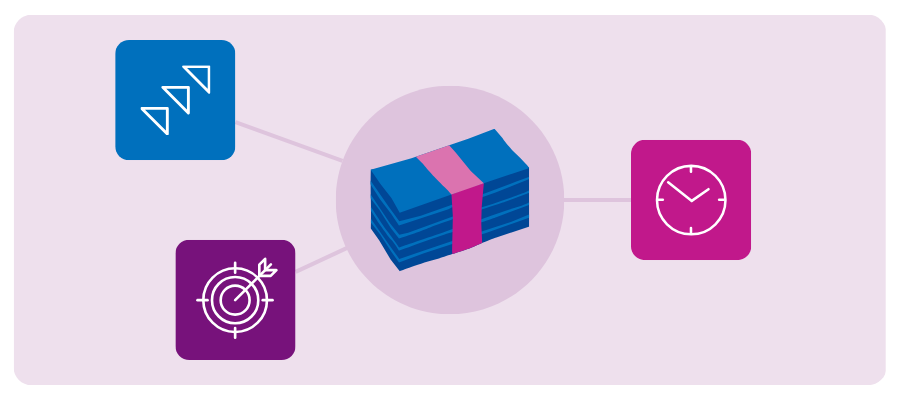
Delivering that level of accuracy means working from a single, trusted view of households, channels, and performance, powered by clean, connected, and continuously updated data.
“When you think about local, these aren’t enormous budgets. These businesses depend on success from day one and are still finding their footing. There’s a wealth of nuanced information we need to hear from advertisers to ensure their campaigns succeed, and a wealth of insights we need to deliver back. It’s a real-time matching problem at scale to make sure everything runs profitably for our customers.”
MadhiveAaron Brown, Chief Scientist
Why Experian data is the foundation of local planning
Data is the foundation of effective local advertising, but not all data is created equal. For local advertisers, the real advantage comes from high-quality, actionable data that pinpoints likely customers and reduces wasted spend.
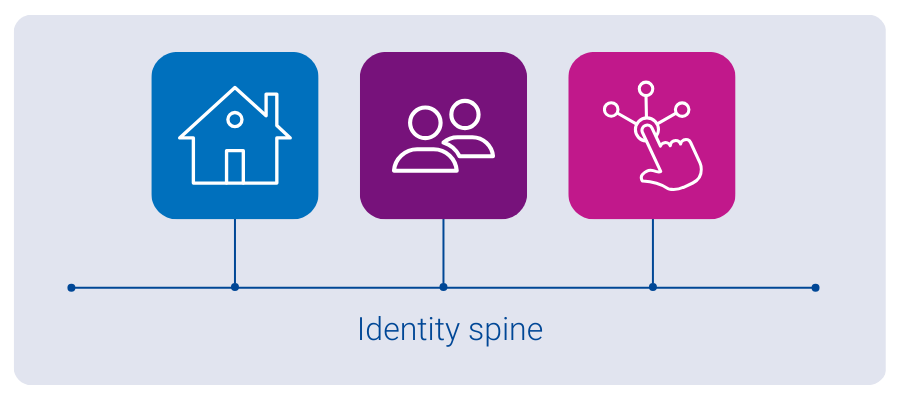
Experian Marketing Data provides the identity and insights spine that helps local advertisers:
- Identify the right households in each market
- Build consistent, people-based audiences across partners
- Activate with confidence and measure outcomes on the same foundation
Madhive’s data marketplace builds on this identity layer, curating trusted data sets that advertisers can integrate directly into planning and activation.
“We’re focused on creating perfect matches between businesses and consumers. The right data is critical, which is why we started the data marketplace. It’s a curated, opinionated take on the best data to drive outcomes for the companies that depend on us.”
MadhiveAaron Brown, Chief Scientist
Madhive’s Maverick AI at the core of local advertising
Madhive’s Maverick AI is the AI-powered operating system for local media. Built as a foundational layer behind Madhive’s entire workflow, Maverick AI connects the dots across planning, targeting, reporting, and storytelling. Its purpose is simple yet transformative: turn fragmented data and advertiser inputs into actionable insights at scale.
What makes Maverick AI different?
“Maverick AI exists to connect local advertisers with data like Experian’s. Its ability to collaborate and tell stories back to advertisers is one of its greatest strengths.”
MadhiveAaron Brown, Chief Scientist
How Maverick AI and Experian Marketing Data turn transparency into results
Maverick AI turns performance transparency into aligned plans and faster optimizations for local advertisers and agencies. Paired with Experian’s identity data, advertisers get an accurate, household-level view of real people in real locations. That lets them build consistent local audiences, reach those audiences across connected television (CTV), social, and the open web, and confidently tie ad exposure back to outcomes that matter in each market.

“Maverick AI is the foundational layer behind all our operations – targeting, reporting, and storytelling. It connects data across organizations and advertisers, including trusted data sources like Experian. AI works tirelessly to pick up context, connect the dots, and deliver great results end-to-end for our customers.”
MadhiveAaron Brown, Chief Scientist
Your next local campaign starts with Madhive and Experian

Local advertising performance starts with a trusted identity foundation. With Experian data and Madhive’s Maverick AI platform, local advertisers can define the right households once, activate their campaigns across CTV and digital channels, and measure outcomes with confidence. Many brands are increasing investment in AI-powered planning to cut waste and grow on-target reach. Let’s work together to make your next campaign a success.
Let’s solve your local advertising challenges today
About our experts

Aaron Brown
Chief Scientist, Madhive
Aaron Brown is Chief Scientist at Madhive, where he leads Mad Labs, the company’s advanced innovation division. With a background spanning mathematics, computer science, and law, Aaron specializes in applying complex technical and theoretical breakthroughs to real-world business challenges. Before joining Madhive, he worked at the machine learning startup Intelligent Life. A graduate of Boston University with degrees in Mathematics and Computer Science, he also holds a J.D. from the University of Southern Queensland and lives in New York City.

Ali Mack
VP of AdTech Sales, Experian
Ali Mack leads Experian’s AdTech business, overseeing global revenue across the company’sexpansivetech and media portfolio. With over a decade of experience in digital and TV advertising, Ali drives strategic growth by aligning sales, customer success, and solutions teams to deliver impactful outcomes for clients and partners.
She has successfully guided teams through two major acquisitions, integrating sales organizations and product portfolios into unified go-to-market strategies. Under her leadership, Experian has consistently exceeded revenue targets while fostering collaborative, results-driven teams and mentoring emerging leaders. Working closely with finance, product, and marketing, Ali develops strategies that support a diverse ecosystem of publishers, brands, and technology partners, positioning Experian at the forefront of data-driven advertising and identity resolution.
FAQs
Local advertisers face tight budgets, short timelines, and high pressure for results. They must reach the right households, tailor messaging, and optimize campaigns across zip codes. Experian’s data solutions and Madhive’s Maverick AI platform help overcome challenges like location targeting and data activation without losing signal.
Madhive’s Maverick AI platform centralizes operations, targeting, and reporting while enabling granular local planning at scale. It integrates Experian’s data to target households accurately, optimize campaigns across markets, and deliver measurable results, even for advertisers with limited budgets.
Madhive’s Maverick AI platform provides transparency and clear recommendations, aligning advertisers on goals. Experian’s data solutions further enhance this process by providing a unified view of audience behavior, ensuring campaigns remain cohesive and effective across all channels.
Latest posts
Over the past two decades, we’ve seen healthcare become increasingly interconnected. Healthcare systems can share a patient's clinical information in a variety of ways. A Pharmacy Benefits Manager can share it through an Electronic Health Record. An MRI scanner can also capture and store patient images on a picture archiving and communication system (PACS). Despite this wealth of information, according to the CDC, 20 million U.S. citizens don’t have access to medical care when they need it. A patient’s well-being should represent more than their clinical data. How can we increase access to care for those individuals? We can look towards non-clinical factors, like the social determinants of health, for answers. Coordinate care for at-risk patients What if you could identify patients who are likely to readmit due to factors outside of their medical conditions? We can use demographic, geographic, and socioeconomic data to discover patients that need greater access to care. The social determinants of health (SDOH) can uncover factors that may increase the burden of disease for some populations. What are the social determinants of health? They are the conditions in the environments where people are born, live, learn, work, play, worship, and age. Think of factors like safe housing, transportation, job opportunities, and education. These conditions can affect a wide range of health, functioning, and quality-of-life outcomes and risks. What insights can the social determinants of health reveal? Experian Health’s Social Determinants of Health solution offers holistic insight into the financial, transportation, and technological barriers individuals may experience. These barriers could hinder their access to care, medication, food, and housing. It's important to find a solution like ours that offers prioritized, proactive suggestions for interventions that help remove or reduce such barriers for improved health outcomes. Our rich household data sets can provide key insights into the SDOH. This data can answer key questions such as: Are there existing populations with housing instability issues? How much price sensitivity do consumers have for medication? Are there markets or locations that have food instability issues? Is transportation an issue that makes it hard for patients to access care facilities? Are there geographic influences that drive or prevent diagnosis and care? In the chart below, we break down the SDOH into five categories. We outline key considerations that offer insights to provide patient-specific context for your caregivers. Finally, we present patient engagement strategies that are SDOH factor-specific and based on best practice interventions and program types. Social determinants of health data in action While much of healthcare focuses on clinical outcomes, our Consumer View data can provide a wealth of insight into a variety of non-clinical factors that can influence quality of care. A profile of core demographics such as age, ethnicity, and gender can uncover new opportunities or highlight areas where engagement does not align with medical research. We can discover patients at-risk for not being able to access essential services utilizing key, social determinants of health and geographic profiling. When combined with core demographics like age, gender, and ethnicity, we can compare any patient population against expected SDOH norms to uncover significant gaps in access to care. Our data shows that: 1 in 12 households have no access to a vehicle 1 in 4 households are sensitive to the cost of medication 1 in 5 households have very low technology sophistication 1 in 7 households live below the federal poverty level Once you have this data, what can you do with it? You can develop an inclusive education and communication campaign with our data-driven content and contact engagement solution. This solution empowers you to pair the perfect messaging styles with the right channels to deliver a personalized experience to broaden your reach. For those individuals who have little access to technology, an email campaign may not reach them. We can identify additional engagement channels like the traditional newspaper, radio, direct mail, or even broadcast TV to determine the best medium to expand your market while increasing access to care. By using decision making styles and engagement channels, together we can reduce the burden of care on the medically underserved. Let’s drive inclusive healthcare together Develop a more holistic view of your patient population while increasing healthcare equity. We can help you use the social determinants of health for actionable care management. Contact us to learn how you can fold this data into your healthcare ecosystem. Get in touch

Next up in our Ask the Expert series, we hear from Sarah Ilie and Lauren Portell. Sarah and Lauren talk about the internet’s value exchange – what we gain and lose when it’s so easy to share our information. Is convenience hurting or helping us? The age of connectivity Today, it’s almost unimaginable to think about how your day-to-day life would look without the convenience of the internet, smartphones, apps, and fitness trackers; the list goes on and on. We live in the age of connectivity. We have the convenience to buy products delivered to our homes on the same day. We can consume content across thousands of platforms. We also have watches or apps that track our health with more granularity than ever before. The internet's value exchange In exchange for this convenience and information, we must share various kinds of data for these transactions and activities to take place. Websites and apps give you the option to “opt in” and share your data. They also often let you know that they are collecting your data. This can feel like an uncomfortable proposition and an invasion of privacy to many people. What does it mean to opt-in to a website or app’s tracking cookies? What value do we exchange? What opting in means for you Opting in to cookies means that you are allowing the app or website to track your online activity and collect anonymous data that is aggregated for marketing analytics. The data provides valuable information to understand users better to create better online experiences or offer more useful products and content. Granting access to “tracking” offers several benefits to users such as a customized, more personal user experience or advertising that is more likely to be relevant. For example, let’s imagine you have recently been using an app or website to plan a camping trip. By sharing your data, the website or app has visibility into what is interesting or useful to you which can lead to related content suggestions (best campsites) or relevant advertising and product recommendations (tents and camping equipment). It’s important to know that the marketing data collected when you opt in is extremely valuable. The revenue that advertising generates is often very important to websites and apps because this is how they make money to continue providing content and services to consumers. Data privacy practices Privacy concerns regarding how companies and developers use tracking information have risen over the last couple of years and have resulted in additional protection for consumers’ privacy while still allowing companies to improve their products and advertising. One big step in this direction has been simply making people aware that their data is being collected, why it’s being collected, and providing users with the option to share this data for marketing analytics through opting-in or not. Other important steps to maintain online privacy include formal legal legislation and self-regulation. The right to privacy is protected by more than 600 laws between individual states and federal legislation and the U.S. House Committee on Energy and Commerce recently voted to pass the American Data Privacy and Protection Act. Additionally, marketing organizations such as the Interactive Advertising Bureau and Association of National Advertisers regulate themselves with codes of conduct and standards given there is so much attention on privacy issues. Is the internet's value exchange worth it? The data that we choose to share by opting in has a lot of benefits for us as consumers. There are laws in place to protect our data and privacy. Of course, it’s important to be aware that data is collected and used for marketing purposes, but it’s also reasonable to share a certain amount of data that translates into benefits for you as well. The best data unlocks the best marketing. Contact us to tap into the power of the world’s largest consumer database. Learn how you can use Experian Marketing Services' powerful consumer data to learn more about your customers, drive new business, and deliver intelligent interactions across all channels. Meet the Experts: Lauren Portell, Account Executive, Advanced TV, Experian Marketing Services Sarah Ilie, Strategic Partner Manager, Experian Marketing Services Get in touch

We’re excited to introduce our new Q&A series, Ask the Expert! Ask the Expert will feature a series of conversations with product experts. We’ll spotlight and dive into the areas you care most about: identity resolution, targeting, attribution, and more. Our first segment features a conversation on Hashed Email. Jeff Tognetti, the Product Development Team Lead at DealerX joins us to chat with Experian’s Chief Revenue Officer, Chris Feo. Chris and Jeff review how to future-proof your identity strategy by exploring Hashed Email use cases, technical details, and offer an expert point of view on the cookieless future. Let’s review a few highlights from their conversation. DealerX’s use case When DealerX first started working with us, we focused on digital identity. DealerX wanted to understand the browsing habits of their first-party shoppers that relate to their clients: What they’re doing How they’re interacting with client sites and products Apply those learnings to target them across the web Eliminate ad fraud and targeting waste Our partnership gave DealerX the ability to take an anonymous consumer from anywhere across their portfolio of customers and understand who they are, while in an anonymous state. Then, they could activate on any channel where that consumer may be in the market for a product. This allowed DealerX to resolve who these people are as they browse the web, leading to reduced ad spend and targeting waste. This was the original and primary use case for DealerX when partnering with us. So, when did Hashed Email come into the mix for DealerX? Before we dive into the specifics, let’s take a step back and understand Hashed Email. What is Hashed Email? Hashed Email is a privacy-safe identifier that can further enrich the connection between the online (digital) and offline (real world) ecosystems. When paired with the Tapad Graph with access to Tapad’s universe of email data, it can provide maximum coverage for targeting and measurement when combined with IDs such as cookies, mobile ad IDs (MAIDs), connected TV (CTV) IDs, and IP addresses. Email hashing uses a method of coding to transform an email address into a jumble of numbers and letters so that it’s fully pseudonymized and privacy safe. Hashed emails can then be used as a digital identifier when a user is logged in to that email and trace their activity – without linking back to the user’s real email address. This allows marketers to collect data on their users and understand their behavior without knowing their email address – a win for both consumer privacy and marketer insight. DealerX & Hashed Email DealerX was one of our first customers to onboard Hashed Email to the Tapad Graph. Adding Hashed Email gave them a privacy-compliant way to work with identity and resolve what a user did on their site. This allowed them to gain insight into where an ad and impression was served; even the day and time these actions occurred. Now, we’re not the only data partner that DealerX works with. Many companies offer the notion of converting email to a digital ID in a privacy-safe way. How does DealerX evaluate the right data partner? Evaluating the right data partner When we say, ‘data partner,’ we’re referring to the data, the service, and the support. The most important characteristics to consider when choosing a data partner, according to DealerX, include: Technical prowess Efficiency Agility Scalability Why did DealerX choose to partner with us? Our services met the characteristics they were looking for in a data partner. We grew the product by iterating on features that worked best for Jeff and his team. The rollout was organized, efficient, and lacked bureaucracy, which can slow down an implementation timeline. While we started our relationship with DealerX as a vendor, now we're partners. How did we transition from vendor to partner? Transitioning from vendor to partner The key to a great partnership is trust. It’s tough to navigate an ecosystem with numerous companies that claim to have the same products and services. The relationship will start off as vendor-client, and both teams will get to know each other’s strengths and weaknesses. As the vendor makes your work seamless and offers an efficient implementation process, the relationship turns into a partnership. There’s more! This is just a taste of Chris and Jeff’s conversation. Visit the Ask the Expert content hub to watch a recording of the conversation. Stay tuned for future segments in our Ask the Expert series. We’re just getting started! Get in touch About DealerXIn just a few short years, DealerX has grown to serve 1,000’s of Tier 3 dealerships across all brands, enterprise partners and OEMs. Their keen approach to data, analytics, machine learning and programmatic initiatives have led DealerX to quickly become the most savvy player in the automotive space. DealerX has helped automotive retailers save 10’s of millions of dollars by avoiding fraud and eliminating wasteful ads pends, while dramatically reducing “cost per sale." In doing so, their partners significantly outperform those leveraging generic “one size fits all” competitive offerings. To learn more, visit their website at Dealerx.com.