At A Glance
Local advertisers face unique challenges, from limited budgets to fragmented audiences and the need for measurable results. Experian’s trusted data, combined with Madhive’s Maverick AI platform, equips advertisers with the insights and tools needed to create impactful campaigns. This collaboration simplifies campaign management, helping advertisers connect with the right audiences.Identity-led local advertising that works
Local advertisers run on tight budgets, short timelines, and constant pressure to prove what works. Every dollar must count. In this Ask the Expert session, Aaron Brown, Chief Scientist at Madhive, joins Ali Mack, VP of AdTech Sales at Experian, to discuss how the Maverick AI platform helps local advertisers make confident decisions, act on clear recommendations, and see outcomes they can stand behind.
Why local campaigns demand accuracy, and how to deliver it
Local teams juggle multiple channels, changing budgets, and heavy performance expectations. To stay competitive, local teams need quick answers to three critical questions:
- Which households are most valuable to reach?
- Which channels work best in their market?
- Are campaigns on on track, day by day?

Delivering that level of accuracy means working from a single, trusted view of households, channels, and performance, powered by clean, connected, and continuously updated data.
“When you think about local, these aren’t enormous budgets. These businesses depend on success from day one and are still finding their footing. There’s a wealth of nuanced information we need to hear from advertisers to ensure their campaigns succeed, and a wealth of insights we need to deliver back. It’s a real-time matching problem at scale to make sure everything runs profitably for our customers.”
MadhiveAaron Brown, Chief Scientist
Why Experian data is the foundation of local planning
Data is the foundation of effective local advertising, but not all data is created equal. For local advertisers, the real advantage comes from high-quality, actionable data that pinpoints likely customers and reduces wasted spend.
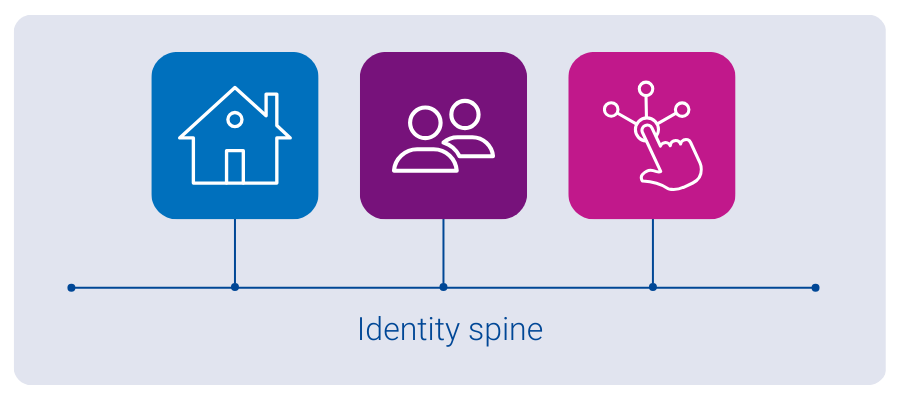
Experian Marketing Data provides the identity and insights spine that helps local advertisers:
- Identify the right households in each market
- Build consistent, people-based audiences across partners
- Activate with confidence and measure outcomes on the same foundation
Madhive’s data marketplace builds on this identity layer, curating trusted data sets that advertisers can integrate directly into planning and activation.
“We’re focused on creating perfect matches between businesses and consumers. The right data is critical, which is why we started the data marketplace. It’s a curated, opinionated take on the best data to drive outcomes for the companies that depend on us.”
MadhiveAaron Brown, Chief Scientist
Madhive’s Maverick AI at the core of local advertising
Madhive’s Maverick AI is the AI-powered operating system for local media. Built as a foundational layer behind Madhive’s entire workflow, Maverick AI connects the dots across planning, targeting, reporting, and storytelling. Its purpose is simple yet transformative: turn fragmented data and advertiser inputs into actionable insights at scale.
What makes Maverick AI different?
“Maverick AI exists to connect local advertisers with data like Experian’s. Its ability to collaborate and tell stories back to advertisers is one of its greatest strengths.”
MadhiveAaron Brown, Chief Scientist
How Maverick AI and Experian Marketing Data turn transparency into results
Maverick AI turns performance transparency into aligned plans and faster optimizations for local advertisers and agencies. Paired with Experian’s identity data, advertisers get an accurate, household-level view of real people in real locations. That lets them build consistent local audiences, reach those audiences across connected television (CTV), social, and the open web, and confidently tie ad exposure back to outcomes that matter in each market.

“Maverick AI is the foundational layer behind all our operations – targeting, reporting, and storytelling. It connects data across organizations and advertisers, including trusted data sources like Experian. AI works tirelessly to pick up context, connect the dots, and deliver great results end-to-end for our customers.”
MadhiveAaron Brown, Chief Scientist
Your next local campaign starts with Madhive and Experian

Local advertising performance starts with a trusted identity foundation. With Experian data and Madhive’s Maverick AI platform, local advertisers can define the right households once, activate their campaigns across CTV and digital channels, and measure outcomes with confidence. Many brands are increasing investment in AI-powered planning to cut waste and grow on-target reach. Let’s work together to make your next campaign a success.
Let’s solve your local advertising challenges today
About our experts

Aaron Brown
Chief Scientist, Madhive
Aaron Brown is Chief Scientist at Madhive, where he leads Mad Labs, the company’s advanced innovation division. With a background spanning mathematics, computer science, and law, Aaron specializes in applying complex technical and theoretical breakthroughs to real-world business challenges. Before joining Madhive, he worked at the machine learning startup Intelligent Life. A graduate of Boston University with degrees in Mathematics and Computer Science, he also holds a J.D. from the University of Southern Queensland and lives in New York City.

Ali Mack
VP of AdTech Sales, Experian
Ali Mack leads Experian’s AdTech business, overseeing global revenue across the company’sexpansivetech and media portfolio. With over a decade of experience in digital and TV advertising, Ali drives strategic growth by aligning sales, customer success, and solutions teams to deliver impactful outcomes for clients and partners.
She has successfully guided teams through two major acquisitions, integrating sales organizations and product portfolios into unified go-to-market strategies. Under her leadership, Experian has consistently exceeded revenue targets while fostering collaborative, results-driven teams and mentoring emerging leaders. Working closely with finance, product, and marketing, Ali develops strategies that support a diverse ecosystem of publishers, brands, and technology partners, positioning Experian at the forefront of data-driven advertising and identity resolution.
FAQs
Local advertisers face tight budgets, short timelines, and high pressure for results. They must reach the right households, tailor messaging, and optimize campaigns across zip codes. Experian’s data solutions and Madhive’s Maverick AI platform help overcome challenges like location targeting and data activation without losing signal.
Madhive’s Maverick AI platform centralizes operations, targeting, and reporting while enabling granular local planning at scale. It integrates Experian’s data to target households accurately, optimize campaigns across markets, and deliver measurable results, even for advertisers with limited budgets.
Madhive’s Maverick AI platform provides transparency and clear recommendations, aligning advertisers on goals. Experian’s data solutions further enhance this process by providing a unified view of audience behavior, ensuring campaigns remain cohesive and effective across all channels.
Latest posts

After a six-month beta period, collaboration in Snowflake Data Clean Rooms using Experian's offline or digital graph is now generally available for all clients. As part of this, Experian is excited to announce that Experian's identity graph will be integrated into Snowflake's Data Clean Rooms. With the growing importance of data privacy and marketing efficiency, this partnership builds off of Experian's previously-announced integration into Snowflake's AI Data Cloud for Media. Adding Experian's identity graph to Snowflake Data Clean Rooms helps advertisers, advertising platforms, and measurement partners work more effectively. Built upon Experian’s rich offline and digital identity foundation, with support for various identifiers across platforms, collaboration in Snowflake Data Clean Rooms helps clients maximize the value of their data and meet the diverse needs of modern business: Collaborate with partners for richer data insights Achieve higher match rates Improve audience building Produce more accurate and complete reports Ensure data privacy Seamless integration of AdTech and MarTech platforms Regardless of the identifier type you are looking to collaborate on, Experian has the identity data in Snowflake Data Clean Rooms to support you and your partner. This leads to higher match rates and more resolved data for you to use to benefit your media initiatives. "Integrating Experian's identity graph into Snowflake Data Clean Rooms marks a transformative leap for digital marketing. This collaboration empowers advertisers, programmatic platforms, and measurement partners with unparalleled accuracy, privacy, and efficiency. Together, we are excited to provide innovative solutions to meet the evolving needs of our clients."Kamakshi Sivaramakrishnan, Head of Data Clean Rooms at Snowflake The Experian and Snowflake partnership showcases how collaboration can enhance scalability and cost-efficiency. Data clean rooms provide a secure environment where multiple parties can share, join, and analyze their data assets without leaving the clean room or exposing the underlying data. By integrating Experian's identity graph within Snowflake's secure platform businesses of all sizes can receive advanced data collaboration and identity tools without the high costs usually involved. The integration prioritizes consumer privacy and data security. Backed by Experian’s Global Data Principles, Experian's deep roots in data protection and security provide customers with the most trusted way to share data and protect consumer privacy. With Experian's graph in Snowflake Data Clean Rooms, customers will get a solution that respects customer consent, safeguards sensitive data, and ensures that processing occurs with the utmost respect for user confidentiality and preferences. Further, Snowflake Data Clean Rooms uses advanced methods to preserve privacy, such as differential privacy and secure computations on encrypted data, enabling data security and integrity. Together, these methods prevent unauthorized access by keeping sensitive data within the secure confines of the cleanroom on a strict, collaboration-to-collaboration basis. The collaboration between Experian and Snowflake significantly enhances data matching and identity resolution within the Snowflake Data Cleanroom. Experian’s identity solution uses digital identifiers like hashed emails, MAIDs, and CTV IDs and offline identifiers like name and address. This allows advertisers to reach more consumers and enrich their data. Marketers can easily use their first-party data in the cleanroom, and with Experian's Graph, they get higher match rates for more accurate targeting and campaign measurement. The continued partnership between Snowflake and Experian provide advertisers, platforms, and measurement providers a secure and effective way to collaborate. This sets the stage for continued innovation in programmatic advertising, ensuring that our solutions evolve in step with our clients' needs. If you're not utilizing clean rooms for collaboration but have advanced identity needs, you can license our Graph and seamlessly integrate it into your Snowflake account. Reach out to our team to learn more Latest posts

With U.S. brands expected to invest over $28 billion in connected TV (CTV) in 2024, balancing linear TV and CTV is now a top priority. Advertisers need to integrate these platforms as the TV landscape evolves to reach audiences with various viewing habits. A successful strategy requires both linear and CTV approaches to effectively reach audiences at scale. We interviewed experts from Comcast Advertising, Disney, Fox, Samsung Ads, Snowflake, and others to gain insights on the evolving landscape of linear and CTV. In our video, they discuss audience fragmentation, data-driven targeting, measurement challenges, and more. Watch now to hear their perspectives. Five considerations for connecting with linear TV and CTV audiences 1. Adapt to audience fragmentation With consumers' rapid shift toward streaming, it's easy to overlook the enduring significance of linear TV, which still commands a large portion of viewership. According to Jamie Power of the Walt Disney Company, roughly half of the current ad supply remains linear, highlighting the need for brands to adapt their strategies to target traditional TV viewers and cord-cutters. As streaming continues to rise, ensuring your strategy integrates both CTV and linear TV is crucial for reaching the full spectrum of audiences. "I don't think that we thought the world would shift so quickly to streaming, but it's not always just all about streaming; there's still such a massive audience in linear."Jamie Power, Disney 2. Combine linear TV’s reach with CTV’s precision Blending the reach of linear TV with the granular targeting capabilities of CTV allows advertisers to engage both broad and niche audiences. Data is critical in understanding audience behavior across these platforms, enabling brands to create highly relevant campaigns tailored to specific audience segments. This strategic use of data enhances engagement and ensures that the right viewers see advertising campaigns. "The future of TV is really around managing the fragmentation of audiences and making sure that you can reach those audiences addressably wherever they're watching TV."Carmela Fournier, Comcast Advertising 3. Manage frequency across platforms Cross-platform campaigns require managing ad frequency to avoid oversaturation while ensuring adequate exposure. With a variety of offline and digital IDs resolved to consumers, our Digital and Offline Graphs can help maintain consistent messaging across linear TV and CTV. This approach allows advertisers to strike the right balance, preventing ad fatigue and delivering the right audience reach for campaign impact. "You've got to make sure that you're not reaching the same homes too many times, that you're reaching everybody the right amount of times."Justin Rosen, Ampersand 4. Focus on consistent measurement Linear TV and CTV offer different data granularities, necessitating tailored approaches for accurate cross-platform campaign measurement. Bridging these data gaps requires advanced tools that streamline reporting for both mediums. As the industry moves toward consistent measurement standards, advertisers must adopt solutions that provide a comprehensive view of campaign performance, enabling them to optimize their cross-platform efforts. "Where I think there are pitfalls are with the measurement piece, it's highly fragmented, there's more work to be done, we're not necessarily unified in terms of a consistent approach to measurement."April Weeks, Basis 5. Align with shifts in audience behavior The success of cross-platform campaigns hinges on staying agile and responsive to shifting audience preferences. As CTV adoption grows, advertisers must proactively adjust their strategies to align with how viewers engage across linear and streaming platforms. Ideas include: Regularly updating creative Adjusting the media mix Utilizing real-time data insights to ensure campaigns remain relevant "At Fox we were a traditional linear company, and essentially what we're trying to do is merge the reach and the scale of TV as well as the reach and the scale of all the cord-cutters and cord-nevers that Tubi possesses." Darren Sherriff – FoxDarren Sherriff, Fox As streaming TV rapidly changes, brands must stay ahead of trends and shifts in consumer behavior to tap into CTV's growing potential. By focusing on these opportunities, advertisers can blend linear TV and CTV, ensuring their campaigns reach audiences wherever they watch. Connect with Experian's TV experts As a trusted leader in data and identity services, Experian offers the expertise to help you succeed in television marketing. With our strong partnerships with key players in the TV industry, we provide access to unique marketing opportunities. Learn how Experian’s data and identity solutions can deliver outstanding results in advanced TV advertising. Partner with us today to enhance your marketing strategies using our Consumer View and Consumer Sync solutions. Connect with our TV experts Contact us Latest posts

In this article…Understanding the AI revolution in commerceFour benefits of the AI revolution coming to commerceFuture trends and predictionsChart the future of commerce with Experian Technology is pushing the boundaries of commerce like never before. Artificial intelligence (AI) is one of the primary driving technologies at the forefront of the commerce evolution, using advanced algorithms to revolutionize marketing and personalize customer experiences. As of 2024, AI adoption in e-commerce is skyrocketing, with 84% of brands already using it or gearing up to do so. This article explores the AI revolution coming to commerce, focusing on what makes AI a driving force for e-commerce in particular, and the ways it's reshaping how businesses engage with consumers. Understanding the AI revolution in commerce AI is quickly reshaping commerce as we know it by democratizing access to sophisticated tools once reserved for large corporations, breaking down functional silos within organizations, and integrating data from multiple sources to achieve deeper customer understanding. It’s paving the way for a future where every brand interaction is uniquely crafted for the individual, powered by AI systems that anticipate preferences proactively. AI is a broad term that encompasses: Data mining: The gathering of current and historical data on which to base predictions Natural language processing (NLP): The interpretation of human language by computers Machine learning: The use of algorithms to learn from past experiences or examples to enhance data understanding The capabilities of AI have significantly matured into powerful tools that can improve operational efficiency and boost sales, even for smaller businesses. They have also fundamentally changed how businesses interact with customers and handle operations. As AI continues to develop, it has the potential to provide even more seamless, personalized, and ethically informed commerce experiences and establish new benchmarks for engagement and efficiency in the marketplace. Four benefits of the AI revolution coming to commerce Major commerce players like Amazon have benefited from AI and related technologies for a while. Through machine learning, they’ve optimized logistics, curated their product selection, and improved the user experience. As this technology quickly expands, businesses have unlimited opportunities to see the same efficiency, growth, and customer satisfaction as Amazon. Here are four primary benefits of AI adoption in commerce. 1. Data-driven decision making AI gives businesses powerful tools to analyze large amounts of data more quickly and accurately than a person. Through advanced algorithms and machine learning, AI can sift through historical sales data, customer behavior patterns, and market trends to uncover insights and suggest actions that might not be immediately obvious to human analysts. By transforming raw data into actionable insights, AI empowers businesses to make more informed decisions, reduce risks, and capitalize on opportunities. As a real-world example, Foxconn, the largest electronics contract manufacturer worldwide, worked with Amazon Machine Learning Solutions Lab to implement AI-enhanced business analytics for more accurate forecasting. This move improved forecasting accuracy by 8%, saved $533,000 annually, reduced labor waste, and improved customer satisfaction through data-driven decisions. 2. A better customer experience AI is set to make customer interactions smoother, faster, and more personalized by recommending products based on preferences and behaviors, making it easier for customers to find what they need. When consumers visit an online store, AI also provides instantaneous help via a chatbot that knows their order history and preferences. These AI-powered assistants offer real-time help like a knowledgeable store clerk. They give the appearance of higher-touch support and can answer basic questions at any hour, provide personalized product recommendations, and even troubleshoot issues. Chatbots free up human customer service agents for more complicated matters, and these agents can then use AI to obtain relevant information and suggestions for the customer during an interaction. 3. Personalized marketing Data-driven personalization of the customer journey has been shown to generate up to eight times the ROI, as data shows 71% of consumers now expect personalized brand interactions. Until AI came around, personalization at scale was complex to achieve. Now, gathering and processing data about a customer’s shopping experience is easier than ever based on lookalike customers and past behavior. Many businesses have adopted AI to glean deeper insights into purchase history, web browsing, and social media interactions to drive better segmentation and targeting. With AI, advertisers can analyze behavioral and demographic data to suggest products someone is likely to love. Consumers can now browse many of their favorite online stores and see product recommendations that perfectly match their tastes and needs. AI can also offer special discounts based on purchasing habits, and send personalized emails with products and content that interest customers to make their shopping experience more engaging and relevant. This personalization helps businesses forge stronger customer relationships. Personalization across digital storefronts Retail media involves placing advertisements within a retailer's website, app, or other digital platform to help brands target consumers based on their behavior and preferences within that environment. Retail media networks (RMNs) expand this capability across multiple retail platforms to create seamless advertising opportunities throughout the customer journey. Integrating AI into RMNs can improve personalization across digital storefronts with personalized, relevant ads and custom offers in real time that improve the customer experience. 4. Operational efficiency AI can also be beneficial on the back end, enabling more efficient resource allocation, pricing optimization, efficiency, and productivity. Customers can be frustrated when they visit a store for a specific product only to find it out of stock or unavailable in a particular size. With AI, these situations can be prevented through algorithms that forecast demand for certain items. Retailers like Amazon and Walmart both use AI to predict demand, with Walmart even tracking inventory in real time so managers can restock items as soon as they run out. AI can automate and streamline operational tasks to help businesses run smoother, faster, and more cost-effective operations. It can: Offload tedious data entry, scheduling, and order processing tasks for greater fulfillment accuracy. Analyze historical data and market trends, predicting demand to help businesses optimize inventory, reduce waste, track online and in-store sales, and prevent shortages. Forecast demand levels, transit times, and shipment delays to make better predictions about logistics and supply chains. Improve data quality using machine learning algorithms that find and correct product information errors, duplicates, and inconsistencies. Adjust prices based on competitor pricing, seasonal fluctuations, and market conditions to maximize profits. Pinpoint bottlenecks, identify issues before they escalate, and provide improvements for suggestions. Future trends and predictions If you want to stay ahead in e-commerce, it’s just as important to know what’s coming as it is to understand where things are today. Here are some of the trends expected to shape the rest of 2024 and beyond. Conversational commerce Conversational commerce allows real-time, two-way communication through AI-based text and voice assistants, social messaging apps, and chatbots. Generative AI advancements may soon enable more seamless, personalized interactions between customers and online retailers. This technology can improve customer engagement and satisfaction while providing helpful insights into preferences and behaviors for better personalization and targeting. Delivery optimization AI-driven delivery optimization uses AI to predict ideal routes for each individual delivery, boosting efficiency, reducing costs, promoting sustainability, and improving customer satisfaction throughout the delivery process. Visual search AI-driven visual search is quickly improving in accuracy, speed, and contextual understanding. Future developments may integrate seamlessly with augmented reality (AR) so shoppers can search for products by pointing their devices at physical objects. Social media and e-commerce platforms may soon incorporate visual search more prominently, allowing users to find products directly from images. AI content creation AI is already automating and optimizing aspects of content production: Algorithms can generate product descriptions, blog posts, and social media captions personalized to specific customer segments. AI tools also enable the creation of high-quality visuals and videos. NLP advancements ensure content is compelling and grammatically correct. AI-driven content strategies analyze consumer behavior and refine messaging to meet changing preferences and trends. This automation speeds up content creation while freeing resources for strategic planning and customer interaction. IoT integration Integrating AI with Internet of Things (IoT) devices could help make the ecosystem more interconnected in the future. AI algorithms can use data from IoT devices like smart appliances, wearables, and sensors to gather real-time insights into consumer behavior, preferences, and product usage patterns. This data enables personalized marketing strategies, predictive maintenance for products, and optimized inventory management. AI-driven IoT data analytics can also streamline supply chain operations to reduce costs and inefficiencies. Fraud detection and security There will likely be an increased focus on the ethical use of AI and data privacy regulations to strengthen consumer trust and transparency. AI-powered systems will get better at detecting and preventing fraud in e-commerce transactions, which will heighten security measures for both businesses and consumers. Chart the future of commerce with Experian AI has changed how marketers approach e-commerce in 2024. With AI-driven analytics and predictive capabilities, marketers can extract deeper insights from extensive data sets to gain a clearer understanding of consumer behavior. This enables refined segmentation, precise targeting, and real-time customization of messages and content to fit individual preferences. Beyond insights, AI automates routine tasks like ad placement, content creation, and customer service responses, freeing marketers to concentrate on strategic planning and creativity. Through machine learning, marketers can predict trends, optimize budgets, and fine-tune strategies faster and more accurately than ever. The time to embrace AI is now. At Experian, we’re here to help you make more data-driven decisions, deliver more relevant content, and reach the right audience at the right time. Using AI in your commerce marketing strategy with our Consumer View and Consumer Sync solutions can help you stay competitive with effective, engaging campaigns. Contact us to learn how we can empower your commerce advertising strategy today. Contact us Latest posts