Loading...

A deep dive with an Experian partner, Madhive

by Experian Marketing Services 7 min read December 5, 2025

At A Glance

Local advertisers face unique challenges, from limited budgets to fragmented audiences and the need for measurable results. Experian’s trusted data, combined with Madhive’s Maverick AI platform, equips advertisers with the insights and tools needed to create impactful campaigns. This collaboration simplifies campaign management, helping advertisers connect with the right audiences.

Identity-led local advertising that works

Local advertisers run on tight budgets, short timelines, and constant pressure to prove what works. Every dollar must count. In this Ask the Expert session, Aaron Brown, Chief Scientist at Madhive, joins Ali Mack, VP of AdTech Sales at Experian, to discuss how the Maverick AI platform helps local advertisers make confident decisions, act on clear recommendations, and see outcomes they can stand behind.

Why local campaigns demand accuracy, and how to deliver it

Local teams juggle multiple channels, changing budgets, and heavy performance expectations. To stay competitive, local teams need quick answers to three critical questions:

  1. Which households are most valuable to reach?
  2. Which channels work best in their market?
  3. Are campaigns on on track, day by day?
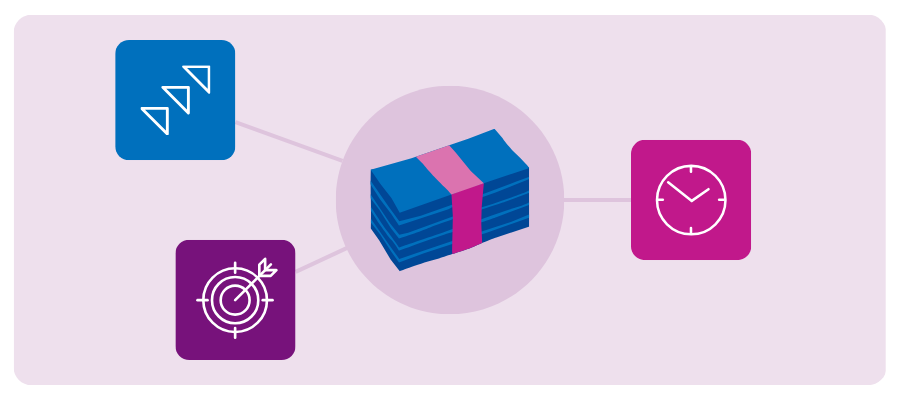
Illustration showing a stack of money in the center connected to icons representing growth

Delivering that level of accuracy means working from a single, trusted view of households, channels, and performance, powered by clean, connected, and continuously updated data.

“When you think about local, these aren’t enormous budgets. These businesses depend on success from day one and are still finding their footing. There’s a wealth of nuanced information we need to hear from advertisers to ensure their campaigns succeed, and a wealth of insights we need to deliver back. It’s a real-time matching problem at scale to make sure everything runs profitably for our customers.”

MadhiveAaron Brown, Chief Scientist

Why Experian data is the foundation of local planning

Data is the foundation of effective local advertising, but not all data is created equal. For local advertisers, the real advantage comes from high-quality, actionable data that pinpoints likely customers and reduces wasted spend.
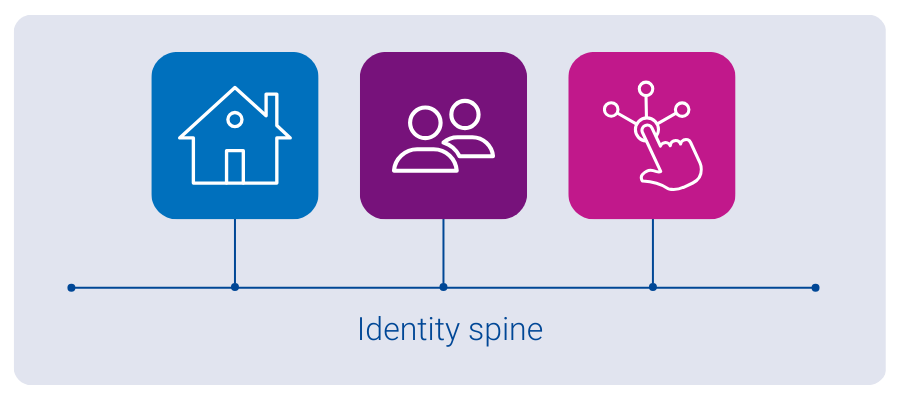
Illustration of three icons—household, people, and digital touchpoints—connected along a line labeled ‘Identity spine.

Experian Marketing Data provides the identity and insights spine that helps local advertisers:

  • Identify the right households in each market
  • Build consistent, people-based audiences across partners
  • Activate with confidence and measure outcomes on the same foundation

Madhive’s data marketplace builds on this identity layer, curating trusted data sets that advertisers can integrate directly into planning and activation.

“We’re focused on creating perfect matches between businesses and consumers. The right data is critical, which is why we started the data marketplace. It’s a curated, opinionated take on the best data to drive outcomes for the companies that depend on us.”

MadhiveAaron Brown, Chief Scientist

Madhive’s Maverick AI at the core of local advertising

Madhive’s Maverick AI is the AI-powered operating system for local media. Built as a foundational layer behind Madhive’s entire workflow, Maverick AI connects the dots across planning, targeting, reporting, and storytelling. Its purpose is simple yet transformative: turn fragmented data and advertiser inputs into actionable insights at scale.

What makes Maverick AI different?

Blue square icon featuring a white outline of a microchip with the letters ‘AI’ in the center.

AI-driven intelligence

It doesn’t just automate tasks; it analyzes signals, connects context across markets, and refines strategies as campaigns progress.

Blue square icon showing a white circular border around a bar chart graphic.

Data connectivity

Maverick AI integrates diverse data sources, including Experian’s trusted identity data, so local advertisers can target households with accuracy and measure outcomes confidently.

Blue square icon showing a white magnifying glass symbol.

Interactive transparency

Beyond dashboards, Maverick AI works alongside sellers and advertisers, surfacing insights, flagging missing inputs, and turning transparency into clear next steps.

Blue square icon showing a white lightbulb with radiating lines, representing an idea or insight.

Adaptability

From structured KPIs to unstructured signals like lists of recent in-store buyers or priority ZIP codes, Maverick AI uses every clue to inform smarter, faster decisions.

“Maverick AI exists to connect local advertisers with data like Experian’s. Its ability to collaborate and tell stories back to advertisers is one of its greatest strengths.”

MadhiveAaron Brown, Chief Scientist

How Maverick AI and Experian Marketing Data turn transparency into results

Maverick AI turns performance transparency into aligned plans and faster optimizations for local advertisers and agencies. Paired with Experian’s identity data, advertisers get an accurate, household-level view of real people in real locations. That lets them build consistent local audiences, reach those audiences across connected television (CTV), social, and the open web, and confidently tie ad exposure back to outcomes that matter in each market.

Illustration of a woman with short hair holding a magnifying glass, examining a bar chart inside the lens, against a light pink background.

“Maverick AI is the foundational layer behind all our operations – targeting, reporting, and storytelling. It connects data across organizations and advertisers, including trusted data sources like Experian. AI works tirelessly to pick up context, connect the dots, and deliver great results end-to-end for our customers.”

MadhiveAaron Brown, Chief Scientist

Your next local campaign starts with Madhive and Experian

Three-panel illustration: a house with a location pin above it; a person viewing a computer screen; and a woman standing in front of rising chart arrows, pointing upward.

Local advertising performance starts with a trusted identity foundation. With Experian data and Madhive’s Maverick AI platform, local advertisers can define the right households once, activate their campaigns across CTV and digital channels, and measure outcomes with confidence. Many brands are increasing investment in AI-powered planning to cut waste and grow on-target reach. Let’s work together to make your next campaign a success.

Let’s solve your local advertising challenges today

This site is protected by reCAPTCHA and the Google Privacy Policy and Terms of Service apply.


About our experts

Aaron Brown, Chief Scientist, Madhive

Aaron Brown

Chief Scientist, Madhive

Aaron Brown is Chief Scientist at Madhive, where he leads Mad Labs, the company’s advanced innovation division. With a background spanning mathematics, computer science, and law, Aaron specializes in applying complex technical and theoretical breakthroughs to real-world business challenges. Before joining Madhive, he worked at the machine learning startup Intelligent Life. A graduate of Boston University with degrees in Mathematics and Computer Science, he also holds a J.D. from the University of Southern Queensland and lives in New York City.

Ali Mack, VP of AdTech Sales, Experian

Ali Mack

VP of AdTech Sales, Experian

Ali Mack leads Experian’s AdTech business, overseeing global revenue across the company’sexpansivetech and media portfolio. With over a decade of experience in digital and TV advertising, Ali drives strategic growth by aligning sales, customer success, and solutions teams to deliver impactful outcomes for clients and partners.

 She has successfully guided teams through two major acquisitions, integrating sales organizations and product portfolios into unified go-to-market strategies. Under her leadership, Experian has consistently exceeded revenue targets while fostering collaborative, results-driven teams and mentoring emerging leaders. Working closely with finance, product, and marketing, Ali develops strategies that support a diverse ecosystem of publishers, brands, and technology partners, positioning Experian at the forefront of data-driven advertising and identity resolution.


FAQs

What makes local advertising so challenging?

Local advertisers face tight budgets, short timelines, and high pressure for results. They must reach the right households, tailor messaging, and optimize campaigns across zip codes. Experian’s data solutions and Madhive’s Maverick AI platform help overcome challenges like location targeting and data activation without losing signal.

How does Madhive’s Maverick AI platform help advertisers achieve better results?

Madhive’s Maverick AI platform centralizes operations, targeting, and reporting while enabling granular local planning at scale. It integrates Experian’s data to target households accurately, optimize campaigns across markets, and deliver measurable results, even for advertisers with limited budgets.

How do Experian and Madhive foster collaboration in local advertising?

Madhive’s Maverick AI platform provides transparency and clear recommendations, aligning advertisers on goals. Experian’s data solutions further enhance this process by providing a unified view of audience behavior, ensuring campaigns remain cohesive and effective across all channels.


Latest posts

Loading…
The evolution of identity: A decade of transformation

Originally appeared on MarTech Series Marketing’s understanding of identity has evolved rapidly over the past decade, much like the shifting media landscape itself. From the early days of basic direct mail targeting to today's complex omnichannel environment, identity has become both more powerful and more fragmented. Each era has brought new tools, challenges, and opportunities, shaping how brands interact with their customers. We’ve moved from traditional media like mail, newspapers, and linear/network TV, to cable TV, the internet, mobile devices, and apps. Now, multiple streaming platforms dominate, creating a far more complex media landscape. As a result, understanding the customer journey and reaching consumers across these various touchpoints has become increasingly difficult. Managing frequency and ensuring effective communication across channels is now more challenging than ever. This development has led to a fragmented view of the consumer, making it harder for marketers to ensure that they are reaching the right audience at the right time while also avoiding oversaturation. Marketers must now navigate a fragmented customer journey across multiple channels, each with its own identity signals, to stitch together a cohesive view of the customer. Let’s break down this evolution, era by era, to understand how identity has progressed—and where it’s headed. 2010-2015: The rise of digital identity – Cookies and MAIDs Between 2010 and 2015, the digital era fundamentally changed how marketers approached identity. Mobile usage surged during this time, and programmatic advertising emerged as the dominant method for reaching consumers across the internet. The introduction of cookies and mobile advertising IDs (MAIDs) became the foundation for tracking users across the web and mobile apps. With these identifiers, marketers gained new capabilities to deliver targeted, personalized messages and drive efficiency through programmatic advertising. This era gave birth to powerful tools for targeting. Marketers could now follow users’ digital footprints, regardless of whether they were browsing on desktop or mobile. This leap in precision allowed brands to optimize spend and performance at scale, but it came with its limitations. Identity was still tied to specific browsers or devices, leaving gaps when users switched platforms. The fragmentation across different devices and the reliance on cookies and MAIDs meant that a seamless, unified view of the customer was still out of reach. 2015-2020: The age of walled gardens From 2015 to 2020, the identity landscape grew more complex with the rise of walled gardens. Platforms like Facebook, Google, and Amazon created closed ecosystems of first-party data, offering rich, self-declared insights about consumers. These platforms built massive advertising businesses on the strength of their user data, giving marketers unprecedented targeting precision within their environments. However, the rise of walled gardens also marked the start of new challenges. While these platforms provided detailed identity solutions within their walls, they didn’t communicate with one another. Marketers could target users with pinpoint accuracy inside Facebook or Google, but they couldn’t connect those identities across different ecosystems. This siloed approach to identity left marketers with an incomplete picture of the customer journey, and brands struggled to piece together a cohesive understanding of their audience across platforms. The promise of detailed targeting was tempered by the fragmentation of the landscape. Marketers were dealing with disparate identity solutions, making it difficult to track users as they moved between these closed environments and the open web. 2020-2025: The multi-ID landscape – CTV, retail media, signal loss, and privacy By 2020, the identity landscape had splintered further, with the rise of connected TV (CTV) and retail media adding even more complexity to the mix. Consumers now engaged with brands across an increasing number of channels—CTV, mobile, desktop, and even in-store—and each of these channels had its own identifiers and systems for tracking. Simultaneously, privacy regulations are tightening the rules around data collection and usage. This, coupled with the planned deprecation of third-party cookies and MAIDs has thrown marketers into a state of flux. The tools they had relied on for years were disappearing, and new solutions had yet to fully emerge. The multi-ID landscape was born, where brands had to navigate multiple identity systems across different platforms, devices, and environments. Retail media networks became another significant player in the identity game. As large retailers like Amazon and Walmart built their own advertising ecosystems, they added yet another layer of first-party data to the mix. While these platforms offer robust insights into consumer behavior, they also operate within their own walled gardens, further fragmenting the identity landscape. With cookies and MAIDs being phased out, the industry began to experiment with alternatives like first-party data, contextual targeting, and new universal identity solutions. The challenge and opportunity for marketers lies in unifying these fragmented identity signals to create a consistent and actionable view of the customer. 2025: The omnichannel imperative Looking ahead to 2025 and beyond, the identity landscape will continue to evolve, but the focus remains the same: activating and measuring across an increasingly fragmented and complex media environment. Consumers now expect seamless, personalized experiences across every channel—from CTV to digital to mobile—and marketers need to keep up. The future of identity lies in interoperability, scale, and availability. Marketers need solutions that can connect the dots across different platforms and devices, allowing them to follow their customers through every stage of the journey. Identity must be actionable in real-time, allowing for personalization and relevance across every touchpoint, so that media can be measurable and attributable. Brands that succeed in 2025 and beyond will be those that invest in scalable, omnichannel identity solutions. They’ll need to embrace privacy-friendly approaches like first-party data, while also ensuring their systems can adapt to an ever-changing landscape. Adapting to the future of identity The evolution of identity has been marked by increasing complexity, but also by growing opportunity. As marketers adapt to a world without third-party cookies and MAIDs, the need for unified identity solutions has never been more urgent. Brands that can navigate the multi-ID landscape will unlock new levels of efficiency and personalization, while those that fail to adapt risk falling behind. The path forward is clear: invest in identity solutions that bridge the gaps between devices, platforms, and channels, providing a full view of the customer. The future of marketing belongs to those who can manage identity in a fragmented world—and those who can’t will struggle to stay relevant. Explore our identity solutions Contact us Latest posts

Published: Nov 25, 2024 by Christopher Feo, Chief Business Officer

Five considerations for the future of innovation in data and identity

We spoke with experts from Audigent, Choreograph, Goodway Group, MiQ, Snowflake about the future of data and identity.

Published: Nov 21, 2024 by Experian Marketing Services

Subscribe to our newsletter

Enter your name and email for the latest updates

This site is protected by reCAPTCHA and the Google Privacy Policy and Terms of Service apply.

About Experian Marketing Services

At Experian Marketing Services, we use data and insights to help brands have more meaningful interactions with people. As leaders in the evolution of the advertising landscape, Experian Marketing Services can help you identify your customers and the right potential customers, uncover the most appropriate communication channels, develop messages that resonate, and measure the effectiveness of marketing activities and campaigns.

Visit our website

Subscribe to our newsletter

Stay up to date on the latest industry news and receive expert tips from our marketing experts.
Subscribe now!