Loading...

A deep dive with an Experian partner, Infillion

Published: November 17, 2025 by Experian Marketing Services

At A Glance

Infillion and Experian collaborate to help advertisers connect with audiences across devices and channels, as cookies and mobile identifiers disappear. By integrating Experian's Digital Graph and Offline Identity Resolution, Infillion strengthens identity connections, improves campaign reach, and enhances audience engagement across CTV, mobile, and web.

In our Ask the Expert Series, we interview leaders from our partner organizations who are helping lead their brands to new heights in AdTech. Today’s interview is with Ben Smith, VP of Product, Data Products at Infillion.

Adapting to signal loss

What does the Experian–Infillion integration mean for advertisers looking to reach audiences as signals fade?

adapting to signal loss

As cookies and mobile identifiers disappear, brands need a new way to find and reach their audiences. The Experian integration strengthens Infillion’s XGraph, a cookieless, interoperable identity graph that supports all major ID frameworks, unifying people and households across devices with privacy compliance, by providing a stronger identity foundation with household- and person-level data. This allows us to connect the dots deterministically and compliantly across devices and channels, including connected TV (CTV). The result is better match rates on your first-party data, more scalable reach in cookieless environments, and more effective frequency management across every screen.

Connecting audiences across channels

How does Experian’s Digital Graph strengthen Infillion’s ability to deliver addressable media across channels like CTV and mobile?
connecting audiences across channels

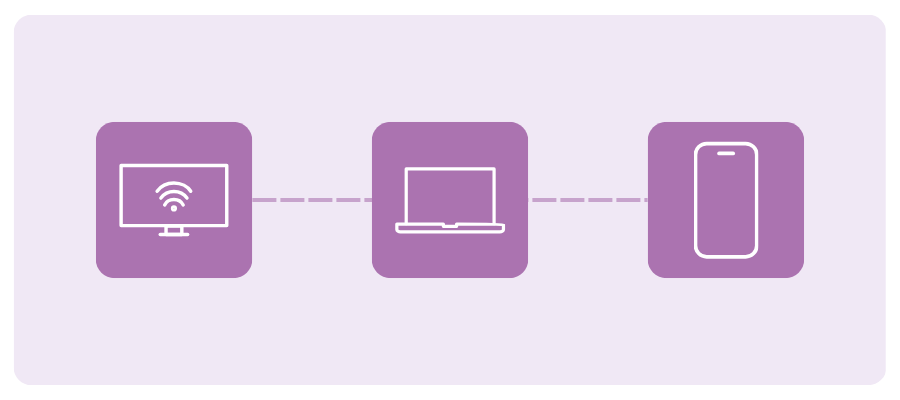
Experian strengthens the household spine of XGraph, which means we can accurately connect CTV impressions to the people and devices in that home – then extend those connections to mobile and web. This lets us plan, activate, and measure campaigns at the right level: household for CTV, and person or device for mobile and web. The outcome is smarter reach, less waste from over-frequency, and campaigns that truly work together across channels.

The value of earned attention

Infillion has long championed “guaranteed attention” in advertising. How does that philosophy translate into measurable outcomes for brands?
The value of earned attention

Our engagement formats, such as TrueX, are based on a simple principle: attention should be earned, not forced. Viewers choose to engage with the ad and complete an action, which means every impression represents real, voluntary attention rather than passive exposure. Because of that, we consistently see stronger completion rates, deeper engagement, and clearer downstream results – like lower acquisition costs, improved on-site behavior, and measurable brand lift.

To take that a step further, we measure attention through UpLift, our real-time brand lift tool. UpLift helps quantify how exposure to a campaign influences awareness, consideration, or purchase intent, providing a more complete picture of how earned attention translates into business impact.

Creative innovation and location insights

Beyond identity resolution, what are some of Infillion’s capabilities, like advanced creative formats or location-based insights, that set you apart in the market?
creative innovation and location insights

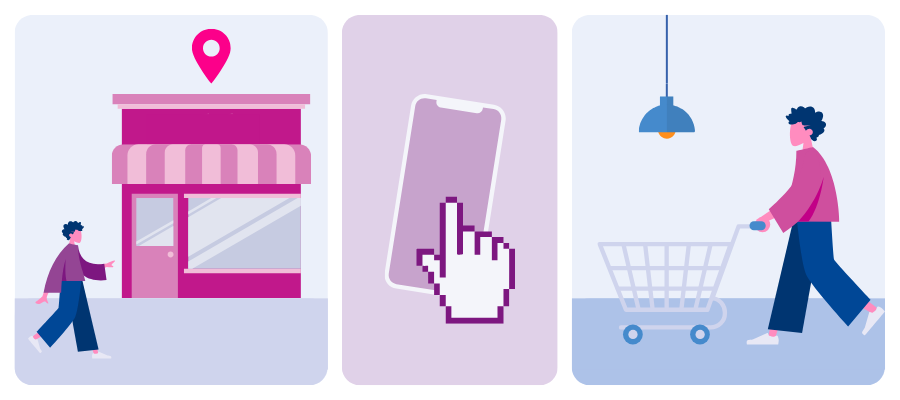
One key area is location intelligence, which combines privacy-safe geospatial insights with location-based targeting through our proprietary geofencing technology. This allows us to build custom, data-driven campaigns that connect media exposure to real-world outcomes – like store visits and dwell time – measured through Arrival, our in-house footfall attribution product.

We also build custom audiences using a mix of zero-party survey data, first-party location-based segments, and bespoke audience builds aligned to each advertiser’s specific strategy.

Then there’s creative innovation, which is a major differentiator for us. Our high-impact formats go beyond static display, such as interactive video units that let viewers explore products through hotspots or carousels, rich-media ads that feature polls, quizzes, dynamic distance, or gamified elements, and immersive experiences that encourage active participation rather than passive viewing. These creative formats not only capture attention but also generate deeper engagement and stronger performance for a variety of KPIs.

Future ready media strategies

How does Infillion’s ID-agnostic approach help brands future-proof their media strategies amid ongoing privacy and tech changes?
future ready media strategies

We don’t put all our eggs in one basket. XGraph securely unifies multiple durable identifiers alongside our proprietary TrueX supply to strengthen CTV household reach. This agnostic design allows us to adapt as platforms, regulations, and browsers evolve – so you can preserve reach and measurement capabilities without getting locked into a single ID or losing coverage when the next signal deprecates.

Raising the bar for media accountability

Looking ahead, how is Infillion evolving its platform to meet the next wave of challenges in audience engagement and media accountability?

From an engagement standpoint, we’re expanding our ability to support the full customer journey, offering ad experiences that move seamlessly from awareness to consideration to conversion. That includes smarter creative that adapts to context, intelligent targeting and retargeting informed by real data, and formats designed to drive measurable outcomes rather than just impressions.

When it comes to accountability, we’re ensuring that measurement is both flexible and credible. In addition to our proprietary tools, we partner with leading third-party measurement providers to validate results and give advertisers confidence that their investment is truly performing. Within our DSP, we emphasize full transparency and log-level data access, ensuring advertisers can see exactly what’s happening on every impression.

All of this builds toward the next era of agentic media buying – one enabled by our MCP suite and modular, component-based tools. This evolution brings greater accountability and next-generation audience engagement to an increasingly automated, intelligent media landscape. Our goal is to help brands connect more meaningfully with audiences while holding every impression – and every outcome – to a higher standard of transparency and effectiveness.

Driving impact across the funnel

What is a success story or use cases that demonstrate the impact of the Experian–Infillion integration?

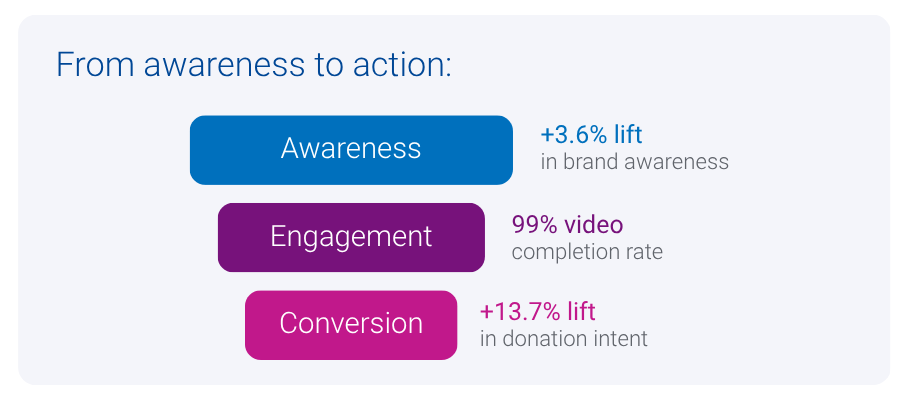
We recently partnered with a national veterans’ organization to raise awareness of its programs for injured or ill veterans and their families. Using the Experian integration, we combined persistent household- and person-level identifiers with cross-device activation to reach veteran and donor audiences more precisely across CTV, display, and rich media. The campaign achieved standout results – industry-leading engagement rates, a 99% video completion rate, and measurable lifts in both brand awareness (3.6 % increase) and donation consideration (13.7% lift). It’s a clear example of how stronger identity and smarter activation can drive meaningful outcomes across the full funnel.
From awareness to action: Awareness, engagement, conversion

Contact us

This site is protected by reCAPTCHA and the Google Privacy Policy and Terms of Service apply.


Identity resolution FAQs

Why is identity resolution critical for CTV and cross-channel campaigns? 

Identity resolution ensures accurate connections between devices, households, and individuals. Experian’s Offline Identity Resolution and Digital Graph strengthen these connections for improved targeting and consistent measurement across CTV, mobile, and web. 

What strategies help address the loss of cookies and mobile IDs? 

Solutions like Experian’s Digital Graph enable brands to connect first-party data to household and person-level identifiers, ensuring scalable reach and compliant audience targeting legacy signals fade.  

How can engagement translate into measurable results? 

Focusing on earned attention (where audiences actively choose to engage) leads to stronger completion rates, improves on-site behavior, and drives measurable increases in brand awareness and consideration. 

What makes cross-channel targeting more effective? 

By linking CTV impressions to households and extending those connections to mobile and web, Experian’s identity solutions ensure campaigns work together seamlessly, reducing over-frequency and improving overall reach.


About our expert

Ben Smith, VP Product, Data Products, Infillion

Ben Smith

VP Product, Data Products, Infillion

Ben Smith leads Infillion’s Data Products organization, delivering identity, audience, and measurement solutions across the platform. Previously, he was CEO and co-founder of Fysical, a location intelligence startup acquired by Infillion in 2019.

About Infillion

Infillion logo

Infillion is the first fully composable advertising platform, built to solve the challenges of complexity, fragmentation, and opacity in the digital media ecosystem. With MediaMath at its core, Infillion’s modular approach enables advertisers to seamlessly integrate or independently deploy key components—including demand, data, creative, and supply. This flexibility allows brands, agencies, commerce and retail media networks, and resellers to create tailored, high-performance solutions without the constraints of traditional, all-or-nothing legacy systems.


Latest posts

Loading…
Align your audience planning with TV and digital viewing behavior

Viewers shift between streaming services, live TV, and on-demand content across multiple devices, making it harder to know exactly who sees your message. Instead of wondering if your ads are reaching the right viewers, it's important to have a clearer understanding of viewing behaviors so you can focus your efforts on the audiences that matter most to your campaign. Experian has collaborated with The Advertising Research Foundation (ARF) to create new opportunities for marketers. By combining data from the ARF’s DASH (Device and Account Sharing) study with Experian Marketing Data, we’ve developed a new way for you to understand and reach modern TV viewers. Instead of estimating who might see your message, you gain a clearer view of viewing behavior and can align activation with the audiences that matter to your campaign. What is the DASH study? The DASH study, developed by the ARF together with the National Opinion Research Center (NORC) and seven industry sponsors, including Experian, provides a detailed picture of how American households consume TV and digital media. This research offers an unbiased and accurate view of media habits, measuring everything from device usage to streaming account sharing. When this viewership data is combined with Experian Marketing Data, it allows for the creation of unique audience segments. These segments are built on real-world media and device usage, providing a more accurate representation of how people watch, share, and engage with TV content. This combination of identity and connectivity helps marketers understand exactly how people engage with media, technology, and their favorite brands. “Television viewing behavior has undergone a massive transformation, making it challenging for advertisers to reach their target audience and optimize frequency. These audiences give advertisers invaluable tools for managing their campaigns in an increasingly fragmented environment.”Doug McLennan, Director of Product Management How do DASH audiences help? By using the DASH study, Experian developed TV audience segments that reflect how people truly interact with content. These audiences provide the insights you need to align your campaigns with actual media consumption habits, helping you reach viewers with more relevant messages. This approach moves beyond basic demographics. It allows you to connect with people based on specific behaviors, such as co-viewing, screen preferences, or household streaming habits. The result is a more focused and efficient advertising strategy that delivers better outcomes. “DASH has established itself as a reliable and unbiased calibration set, a “true North”, for media measurement. Our collaboration with Experian puts the power and precision of DASH in the hands of marketers and advertisers as well.” Paul Donato, Chief Research Officer Which audience segments help you target viewers more effectively? These audience segments make it possible to find specific types of viewers and align your marketing campaigns with their media usage. Whether you’re connecting with people who are receptive to ads, households that enjoy shows together, or individuals who are frequent streamers, you can approach campaigns with greater accuracy and confidence. We’re pleased to introduce these segments and continue our partnership with the ARF, creating new opportunities to help you build effective connections with your target audiences.  Explore some of our key audience segments: Ad Acceptors: Viewers who are more open to watching advertisements. Ad Avoiders: People who actively try to skip or block ads. Co-Watchers: Households where multiple people view content together. Solo Watchers: Individuals who typically watch TV by themselves. Paid TV High Spenders: Households that subscribe to multiple paid TV or streaming services. Large Screen Viewers: People who primarily watch content on large television screens. Small Screen Viewers: Individuals who prefer watching on smaller devices like tablets or phones. How can I use these audiences? Experian’s DASH audiences are available in your demand-side platform (DSP) of choice, ready for activation across all offline and online channels. This easy access means you can build more effective campaigns without changing your existing workflow. Using these segments, you can manage your advertising with greater confidence. You gain the tools needed to navigate the fragmented media environment and ensure your campaigns are seen by the right people. This targeted approach helps you maximize the impact of your marketing efforts and achieve your goals. Strengthen your TV planning and activation with DASH audiences. Are you ready to connect with your audience in a more meaningful way? FAQs What is the DASH study? The DASH study, developed by ARF, provides an unbiased view of how American households consume TV and digital media. It measures device usage, streaming habits, and account sharing to create a detailed picture of media consumption. How does Experian help advertisers understand media habits? Experian combines its Marketing Data with insights from studies like DASH to create audience segments based on real-world behaviors. This allows advertisers to align their campaigns with how people actually consume content. What types of audiences can I target with these segments? Audience segments include Ad Acceptors, Co-Watchers, Solo Watchers, Paid TV High Spenders, and Large or Small Screen Viewers, enabling precise targeting based on viewing habits. Why is understanding viewing behavior important for advertisers? By focusing on actual media consumption habits, advertisers can deliver more relevant messages, reduce wasted impressions, and improve the overall effectiveness of their campaigns. Latest posts

Dec 19,2022 by Experian Marketing Services

Advanced TV and identity: A holistic approach

Advertisers continue to increase their spending across addressable TV, connected TV (CTV), and digital. According to IAB's "2021 Video Ad Spend and 2022 Outlook" report, digital video ad spending is expected to increase by 26% to $49.2 billion in 2022. Understanding who consumers are and how to best reach them in their preferred channel is becoming more complex. Damian Amitin and Colleen Dawe discuss how a seamless identity strategy can address the complexity of the emerging TV space. The evolution of identity resolution Around ten years ago, the idea of digital “identity resolution” or “Device Graphs” was born. This idea connected cookies and MAIDs to understand when many IDs were the same person or household. In more recent years, our industry began to connect that initial understanding to the CTV ecosystem. But, a large part of the TV ecosystem existed in silos, like first and third-party audience data, and the growing advanced TV market. The goal of identity resolution has always been to understand the consumer better. To achieve more accurate targeting and measurement in the CTV ecosystem, we must incorporate the following: What we know about the household and consumer from an ID perspective Who the consumer is as it relates to audience data, as well as the wealth of first-party data in the advanced TV space We know the cookie is a flawed way to collect data. While Google delayed the deprecation of third-party cookies, there are other challenges that we face right now. Such as the glaring gap in Safari traffic and the Identifier for Advertisers (IDFA) turning to “opt-in." Understanding consumer behavior across devices and platforms continues to challenge marketers and publishers. These challenges are creating the need to find more stable identifiers. Though the cookie remains valuable, it has an uncertain future. This has led advertisers to place bigger bets on the combination of addressable and CTV. The overlap in addressable and CTV data leads to fragmentation Personally identifiable information (PII) makes up the majority of addressable TV households' data. Part of the attraction to CTV is that their IDs remain universal, persistent, and stable. Analysts project that CTV ad spending will hit $23B in 2023. Consumers now have an average of 4.7 streaming subscriptions per household. It’s no surprise then, that Disney+, HBO, and Netflix released or announced ad-supported tiers. Addressable TV and CTV are often thought of as distinct markets across the industry. But, in the context of identity, we should look at them through the same lens. Millions of households still consume TV and video content via a set-top box or through apps on CTVs. This is in addition to what they consume on their laptops, tablets, and phones. Of the top 11 cable and satellite providers, 65 million U.S. households still have a box in their homes. On the other hand, approximately 96 million U.S. households have at least one or more Smart TVs and streaming services. With about 126 million total U.S. TV households, that’s a lot of overlap. There are still significant numbers of both addressable and CTV homes. How can we address fragmented TV consumption? Through a holistic and comprehensive approach to identity. An approach that captures addressable TV, CTV, and digital identifiers. An approach that captures all audience attributes inside of a single identity graph. This is the ideal approach for publishers, AdTech vendors, and brands. Discover how to unlock holistic identity How can we achieve a holistic identity? Through a three-pillared approach: First-party data onboarding Digital identifiers Consumer data First-party data onboarding Bringing offline data from a brand’s consumers is very valuable due to the quality of the data. Because the data is being collected right from the source, you know it’s accurate. It provides the foundation you can build your identity strategy from. Digital identifiers Once you create a foundation with first-party data, you need to connect it. Either with an internal or licensed digital ID graph. Then you can understand the connections between all devices within the household. Consumer data After you know which devices tie to a single consumer, you'll want to act on that knowledge. The next step is to partner with a data provider that can help you understand your consumers. Establishing this partnership will help improve targeting, measurement, and the customer experience. To achieve a well-rounded customer view tomorrow, we need to start today The three-pillared approach bridges the gap between the offline and online worlds. This provides a well-rounded view of customers and audiences. However, the ability to tie these aspects of identity together still presents several challenges. To achieve the three-pillared approach today, you need to use many vendors and fragmented data sources. Often with conflicting data. As we look forward, the tools to do this are becoming more advanced and unified. The players in our ecosystem should adopt a seamless identity strategy. One that provides a privacy-safe yet full-picture solution. That means capturing and unifying all devices within a household. While also understanding the consumer behaviors and profiles behind those devices. As TV becomes more sophisticated, our data and services will enable you to unlock a holistic identity. Chris Feo, SVP of Advanced TV and Platforms, spoke with Broadcasting & Cable about how our data powers measurement, audience insights, and results for businesses within the TV space. "As more and more companies enter the general TV space, whether you're a publisher, an advertiser or anyone in between that's doing measurement, insights, analytics, our data or our services will play a role in some part of that value exchange." – Chris Feo, SVP of Advanced TV and Platforms, Experian Marketing Services Keep up with your customers and their data Once we create an informed identity strategy, we can begin to understand the makeup of each household and the individuals within. In this new world, personalizing the experience for an audience is key. Where do they prefer to spend their time? What type of content are they most engaged in? Only then can we as an industry provide an optimal experience for each consumer. All while driving greater ROI for advertisers and publishers. Are you ready to know more about your customers than ever before? Let's get to work together to achieve your marketing goals. Contact us to learn how we can connect the complex dots of identity resolution. About our experts Damian Amitin, VP of Enterprise Partnerships, Experian Marketing Services Damian Amitin is the VP of Enterprise Partnerships and joined Experian during the Tapad acquisition in November 2020. Damian is a senior sales and partnerships executive, specializing in the identity resolution and marketing data ecosystem. Damian helps brands, publishers, and technology vendors enable enhanced ID resolution through The Experian/Tapad platform to attain a 360 view of the customer across targeting analytics, attribution, and personalization. Colleen Dawe, Senior Account Executive, Experian Marketing Services Colleen Dawe is a Senior Account Executive on the Advanced TV Team within Experian Marketing Services. With 15 years of experience working within the television ecosystem, Colleen works with clients to bring the value and expertise of Experian to support their objectives in the areas of data, identity, activation, and measurement. Get in touch

Oct 31,2022 by Experian Marketing Services

Increase healthcare equity with the social determinants of health

Over the past two decades, we’ve seen healthcare become increasingly interconnected. Healthcare systems can share a patient's clinical information in a variety of ways. A Pharmacy Benefits Manager can share it through an Electronic Health Record. An MRI scanner can also capture and store patient images on a picture archiving and communication system (PACS). Despite this wealth of information, according to the CDC, 20 million U.S. citizens don’t have access to medical care when they need it. A patient’s well-being should represent more than their clinical data. How can we increase access to care for those individuals? We can look towards non-clinical factors, like the social determinants of health, for answers. Coordinate care for at-risk patients What if you could identify patients who are likely to readmit due to factors outside of their medical conditions? We can use demographic, geographic, and socioeconomic data to discover patients that need greater access to care. The social determinants of health (SDOH) can uncover factors that may increase the burden of disease for some populations. What are the social determinants of health? They are the conditions in the environments where people are born, live, learn, work, play, worship, and age. Think of factors like safe housing, transportation, job opportunities, and education. These conditions can affect a wide range of health, functioning, and quality-of-life outcomes and risks. What insights can the social determinants of health reveal? Experian Health’s Social Determinants of Health solution offers holistic insight into the financial, transportation, and technological barriers individuals may experience. These barriers could hinder their access to care, medication, food, and housing. It's important to find a solution like ours that offers prioritized, proactive suggestions for interventions that help remove or reduce such barriers for improved health outcomes. Our rich household data sets can provide key insights into the SDOH. This data can answer key questions such as: Are there existing populations with housing instability issues? How much price sensitivity do consumers have for medication? Are there markets or locations that have food instability issues? Is transportation an issue that makes it hard for patients to access care facilities? Are there geographic influences that drive or prevent diagnosis and care? In the chart below, we break down the SDOH into five categories. We outline key considerations that offer insights to provide patient-specific context for your caregivers. Finally, we present patient engagement strategies that are SDOH factor-specific and based on best practice interventions and program types.                                   Social determinants of health data in action While much of healthcare focuses on clinical outcomes, our Consumer View data can provide a wealth of insight into a variety of non-clinical factors that can influence quality of care. A profile of core demographics such as age, ethnicity, and gender can uncover new opportunities or highlight areas where engagement does not align with medical research. We can discover patients at-risk for not being able to access essential services utilizing key, social determinants of health and geographic profiling. When combined with core demographics like age, gender, and ethnicity, we can compare any patient population against expected SDOH norms to uncover significant gaps in access to care. Our data shows that: 1 in 12 households have no access to a vehicle 1 in 4 households are sensitive to the cost of medication 1 in 5 households have very low technology sophistication 1 in 7 households live below the federal poverty level Once you have this data, what can you do with it? You can develop an inclusive education and communication campaign with our data-driven content and contact engagement solution. This solution empowers you to pair the perfect messaging styles with the right channels to deliver a personalized experience to broaden your reach. For those individuals who have little access to technology, an email campaign may not reach them. We can identify additional engagement channels like the traditional newspaper, radio, direct mail, or even broadcast TV to determine the best medium to expand your market while increasing access to care. By using decision making styles and engagement channels, together we can reduce the burden of care on the medically underserved. Let’s drive inclusive healthcare together Develop a more holistic view of your patient population while increasing healthcare equity. We can help you use the social determinants of health for actionable care management. Contact us to learn how you can fold this data into your healthcare ecosystem. Get in touch

Oct 17,2022 by Experian Marketing Services

Subscribe to our newsletter

Enter your name and email for the latest updates

This site is protected by reCAPTCHA and the Google Privacy Policy and Terms of Service apply.

About Experian Marketing Services

At Experian Marketing Services, we use data and insights to help brands have more meaningful interactions with people. As leaders in the evolution of the advertising landscape, Experian Marketing Services can help you identify your customers and the right potential customers, uncover the most appropriate communication channels, develop messages that resonate, and measure the effectiveness of marketing activities and campaigns.

Visit our website

Subscribe to our newsletter

Stay up to date on the latest industry news and receive expert tips from our marketing experts.
Subscribe now!