At A Glance
Sell-side decisioning is changing how publishers and advertisers collaborate, improving efficiency and fostering more meaningful connections. Experian’s syndicated audiences and data solutions help both sides reach the right audiences with greater transparency and privacy.In our Ask the Expert Series, we interview leaders from our partner organizations who are helping lead their brands to new heights in AdTech. Today’s interview is with Paul Zovighian, VP of Marketplaces at Index Exchange.
Sell-side activation vs. buy-side packaging
What’s fundamentally changed with sell-side decisioning, and how does it now diverge from traditional buy-side packaging?
Sell-side decisioning is programmatic’s next major evolution – one that redefines how intelligence enters the transaction. Advances in infrastructure and computing power now allow supply-side platforms(SSPs) to act in the crucial pre-bid moment, enriching impressions with context, quality, and data before they reach the buy side.
This isn’t just about efficiency; it’s about unlocking new value. Smarter requests mean buyers see only the most relevant opportunities, while publishers gain recognition for the true worth of their audiences and environments.
We’re still at the beginning of this shift. Many players still package inventory without engaging in real pre-bid intelligence. As the market matures, the companies that evolve toward sell-side decisioning will be the ones to set the pace for programmatic’s future.
Economic shifts with scaled curation
As curation scales, what economic levers shift for both publishers and buyers, and how do those shifts influence deal structure and media planning?
As curation scales, one of the most powerful levers is data. It’s the industry’s most valuable asset, and on Index it keeps its full worth. We don’t take a platform cut or add hidden fees, so data partners benefit from the clearest, most efficient economics in the market. Data vendors gain confidence that their economics aren’t eroded by a platform tax.
For publishers, this means stronger yield and more ad spend flowing directly into working media. When data retains its full value, it enhances how impressions are packaged, priced, and differentiated—driving more competition for quality inventory and more opportunities for revenue.
For buyers, it means compressed supply paths and total transparency – they know exactly what they’re paying for. With no intermediaries and full transparency into economics, buyers gain a clearer view of where their budgets go and the confidence that their investments reach real audiences in trusted environments. They benefit from cleaner supply chains, better performance, and more meaningful alignment between spend and outcome. The result is a healthier marketplace where both sides benefit from efficiency, fairness, and scale.
Moving decisions upstream for value
What decisions historically made in DSPs should now move upstream to publishers or SSPs to unlock more value, and which should remain buy-side?
Decisioning is no longer confined to demand-side platforms(DSPs). We can enrich impressions by applying intelligence — via data, algorithms, creative technology, and more, before they even reach the buy side — adding context, filtering out low-quality supply, and expanding audience discovery.
This isn’t about shifting roles; DSPs remain critical for campaign strategy, optimization, and budget allocation. The sell side simply ensures every bid request is smarter from the start, creating more value for all parties.
In doing so, we also alleviate pressure on DSPs — enabling more comprehensive data discovery by searching for signals at the top of the funnel, prior to optimization. That means DSPs can focus on what they do best, supported by a cleaner, more transparent supply path.
Index Marketplaces use cases explained
Index Marketplaces is designed to enable the strength of our partners, and Experian brings one of the broadest sets of demographic and audience insights in the industry. That scale enables a wide variety of applications, from more precise audience activation to deeper measurement and analytics.

What’s different on the sell side is how those insights are applied. By activating Experian’s syndicated audiences directly at the point of decision, their value is realized in real time and across the full scale of the open internet. Buyers gain a clearer path to relevant audiences, and publishers benefit from stronger alignment between data and media.
It’s an approach that ensures partners like Experian can maximize the impact of their assets while helping the market move toward more intelligent, performance-driven activation.
Identity signals with stronger privacy
For identity partners like Experian, what’s the right way to bring audience, context, and propensity signals into sell-side activation?
The beauty of sell-side decisioning is that it reduces the hops in how identity signals are applied. Without it, IDs have to travel through multiple platforms, creating extra handoffs and additional risks of data loss or leakage.
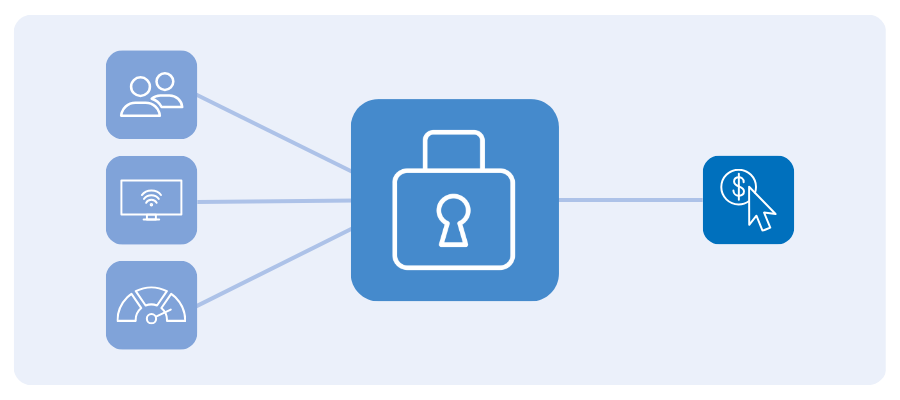
With sell-side decisioning, those signals are obfuscated under a deal ID and applied directly at the point of decision. That means audience, context, and propensity data are activated securely, without ever leaving the sell-side environment.
For partners like Experian, it’s the cleanest path to value: fewer hops, stronger privacy protection, and clearer economics for everyone in the chain.
Contact us
About our expert

Paul Zovighian
VP of Marketplaces, Index Exchange
Paul Zovighian carries over a decade of industry expertise, stemming from his analytics and optimization roots to his current post as VP, Marketplaces, where he is focused on the commercial activation of Index’s newest product, Index Marketplaces. Previously, in his role as VP of corporate development, Paul led Index’s first-ever business acquisition. In his spare time, he enjoys long walks on the beach and befriending cats in NYC’s thriving bodega community.

About Index Exchange
Index Exchange is a global advertising supply-side platform enabling media owners to maximize the value of their content on any screen. They’re a proud industry pioneer with over 20 years of experience connecting leading experience makers with the world’s largest brands to ensure a quality experience for consumers.
FAQs
Sell-side decisioning allows publishers to add intelligence, like audience data and context, before ad impressions are sent to buyers. This makes the process more efficient and ensures advertisers see only the most relevant opportunities.
Traditional buy-side packaging happens after impressions are sent to demand-side platforms (DSPs). Sell-side decisioning moves some of that intelligence upstream, enriching impressions earlier and reducing inefficiencies.
Curation refers to the process of organizing and enriching ad inventory with data and context. For publishers, it leads to better yield and more ad spend going directly to their media. For advertisers, it means clearer, more transparent supply paths.
By applying audience and identity signals directly on the sell side, data stays within a secure environment. This reduces the number of platforms handling sensitive information, lowering the risk of data loss or leakage.
Experian provides demographic and audience insights that are activated directly at the point of decision. This helps advertisers reach the right audiences more effectively while ensuring publishers can maximize the value of their inventory.
When publishers and SSPs handle some decisioning earlier, DSPs can focus on campaign strategy and optimization. This creates a cleaner, more efficient process for everyone involved.
A deal ID is a unique identifier used in programmatic advertising to bundle audience and context signals securely. It ensures data is applied without being exposed or shared across multiple platforms.
Latest posts

Get ready for Cannes Lions 2024—the advertising industry is buzzing with excitement. This year's event promises to be a center of innovation, ideas, and networking. Here are five themes we expect will take center stage in conversations and how Experian can help marketers be prepared for what’s ahead. Cookie deprecation and signal loss At Cannes Lions 2024, the theme of transitioning to a cookieless advertising ecosystem is likely to dominate discussions. The saga of cookie deprecation continues to unfold, with Google recently pushing back the demise of third-party cookies once again. Experian remains fully committed to prioritizing continued testing of different industry solutions, including the Google Privacy Sandbox, to help customers prepare for a future without cookies. We've identified six viable alternatives to third-party cookies, how these alternatives fall short, and how Experian can help you navigate these alternatives. With Experian, the loss of cookies does not equate to a loss of coverage. With our strong roots in offline data and significant investments in our Graph, Experian ensures uninterrupted and effective marketing with robust signal coverage, with or without cookies. Based on early tests, we expect our Graph to maintain 97% of its household coverage. Read how MiQ, a leader in the cookieless era, strengthened its Identity Spine with the integration of Experian’s cross-device Graph here. Commerce The theme of commerce is poised to be a central topic of discussion at Cannes Lions 2024, reflecting the emergence and growth of retail media networks (RMNs). Evolving customer expectations are a key driver, with consumers demanding seamless and personalized experiences across all touchpoints of their shopping journey. The importance of bridging physical and digital experiences to create a cohesive customer journey will undoubtedly feature prominently in discussions at Cannes. Experian's Consumer Sync offerings facilitate seamless integration between online and in-person interactions, fostering a cohesive approach to engaging audiences across various platforms while measuring campaign effectiveness. As we heard at Shoptalk 2024, the evolution of retail media is propelling us into a new era of advertising and first-party data monetization. The integration of e-commerce with advertising presents an exciting opportunity for brands to drive direct sales through ads displayed within retail platforms, blurring the lines between marketing and commerce. Our Consumer View solutions provide access to over 5,000 demographic and behavioral data points, enriching your customer profiles for deeper insights. By combining first-party data with Experian's industry-leading data sets, you can create bespoke audience segments that drive increased return on investment (ROI), going beyond conventional category-based targeting strategies. Looking ahead, the future outlook for RMNs remains promising, with anticipated growth and expansion as brands increasingly recognize the value of reaching consumers precisely at the point of purchase. Connected TV At Cannes Lions 2024, we anticipate discussions to focus on how connected TV (CTV) can continue to live up to its promise. CTV is the most rapidly expanding advertising channel in the U.S and 95% of advertisers plan to increase their share of spend on programmatic CTV in 2024, according to The Trade Desk's latest CTV report. The growing adoption of CTV among viewers, driven by factors like quality content, reduced ad interruptions, and cost-saving alternatives to traditional cable, signals a shift in consumer behavior that marketers cannot afford to overlook. Experian supports the growth of advertising interest in CTV through our signal-agnostic Graph that connects CTV IDs, universal IDs like Unified I.D. 2.0 (UID2), IPs, and mobile ad IDs (MAIDs) for effective activation. Our digital identity resolution with Activity Feed provides insights into CTV viewership behavior, linking CTV exposure to e-commerce conversions. CTV also enables greater collaboration, and we've recently announced new partnerships with CTV industry leaders Microsoft, Samsung, Attain, Sonobi, and EDO. Consumer privacy Consumers are increasingly aware of privacy concerns surrounding their data and numerous laws are going into effect across the U.S. at the state level. Most recently, there has been momentum on a federal data privacy law. We expect consumer privacy to be a significant topic of discussion at Cannes Lions 2024, reflecting the growing importance of ethical data practices in advertising. In a recent Q&A with Datavant, Jeremy Meade, VP of Marketing Data & Product Operations at Experian, highlights the importance of balancing data privacy and utility, focusing on "data for good" practices while using de-identification techniques to support research without compromising consumer privacy. Our Geo-Indexed audiences are an example of how Experian can help you reach your audience while balancing data privacy and accuracy. Our Geo-Indexed audiences combine location data with audience insights to deliver targeted marketing solutions. These audiences are created without the use of sensitive personal information, so you can confidently reach your target audience without sacrificing data privacy. With deep roots in data protection and security, you can confidently partner with Experian as we proactively stay ahead of regulations and strictly follow all consumer privacy laws. Campaigns and competition The theme of campaigns and competition is poised to be an important discussion point, driven by the convergence of major global events like the U.S. presidential election and this summer’s games—both occurring once every four years. These landmark occasions present opportunities for marketers to craft targeted campaigns that resonate with specific audience segments. As we approach the 2024 election season, the advertising landscape is primed for growth, with political ad spending projected to exceed $10 billion. Effective audience targeting during this crucial period can sway voters, shape public opinion, and influence election outcomes. Experian's 240+ politically relevant syndicated audiences, including our 10 political personas, enable a nuanced understanding of voter viewpoints and empower tailored engagement strategies to connect more effectively with constituents. At the same time, this summer’s games in Paris offer a unique opportunity for sports marketing. With one billion viewers expected to tune in, the global spectacle presents a platform to engage with passionate sports audiences worldwide. Using Experian's syndicated audiences, marketers can precisely target sporting goods shoppers, avid fans, athletes, and spectators alike. The combination of these major events emphasizes the need for careful planning and data-driven strategies and marketers should take advantage of the excitement surrounding both events. Follow us on LinkedIn or sign up for our email newsletter for more informative content on the latest industry insights and data-driven marketing. Contact us Latest posts

With the back-to-school season approaching, marketers are preparing to engage both eager students and parents. Our Q&A video with Experian experts shares our predictions and tips for the 2024 back-to-school season so you can craft effective back-to-school marketing campaigns. From early campaign launches to the rise of online shopping and budget-conscious consumer behaviors, let’s explore what lies ahead and how brands and agencies can prepare. What separates Experian's syndicated audiences Experian’s 2,400+ syndicated audiences are available directly on over 30 leading television, social, programmatic advertising platforms, and directly within Audigent for activation within private marketplaces (PMPs). Reach consumers based on who they are, where they live, and their household makeup. Experian ranked #1 in accuracy by Truthset for key demographic attributes such as Presence of Children. Access to unique audiences through Experian’s Partner Audiences available on Experian’s data marketplace, within Audigent for activation in PMPs and directly on platforms like DirectTV, Dish, Magnite, OpenAP, and The Trade Desk. Watch the highlights from our video below. Three trends for the 2024 back-to-school marketing season Campaigns will start earlier We expect back-to-school marketing efforts to kick off earlier than usual. Brands will launch campaigns with special promotions to secure mind and market share ahead of competitors. Additionally, the traditional back-to-school season is extending, urging marketers to prolong their campaigns to capture the attention of consumers who are taking more time to make purchasing decisions. Online shopping will continue to rise The surge in online shopping during the pandemic has become a lasting trend – and is especially appreciated by busy parents seeking convenience. Brands should focus on enhancing online and mobile shopping experiences, including options for in-store pickup and delivery. Marketers should prioritize their online presence and optimize e-commerce platforms, including experimenting with shoppable ads on connected TV (CTV), to meet the needs of families shopping for back-to-school supplies. Budget consciousness is top of mind With inflation on the rise and tighter budgets at home, households are becoming more selective in their back-to-school spending. Marketers should align their efforts with value-driven products and prioritize advertising that resonates with these financial priorities. Strategies for brands and agencies Next, let's explore strategies brands and agencies can use to prepare for the upcoming back-to-school season. Brands First, we'll highlight three recommended strategies for brands. Maintain an evergreen presence Launch your back-to-school campaigns early and maintain a steady presence throughout the season. Experian's TrueTouchTM audience insights can guide your channel selection for maximum impact, helping you decide on key channels such as email, digital video, or specific social media platforms. Build loyalty programs that deepen customer relationships Use your customer data to create loyalty programs that foster stronger connections with your audience. By using insights from Experian, you can gain a holistic understanding of customer profiles and identify potential back-to-school prospects within your existing customer base. On average, Experian has 250 behavioral and demographic marketing attributes per individual, which means we can decorate households and people with marketing data to get a full customer profile and fill in any gaps you have on your audience. Prioritize value and convenience Offer flexible shopping options like in-store, online, and buy online, pick up in-store (BOPIS) to cater to busy families. Partner with services like Shipt or Instacart to streamline shopping experiences. Agencies Now, we'll share two ways agencies can effectively prepare for the back-to-school season. Engage early and extend your campaigns Initiate conversations with brands earlier to ensure timely planning and execution. Extend campaign durations to capture late-decision makers. Adapt your channel strategies Shift focus to digital channels like CTV and social media, aligning with evolving consumer habits and preferences. Experian works with major platforms, marketers, and agencies, which means we have existing partnerships across the ecosystem for you to connect with and bring your consumer data to life to meet your needs. Watch the full Q&A The 2024 back-to-school season promises new challenges and opportunities for marketers. By starting campaigns earlier, optimizing online experiences, and aligning with budget-conscious consumers, brands and agencies can position themselves for success. Watch our full Q&A video where our experts cover: Tactics we predict marketers will employ to navigate signal loss Which channels will be the most successful Recommended audiences for targeting And more! Watch now Need a custom audience? Reach out to our audience team and we can help you build and activate an Experian audience on the platform of your choice. Additionally, work with Experian’s network of data providers to build audiences and send to an Audigent PMP for activation. Contact us Latest posts

Marketing success can sometimes come in the most unlikely of combinations — reminiscent of a great chef crafting a delicious dish from ingredients rarely used together. In advertising, this type of outside-the-box thinking can give you a competitive advantage over peers who are operating within the normal limits. In this blog post, we will explore how both financial and non-financial advertisers can use consumer financial marketing data in their ad campaigns to connect with the right consumers. This type of strategic thinking will make campaigns more effective, resonate more deeply with audiences, and turn your chicken into coq au vin. Background on Financial Audiences FMCG Direct, a Deluxe company, in partnership with Experian, has developed financial audiences that deeply understand consumer financial behavior. These audiences are not just static lists of potential customers but are constantly updated to provide a multi-dimensional view of consumer financial habits, including investing, borrowing, credit card preferences, and more. Central to this effort are Consumer Financial Insights®, Financial Personalities® and ConsumerSpend® models. These tools are built utilizing a combination of FMCG Direct, a Deluxe company in-depth consumer research, sophisticated clustering techniques, and Experian's extensive consumer marketing data. FMCG Direct, a Deluxe company financial audience segments The Financial Personalities® segments categorize consumers based on their financial behaviors and preferences, dividing them into distinct categories such as insurance, credit card usage, and investment habits. This allows for a targeted approach considering each consumer's unique financial behavior and potential needs. Meanwhile, Consumer Financial Insights® segments offer a detailed and tiered view of a consumer's economic status, including insights into household deposits, investable assets, net assets, and the likelihood of mortgage refinancing, all categorized into specific tiers to reflect varying levels of wealth and investment. Lastly, ConsumerSpend® segments provide a look at how and where a household allocates their disposable income. Broken up by nine unique categories, marketers can better understand where people are spending their money each year. These predictive segments are built through extensive research, surveying over 25,000 consumer households across the United States. Each household's financial profile encompasses a wide array of data points, such as total household assets, deposit balances, and investable assets. The result? A granular understanding of consumer financial behaviors, which marketers can use to tailor their financial services offerings. However, the potential applications of these insights extend far beyond the confines of financial products and services. Here are some ideas to help you get started. Advertising campaigns for travel and leisure Launch campaigns that precisely cater to different consumer segments' unique financial personalities and spending behaviors. Credit Card Financial Personality: Launch digital ads for luxury travel experiences tailored to consumers known for extensive credit card usage in travel, capitalizing on their affinity for high-end leisure activities. Deposits (Bank) Financial Personality: Implement advertising campaigns for budget-friendly travel options tailored to consumers with modest bank deposits and prudent spending habits. These ads could highlight affordable vacation packages, discount travel deals, and value travel bundles, catering to those prioritizing cost efficiency and practical travel solutions. Ideas focusing on home improvement and decor Craft advertising campaigns aimed at audiences with modest net worth, using insights into their financial profiles to promote accessible and essential products and services. Net Asset Score (Lower Tiers): Develop ad campaigns for cost-effective home improvement services and budget-friendly home appliance options, targeting consumers whose net asset scores indicate more modest financial resources. These ads should highlight the products' durability and energy efficiency, appealing to the consumers' need for long-term savings. Discretionary Spend – Home Furnishing: Design ad campaigns for upscale home furnishing collections, targeting audiences with significant discretionary spending power. These ads should spotlight your home furnishings' premium quality, sophisticated design, and superior craftsmanship, appealing to consumers' tastes for luxury and exclusivity. Campaigns for consumers in entertainment Execute targeted advertising campaigns designed for consumers with high disposable income, utilizing insights from their net asset and investable asset scores. Net Asset Score (Higher Tiers): Launch advertising campaigns for premium entertainment experiences, including exclusive concert seats, backstage passes, and custom festival packages. Target consumers whose net asset scores suggest significant disposable income to ensure your promotions reach the most likely attendees. Discretionary Spend — Entertainment: Design advertising campaigns for high-profile music and entertainment events, focusing on individuals known for their significant expenditures on entertainment. Create promotions that resonate with their lifestyle, emphasizing the connection between a vibrant social life and exclusive entertainment opportunities. As you can see by understanding and utilizing the nuances of financial data, advertisers can create highly targeted, relevant, and effective campaigns across various sectors. This approach exemplifies the innovative spirit of audience usage, proving that with a bit of creativity, data applications are as limitless as our imagination. Financial Personalities and Consumer Financial Insight audiences and their in-platform names Find these syndicated audiences in your demand and supply-side platform of choice. Insurance financial personality – Audiences to help understand a consumer's behavior and confidence in their ability to find the right life insurance. Financial Personalities > Insurance Financial Personality Credit card personality – Used to identify consumers based on their credit card usage and behaviors. Financial Personalities > Credit Card Financial Personality Deposits financial personality – These audiences include consumers who are likely to look for bank offers based on their spending behaviors. Financial Personalities > Deposits Financial Personality Investments financial personality – Audiences to help understand a consumer’s comfort and behaviors with making financial investments. Financial Personalities > Investments Financial Personality Home equity financial personality – Audiences to help understand a consumer’s home equity circumstances and behaviors. Financial Personalities > Home Equity Financial Personality Mortgage financial personality – Audiences to help understand a consumer’s behavior and preferences with mortgages. Financial Personalities > Mortgage Financial Personality Investable assets (FLA/Fair Lending Friendly)* – Audiences that include consumers who have available investable assets in seven total tiers with Tier 1 being the highest, and Tier 7 being the lowest. Consumer Financial Insights > Investable Assets Net asset score (FLA/Fair Lending Friendly) – Predict a consumers likely net asset score ranging from less than $25,000 to over $5,000,000. Consumer Financial Insights > Net Assets Score (Net Worth) Discretionary spend – Predicts the annual discretionary spend for the category listed in the audience.Consumer Financial Insights > Discretionary Spend – Travel Consumer Financial Insights > Discretionary Spend – Jewelry Consumer Financial Insights > Discretionary Spend – Home Furnishings Consumer Financial Insights > Discretionary Spend – Entertainment Consumer Financial Insights > Discretionary Spend – Electronics Consumer Financial Insights > Discretionary Spend – Education Consumer Financial Insights > Discretionary Spend – Donations Consumer Financial Insights > Discretionary Spend – Dining Out Consumer Financial Insights > Discretionary Spend – Total Consumer Financial Insights > Discretionary Spend – Clothing/Apparel Household deposits/balances (FLA/Fair Lending Friendly) – Audiences that include households that have bank deposits balance in six total tiers with Tier 1 being the highest, and Tier 6 being the lowest. Consumer Financial Insights > Household Deposits/Balances Investment Balances (FLA/ Fair Lending Friendly) – Audiences that include consumers who have an investment balance in six total tiers with Tier 1 being the highest, and Tier 6 being the lowest. Consumer Financial Insights > Investment Balances Mortgage refinance (FLA/Fair Lending Friendly) – Predicts the likelihood the consumer is to refinance their mortgage. Consumer Financial Insights > Mortgage Refinance Contact us Footnote * “Fair Lending Friendly” indicates data fields that Experian has made available without use of certain demographic attributes that may increase the likelihood of discriminatory practices prohibited by the Fair Housing Act (“FHA”) and Equal Credit Opportunity Act (“ECOA”). These excluded attributes include, but may not be limited to, race, color, religion, national origin, sex, marital status, age, disability, handicap, family status, ancestry, sexual orientation, unfavorable military discharge, and gender. Experian’s provision of Fair Lending Friendly indicators does not constitute legal advice or otherwise assures your compliance with the FHA, ECOA, or any other applicable laws. Clients should seek legal advice with respect to your use of data in connection with lending decisions or application and compliance with applicable laws. Latest posts