Tag: self-scheduling

Telehealth adoption has been a bumpy ride. Remote and virtual healthcare services struggled to gain traction pre-pandemic, only to become a life raft for safe access to care when infection rates began to climb. After that initial surge, telehealth usage leveled off at around 38 times pre-pandemic levels for much of 2021. Now, while uptake has dipped slightly as patients return to in-person care, the way healthcare is delivered has changed forever. Having seen what digital healthcare solutions can do, providers are continuing to embrace telehealth and digital tools as a route to improve equity, access and efficiency. According to a new report by Grand View Research, the telehealth market is expected to reach $787.4 billion by 2028 – a compound annual growth rate of 36.5% from 2022. Research from Experian Health and PYMNTS confirms that patients similarly expect digital tools to remain on their healthcare menu, with two-thirds using patient portals. Healthcare providers must keep patients' digital demands firmly in their sights, to improve patient engagement and secure a competitive edge. For providers thinking about their next digital steps, where are the emerging opportunities and pitfalls? How to harness the benefits of digital healthcare solutions: 1. Satisfy consumer demand with hybrid models Research shows that digital-first patients prefer using online tools to schedule appointments, obtain test results and make payments. Providers can satisfy consumer demand by offering hybrid models that include in-person and digital tools. Experian Health's suite of patient access solutions allows patients to choose when and where they engage with their provider and reduces friction around booking and billing. Clean data and reliable patient matching can give patients a seamless experience as they move between online and in-person interactions. 2. Connect with diverse communities to increase access to care Adoption of telehealth and digital opportunities goes beyond consumer satisfaction. Opening healthcare's digital front door enables communities that often find it challenging to access care, such as rural and lower-income communities, to overcome obstacles. Online scheduling tools can give busy families and those who may be juggling multiple jobs opportunities to book appointments at a time and place that suits them best. Data on the social determinants of health and patients' financial circumstances can be used to direct those in need to financial assistance, so patients don't miss care out of concerns about cost. Digital healthcare solutions can also be a better fit for younger patients who automatically reach for their mobile devices to interact with services. 3. Automate to save resources and mitigate rising inflation Automated and self-service digital healthcare tools that eliminate the need for manual input are also far more efficient than analog alternatives. Providers can save valuable staff time and resources and redirect them to where they're most needed. A more efficient and adaptive approach to healthcare delivery can help combat rising inflation and ride out economic shocks. Pitfalls to avoid when implementing digital health solutions: 1. Close the expectation gap – especially around payments Despite these advantages, a gap remains between how patients say they want to use digital tools, and whether they can actually use them. For example, in The Digital Healthcare Gap report by Experian Health and PYMNTS, 32% of patients who don't currently use patient portals said they'd be interested in doing so if one was available. There's a similarly stark gap between the number of patients seeking upfront cost estimates and those who get them. Only 24% of patients said they had access to a patient portal that offered pricing estimates. To increase patient satisfaction (and bump up collections rates), providers must expand portal capabilities to include cost estimates, payment plans and other services that patients repeatedly say they need.Closing the expectation gap will be particularly relevant to providers that want to attract new and younger consumers, who are more likely to expect and use digital healthcare solutions. 2. Eliminate disjointed data with interoperabiliy Digital and data-driven tools are only as powerful as the data they’re built on. If patient information is inaccurate or incomplete, the convenience and ease expected of digital healthcare solutions start to break down. Providers must find digital healthcare solutions that are convenient for patients to use, but also compatible and easily integrated with the wider information ecosystem. A unique patient identifier is one way to ensure that these innovative tools and apps work together and ensure staff have access to up-to-the-minute patient information. Getting the back-end setup right will ease friction in the patient journey. 3. Avoid missed opportunities to scale with actionable analytics As the pandemic has shown, telehealth and digital healthcare solutions have the power to open access to care, but only if they are made available to the right patients at the right time. Experian Health's data and analytics solutions allow providers to identify gaps in digital strategy delivery, understand and segment patients, and adopt a flexible and responsive approach to create a frictionless patient journey. Find out more about how Experian Health can support healthcare organizations to maximize the opportunities in implementing digital healthcare solutions and secure the digital advantage.

Healthcare staffing shortages are patients' biggest safety concern, according to a new study by ECRI. Pandemic pressures led many healthcare workers – clinical and non-clinical – to join the “Great Resignation,” causing a significant drop in hospital employment since February 2020. Insufficient staffing can lead to longer wait times and clinical and administrative errors, which can present a real threat to patient safety. Critical shortages also erode financial performance through wage inflation, recruitment and training costs, and hampered productivity. As the problem persists, providers are seeking effective solutions to alleviate the burden on their existing workforce and solve for healthcare staffing shortages. Digital tools and automation should be top of the list to help improve efficiency, increase staff satisfaction, and corral the resources needed to deliver high-quality care in a cost-effective way for non-clinical jobs. Creating the conditions for a thriving healthcare workforce The pandemic exacerbated longstanding issues with understaffing and burnout that led to healthcare staffing shortages, but it also expedited several digital innovations that may be part of the solution. An aging population coupled with increasing public health concerns aren't going to make the situation any easier, so healthcare leaders should leverage these digital advances to build a resilient workforce. For non-clinical roles, advanced data analytics and automation can complement wider workforce strategies – by making it easier for downsized teams to do more with less. This can help reduce time-consuming manual work, eliminate frustrating and unnecessary rework, and streamline workflows to increase efficiency and job satisfaction. By handing off repetitive and rule-based tasks to intelligent software, administrative and billing teams will be able to manage the growing workload with less staff and focus their efforts on the tasks that really need a human touch. How digital tools can fill in the gaps created by healthcare staffing shortages 1. Streamline non-clinical workflows with advanced analytics Analytics can capture organization-wide insights to inform planning and optimize staff resources on a day-to-day basis. By taking a deep dive into existing processes, providers can better understand what tasks are really necessary. Eliminating superfluous activities and automating those that don't need a human touch means that available staff can be deployed more efficiently. This is more than simply digitizing existing workflows. The real power lies in combining updated technology with strategic process improvements. For example, automated patient outreach allows providers to send automated messages and appointment and bill reminders to patients, so fewer staff members are needed to manage calls. It can also be used alongside consumer data to segment patients according to their needs, so providers can identify and reach out to those that may need to reschedule care. This can help forecast future demand with greater accuracy. 2. Facilitate self-service patient access with automation Equipping patients with the digital tools to complete more administrative tasks themselves is another effective way to reduce the need for staff input. Self-service patient scheduling and registration solutions give patients the convenience and choice they desire (as revealed in Experian Health's State of Patient Access survey 2.0). They also minimize the manual tasks and call volumes that put pressure on understaffed patient access teams. Digital scheduling also plays a role in patient care. Online scheduling reduces the risk of no-shows because it's easy for patients to book and reschedule appointments at a time they know they can attend, thus avoiding diagnostic and treatment delays that could lead to poorer health outcomes. And unlike manual registration processes, data errors are far less likely, which helps avoid delays and rework later. Automated self-scheduling and registration platforms allow small teams to handle more complex work, which improves staff satisfaction and increases the likelihood of positive patient outcomes. 3. Let better data minimize staff time spent on revenue cycle tasks Understaffed teams must allocate their time carefully. Significant amounts of staff time can be saved throughout the revenue cycle with more accurate and timely data. For example, Kootenai Health in Idaho saved 60 hours of staff time in two months by automating patient financial clearance. More patients were assigned to the correct financial pathway, and reliable data insights helped reduce manual work and guesswork, leading to fewer bills being written off. A particular challenge for busy teams is managing frequent changes to prior authorization requirements. Prior authorization software pulls information from multiple health plan websites to give staff real-time visibility into current requirements and generates an exception-based workflow so they can focus on high-priority tasks. Ease workforce pressures and enhance the patient experience with automation Automation is not a substitute for the care and attention provided by expert healthcare workers. However, new digital and data-driven technologies can complement person-to-person interactions and ease pressure on busy teams. Integrating reliable data sources, analytics and responsive workflows can help providers manage current shortages and future workforce challenges by removing unnecessary manual tasks, reducing errors, and offering insights to improve patient-facing and back-office systems. Contact us to find out how Experian Health's data-driven insights and automation can help solve for healthcare staffing shortages, protect the revenue cycle and maintain high-quality standards of care.

When it comes to patient access, friction can lead to bad patient experiences. If patients can’t see a quick way to schedule a medical appointment when they visit their provider’s website, they’ll click away. If registration involves sitting in a waiting room with piles of paperwork, they’ll be reluctant to attend. If patients are confused by complex billing processes, they’ll put it off until they have the time and energy to engage. A recent survey by PYMNTS and Experian Health found that 61% of patients would consider switching to a provider that eliminates these pain points in patient access and offers more streamlined patient access, for example, through a patient portal. Beyond consumer satisfaction, convenient and flexible patient access makes financial sense for providers. It can help reduce no-shows, enable better use of staff time and accelerate patient collections. It also paves the way for higher quality care. After all, if patients are deterred from attending appointments and/or thinking about switching providers, it’ll take much longer for them to receive their diagnosis and treatment. What does “convenient and flexible” mean in practice? It means deploying digital patient access software that allows patients to complete intake tasks at a time and place that suits them. Self-service scheduling, automated registration, and personalized outreach around billing all help to create a friction-free consumer experience – and a more consistent cash flow. Rethinking patient access with patient-friendly digital solutions Consumer feedback in the survey by PYMNTS and Experian Health suggests there’s an opportunity to rethink patient access to meet patients’ digital expectations. Here are some examples of revenue-boosting swaps that will help create a patient access and intake experience that keeps patients coming in: 1. Instead of time-consuming queues and call center bookings → offer convenient online self-scheduling Around a fifth of patients say they’ve used digital scheduling tools, including patient portals, websites or text messages. Patients want to be able to schedule appointments when it suits them, rather than having to call within fixed hours to speak to a call center agent. Online self-scheduling allows patients to quickly find and book available appointments. Some providers may worry that these systems can’t account for their complex scheduling rules, but that’s not the case. Built-in guided search functions can factor in the provider’s scheduling rules, so patients are only offered appointments with the right providers. It’s easier for patients, and it’s far more efficient for staff. Relying on institutional knowledge and thumbing through giant binders of questionnaires can be stressful, time-consuming and error-prone. Online patient scheduling platforms eliminate these challenges. 2. Instead of patchy patient data → get accurate and complete patient identities One of the biggest challenges in patient access is capturing and utilizing accurate patient information. Typos, missing demographic details, out-of-date contact information and duplicate data all contribute to gaps and errors in patient identities. Without complete and reliable patient records, providers run the risk of delivering substandard care and suffer from preventable revenue loss. Instead of relying on manual data input processes, providers need digital systems that ensure the information added to a patient’s record is correct and complete. Experian Health’s Patient Identity Management solution pulls from the industry’s most reliable data sources to verify each patient’s information. It arms staff with automatic updates and alerts them to any potential discrepancies. Identity Verification helps improve the patient experience, minimize payment delays, and protect patients and healthcare organizations from identity theft. With more accurate data, collections are more efficient, leading to faster revenue recovery and fewer costly denials. 3. Instead of losing revenue to unnecessary write-offs → run automated coverage checks to find forgotten insurance If patients are unsure of their insurance coverage status, providers must invest time and resources to check for missing coverage. This pain point is currently in sharp focus, with the end of the COVID-19 Uninsured Program and the end of continuous Medicaid enrollment. As patients’ coverage status changes, providers must be able to run efficient checks for any potential missing or undisclosed coverage. Experian Health’s Coverage Discovery tool can run automated checks to look for billable coverage, as soon as the patient first interacts with the organization. Data-driven coverage discovery gives patients clarity about what they owe so they can plan ahead and allows more efficient use of staff time. 4. Instead of opaque pricing information → make it easy for patients to understand and pay bills Patients want transparent healthcare pricing. However, 15% of patients said they found it difficult to get accurate price estimates before coming in for care. The complaint was more frequent among the most digitally active patients – who are also more likely to switch providers based on the quality of digital services. Despite a recent push toward price transparency, there’s still a long way to go, with many providers struggling to comply with new federal price transparency requirements. Upfront pricing estimates make it easier for patients to understand and plan for their medical bills. With Patient Payment Estimates, patients get a clear, personalized breakdown of their expected financial responsibility sent directly to their mobile device. Patient Financial Advisor takes this a step further, by offering a text-to-mobile financial experience that connects patients with estimates, payment plans and contactless payment methods. Providers that offer convenient and flexible ways to pay will be best placed to protect profits. Discover how Experian Health’s digital patient access software solutions can help attract and retain satisfied consumers and bolster the bottom line.

The recent discovery of the Omicron variant has placed the world on high alert. As COVID-19 continues to transform and evolve, erupting as “new” pandemics within the existing pandemic, it is becoming clear that digitally-enabled clinical care and access to that care are some of the world’s tools to mitigate its spread. Should infection rates rise, providers can anticipate fluctuations in patient volumes, which may trigger a return to the scheduling complexities seen earlier in the pandemic. Streamlining patient access with digital scheduling to minimize wait times, free up hospital beds, and ensure efficient intake workflows is going to be crucial. New variants could also exacerbate existing healthcare staffing shortages, which is a major concern for providers whose capacity is already at a “tipping point.” With a winter flu season “twindemic” looming on the horizon, and more people traveling over the holidays, this challenge may only get tougher. One route through this uncertainty is to continue the digital pivot seen in the early days of the pandemic. Here, we look at how flexible self-scheduling tools and other digital services can continue to help providers maintain operational efficiency as they navigate the implications of this new coronavirus strain. Uncertainty about Omicron – and future variants – could trigger patient scheduling complexities The new variant could trigger a rise in patient numbers, as seen with the Delta variant. In parallel, some providers and states may follow New York’s lead to try to manage non-urgent care and postpone certain elective treatments. Patients, too, may decide to hold off on booking appointments if they’re worried about contracting the virus while visiting their doctor. This means that the scheduling (and rescheduling) challenges seen throughout the pandemic could resurface. Providers should be ready to offer easy and convenient self-scheduling options. Digital patient scheduling platforms allow patients to book essential care and reschedule deferred appointments from the comfort of their own home, using whatever channel suits them best. Not only will this ease pressure on busy staff and reduce the number of people sitting side-by-side in doctors’ waiting rooms, but it’s also a quicker and more reliable way for patients to plan their care. Providers can augment these operational efficiencies with digital scheduling and registration tools. Registration Accelerator can reduce the burden on patient access teams by allowing patients to create user profiles and fill out pre-treatment information from home. Double down on convenient vaccination scheduling New variant outbreaks also add a layer of urgency and complexity to the ongoing vaccination program. Boosting the country’s vaccination rates is a crucial defense against existing strains of COVID-19. Patient-friendly digital scheduling tools can make it as easy as possible for people to arrange an appointment, thus helping to bump up vaccination rates. Of course, if more people are encouraged to seek vaccinations and boosters, the scheduling process could get even more complicated. Again, digital self-scheduling tools can ease the pressure, by using real-time databases and automation to ensure that patients book appointments within the requisite vaccination window. Automation can also be used to deliver personalized patient outreach reminders, nudging patients to schedule their vaccine appointment if they haven’t made one already. Comprehensive consumer data can help identify the most appropriate messages and channels for different patients, to make it as easy as possible for them to plan and book their appointment. The federal response to new outbreaks has included provisions for vaccine outreach campaigns and education initiatives. Providers should consider how their own outreach campaigns are performing, as well as ensure that their scheduling platforms are ready to meet the increase in demand that’s likely to follow. Automation and digital scheduling tools could help alleviate staffing shortages Behind the scenes, providers are still wrangling with ongoing staffing shortages. According to an analysis of US Bureau of Labor Statistics data, hospital employment declined by nearly 100,000 between February 2020 and September 2021, amounting to a financial cost of around $24 billion. New variants could make this worse. If more staff are infected, healthcare organizations may find it more difficult to handle the increase in patient volume. Automating manual tasks can free up capacity by helping to manage the growing demand for services and reduce call volumes. These automated tools and systems are designed to be user-friendly for busy staff, and for patients looking for a stress-free patient access experience. With streamlined self-scheduling options and more efficient staff workflows, providers can feel more prepared in the face of uncertainty. Contact Experian Health to find out more about how digital scheduling tools can help your organization prepare as the Omicron situation unfolds.
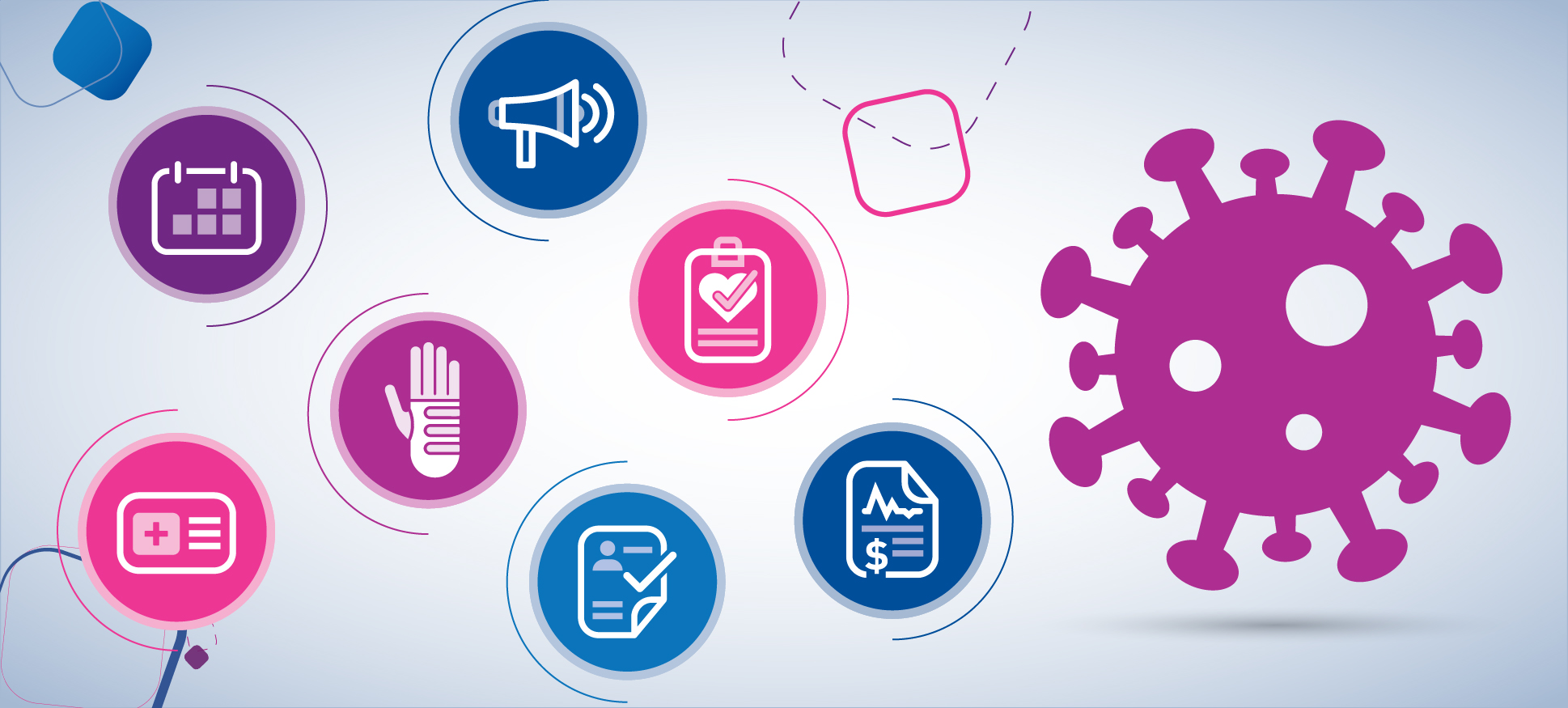
COVID-19 transformed the patient journey, and it's clear when we evaluate every step. Data and technology gave patients the convenience, flexibility, and control to get care on their terms, and these changes will be here to stay. From marketing to scheduling to payments and more - providers and payers have ample opportunities to respond to these changes and will need to adapt their future strategies accordingly. Self-scheduling, mobile registrations, and automated authorizations are a few examples of tools and technologies that are more than likely to remain prominent in healthcare. What other changes are here to stay? In this new infographic, we take a dive into each of the 7 steps to see how data and technology has impacted the patient journey, and provide strategic recommendations on how providers and payers can adjust post-pandemic: The use of data and digital tools opened up new doors for greater patient access, engagement, transparency, and control. The post-COVID-19 patient journey is going to continue to evolve - payers and providers will need to adapt to keep up with the changes, to ensure that patients experience the best outcomes. To get a deep dive into all of the changes to the patient journey, download our white paper.

The delta variant is still surging – and flu season is about to begin. How can healthcare providers leverage innovative technologies to streamline care and prepare for a potential “twindemic?” The summer of 2021 has not been kind to healthcare professionals. After a brief period of hope that the worst of the COVID-19 epidemic was over, the delta variant started its march across America, flooding hospitals and physician practices with a new wave of seriously ill patients. Autumn and winter look like they might be trouble, too, as delta joins forces with the seasonal flu to form a potential “twindemic.” After a mild season in 2020, many experts are predicting that the flu will reemerge with a vengeance this year as people return to in-person work and school. The combination of the two illnesses could easily overwhelm providers who aren’t prepared with technologies and workflows that allow them to serve patients efficiently and remain responsive to fluctuating demands. As providers look to navigate the coming months, they will need to make sure that they have self-service tools in place to keep patients safe and relieve strain on staff. With a few key digital solutions, resources can be maximized, unpredictable patient volume can be managed effectively, and difficult circumstances won’t slow down operations. Online self-scheduling can improve experiences for patients and staff Online self-scheduling is in high demand because it provides flexibility. patients want to move on with their busy lives without having to sit on hold with a representative. In Experian Health’s recent survey, the State of Patient Access 2.0, more than seven out of ten patients wanted to take the appointment-making process into their own hands, citing the speed and convenience of choosing their own appointments. Providers and physician groups appear eager to oblige. More than 70 percent of providers responding to the survey stated they are planning to offer online appointment tools to improve experiences and manage complex operations as the pandemic continues. The benefits for providers are significant. Online self-scheduling can measurably reduce administrative burdens on staff, allowing practices to reallocate their people power to other high-priority tasks. Giving patients the tools to make appointments may also help to reduce patient no-show rates, which can drain billions of dollars each year from provider organizations. Using self-scheduling tools, patients with transportation issues or concerns about exposure risks may be able to opt for telehealth visits, as opposed to unplanned visits to urgent care centers or the emergency department. This can help protect other consumers and staff from illness while allowing them to manage their own calendars. Mobile patient registration keeps patients safe from exposure during a "twindemic" Shifting patient registration from the clinic to the home can also be beneficial for patients and providers. When patients fill out new forms or update existing information in person, they increase their exposure risk by staying in the waiting room longer than necessary. In contrast, a digital registration accelerator solution offers a quick, touchless, and convenient intake experience on the patient’s own mobile phone. Patients can complete the process in their homes (where they are more likely to have all their personal information at hand), or in the parking lot while waiting for clearance to enter the building. On the provider’s side, automating patient intake improves operational efficiency and avoids errors that come from illegible handwriting and verbal information communicated through masks and plexiglass. Data integrity algorithms and real-time feedback for patients can correct mistakes quickly to ensure high accuracy of patient data – a crucial competency for treatment and reimbursement. Patient portals boost convenience, communication, and security As providers prepare to battle two illnesses instead of just one, practices shouldn’t forget to leverage one of the most important parts of the digital arsenal: the patient portal. Portals are instrumental for staying connected with patients, particularly with the 40% of patients who skipped medical care in the early months of the pandemic. As a complement to necessary in-person care, patient portals offer a convenient way to communicate with providers, complete administrative tasks, and access personal health information at their leisure. Providers must be certain, however, that their portals don’t become avenues for medical identity theft. Healthcare organizations must maintain tight security policies that simultaneously deliver an optimized patient experience. A patient identify-proofing and authentication solution that automates patient portal enrollment while adhering to the high standards of HIPAA and other industry requirements is key. Solid security can reassure patients that sharing digital health information with their trusted providers is safe - fostering more open relationships and leading to better care. Hopefully, fears of a “twindemic” will fizzle as communities continue to take sensible precautions against the spread of COVID-19. However, if the flu does roar back into life, providers must be prepared. Self-service technologies and robust security measures can safeguard practices against the strain of higher-than-expected patient volumes and supporting the continued delivery of high-quality patient care. Learn more about how Experian can help your organization incorporate these new technologies and prepare for a potential "twindemic."

The rising popularity of virtual care seems to be extending itself into other areas of patient experience, including a re-energized consumer preference for digital self-scheduling. In fact, McKinsey & Company reports that telehealth visits and utilization are 38x higher than pre-COVID-19 levels (July 2021). Meanwhile, Experian Health’s State of Patient Access 2.0 survey, released in June 2021, found that 73% of consumers now want to schedule their own doctor appointments online. Interest in self-scheduling is more than a lingering side effect of the pandemic. For providers, it’s a great way to build digital engagement with current and prospective patients – while accelerating internal efficiencies as patient volume increases. A clear preference for patient self-scheduling emerges “The preference for self-scheduling is not surprising when you look at the data,” says Sanju Pratap, Experian Health’s Vice President of Consumer Products, who sat down to talk about leveraging patient scheduling solutions to enhance digital engagement. “Patients are scheduling appointments online at all times of day – right before dinner, early in the morning or at lunchtime. During these uncertain times, self-scheduling is so much easier and safer." Expectations also changed when COVID-19 introduced consumers to self-scheduling for vaccine appointments. “At the same time, providers are cognizant of wanting to reduce patient waiting time when trying to schedule appointments or follow-ups – especially in care settings where they’re trying to minimize the time patients are in the office,” says Pratap. “Their resources are pretty slim these days. Any move toward efficiency is appreciated.” Self-scheduling creates a better digital patient experience—and a competitive advantage Now, providers are contending with a large number of consumers who moved during and after the pandemic and increased patient volume following a year or more of deferred care. Self-scheduling is often the first point of interaction. “I may Google a new provider to learn more about their practice,” says Pratap. “If I’m on their website and I see a “schedule now” button, I’m likely to try it, rather than waiting weeks or months to call the office to see whether they take my insurance or have an appointment for me.” That first point of contact can turn into a competitive advantage: “Does the orthopedic practice down the street offer online scheduling that makes it easy for other providers to refer to them—and easy for patients to schedule their own appointments? Providers that do are going to get new patient revenue and increase patient loyalty. They’re going to keep more of their existing patients if they meet consumers where they want to be.” Providers can create processes that exceed their own expectations Many providers still have their doubts about self-scheduling. “We often hear, ‘No system is going to understand the nuances of my scheduling template,’” says Pratap. These doubts aren’t totally unfounded. “Accurate appointments require a deep understanding of scheduling protocols. In the past, individually scripted schedulers had binders of questionnaires that they made notes on, relied on Post-It notes, and/or institutional knowledge. As you can imagine, this can be very inefficient, error-prone, and not the best experience for patients, providers or staff.” If humans have a hard time managing online healthcare appointment scheduling, what hope is there for automated systems? In fact, digital questionnaires and electronic medical records (EMRs) can streamline scheduling and provide a clean, seamless experience for all parties involved. The key: building a patient self-scheduling system without blind spots To make scheduling more efficient, questionnaires must be consistent, but also flexible enough to accommodate a variety of providers, locations and specialties. Patients and access coordinators should be able to look for appointments across providers within a single view. If one provider is not available within a patient’s requested timeframe, a system could suggest another qualified provider. In doing so, systems can avoid scheduling imbalances that overload some providers, while under-scheduling others. Pratap shared additional ideas for avoiding blind spots: Remove friction from the patient journey end to end. For example, if you require a sign-in to your patient portal to view appointments, you may discourage consumers who don’t want to create new sign-ins just to view availability. Create a system that works for many users. “It’s not just patient self-scheduling you have to consider, but also the call center, the patient portal and anyone that’s leveraging an API to book into a provider’s schedule,” says Pratap. “Scheduling tools should make it easy to see availability across multiple providers and locations, and allow patients to see accurate availability and easily book, no matter who you are or how you accessed the system.” Revaluate pre-visit messages sent after appointments are made. Capture all the information you need to ensure the patient’s registration process and visit goes smoothly. Build in accommodations for unique needs. While automation can help streamline scheduling, it’s important to understand every patient’s individual needs. If necessary, staff can step in and take the reins on scheduling. For example, staff can manually accommodate appointments for an older patient who suffers from chronic issues and needs more time with their doctor. Don’t rely solely on out-of-the-box solutions. Using the scheduling functions that come with different types of EMRs may be tempting. However, making the additional effort to create a process that is accurate, efficient and flexible—and encourages digital patient engagement—increases the value of a patient scheduling solution exponentially. Measure progress and mine data to continue optimizing Scheduling isn’t just your digital front door. It also has the potential to make—or lose—revenue. “Some providers worry about patients booking the wrong appointments and taking time away from other patients,” says Pratap. “Their concerns are valid; these time slots are valuable.” “One of the metrics we use to gauge how successful our scheduling systems are is by looking at the rescheduling rate,” Pratap explains. “We look at how many appointments need to be re-booked because the wrong provider or appointment type was chosen and filter out appointments that were re-booked for other reasons. By using this information, we can create systems where re-booking is rare.” Monitoring data also helps providers stay ahead of fluctuating needs and preferences. “When you’re choosing a scheduling solution, ask what reporting and analytics are built-in,” says Pratap. “You want to be able to find out, for instance, what availability looks like across your practice—and whether it’s the reason patients aren’t scheduling with you. Analytics and insights can be layered on top of data to help you optimize the patient experience and keep your practice running efficiently.” Contact us to see how Experian Health can help streamline patient scheduling for your organization.

This is the second in a series of blog posts that will highlight how the patient journey has evolved since the onset of COVID-19. This series will take you through the changes that impacted every step of the patient journey and provide strategic recommendations to move forward. In this post, we explore how 24/7 self-scheduling can help healthcare providers adapt to the post-pandemic digital landscape. To read the full white paper, download it here. If there’s one digital tool that punches above its weight in the healthcare industry, it’s online self-scheduling. This simple concept – allowing patients to book their own appointments online – resolves many sticky issues throughout the entire patient journey. It drives patient satisfaction, acquisition, and retention. It boosts staff efficiency and smooths out bumps in the revenue cycle. No-shows and delayed care can be minimized, leading to reduced costs and far better health outcomes. All of that was true before the pandemic. However, when COVID-19 hit, self-scheduling was a gamechanger. When more patients wanted to manage their healthcare online, and staff were forced to work remotely, online medical scheduling was convenient and safe. Now, the return on investment is even higher. As patients struggle to overcome growing barriers to care, and providers wrangle with soaring volumes of returning patients, the digital front door must remain open. How can providers leverage the benefits of 24/7 digital self-scheduling seen over the last year or so, and create a digital patient experience that’s fit for the future? Consumers schedule appointments differently now – and they don’t want to go back Healthcare has been playing digital catch-up to other industries for much of the last decade. Consumers have long grumbled about archaic registration processes and the absence of digital tools seen frequently in other sectors. The urgent reconfiguration of the healthcare consumer experience over the last year means many of those missing digital options are now available. Instead of calling to make an appointment during office hours, patients can use 24/7 online scheduling platforms – accessible any time, from any device. Having had a taste of convenience and control, consumers expect online scheduling to continue beyond the pandemic. According to a new Experian Health study, nearly three-quarters of consumers want to continue to schedule their own appointments online. More than eight in 10 prefer an online or mobile-related registration experience. Rather than wait in a long customer service queue, patients can make, cancel, or reschedule appointments with the push of a button. Patients of all ages like having a flexible and frictionless way to manage their care, so why would they choose a provider that doesn’t offer online self-scheduling as part of the mix? 24/7 self-scheduling reduces barriers to care In addition to meeting consumer expectations, 24/7 self-scheduling also helps providers overcome many new and existing consumer challenges in the wake of the pandemic. Patients can be blocked from accessing the care they need for all sorts of reasons – financial worries, lack of transportation, lack of time to phone and book appointments, and/or cultural barriers to seeking support. As with many public health challenges, those who experience the greatest social and economic challenges have also been hardest hit by the pandemic. While many of these issues aren’t easily resolved by any one organization, self-scheduling does offer a route around several barriers to care. By simply offering a more flexible way to book and cancel appointments and interact with their provider, self-scheduling platforms allow patients to make plans in a way that fits their circumstances. Inconvenient business hours and long waits for available appointments become less of a concern. And with automated patient outreach, providers can make the process even easier, by sending text or email reminders to specific groups of patients to make sure they get the care they need. Digital self-scheduling eases call center bottlenecks Giving patients the ability to book their own appointments online also eases the burden on call center staff. Setting up staff to work remotely, while managing an influx of patients scrambling to book COVID-19 tests and vaccinations, created many pain points throughout the pandemic. First come, first serve scheduling options create bottlenecks in call volume, and when patients can’t get through to cancel appointments they can no longer attend, those slots sit unused - wasting physician time. As patients look to reschedule deferred care, 24/7 self-scheduling can minimize these bottlenecks by relieving pressure on call center staff and spread the load across multiple channels. Call center agents can reallocate their time to higher-priority inquiries. Call times can be cut because agents will have integrated access to disparate electronic health records and project management systems. Training time can also be reduced through simplified online systems. It’s no wonder that 71% of providers offer (or plan to offer) online self-scheduling options. Building a self-scheduling ecosystem that’s fit for the future Digital self-scheduling systems implemented during the pandemic should become a permanent feature in patient access. Providers that want to create an attractive patient experience should expand their digital self-scheduling offering beyond simply booking appointments. Multiple specialty services can be integrated into the scheduling system to streamline referrals. Telehealth services that gained so much ground over the last 18 months can be connected to online scheduling tools so they’re fully embedded going forward. Digital payment options and coverage functions can also be linked to scheduling platforms, for a seamless end-to-end digital patient experience. Find out how Experian Health’s 24/7 online patient scheduling software can help your organization deliver an optimal patient experience, improve call center productivity, and reduce revenue loss as the healthcare industry adapts to the new digital landscape. Download our white paper to get patient-provider perspectives on self-scheduling and other digital trends.

COVID-19 changed every aspect of the patient journey – placing unprecedented demands on the healthcare system and accelerating the need for digital transformation industry-wide. Telehealth, touchless engagement, and self-service scheduling became the new normal; however, this created new stress on operations, administration, and finance. While this new normal comes with many challenges, data and digital tools have created greater accessibility, engagement, transparency, and control for patients and providers. In this blog, we examine COVID-19’s impact on the patient journey and explore the digital tools and data that are helping the healthcare industry recover and thrive. To get more insights, read the full whitepaper here. COVID-19 strained the healthcare system more than ever before. To say that COVID-19 challenged the healthcare system is a massive understatement. Seven in 10 patients deferred or canceled treatments during the pandemic, causing disruptions to both revenue and patient engagement. Even behind the scenes, novel diagnostic codes and new sources of information—together with rising inpatient volume and government intervention—affected costs, billing and reimbursements at scale. Patient-provider relationships became much more complex. Many people moved, changed jobs and changed insurance during the pandemic. In fact, an estimated 40 million Americans lost work during the pandemic and just over half of all workers in North America plan to look for new work in 2021. As a result, relationships between physicians and patients became disrupted. While re-engagement is critical for providing care, simply finding patients remains a challenge. The digital experience raised patient expectations. As consumers turned to technology to cope with changes, digital engagement increased in healthcare services and elevated consumer expectations. This trend began before the pandemic: A pre-COVID-19 AARP survey of older adults (50+) found that a majority would prefer to have their healthcare needs managed by a mix of medical professionals and technology. During the pandemic, patients used telehealth to access care from home, mobile registrations to avoid filling out paperwork in the waiting room and digital payment options that made paying bills simple and seamless. Now that patients have experienced telemedicine, self-service scheduling and easy digital payments, there is no going back. Expectations have changed permanently, and providers that don’t offer an updated patient experience may suffer by comparison. Opportunities for better outcomes: transforming the patient journey with digital transformation We looked at key parts of the patient journey where technology is helping healthcare providers engage and care for their patients successfully across the marketing, scheduling, registration, authorization, treatment, claims and payment. Here are a few strategic opportunities for providers to consider post-COVID: 1. Use smart data for better outcomes Third-party data is helping providers find and re-engage patients, deliver more holistic care and facilitate better financial outcomes. For example, integrating data on social determinants of health (SDOH), can provide physicians with a more holistic picture of non-medical factors that may influence medical outcomes, such as a patient’s socioeconomic status. SDOH data can also shine a light on a patient’s ability to pay, which in turn may inspire a wider range of payment options so that more patients can afford care, and more providers can avoid write-offs. 2. Continue using technology and automation for the recovery to come Using digital self-service applications for registration does more than just provide the patient-friendly option of completing paperwork at home (instead of the waiting room). It also eliminates the need for staff hours spent inputting information, reduces the potential for error, and improves efficiency. Advances in automation make it possible for providers to reduce the effort of manual tasks - like sorting through patient records from disparate sources to create a single, comprehensive patient file, or gathering the information necessary to revisit claims authorization for deferred care. Across the board, digitalization provides greater transparency, flexibility, and seamless experiences for patients and providers alike. 3. Clear the path for payments Going digital can help patients and providers better navigate the patient journey, especially when it comes to payments. As many as half of nonretired adults expect long-term financial effects as a result of the pandemic. This makes it more imperative than ever to improve and accelerate authorization, claims, and payment processes so that both patients and providers have a clearer understanding of how care will be paid for. Accurate patient estimates, coverage discovery, automated authorizations, and payments all play a role in creating a better financial experience going forward. Digital transformation gains traction as we look to the future Although the digital transformation was already underway before COVID-19, the pandemic has accelerated the need for data, automation, and self-service tools. Find out how Experian Health can help your organization meet the data challenges of the post-COVID-19 patient journey by downloading our white paper.