Topics

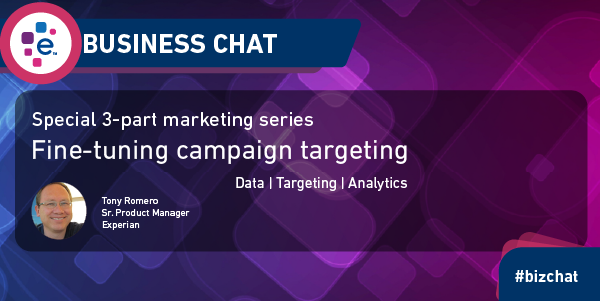
If you want to get the most out of your marketing campaigns, it's important that they are tailored for a specific audience. We invited Tony Romero on Business Chat to talk about part two of his three-part Sip and Solve webinar series focused on B2B marketing where he explains how segmentation and targeting can make all aspects (landing page or email) more effective by using industry SIC as well as NAICS codes. Look-a-like analysis CMO's challenged with restricted budgets Analyzing portfolio diversity and targeting minority-led, women-led businesses Profiling prospects with limited data attributes Watch Our Interview What follows is a lightly edited transcription of our talk. [Gary Stockton]: So in our last chat, we talked about maintaining robust marketing data to power effective campaigns and how clean data really helps businesses conduct effective marketing campaigns. This week, we switch gears to discuss the power of segmentation and targeting using industry SIC and NAICS codes to optimize your marketing budgets. So let's dive in. In our previous chat, we spoke about the changes that tech companies have enacted to make the job of targeting business prospects harder, but it's not game over for marketers. [Tony Romero]: No, definitely not. You know, it's really important to know that there's still a lot of a wealth of data out there that can be used to identify and segment target customers. You know, the first-party data obviously is really key, as well as being able to take information that may be spotty. If, for example, you only have a name or address, you can be able to through services like ours, be able to get a full, comprehensive set of data on that customer, both firmographic, demographic, and credit information, and then be able to use that to promote to customers. [Gary Stockton]: So can you share some examples of how Experian data can help marketers hone in on their target customer, for example, how SICs and NAICS codes can help? [Tony Romero]: Yeah, Gary, you're right. SIC and NAICS codes provide information about what industry the business is in. And so, by knowing that, you're able to target those consumers. So again, as I mentioned before, you can take a look at your existing customer base and find out who's your ideal target customer. And from that, then you can compare that to prospective businesses that look just like that. And that's what's called a lookalike analysis. And by using SIC and NAICS codes, you're able to use that to segment the market and then be able to promote effectively. And Gary, you also mentioned that with the economic state, CMOs have to watch their budgets and be as efficient as possible these days. So again, by doing very good segmenting of your target audience, you are making sure that your finance and financial output to a campaign are as efficient as possible. [Gary Stockton]: Excellent, regulators, they're focusing on diversity, equity, and inclusion. How can Experian help clients in that effort? [Tony Romero]: You know? Yeah. That's a very key point and definitely more than ever. It's important to focus on identifying your existing portfolio and seeing how many customers in your portfolio are minority-led or women-led businesses. So you can do benchmarking, you can see how you fare against other businesses in your market space. And that helps you to determine how much more do you need to market to these minority or women-led businesses. So what's number one is the benchmarking, but secondly, you need to be able to go out and look at your prospective target list and find out who are minority-led or women-led. And there, getting an indicator about a Woman-led or Minority-led business allows you to promote specifically to those types of businesses to help increase your portfolio. [Gary Stockton]: That's good. So if all I have is a name and an email address, and in a lot of cases, you know, if we're driving a newsletter, can I still profile this contact? Or are there other ways to do that with minimal info? [Tony Romero]: Yes, there is. You know, even just having a name and address is enough data to go through our type of service and be able to append all of the other information that we talked about, whether it's firmographic with SIC or NAICS codes, it could be demographic information where we look at the business and find out who the consumers that are tied to that business are? So that's called a B2C linkage. And from that now, you know who the actual individual is and go target those specific individuals. So that's also another key point to bring out [Gary Stockton]: Excellent stuff, Tony. Well, folks, if you enjoyed this chat and want to go a level deeper, don't miss Tony's campaign targeting Sip and Solve webinar - Fine Tuning B2b Campaign Targeting. He goes into greater detail on targeting B2B prospects, just click the image to be taken over to the recording. Related Posts
We're talking B2B marketing data hygiene with Tony Romero from our product team today on Business Chat.

Stagflation can impact your commercial portfolio performance. We explore options credit departments can take to identify high-risk accounts.
Experian can be your trusted provider to supercharge B2B marketing campaigns with powerful data, analytics and consulting services.
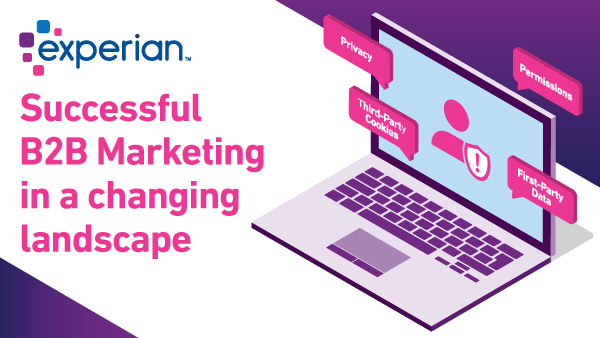
As data privacy regulations become more strict and tech firms implement change, we share how marketers can remain effective while remaining compliant.

Images of giant container ships clogging up ports have become the public face of global supply chains' disruptions. With widespread factory and shipping operations interruptions, supplier delivery times increased dramatically. According to U.S. Census, 38.8 percent of small businesses experienced domestic supplier delays during the pandemic. Some even predict that global supply chain disruptions could continue into next year. While some aspects of the supply chain—such as increased consumer demand and labor shortages—are out of your hands, there are risks within your supply chain that you can manage and build resiliency and agility. Running a tight supplier network gives you a competitive advantage during periods of crisis when others are struggling to keep up. What is Supplier Risk Management? Supplier risk management is the process of evaluating your suppliers to understand better where the vulnerabilities lie and then taking proactive steps to mitigate the risks you've identified. In the past, many client companies overlooked their suppliers' health and operational resiliency. If one supplier faltered, another supplier could be counted on to step in and take their place. But it's not always simple. As the global pandemic has revealed, there can be challenges to finding alternative suppliers if demand soars. Whether it's geopolitical risks, natural disasters or labor unrest, many risks can impact the operational health of the entire supply chain. One supplier slip-up can throw off the whole chain and put a business in jeopardy. Client companies need to know how stable their suppliers are—not just today, but in the foreseeable future too. Companies need to manage their supplier networks proactively. Common Supplier Risks Assessing the health of the entire supply chain is more critical than ever. Put these common supplier risks on your radar. Social, Ethical or Environmental Risks Increasingly, businesses are screening their suppliers for how well they perform on environmental, social or governance (ESG) factors. Businesses want to ensure that they are working with vendors with a solid track record on sustainability, employee relationships and transparency. For example, working with suppliers that flout emissions standards or engage in bribery can pose liability risks for you. The negative reputations of these types of suppliers can carry over to their clients. Moreover, doing business with suppliers that are on government sanctions or non-compliance lists can result in penalties for you and potentially even legal liability. Even companies that profess a commitment to ESG principles must demonstrate adherence to certain standards within their supply chain. It's what consumers increasingly demand and some governments are legislating. But how can you screen suppliers to ensure compliance with ESG principles? Technology can help: Experian's partner Global Risk Management Solutions (GRMS) allows companies to keep track of all their suppliers and verifies compliance within the required Environmental, Social and Governance (ESG) parameters. How to Create a World-Class Supplier Risk Assessment Program To learn more about Global Risk Management Solutions watch our interview where we discuss the main points of setting up a world-class program. Financial Risks Many businesses monitor their suppliers for financial risks, which is the likelihood that a supplier will run into financial difficulty, and therefore, renege on their obligations. Working with a supplier on shaky financing footing can undermine the operational health of your organization. For example, suppliers in financial distress can suffer service interruptions, poor quality and safety problems – all of which can spill over to clients, especially if it's a main supplier. If one of your suppliers suddenly closes its doors or goes bankrupt, it may be difficult to find a replacement supplier on short notice. Screening for financial risks has become more straightforward, thanks to technological advancements. Tools like Experian's Small Business Financial Exchange and Supplier Check Reports provide information on small business credit performance to help you assess financial risks more efficiently. Operational Risks Any risk that results from flawed internal processes or management, rather than external events, is known as operational risk. This can include labor unrest, factory closures and equipment failures, which can ultimately prevent a supplier from meeting their deliverables. Understanding the potential and actual operational challenges faced by your suppliers can help you assess whether to work with them. Continuity Risks As the pandemic has shown, it's impossible to predict when a crisis might hit your supply chain. That's why businesses need to develop a continuity plan for how they'll handle unexpected crises and the steps they'll take for recovery. That's true of your suppliers too. Suppliers that lack continuity plans can easily get kicked off the line without a plan for a rebound. That can cause major disruptions to their clients. But how do you know what your suppliers' business continuity plans are? Strategic Risks Internal or external events that make it difficult or impossible for a company to achieve its business goals are strategic risks and you need to monitor your supply chain against them. For example, a supplier that may not have the resources to hire enough workers poses a strategic risk for its clients and can undermine its market position and reputation. Until recently, companies hadn't considered their supply chain as a strategic decision because of the siloed decision-making process. Bringing together supply chain functions with risk management and corporate strategy places supply chain management at the center of strategic planning and can build resiliency. Expanding the role of procurement within your organization can help management better assess the weak links, anticipate unexpected events and adapt to changing conditions. Insights drive awareness Managing your supply chain risk is only possible when you have insight and clarity into the financial health of your suppliers. Experian's powerful technology solutions allow you to do this in several ways: Finding alternative lookalike suppliers Your existing performing suppliers can be valuable in identifying other possible alternative or contingent suppliers. By leveraging tools like Experian's Business TargetIQ (BTIQ), you can effortlessly profile your ideal supplier with premier firmographic, geographic, risk and credit attributes. Once you have determined your ideal supplier profile, use the "find similar" feature to swiftly and easily identify other companies that meet your criteria and have similar profiles. Further expand your segment and qualify by adjusting the platform's robust built-in filters. In addition, third-party and other data can easily be uploaded to get a comprehensive 360-view of the suppliers. Why start from scratch when you can easily leverage existing relationships that are performing? Develop an Integrated Supplier Database Your ability to make informed decisions hinges on access to quality data about your suppliers. But getting reliable, real-time data on your own may be difficult. You may need to work with a third-party vendor that gathers and validates this information. But vast amounts of data can quickly overwhelm an organization, especially if it's siloed. For data to be useful, it must integrate with existing customer relationship management and enterprise resource planning software that your workforce uses each day. Integrating these databases offers a 360-degree view of your entire supply chain, which makes it easier to isolate risks. Look for vendors that can work with your legacy systems. Segment Suppliers into Risk Categories Segmenting suppliers by different attributes can provide valuable insights into how vital each supplier is to your operations. While there are several ways to segment suppliers – such as the amount of spend, product, service or volume – consider segmenting suppliers based on their risk profiles. This approach can uncover the level of risk exposure for each supplier, no matter how small. A risk event, even with a smaller supplier, can cause downstream disruptions. Translate Risk Data into Predictive Intelligence With vast amounts of data on suppliers, it's possible to create forecasting models to play out "what if" scenarios based on both historical information as well as real-time events. However, even the most powerful artificial intelligence programs are only as good as the quality of the data input. Quality data increases the probability of an accurate forecast and makes it meaningful. To tackle this, GRMS monitors suppliers in real-time and sends clients push notifications alerting them to any status changes. That way, they can act on potential problems before they hit their supply chain. Keep Supplier Assessments Up to Date While some companies may perform supplier assessments internally, it can be hard to continuously monitor them. For example, knowing when a supplier's insurance policy has lapsed or if regulatory actions have been taken against a supplier is crucial to building their risk profile. Companies without in-house expertise on supply chain risk factors should seek out third-party vendors that can gather, assess and monitor supplier data. Why is Supplier Risk Management Important? During difficult market conditions, a well-managed supplier network means having a leg up in the industry. Businesses that manage actual or potential risks may continue to operate without disruption, as well as gain important insights that can help turn risks into opportunities. They can also improve their competitive position and lower supplier costs. Information is power. On the flip side, companies that fail to adequately assess the supply chain risks can get blindsided. Here are a few reasons why supplier risk management is critical to business success. Greater Insights Help Create Strategies That Turn Risk into Competitive Advantages A supply chain is more than the building block of your business. It's what makes your business possible and is a revenue driver and a differentiator. A powerful, reliable supply chain enables you to get products and services to market faster and with lower costs than competitors. Case in point: according to Deloitte, 79 percent of organizations identified as "supply chain leaders" achieve revenue growth that is "significantly above-average." Disruptions anywhere along the supply chain can undermine those goals. According to that same report, only 8 percent of the organizations with "lower-performing supply chains" were able to achieve "above-average" revenue growth. The bottom line: with greater technology-enabled insights into your supplier network, you can turn risk into competitive advantages. For example, data insights can alert you if a major supplier faces financial difficulties, which gives you time to find a new, better-positioned alternative. Your competitors may not have access to such a resource, putting them at a disadvantage. An Improved Competitive Position in Your Market With shipping delays and poor customer service befalling businesses of all types in recent months, a well-managed supply chain can help you deliver greater value to customers compared to your competitors. According to a recent Oracle survey, 76 percent of people would trust and be more willing to buy from (78 percent) a company if they knew it used advanced technologies like artificial intelligence to manage its supply chain. By emphasizing supply chain risk management within your organization and creating processes to assess the risks, you can gain a competitive advantage in the industry. Lower Supplier Costs The cost of supply chain disruption is higher than you may think. Downtime, sourcing a new supplier and missed deliverables on your end can add up to astronomical amounts: on average, global supply chain disruptions cost $184 million per year in lost revenue for each large organization, according to Interos Annual Global Supply Chain Report. There are also long-term costs, such as reputational damage and customer perceptions, which are difficult to measure. In that same Interos report, 83 percent of responding organizations reported suffering "at least a little reputational damage" due to supply chain problems. Ultimately, a supply chain that delivers and allows you to keep your brand promises is worth its weight in gold. Reliable suppliers allow you to keep your overall costs in check. Proactive risk management of your supply chain is an essential cost containment best practice. Looking Ahead to the Future of Supply Chain Risk Management Some supply chain disruptions are out of your hands. But there are ways to intelligently and efficiently manage risks and bring stability to your company. Until now, it's been difficult for companies to assess and monitor the financial and operational health of their suppliers, either due to a lack of internal capacity or the necessary transparency. But that's changed: by utilizing robust technology solutions, organizations can minimize supply chain disruptions and optimize their strategic value.

By all indications, the supply chain challenge of this year will stretch well into 2022. Risk managers and finance departments are working in real-time to pivot, and keep customers satisfied, and while there’s currently no silver bullet to port delays, the lack of truck drivers or warehouse space, there are new strategies to consider. Join us for a very special supplier management webinar. Will your current suppliers be capable of delivering or do you need to pivot? In our upcoming webinar our panel of experts will talk about simplifying supplier discovery and diversification. In this talk you will learn: How to conduct a world-class supplier risk assessment program How to identify look-a-like suppliers in specific industries How to filter on multiple risk factors and more We will also be taking your questions, it promises to be an illuminating discussion, we hope you can join us. Register for Webinar

Experian hosted a commercial fraud trends webinar titled 'Uncovering Undiscovered Fraud Within The Portfolio'. During our session, key Experian experts Dominic DeGuiseppe, Javier Rodriguez-Paiva, and Li Mao, discussed the critical issue of commercial fraud within the financial industry and how it's often misclassified, leading to significant impacts on businesses. The speakers emphasized how businesses often underestimate their commercial fraud issues. Misclassification happens when business operational losses are erroneously categorized as credit losses. Businesses come to realize this when they delve deeper into the instances of credit misuse by fraudsters. Javier Rodriguez-Paiva argued that commercial fraud rates remain concerningly high, especially in small business lending and credit facilities, which are attractive magnets for criminals and credit abusers. This ongoing situation is worsened by lenders often lacking the specific capabilities to detect and manage fraud. In response to these challenges, Experian offers solutions aimed at rapid and early detection of different types of fraudulent activity. As Li Mao explained, the goal is to design solutions that allow businesses to identify risk quickly at the time of account opening, using advanced analytics and substantial data sources. Experian's solutions aim to ensure businesses can understand the different commercial fraud classifications and treat each case uniquely. By identifying the fraud type, be it first-party, third-party or synthetic ID fraud, appropriate responses can be triggered for each application. During the webinar, Li Mao introduced Experian's Multi-Point Verification solution, which verifies application information against trusted sources, allowing businesses to be confident of the identity of the business they are dealing with. This solution incorporates credit, fraud, and identity verification within a single tool. Javier Rodriguez-Paiva concluded by emphasizing the need for a more comprehensive risk management framework. Lenders could benefit from combining traditional credit scores with fraud-screening tools to provide a 360-degree view of a potential customer's risks. Such a multi-dimensional analysis can significantly improve fraud detection and prevention. The webinar highlighted Experian's commitment to supporting businesses in managing and mitigating prevalent commercial fraud challenges. While identity theft and credit abuse fraud are expected to increase, Experian's new strategies, enhanced verification tools, and advanced analytics solutions offer a promising shield against fraudulent activities. Click below to watch this webinar on-demand.

As the economy continues to recover, commercial service providers have a significant opportunity to expand their market share by growing their business and commercial portfolios through new customer acquisition. Compared to consumer relationships, which typically carry a more limited number of accounts, business customers offer the opportunity for a more expansive relationship, with the ability to onboard the customer into multiple accounts and products. A relationship with a business customer may start with a single checking account, and if the customer is pleased with the service and experience, that relationship may blossom with the customer’s adoption of additional products and services including telephone lines and devices, business credit cards, loans and lines of credit for business needs, software, and treasury management products, among many others. To gain more share of the wallet, commercial service providers must offer an excellent digital customer experience as the cornerstone of a successful customer relationship, as the market becomes more and more competitive. Business customers are quickly transitioning their operational processes to be digital-first, and they expect vendors and suppliers, across many industries especially financial institutions, to be a step ahead in offering digital account opening and support. How fraud tools help the customer experience Commercial service providers must continuously innovate their operations and account onboarding strategy to stay competitive and shut out cybercriminals. A robust fraud prevention strategy should help to reduce losses and operational costs. By prioritizing fraud tools that enable automation, commercial service providers can reduce costs by eliminating labor-intensive processes. The challenge for service providers becomes how to effectively manage that trade-off: creating a technology-enabled process that accurately disrupts fraud attempts while not inconveniencing and adding undue friction to legitimate customers. For example, fraud tools that activate during the onboarding phase can help service providers offer a better customer experience, allowing low-risk accounts to pass through with minimal friction while applying safeguards to slow down applicants in the danger zone for further review. Many commercial service providers are unaware of the amount of undiscovered fraud that lies within their customer portfolio. Undiscovered fraud is a subset of your approved customers who represent a risk of future fraud. These cases exist because many legacy fraud tools take a one-size-fits-all approach to screening for fraud. But these customers are at a higher risk for future fraud occurrence. Now, advanced fraud prevention improves the experience for the majority of customers by enabling a less intrusive application process, reducing friction within the customer experience, and increasing operational efficiency. Preventing fraud with an integrated framework of tools There are three major types of application fraud: First-Party Fraud —the perpetrator opens an account without an intent to repay the creditorThird-Party Fraud — the perpetrator opens an account under someone else’s identitySynthetic Fraud — the perpetrator uses stolen information and creates a fictitious identity with pieces of real information, in order to carry out fraud. Tailoring your approach to specific fraud makes for a better customer experience and bottom-line savings. However, identifying and remediating all types of fraud requires a cascade of tools, experts, and data sources. Experian’s commercial fraud suite can be customized within a commercial service provider’s operational workflows to address each form of fraud with the correct treatment. Experian’s tools are supported by the most robust consumer and business data available, in addition to new, third-party sources, giving commercial service providers the ability to gain efficiency through a single partnership, as opposed to manually integrating data from multiple disparate tools and sources. One way we have created efficiencies for commercial service providers is by blending consumer and business data through our next-generation business verification solution Multipoint Verification. It helps clients cross-reference application information with robust databases backed by blended bureau data and new, third-party data sources. With Multipoint Verification, commercial service providers can leverage practical intelligence gathered from signals that describe the validity of attributes like the applicant’s phone number, professional social media profiles, historical employment information; and business information like a business’ web domain, email addresses, mailing address, industry classification, corporate linkage, Tax ID, and much more. Once the business owners have been verified, providers can score their applicants with Experian’s First Party Fraud Score, a new-generation blended predictive scoring model designed to identify first-party fraud risk or the likelihood of a first payment default within the first 6 months of account opening and to identify credit bust-out scenarios. Growing business customer bases with fraud prevention tools Customer expectations of online applications have changed in recent years, and your lower-risk good customers can enjoy that lower friction experience while higher-risk applications get more scrutiny. Focusing on the customer experience in how you screen for fraud can be a great growth opportunity. By using a comprehensive suite of tools such as Experian’s Commercial Entity Fraud Solutions, which specifically addresses each fraud type and applies the right type of friction when needed, your firm can drive operational efficiency that reduces risk and cost. Learn more about Multipoint Verification