Financial Services

Gary Stockton: Experian has just released the Q4 2017 Main Street Report. We partner with Moody's Analytics on this report each quarter, and Derrek Grunfelder-McCrank is the economist who works on the report. We asked him a few questions about the trends that we're seeing in this quarter's data. Gary Stockton: The latest Main Street Report states that small business credit conditions remain positive. Is there a primary factor that's driving this stability? Derrek G. McCrank: Yeah there certainly is Gary. The primary factor that's driving stability in small business credit is the broader U.S. economy. Right now we have the labor market that's tight. This is resulting in wage increases for consumers as a result. Consumer spending has been reliable. Inflation is starting to pick up in a slow steady manner. On top of it all at the end of last year we just got tax reform. Right now the outlook for small business credit is positive. And that doesn't look set to change anytime soon. Gary Stockton: and are you seeing greater numbers of small businesses investing in that business by borrowing for equipment purchases? Derrek G. McCrank: Well Gary while we can't say for certain. The data seems to suggest that this isn't happening to the extent it could just yet. One of the questions in the NFIB's monthly survey is about whether firms are planning capital expenditures in the next three to six months. Since the end of the last recession. We've seen the positive response rate to this question steadily increasing. However it still sits below its long term average. Couple this with tax reform coming so late at the end of last year, and a decent number of firms are likely to have waited until the new year when they could invest in their business with a little more certainty. Gary Stockton: Well historically small businesses been keeping bankruptcy in check, but this quarter we saw it up slightly. Is this a major concern? Derrek G. McCrank: This isn't a cause for concern yet. Though it is something to monitor going forward. In the first quarter of 2017 the small business bankruptcy rate bottomed out, it hi its floor. As the year progressed, the bankruptcy rate moved off of that floor and that appears to be all that happened. In fact I'm hopeful that this might indicate a return to a more dynamic environment for small businesses which I look forward to discussing in a little more detail and our upcoming webinar. But for now, given the state of the economy, I'm optimistic for the state of small business credit. Gary Stockton: On the flip side, the Northeast saw a steep decline in business bankruptcies in Q4. Can you share some insight on what might be driving that? Derrek G. McCrank: Sure, so in the fourth quarter. the Northeast saw declines in its severely delinquent or 90 days past due rate coupled with a slight uptick in its business bankruptcy rate. What happened with business bankruptcies mirrored the trend nationally, so it shouldn't be a cause for concern this year, the declines in the severely delinquent rate were driven by two primary factors - geography and industry, from a geographic point of view, Connecticut, New Hampshire and Maine were the driving forces behind the reductions in severe delinquency, and from an industrial point of view financial services, public administration and the manufacturing industries are credited with declines in severe delinquency. Download the latest report

I had the pleasure of speaking with Kelly DeBoer recently. She is a Product Manager at Experian working in Business Information Services. Kelly leads product strategy for our business marketing products. In this Business Q&A we talk about B2B marketing trends and how Experian is helping business clients get the most out of their marketing initiatives. Gary: B2B marketing has changed significantly in the last five years. What are some of the important trends that you're seeing? Kelly: What we're seeing in the B2B space is really what we've seen in the B2C space for years, and that is, our clients are really trying to gain as much insight into their not only existing clients but potential clients as well? So you know additional firmographic information, credit information, anything that gives them a fuller picture of their clients, and then not only how to retain their existing clients and cross-sell, but also in terms of prospecting, how to best reach these targets once we've identified them what's the best channels to reach those prospects to get the best response. Gary: Kelly, most of our clients think of Experian Business Information Services as firstly business data and credit risk management. So how are we helping clients with their marketing initiatives? Kelly: With regard to B2B marketing, Experian has a tremendous amount of marketing assets including not only our U.S. Business Database which has over 16 million businesses. We also overlay that with our credit information, so clients can come and tap into this this huge resource to help them with their targeting in terms of selecting by firmographics, employee size, sales volume, as well as credit attributes, UCC filings, bankruptcies, information that can be translated to marketing campaigns. It can be utilized for direct marketing, for telemarketing, for digital applications - social media, email campaigns, analytical solutions, modeling. So it's a vast amount of resources that we can tap into to help with marketing campaigns. Gary: Can you share about some B2B marketing solutions we can look forward to from Experian? Kelly: Experian has a lot on the horizon with regard to B2B marketing. But one thing I'm particularly excited about is our new B2C linkage business to consumer linkage. Ultimately our clients have been coming to us saying you know, we're looking for a way to link our consumer records to any businesses that they may be associated with. So we create a customized linkage system that allows us to take in those consumer records, match them to our commercial repositories, and then provide back information that allows our clients to then not only target that consumer at their residential address but also their business address. So it gives them a chance to cross-sell and up-sell commercial offers as well as their consumer offers. Experian Business Marketing Solutions
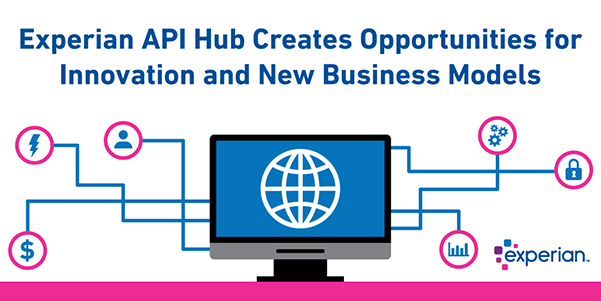
Carl Stronach is the Senior Product Manager for Experian’s API Developer Hub. We sat down with him recently to discuss how API’s are helping business clients solve problems, and to get answers to some frequently asked questions about Experian Business API’s, how they work, and how developers can get started using them. What is the API Developer Hub and Why Did Experian Launch It? The Experian API Hub is a one stop shop for all Experian data. Whether client developer’s come into Experian to access our information on businesses, consumers, automotive data, data quality, they can find all our API’s in one place through one developer account. It makes it much easier for developers to come in find all the data assets that Experian has and start testing that data in just minutes. So clients are coming into the API hub and they’re coding to our API’s to integrate that data into their applications. And so one of the most exciting things that I find is when clients will share a screenshot with me of all our data that’s live in their application. Can you give us some examples of the kinds of apps clients have connected to the hub, do we know what data is being used for? We see clients using the API is for a variety of reasons. The first one would be your traditional credit underwriting. They need to have a Credit Manager access Experian data within their own application so that they can make a credit decision. The API makes it easy to put all the data that a Credit Manager needs on one single screen. That’s what they are designed to do. And so that’s probably the first use case. The second use case that clients are coming into is when they’re running their own platform. Clients are coming in. They might be a fintech company. They might be a special niche provider of business information on a specific industry. So the API’s enable not only Experian to have a direct relationship with clients and end users, but also enable our own partners to give their end users access to Experian data within their applications as well. Does the Experian API Developer Hub open up opportunities for new business models? We’re enabling new types of clients to come into Experian and start working with our data, clients who would have never done that before. We’re opening the market to these types of developers to create new types of innovations. It spurs innovation. So yes, we think the API Hub enables new business models to be created. One of the ways we’re tackling that is by making the API’s available for startups making the API’s available for startup incubators. There’s all these little networks of startup incubators that allow all their startups to get access to different data assets, or different API’s to solve these business problems. Experian is getting into those incubators to allow our data to be at the fingertips of these startup environments where we can go a step further than just the public developer portal access that we provide to everyone. For some of these businesses that are in these incubators, we can provide production grade data to businesses who are just starting up. Normally they wouldn’t have the capital or funds to access our data in the production environment if they were to come to us directly, but as a part of these programs they can get started in creating a real application at a relatively low cost in those early phases of their business. What are the key benefits of using an API over other processes such as batch delivery? Many clients today might be using a batch process to automatically update their portfolio. There are certainly many benefits to using a batch process. It’s a bulk process. We offer very competitive pricing when we’re talking about batch delivery. The disadvantage is that the data isn’t real-time. Underwriting decisions are best supported by access to fresh data. That’s real-time, and that’s exactly what the APIs do. So when a client makes an API call to us we calculate data based on the data we have available at that time. We’ll pull data to create calculate a score on the fly, a fresh score. Every API that we have delivers data that we have in our database in real-time, so that real-time data that you can get at your fingertips when a client is completing an application, and you can use that data in real-time to make real-time decisions. So there are a few different ways. Where can people learn more about Experian API’s? The best way to find out about our API is to go directly to our API developer portal. The API developer portal is at developer.experian.com. If you visit, you’re able to go to the portal see the API’s that we have, read our API documentation. You can register for an account in just a few minutes and start making test API calls to start seeing how you might interact with Experian data and integrate that into your application. Other ways that we’re supporting clients interacting with our API’s – we are focused on not only say Credit Managers, and those traditional use cases that we’re working with, but we’re really focused on the client developer, and so we’re trying to make it as easy as possible for developers to code to our API’s. We’re doing things like creating libraries. We have some developer libraries that are out on GitHub right now. There’s a Node.JS library and a Java library that is available. We also can provide what’s called a Postman collection to our developers. Basically, it lets them download our API’s onto their computer and start making test API calls to any of our API’s in just a few minutes. It makes it super easy to start coding and interacting with our API’s. We’re trying to provide these open source ways for developers to start working with Experian data. And you know we’re looking for that client feedback. You know, what types of developer libraries can we create to make it easier for you to code to our API’s and integrate. We want to make API integration as easy as possible for some clients, so we’re going the extra mile to create open-source code that makes it really easy to interact with Experian API. Experian API Developer Portal

Andrea Schmalzer is an analytical consultant in the Commercial Data Sciences team here at Experian, and she just completed a study of the mining industry titled "Managing volatility: the unique credit risks of the mining industry", so we did a quick Q&A with Andrea about her research. Gary: Hi Andrea, why did Experian study the mining industry? Have there been any notable changes to this industry in recent years? Andrea: Hi Gary. We decided to study the mining industry in order to evaluate the impact the mining industry has on small businesses that are supporting that industry. Knowing that there will be some volatility as we see shifts in which fossil fuels are predominantly being used. As far as changes go, we have seen a decrease in coal production. Some of this is due to the fact that we had the big boom in natural gas which caused the natural gas prices to decrease substantially. And also just due to the fact that the coal supplies are decreasing overall. Gary: Can you tell us what states driving the bulk of the mining in the United States. Andrea Schmalzer: So Texas is the number one oil and gas producers in the country. As far as natural gas we also had that being mainly produced in Pennsylvania and Oklahoma. For oil, we do see that being produced in North Dakota and California, and as far as coal mining goes that comes from Wyoming, Kentucky and West Virginia. Gary: Andrea what impact has the decrease in natural gas and oil production had on the local small business economy? Andrea: So, North Dakota was one of the most impacted states when the prices of oil dropped because they decided to stop drilling because it wasn't cost effective. So we did see employment drop quite a bit in the oil and gas industry. But overall as a state North Dakota is still under a 3 percent unemployment rate. Some of those folks are now working in retail or grocery stores, gas stations in hopes that new drilling will come up again. For businesses though we do see delinquencies shrinking in the retail segment also in the manufacturing segment. However we do see charge off's increasing for both retail and manufacturing which is one area we need to keep an eye on. Gary: With the falling supply of coal in West Virginia what trends are you seeing in business credit and delinquency? Andrea: Like you said we've seen a large decrease in coal production in West Virginia, most notably in the southern counties of West Virginia. And with that we've seen an increase in unemployment and in some cases an increase in delinquencies. For example the retail and service industries have seen an uptick in delinquencies in southern West Virginia compared to the rest of the state. But we aren't seeing write off's come through yet. So an area to keep an eye on. Also overall in West Virginia we do see higher delinquency rates in the agricultural industry for the coal counties versus non-coal counties. But again, like retail and service we aren't seeing the write the off's come through yet. So definitely an area we need to keep an eye on. Download Whitepaper
The Consumer Financial Protection Bureau (CFPB) is engaged in increasing its understanding of the opportunities and potential challenges associated with consumer permissioned account data. The agency launched a request for information on the topic in November 2016 and is currently analyzing information it received prior to the February 2017 comment deadline. In remarksat a field hearing in conjunction with the launch of the RFI, CFPB Director Cordray stated, that "access to digital financial records is critical. As with your student records or medical records, your financial records tell an important story about you. With health care, for example, if you can see your records, it is easier to participate.” Demand for financial account data goes beyond consumer loans and its use in the small business credit-granting process has been increasing. Experian recently entered a partnership with Finicity to develop new tools that will make it easier for small businesses to apply for a loan and to accelerate loan underwriting. These tools are used for authentication, verification of income and assets, and cash flow analysis. These tools improve accuracy and reduce fraud risk for lenders, thereby broadening access to loans. Experian's new Digital Verification Solutions leverage Finicity's data aggregation and insight platform. Experian is the first credit bureau to implement this technology, which gives small businesses the opportunity to secure loans with less paperwork and hassle by connecting with financial institutions digitally. While this information is currently limited in use for credit risk analyses for small business lending, Experian believes that user-permissioned account aggregation platforms will increasingly provide an opportunity to collect and analyze cash flow and recurring payment information relevant to lenders in making credit decisions. For example, user-permissioned data from a businesses’ bank account could demonstrate the entity’s payment history for utilities and telecommunications services, as well as for monthly rent. With respect to the collection and use of data obtained through account data aggregation platforms, it is important that a borrower grant permission pursuant to clear statements about how the consumer's information will be accessed and how the data will be used. Such statements should include whether the data will be shared with third-parties, and for what purposes. It is vital for market participants — both financial institutions and account aggregators — to continue to work together to develop cooperative agreements that allow data to be accessed, analyzed and shared in an efficient and secure environment. Recently, several account aggregators have formed direct agreements with financial institutions and there is ongoing work to develop best practices and industry standards for secure consumer and business access to financial data. In the past, the CFPB has promoted this ecosystem. As with other commercial credit data, financial account data can be used to make decisions throughout the credit lifecycle. This includes supporting pre-qualification when a business is prospecting for new customers; conducting credit risk analysis and verifications; managing portfolio risk; and if necessary, collecting on unpaid or overdue debts.
This week for Business Chat | Live we interviewed Peter Bolin about business owner wealth, and how lenders are finding new ways to evaluate entrepreneurs in the underwriting process. Gary: Today we're going to have a discussion on business owner wealth and evaluating business owner wealth in risk models. Joining me today is Mr. Peter Bolin. He's the Director of Analytics and Consulting for Experian. Good morning Peter. Peter: Good morning Gary. Good morning everyone. Gary: Let's just kick off this discussion. Business owner wealth and small business owners and evaluating risk. What's it all about? Peter: Yeah, thanks Gary, thanks everyone. As I travel around talking to a hundred clients a year, one theme that always comes back is, "Hey Pete, can you and Experian help us get to yes?" We know that there is a pool of small businesses, a pool of small business owners out there that are small, that are emerging, that are cutting edge, maybe not solid yet, but they don't have a credit file, what we typically call maybe credit invisibles or maybe thin files, but we know that they have a good idea, we know that they've good product and services, but we can't approve them. Is there anything you can do to help us get to yes? At Experian we got to thinking about that. We have a tremendous amount of data assets as everyone know. We looked around and we said, "Hey, there is this new product that we have called the Wealth Opportunity Score," and that estimates, based on our proprietary database, the wealth of an individual. We got to thinking, does wealth of a business owner affect the opportunity to be approved? That's what we're here to talk about today, Gary. Can we use the Wealth Opportunity Score on a business owner based on a sample of our data, we have some great results, and we definitely feel that we can help lenders, wholesalers, target marketers, get to yes. Gary: Okay. So you mentioned getting to yes. What does that mean in terms of say, a new business or a business that has say, a very thin credit file? How does that work? Peter: The first thing that we do when we're evaluating any new data source, and while wealth insights have been at Experian for a year or two, it's new, we're introducing it for the first time to the commercial space for the business owner, the first thing we do is say, "Okay, can we get a predictive lift by using this data?" The answer is yes. In particular, can we use this in the thin file, in the very, very small, emerging businesses that maybe we could refer to as the credit invisibles. It's kind of an overused term. Invisible to who? So, we're using this in this example as credit invisible are a very thin file or maybe have no file on the commercial credit report. We took a sample of business owners in that population and we added this Wealth Opportunity Score as an attribute within our demographic only segment, and we said, "Yes, indeed, this does help the predictive power of that segment." Going from a KS of a 16 to a 23. A KS for those of you who might not know, that's the Kolmogorov-Smirnov statistic, that's the industry standard for measuring the predictiveness of the model, the higher the KS the better the separation between the goods and the bad. We're seeing that yes, by just including this data, on the credit invisible/thin file, that segment was able to improve the predictive power by 43%. Gary: Wow, that's incredible. So, we discussed the better prediction of risk using the owner wealth. What does rank ordering have to do with that, and why is that such a big deal? Peter: As quant jocks sometimes we get overly, overemphasize the KS, the rock, the Genie, area under curve and those are all important statistics, but we can't forget about another critical part, which is the stability of the model. That's where we look at how well it rank orders. We'd like to see a nice, smooth monotonic progression in the rank ordering of the bads throughout the decile. We would like to see a large number of bads pushed down to the riskiest scoring, and fewer number of bads pushed up to the least risky. As you can see, when we added the Wealth Opportunity Score to our demographic only file, we got a nice, more smooth monotonic progression, which says not only do we get lift like we talked about in the first slide, but we're also improving the stability of the model, which is very, very important. As you can see, it's still a little bit choppy. Some of you might say, the skeptics out there might say, "Gee, Pete, this is all pretty choppy." However, keep in mind this is a demographic thin file, not much to go on other than some key demographic items, but by adding the Wealth Opportunity Score we're able to increase the predictiveness and the stability of the model. Gary: Wow. Okay, so there's been a lot of talk about women-owned businesses, minority-owned businesses lately. How does wealth play in the role in accessing credit for minorities, and in particular women-owned businesses? Peter: Absolutely. Gary, that's a huge topic right now, access to credit. Do minority-owned businesses and especially women-owned businesses have access to credit? We're also looking at data to help evaluate that. The next thing we did was, we were curious. Okay, is there a difference between a male-owned business and a female-owned business when it comes to wealth? Really, if you look at the bottom two lines on the curve, you see that there's really not. They're pretty similar. They are fairly similar. There is some blips on the lower side, so if you're looking at the left side of the graph, you do see where that pink line is the female owner, they do tend to have slightly lower wealth, and that's measured on the first Y axis. What we're saying is that there's really no difference. If you're looking at wealth, there isn't much difference between a woman-owned business and a male-owned business, so that should not be a prohibitor in access to credit. The other thing that we looked at on the other, secondary X axis, is the whole concept around annual spend. This is annual spend on the business owner personally, not the business, so I just want to make that clear. We looked at that, and we saw similar trends, that there really wasn't much difference in spending except in the very, very high quadrant up there, there was a little bit of difference in the extremely wealthy. Actually, it says that male owners, male business owners, had much more annual spend. So, not only were we introducing the Wealth Opportunity Score, which is a new concept in commercial lending, we're also looking at the total plastic spend on the business owner personally, which we found is a very powerful indicator, especially when you're trying to target market. Gary: Excellent. Okay, changing gears a little now, to target marketing and how does wealth help with those that are maybe in the market for credit? Peter: Well, it's very interesting Gary, because what we find is that there's an inverse relationship between wealth and in the market, so very, very wealthy owners are not as in the market based on our in the market score. We have a business credit seeker model, which predicts the likelihood that someone's going to open up a new trade, so, that they're in the market. They're really serious about it. We threw these attributes and this scores into that model, and what we found is that intuitively I think that it makes a lot of sense as well. What we see is that lower wealthy business owners are more in the market, right? They don't have any personal wealth. They need capital. They need access to capital. They're anxious to get capital. There's a higher percentage of the lower wealth spectrum that are looking for credit. However, however, that's not to say that the high end, so if you look at the very high end, three million or more in wealth, there's also a percentage, 9.5% of the population that are also looking for credit. They could be a small business, they could have two employees or less, they could be around for two years or less, but they have high net worth. They might be invisible on the commercial side and this Wealth Opportunity Score will definitely help them, help lenders and wholesalers get to yes. Gary: Are there other particular industries that you recommend targeting with the new business credit seeker model? Peter: Sure, that was the other kind of thing that was surprising to me, I'll be very frank. This surprised me, because when we looked at the industries and then we plotted the risk scores, and then we plotted the bad rates, and then we looked at the wealth of the individual, or sorry, not the wealth at this particular point. What we're looking at here is the actual in the market. What we found is that the industries that have the highest in the market percentage, which is measured on the blue bar, and then we look at their average IPV2 score, that's Experian's commercial risk score predict a likelihood of a trade going 91-plus, we see a convergence that the agricultural, wholesale trade and mining industry, which surprised the heck out of me, were the three industries that have the highest percentage and likelihood to be in the market, and also had the highest IP score, which means they have the lowest risk. The mining industry in particular, Gary, is shocking, because over the last eight years, without me getting too politically sensitive, that industry has taken a battering in the last nine years. Big cuts, big cutbacks, in traditional coal mining, and what we're seeing now, with some of the new administration's outlook on mining, the regulations are coming off and we're predicting that this could be a very big growth opportunity for our clients in terms of marketing, in terms of wholesale credit, traditional lines of credit, and traditional term-type credit. The mining industry in the market and a very high IPV2 score, and later on we'll see also some interesting wealth information about that as well. Gary: Excellent. You talked about credit scores. What about bad debt rates and industry targeting? Can you talk a little bit about that? Peter: Yep, very similar results. We also wanted to look and see what the bad rates were for each of these industries to give the viewers an opportunity to see this trend. This is also the exact same thing as you saw with the score, relatively low risk. Agricultural, wholesale trade, mining again, when you look at their bad rates as measured on that secondary axis, but high in the market. Very, very surprising to me, once again, I did not expect to see especially the mining, given the fact that they've been hammered the last nine months, so again, if you're looking about low-risk industries to target, those are the three that I would recommend. Gary: Does owner wealth matter in these industries in particular? Peter: It does, it does, especially again in the mining industry. You see some interesting wealth statistics. If you look at the distribution of the Wealth Opportunity Score, which once again, predicts the wealth of the business owner, or the individual but in this case we scored it with business owners, you see some blips. Those yellow bars, some blips, and as you can see, there's also a tremendous opportunity really up there in that big, look at up there, there's a significant percentage in all three of these industries, but particular mining industry that have extremely high net worth. We already know from previous slides that they have low risk, low bad rates, so again, the mining industry, high wealth, high scores, low bad rates, again, another indication that using this data can help you get to yes. Gary: What about micropreneurs, you know, these businesses that are just emerging, just getting started, they're credit invisible, right? Does the business owner wealth factor come into lending and risk models? Peter: Certainly, and the whole concept of a micropreneur, that's kind of a new term, I'm not even sure it is a word, but maybe we invented it, the micropreneur, a great concept, very, very small businesses. It's not uncommon, Gary, that I get the following statement made to me when I'm talking to clients: "Pete, we don't approve anyone that's been in business for two years or less. We don't approve anyone that has two employees or less. We don't approve anyone who's a sole proprietor. We want to avoid those type of businesses," and I would urge all of the listeners and all of the viewers to think a second time about that, because even if you look at the far right-hand side bar, there are 28% of the population with three million or more in estimated wealth, 28% of that population have been in business or have one or two employees or less. That wealth could be used in your personal guarantee situation, that could be used as collateral. The other nice thing about the Wealth Opportunity Score before I forget is actually evaluating the net worth of an individual. It gives you the opportunity to verify that. It's very common in these situations that if a small business, one or two employees or less, goes in for an application, applies and they have to have a personal guarantee, and they say, "I'm worth $3 million," well, how do you know? Well, with this system you can come to Experian and at least get an estimate that that wealth is right, that you've verified that wealth and that you can set your credit limits, you can set your approval accordingly. So again, what does it mean for the micropreneur? It means that if they have wealth, it's another data point that can help you. Gary: It's helping them get their businesses started. It's helping to drive the economy, which is, at the same time this is good for everybody. It's a win-win situation of, it sounds like to me anyway. Peter: Absolutely. You know Gary, the whole concept of what we're talking about today comes from my personal passion, and I know Experian Business Information Services as an entity's passion, to be an advocate for the small business owners. What we talk about frequently. Through this passion, we're looking at all of our data assets. Can we use our data assets for good? And the good is, as small businesses goes, so goes the United States, and I'm really passionate, and I know Experian Business Information Services is passionate about turning over every leaf, every piece to data, that will fuel small business growth and fuel our economy. Gary: That's awesome. Okay, well this has been excellent Peter. I think if folks are interested in this, we just invite them to drop a comment on the video here if you find this on YouTube, or come to our website, experian.com/b2b. I'm sure we can connect you to Pete and his experts in business information if you want to talk about business owner wealth models. Pete I want to thank you so much for taking time out this morning to come on and talk to us about this topic. I really enjoyed our chat, and we'd love to have you back again in the future. Peter: Thank you Gary. I had a lot of fun. My first live TV spot. Gary: All right, thank you Pete. Have a good day, and- Peter: Thank you. Gary: And have a good day everybody. Thank you so much for coming to our live video. As I said, we're just wading into this. We'd love to have more of these live shows. If you've got ideas for live shows, if there's things about business information, things that would help you be more successful in business or evaluating risk, just send us a note on our YouTube channel. We'd be happy to consider that, and maybe put a show together. Maybe even invite you on as a guest. That's it for today, so thank you everyone and have a good day.
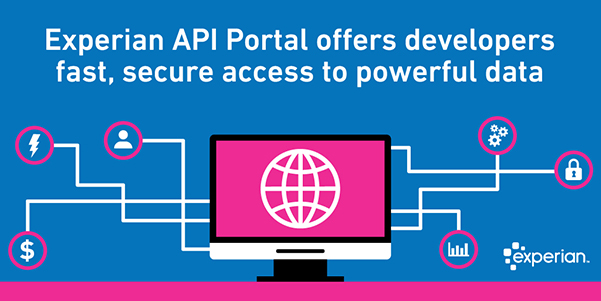
One of the world's largest financial institutions, Citi is determined to keep pace with rapid changes in international commerce. As detailed in the April 2017 issue of PYMNTS.com's B2B API Tracker Citi believes APIs – Application Programing Interfaces – are the key to getting international businesses the financial information they need to prosper. "We realized [our] clients were getting into newer business models which require faster access to payments [and] faster access to information," Mayank Mishra, managing director and global head of channel services for Citi treasury and trade solutions, told B2B API Tracker. "We had to go with a standard that was well-accepted by clients so they wouldn’t have to go through massive infrastructure changes." He noted the company's heavy investments in APIs will give its customers "the flexibility they're looking for to access the relevant information they want." Like Citi, Experian is eager to serve clients in a nimble, open fashion. To address this need Experian has created an API Developer Hub. Found at developer.experian.com, the Experian API Developer Hub is poised to expose the company's deep and detailed data on businesses and consumers, in addition to Experian’s automotive, health, and decisioning services in both the US and across the globe to the developer community. The API Bonanza Although they have been around for years, APIs have recently garnered lots of attention from companies of all types and sizes. "APIs are a technology exposed over the web that allow applications (software programs) to talk to one another," explained Mike Myers, Experian's Senior Director of Product Marketing. "APIs provide software developers with instructions on how to easily access and integrate data that can help fast track new ideas, partnerships, and innovation." Myers leads a team that creates business information APIs for the API Developer Hub, giving developers easy access to Experian's business information to use as they see fit. Laid out simply and intuitively, the Developer Hub serves as an easy-to-use "window" through which users can see: The depth and breadth of information Experian can provide to them How to acquire this information in a form most useful to their company How this information can be easily requested and consumed Serving Both Established Core Customers and Aggressive Start-Ups Myers explained that there are two principal markets for the new API Developer Hub: Mike Myers Experian AgileWorks "The first is our core customers, mainly financial institutions, insurance companies, trade credit, credit managers – basically the user who needs to integrate Experian data to determine their customers’ status, needs to reduce friction and minimize risk when making credit decisions as well as satisfy compliance regulations. This use case has been our bread and butter for decades," Myers said. "They need to manage risk. They must ensure their operations are in compliance. And, perhaps most importantly, when issuing credit, the likelihood that they’re going to get paid. That’s really the bottom line and is a key issue our API developer portal is designed to address." The second use case is designed for the developer community. “Developers are working for companies of all types and sizes that have yet to experience the power Experian’s data assets can deliver. They may share similar needs to our core users, but they most likely also have completely different market problems which Experian data can help solve. Maybe it’s a subset of our data applied to a new use case or maybe it’s combining our data with other data in new and innovative ways.” Experian designed the API Developer Hub to be as user-friendly as possible. New accounts can be setup in minutes. "It's taken a historically offline process and converted it to real-time” Myers said. Developers can explore a host of options, including access to APIs for Business Search, Business Credit, Commercial Public Records and Business Compliance Insight. We don't know what new apps or offerings will appear because of this new venture, but with the amount of energy, imagination and innovation driving today's tech world, we suspect that through APIs, developers will enhance the power of companies -- and consumers -- in ways we can't yet even imagine. We are proud -- and thrilled -- to be contributing to this ongoing revolution. Experian Developer Hub

Loan stacking is a small but serious problem for Online Marketplace Lenders (OMLs). Often invisible to the issuers of commercial capital, businesses that engage in this insidious practice are significantly more likely to become delinquent on their payments and even default entirely on their obligations. If you manage a company that issues commercial credit, you need to be diligent in weeding out these bad players to protect not only yourself but your industry as a whole. What is Loan Stacking? Simply put, loan stacking is the opening of multiple credit lines within a short period of time. (Sometimes as little as 24 or 48 hours.) Because there is a natural lag in credit reporting, the lenders involved usually are unaware that other companies are transacting with the same customer. On the personal credit side, loan stacking is a potential problem for borrowers who run their multiple credit lines near – or up to – their maximums and then find they can no longer meet all of their monthly obligations. However, it’s not uncommon for individuals to carry multiple credit cards, and most credit card companies already have reliable systems in place to ensure borrowers don’t get more credit than their incomes justify. Things are different on the commercial side. Today, a lot of short-term borrowing occurs online through Merchant Cash Advances (MCAs). Repayment takes the form of weekly or even daily debits against the businesses’ cash receipts pulled directly from the borrower's checking account. For example, a restaurant may take out a $10,000 cash advance, the lender then taking five percent of that restaurant’s daily receipts until the advance is repaid – with interest. MCAs are not technically considered “loans,” and thus are not subject to the same regulations and oversight as traditional commercial lending. Such advances usually cover a period of four to eight months. Some can go as long as 12 months, but rarely do they go longer. MCAs are most popular among retail stores and have helped many small businesses get funding when needed. However, problems arise when a business takes out several cash advances at the same time. Instead of paying, say, 5 percent of daily receipts to a single lender, the restaurant loses perhaps 20 percent to four lenders simultaneously. At this rate, the business becomes unsustainable and defaults. Not only is commercial loan stacking a risky practice, it can be legally problematic. Many MCA providers are now placing anti-stacking language in their contracts that require borrowers to pledge not to promise their receipts to any other companies. Stacking loans violates this provision and thus may be tantamount to fraud. How common is commercial loan stacking? Based on our research and analysis, we believe that between five and six percent of all merchant cash advances are stacked. In 2013, the MCA market accounted for about $3 billion in transactions. By December 2016, that number had probably doubled. That means that between $150 million and $360 million in commercial loans are stacked. Granted, that's a drop in the bucket for the $1.9 trillion commercial lending industry, but for a small company just getting in the business of making such credit advances, it could be a serious threat to their portfolio's health. Why loan stacking occurs Why do MCA lenders allow themselves to be pitted against each other in this fashion? Blame the internet. The same internet that gives us the benefits of virtually instantaneous credit applications, reviews and approvals also makes it possible for businesses to easily make multiple applications within a 24- or 48-hour period. Many commercial credit reporting companies may provide updates as quick as 24 hours in some cases, a commercial MCA lender receiving a cash advance application may experience a slight delay in knowing if other lenders are working with the same customer. As for borrowers, most don't stack because they are not intending to commit fraud or otherwise game the system. They're doing so because, at the time, they believe they have no choice. Running a small business is difficult. Businesses often operate on thin margins and owners may, at times, struggle to make payroll. If there's a sudden setback or cash flow suddenly stalls, an owner may need a sizeable cash infusion just to keep the doors open. Being an optimistic lot, most owners who get multiple MCA loans do so in the belief they can quickly get over the hump, recover their losses, rapidly pay back what they owe and no one will be any the wiser. Sometimes, this strategy works. But too often, it does not. And that's when things get nasty. How to avoid loan stacking customers If you are an MCA lender and wish to avoid loan stacking customers, you have three tools at your disposal: Before making a cash advance, ask to see a full year of checking account activity. If you see a pattern of weekly or daily debits in a similar dollar range, this could be a sign that the business already has an MCA in place. If the business is relatively new, check their credit report for a high number of UCC (Uniform Commercial Code) filings. A large number of hard credit inquiries often indicates the owner is doing a lot of loan shopping, and this can indicate loan stacking. Sign up for Experian's custom short-term industry specific risk model consulting services. Signs of loan stacking, particularly in young companies with excessive UCC filings, can often be spotted using this service. For MCAs and all other forms of commercial lending to work, all parties have to play by the rules. Discouraging loan stacking not only benefits lenders, but also the borrowers who depend on the services these lenders provide.

I sat down with Gavin Harding, Sr. Business Consultant with Experian who is attending American Banker’s Marketplace Lending & Investing Conference in New York City this week to get his perspectives. Interview with Gavin Harding Gary: Hello and good evening my name is Gary Stockton and I’m with Experian Business Information Services in Costa Mesa. I’m joined by Gavin Harding who is with our global consulting practice. Gavin is at the Marketplace Lending and Investing show in New York, Gavin how are you doing in New York? Gavin: Good evening Gary it’s good to be here. It’s a tremendous show this year. Very high-energy, very dynamic a little different to some conferences that we’ve participated in over the last couple of years. So some evolving themes. Two years ago, three years ago at this type of conference it was all about growth. Maybe a year ago it became more about regulation and compliance, kind of a more pragmatic approach. And this year it has evolved one more time into a core question of sustainability. How can marketplace lenders build a solid foundation that incorporates compliance, growth, risk, basic core principles of governance to make sure they become profitable and that they are still here in 3 to 5 years? So it’s really interesting to see those themes emerge over the last couple of years. Gary: So marketplace lenders it seems like they are getting their houses in order right? We’ve had a few things happen in the last six eight months that kind of rattled the industry but I think a lot of them have taken a step back from that rapid growth pace to get you know compliance and things like that in order, and a lot of them are pursuing partnerships with lenders right? Gavin: That’s right. So, some of the key drivers have changed over the last year have been some things in the news that kind of shook the industry up a little bit, caused both marketplace lenders themselves and the investment community and the banks and bank partners to stand back a little bit and pause, and address some really key fundamental questions. So, one of the questions, I want to take this from a bank perspective. There was a great program this morning. Four panelists - one banker and three marketplace lending lawyers, and the question was about the interaction between banks and marketplace lenders, and it was really interesting questions that were asked and one of them was, if every marketplace lender has its core competency, it’s target market, the thing it does differently and better than anybody else the differentiator, the key question for the bank partner is how real is that? How do we know? How do we document that? So there’s definitely more of a, it’s great to share the story with the bank partner, now the bank partner is saying that’s great I like the story, now let me show or let me see some evidence how it works, show me that you are adhering to your model consistently. Show me that you were documenting what you’re doing. Show me that you are being fair and disciplined in your credit decisions. Prove to me that when you say your portfolio is grade A+, that it actually is grade A+. So, not so much a skepticism, more a real life pragmatism to fully engage with the marketplace lender and to understand their model down to a granular level in terms of process, in terms of business governance, management practices and so on. So I see it as a convergence of the new innovative approaches of marketplace lenders, and the more traditional approaches of banking. So I see the two as coming together being more engaged and aligning more closely and again that overall pragmatic approach is prevailing. Gary: Are you seeing, last year there were a lot of international companies starting to come on the scene there were a number of Chinese marketplace lending companies, is that kind of still the case or is it pretty much domestic US marketplace lenders? Gavin: So with this particular event this year it seems it’s mainly U.S. based however there are some global players. I’m not seeing a lot of participants and attendees from Asia for instance where at prior events we would have seen more of them. Gary: And so looking at the agenda are there any sessions that you personally are looking forward to? Gavin: Today the one that really resonated with me was the session on bank partnerships, exactly how they can work and the one theme that was a central core statement from that is, compliance is now a price of entry. Compliance is not a want to have. The marketplace lender has to have solid documented procedures in place to have a conversation with a bank. This doesn’t mean that there needs to be an exact mirroring of the bureaucracy and really deep compliance processes in a bank, but it means that the marketplace lender has to understand the banks perspective, has to speak the banks language and needs to understand the regulations with which the bank is complying. That’s now the expectation from banks of their marketplace lending partners. And that changes the world significantly for them. There is a demand for better alignment and mutual understanding, high levels of transparency and the application of fundamental principles of management and good governance so for me that session today resonated. I think it was a long time coming, and it was good for the group to hear that. Gary: That’s great so you’re there tomorrow and you’re speaking at the conference right? Gavin: Tomorrow afternoon we have a session that should be pretty interesting, it’s a panel session and it is centered on building sustainability in your portfolio. Let me tell you kind of where that comes from and why we’re talking about this. So there has been over the last year and a half, a tightening in terms of the availability of capital for marketplace lenders, a heightening in the demand from investors and from bank partners and others, heightening in the demand for additional information and more granular data on what’s in the portfolio, portfolio content, predictive performance, risk profiles and so on and so forth. To continue to address those needs marketplace lenders need to look within their portfolio to add components in terms of reporting, in terms of upfront origination discipline, ongoing management so that as they approach partners to look at these portfolios and invest in them, the partners can gain a level of confidence that the portfolios are as presented. So tomorrow I will be speaking with two other panelists, one from the world of regulation compliance in an advisory capacity working for a law firm in DC with a long history of working in the regulatory and supervisory market. And the perspective of the other panelist is from a firm that assesses portfolios, stress tests portfolios, establishes valuations and so forth, again related to our conversation on investment, the investment community, the reduced availability in capital of capital and the demand for more information and then I’ll be giving some examples of some work we’ve done with clients in terms of trying to understand the portfolio. Of presenting the portfolio in industry-standard approaches, industry-standard scores, industry-standard analytical approaches that can help bridge a portfolio to the investment community, and help that investment community gain a level of comfort that they need. So I think it will be a lively discussion, I think we got some great diversity in the panelists, and from what I saw today I think the audience is going to be very engaged and ask some tough questions. Gary: That’s great so do you think you might have time tomorrow to give us another recap from the event? Gavin: I’d look forward to that. Gary: OK. Well I want to thank you for taking time out I know that you very busy there it’s in the evening so thanks for staying back and giving us your update and we’ll look forward to another chat tomorrow around the same time. Gavin: You’re welcome thank you Gary.