Ask any agency or brand leader what they want from a curation partner, and you’ll hear similar things: better data, cleaner deals, and measurable outcomes. At the same time, most teams are also managing a media strategy that spans dozens of platforms, partners, and environments. Your strategy shouldn’t be constrained by any one of them.
While those things matter, there’s a question underneath all of them that rarely gets asked directly.
Is your curation partner structured to serve you, or to serve their own position in the ecosystem?
That question matters more today than it did two years ago. The programmatic ecosystem has consolidated. Platforms have gotten larger, partnerships have become more entangled, and the line between trusted partner and another stakeholder with an agenda has gotten harder to see.
At Experian, we think about neutrality as the structural question curation has to answer first. Before data quality. Before deal performance. Before scale.
What neutral actually means
Neutral isn’t the same as passive. It means being structured to serve both sides of a transaction without benefiting from pushing either side in a particular direction. That’s the definition of a trusted intermediary: sitting in the middle of the ecosystem to create better outcomes, not to capture a larger share of it.
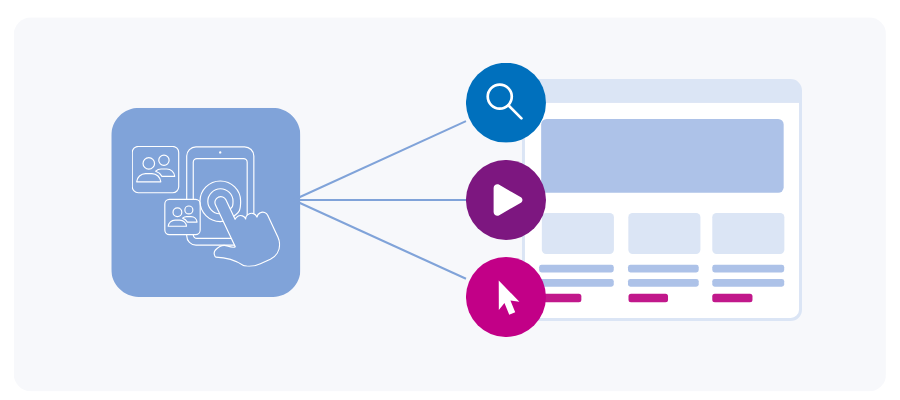
For curation, that means a few things we take seriously. We are demand-side platform (DSP) agnostic. We don’t route buyers toward certain platforms because we have a financial stake in their success. We honor existing supply-side platform (SSP) relationships and build integrations that work across the agencies, brands, publishers, and technology platforms our clients already use. Our goal is to work inside your ecosystem, not compete with it.
Why neutrality is harder to find than it should be
Most players in the programmatic supply chain have built their business models around a specific position. DSPs optimize for platform retention, SSPs want a larger share of available supply, and walled gardens are designed to keep signal inside their environment.
Those are understandable business decisions. But they create conflicting incentives for anyone inside those structures who is also being positioned as a neutral curation partner.
Experian’s position is different. Our value grows when the ecosystem stays open and connected. That alignment shapes how we build, price, and go to market. It’s what makes genuine neutrality possible at scale.
Neutrality is what makes everything else trustworthy
Data quality, interoperability, and performance all matter in a curation partner. But none of those capabilities deliver their full value when the partner providing them has a stake in steering outcomes toward their own infrastructure.
Neutrality is the condition that makes the rest of the evaluation trustworthy.
For teams assessing curation partners right now, I’d start there. Ask how the partner makes money. Ask who benefits when you stay inside their ecosystem. Those answers will tell you a great deal about whether the relationship is actually built in your interest.
About the author

Kevin Dunn
Chief Revenue Officer, Experian
Kevin Dunn joins Experian Marketing Services with more than 20 years of leadership experience across marketing and advertising technology, most recently serving as Senior Vice President of Brands and Agencies at LiveRamp. In that role, he led growth across retail, CPG, travel, hospitality, financial services, and healthcare, overseeing new business, account expansion, and channel partnerships.
Kevin is known for building cohesive, accountable teams and leading with optimism, clarity, and a strong sense of shared purpose. His leadership philosophy centers on empowering people, driving positive outcomes for clients and fostering a culture where teams can grow, take smart risks, and succeed together.
Latest posts

Tapad’s integration with Knorex’s XPO™ platform will complement cross-channel optimization capabilities for brands and agencies in the U.S. and APAC markets NEW YORK and SINGAPORE, Dec. 10, 2019 /PRNewswire/ — Tapad, part of Experian and a global leader in digital identity resolution, has partnered with Knorex, a leading provider of digital performance marketing. Knorex’s self-service online advertising platform, Knorex XPO™, enables marketers to advertise globally in real-time across different media channels, formats, platforms and devices. Tapad’s global, privacy-safe digital cross-device solution, The Tapad Graph, will compliment Knorex XPO™’s own device data set for enhanced marketing capabilities. For Knorex, the integration enables their brand direct and agency customers to gain a more accurate understanding of consumers across devices to reduce campaign inefficiencies and duplication, and to effectively manage frequency capping and attribution. Abhishek Kumar, VP of Engineering at Knorex commented, “Today’s digital consumer is raising the bar for marketers. With increasing marketing complexities and consumer device usage, this integration enables marketers to understand the consumer decision journey with heightened ease. Our combined offering will empower agencies in the APAC and US markets, providing an improved marketing solution that will help to streamline their efforts.” Abhay Doshi, Head of APAC at Tapad added: “The Tapad Graph, when integrated with the Knorex XPO platform, should not only help U.S. and APAC marketers optimize campaign performance through cross device marketing – but also increase the opportunity for brands to reach out to their target customers within a desired time.” To learn more about Tapad and our digital identity resolution capabilities, visit https://www.experian.com/marketing/consumer-sync. About TapadTapad, Inc. is a global leader in digital identity resolution. The Tapad Graph and its related solutions provide a transparent, privacy-safe approach connecting brands to consumers through their devices globally. Tapad is recognized across the industry for its product innovation, workplace culture, and talent, and has earned numerous awards including One World Identity’s 2019 Top 100 Influencers in Identity Award. Headquartered in New York, Tapad also has offices in Chicago, London, Oslo, Singapore, and Tokyo. About KnorexKnorex provides programmatic advertising products and technologies to advertising buyers worldwide. With its cloud-based online advertising platform, Knorex XPO™ enables ad buyers to self-serve and advertise real-time across the globe regardless of the media channels (social, search, OTT/CTV, video, web/mobile etc.), ad formats (display, native, search, social, video etc) and devices (desktop, laptop, smartphones and tablets) to deliver personalized marketing messages to the target audience in an automated way, powered by machine learning/AI. Underpinned by a multi-layered data-driven approach, XPO simplifies the execution and optimization of marketing campaigns, while delivering measurable and attributable performance. Contact us today
Tapad, now part of Experian, technology now powers Lifesight’s real world intelligence platform with cross-device and reach expansion in the Asia Pacific Region SINGAPORE, Nov. 20, 2019 /PRNewswire/ — Tapad, part of Experian and a global leader in digital identity resolution, today announced a new partnership with Lifesight, a leading provider of real world intelligence for advertisers in the Asia Pacific region (APAC). With the combined offering of The Tapad Graph, Tapad’s global, privacy-safe digital cross-device solution, and Lifesight’s real world intelligence platform, brands and agencies across APAC can benefit from better consumer targeting, expanded reach for targeted audiences and web-to-mobile footfall attribution. Through this multi-layered offering, Lifesight’s brand and agency partners can access an omnichannel view of consumers’ paths to purchase, thereby enabling them to increase the reach, measurability and ROI of their advertising campaigns. Rohit Maheswaran, Co-founder of Lifesight commented, “The consumer journey is getting increasingly more complex with ever changing digital and physical world behaviours, making it difficult for marketers to make strategic marketing spend decisions. That’s why it’s our mission at Lifesight to empower the brands and agencies within the APAC market to achieve better targeting and measurement capabilities, and our partnership with Tapad will help further this cause.” Abhay Doshi, Head of APAC at Tapad added, “The Tapad Graph, which enables a unified view of consumers across their multiple digital devices, has a reach of 1 billion devices across the APAC market today. Paired with Lifesight’s consumer insights of more than 500 million unique devices, this valuable partnership will offer the market extended consumer reach and prove beneficial to brands and advertisers across APAC who have historically struggled with resolving attribution.” To learn more about Tapad and our digital identity resolution capabilities, visit www.experian.com/marketing/consumer-sync About Tapad Tapad, Inc. is a global leader in digital identity resolution. The Tapad Graph, and its related solutions, provide a transparent, privacy-safe approach connecting brands to consumers through their devices globally. Our one-of-a-kind Graph Select offering enables marketers the flexibility and freedom of choice to correlate devices to varied objectives, driving campaign effectiveness and business results. Tapad is recognized across the industry for its product innovation, workplace culture and talent, and has earned numerous awards including One World Identity’s 2019 Top 100 Influencers in Identity Award. Headquartered in New York, Tapad also has offices in Chicago, London, Oslo, Singapore and Tokyo. About Lifesight Lifesight is Asia’s leading real world intelligence company that helps marketers understand, target, and measure consumers based on their real world behaviour. Lifesight’s robust platform and data solutions power business decisioning, audience activation, footfall measurement, and in-depth location analytics for leading brands and enterprises. The company is headquartered in Singapore with a rapidly expanding footprint in the Asia Pacific region operating in India, Malaysia, Indonesia, UAE, Saudi Arabia, Thailand, Philippines, Vietnam, Japan, Australia and New Zealand. To learn more, visit https://www.lifesight.io/. Contact us today
NEW YORK, Oct. 24, 2019 /PRNewswire/ — Tapad, part of Experian and a global leader in digital identity resolution, today announced a new partnership with Retargetly, a leading independent full stack data company. The partnership combines Tapad’s cross-device identity resolution technology with Retargetly’s robust data toolset, allowing brands and agencies using Retargetly’s platform to seamlessly access an expanded audience across devices, without compromising precision. In addition to reach expansion, Tapad’s global, privacy-safe digital cross-device solution, The Tapad Graph, enables Retargetly’s brand and agency clients a more holistic digital customer journey analysis, and efficient campaign capabilities like frequency capping and online attribution. At the same time, Tapad will be able to extend its presence into the LATAM region, tapping into Retargetly’s existing regional footprint. Understanding a consumer’s cross-device journey is a marketing necessity. A recent study showed that 75% of consumers expect a consistent experience from brands1. With the number of devices per individual rapidly increasing, digital identity resolution becomes essential to create that streamlined experience consumers crave. “Similarly to Tapad, our goal is to offer marketers a suite of products that can increase the ROI of their campaigns,” said Juan Amuchastegui, Head of Product at Retargetly. “In order to achieve this, marketers need digital cross-device identity resolution to gain attribution, acquisition and reach expansion capabilities. We chose Tapad as our partner because The Tapad Graph has differentiated global scale, and privacy-safe measures, which we knew would benefit our clients’ campaigns.” Santi Darmandrail, Managing Director at Retargetly added, “Across the Americas our clients choose to work with us because of our scale, our precision, and our unique approach to what data can do to transform business outcomes. In that scenario, partnering with Tapad and integrating The Tapad Graph onto our platform was really a no-brainer and we are beyond excited to be making that available for our more than 700 clients across the region.” To learn more about Tapad and our digital identity resolution products, visit our identity solutions page. About Tapad Tapad, Inc. is a global leader in digital identity resolution. The Tapad Graph, and its related solutions, provide a transparent, privacy-safe approach connecting brands to consumers through their devices globally. Tapad is recognized across the industry for its product innovation, workplace culture and talent, and has earned numerous awards including One World Identity’s 2019 Top 100 Influencers in Identity Award. Headquartered in New York, Tapad also has offices in Chicago, Denver, London, Oslo, Singapore and Tokyo. About Retargetly: Retargetly is the leading independent data solution from Latam. Their proprietary platform processes over 25 billion data events a month and transforms them into actionable analytics that drive business results across the board. The recently launched Retargetly Audience Platform (RAM) is the number one data exchange in Latin America, with over 1000 active buyers and millions of dollars traded every year. Regargetly provides services across Latam and has offices in Buenos Aires, Mexico City, São Paulo and New York. For more information, visit www.retargetly.com. Contact us today