At A Glance
Curation is changing how media is bought and sold, moving beyond open auctions and static site lists to more efficient deals. By combining unique data, real-time supply connections, and continuous optimization, curated PMPs reduce waste and improve results. Audigent's, a part of Experian, solutions help marketers achieve measurable outcomes with curated strategies that deliver better targeting, higher engagement, and improved ROI.If you buy media today, you’re already feeling the shift: the best results don’t always come from broad, open auctions or static “safe site” lists; they’re coming from deals that combine the right data with the right inventory and let algorithms optimize in real time. That’s curation. And when it’s done right, it reduces data and media waste for buyers and raises eCPMs (effective cost per thousand impressions) and win rates for publishers.
As part of our Cannes Content Studio series, leaders from Butler/Till, Index Exchange, OpenX, PubMatic, and Yieldmo discuss how curation cuts waste and lifts results.
What is real curation?
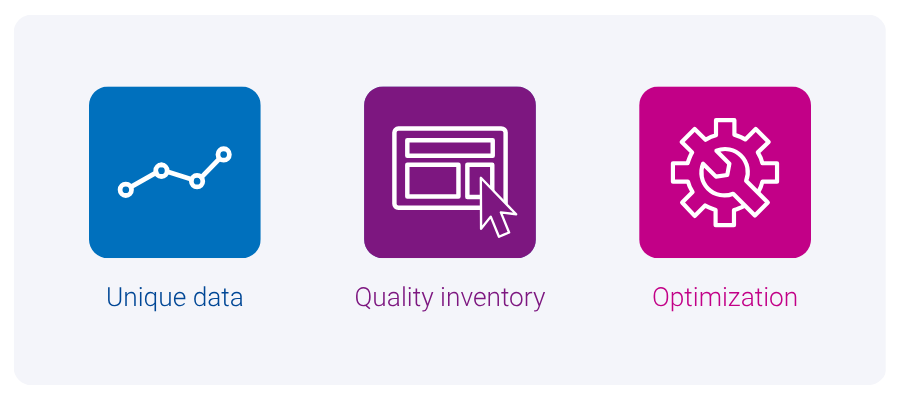
Real curation isn’t “packaging inventory.” It’s a strategic framework built on three pillars:
Why it matters: Manual approaches hit a ceiling. They can’t react quickly to shifting content, identity signals, or auction dynamics. That’s where technology partners come in, keeping the optimization loop running continuously.
Intelligence at every touchpoint
Curation isn’t about shifting control between platforms. It’s about better brand decisions, connecting opportunity-rich supply to the brand’s preferred buying platform and enriching each buy with audience data.In practice, supply-side platforms (SSPs) are ingesting richer signals to route inventory more effectively and support frequency caps and deal prioritization, in collaboration with demand-side platforms (DSPs).
“I think we’re seeing a shift toward bringing more DSP capabilities into the SSP, like supply-side targeting and data driven curation. Advancements in areas like CTV are enabling targeting based on content signals, and SSPs are pulling in more data to inform which supply is sent to the DSP, helping with things like frequency caps.”
OpenXMatt Sattel
Why page-level targeting beats static lists
Static domain lists were a useful first step for quality control. The intent was sound, but the approach was too cumbersome for today’s signal-rich buying. Today, AI and contextual engines read the page, not just the site, and adapt in real time.

Page-level logic delivers three key benefits:
- Accuracy by targeting high-intent, page-level content.
- Relevance by matching the creative to both the content and the audience context.
- Speed by enabling campaigns to move away from underperforming pages in real time, without waiting for a manual trafficking change.
“AI-driven contextual engines evaluate the page, not just the domain, to curate inventory in real time. That moves curation from static allowlists to adaptive logic for greater accuracy, relevance, and speed.”
YieldmoSophia Su
Partnerships broaden who influences the buy

Curation works when publishers, agencies, data partners, and platforms share signals and KPIs.
- Horizontal curation (across multiple SSPs) assembles broader, higher-quality reach and resilience, ideal for scale and diversity of supply.
- Vertical curation (an SSP’s in-house product) provides deep controls within a single exchange, useful for specific inventory strategies.
- Creative and data now shape supply and demand: better creative decisioning, tested against richer signals, improves outcomes.
DSPs remain central for activation and pacing. But the sell-side’s growing intelligence means more accurate inventory routing and signal application before a bid ever fires.
“Curation will continue to evolve through deeper data partnerships and expanded use across publishers and agencies, with more sophisticated types of optimization. DSPs will remain critical to activation, even as sell-side decisioning plays a larger role in identifying and shaping the supply to select.”
Index ExchangeMike McNeeley
Curation delivers access and measurable performance
Here’s what curated deals are delivering.
For buyers
| Result | Type of result |
| 36-81% | savings on data segments |
| 10-70% | lower cost per click (CPCs) |
| 1.5-3x | higher click-through rates (CTRs) |
| 10-30% | higher video completion rates |
For publishers
| Result | Type of result |
| 20% | bid density |
| 118% | win rate |
| 10% | revenue on discovered inventory |
| 25% | eCRM on incremental impressions |
Why it works: When data, supply, and optimization are integrated, you reduce waste, surface better impressions, and let algorithms compound your advantage. That’s why curated private marketplaces (PMPs) have grown at ~19% compound annual growth rate (CAGR) since 2019.
“Publishers using supply-side curation see ~15% more diverse buyers and 20–25% better performance than buy-side-only targeting. Smarter packaging and signal application tighten auctions and strengthen outcomes.”
PubmaticHoward Luks
Holistic curation streamlines planning and outcomes
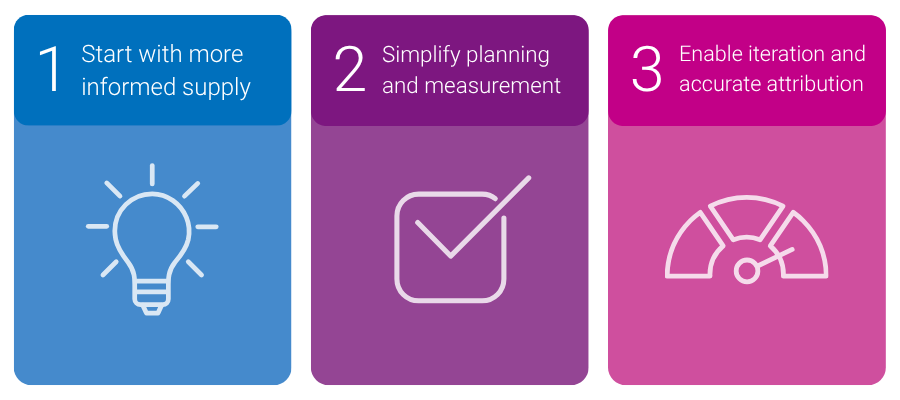
Curation adds the data layer earlier in the buying process, starting at the supply-side. This creates more opportunities to reach the right audience and improves scale and performance. By replacing multiple line items with a single curated deal, campaign setup becomes faster and less error-prone. Curated deals also simplify measurement by including the necessary context for accurate attribution, while dynamic adjustments ensure campaigns remain optimized without requiring manual updates.
“Publishers using supply-side curation see ~15% more diverse buyers and 20–25% better performance than buy-side-only targeting. Smarter packaging and signal application tighten auctions and strengthen outcomes.”
Butler/TillGina Whelehan
It’s much more streamlined, bringing more pieces together so we’re thoughtful and holistic. Adding the audience and data element creates more scale and strategy in how we curate supply and data, and ultimately better results for clients.
The bottom line
Curation has matured from buzzword to performance system. DSPs still anchor activation and pacing, but better sell-side pipes now pre-route inventory and apply signals before any bid starts, making the whole system faster and more accurate. When you combine unique signals, tight supply connections, and always-on optimization, you gain addressability, reduce waste, and achieve better business outcomes for both buyers and sellers.
Curation isn’t just a trend; it’s where programmatic advertising is headed. Start testing curated PMPs today to see the difference for yourself.
Explore curated PMPs with Audigent
Curation FAQs
Curation in performance marketing is the process of combining data, inventory, and optimization to deliver better results. Audigent supports curated strategies through privacy-safe data and advanced integrations.
Curation reduces wasted spend by targeting high-quality impressions and optimizing campaigns in real time. Audigent’s solutions help marketers achieve higher click-through rates, lower costs, and better engagement across channels.
Curated PMPs are deals that use curated data and inventory to deliver measurable results. They help buyers save on data costs, improve ad performance, and achieve better video completion rates, while publishers see higher win rates and revenue.
Audigent provides unique data assets, privacy-safe integrations, and optimization tools that help marketers and publishers create curated deals. Our solutions ensure campaigns are more efficient, targeted, and effective from start to finish.
Horizontal curation combines inventory across multiple platforms for broader reach and diversity, while vertical curation focuses on deep control within a single platform. Both approaches can be tailored to specific campaign goals with Audigent’s expertise.
Latest posts

Sixty-Nine Percent Organic Sales Growth Spurred by Expanded Business and Continued Investment in The Tapad Graph™ NEW YORK, May 7, 2019 /PRNewswire/ — Tapad, a part of Experian, a global leader in digital identity resolution, today announced a record start to the year, following its highest earning year in the company's history. Since January, Tapad has experienced a 69 percent organic increase in global revenue; with strategic investments in talent, continued high retention rates, and an expanded range of clients across global markets. Globally, Tapad increased its client base across multiple categories and verticals, catering to agencies, brands, telecoms, and data providers. The Tapad Graph™'s varied use cases and differentiated global scale have been instrumental to the company's overall success to-date. With an ongoing investment in product, and expected feature releases slated for 2019, the company anticipates these accomplishments to continue. "Since the inception of our business, Tapad has heavily focused on enabling marketers to boost the performance of their campaigns with the help of our advanced digital identity resolution technologies," said Sigvart Voss Eriksen, CEO at Tapad. "While we continue to grow, creating privacy-safe solutions that solve marketers evolving needs remains integral to our evolution. As pioneers in cross-device, we're constantly innovating and pushing ourselves to be at the forefront of industry change. Our leadership in the space is recognized across the industry, as is evident by our current success." In addition to partner expansions, Tapad also invested in new talent. In February, Tapad announced Ajit Thupil as the company's first Senior Vice President of Identity, deepening the company's commitment to creating ground-breaking digital identity resolution products for brands, agencies and platforms. Tapad's investment in talent has been recognized by One World Identity's 2019 Top 100 Influencers in Identity Award and by ClickZ's 2019 Marketing Technology Awards. To learn more about Tapad and our digital identity resolution products, visit Experian.com Open job opportunities across the globe can be found on Tapad's career page here: https://www.experian.com/careers/ About Tapad Tapad, Inc. is a global leader in digital identity resolution. The Tapad Graph™, and related solutions, provide a privacy-safe approach to connecting device identifiers to brand and marketer data, thereby allowing marketers around the world to maximize campaign effectiveness. Tapad is recognized across the industry for its innovation, growth and workplace culture, and has earned numerous awards, including the TMCnet Tech Culture Award. Based in New York, Tapad also has offices in Chicago, London, Oslo, Singapore and Tokyo, and is a wholly owned subsidiary of Telenor Group. Contact us today
The UK digital advertising market is worth £13.44bn, an increase year-on-year of 15%, reveals the 2018 IAB UK & PwC Digital Adspend Study. Report highlights The majority of all growth is coming from smartphone advertising, which has increased by £1.65bn (35%) from 2017. Smartphone advertising now represents 51% of all UK digital ad spend, up from 45% in 2017. Video is now the largest display format (£2307m), overtaking standard display banners (£1486m). Outstream/social in-feed has increased its majority in total video spend, now occupying a share of 57%, up from 52% in 2017. Social revenue now represents 23% of all digital ad spend. Growth is predicted to slow during 2019, with 5% estimated growth (+9% digital, +11% display, +9% search) compared to 15% in 2018. 2018 marks the tipping point towards a mobile-first ecosystem “For the past few years, industry commentators have been hailing the year of mobile. Each January the predictions come and the waiting commences for evidence to mark a tipping point, a shift to a mobile-first digital ad ecosystem. Well, drumroll… it was 2018! The latest Adspend report from IAB UK and PwC reveals that spend on smartphones outstripped spend on desktop for the first time last year. Brands spent 51% of total spend (which stands at £13.44 billion) on smartphones in 2018, up from 45% in 2017 – a significant milestone in the evolution of digital advertising. “This evidence shows that advertisers are increasingly thinking mobile-first. Growth in investment has historically lagged behind the amount of time spent on the device and we expect to see growth continue at a rapid pace to keep up with audience behaviour – two thirds of time spent online is now on mobile, according to UKOM. Other areas of growth highlighted by the report include video, which accounts for 44% of the total display market, while mobile video now makes up 51% of smartphone display. This is no doubt down to bigger mobile screens, better 4G and more readily available WiFi making video ads an increasingly attractive option. “Across the board, advertisers are investing in digital for longer-term brand building as well as short-term activation, with the direct-to-consumer market helping to drive this trend. What’s more, digital continues to be an accessible and popular route to market for businesses of all sizes, from leading advertisers to SMEs.” Tim Elkington, Chief Digital Officer, IAB UK Content & context crucial for attracting audiences “As people spend more and more of their time on mobile, it’s comes as no surprise that advertisers will follow where audiences are with their marketing spend. “Video has been the driving force in this growth, indicating that engaging visual content is still key in helping brands to achieve great results and to capture consumer attention in a vast sea of digital noise. “Video still has a way to go if it is to reach the level of effectiveness of traditional formats like cinema, but it will be interesting to see how the format develops over the next year or so. Ultimately, brilliant content and properly considered context are crucial for advertisers hoping to attract relevant audiences and build strong brands long term.” Kathryn Jacob OBE, CEO, Pearl & Dean Mobile-first approach driving investment in user experience “As a mobile-first approach has become the norm for many businesses, we’ve seen significant innovation and investment in the user experience that has fuelled the rise in mobile commerce. “Yet, for some years, limitations in the technology and formats available have meant that mobile advertising couldn’t always keep pace with changing consumer behaviours – delivering weaker performance when compared to desktop. “Fortunately, mobile has made huge strides in recent years. Mobile advertising affords great targeting opportunities for brands and a more interactive and immersive experience for consumers. “There is no reason to doubt this trend will continue as advertisers design their media, creative, and targeting strategy with mobile at the heart – optimising performance, enhancing the customer experience, and delivering the best results.” James Cragg, UK Managing Director, Tug New technologies to improve investment efficiency “The UK digital ad market has continued to grow despite the various challenges that the market has faced, including the current socioeconomic climate and general changes in the industry. As spend increases, it’s important to look at how media buying can be made as efficient as possible, minimising waste and maximising the return on investment. “Marketers will start to look to new technologies, like AI, to offer an impartial and more efficient approach to media buying, allowing marketers to measure effectiveness of campaigns and allocate spend accordingly.” Carl Erik Kjaersgaard, Chief Executive, Blackwood Seven Industry going from strength to strength “This significant growth in ad spend is great to see and shows that our industry is going from strength to strength. It’s especially good to see that as advertisers invest more and more in digital advertising, they’re becoming more considered in where they’re spending their money – with a large portion of the growth coming from companies that are part of IAB’s Gold Standard. “At The Trade Desk, we’ve long been ambassadors for the importance of transparency. These findings show that it isn’t just the right thing to do, but makes good business sense as advertisers increasingly choose partners who are demonstrating a commitment to best practice.” Anna Forbes, UK General Manager, The Trade Desk Advertisers embracing mobile “As consumers spend more of their time online, it’s no surprise that digital ad spend has continued its rise, up 15% to £13.4bn. With digital, in every sense, becoming further embedded in our daily lives, it is inevitable that this number is set to rise further next year. “Given the vast majority of people using their smartphone as their primary digital device, evident from site traffic stats we see across the board, the IAB report shows that advertisers have started to fully embrace this shift by following with ad spend. Over the last few years, a combination of faster wireless connectivity along with more capable devices has made it the go-to device for consumers to get online. This is set to continue over the next few years with 5G and even faster, more capable smartphones arriving (i.e. foldables) that will further cement ‘mobile’ as the main digital device to reach consumers.” Wajid Ali, Head of Paid Search, ForwardPMX Budgets must go to professionally produced content “In the IAB’s latest ‘Digital Adspend Study’ it is positive to see that outstream continues to dominate video spend, showing close to a 10% year-on-year increase. “Unsurprisingly, the study highlights that mobile is the most important distribution device (76% of all video spend is on the smartphone), and it’s great to see the format we invented dominating that space. “However, it’s now more pertinent than ever that clients and agencies invest their outstream budgets into professionally produced content and not social infeeds. Budgets must go where content is being produced, rather than aggregators and distributors, where the content is read rather than where a click happened. “We must remember how important local, national, and vertical press are to the global digital ecosystem. By unifying the best publishers at scale, delivering mobile-optimised creativity and outcome-orientated distribution, we are fighting to ensure publishers are getting their fair share of revenue in comparison to the social platforms.” Justin Taylor, UK MD, Teads UK market in robust health “The latest IAB digital ad spend report shows encouraging signs that the UK digital advertising market is in robust health, with mobile advertising continuing its upward trend. “The rise of up-and-coming ad formats like Shopping Ads, Google’s Responsive Search Ads, and Facebook Messenger Ads show that advertisers are looking for ways to capture consumer attention in the evolving digital landscape. As a result, the lines across search, social, and e-commerce are more blurred than ever with the introduction of features like Checkout for Instagram and Shopping ads on Google Images. Furthermore, with the rapid growth of Amazon’s ads business, e-commerce has quickly emerged as a third pillar of digital advertising, making it vital for marketers to have a complete view of the customer journey across channels and devices, if they hope to more accurately understand campaign performance and attribution.” Wesley MacLaggan, SVP of Marketing, Marin Software Digital identity resolution essential in understanding customer journey “Last year’s figures show that UK ad spend is starting to mirror the behaviour of consumers who, according to UKOM data, spend two-thirds of their time online on a smartphone. The fact that mobile ad spend now surpasses that of ad spend on desktop highlights marketers’ understanding that digital identity resolution is essential, not a nice-to-have. “Appreciating the cross-device behaviours of consumers allows brands to gain a better understanding of the customer journey and build stronger relationships with their audiences long term.” Tom Rolph, VP EMEA, Tapad, a part of Experian. Contact us today
OpenAudience promises the targeting capabilities of a walled garden but without the restrictionsOpenX has lifted the lid on a targeting solution it claims will offer people-based advertising opportunities outside of the industry’s walled gardens such as Facebook and Google. Dubbed OpenAudience, the supply-side programmatic player claims the new offering is powered by proprietary data assets and is supplemented by data partnerships with partners such as LiveRamp and Tapad, a part of Experian. Initially available in the U.S., OpenAudience has a user graph of 240 million monthly users and is currently being tested with multiple marketers with a general rollout planned for the third quarter of 2019. Speaking with Adweek, OpenX CEO Tim Cadogan said the rollout would help differentiate it among its peers as for the most part ad exchanges have marketed themselves based on their impression count, not necessarily addressable audiences. Compare this with Google and Facebook, both of whom account for almost 60% of U.S. ad spend, although this is disproportionate to the amount of time spent with their properties, according to Cadogan. “The thing that has given Facebook and Google so much power is that they have people-based systems [for ad targeting] that are simple to use and operate with a massive scale that are effective, and programmatic hasn’t kept pace with that,” he said. Cadogan cited the findings of a further study by eMarketer, which indicated that marketers are increasingly reliant on such walled garden players for their online inventory supply with the latest launch geared towards capitalizing on that. The latest launch is the culmination of the California-based company’s recent strategic overhaul, namely its attempts to get to grips with an identity-based solution that provides options outside of the walled gardens. Also speaking with Adweek was Todd Parsons, OpenX’s chief product officer, who offered further insight into how OpenAudience operates including how it uses its recently sealed relationship with Google Cloud Platform and machine learning to ape the efficacy of walled garden advertising solutions. “We had to build a matching technology, which made it possible for us to talk about monthly active users instead of talking about cookies or devices,” he explained. “And it took several quarters of staffing up with the right people from the consumer data and identity space.” OpenAudience’s matching technology works by using the identity and cookie matching capabilities of cross-device specialist Tapad and data onboarder LiveRamp to formulate a persistent, deterministic ID which can then be used to match advertisers with audiences on its ad exchange. “So, the idea isn’t for us as a company to put our future into one provider,” added Parsons. “It is to provide a matching technology that uses the best of several.” OpenAudience will also include involve additional tie-ups to offering further demographic information on the 240 million monthly U.S. users such as location, etc., which is currently in testing. “We felt like we needed to be very different about enabling marketers and publishers to activate against that data,” added Parsons. He further added that OpenX wants to rival Facebook’s levels of service when it comes to helping publishers monetize audiences on the social network, except this time on the open web. “No one has actually pushed identity and consumer data into the hands of publishers in a way that you might unify the view of audiences across many websites.” OpenX’s Cadogan summed up the OpenAudience offering and how it may look to advertisers when he said, “Imagine the open web is one publisher, and this lets buyers look at it as a single entity and market to them accordingly.” Contact us today