
What makes an ad impression valuable to an advertiser? The inventory where an ad appears, the audience it reaches, or its potential to contribute to a business outcome?
The answer often involves all three. Yet curation is frequently discussed in terms of site lists, audience segments, and deal IDs. These play an important role, but they don’t tell the full story of the intelligence and decisioning required to evaluate supply and media opportunities.
Advertisers want to reach relevant audiences across quality inventory, make efficient use of their media investments, and achieve measurable business outcomes. Meeting those goals requires connecting the right identity, consumer intelligence, technology, and optimization closer to the source of each impression. Making decisions too late in the transaction can mean missing more effective, direct, or cost-efficient paths to an advertiser’s target audience.
The four pillars of effective curation
Curation works best when four capabilities come together to connect advertiser objectives with relevant media opportunities.
1. Identity makes data useful across environments
Advertisers know their customers, publishers know their audiences, supply-side platforms (SSPs) understand their inventory and traffic, and demand-side platforms (DSPs) bring knowledge of campaign goals. Data partners add behavioral insights. Each may use different identifiers, making it harder to recognize the same person or household consistently across the ecosystem.
Identity provides a shared foundation for connecting these signals. A trusted, widely adopted identity graph can link permitted identifiers to a consistent view of people and households across participating ecosystem partners. This allows advertiser, publisher, and audience data to work together under appropriate privacy controls to inform media decisions.
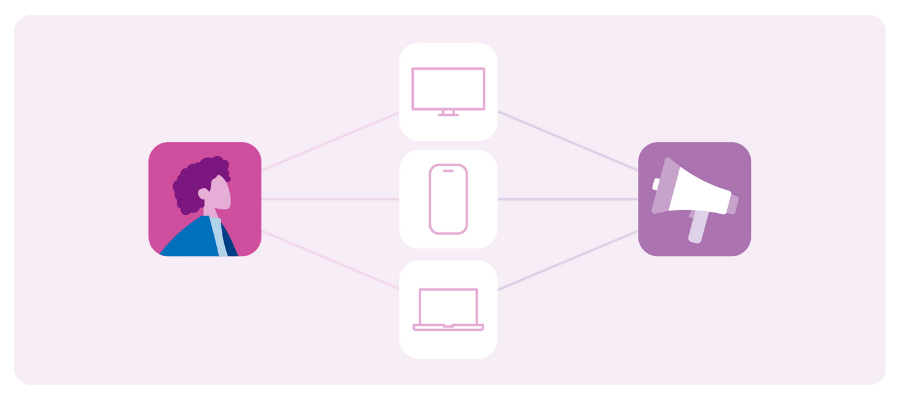
When that identity foundation is available through real-time integrations, audience signals can be interpreted more effectively as media opportunities arise. Decisioning can apply a consistent understanding of the audience across participating supply environments, keeping audience context connected as opportunities move through the ecosystem.
2. Consumer intelligence adds context to each opportunity
Effective consumer intelligence starts with trusted data and understanding who consumers are, what they do, and what they care about, collected and used with appropriate consent, privacy protections, and permissions.
To achieve that, it’s critical to identify which data providers, audience segments, and types of data are best suited to a specific campaign and deal. Different sources offer different insights, and selecting the right combination helps advertisers identify relevant audiences and make more informed media decisions.

The right signals depend on the campaign. Retail campaigns may draw on purchase history and other behaviors that help predict future spending. Automotive campaigns may rely more on in-market signals, given longer buying cycles, to inform audience, messaging, and channel strategies. First party audiences play a crucial role in many use cases, and the ability to apply these audiences through an independent decisioning system maximizes match rates while minimizing data sharing across platforms.
Rather than relying on a predefined mix of audience segments, an advanced decisioning system can use campaign goals, brand context, and other available signals to shape the audience for each opportunity.
It can help identify which data providers, segments, and data types are most relevant, and then adjust the audience mix as performance and outcomes provide new information. This supports more tailored media decisions throughout a campaign.
3. Technology integrations connect intelligence to supply
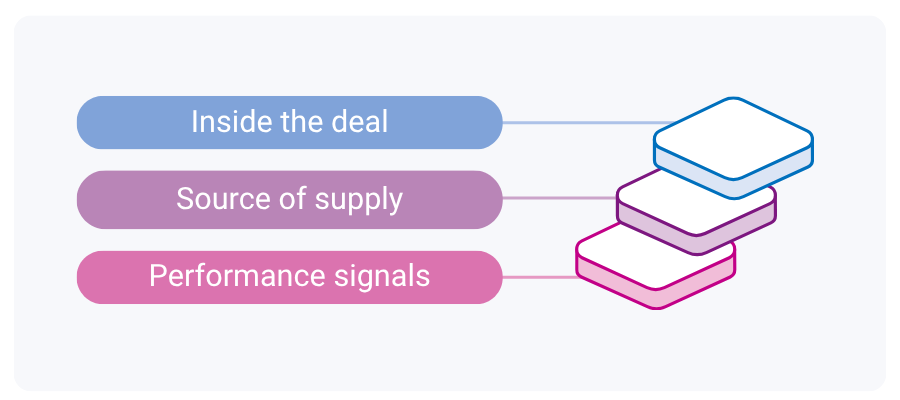
Real-time connections with SSPs let decisioning systems consider signals such as context, device information, and format alongside advertiser audience and campaign criteria as opportunities arise. But each SSP integration can expose different signals and data structures, making it difficult to apply a strategy consistently across supply. A neutral intelligence layer connected through the right technology framework can normalize those inputs across participating SSPs and return qualifying deal and audience signals through the SSP, helping DSPs prioritize relevant opportunities in their existing workflows.
4. Optimization turns insights into better decisions
Optimization becomes more informed as demand-side performance data, signals from real-time supply integrations, and online and offline conversion data come together. Connected through a consistent audience view, these signals can help categorize inventory and identify supply paths associated with stronger performance.
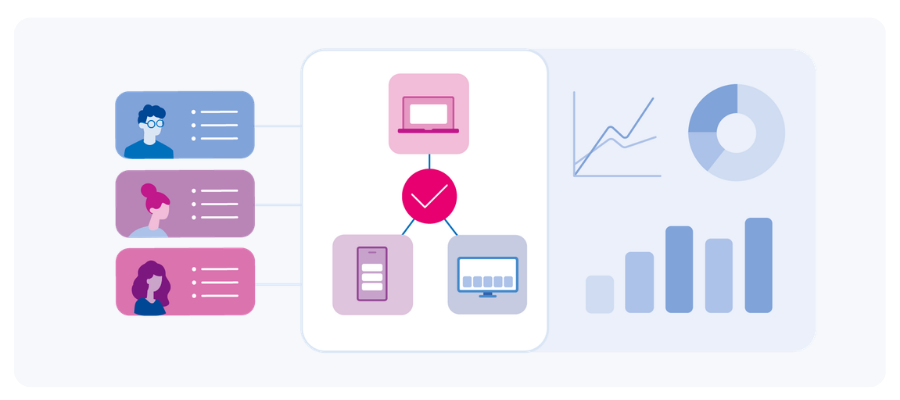
Real-time decisioning and optimization help apply those insights quickly during a campaign, while accumulated learnings can inform future campaign setup and delivery. Decisioning systems can evaluate impressions quickly. The quality, relevance, and connectivity of the information behind them determine how useful those decisions are.
Bringing intelligence closer to the impression
Advances in real-time technology are creating new opportunities to apply this intelligence earlier in the media transaction.
Traditionally, much of the intelligence informing programmatic buying has been applied through DSPs. Curation was developed and widely adopted in part because it improved decisioning and performance by layering supply side signals into the ad buying workflow. Containerization is how SSPs are extending that shift, allowing decisioning capabilities to operate within or alongside their infrastructure, closer to the source of supply.
While containers are powerful tools, containerization alone doesn’t create interoperability across supply. Each container operates within its SSP environment, therefore utilizing native features and signals available there.
Real-time integrations are needed to pass signals from participating SSP environments into a neutral decisioning layer. That layer can connect varying signals and identifiers across supply sources, helping apply decisioning more consistently across different sources and types of supply. Imagine an automotive campaign focused on test-drive bookings. Identity and audience signals help recognize likely buyers. SSP signals such as context and format describe the available placements. Campaign and conversion feedback can show which audience, context and placement combinations are performing better. Real-time integrations help apply those learnings across participating SSPs during the campaign, so the DSP can prioritize stronger opportunities while retaining control of bidding.
Advertisers, publishers, data providers, DSPs, and SSPs each contribute different signals that can inform media selection. Connecting those signals through trusted identity and interoperable technology can make decisioning more relevant to individual campaign objectives.

AI can take this a step further by analyzing connected signals and executing media decisions faster and more dynamically. As more relevant data becomes available in real time, AI-driven models could tailor how opportunities are evaluated based on an advertiser’s campaign objectives, audience priorities, and the specific requirements of a DSP. With access to appropriate performance feedback, these systems could refine their decisions over time, making curation increasingly responsive to individual campaigns.
What’s next for curation?
Curation will continue evolving into a real-time decisioning engine for the advertising ecosystem, connecting identity, consumer intelligence, technology, and optimization closer to where media opportunities become available. Neutrality and interoperability will be central to making that intelligence work across platforms and creating value for everyone involved.
Site lists and deal IDs remain useful components of programmatic activation. Relying on site lists and contextual signals alone, though, means overlooking much of what curation can offer. The broader value comes from connecting identity, consumer intelligence, technology, and optimization through real-time supply integrations to inform media decisions. As these capabilities become more connected, curation can play a greater role in how the industry evaluates and acts on media opportunities, helping advertisers and their partners make faster, more customized decisions across the open web.
That’s where the value of modern curation comes into focus, and where its future in media lies.
About the author

Budi Tanzi
SVP, Product, Experian
Budi Tanzi is the Senior Vice President of Product at Experian Marketing Services, overseeing all identity products. Prior to joining Experian, Budi worked at various stakeholders of the ad-tech ecosystem, such as Tapad, Sizmek, and StrikeAd. During his career, he held leadership roles in both Product Management and Solution Engineering. Budi has been living in New York for almost 11 years and enjoys being outdoors as well as sailing around NYC whenever possible.
Latest posts

Learn how brands can close the activation gap by carrying audience intelligence from identity to execution and outcomes across channels.

In our Ask the Expert series, we interview leaders from our partner organizations who are helping lead their brands to new heights in AdTech. Today’s interview is with Samantha Zhang, Senior Data Scientist, and Jim Meyer, General Manager of the DASH TV Universe Study at the Advertising Research Foundation (ARF). DASH is an annual tracking study conducted by the ARF to define and better understand TV audience behavior and household dynamics. What does DASH measure, and how does it help the industry understand TV consumption today? By capturing hundreds of individual- and household-level data points from each respondent in a rigorous and nationally projectable sample, DASH creates a comprehensive picture of U.S. consumer TV “infrastructure” – how America watches. Core elements in DASHElements that create context in DASHTV setsLocation | brand | smartness | service modes | sources DemographicsConnected devices Game consoles |video players | streaming devicesYesterday viewing Daypart | TV/device genre | Out-of-home viewingMobile devicesOwners | sharing usersShoppingOnline and in-store | Exposure to major RMNsInternet serviceModes | ISPs | connectivity by device Streaming audio Streaming TVSVOD/AVOD tiers and sharing | FAST Email accounts and apps Live TV Modes of access | including casting from devices Social media For example, DASH gathers: Data on every TV set, including brand, room location, age, “smartness,” and connection devices and modes Household connectivity and video service data, even in homes with no TV set Internet Service Providers (ISP) and TV service usage, including Multichannel Video Programming Distributors (MVPDs), virtual vMVPDs, streamers (ad-supported and premium), and Free Ad-Supported Television (FAST) channels Person-level ownership and usage of video-capable mobile devices, including smartphones, tablets, and laptops Measures of viewing and co-viewing across dayparts, devices, and services Additional modules covering shopping and retail media networks, streaming audio, social media, email, and apps Broad coverage and granularity make DASH a uniquely robust source of truth for practitioners across the industry, including measurement experts and ad programming strategists. DASH also reports regularly (and publicly) on key industry dynamics. DASH identified a growing segment of device-only viewers – now nearly 9 million households that watch TV, but do not own a TV set – and highlighted the implications of that trend for traditional ratings systems based only on households with TV sets. Households (HHs – million)2025 HHs (M) U.S. penetrationChange vs. 2024 (M)Total US134.8100%+2.7Connected TV (CTV)114.685%+2.1TV (Set)124.292.2%+1.1Device-only8.86.6%+1.6TV-Accessible133.198.7%+2.7 DASH called out the rise in app-based pay TV and proposed a new connection framework that better represents the modern TV world, in which linear and streaming overlap. DASH also defines the universes of households reachable with advertising. This graphic, for example, shows how all ad-supported linear and streaming properties in aggregate define the true scale of TV advertising. While 35 million households (and growing) are reachable only with streaming ads and 13 million (and falling) only with linear ads, most households are reachable with both, underscoring the importance of understanding the “overlap.” Who uses DASH data, and what decisions does it help inform? There are three primary users of DASH, each with its own use cases: Measurement providers, including Nielsen, use DASH to calibrate viewership data, turn household data into persons data (and vice versa) and estimate potential reached audiences–what the providers call media-related universe estimate (MRUEs)–for the calculation of ratings. Not surprisingly, measurement companies were the first to see the value that an independent TV universe study could provide. Media companies, including major broadcasters and streamers, use DASH to add context and color to their ad sales presentations – and to track the measurement providers, whose ratings play a major role in valuing ad inventory. AdTech companies, including Experian, use DASH to create high-value audience segments for activation. The recent accreditation of DASH by the Media Rating Council (MRC) and adoption by Nielsen as an input to its TV ratings have generated interest from a broad range of companies. We are actively pursuing new licensees and partners to make DASH more useful within, and even outside, the TV ecosystem. What does MRC accreditation signify, and why is it meaningful for DASH? MRC accreditation means DASH passed a rigorous audit conducted by Ernst & Young over many months, which validated our methodology, controls, and data quality. MRC accreditation establishes that DASH is an industry-standard dataset. While the service provider normally announces its own accreditation, the MRC took the unusual step of issuing its own release on DASH, announcing the accreditation of DASH for TV universe estimation and endorsing the study for broader, cross-media use. How does Experian use DASH data to build audiences? The segments combine specific TV usage habits and behaviors from DASH with Experian data on demographics, spending, and other contextual inputs to create a fuller view of consumer viewing behavior. They are designed to be valuable to advertisers in many categories and planning contexts – and to be customizable to fit advertisers’ media targets. The segments can be used to: Apply or suppress audiences to improve target coverage across a campaign Better align media and creative Reach elusive but high-value viewers, such as Ad Avoiders Drive valuable consumer behavior Achieve specific advertising objectives What are some practical use cases for DASH-based audiences? Here are some practical use cases for four different kinds of DASH segments in five different advertiser categories. Travel Co-WatchersA couples-only resort uses TV Co-Watching Households without Children to strengthen target reach and ad memory recallA big theme park destination uses TV Co-Watching Households with Children to reach families in moments of togetherness Home Entertainment TV Owners and Brand LoyalistsA premium TV manufacturer uses the overlap of Multi Brand TV Owners and Single Brand TV Loyalist Households to market its newest TV model to its most loyal consumers. Fast Food Screen Size ViewersA fast food chain with a high-impact new brand campaign uses Large Screen TV Viewers to better align the media and creativeThat same fast food chain uses Small-Screen TV Viewers to drive store traffic by increasing exposure of its retail campaign among on-the-go viewers Financial Services Cord Cutters A personal cost management app and a cash-back credit card target Streaming-First Cord Cutter Households to reach young, tech-savvy, cost-conscious consumers Thanks for the interview. Where can readers learn more about DASH? We started work on DASH seven years ago, and it’s been fun to watch it “grow up.” Our partnership with Experian is a big step toward putting DASH to work for advertisers and agencies. To learn more, visit our site at https://theARF.org/DASH or contact us at DASH@theARF.org. Contact us About our experts Samantha Zhang, Senior Data Scientist at ARF Samantha Zhang is a Senior Data Scientist at the Advertising Research Foundation working on the DASH TV Universe Study, with additional research spanning areas including attention measurement, digital privacy, and artificial intelligence. Jim Meyer, General Manager, DASH, at ARF Jim Meyer is general manager and co-founder of the ARF DASH TV Universe Study and managing partner of Golden Square, LLC, which advises media and research technology companies on growth strategy and development. Latest posts

Reach buyers based on how they shop in a changing market. Experian Audiences help target switchers, align to budgets, and match messaging to inventory.