
Originally appeared in The Current
Forget the cookie delay — AI is already rewriting the rules of advertising.
While the industry was busy debating yet another postponement of Chrome’s third-party cookie phaseout, AI quietly became the most disruptive force in marketing. But here’s the twist: AI doesn’t work without identity. If marketers want results — real outcomes, not just impressions — they need to prioritize the data that makes AI go.
First-party data strategies are now mainstream. Interoperable identity solutions like Unified I.D. 2.0 (UID2) and ID5 are gaining adoption across the open web. Connected TV (CTV) has grown into a performance-focused, cookieless channel. Contextual and geo-based targeting have become smarter and more scalable. Identity graphs are helping marketers stitch together signals across devices, platforms, and channels.
The foundation for a better ecosystem isn’t being built — it’s already here.
The AI hype is over — and the stakes are higher
It’s no longer buzz. AI is here, and it’s already reshaping how we plan, activate, and measure advertising.
We’re seeing the rise of agentic AI: systems that don’t just surface insights but act on them. These AI agents are identifying patterns, building audiences, optimizing media buys, and analyzing performance. AI is helping marketers stop guessing and start improving.
But there’s a catch — one we can’t afford to overlook.

AI is only as good as the data it works with. “Garbage in, garbage out.” as the saying goes. And in advertising, that means if you don’t know who you’re reaching, even the smartest AI won’t drive results. To unlock AI’s full potential, marketers need a strong, privacy-safe identity foundation.
Identity is the fuel that makes AI work
AI can personalize creative, optimize in-flight campaigns, and even recommend which channels to prioritize — but it can’t do any of that well without context. And context starts with identity.
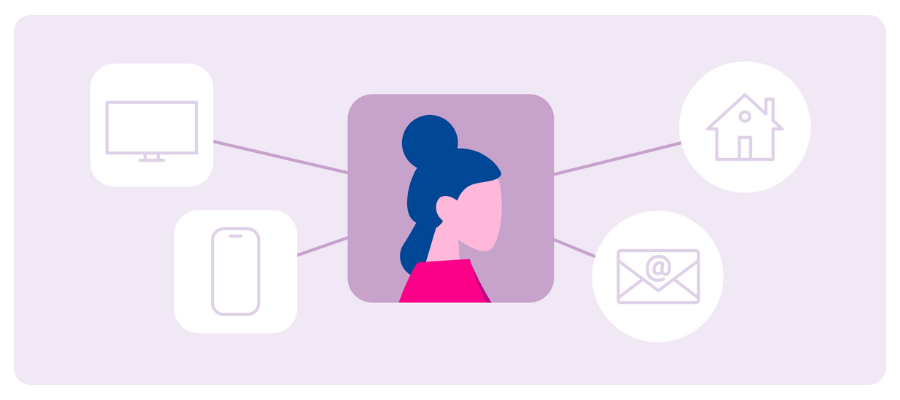
Identity connects signals from different devices, logins, channels, and interactions to real people. It tells your AI models who you’re talking to — not just what they clicked. That kind of clarity gives AI the power to make smarter predictions, uncover insights, and deliver relevance at scale. Without identity, AI is guessing. With identity, it’s delivering.
Identity is the foundation of the outcomes era
We’re living in a performance-driven age. Impressions and clicks are no longer enough. Marketers today are being judged by real outcomes: incremental sales, customer acquisition, revenue lift, and long-term value.
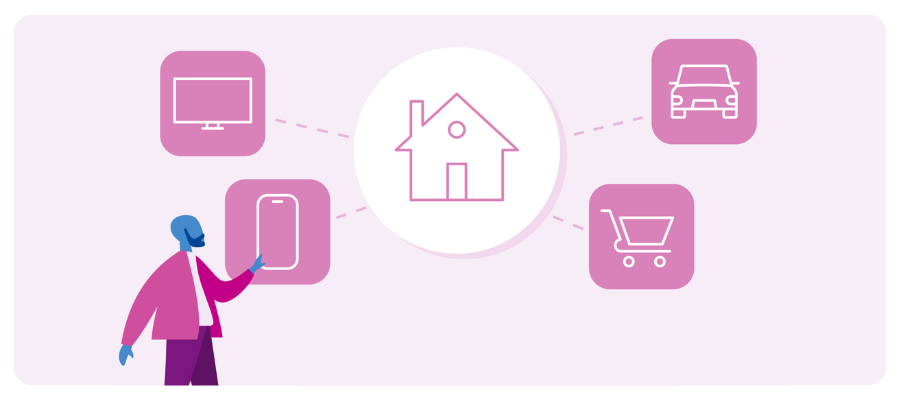
To measure those outcomes, you need to know who you reached — and whether they took action. Identity makes that connection possible. It links ad exposure to real-world results. It enables accurate attribution across channels. It powers personalization at every stage of the journey, making every impression more valuable.
This is the outcomes era, and identity is what makes it measurable.
Commerce media and CTV show what’s possible
Two of the fastest-growing channels — commerce media and CTV — are great examples of identity in action.
At Experian, we’ve invested in this future. Our recent acquisition of Audigent brings together data, identity, and activation — under one roof — built to support both AI-driven planning and outcome-based performance.
How marketers can win now
To stay ahead in a world defined by AI and outcomes, marketers need to:
It’s not about rebuilding everything. It’s about building on what’s already working.
Final thought: Identity is the bridge
AI is raising the bar, and outcomes are the new standard. But neither works without identity. The marketers who win won’t treat identity as a compliance checkbox — they’ll treat it as their competitive edge.
Get started with us today
Latest posts

Tapad Device Graph™ and Sojern’s mobile offering unify travel intent signals; achieve amplification rate of more than 600 percent NEW YORK, June 15, 2017 – Tapad, a part of Experian, the leader in cross-device marketing technology, is partnering with Sojern, travel’s direct demand engine, to provide marketers with an even stronger understanding of travelers as they research and shop across multiple devices. Combined with its 350 million global traveler profiles and billions of predictive purchase intent signals, Sojern utilizes the Tapad Device Graph™ to resolve the complex travel consumer journey, target travelers more precisely, and derive more actionable insights for its travel clientele. According to Sojern’s research, travelers visit hundreds of websites preceding their trip purchase, with some consumers reaching upwards of 450 touchpoints prior to booking. Sojern’s partnership with Tapad will help unify these touchpoints across devices, enabling travel brands to more effectively nurture and engage potential buyers during the purchase process, regardless of which device they use. “Sojern’s been focused on travel for over a decade, helping brands activate predictive purchase signals and leverage our traveler profiles into effective performance marketing campaigns,” said Mat Harris, Sojern’s VP of Product, Enterprise Solutions. “The cross-device insights we gain from the Tapad Device Graph provide a valuable tool for our customers to reach travelers across devices in real-time and at scale, on the right device.” Prior to selecting Tapad as its cross-device partner, Sojern surveyed several probabilistic and deterministic cross-device vendors and performed an extensive global test. The test was an examination of scale, match rate and several other factors, which enabled Sojern to learn as much as possible about each vendor. After examining the final test results, Sojern selected Tapad based on its excellent test performance, tried-and-true experience in the market and complimentary business model. To date, Sojern has already seen an amplification rate of more than 600 percent as a result of the integration, meaning that the Tapad Device Graph is connecting an average of six or more device and browser IDs for every one existing Sojern ID. “Not only is Sojern a compatible partner for our singular Device Graph capabilities, but they are also an incredible data partner to help expand our work in the travel industry,” said Pierre Martensson, SVP and GM of Tapad’s global data division. “Working with the team at Sojern allows us to solve a true challenge within the travel industry today: creating a unified view of customers so travel brands can better understand and access their key audiences at every point along their path to purchase.” Contact us today
Leading data insights and cross-device-powered services bridge mobile insights with connectivity to drive real-time consumer intelligence NEW YORK, May 17, 2017 /PRNewswire/ – Tapad, now a part of Experian, the leader in cross-device marketing technology, has partnered with Resonate, a leading provider of real-time consumer intelligence and activation SaaS solutions. Through this partnership, Resonate will leverage the Tapad Device Graph™ to capture a deeper understanding of its mobile app audiences and provide brands with a more direct connection to their intended consumers. The integration of Resonate and Tapad's technologies equips mobile app brands with insights into their consumers' values, beliefs, motivations and purchase drivers. As a result, mobile app brands will better understand how to tailor messaging, drive advertising engagement, increase lift in performance across mobile consumers and ultimately boost revenue and returns. Utilizing the advanced data that the Tapad Device Graph™ provides, Resonate will create an Identity Service that connects mobile IDs to Resonate IDs for reporting insights both in-platform and out. To date, Tapad and Resonate have already driven incremental device connections for nearly 60 percent of customer profiles with an amplification rate of more than 120 percent, resulting in more than 400 million net new IDs within Resonate's user base. "After testing multiple partners over the course of 12 months, it was clear that Tapad was the partner for us, given their ability to provide cross-device connectivity for more than one billion unique IDs against our consumer base," said Joel Pulliam, SVP and chief product officer at Resonate. "In addition, Resonate customers have an inherent trust in Tapad's mix of probabilistic and deterministic mobile connectivity data to provide a unified understanding of their mobile audiences." "Partnering with Resonate will not only provide its brands with a more in-depth and actionable understanding of its consumers, but it will also allow our clients to connect with mobile consumers on a deeper level," said Pierre Martensson, SVP and GM of Tapad's global data division. "Resonate is not just answering the question of 'how' consumers are making purchases, but also tackling the more difficult question of 'why' they make certain buying decisions to best inform mobile brands about their audiences." Contact us today
Partnership leverages industry-leading Tapad Device Graph™ for more effective video marketing across all connected devices NEW YORK, April 11, 2017 /PRNewswire/ – Tapad, a part of Experian, the leading provider of privacy-safe, cross-device marketing technology solutions, has announced its partnership with Innovid, the world's leading video marketing platform. This integration enables Innovid to bring cross-device personalization and a more unified viewer experience to its video marketing clients including Bank of America, L'Oréal, Microsoft and Procter & Gamble. Innovid's proprietary technology is the only platform optimized for video, enabling marketers to thrive in an ever-changing digital television landscape. Since its launch last year, Innovid's Marketing Cloud Suite has helped marketers increase message relevance and the opportunity to drive conversions, retention and acquisition through video personalization. By leveraging the Tapad Device GraphTM, Innovid's marketers can now benefit from the ability to drive consistent, personalized user experiences across all devices, creating more impactful connections with consumers and increasing ROI. "Personalization is a must for every data-driven marketer and really needs to happen across all devices to ensure a unified customer journey," says Ronnie Lavi, SVP of product at Innovid. "At Innovid, we recognize one size does not fit all when it comes to video. As an open platform, we are always looking to add best-of-breed capabilities through integrations and partnerships, and we've chosen Tapad because of its superior cross-device expertise." "Innovid has long paved the way for effective personalization in the video marketing space," says Pierre Martensson, GM of Tapad's data division. "As video continues to gain popularity across digital formats, we're excited to see how our technology empowers Innovid to bring that renowned personalization to more customers across all of their devices." Contact us today