
Originally appeared in The Current
Forget the cookie delay — AI is already rewriting the rules of advertising.
While the industry was busy debating yet another postponement of Chrome’s third-party cookie phaseout, AI quietly became the most disruptive force in marketing. But here’s the twist: AI doesn’t work without identity. If marketers want results — real outcomes, not just impressions — they need to prioritize the data that makes AI go.
First-party data strategies are now mainstream. Interoperable identity solutions like Unified I.D. 2.0 (UID2) and ID5 are gaining adoption across the open web. Connected TV (CTV) has grown into a performance-focused, cookieless channel. Contextual and geo-based targeting have become smarter and more scalable. Identity graphs are helping marketers stitch together signals across devices, platforms, and channels.
The foundation for a better ecosystem isn’t being built — it’s already here.
The AI hype is over — and the stakes are higher
It’s no longer buzz. AI is here, and it’s already reshaping how we plan, activate, and measure advertising.
We’re seeing the rise of agentic AI: systems that don’t just surface insights but act on them. These AI agents are identifying patterns, building audiences, optimizing media buys, and analyzing performance. AI is helping marketers stop guessing and start improving.
But there’s a catch — one we can’t afford to overlook.

AI is only as good as the data it works with. “Garbage in, garbage out.” as the saying goes. And in advertising, that means if you don’t know who you’re reaching, even the smartest AI won’t drive results. To unlock AI’s full potential, marketers need a strong, privacy-safe identity foundation.
Identity is the fuel that makes AI work
AI can personalize creative, optimize in-flight campaigns, and even recommend which channels to prioritize — but it can’t do any of that well without context. And context starts with identity.
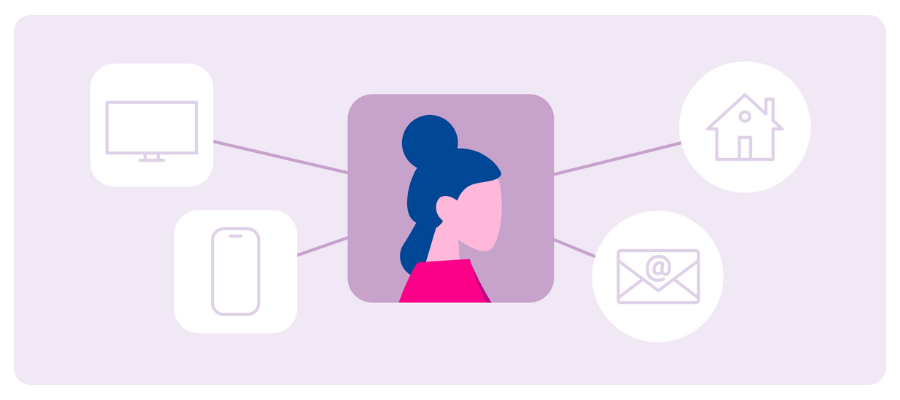
Identity connects signals from different devices, logins, channels, and interactions to real people. It tells your AI models who you’re talking to — not just what they clicked. That kind of clarity gives AI the power to make smarter predictions, uncover insights, and deliver relevance at scale. Without identity, AI is guessing. With identity, it’s delivering.
Identity is the foundation of the outcomes era
We’re living in a performance-driven age. Impressions and clicks are no longer enough. Marketers today are being judged by real outcomes: incremental sales, customer acquisition, revenue lift, and long-term value.

To measure those outcomes, you need to know who you reached — and whether they took action. Identity makes that connection possible. It links ad exposure to real-world results. It enables accurate attribution across channels. It powers personalization at every stage of the journey, making every impression more valuable.
This is the outcomes era, and identity is what makes it measurable.
Commerce media and CTV show what’s possible
Two of the fastest-growing channels — commerce media and CTV — are great examples of identity in action.
At Experian, we’ve invested in this future. Our recent acquisition of Audigent brings together data, identity, and activation — under one roof — built to support both AI-driven planning and outcome-based performance.
How marketers can win now
To stay ahead in a world defined by AI and outcomes, marketers need to:
It’s not about rebuilding everything. It’s about building on what’s already working.
Final thought: Identity is the bridge
AI is raising the bar, and outcomes are the new standard. But neither works without identity. The marketers who win won’t treat identity as a compliance checkbox — they’ll treat it as their competitive edge.
Get started with us today
Latest posts

Experian offers a suite of next-generation tools built on the Experian Digital Graph to help marketers adapt to ongoing signal fragmentation and privacy regulation. These solutions enable brands to maintain behavioral targeting and campaign performance even as traditional signals decrease. Through Experian's integration with Audigent, we now offer early access to Curated Deals, contextually-indexed audiences, and Geo-Indexed Audiences that help advertisers test privacy-first audience activation in a period of accelerating signal fragmentation. Experian and Audigent offer a data management platform (DMP) that enables publishers to collect, manage, and understand their first-party data, while also accessing third-party data, to better monetize their data assets. At the same time, Experian continues to advance its signal-agnostic Digital Graph, which already covers industry-standard universal IDs, like Unified ID 2.0 (UID2) and ID5, as well as both IPv4 and IPv6, which are becoming more and more prevalent. Together, these updates give marketers a reliable, privacy-forward foundation for audience reach, cross-device targeting, and measurement as signal fragmentation continues to reshape digital advertising. How is Experian's Digital Graph evolving in a multi-signal world? Signal fragmentation is reshaping how marketers reach and measure audiences, so we continue to strengthen the Experian Digital Graph to keep performance steady across channels. Recent updates focus on improving connectivity, accuracy, and durability: More signals to keep reach strong: We added IPv6 and phone-based UID2s to our Digital Graph, building on the hashed email (HEM)-based UID2s we already support. Better AI models for cleaner identity data: We improved our AI clustering and device classification models to sharpen ID resolution. More stable customer profiles: We enhanced stability in our Digital Graph by tying it more closely to our Offline Graph, ensuring more complete customer profiles that last over time. Together, these updates give marketers a more resilient identity foundation and help maintain performance in a market defined by rising signal fragmentation. How is Experian advancing contextual targeting and geo-based targeting with our partners? AWith more signals in market and traditional identifiers becoming less reliable advertisers are returning to tactics that don’t rely on cookies. Contextual targeting and geo-based targeting have both delivered results for years, and are becoming even more important as marketers look for consistent ways to reach audiences without relying on ID-level data. Experian is modernizing these approaches by pairing Experian Marketing Data with contextual and geographic signals to create privacy-first activation paths that hold up as identifiers fade. With our acquisition of Audigent, we’re expanding the ways marketers can activate privacy-forward audiences at scale. Together, these capabilities strengthen how brands reach people with relevant experiences, even as traditional IDs fade: Contextually- Indexed Audiences: We index Experian’s syndicated audiences against contextual signals inside private marketplace (PMP) deals using Experian’s Digital Graph and Audigent’s Hadron ID. In a 15-day test with a national advertiser, this ID-less approach exceeded click-through rate goals by 25% while matching the scale and delivery of ID-based campaigns. Geo-Indexed Audiences: We also offer Geo-Indexed Audiences that use location-based signals to reach consumers in the right places and moments, providing another durable option when IDs are unavailable or restricted. Evolving toward more intent-rich signals: Looking ahead, we are developing ways to incorporate additional intent indicators, such as content consumption patterns and repeated contextual behaviors, to give marketers stronger cues about where their audiences are in their decision process, all without relying on user-level identifiers. Together, these tactics make contextual and geo-based targeting more measurable, scalable, and privacy-safe, helping marketers keep performance steady as signal fragmentation accelerates. Which alternative IDs does Experian's Digital Graph support? Experian’s signal-agnostic Digital Graph is designed to interoperate across identity frameworks and connect digital identifiers into a single, privacy-compliant system. It now supports alternative IDs such as: UID2s ID5 IDs HEMs Connected TV (CTV) IDs Our Digital Graph is rebuilt weekly to maintain high accuracy and addressability across campaigns. These capabilities ensure marketers can continue cross-device activation and measurement as legacy signals decline. “Experian is a valued partner in Nexxen’s unified identity graph powering the Nexxen data platforms, which bring us the ability to seamlessly onboard client data, activate campaigns, and measure performance while maximizing biddable opportunities for our advertisers. They help ensure our clients can continue reaching audiences at scale and successfully execute campaigns.”Chance Johnson, Chief Commercial Officer What's next for Experian's identity and connectivity roadmap? As digital signals change and CTV viewership grows, we continue to expand the identifiers supported within the Experian Digital Graph. Recent additions such as IPv6 and phone-based UID2s, alongside existing IPv4 and email-based IDs, help marketers and platforms understand the full customer journey across screens and households within a privacy-first framework. We are committed to maintaining and increasing connectivity in the digital world, ensuring that clients can reach their audiences even as familiar signals decline. A core part of that commitment is strengthening the overlap between our Offline and Digital Graphs. This work improves cross-channel consistency and gives marketers more reliable links between individuals, households, and devices. As we keep investing in identity resilience, clients can expect ongoing innovation that supports addressability and performance despite evolving privacy constraints. Start exploring privacy-first audience targeting through Experian's data marketplace How can marketers maintain addressability at scale today? Experian’s connected toolkit of signal-agnostic advertising solutions empowers brands to continue reaching audiences with confidence: Identity resolution through Experian’s Digital Graph Curation via Audigent Cross-device measurement built for privacy compliance Universal ID interoperability across platforms As the industry adjusts to signal fragmentation, Experian provides the scale, trust, and connectivity required to sustain effective targeting. A resilient path forward for addressable advertising As the AdTech industry continues to evolve, Experian’s Digital Graph continues to power interoperability, scale, and privacy-safe measurement. With data ranked #1 in accuracy by Truthset, collaborations across the AdTech ecosystem, and ongoing support for universal IDs, Experian gives marketers a reliable path to addressable, measurable, and privacy-first advertising. Connect with our team About the author Budi Tanzi, VP of Product and Solution Engineering, Experian Marketing Services Budi Tanzi is the Vice President of Product at Experian Marketing Services, overseeing all Identity Products. Prior to joining Experian, Budi worked at various stakeholders of the ad-tech ecosystem, such as Tapad, Sizmek and StrikeAd. During his career, he held leadership roles in both Product Management and Solution Engineering. Budi has been living in New York for almost 11 years and enjoys being outdoors as well as sailing around NYC whenever possible. FAQs How does Experian's Digital Graph help marketers prepare amidst signal fragmentation? Experian’s Digital Graph enables consistent audience targeting and measurement across browsers and devices using privacy-compliant identifiers. It connects verified digital data, giving advertisers continuity as traditional IDs become less reliable.Experian’s Digital Graph supports consistent audience targeting and measurement across browsers and devices using privacy-compliant identifiers. By connecting verified digital data, the Digital Graph gives marketers continuity as signals such as cookies, device IDs, and IP-based identifiers become less reliable. Recent updates, including IPv6, phone-based UID2s, and improved AI clustering, help you maintain reach and accuracy even as digital signals shift. What partners support Experian’s signal fragmentation strategy? Experian works with a variety of partners to source digital IDs. We work with The Trade Desk and ID5 to incorporate their universal IDs into our Digital Graph. Additionally, Audigent, now a part of Experian, offers Curated Deals, which are a non-cookie dependent way to provide reach and relevance. Does Experian’s Digital Graph comply with privacy standards? Yes. Experian’s identity and data solutions align with IAB Data Privacy Standards and regulations such as the California Consumer Privacy Act (CCPA), ensuring transparent and compliant data use. What future plans does Experian have for the Digital Graph? Our current focus is to increase the overlap between our Offline and Digital Graphs, enabling more cross-channel addressability for our clients. We also continue expanding supported identifiers and improving our AI models to maintain performance as signal fragmentation grows. How can I get started testing Experian’s signal-agnostic solutions? You can reach out directly to explore privacy-first activation options, including contextual, geo-indexed, curated deals, and ID-based strategies supported by the Experian Digital Graph. Latest posts

What is Experian Third-Party Onboarding? Experian Third-Party Onboarding is a our capability that streamlines how third-party data providers distribute and monetize their audience segments across Experian’s connected ecosystem. It reduces friction in the onboarding process, allowing data providers to reach more buyers through direct integrations with over 20 programmatic, social, and TV platforms. Key benefits at a glance Future-proofed addressability Access to premium connected TV (CTV) and cross-channel activation Clear pricing and faster reporting Self-service control and expert support Flexible audience support Data providers including AnalyticsIQ, Circana, Dun & Bradstreet, PurpleLab, PlaceIQ, and over 20 more are already using Experian Third-Party Onboarding. Read the announcement in AdExchanger Why now? The industry shift driving third-party onboarding Marketers and platforms are under growing pressure to maintain audience addressability amidst signal loss and increasing privacy regulations. Experian’s Third-Party Onboarding meets this demand by unifying AI-enhanced identity, compliance, and monetization in one place. What's the difference between first-party and third-party onboarding? Find out here How does Experian Third-Party Onboarding improve connectivity and addressability? Experian Third-Party Onboarding builds on the infrastructure that powers our own syndicated audience distribution. Since 2020, we've shifted from third-party partners to direct platform connections, giving data providers access to the same high-performance network. Verified performance metrics The data below highlights the performance advantage of Experian Third-Party Onboarding compared to our competition. MetricExperian performanceProgrammatic addressability50% higherConnected TV (CTV) addressability73% higherActive digital IDs (weekly)4.2 billion "Moving beyond cookie-only third-party onboarding solutions is critical for our users in the age of cookie deprecation, and Experian's identity graph does that. Experian's match rates and speed to turn around audiences to a large number of platforms is critical for our political buyers during this very busy campaign season."Paul Westcott, EVP What unique advantages does Experian Third-Party Onboarding offer? Experian Third-Party Onboarding combines AI-powered identity technology with user-centric design to make onboarding seamless and scalable. Future-proofed addressability With Experian's advanced Digital and Offline Graphs embedded within our Third-Party Onboarding solution, user audiences will automatically be expanded to a deep set of identifiers to ensure scale and maximum addressability. Identifiers include: CTV IDs Mobile ad IDs (MAIDs) IP addresses Unified I.D. 2.0 (UID2) Hashed emails (HEMs) and more Access to premium CTV and cross-channel activation Tap into 300 million CTV IDs and 350 million UID2s through integrations with TV and digital platforms. Clear pricing and faster reporting Enjoy a straightforward, revenue-share pricing model with self-service reporting available within days. Track segment adoption, advertiser usage, and destination performance instantly. Flexible audience support Seamlessly onboard bulk syndicated audience taxonomies and custom audiences to programmatic, social, and TV platforms through our existing integrations. “Both activation platforms and data providers familiar with our world-class identity graph and top-notch service have proactively asked Experian to provide third-party onboarding services. After listening carefully to how we can improve upon their current setup, we are excited to bring a solution to the market that directly addresses their needs.”Scott Kozub, VP, Product Key takeaways Experian Third-Party Onboarding streamlines audience monetization for third-party data providers. Built on Experian’s AI-powered identity graph with direct integrations across more than 20 programmatic, social, and TV platforms. Experian Third-Party Onboarding provides 50% greater programmatic addressability and 73% higher CTV reach than the competition. Experian Third-Party Onboarding is privacy-first, transparent, and designed for interoperability. Connect with our team to learn more about Experian Third-Party Onboarding and how you can get started About the author Scott Kozub VP, Product, Experian Scott leads the Product Strategy team at Experian Marketing Services working across the entire product portfolio. He has over 20 years of product experience in the marketing and advertising space. He’s been with a few startups and spent many years at FICO and Oracle Data Cloud heavily focused on loyalty marketing and advertising technology. Experian Third-Party Onboarding FAQs What makes Experian’s onboarding process different from other providers? Experian Third-Party Onboarding eliminates intermediaries and uses direct integrations with more than 20 programmatic, social, and TV platforms. This creates faster audience availability, higher match rates, and transparent pricing. Can data providers onboard both syndicated and custom audiences? Yes. Data providers can upload and manage syndicated taxonomies or custom audience builds for activation across Experian’s network of programmatic, social, and CTV destinations. How quickly can data providers access reporting? Self-service reporting is available within days of audience activation, giving providers near real-time visibility into usage by destination, advertiser, or campaign. Where can I learn more about Experian’s identity capabilities? Visit our website to learn more about Experian's AI-powered identity solutions. Latest posts

Retail media networks (RMNs) rank among the fastest-growing media channels. According to eMarketer, retail media spend is forecasted to account for more than a fifth of overall digital spending in 2025, and retail media spend will grow by 21.8%. For RMNs, the path to realizing this opportunity is marked by navigating through a series of critical stages, each with its own set of challenges and solutions. Retail media strategies Simply put, RMNs need to know who their customers are, where they are, and how to reach them to succeed. But we know nothing is that simple. This blog post reviews the three pivotal stages of RMN success, offering a roadmap for networks aiming to optimize their operations and claim their share of the rapidly growing category. Stage 1: Develop a data foundation In a world where traditional tracking methods are fading, first-party data has become essential for targeted advertising. Retailers have a wealth of this valuable data due to their direct consumer relationships. The initial step in establishing an RMN is to organize and utilize this data effectively. Steps to develop a data foundation: Organize data: Bring together fragmented shopper data, loyalty program information, and other customer data into a unified location. Clean and deduplicate this data to create consistent customer profiles. Enhance profiles: Gain insights into your customers and your brand’s customers so you can learn who your best, lapsed, and non-customers are. Append additional attributes to your shopper data, including media consumption habits, lifestyle preferences, demographic information, and more. Use identity graphs: Identity providers, like Experian, enable you to learn about the anonymous – and known – visitors on your platform and organize disparate customer data points into households. This will allow RMNs to connect addressable identifiers to the household, making it easier to reach customers across channels. Create audience segments: With a solid data foundation, RMNs can build audience segments beyond basic shopper data. These segments will make your data more attractive and actionable for media buyers. For example, consider a retailer that knows its shoppers are primarily young professionals, but a CPG brand wants to target not only these shoppers but also young professionals who are parents. By partnering with an identity solution provider like Experian, the retailer can append additional data to identify and target the young parents within their existing customer base, enabling the CPG brand to reach both audience segments effectively. “Retail media networks thrive on clean, accurate, and actionable data. Simply put, it's crucial to know who your customers are, when they're most engaged, and where to reach them to drive effective marketing strategies and maximize ROI.”anne passon, sr. director, sales, retail Stage 2: Become a publisher for optimal retail media growth The next step for RMNs is to transition from building a data foundation to helping marketers reach their target audience, essentially becoming a publisher. This involves two main processes: organizing advertising inventory and connecting it to demand. Steps to become a publisher: Audit and organize inventory: Conduct a thorough review of all existing ad spaces, including websites, apps, and in-store placements. Identify gaps and consider creating new advertising opportunities, such as website and app features, interactive digital experiences, or expanded in-store touchpoints. Connect inventory to demand: Integrate the organized inventory with platforms, allowing advertisers to access it easily. This often involves using supply-side platforms (SSPs) and demand-side platforms (DSPs). Continuing with our example, the CPG brand can work with its DSP or SSP partners and easily access your ad inventory, and effectively target the young professional and young parent audience segments. Stage 3: Scale inventory for retail media growth As RMNs progress to the final stage of their success journey, they may face the challenge of limited inventory within their owned and operated (O&O) channels. To meet marketers' expansive reach requirements and to continue to drive growth and profitability for their organizations, RMNs must expand their inventory beyond O&O. Steps to scale inventory: Utilize data collaboration tools: Clean rooms allow secure merging and enrichment of data from various sources, creating richer audience profiles while maintaining privacy. Resolve identity and enhance addressability: Identity graphs help resolve known customer identifiers (e.g. emails) into addressable IDs (e.g. mobile IDs and connected TV IDs), which can be used to reach customers across all the platforms they consume media. Expand audience reach: Onboarders, like Experian, help extend data and audiences to programmatic destinations beyond a retailer's O&O inventory. By mapping audiences to digital identifiers maintained by identity partners, RMNs can significantly widen their reach, meeting advertisers' needs for engaging with broader and more diverse audience segments. The CPG brand can now reach young professionals and young parents on the retailer’s platform and in all the other places where they consume media, like watching their favorite shows on connected TV (CTV) or browsing the web on their phones. Measurement across stages for retail media growth Measurement is crucial and must be conducted during and after a campaign to understand and validate performance. Here are two types of measurement to consider: Cross-device campaign measurement: Measure performance by connecting an ad exposure in one environment (e.g. CTV) to an action in another (e.g. mobile purchase). This holistic, cross-device approach requires a partner for identity resolution as it will ensure that the impact of a campaign is fully understood. Aggregate performance analysis: Understand performance in aggregate across several campaign studies. Receive independent third-party measurement validation that you can promote to advertisers to drive increased spend. For our CPG brand, these measurement reports ensure that they can track the performance of their campaigns from the initial exposure on a CTV to the final purchase made on a mobile device, providing comprehensive insights and validation of their advertising strategy. The retailer can aggregate these studies and promote their network’s effectiveness to prospective advertisers. Accelerate retail media growth with strategic partnerships The journey through the stages of RMN success is riddled with deep technical challenges that are often beyond the institutional capabilities of non-media businesses. The intricacies of data management, audience insights, identity resolution, precise cross-device targeting, and measurement require specialized expertise and technologies that may not be readily available in-house. RMNs stand to benefit from forging strategic partnerships with companies that possess not only the necessary technological tools but also a profound understanding of the media landscape. The steps outlined here will accelerate your growth and ensure you capitalize on the opportunity in front of you. Connect with a member of our team to learn how we can support your journey toward RMN success. Contact us to enhance your retail media strategies Latest posts